

New immunotherapies are not inherently better. In many cases, they’re just newer, vastly more expensive, and only marginally – or not at all – superior to what we already had.
That’s sacrilege in modern oncology marketing. But it’s what the data actually show.
You’ve heard the script. “Breakthrough.” “Game‑changing.” “Harnessing the immune system to cure cancer.” I have sat in tumor boards where a junior resident practically whispered “chemo” like it was an insult and lit up when they could say “pembrolizumab” or “nivolumab” instead. As if mechanism alone guarantees better outcomes.
It doesn’t.
Let’s walk through what immunotherapy really does, where it’s a revolution, where it’s a modest step, and where it’s an overhyped, expensive side quest. And then let’s talk about what that means for you ethically as a future or current clinician.
The Myth of “New = Better” in Immunotherapy
Immunotherapy is not one thing. That’s the first confusion.
You’ve got checkpoint inhibitors (PD‑1, PD‑L1, CTLA‑4), CAR‑T cells, bispecific antibodies, cancer vaccines, oncolytic viruses, and a growing alphabet soup of experimental approaches. Lumping them all together and calling them “immunotherapy” makes as much sense as lumping aspirin, cisplatin, and insulin together as “old drugs.”
But there is a pattern across the class: sensational marketing first, nuanced data later.
You hear the outliers. The stage IV melanoma that melts away on pembrolizumab and stays gone five years later. The refractory Hodgkin lymphoma patient in their twenties who responds to nivolumab after failing everything else. Those patients exist. They’re real. They’re why I’d never dismiss immunotherapies outright.
The problem is when that 10–30% life‑changing response rate quietly turns into a narrative of “this is the new standard and obviously better than everything old.” Sometimes it is. Sometimes it’s not even close.
Look at some actual numbers.
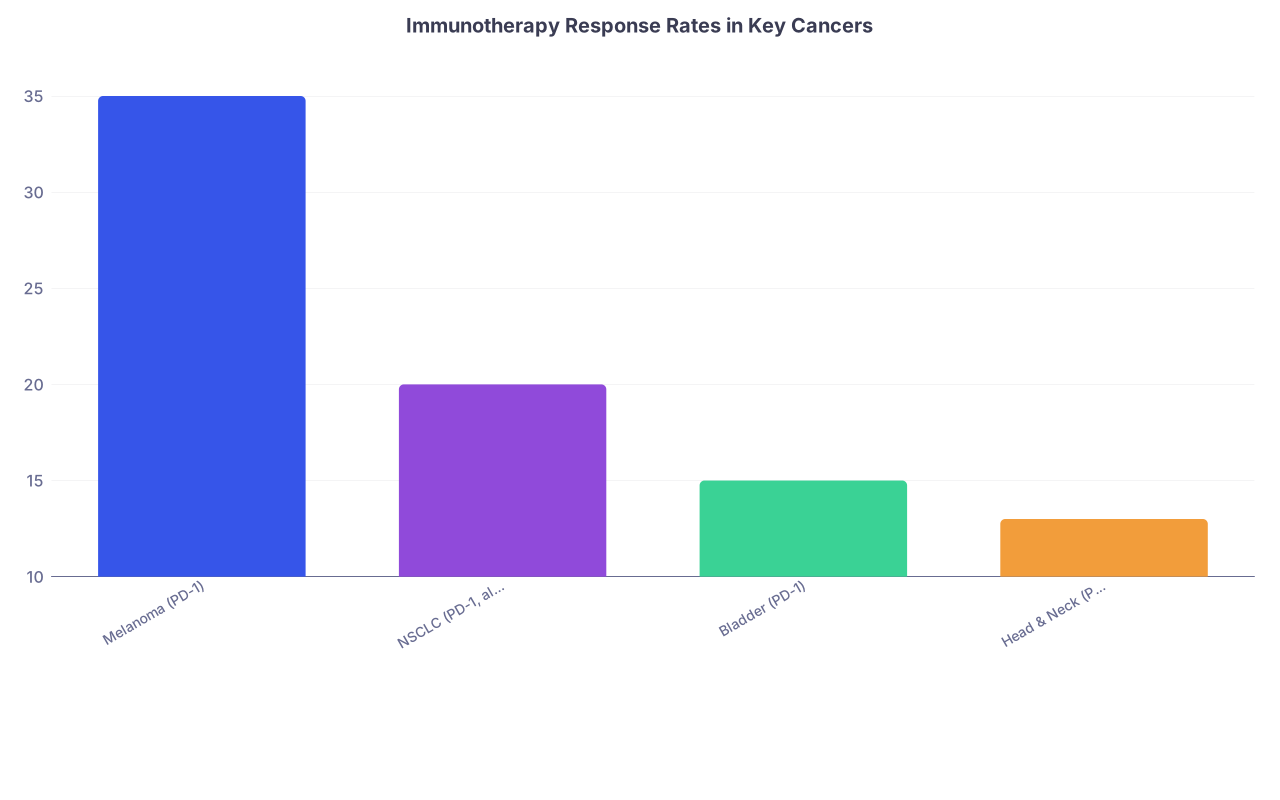
| Category | Value |
|---|---|
| Melanoma (PD-1) | 35 |
| NSCLC (PD-1, all comers) | 20 |
| Bladder (PD-1) | 15 |
| Head & Neck (PD-1) | 13 |
Those are response rates, not cure rates. In many solid tumors, most patients still do not benefit meaningfully from checkpoint inhibitors, even when heavily marketed.
Yet the cultural narrative in clinics and media is that immunotherapy has “replaced chemo.” No, it hasn’t. It has joined chemo. And surgery. And radiation. In a messy, incremental, sometimes spectacular, often disappointing reality.
Where Immunotherapy Really Is a Game‑Changer
Let’s be fair. There are diseases where immunotherapy is not just “better”; it has completely rewritten the prognosis.
Advanced melanoma used to be a death sentence. Median survival for metastatic disease was measured in months. Along came ipilimumab, then PD‑1 inhibitors and combinations. Now?
Survival curves show a plateau. A tail. People alive and disease‑free at 5+ years, something basically unheard of in the old dacarbazine days.
Same story, different scale, in classic Hodgkin lymphoma. Anti–PD‑1 agents in relapsed/refractory disease offer high response rates and durable remissions in a subset who previously had miserable options.
In some leukemias and lymphomas, CAR‑T cell therapy has pulled kids and young adults back from hospice. Not theoretically. Literally.
So yes, there are pockets where the word “breakthrough” is not marketing puff. It’s just accurate.
But the extrapolation from “life‑changing in melanoma” to “obviously the right choice in any cancer where a PD‑1 drug has an indication” is where evidence stops and hype begins.
Where the Outcomes Data Is… Underwhelming
You do not have to look hard to find scenarios where new immunotherapies add little, nothing, or even harm relative to previous standards.
A few patterns come up over and over.
1. Marginal survival benefit at enormous cost
You’ve seen these trials. The Kaplan–Meier curves that separate by a few percentage points at 12 or 24 months. Statistically significant. Clinically? Debatable.
In some advanced solid tumors, adding a checkpoint inhibitor to chemo improves median overall survival by only a few months for the average patient. Meanwhile, the drug cost alone runs into six figures per year.
| Setting | Regimen | Median OS Gain vs Control | Drug Cost Direction |
|---|---|---|---|
| Metastatic NSCLC (non–driver) | Chemo vs Chemo+PD-1 | ~2–4 months | Massive increase |
| Some GI cancers (e.g. GEJ) | Chemo vs Chemo+PD-1 | Often <3 months | Massive increase |
| Recurrent head & neck | Cetuximab vs PD-1 | Similar median OS | Higher |
You can argue those months matter. For some patients, absolutely. But pretending this is the same magnitude of benefit as curative adjuvant therapy or a true long‑tail survival revolution is intellectually dishonest.
2. “Non‑inferior” but not actually better
In several settings, newer agents get approved because they’re “non‑inferior” to older therapies. That means: not clearly worse by predefined margins.
Non‑inferiority is not “better.” It’s often “roughly the same – but more expensive and with a different side effect profile.”
Ethically, if a new immunotherapy is no better at keeping people alive than an older, cheaper regimen, you should question defaulting to the newer drug just because it’s newer.
3. Trials designed to flatter the drug, not inform you
A lot of immunotherapy approvals are built on trials with:
- Carefully selected patients with good performance status
- Biomarker‑enriched cohorts that do not match real‑world practice
- Crossovers and post‑progression treatments that muddy survival interpretations
I’ve watched clinicians remember the abstract headline – “Significant improvement in PFS!” – and completely forget the absolute difference was a few weeks and there was no clear OS gain.
If you are serious about outcomes, you must read past the press release and the ASCO talk.
The Dark Side: Toxicity and Immune‑Related Collateral Damage
Here’s another myth: immunotherapy is “gentler” and “less toxic” than chemo.
Sometimes true. Absolutely not uniformly true.
The toxicity is different. That’s it.
Chemo toxicity is in‑your‑face. Nausea, hair loss, cytopenias, infections. You see it on daily rounds.
Immunotherapy toxicity can be sneaky, delayed, and catastrophic. Immune‑related adverse events are not “just rashes.” I’ve seen:
- A previously healthy patient in the ICU with immunotherapy‑induced pneumonitis, gasping on high‑flow oxygen
- Fulminant myocarditis with troponins through the roof a few weeks into treatment
- Insulin‑dependent diabetes triggered by checkpoint inhibitors, permanent and life‑altering
No, these are not the majority. But when immunotherapy is oversold as “safer than chemo,” patients (and too often trainees) underestimate the seriousness of immune‑related endocrinopathies, colitis, hepatitis, myocarditis, and neurologic syndromes.
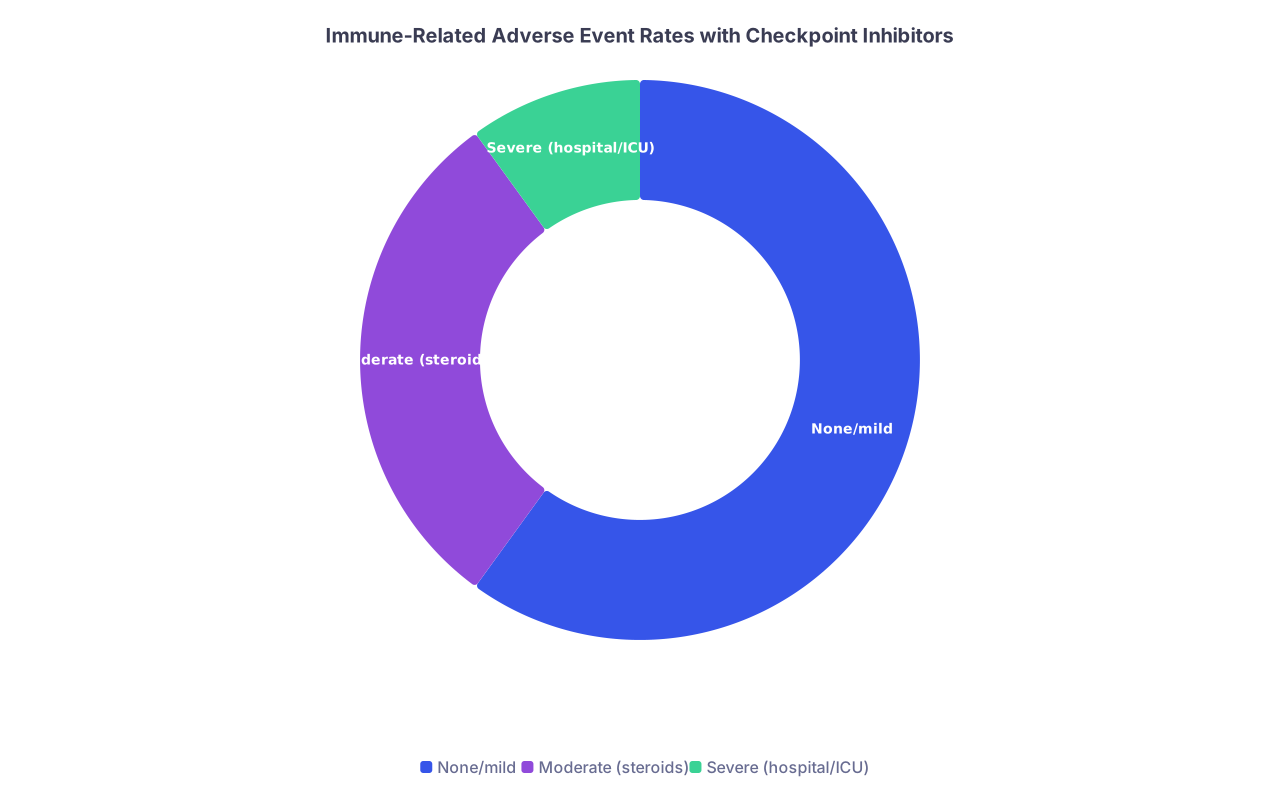
| Category | Value |
|---|---|
| None/mild | 60 |
| Moderate (steroids) | 30 |
| Severe (hospital/ICU) | 10 |
Ten percent severe is not a rounding error. It’s a risk you need to own when you present these drugs as “the better, modern option.”
Cost, Hype, and the Ethics of “Offering Everything”
There’s an ugly truth you will not hear in glossy CME dinners: a lot of what drives overuse of new immunotherapies is financial.
Not just pharma profits. Institutions, infusion centers, professional societies that love “innovation” branding. Even you, indirectly, through reimbursement structures that reward drug administration.
The result: a subtle but powerful pressure to “offer everything” – every new checkpoint inhibitor, every combination – even when the incremental benefit is tiny or unproven in that particular patient’s situation.
You’ll hear lines like:
- “We should at least try immunotherapy. It’s the new standard.”
- “Families expect us to do something. Not offering it looks like we’re giving up.”
- “The trial showed benefit, so we’re covered.”
Covered. That word comes up a lot in back‑room conversations. As in, medicolegally.
Ethically, “covered” isn’t the bar. The question is: is this likely to give this patient a meaningful benefit relative to the burden (toxicity, time in clinics, financial ruin) it imposes?
When a single course of an immunotherapy regimen can cost more than a family home in many countries, you cannot pretend cost is some abstract policy issue. It is a clinical toxicity.
Personal Development: Becoming the Clinician Who Asks “Better for Whom?”
If you want to practice medicine with integrity in the era of immunotherapy, you have to retrain your brain away from gadget‑worship.
Better is not a property of the drug. Better is relational:
- Better for this patient’s biology
- Better for this patient’s values
- Better in this clinical context, at this stage of disease
A frail 82‑year‑old with widespread metastatic cancer and multiple comorbidities may not experience “better” the same way a 45‑year‑old with an oligometastatic, PD‑L1 high tumor does.
Your job is not to reflexively reach for whatever was on the last ASCO plenary slide. Your job is to translate population‑level data into an honest, patient‑specific conversation.
That demands a few uncomfortable skills:
You must be able to say “no.”
You must be able to say “we can, but we probably shouldn’t.”
You must be able to say “this might add weeks, not years, and it carries real risk – does that match what you want?”
I’ve seen residents freeze when an attending bluntly told a family, “Immunotherapy is on the table, but the chance it truly changes where we’re going is low. We can do more good by focusing on comfort.” They’re used to “throw the new drug at it” as the default behavior. It feels safer. Less confrontational. More “modern.”
It’s also often ethically lazy.
Medical Ethics: Consent That’s Actually Informed
Here’s where immunotherapy forces you to grow up as a clinician: informed consent.
Handing someone a glossy pamphlet and saying, “This is a newer treatment that helps your immune system fight cancer and is usually better tolerated than chemo” is not consent. It’s marketing.
Real informed consent for immunotherapy means at least:
- Stating clearly the absolute benefit (not just the relative risk reduction or the p‑value)
- Explaining the real risk of severe immune‑related events and the possibility of permanent organ damage
- Being upfront about uncertainty: “We do not have long‑term data in people exactly like you”
- Acknowledging cost and time burden, especially when benefit is modest
You do not have to dump a 40‑page trial on someone. But you do need to be able to say, “Out of 100 people like you, maybe 20 will have a strong response that lasts. Another 20 will have some shrinkage for a while. The other 60 will not see meaningful benefit. Meanwhile, about 10 will have serious side effects that could land them in the hospital.”
That’s different from the usual breezy “this is the cutting‑edge option.”
New vs Old: A More Honest Comparison
Let’s strip the branding and put it side by side.
| Dimension | New Immunotherapies | Older Approaches (Chemo, Targeted) |
|---|---|---|
| Mechanism | Immune modulation | Direct cytotoxic or pathway inhibition |
| Response pattern | Deep & durable in minority; none in many | More uniform but often less durable |
| Toxicity | Immune, sometimes delayed, organ-threatening | Hematologic, GI, alopecia, neuropathy |
| Biomarker use | Increasing (PD-L1, MSI, TMB) | Variable (e.g. EGFR, HER2) |
| Cost | Extremely high | High to moderate |
| Evidence hype | Massive marketing, early approvals | More mature, less sensational |
Neither column is “good” or “bad.” They’re tools. The ethical failure is when we elevate one set of tools to near‑religious status because they’re newer.
Where This Leaves You
If you’re a student or trainee, immunotherapy probably feels exciting, modern, almost glamorous. The mechanisms are fun. The board questions are everywhere. The pharma swag at conferences is slick.
None of that will matter when you’re sitting across from an exhausted patient and their family, trying to decide whether to hang another bag of a PD‑1 inhibitor that has a 10–20% chance of buying something meaningful and a non‑trivial chance of pushing them into an ICU bed.
That moment will not care how hyped the drug was.
The real professional development here is learning to separate signal from noise, trial data from TED Talk, and “new” from “better, for this human being in front of me.”
Immunotherapies are powerful additions to our arsenal. In some cancers, they have completely altered the landscape and genuinely deserve the word “transformative.”
But always better? No. Often over‑sold, over‑applied, and under‑explained. Yes.
Years from now, you won’t remember the brand names that were trending on conference banners. You’ll remember the times you had the courage to tell someone the truth about what a new therapy could and could not do for them—and you’ll sleep better for choosing honesty over hype.


