

It is February of your first preclinical year. You just heard “whole exome sequencing” for the third time this week, and your genetics lectures are starting to blur into one long Punnett square. Step-style question banks keep throwing BRCA, EGFR, and TPMT at you. But on your actual preclinical exams, it still feels like Mendelian inheritance and karyotypes rule the day.
You are trying to answer a basic question: When should you actually invest in learning genomics deeply, and when does it finally matter on the wards?
Let us walk this from MS1 orientation through your first clerkship year, with clear checkpoints: what to learn, what to ignore for now, and exactly when to start using genomics at the bedside.
Big Picture Timeline: How Genomics Enters Your Training
First, the 10,000-foot timeline. Then we drill down month by month.
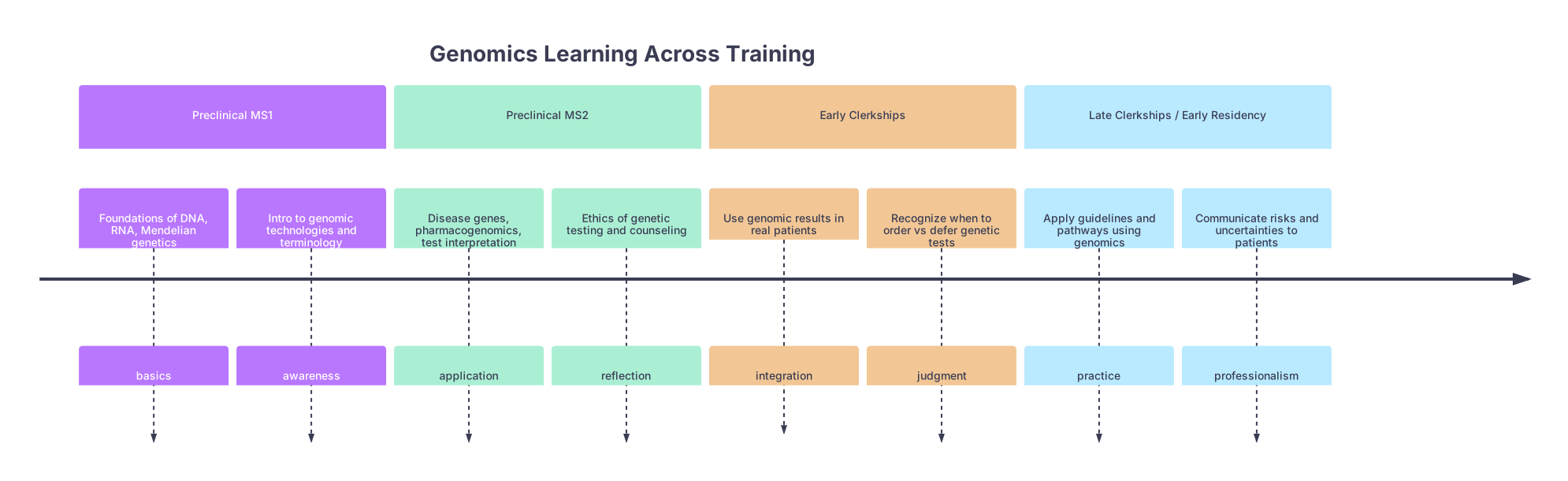
| Period | Event |
|---|---|
| Preclinical MS1 - Foundations of DNA, RNA, Mendelian genetics | basics |
| Preclinical MS1 - Intro to genomic technologies and terminology | awareness |
| Preclinical MS2 - Disease genes, pharmacogenomics, test interpretation | application |
| Preclinical MS2 - Ethics of genetic testing and counseling | reflection |
| Early Clerkships - Use genomic results in real patients | integration |
| Early Clerkships - Recognize when to order vs defer genetic tests | judgment |
| Late Clerkships / Early Residency - Apply guidelines and pathways using genomics | practice |
| Late Clerkships / Early Residency - Communicate risks and uncertainties to patients | professionalism |
You do not need to master all of genomics before clerkships. That is a trap. You need layers:
- Early: vocabulary and concepts.
- Mid: pattern recognition and basic interpretation.
- On the wards: clinical judgment, communication, and ethics.
MS1: Laying the Foundation (You Need Fluency, Not Mastery)
You are here: first year, between August and May. Anatomy is suffocating you, biochem is constant, and your “Genetics / Molecular Medicine” block is crammed into 4–8 weeks.
August–December (First Semester): Learn the Language
At this point you should treat genomics like anatomy vocabulary: painful now, essential later.
Focus on these non‑negotiables:
Core molecular concepts
- DNA replication, transcription, translation (yes, again – this time cleaner).
- Types of genetic variants:
- Single nucleotide variants
- Insertions/deletions
- Copy number variants
- How these show up in reports: c.123A>T, p.Glu41Lys, etc.
Classical → modern bridge
- Mendelian inheritance + penetrance + expressivity.
- How that becomes:
- Risk alleles
- Polygenic risk scores (just conceptually; no math).
Core tests: just know what they are
- Karyotype vs FISH vs chromosomal microarray vs gene panel vs exome vs genome.
- Single, clear sentence for each:
- “Karyotype – large chromosomal changes.”
- “Microarray – copy number across genome.”
- “Panel – multiple genes relevant to one phenotype.”
- “Exome – all coding regions.”
- “Genome – almost everything.”
At this stage, you are not trying to decide which test to order. You are trying to ensure that when an attending says “we sent a gene panel,” you are not nodding while internally panicking.
January–May (Second Semester MS1): Tie It to Real Disease
By mid‑MS1 you should deliberately attach genomics to organ systems:
- When you hit cardio:
- Hypertrophic cardiomyopathy genes (MYH7, MYBPC3).
- Long QT and channelopathies conceptually.
- In heme/onc:
- BCR-ABL, HER2, EGFR, KRAS/NRAS.
- Rough idea of “driver mutations” vs “passenger.”
- In peds/embryology:
- Trisomy 21 vs microdeletion syndromes (DiGeorge, Williams).
- What “contiguous gene deletion” actually means.
At this point you should:
- Recognize 10–15 high‑yield genes or alterations and their diseases.
- Know why a specific alteration matters (prognosis? drug target? screening?).
Ignore the sprawling gene lists. They are test-writing fodder and clinically useless memorized in bulk. Focus on patterns.
Summer Between MS1 and MS2: Light, Targeted Upgrade
You finally have two months where school is not actively beating you up. Do not torture yourself with a full genomics textbook. Instead, set aside 4–6 focused hours total.
At this point you should:
Clarify your weak spots
- Make a one-page map:
- “I do not understand exome vs genome.”
- “I mix up somatic vs germline.”
- “Pharmacogenomics feels like marketing.”
- Make a one-page map:
Do one proper overview
- A short, modern genomics in medicine review article.
- Or your school’s “omics” pre-reading (actually read it, not just skim).
Connect to future Step prep
- Flag pharmacogenomics variants that show up constantly in question banks:
- TPMT, DPYD, HLA-B*57:01, CYP2D6/CYP2C19, SLCO1B1.
- Flag pharmacogenomics variants that show up constantly in question banks:
Just enough so MS2 does not feel like starting from zero.
MS2: When Genomics Starts to Matter for Exams and Ethics
You are here: second year, boards on the horizon, path and pharm eating your time.
Now genomics becomes applied medicine, not trivia.
August–December MS2: Build Clinical Use-Cases
At this point you should bridge genomics into diagnosis and treatment decisions.
Focus on 4 pillars:
Monogenic disease patterns
- Recognize when a presentation screams “single gene disorder”:
- Early onset
- Strong family history
- Very specific phenotype (Marfan, NF1, cystic fibrosis).
- Understand:
- What test is typically used.
- What finding changes management (e.g., CFTR variants and modulator therapy).
- Recognize when a presentation screams “single gene disorder”:
Cancer genomics – the realistic core
- Breast: BRCA1/2 for hereditary risk.
- Colon: Lynch syndrome (MMR genes, microsatellite instability).
- Targeted therapy examples:
- EGFR, ALK, ROS1 in lung.
- BCR-ABL in CML.
- Just enough to follow an oncology note without getting lost.
Pharmacogenomics You will see this on exams, and you will use versions of it on the wards.
Core examples:
- HLA-B*57:01 – abacavir hypersensitivity.
- HLA-B*15:02 – carbamazepine and SJS in some Asian populations.
- TPMT / NUDT15 – thiopurines (azathioprine, 6-MP).
- CYP2C19 – clopidogrel poor metabolizers.
- SLCO1B1 – statin myopathy risk.
Basic lab report literacy
- “Pathogenic,” “likely pathogenic,” “VUS,” “likely benign,” “benign.”
- Zygosity (heterozygous, homozygous, compound heterozygous).
- Why a VUS should not drive major clinical decisions.
This is also the right time to confront a key ethical layer: uncertainty and incidental findings.

Ethics Checkpoints: When You Must Think Before You Order
Genomics is ethically dangerous when the technology outruns your judgment. That happens fast.
At this point (late MS2) you should be comfortable thinking through three recurring scenarios:
1. Incidental and Secondary Findings
A patient gets a panel for cardiomyopathy and is found to have a BRCA2 variant.
Questions you should ask yourself:
- Did the patient consent to secondary findings?
- Do they want to know about cancer risk?
- Are you prepared to handle the cascade: family testing, anxiety, insurance worries?
The correct reflex: Genomics is not a fishing expedition. Pre‑test counseling and clear goals matter.
2. Variants of Uncertain Significance (VUS)
You will see this in reports. I have seen residents overcall VUS results and scare families. It is sloppy and harmful.
At this point you should:
- Treat VUS findings as non‑actionable until proven otherwise.
- Recognize that reclassification over time is a thing. Results evolve.
3. Privacy and Discrimination
You are in the “Personal Development and Medical Ethics” phase. So you should know:
- GINA protects against health insurance and employment discrimination in the U.S.
- GINA does not cover:
- Life insurance
- Long-term care
- Disability insurance
You should be able to explain that to a hypothetical patient in an OSCE.
Transition to Clerkships: The Last 3–4 Months Before the Wards
You are in the gray zone: Step studying, OSCEs, and the looming shock of being called “doctor” by accident.
This is when you convert genomics from facts into clinical scripts.
At this point you should:
Build 5–7 “genomics stories” you can tell out loud Example scripts:
- “We have a 32-year-old with multiple colon cancers and a family history; this might be Lynch syndrome, and we would think about an MMR gene panel and MSI testing.”
- “This patient has HOCM; first-degree relatives should get screening, and there is often a causative sarcomere gene mutation.”
Know when to say “genetics consult” You are not the one ordering whole exome sequencing as an MS3. But you should recognize when to call for help:
- Recurrent unexplained pregnancy loss.
- Multiple congenital anomalies.
- Strong cancer pedigrees with early onset disease.
- Unexplained cardiomyopathy or arrhythmia in a young person.
Review one institutional or national guideline involving genomics For example:
- NCCN hereditary breast/ovarian cancer guideline.
- ACMG recommendations for incidental findings.
Not in full detail. Just to see how real clinicians embed genomics in decision algorithms.
MS3: Using Genomics Without Drowning in It
Now you are on the wards. The key shift:
- Preclinical: “What is BRCA?”
- Clerkship: “This patient’s BRCA result is pending. What does that change right now?”
First 2–3 Months of Clerkships: Survival Genomics
At this point you should aim for pattern recognition and safe communication, not heroics.
Focus on:
- Where genomics shows up on core rotations
| Clerkship | Common Genomics Use |
|---|---|
| Internal Medicine | Cancer panels, pharmacogenomics, heme-onc workups |
| Pediatrics | Congenital syndromes, developmental delay, metabolic disease |
| OB/GYN | Prenatal screening, carrier testing, hereditary cancer risk |
| Psychiatry | Pharmacogenomic panels (often overused), rare syndromes |
| Family Medicine | Direct-to-consumer test questions, risk counseling |
- Your role as a student
On the wards, your genomics job usually is:
- Identify: “This could be a genetic condition.”
- Ask: “Has genetics been consulted?” / “Have we done any genetic testing?”
- Communicate: explain to the team what a result means in simple terms.
- Translate for patients using non-technical language.
You are not the one clicking the order for a 60-gene panel on a whim. If you are, someone is supervising poorly.
- Ethical landmines you will actually see
Examples I have seen on the wards:
- Onc clinic:
- Patient does not want her adult children told about a pathogenic BRCA variant.
- Peds:
- Parents want “everything tested” in a child with developmental delay, with no understanding of incidental findings.
- Primary care:
- A patient brings in ancestry / DTC raw data saying, “It says I have Alzheimer’s risk, am I doomed?”
At this point you should consciously practice:
- Asking about what the patient wants to know before you unload every piece of data.
- Using phrases like:
- “This result increases your risk, but it does not guarantee you will get the disease.”
- “We found a change in the DNA; we are not sure yet if it causes disease. Right now we do not change your care based on this alone.”
Mid to Late MS3: Deliberately Using Genomics in Your Presentations
By the middle of MS3, you should be able to weave genomics into your assessment and plan without sounding like you copy‑pasted UpToDate.
Example on medicine:
“Given his age and multiple primary colon cancers, I am concerned about a hereditary colon cancer syndrome such as Lynch. I would recommend a genetics consult to consider MMR gene panel testing, which would affect both his own surveillance and screening for family members.”
Example on OB/GYN:
“She is 10 weeks pregnant and 37 years old. I would discuss noninvasive prenatal testing, which looks at fetal DNA in maternal blood to screen for trisomies. I would also clarify that it is a screening test, not diagnostic, and positive results need confirmation with CVS or amniocentesis.”
At this point you should:
- Bring up genetics when it changes management or family counseling.
- Avoid throwing out tests as buzzwords.
- Admit what you do not know and suggest genetics consult when appropriate.
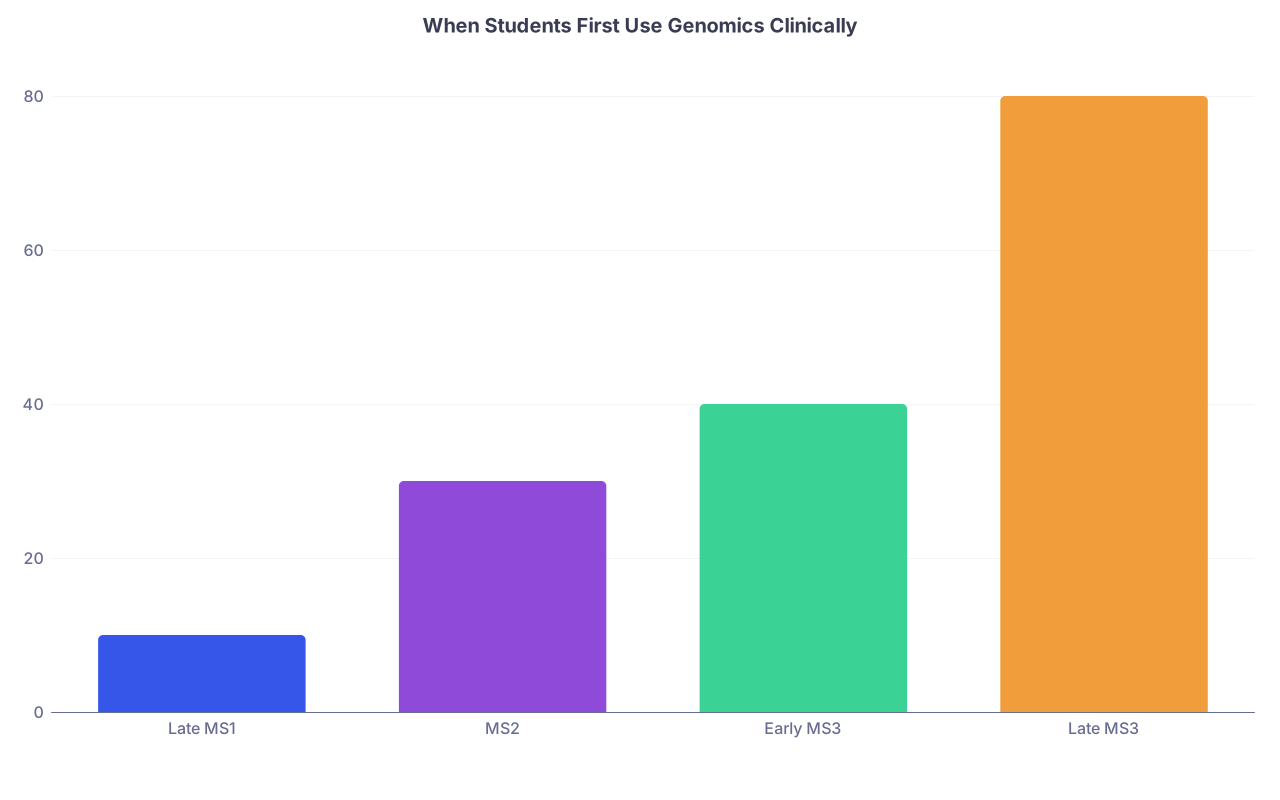
| Category | Value |
|---|---|
| Late MS1 | 10 |
| MS2 | 30 |
| Early MS3 | 40 |
| Late MS3 | 80 |
Common Pitfalls and How to Avoid Them
I have watched this play out with multiple cohorts. Here is what usually goes wrong—and when.
MS1–MS2 Pitfall: Treating Genomics as Trivia Only
You memorize BRCA1/2 for exams and forget the words “cascade testing” and “family screening” exist.
Fix at this point:
- Every time you see a genetic disorder, ask:
- Does this affect screening for relatives?
- Does this change therapy choices?
Early MS3 Pitfall: Overtrusting the Report
Students (and some residents) treat anything in a genomics report as automatically true and actionable.
Fix at this point:
- Always pay attention to:
- Interpretation level (pathogenic vs VUS).
- Phenotype match: Does this variant explain the actual patient in front of you?
Late MS3 Pitfall: Avoiding Genomics Because It Feels “Not My Job”
You default to “genetics will handle it” and never build your own judgment.
Fix at this point:
- Once per week on a rotation, pick one patient with a potential genetic angle.
- Ask:
- Was genomic testing considered?
- If not, should it be?
- How would a positive result change what we do?
It is not about becoming a geneticist. It is about becoming a modern physician.

Long-Term: How Much Genomics Do You Really Need?
Not everyone will do a genetics fellowship. But everyone will practice in a system that uses genomics in at least three areas:
- Cancer diagnosis and therapy.
- Pharmacogenomics (increasingly baked into EHRs).
- Risk assessment and screening.
So your realistic outcomes should be:
By end of MS2, you can:
- Explain the basic types of genomic tests.
- Interpret a simple test report at a conceptual level.
- Identify major ethical issues in genetic testing.
By end of MS3, you can:
- Recognize when a patient probably needs genetics input.
- Integrate genomic information into your assessment and plan, at least at a basic level.
- Communicate genomic risk and uncertainty to patients in normal language.
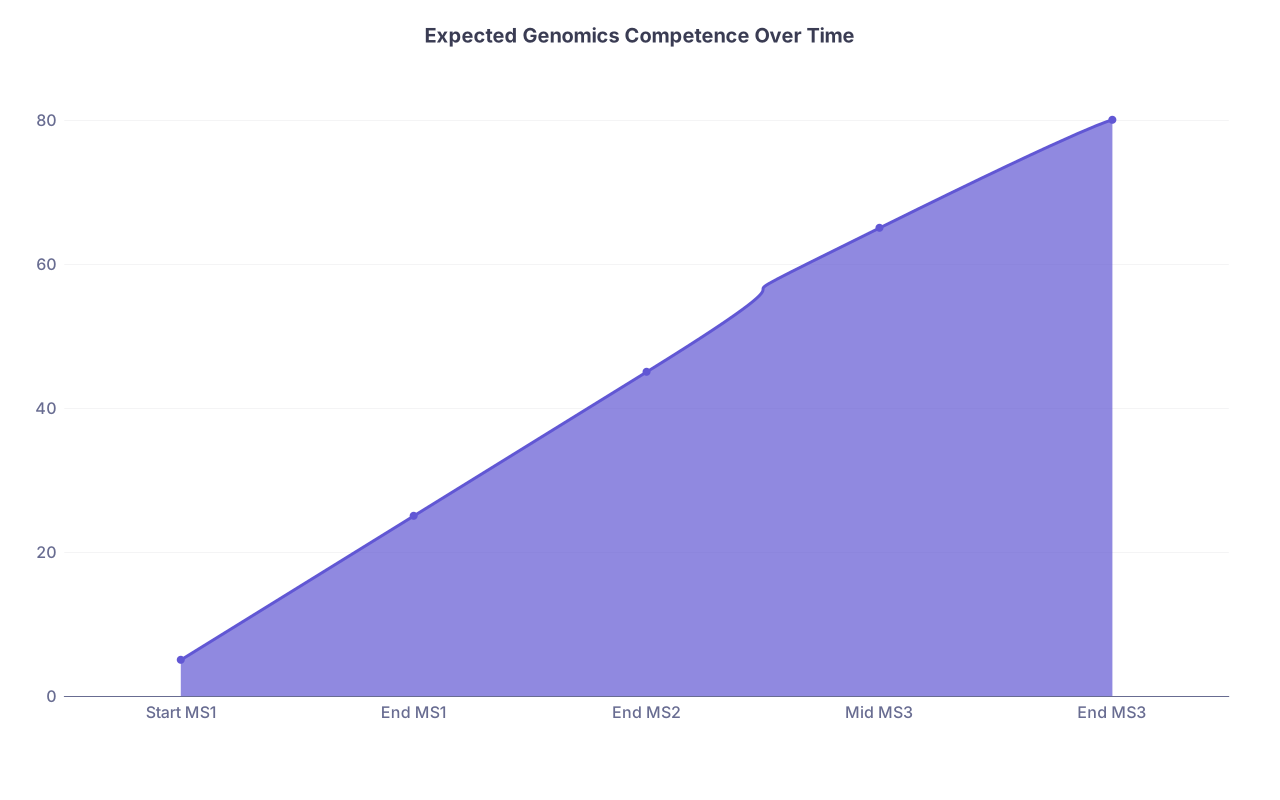
| Category | Value |
|---|---|
| Start MS1 | 5 |
| End MS1 | 25 |
| End MS2 | 45 |
| Mid MS3 | 65 |
| End MS3 | 80 |
You are not expected to call every variant from memory. You are expected to ask the right questions and to understand the implications.
FAQs
1. I feel behind on genomics at the end of MS2. Is it too late?
No. Genomics is much more about how you think than what you have memorized. Start now with:
- Learning test types and when each is used.
- Reviewing a handful of real or sample genetic reports.
- Practicing how to discuss a single genetic condition, like BRCA-related cancer, clearly.
You can catch up during clerkships if you engage actively instead of avoiding cases that involve genetics.
2. Should I do a dedicated genomics elective before starting clerkships?
If your school offers a 2–4 week applied genomics or clinical genetics elective and you are genuinely interested, it is a strong option. But it is not mandatory for safe clerkship performance. A better minimum move is:
- Attend at least one genetics case conference or tumor board.
- Shadow a genetics clinic for a day if you can. That gives you a sense of how genomics is actually used, not just how it is tested.
3. How deep do I need to go into polygenic risk scores and cutting-edge tools?
For medical school and early residency: not very deep. You should:
- Understand the idea of polygenic risk scores (many variants, small effects, combined into one number).
- Recognize that these scores have limitations, especially across diverse populations.
- Know that they are one tool among many, not destiny.
Leave detailed statistical models and algorithm development for fellowship or a dedicated research path.
Your next step today:
Pull one recent patient case (real or from a case book) that involved suspected hereditary cancer, a congenital syndrome, or pharmacogenomics. Write a 5–6 sentence summary that includes: what genomic test was or should be ordered, what a positive result would mean, and how you would explain that result to the patient in plain language.


