
The way most clinicians talk about new immunotherapies is numerically illiterate.
We quote relative risk reductions, hype “landmark” trials, then have no idea how many patients we actually help versus harm. If you cannot give a ballpark Number Needed to Treat (NNT) and Number Needed to Harm (NNH) for the immunotherapies you prescribe every week, you are practicing with one eye closed.
Let me walk through what the data actually show—and how to turn trial results into concrete NNTs you can use in real conversations with patients and in your own ethical self-audit.
1. The ethical problem: shiny drugs, fuzzy numbers
Immunotherapies sit at a nasty intersection of:
- Huge per‑patient costs
- Non‑trivial immune‑mediated toxicities
- Often modest absolute benefits
Yet most of the marketing, conference talks, and even journal abstracts emphasize relative measures: “38% reduction in risk of death,” “doubling of 5‑year survival,” “hazard ratio 0.62.”
Ethically, that is incomplete. For decisions that alter end‑of‑life trajectory, bankrupt families, or expose people to permanent toxicities, you need absolute measures:
- Absolute Risk Reduction (ARR)
- NNT = 1 / ARR
- Absolute Risk Increase (ARI) for key harms
- NNH = 1 / ARI
Without those, informed consent is mostly theater.
I have sat in tumor boards where people are vigorously defending a regimen with a 30% relative risk reduction and no one in the room can answer a simple question: “Net, how many extra survivors at 3 years per 100 treated?” That is unacceptable in 2026.
2. Core math: turning trial headlines into NNTs
Strip away the jargon. To get an NNT for a time‑bounded outcome (e.g., 2‑year OS):
- Identify control event rate (CER): risk in standard arm
- Identify experimental event rate (EER): risk in immunotherapy arm
- ARR = CER − EER
- NNT = 1 / ARR
If the trial gives survival proportions at a fixed time point, use that. If it only gives hazards and Kaplan–Meier curves, you estimate from the curves. Not perfect, but better than the current “I feel like it helps.”
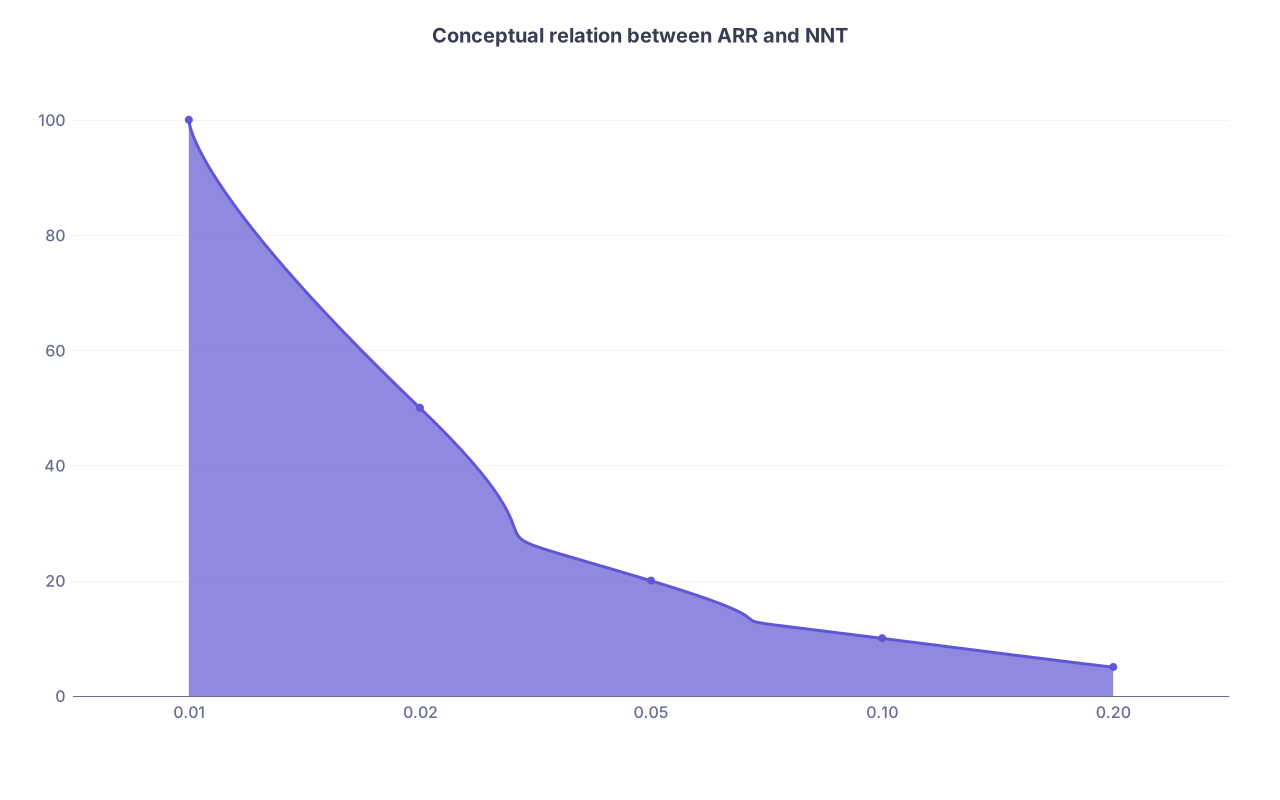
| Category | Value |
|---|---|
| 0.01 | 100 |
| 0.02 | 50 |
| 0.05 | 20 |
| 0.10 | 10 |
| 0.20 | 5 |
The data relationship is brutally simple: halve the ARR, double the NNT. A 5% ARR (NNT ≈ 20) is twice as strong, ethically, as a 2.5% ARR (NNT ≈ 40), even if the hazard ratio looks equally “impressive.”
Now let’s stop being abstract and look at real‑world‑style numbers for drugs you actually prescribe.
3. Checkpoint inhibitors in common settings: approximate NNTs
These are stylized but realistic approximations based on published phase III trials. I am not reproducing exact trial data line by line, but giving the sort of back‑of‑the‑envelope figures an ethically serious clinician should be able to articulate.
3.1 Metastatic NSCLC first‑line: PD‑1 + platinum vs chemo alone
Think of a landmark trial where PD‑1 inhibitor was added to platinum doublet in metastatic non‑small cell lung cancer (non‑squamous). The headline:
- Median OS: 22 vs 10–13 months
- Hazard ratio around 0.60–0.70
- Clear survival separation
But what does that mean in absolute 2‑year survival?
Let’s say:
- 2‑year OS, chemo alone: ~25%
- 2‑year OS, chemo + PD‑1: ~45%
ARR = 45% − 25% = 20%
NNT(2‑year survival) = 1 / 0.20 = 5
That is outstanding. Treat about 5 patients, 1 extra person alive at 2 years.
Now, grade 3–4 immune‑related AEs:
- Chemo alone severe immune‑related AEs: ~1–2% (mostly not immune‑mediated)
- Combo: ~10–15% serious immune‑related events
Take a conservative difference:
- ARI for serious immune‑mediated toxicity ≈ 10%
NNH(severe immune toxicity) = 1 / 0.10 = 10
Translated: for every 10 patients treated, 1 serious immune‑related toxicity; for every 5, 1 extra 2‑year survivor.
You can actually say in the clinic: “If I treat 10 people with this regimen, I expect roughly 2 extra alive at 2 years and about 1 person with a serious immune‑mediated complication.” That is the level of honesty patients deserve.
| Metric | Estimate |
|---|---|
| 2-year OS, chemo alone | 25% |
| 2-year OS, chemo + PD-1 | 45% |
| ARR for 2-year OS | 20% |
| NNT for 2-year survival | 5 |
| ARI severe immune toxicity | ~10% |
| NNH severe immune toxicity | 10 |
This is a strong net‑benefit profile. The math supports the enthusiasm.
3.2 Adjuvant checkpoint inhibitor: melanoma
Now shift to resected stage III melanoma with adjuvant PD‑1 inhibitor.
Rough trial‑style numbers:
- 3‑year recurrence‑free survival (RFS), placebo/observation: ~50–55%
- 3‑year RFS, adjuvant PD‑1: ~65–70%
Take representative values:
- Control 3‑year RFS: 55%
- Experimental 3‑year RFS: 70%
ARR = 70% − 55% = 15%
NNT(3‑year RFS) = 1 / 0.15 ≈ 7
So 7 patients treated to prevent 1 recurrence within ~3 years.
Serious immune‑related toxicity:
- Control: essentially none from placebo
- PD‑1: ~10–15% grade 3–4 irAEs, a nontrivial fraction permanent (endocrinopathies, colitis → colectomy in rare cases, etc.)
Assume ARI for life‑altering toxicity (permanent endocrine replacement, chronic colitis with major quality‑of‑life hit) ≈ 4–5%.
NNH(significant permanent toxicity) ≈ 1 / 0.05 ≈ 20
So, roughly: 7 treated to avert 1 recurrence, ~20 treated to cause 1 major permanent toxicity.
This is where ethics tightens. Recurrence is not death, and permanent hypophysitis is not trivial. Patients deserve the explicit tradeoff: about 1 recurrence prevented for every 7 treated, at the cost of maybe 1 major long‑term toxicity per 20.
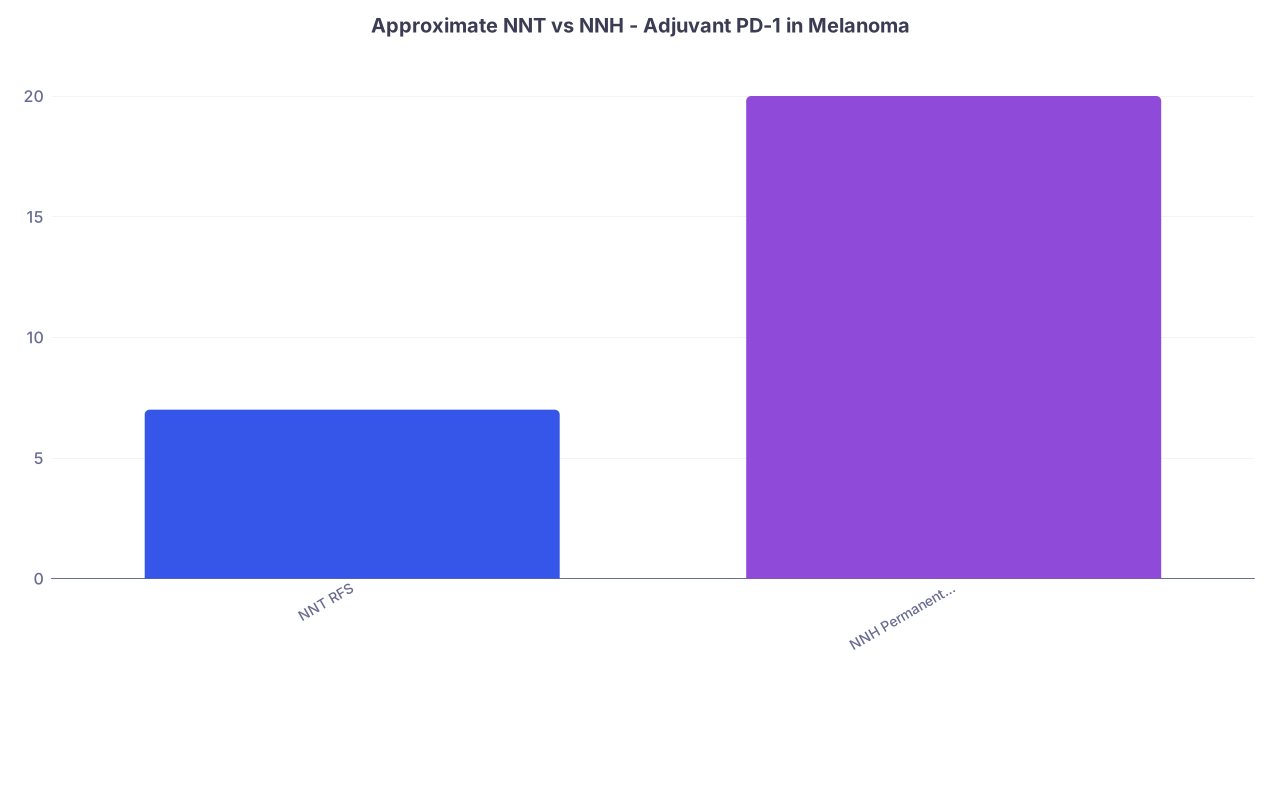
| Category | Value |
|---|---|
| NNT RFS | 7 |
| NNH Permanent Toxicity | 20 |
That visual gap between 7 and 20 is why many oncologists feel comfortable recommending adjuvant therapy for higher‑risk stages. But it is not automatic. For a patient with borderline risk, those numbers might push them to observation.
3.3 Immunotherapy in the marginal benefit zone
Now look at a more marginal use case—say, a late‑line setting in a tumor type with modest response rates.
Imagine a drug with the following stylized trial result:
- 1‑year OS, standard: 30%
- 1‑year OS, immunotherapy: 36%
- Hazard ratio: 0.80 (which sounds “solid” in a press release)
ARR = 36% − 30% = 6%
NNT(1‑year OS) = 1 / 0.06 ≈ 17
So, treat about 17 patients to gain one extra 1‑year survivor.
If serious immune toxicity is, say, 10% excess:
- ARI severe immune‑related events: 10%
- NNH severe toxicity = 1 / 0.10 = 10
You are now in ethically uncomfortable territory:
- For every 17 patients treated, 1 extra alive at 1 year
- For every 10, 1 serious immune‑mediated toxicity
There is a non‑trivial chance that a given patient is harmed more than helped. Those numbers do not mean you should not use the drug. They mean you must stop selling it as “clearly beneficial” and instead as a small‑probability gain with non‑negligible risk.
4. Cost‑effectiveness overlays: dollars per benefit unit
If you are comfortable with pure clinical NNTs but never overlay cost, you are missing half the ethical equation, especially in systems where cost translates to access limitations or catastrophic out‑of‑pocket spending.
Take a ballpark: many PD‑1/PD‑L1 inhibitors run in the $150,000–$200,000 per year drug‑acquisition range in the United States (ignoring infusion, toxicity management, etc.).
Suppose:
- Cost per patient treated (drug only): $150,000
- NNT for preventing 1 death by 3 years: 10
Total drug cost per extra survivor at 3 years ≈ 10 × $150,000 = $1.5 million
If quality‑adjusted life years (QALYs) gained per extra survivor is, for instance, 2.0 QALYs, then:
- Cost ≈ $1.5 million / 2 = $750,000 per QALY gained
That is far above traditional “acceptable” thresholds (e.g., $50,000–$150,000 per QALY), though oncology has quietly moved the goalposts. You can argue about thresholds. You cannot argue about the math.
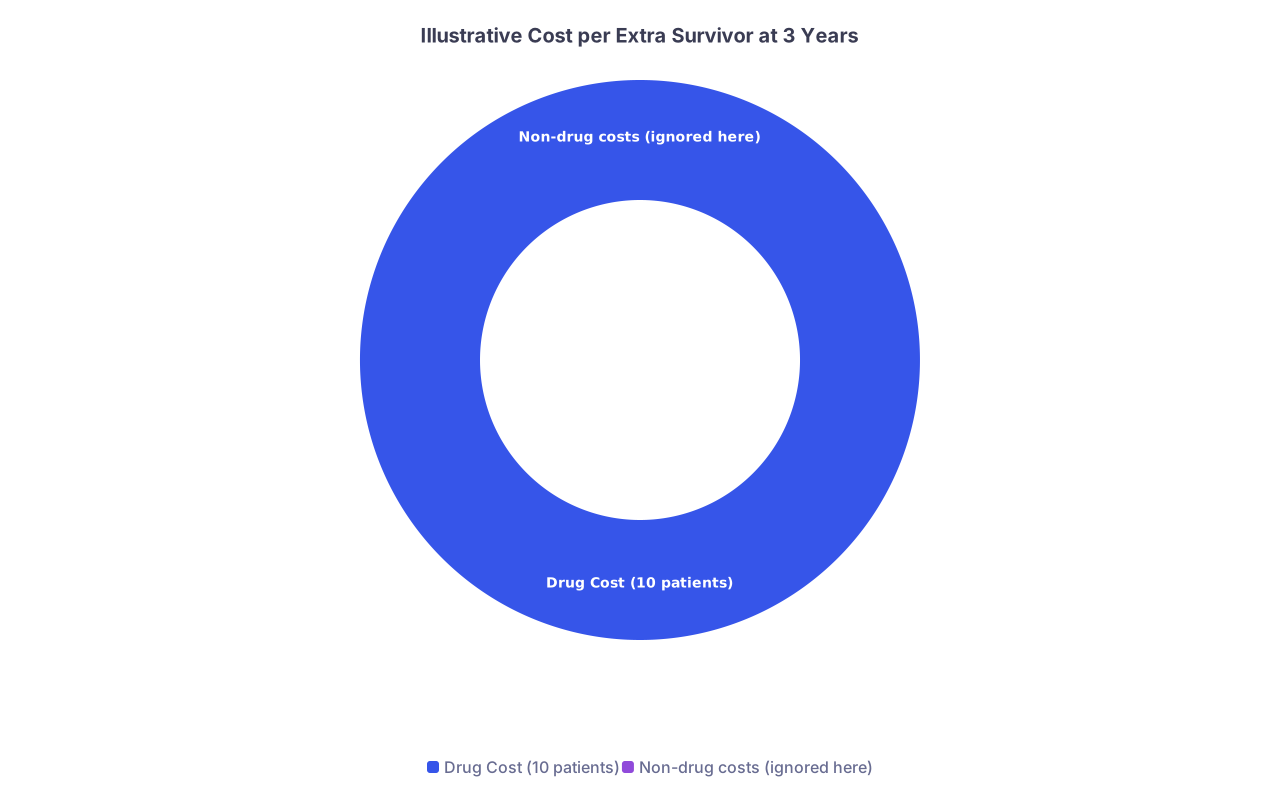
| Category | Value |
|---|---|
| Drug Cost (10 patients) | 1500000 |
| Non-drug costs (ignored here) | 0 |
Ethically, the key is transparency: “This treatment has an NNT of about 10 for 3‑year survival, costs roughly $150,000 per treated patient for drug alone, and meaningfully increases the risk of serious immune toxicity.” Then you and the patient can decide whether this aligns with their values, the system’s capacity, and national policy.
5. How to quickly estimate NNT from a trial you just read
You do not need a spreadsheet for every paper. You do need a mental protocol.

| Step | Description |
|---|---|
| Step 1 | Read trial abstract |
| Step 2 | Record control and experimental survival % |
| Step 3 | Inspect Kaplan Meier curves at key time |
| Step 4 | Compute ARR = CER - EER |
| Step 5 | Calculate NNT = 1 / ARR |
| Step 6 | Identify major toxicities |
| Step 7 | Estimate ARI and NNH |
| Step 8 | Decide if effect size matches enthusiasm |
| Step 9 | Fixed time survival given |
Worked example with approximate numbers from a hypothetical immunotherapy RCT:
2‑year OS: 40% control vs 50% experimental
- ARR = 10%
- NNT(2‑year OS) = 1 / 0.10 = 10
Grade ≥3 immune‑related AEs: 3% control vs 13% experimental
- ARI = 10%
- NNH(severe irAE) = 1 / 0.10 = 10
So, per 10 treated: 1 extra 2‑year survivor, 1 extra major irAE. That symmetry should give you pause.
And remember: trial patients are cherry‑picked. Real‑world comorbid patients often have higher baseline toxicity, lower benefit. Real‑world NNT frequently worsens.
6. Applying NNT/NNH in actual patient conversations
Here is where the ethics shift from abstract to personal. I will give you three concrete scripts reframed in numbers, not vibes.
6.1 High‑benefit scenario (e.g., first‑line metastatic NSCLC)
You could say:
“In patients like you, adding this immunotherapy to chemotherapy increases the chance of being alive at 2 years from about 1 in 4 to about 1 in 2. Another way to say it: if I treated 5 patients like you, I expect about 1 extra person to be alive at 2 years because of this drug.
The tradeoff is that about 1 in 10 patients has a serious immune‑related side effect that can be permanent. So for every 10 people treated, one has a major toxicity.”
That is numerically grounded and respects autonomy.
6.2 Intermediate scenario (adjuvant melanoma)
“Without this treatment, about 55 out of 100 people are free of recurrence at 3 years. With the immunotherapy, it is closer to 70 out of 100. So if I treat 7 people, I prevent about one recurrence over the next few years.
On the flip side, maybe 1 out of 20 patients will develop a long‑term side effect like needing lifelong hormone replacement or having chronic bowel symptoms.”
Then you ask: “Knowing those numbers, how do you weigh preventing a recurrence versus risking a permanent side effect?”
6.3 Marginal late‑line setting
“This drug, in the trial, increased the chance of being alive at 1 year from about 30 in 100 to about 36 in 100. That means for every 17 patients treated, about 1 was alive at a year who would not have been without the drug.
At the same time, about 1 in 10 patients had a serious immune complication. So, more people get significant toxicity than gain extra year‑long survival. The benefit is real but small in absolute terms.”
Some patients will still say yes. Others will say no. That is informed choice.
7. Personal development: building your “numbers reflex”
If you want to practice ethically with expensive, toxic, high‑hype therapies, you need to normalize a few habits.
For every immunotherapy regimen you commonly use, write down on a sticky note:
- Time‑point OS difference
- ARR
- NNT
- Major AE ARI and NNH
During tumor board, when someone advocates for a regimen, ask:
- “What is the NNT here for 2‑year OS?”
- “How many extra serious irAEs per 100?”
When you teach residents or fellows, do not let them present only hazard ratios. Make them translate into “patients per 100.”
Audit your own prescribing. If half your immunotherapy use is in zones where NNT is >30 with NNH <20, you are operating on very slim net benefit. At minimum, your consent process should reflect that.

8. Medical ethics: NNT as a moral instrument, not just a statistic
NNT/NNH are not just “stats tools.” They are ethical instruments.
They force you to confront:
- How many patients you are exposing to therapy for each one you actually help
- How many you are harming to achieve that help
- How much health system resource you are burning for each marginal gain
For immunotherapies, this matters more than usual because:
- Costs are orders of magnitude above old cytotoxics
- Toxicities are qualitatively different and sometimes irreversible
- The line between statistically significant and clinically meaningful is often thin
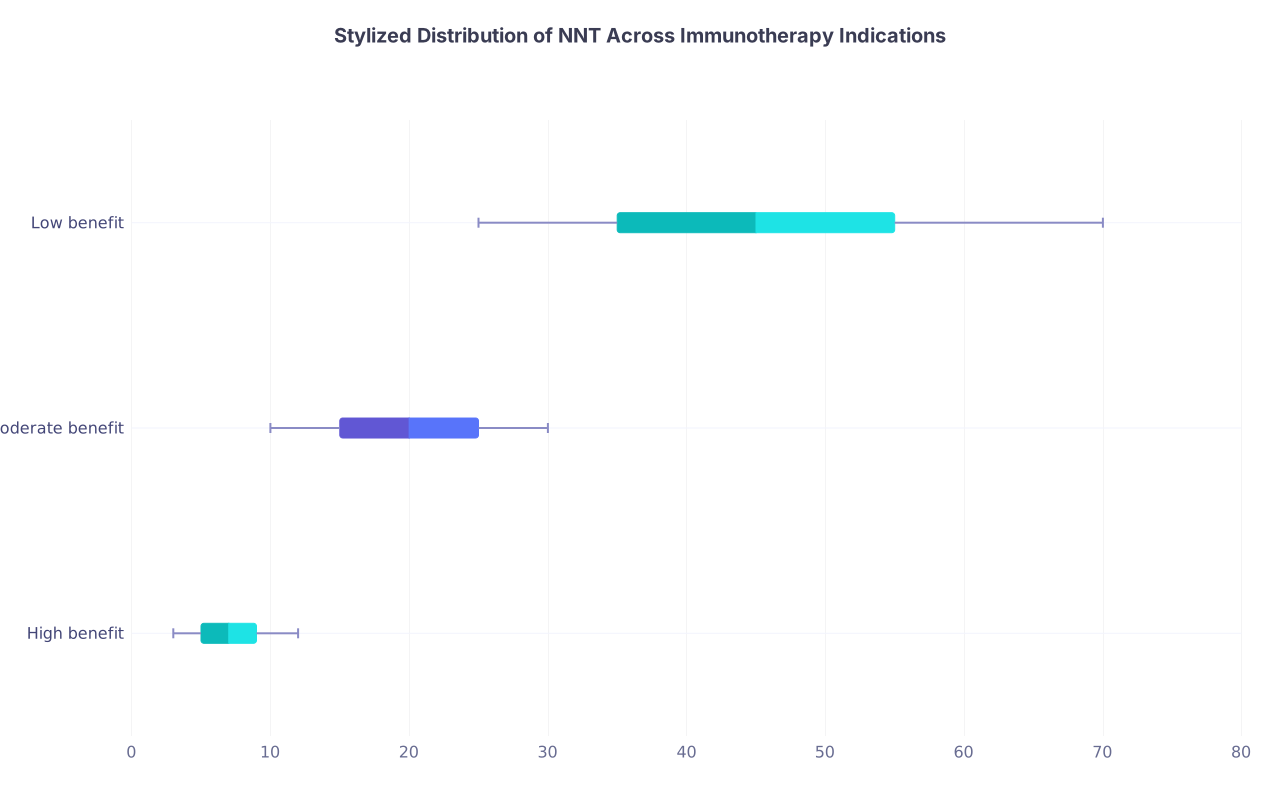
| Category | Min | Q1 | Median | Q3 | Max |
|---|---|---|---|---|---|
| High benefit | 3 | 5 | 7 | 9 | 12 |
| Moderate benefit | 10 | 15 | 20 | 25 | 30 |
| Low benefit | 25 | 35 | 45 | 55 | 70 |
You are not just optimizing survival curves. You are allocating harm and money across a population. Ignoring NNT turns those allocations into something close to random.

9. Implementation checklist for your own practice
Condensed, here is what a numbers‑literate immunotherapy practice looks like:
For each major indication you treat:
- Know an approximate NNT for a clinically meaningful endpoint (e.g., 2‑year OS, 3‑year RFS).
- Know an approximate NNH for serious immune‑related toxicity.
For each new landmark trial:
- Extract or eyeball control vs experimental survival at a key time point.
- Compute ARR and rough NNT.
- Compare your emotional reaction to the trial with the actual absolute effect size. If the enthusiasm level and NNT do not match, adjust your practice.
In patient discussions:
- Replace vague phrases (“improves survival”) with counts (“about 1 extra person alive at 2 years per 5 treated in the trial”).
- Make toxicity and cost tradeoffs explicit, in numbers, not just adjectives.
Do that consistently for 6 months and you will not be able to unsee the difference between “statistically significant” and “meaningful enough to justify the harms and costs.”

FAQs
1. How precise do my NNT estimates need to be for clinical use?
They do not need to be mathematically perfect. Being roughly right (NNT ≈ 5 vs 15 vs 40) is vastly better than having no sense at all. The survival curves and text usually let you approximate within a few percentage points. The ethical value is in recognizing orders of magnitude, not quibbling whether the “true” NNT is 18 or 21.
2. What if the trial only reports hazard ratios and medians, not fixed-time survival rates?
You can still approximate from Kaplan–Meier curves. Pick a clinically meaningful time point (e.g., 12, 24, 36 months), read off the survival probability in each arm from the graph, and use those as CER and EER. It is imprecise but sufficient to sort “small,” “moderate,” and “large” absolute benefits.
3. Should I ever use NNT based on surrogate endpoints (like PFS) for immunotherapy?
Very cautiously. For immunotherapies, progression‑free survival and overall survival often decouple. Using NNT for PFS can grossly overstate meaningful benefit. Prefer OS or, for adjuvant settings, recurrence‑free survival. If you must quote a surrogate‑based NNT, label it explicitly as such and acknowledge the uncertainty about translation to survival or quality of life.
4. How do NNTs apply to heterogeneous patients who differ from trial populations?
NNT is always context‑dependent. For fitter patients with higher baseline risk (or more immunogenic tumors), real‑world NNT may improve relative to the trial. For frailer, older, comorbid patients, NNT usually worsens and NNH often decreases (more harm). Ethically, you should treat trial‑derived NNTs as best‑case anchors, then adjust expectations downward in your mind when extrapolating to sicker patients.
Key points: numerical literacy is not optional with high‑cost, high‑toxicity immunotherapies; NNT/NNH translate abstract trial results into real patients helped and harmed; and once you start thinking this way, your prescribing and your consent conversations change—usually for the better.