

The hard truth: most “genomic tests” being marketed to primary care right now are clinically useless.
A tiny minority are game‑changing. A big chunk are harmless noise. And some are actively dangerous because they create anxiety, false reassurance, or bad medical decisions.
Let’s sort them.
1. Start With a Brutal Filter: “Will This Change What I Do?”
If a genomic test won’t change:
- what you screen for
- how often you screen
- what meds you choose or avoid
- what referrals you make
…it’s not clinically useful in primary care. It’s just decoration.
So I use a simple rule with residents and early‑career docs:
If you can’t write the post-test plan in one sentence, don’t order the test.
Examples of good one‑sentence plans:
- “If BRCA positive → refer to genetics, high‑risk breast clinic, and discuss MRI + prophylactic options.”
- “If pharmacogenomic panel shows CYP2C19 poor metabolizer → avoid clopidogrel and use alternative antiplatelet.”
- “If Lynch syndrome → earlier and more frequent colonoscopy, plus cascade testing for family.”
Keep that in the back of your mind as we go through the main categories.
2. Genomic Tests That ARE Clinically Useful in Primary Care
These are the ones I’d actually defend in a chart review or a courtroom.
A. Hereditary Cancer Syndromes (High‑Penetrance Variants)
This is top of the list. High impact, clear pathways, strong evidence.
Clinically useful tests:
- BRCA1/2 and related breast/ovarian cancer genes
- Lynch syndrome genes (MLH1, MSH2, MSH6, PMS2, EPCAM)
- Other high‑penetrance genes (e.g., TP53, PTEN, APC, etc.) depending on family history or panel design
When are they useful in primary care?
You identify red flags in history:
- Multiple relatives with early‑onset cancer (often <50)
- Clusters of breast/ovarian/pancreatic or colon/endometrial cancers
- Known pathogenic variant in the family
- Bilateral or multiple primary cancers in one person
You can trigger either:
- Direct testing if you’re comfortable and have access to genetic counseling
- Referral to genetics/high‑risk clinic
Practical primary care use:
- You don’t need to memorize 50 genes. You need to recognize patterns and know who to refer.
- If your system allows primary care to order hereditary cancer panels with built‑in counseling support, that’s reasonable. But you should still document the specific action plan if positive (enhanced screening, prophylactic surgery, cascade testing).
Ethical angle:
- These are often life‑altering results. Think hard about informed consent, family implications, and the patient’s psychological state.
- Don’t drop a pathogenic BRCA result via patient portal at 11 pm with no context. That’s malpractice in spirit, even if not in law.
B. Pharmacogenomic Testing (Targeted, Not Blanket Panels)
Most broad “pharmacogenomic panels for everyone” are oversold. But targeted pharmacogenomics? That can be very helpful.
Use cases with decent evidence in primary care:
- Antiplatelet therapy: CYP2C19 for clopidogrel responsiveness (more common in cardiology, but you’ll see the downstream notes).
- Psych meds: CYP2D6, CYP2C19 for SSRIs, SNRIs, TCAs – helpful in patients with multiple failed trials or severe side effects.
- Pain meds: Codeine and tramadol in CYP2D6 poor or ultra‑rapid metabolizers (especially avoiding codeine in kids and breastfeeding mothers with high‑risk genotypes).
- Some PPIs, warfarin, and other agents depending on your system’s protocols.
Where primary care can actually use this:
- Patient with 3+ failed antidepressant trials: a focused pharmacogenomic panel may guide better choice/dose.
- Patient with weird or extreme drug reactions that don’t make sense: consider testing.
- Systems with embedded clinical decision support where the EMR reads PGx data and recommends doses/alternatives automatically.
What NOT to do:
- Don’t order big “everything panel” PGx tests on healthy people with no meds issues just because it sounds futuristic.
- Don’t let color‑coded “green/yellow/red” reports substitute for clinical judgment. Some PGx vendors are basically marketing machines with a CLIA lab attached.
Ethics:
- Make sure the patient understands this: PGx doesn’t guarantee perfect outcomes. It just shifts probabilities. Manage expectations.
C. Familial Hypercholesterolemia and Other Monogenic Lipid Disorders
You don’t need a gene test to diagnose most FH. But in some cases, it helps.
Clinically useful when:
- LDL is extremely high (often >190 mg/dL) at a young age, especially with strong family history of premature ASCVD.
- There’s diagnostic uncertainty (e.g., possible polygenic vs monogenic hyperlipidemia).
- You want to justify more aggressive treatment or get coverage for PCSK9 inhibitors or other advanced therapies.
- You want to do cascade screening in the family.
Primary care use:
- You can either order FH testing directly or refer to lipid clinic/genetics depending on your resources.
- The real value: pulling in relatives for early screening and treatment, not just putting a name on the variant.
D. Lynch Syndrome–Level Risk in Primary Care: Colorectal and Endometrial Cancer
You won’t usually order germline testing yourself for Lynch, but you will see the flags:
- Young-onset colon or endometrial cancer in patient or first‑degree relative
- Personal history of multiple primary GI or GYN cancers
- Pathology reports showing mismatch repair (MMR) deficiency or microsatellite instability (you’ll see “consider germline testing” in the path report)
When it’s useful:
- It totally changes your screening schedule
- It justifies early colonoscopy in relatives
- It pulls in a genetics team and sometimes high‑risk GYN surveillance or prophylactic surgery
Your job:
- Read the pathology reports carefully.
- Don’t ignore “suggest germline testing” in the fine print.
- Document strong family histories and act on them instead of just writing “FHx + colon ca” as a throwaway.
E. Newborn Screening / Pediatric Genetic Workups (Usually Not Ordered by PCP, but Affects You)
You’re not running exome sequencing in clinic. But you’re absolutely living with the consequences:
- Positive CF screen
- SMA carrier/affected newborn
- Metabolic disorder discovered on heel‑prick panel
Clinically useful for you:
- It changes vaccination issues, infection thresholds, dietary needs, development surveillance, and family planning counseling.
- The key is actually reading and understanding those genetics consults that hit your inbox instead of clicking “acknowledge” and forgetting.
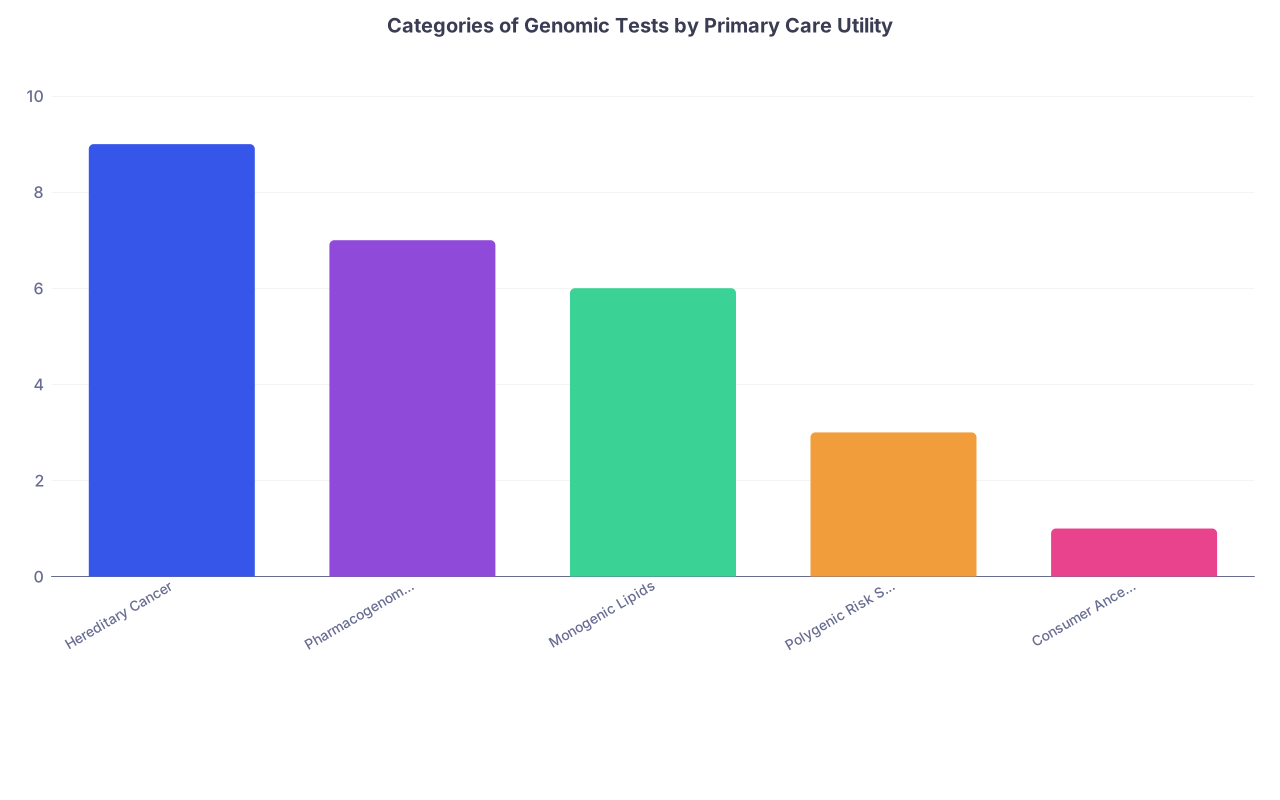
| Category | Value |
|---|---|
| Hereditary Cancer | 9 |
| Pharmacogenomics | 7 |
| Monogenic Lipids | 6 |
| Polygenic Risk Scores | 3 |
| Consumer Ancestry/Wellness | 1 |
3. Genomic Tests That Are Sometimes Useful (With Big Asterisks)
These live in the gray zone. Not outright garbage, but not routine yet.
A. Expanded Carrier Screening (Preconception / Prenatal)
These tests look for carrier status for dozens or hundreds of recessive conditions.
When they can be clinically useful:
- Couples planning pregnancy who want to understand severe childhood disease risks.
- Certain ethnic backgrounds with higher prevalence of specific disorders (though ethnic‑agnostic panels are increasingly used).
- Patients doing IVF with preimplantation genetic testing.
Primary care angle:
- Reasonable to discuss in preconception counseling, then often refer to OB/MFM/genetics.
- You should be ready to explain basics: “carrier ≠ sick,” and “this raises reproductive decision questions, not immediate health issues.”
Why not for everyone by default yet?
- The more you test, the more you find, and the more complex the counseling.
- Many variants are of uncertain significance. That’s a psychological and ethical minefield.
- If you don’t have genetics backup, you can easily create more harm than benefit.
B. Polygenic Risk Scores (PRS) for Common Diseases
This is the hot startup space right now. PRS for:
- Coronary artery disease
- Type 2 diabetes
- Breast cancer (beyond BRCA)
- Atrial fibrillation, obesity, etc.
Are they clinically useful in primary care today? Barely. And mostly in research or pilot programs.
The problem:
- They often don’t outperform simple, cheap clinical tools like ASCVD calculators, BMI, blood pressure, and family history.
- Many are less accurate in non‑European ancestries.
- There’s no universal guideline yet that says, “If PRS > X, do Y.”
Where they might be borderline useful:
- Very high PRS that pushes you to be more aggressive with prevention in someone who otherwise looks “borderline risk.”
- Research settings or integrated health systems testing if PRS improves population health outcomes.
For most primary care docs right now, these are “interesting” but not part of standard practice. If you’re tempted, ask: “Will I actually change management beyond what I’d already do for a high‑risk patient based on history and labs?” Usually the answer is no.

| Step | Description |
|---|---|
| Step 1 | Patient asks about or is candidate for genomic test |
| Step 2 | Order or refer for testing |
| Step 3 | Consider case by case, document rationale |
| Step 4 | Do not order, explain limits and uncertainty |
| Step 5 | Provide pretest counseling |
| Step 6 | Act on results with concrete plan |
| Step 7 | Is there a clear guideline-linked action? |
| Step 8 | Is there strong evidence it improves outcomes? |
4. Genomic Tests That Are Basically Useless in Primary Care
Here’s where I’m blunt, because I’ve seen too many patients harmed or confused by these.
A. Direct‑to‑Consumer Ancestry and “Wellness” Tests
Examples: 23andMe ancestry, random nutrigenomics, “optimize your fitness by your DNA” kits.
Clinical utility in primary care: near zero.
Why:
- Most health‑related variants reported by these platforms are low‑penetrance and don’t change what you do.
- Raw data is often misinterpreted by third‑party apps, leading patients to think they have terrifying diseases they absolutely don’t have.
- Nutrigenomic claims like “you need more vitamin X because of your DNA” are mostly fluff.
Your job when patients bring these in:
- Acknowledge their interest.
- Explain: “This isn’t the same as clinical‑grade testing. It doesn’t replace real medical evaluation or guideline‑based screening.”
- If there’s a true red flag (like a BRCA result from a reputable lab), confirm with clinical‑grade testing before acting.
B. Massive “Cancer Screening” Panels in Asymptomatic Average‑Risk Adults
Companies that market multi‑cancer early detection or huge germline panels to every 40‑year‑old with a credit card.
Problems:
- High false positive rates → anxiety, imaging, biopsies, complications.
- Lots of variants of uncertain significance that no one knows how to interpret.
- No strong outcome data (yet) showing mortality benefit in general population.
In primary care, if you’re getting external reports:
- Don’t let them hijack your visit.
- Separate: “clinically proven screening we must do” (Pap, mammogram, colonoscopy, etc.) from experimental or unproven extras.
- Encourage patients to see these as “add‑ons” at best, not replacements.
C. “Personality”, “IQ”, or Mental Health Genomic Profiles
Yes, they exist. No, you shouldn’t take them seriously.
Claims:
- DNA that predicts resilience, creativity, intelligence, risk of burnout, “ideal career fit,” etc.
Reality:
- Polygenic traits + environment + life experience. Not testable in any precise or actionable way right now.
- Ethically shaky. You don’t want to start labeling kids (or adults) with genetic destiny myths.
Your line is simple: “These are not clinically validated tools. They shouldn’t guide medication, schooling, or career decisions.”
| Test Type | Clinical Utility in Primary Care |
|---|---|
| Hereditary cancer panels | High |
| Targeted pharmacogenomics | Moderate–High |
| Monogenic lipid disorders | Moderate |
| Polygenic risk scores | Low (for now) |
| DTC ancestry/wellness kits | Very Low |
5. How to Handle This Ethically Without Drowning
You’re not a clinical geneticist. You’re a gatekeeper and synthesizer. That’s enough.
Here’s a sane framework.
Step 1: Know the Few Genomic Areas You Must Recognize
Bare minimum pattern recognition:
- Strong family history of early breast/ovarian/pancreatic → think BRCA‑type
- Strong family history of early colon/endometrial → think Lynch‑type
- Extremely high LDL from young age → think FH
- Multiple failed meds or odd drug reactions → consider pharmacogenomics
You don’t have to be an expert. You just have to not miss the obvious.
Step 2: Separate “Medical Grade” from “Consumer DNA”
When a patient walks in with a printout:
- First question: “Was this ordered through a doctor/clinic or bought online?”
- Medical grade → treat it seriously, verify, get reports, maybe talk to genetics.
- Consumer grade → explain limitations, reassure, and don’t overreact.
Step 3: Always Anchor Back to the Patient in Front of You
Ethics rule of thumb: the test should serve the patient, not the curiosity of the clinician or the revenue goals of a company.
Ask yourself:
- Will this test reduce their risk of a bad outcome?
- Will it meaningfully guide medication choice or screening?
- Can I explain the implications clearly, including what we’ll do if it’s normal, positive, or uncertain?
If you can’t answer those, you’re not ready to order it.
Step 4: Be Honest About Uncertainty
Don’t bluff. If a patient brings in some exotic genomic report:
You’re allowed to say: “This is outside what’s known to be clinically useful in primary care. I don’t want to mislead you. If this is worrying you, we can refer to a genetics specialist or ignore it and focus on proven prevention strategies.”
That’s more ethical than pretending it means something profound.
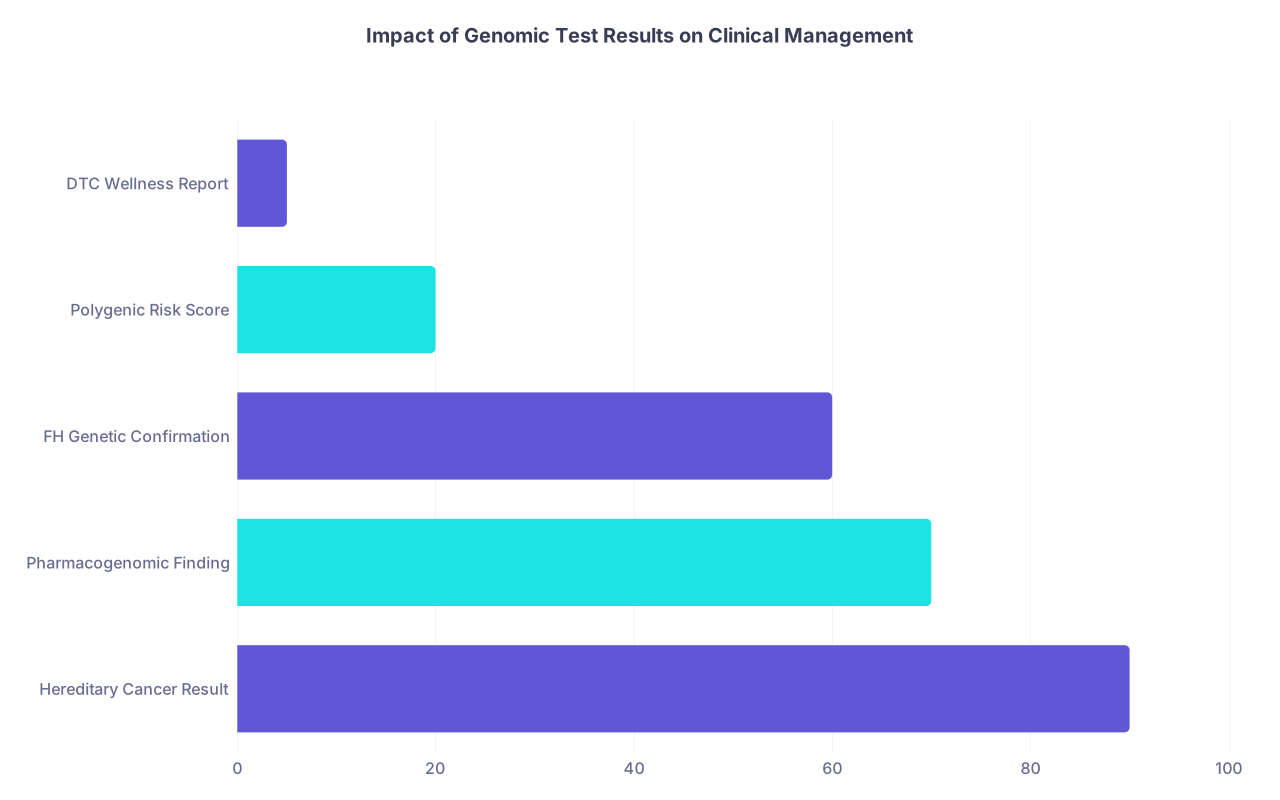
| Category | Value |
|---|---|
| Hereditary Cancer Result | 90 |
| Pharmacogenomic Finding | 70 |
| FH Genetic Confirmation | 60 |
| Polygenic Risk Score | 20 |
| DTC Wellness Report | 5 |
FAQ: Quick Answers to Common Questions
Should I offer genomic testing to all my primary care patients as part of prevention?
No. Focus first on getting standard, evidence‑based prevention right: vaccines, blood pressure, lipids, diabetes screening, cancer screening. Genomic testing should be selective—driven by strong family history, unusual clinical patterns, or specific medication issues, not blanket screening.What do I do if a patient brings in a 23andMe BRCA result?
Treat it seriously but verify. Explain that consumer tests are not the final word. Order confirmatory testing through a clinical lab or refer to genetics. If confirmed pathogenic, then follow hereditary breast/ovarian cancer guidelines. Don’t make big decisions (like prophylactic surgery) off a DTC report alone.Is pharmacogenomic testing worth it for depression and anxiety meds?
Sometimes. It’s most helpful in patients who’ve failed multiple medications or have severe side effects. It’s not magic, and it won’t choose the perfect med for you, but it can narrow the field and help with dosing. I wouldn’t order it automatically for the first SSRI trial in a straightforward case.How do I bill and document genomic testing ethically?
Document three things clearly: why you’re ordering it (clinical indication), what decisions might change based on results, and that you discussed limitations and implications with the patient. Avoid fishing expeditions like “patient interested in seeing their genes” without a specific clinical rationale.Do I have a duty to warn family members if I find a serious hereditary variant?
Your primary duty is to your patient. Encourage them strongly to share results with at‑risk relatives and offer to provide written summaries or referrals. Laws differ by region on direct duty to warn relatives; when in doubt, involve genetics and, if needed, ethics or legal. Don’t start cold‑calling family without guidance.How do I keep up with genomic advances without losing my mind?
Don’t try to track everything. Focus on core areas that affect primary care: hereditary cancer syndromes, FH, basic pharmacogenomics, and how to triage DTC results. Use your system’s genetic counselors as allies. And when something seems new and shiny, ask: “Is there a guideline? Does this change management? Show me the outcome data.”
Key points: In primary care, a small set of genomic tests—hereditary cancer panels, targeted pharmacogenomics, and select monogenic disease tests—are genuinely useful and actionable. Most consumer and “wellness” genomic tests are noise and should not drive medical decisions. Your job isn’t to know every gene; it’s to recognize high‑risk patterns, order or refer selectively, and stay anchored to evidence‑based care and clear, honest communication.


