The loudest person in the room is not automatically the best medical professor. Not even close.
If you’re introverted and secretly wondering, “Am I kidding myself thinking I could ever be a med school professor?”—you’re not being dramatic. You’re asking a very fair question. Because academia in medicine looks like it’s built for extroverts: grand rounds, lecturing to 200 students, being “on” constantly, hallway small talk, committee meetings that never end.
And if you’re like me, you’re thinking about worst‑case scenarios:
- You freeze mid-lecture.
- Your students think you’re boring or “low energy.”
- Your colleagues see you as “not leadership material.”
- Teaching drains you so much you start to resent the job you thought you wanted.
Let me be blunt: introverts absolutely can succeed as medical professors. Many already do. But it’s not magic and it’s not effortless. There are real pros, real cons, and some landmines you need to see before you commit to this path.
Let’s walk through it like anxious people do: honestly, specifically, and with all the “what‑ifs” on the table.
The Hidden Advantages Introverts Have as Medical Professors
No one tells you this in med school, because everyone’s too busy praising “dynamic” speakers and charismatic chairs. But introverts have some unfair advantages in teaching, especially in medicine.
1. You actually listen. Like, really listen.
On rounds, students say things like:
- “Wait, so… why are we doing this test?”
- “I’m confused how this connects to pathophys from yesterday.”
Extroverted, high-speed attendings often bulldoze past that. They’re in “performance” mode.
Introverted professors? They pause. They ask, “Tell me more about what’s confusing.” They let silence hang for a second. That’s where real teaching lives.
Students remember:
- The attending who took their anxiety seriously
- The professor who stayed after lecture to clarify something
- The one who said, “You’re not the only one confused by this”
You can do that almost by default, because one-on-one or small-group conversations are exactly where introverts tend to shine.
2. Depth is your superpower
Medical education is full of shallow, flashy teaching:
- 50-slide “overview” with zero clinical nuance
- Cases that are basically Step question stems read out loud
Introverts are usually better at:
- Building a coherent, deep explanation
- Connecting concepts across disciplines
- Saying, “We’re not moving on until this actually makes sense”
I’ve seen quiet ID attendings who barely raise their voice hold a room of residents just by slowly walking them through a complicated sepsis case, step by step, calmly, no theatrics. Students come out of those sessions saying, “That finally clicked.”
That’s you. That can be you.
3. You don’t need the spotlight to feel fulfilled
This matters more than it seems.
A lot of extroverted professors get energy from:
- Being keynote at a conference
- Running the biggest lecture series
- Chairing every committee
Introverts often get their meaning from:
- Seeing a struggling student finally pass
- Watching a resident grow into an independent clinician
- Quiet moments after a teaching session where one learner says, “That helped a lot”
You’re less likely to burn out chasing external praise, and more likely to be satisfied by actual learning happening. That’s not fluff. That’s staying power.
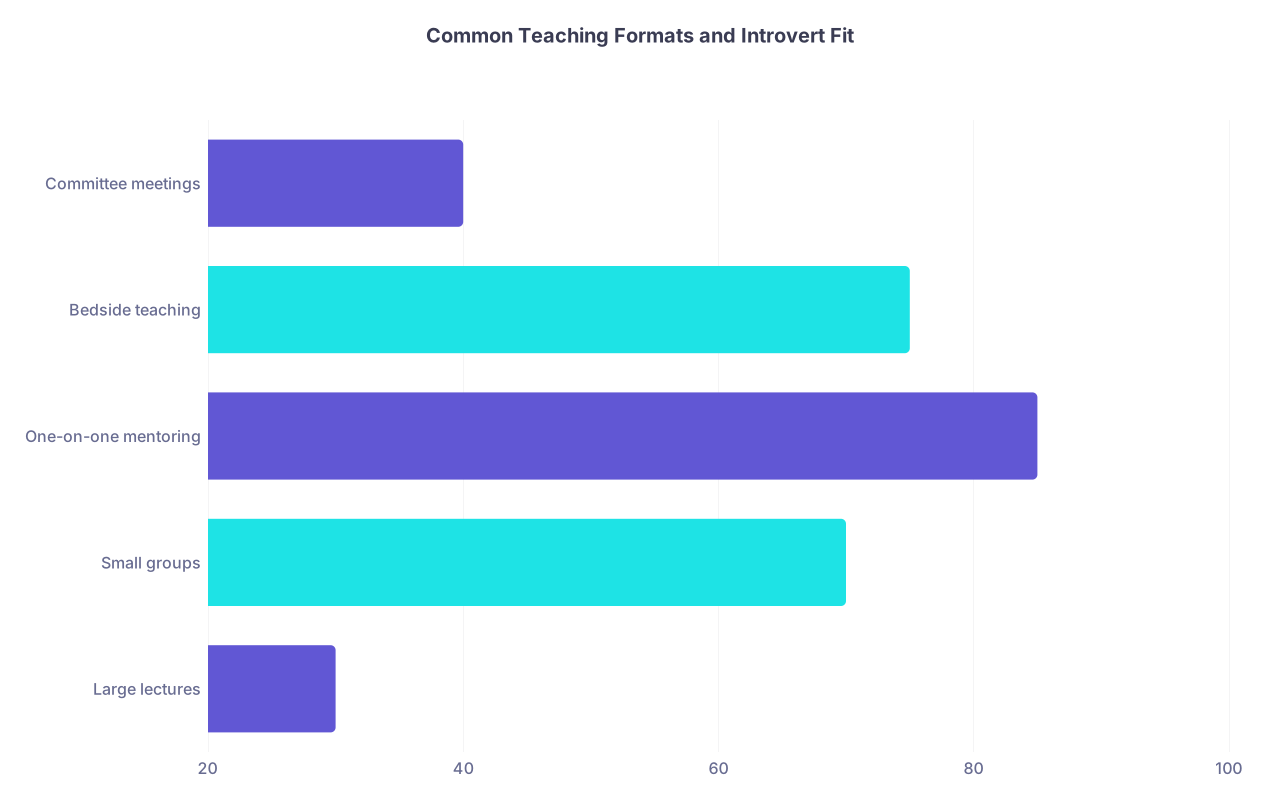
| Category | Value |
|---|---|
| Large lectures | 30 |
| Small groups | 70 |
| One-on-one mentoring | 85 |
| Bedside teaching | 75 |
| Committee meetings | 40 |
The Hard Parts No One Sugarcoats (And That Keep You Up at Night)
Let’s talk about the stuff that actually makes your stomach clench.
1. The performative parts of the job are real
Medical professors are not just quiet scholars in offices. You may have to:
- Give large lectures
- Present at grand rounds
- Defend curriculum decisions in big rooms
- Run workshops with loud, opinionated colleagues
If the thought of holding a mic in a 200-seat auditorium makes your heart race, yeah, that’s not imaginary anxiety. That’s a genuine stressor.
But here’s the nuance:
Being introverted ≠ being incapable of speaking in public.
Introverts often:
- Need more prep time
- Prefer structure (slides, a clear outline)
- Feel drained after, not energized
That’s not failure. That’s just how your energy works. The real danger is pretending you’re not like this and overscheduling yourself.
2. Constant interaction can shred your energy
Real teaching jobs in medicine are messy:
- A “quick” student meeting at 8:00
- Rounds with learners from 9–11
- Call from a resident at noon
- Teaching clinic in the afternoon
- Emails from students at night about evaluations, feedback, etc.
If you’re already imagining crawling under a desk after lunch—same.
This is where introverts crash:
- Saying yes to every teaching opportunity
- No protected recharge time
- No boundaries around office hours or open-door “drop by whenever” culture
The con isn’t that you can’t do it. It’s that if you don’t protect your energy deliberately, you will silently spiral into burnout.
3. The “low energy” stereotype is very real
This one stings.
Students and colleagues sometimes say stuff like:
- “They’re knowledgeable, but kind of flat.”
- “Not very engaging.”
- “Monotone.”
And if you’re sensitive (hi, same), comments like that go straight into the “proof I’m not cut out for this” file in your head.
Here’s what I’ve seen actually happen:
- Introverted professors are told to “be more engaging”
- They interpret that as “be louder, more animated, more extroverted”
- They try to fake it
- They feel inauthentic and exhausted, and their teaching actually gets worse
The fix is not “be louder.” The fix is:
- Tell more clinical stories
- Use questions and cases
- Make your structure super clear
- Be intentionally human and relatable in your own quiet way
Engaging ≠ loud. But academia sometimes forgets that.
How Introverts Can Actually Succeed (Without Becoming Fake Extroverts)
So yes, introverts can succeed as medical professors. But not if they copy extroverts and hope for the best. You need strategy.
1. Choose teaching formats that match how you work
If you picture “medical professor” and only imagine being on a giant stage, you’re missing half the job.
Here are common formats and how they tend to feel for introverts:
| Format | Likely Experience for Introverts |
|---|---|
| Large lectures | Draining, high prep, manageable |
| Small groups | Often comfortable, high impact |
| Bedside teaching | Mixed, but can be very rewarding |
| One-on-one mentoring | Usually easiest and most natural |
| Online teaching | Lower stress, more control |
You can absolutely:
- Build a career more around small groups, workshops, clinical teaching, and mentoring
- Do fewer giant lectures, or at least not make that the only thing you’re known for
Most med schools and teaching hospitals need:
- Course coordinators
- Clerkship directors
- Mentors for residents
- Longitudinal coaches
These roles often reward your strengths: consistency, depth, 1:1 connection.
2. Treat your energy like a finite resource, not a personality flaw
You’re not “weak” because a 3-hour teaching block exhausts you. You’re just an introvert with a human brain.
Practical things that actually help:
- Block “quiet time” on your calendar after heavy teaching sessions and don’t apologize for it.
- Cluster meetings instead of scattering them through the week like landmines.
- Set clear expectations with learners: “I check email once a day; if urgent, message through X channel.”
If you don’t manage this, you will start to hate teaching even if you’re objectively good at it. And then you’ll use that as evidence you “weren’t cut out” for this, when actually you were just under-resourced.
3. Build a teaching style that fits introversion
You don’t need to transform into a TED Talk speaker. You need to double down on what introverts tend to do well.
For example:
- Use more cases and questions instead of nonstop lecturing. This shares the “speaking load.”
- Give students pre-reading or pre-questions so in-class time is more targeted and interactive.
- Use structured frameworks: “3 reasons this matters,” “4 steps to interpret this ECG,” etc. Clarity feels safe—for you and them.
Honestly, half of teaching is simply: “Here’s what we’re doing, here’s why, here’s where we’re going.” Introverts are very capable of that kind of calm, organized explanation.

| Step | Description |
|---|---|
| Step 1 | Morning Teaching Block |
| Step 2 | Short Solo Decompress |
| Step 3 | Student Meetings Grouped Together |
| Step 4 | Quiet Documentation Time |
| Step 5 | Small Group Session |
| Step 6 | End of Day Recharge |
Career Reality Check: Can You Progress, Get Promoted, and Be Respected?
Let’s address the career anxiety directly:
“Will being introverted hold me back from being promoted or taken seriously as faculty?”
Sometimes? Yes. Harsh but true.
Academic medicine still often equates:
- Charisma with leadership
- Visibility with value
- Volume with authority
But it’s not a simple “introverts are doomed” story.
Where introverts do very well
- Course/clerkship directors who quietly keep everything running
- Residency program faculty who are known as “the person to go to for real feedback”
- Faculty who build expertise in a niche and become the go-to consultant/teacher for that area
You can progress on:
- Teaching portfolios
- Strong evaluations
- Mentoring records
- Curriculum development projects
I’ve seen soft-spoken associate professors who never give the flashiest talks but are absolutely indispensable, widely respected, and deeply trusted.
Where it might be harder (but not impossible)
- Becoming department chair if the culture worships extroversion
- Taking on roles that require heavy politics, networking, constant public presence
- Competing for “Most Inspiring Lecturer” style internal awards that are basically charisma contests
This doesn’t mean you can’t do those things. It means you’ll need:
- Intentional mentorship
- A clear narrative about the kind of leader/teacher you are
- To stop expecting your work to “speak for itself” (because it won’t; you’ll have to advocate for yourself, even if that feels uncomfortable)
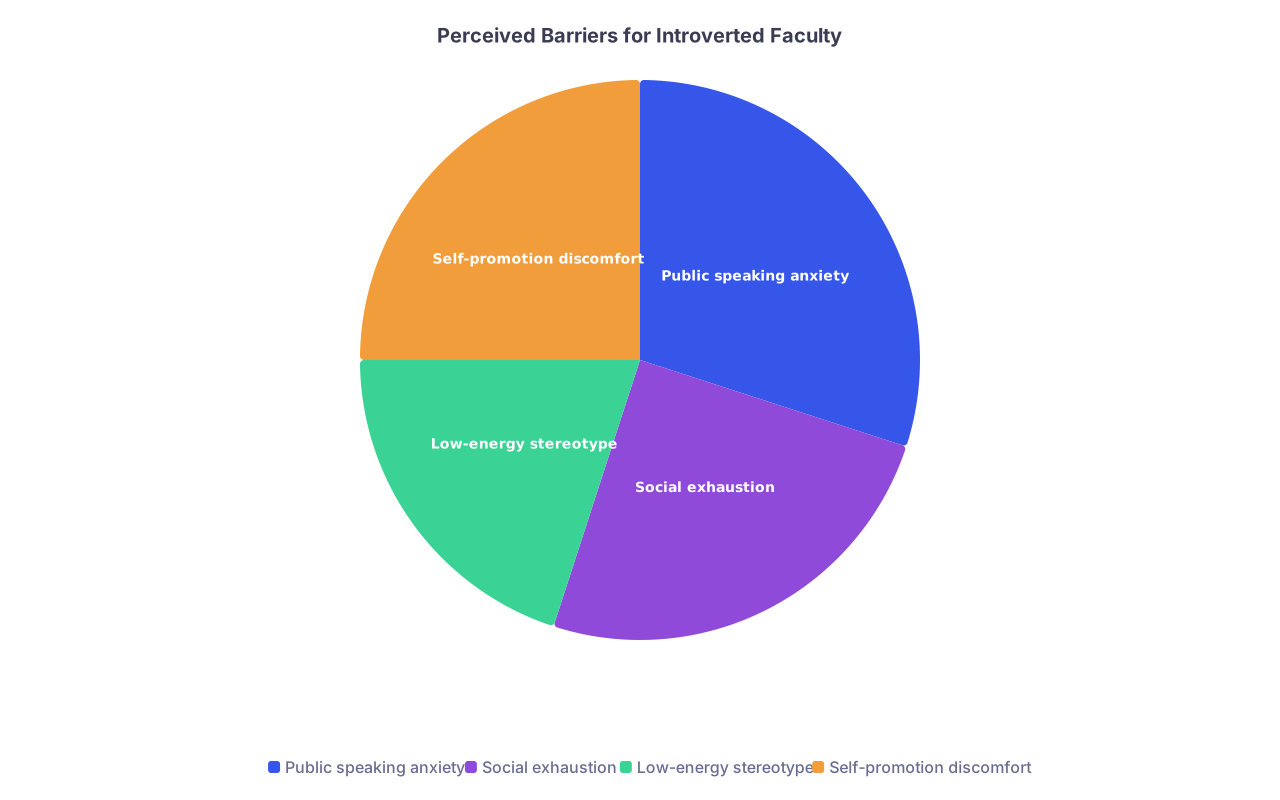
| Category | Value |
|---|---|
| Public speaking anxiety | 30 |
| Social exhaustion | 25 |
| Low-energy stereotype | 20 |
| Self-promotion discomfort | 25 |
How to Test This Path Before You Commit Your Whole Life to It
If you’re still early in training and spiraling over, “Can I actually do this long term?”—good. Use that anxiety productively.
As a medical student
Try:
- Being a TA for anatomy, physiology, or clinical skills
- Leading a small review session before an exam
- Tutoring one or two classmates or juniors
Pay attention to:
- Do you feel drained or satisfied afterward? Both can happen, but which dominates?
- Do you dread it all week, or just feel nervous and then mostly okay?
- Do people say things like “You explain this really clearly” even if you’re not the loudest?
As a resident
Look for:
- Resident-as-teacher workshops
- Opportunities to give short, 10–15 minute chalk talks on rounds
- Supervising students and interns intentionally, not just functionally
This is your low-risk lab. You’re figuring out not just “Am I good at this?” but “Can I build a version of this that doesn’t destroy me?”

What If the Worst-Case Fears Come True?
Let’s drag your nightmares into daylight.
“What if students think I’m boring?”
Some will. They think lots of people are boring. That’s not about your worth.
What matters is:
- Are they learning?
- Are your evaluations improving with feedback?
- Can you adjust your methods (more stories, clearer structure) without changing your personality?
You don’t need to be everyone’s favorite. You need to be effective and fair.
“What if I freeze in front of a big group?”
This happens. To introverts and extroverts.
If it does:
- Pause. Breathe. Look at your slide or written outline.
- Say calmly, “Give me a second to collect the next point.”
- Then move on.
Students don’t remember your 4-second pause. You will. But they won’t. You’re allowed to be human.
“What if I burn out and regret everything?”
This is possible. You can burn out as a purely clinical doc too. Or as a researcher. Or in private practice. Medicine is not short on burnout paths.
The best protection is:
- Self-awareness (you already have that, or you wouldn’t be reading this)
- Boundaries around energy
- A career that uses, not fights, your temperament
Introverts who build their careers intentionally around their strengths don’t burn out because of introversion. They burn out from systems overload. Different problem.

FAQs: Introverts as Medical Professors
1. Do I have to become “more extroverted” to survive as faculty?
No. You might have to become more skilled at visible things (public speaking, advocating for yourself), but that’s different from changing who you are. You can learn to give a solid lecture without enjoying parties. You can speak up in a meeting without suddenly loving networking. The goal is competence, not personality replacement.
2. Will my introversion make students think I don’t care?
Only if you disappear. If you’re quiet but:
- You respond consistently
- You remember their names
- You give thoughtful feedback
- You make time for them in structured ways
They interpret that as: “This person is calm and cares.” You don’t need to be bubbly. You need to be present and reliable.
3. Is it realistic to avoid large lectures altogether?
Probably not, at least not forever. Most teaching-heavy roles involve some big-group work. But you can absolutely:
- Keep that as a small part of your portfolio
- Share responsibilities with colleagues
- Design your job so your main value is in small groups, mentoring, clinical teaching, or curriculum work
The key is to know your limits and communicate them early rather than silently suffering.
4. What should I focus on now if I’m introverted and thinking about academic medicine?
Start small and concrete:
- Practice explaining concepts clearly to peers or juniors
- Try at least one structured teaching role (TA, tutor, small group leader)
- Pay close attention to how your energy recovers and what kinds of teaching feel most natural
- Get at least one mentor who knows you’re introverted and can help you design a realistic career path
Key points to keep in your head when the anxiety spirals:
- Introverts absolutely can succeed as medical professors—many already do—by leaning into depth, listening, and 1:1 connection.
- You’ll need to manage your energy and deliberately shape your role toward formats that fit you, instead of copying the loudest person in the department.
- You don’t have to become someone else; you just have to become a skilled, authentic version of you who teaches in a way that works—for your students and for your nervous system.