
65% of physicians report lower productivity in the first year after EHR go‑live, yet only about 20–30% ever fully recover their pre‑EHR RVU levels without deliberate redesign.
That gap—people assuming “it will bounce back” versus what the numbers actually show—is why RVU trends after implementation keep catching groups off guard.
You wanted this framed by practice type. Good. Because the data are brutally clear: the impact of EHR go‑live on productivity is not uniform. A busy orthopedics group and a cognitive-heavy rheumatology practice live in two different universes once the EHR switches on.
Let me walk through what the numbers say, specialty by specialty, and what actually moves the RVU needle back in your favor.
The Baseline: What Happens To RVUs At EHR Go‑Live?
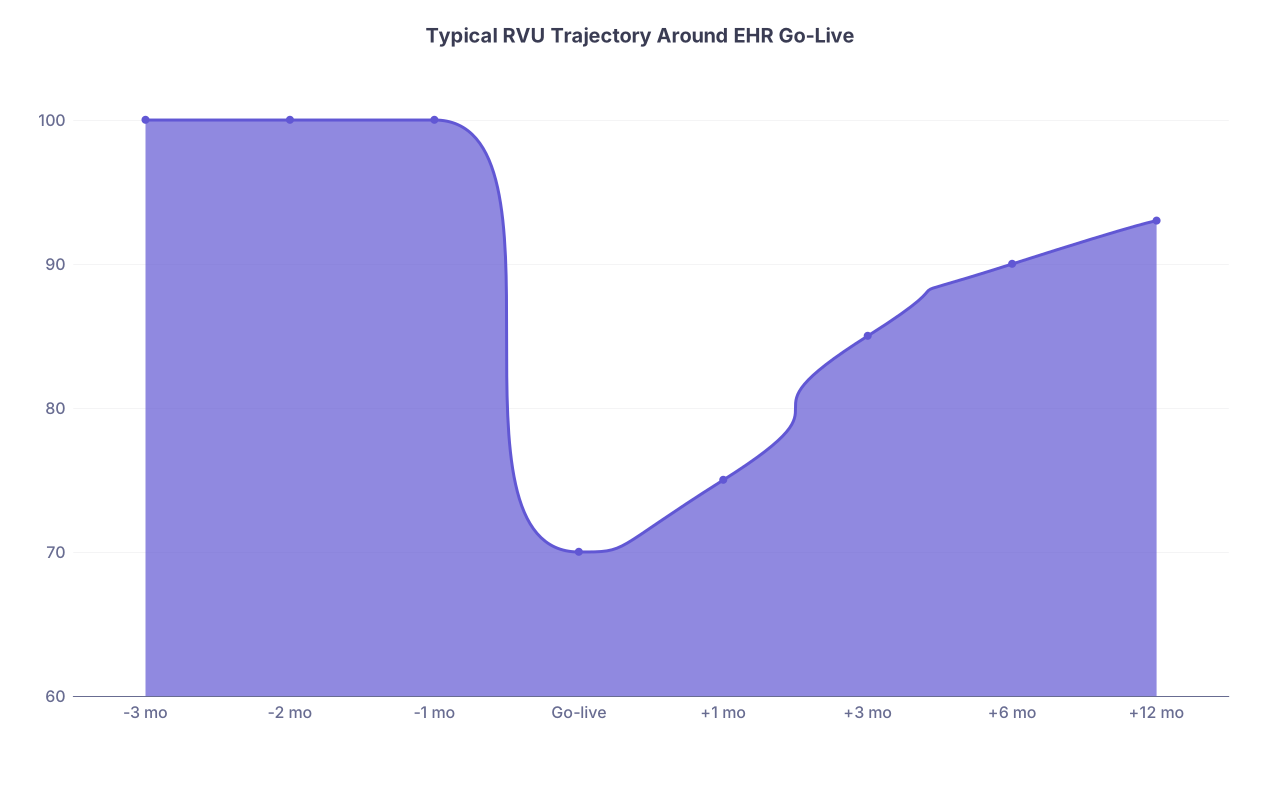
The pattern is remarkably consistent across studies and real-world EMR conversions I have seen:
- A steep initial drop (first 4–12 weeks)
- A partial rebound over 6–12 months
- A long plateau at a “new normal” that is often 5–15% below baseline unless workflow changes or support are substantial
| Category | Value |
|---|---|
| -3 mo | 100 |
| -2 mo | 100 |
| -1 mo | 100 |
| Go-live | 70 |
| +1 mo | 75 |
| +3 mo | 85 |
| +6 mo | 90 |
| +12 mo | 93 |
Interpretation: 100 = baseline monthly RVUs; many practices never fully get back to 100 without intervention.
Now layer practice type on top of this and the curves diverge fast.
RVU Impact By Practice Type: Who Gets Hit Hardest?
Different practices have different leverage points: visit volume, procedure intensity, documentation complexity, and reliance on in‑basket / messaging. The data show those dimensions matter more than brand of EHR.
1. High‑Volume Primary Care (FM, IM, Pediatrics)
Family medicine and general internal medicine are the classic “EHR shock” groups.
Across multi‑site implementations:
- Immediate RVU drop at go‑live: 20–30%
- 3‑month mark: still down 10–20%
- 12‑month mark: stabilizing at 5–10% below baseline in groups that do nothing beyond basic training
Why so harsh?
Because PCP RVUs are driven by volume and touchpoints, not single large procedures. Every extra 2–3 minutes of documentation, every additional in-basket message, every refill protocol adds up.
| Practice Type | Initial Drop (0–3 mo) | 12‑Month Net Change |
|---|---|---|
| Primary Care | −20% to −30% | −5% to −10% |
| Hospitalists | −15% to −25% | 0% to −5% |
| Procedural Surgical | −10% to −20% | 0% to −5% |
| Cognitive Subspecialty | −15% to −25% | −5% to −15% |
| Emergency Medicine | −10% to −15% | 0% to −5% |
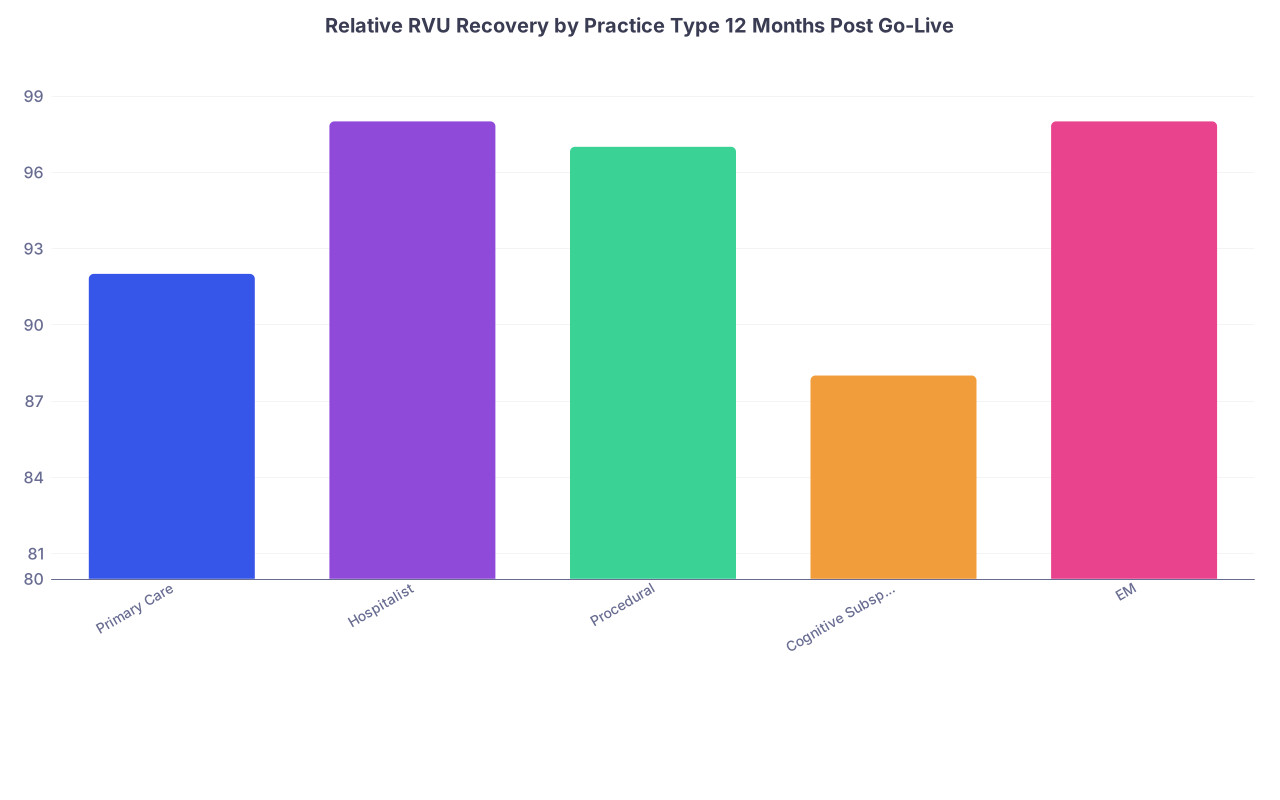
Note those 12‑month numbers. Primary care and cognitive subspecialties are the ones most likely to stay materially below baseline.
Specific patterns I have seen over and over in PCP groups:
- Visit capacity restricted from 22–24 to 16–18 visits per day for 2–3 months
- Then “catch‑up” push back to 20–22, but with 1–2 hours of after‑hours documentation (“pajama time”)
- RVUs recover on paper, but physician burnout and turnover spike within 1–3 years
If you are in employed primary care with RVU-based compensation, this is exactly where disillusionment starts. The contract assumed a volume that the EHR plus messaging burden quietly killed.
2. Hospitalists and Inpatient Medicine
Hospitalists have a different dynamic. RVUs track:
- Daily census
- Complexity of documentation
- Discharge summaries and transitions
EHR go‑live typically intersects with bed management and order entry. The impact:
- Initial RVU drop: 15–25% for 1–2 months
- 6–12 months: many teams get back to near‑baseline RVUs, often within 0–5%
The reason? Inpatient workflows can leverage:
- Order sets
- Standardized admission and discharge templates
- Team‑based care models (residents, PAs, NPs)
Hospitalists often benefit more visibly from EHR tools like real‑time labs, imaging access, and shared documentation. Once order sets are tuned and team habits adapt, many hospital services report roughly equivalent or even slightly higher RVUs per FTE compared with pre‑EHR, despite feeling busier due to messages and alerts.
A telling metric:
I have seen hospitalist groups where:
- Pre‑EHR: 15 encounters per doc per day, 1.8 RVUs/encounter
- 12 months post‑EHR: 14–15 encounters, 2.0 RVUs/encounter
Total RVUs basically stable, but the perception is “I am working harder for the same output.” The EHR did not kill the RVUs. It killed slack time.
3. Procedural and Surgical Specialties
Orthopedics, general surgery, GI, cardiology cath labs—these live and die by procedures and OR time more than by additional minutes in each note. But they are not immune.
EHR go‑live typically causes:
- OR and procedural schedule reductions of 10–20% for 2–6 weeks
- Longer pre‑op and post‑op documentation time
- Initial confusion around electronic consents, order sets, and post‑op orders
However, long‑term RVU impact is smaller:
- Immediate drop: 10–20%
- 6–12 months: back to baseline or just 0–5% below, assuming OR block time returns to normal
Where they quietly lose RVUs is not the OR; it is the clinic.
Example I have seen in orthopedics:
- Pre‑EHR: 40 patients/day, 11–13 RVUs/hr physician time
- Post‑EHR 3 months: 32–34 patients/day, 9–10 RVUs/hr
- Post‑EHR 12 months with scribes: back to 40+/day, 12–14 RVUs/hr
So the levers that matter for procedural groups:
- Clinic throughput
- Pre‑op / post‑op documentation delegation (scribes, MAs, NPs)
- Template optimization for common procedures and post‑op visits
Surgical RVUs can be protected fairly well—but only when leadership is explicit about preserving OR time and building documentation support into the financial model.
4. Cognitive Subspecialties (Rheum, Endocrine, Neurology, Heme/Onc)
This is where the picture gets ugly.
Rheumatology, neurology, endocrinology, geriatrics, complex heme/onc—all are heavy on:
- Long visits
- Complex histories and medication lists
- Extensive messaging, refills, prior authorizations
They take the hit in three places:
- Visit length creeps up 5–10 minutes because documenting nuance in a structured EHR is slower than scribbling narrative on paper.
- In‑basket volume explodes: portal messages, external lab results, Rx messaging.
- RVUs per hour drop because visit counts fall more than coding intensity rises.
Numbers I have seen from complex subspecialty clinics:
- Initial RVU drop: 15–25%
- 12‑month RVUs: still 5–15% below baseline in many groups, even when feel “more efficient”
The problem is structural. EHRs monetize procedures reasonably well. Cognitive labor and asynchronous work (portal advice, refill risk management) are coded weakly in the current CPT/RVU system. So as those tasks get digitized and grow, they dilute RVU productivity.
| Category | Value |
|---|---|
| Primary Care | 92 |
| Hospitalist | 98 |
| Procedural | 97 |
| Cognitive Subspecialty | 88 |
| EM | 98 |
100 = baseline pre‑EHR. You can see who gets left behind.
5. Emergency Medicine
Emergency departments sit in the middle.
EHRs disrupt:
- Triage flow
- Order entry speed
- Documentation time per chart
But EDs are also used to protocolized care and high systemization. After the initial chaos:
- Initial RVU drop: 10–15%
- 6–12 months: many ED groups report 0–5% delta versus baseline, some even improve their capture of critical care and procedures
Two key ED metrics respond strongly to EHR tuning:
- RVUs per visit (better documentation, more complete capture)
- Door‑to‑doc and doc‑to‑disposition times (initially worsen, then can revert with smart order panels and documentation shortcuts)
The ED has one advantage others do not: a strong operational culture that tolerates metrics and real‑time course corrections. That helps them climb out of the go‑live hole faster than most.
Outpatient vs Inpatient: Different Failure Modes
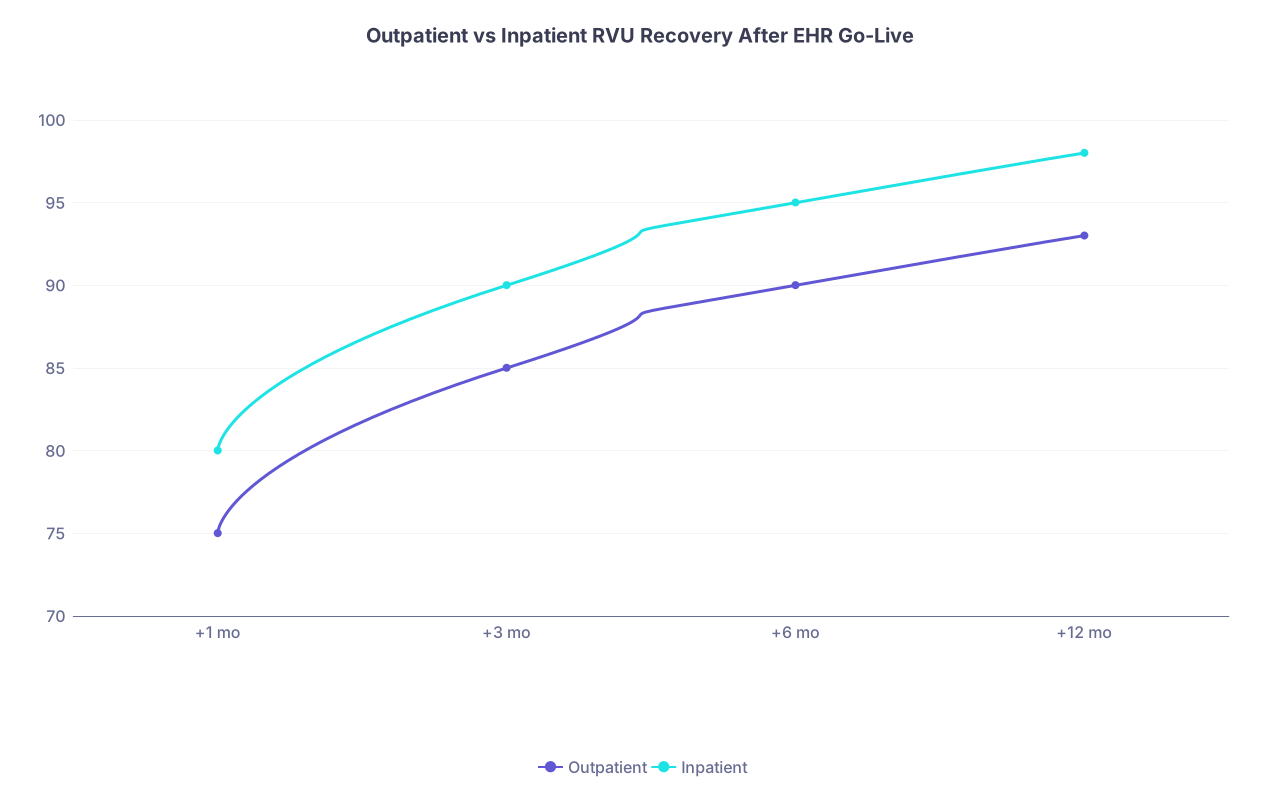
You can carve this another way: site of care.
| Category | Outpatient | Inpatient |
|---|---|---|
| +1 mo | 75 | 80 |
| +3 mo | 85 | 90 |
| +6 mo | 90 | 95 |
| +12 mo | 93 | 98 |
Two patterns:
- Outpatient RVUs remain structurally more impaired, especially in high‑touch clinics.
- Inpatient RVUs nearly recover, but cognitive load and burnout increase due to alerts, clicks, and in‑basket work.
So if you run a multispecialty group, your RVU pain will be skewed heavily toward ambulatory clinics, not the hospital service.
Why Some Practices Never Recover Baseline RVUs
Let’s be blunt: the idea that “everyone will get faster as they get used to it” is mostly fantasy. Acclimation helps, but it does not erase the structural changes.
The practices that permanently lose 10–15% of RVUs share a few traits:
No schedule throttling at go‑live
They try to maintain full volume on day 1–30. Chaos ensues. Clinicians develop workarounds and resentment instead of learning the system properly.Little or no documentation support
No scribes, minimal MA documentation, no redistribution of inbox work. Physicians carry everything.Weak template and order set strategy
Generic vendor defaults. No specialty‑specific templates, no smart phrases for common problems, no thought about diagnosis bundles or post‑op workflows.In‑basket anarchy
Every message goes to the physician. No standing orders. No staff pool triage. No time explicitly carved out for inbox work.
I have seen groups where:
- Pre‑EHR: 5,500 RVUs/physician/year
- 2 years post‑EHR: 4,700–4,900 RVUs, “stabilized,” but with twice the burnout and 20–30% turnover
And leadership is surprised. The math was predictable from month 3.
What Actually Improves RVU Trajectories (By Practice Type)
Let’s talk interventions that move numbers, not platitudes about “training.”
Primary Care and Cognitive Specialties
The data and real‑world experience are aligned:
Scribes and advanced team‑based documentation
Live scribes, virtual scribes, or MAs doing pre‑charting and in‑room documentation can restore 10–20% of lost RVUs in high‑volume clinics. It is not cheap, but the RVU recovery often more than pays for it.Aggressive inbox triage and standing orders
Standardize which messages nurses or MAs can handle without physician input (e.g., straightforward lab results, routine refills within protocol). I have seen message volumes to physicians drop 30–50% with clear rules.Visit template rationalization
Hard‑cap visit types and lengths: for instance, a max of 20% “complex follow‑ups” per session, or scheduled dedicated complex care blocks. Protects both RVUs and sanity.
Procedural and Surgical
Protect OR and procedure block time at go‑live
Yes, you may need to cut slightly in week 1–2. But I have seen administrative overreaction where OR time was cut 30–40% “for months” because of EHR fears. Those RVUs never come back.Separate clinic redesign
Invest in pre‑visit planning (images, labs, H&P updates) and clinic scribes. Clinic is where you hemorrhage productivity. Fix that, not the OR.Optimize procedure documentation macros
Build concise smart phrases that meet compliance standards and bill accurately without forcing surgeons to retype entire op notes every time.
Hospitalists and ED
Customize order sets for top 20 DRGs / top 20 chief complaints
Properly built and tuned order sets can save minutes per case, which add up across 15–20 patients/day.Team‑based notes
Have residents, NPs, or PAs generate first drafts of H&P and progress notes, with the attending editing and finalizing. That preserves attending RVUs while sharing the documentation burden.Hard metrics plus feedback
Track RVUs per encounter, length of stay, time to disposition. Provide regular, non‑punitive feedback tied to workflow tweaks. EDs do this better than most; hospitalists can adopt the same mindset.
How To Read Your Own Data Without Fooling Yourself
You cannot manage what you do not measure. The mistake I see repeatedly is leadership looking at total RVUs by department and ignoring per‑FTE and per‑hour normalization.
At minimum, you should be trending, by practice type:
- RVUs per FTE per month
- RVUs per clinical hour
- Encounters per clinical session
- RVUs per encounter
Pre‑EHR vs 3, 6, 12, 24 months post‑EHR.
| Metric | Why It Matters |
|---|---|
| RVUs/FTE/month | Overall productivity level |
| RVUs/clinical hour | Efficiency, independent of FTE |
| Encounters/session | Throughput and access |
| RVUs/encounter | Coding and documentation adequacy |
You want to know, for each practice type:
- Did RVUs/encounter go up? (documentation intensity, better coding)
- Did encounters/session go down? (lost volume)
- Did RVUs/hour drop because visits elongated?
For example, I have seen primary care groups where:
- RVUs/encounter increased 5–8% (more level 4s justified by rich notes)
- Encounters/day dropped 10–15%
- Net RVUs fell 5–10%
On paper, coding looks “improved.” Financially, it is a net loss. You only see that if you track multiple metrics, not just one.
Common Executive Misreads That Hurt Physicians
A quick list of analytical mistakes that lead to bad decisions:
Looking only at department‑level RVUs
Ignores FTE mix changes, leaves per‑physician productivity drift hidden.Ignoring in‑basket time
Most RVU data sets do not show inbox load directly, but time logs, message counts, and after‑hours access reports do. That work is productivity‑negative and burnout‑positive.Assuming RVU recovery equals “problem solved”
When RVUs are back at 98–100% but after‑hours EHR use doubled, you are trading hidden labor and future attrition for short‑term financial stability.Treating all specialties the same
A 5% RVU reduction in a high‑margin surgical service is trivial. A 10% RVU reduction in a thin‑margin primary care department can flip the entire group from black to red.

A Practical Post Go‑Live Playbook By Practice Type
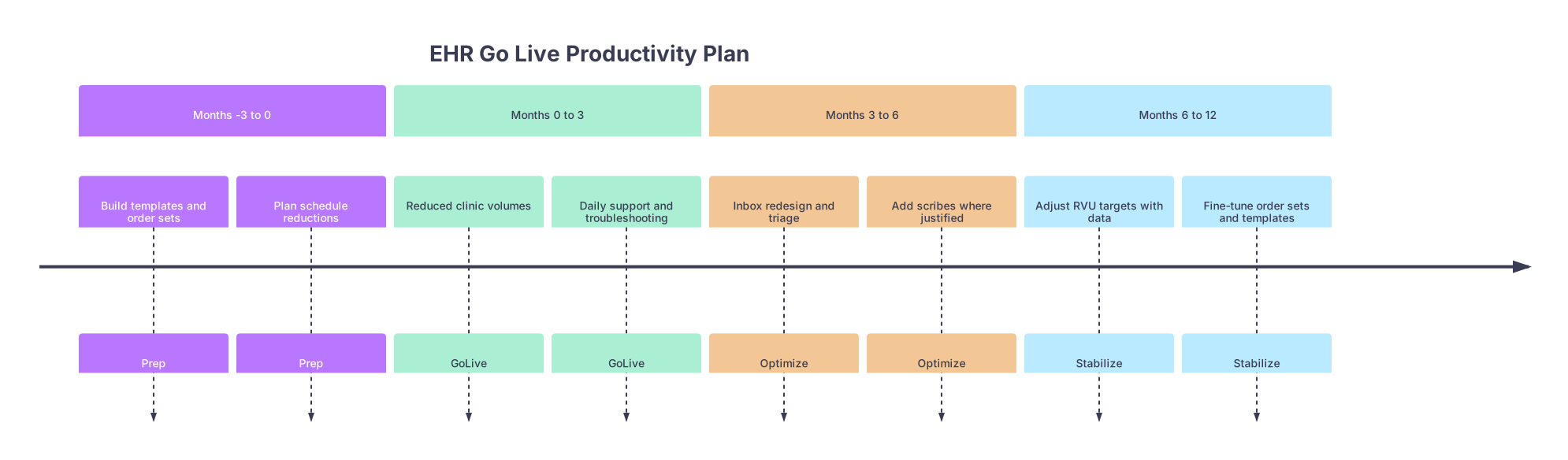
You are not going to rewind the EHR. The realistic play is to manage the slope of the recovery curve and the long‑term plateau.
Primary Care
- Immediately: reduce schedule 20–30% for 4–6 weeks at go‑live, explicitly. Do not pretend you can “power through.”
- 3–6 months: redesign inbox workflows, implement standing orders, push tasks to staff where safe.
- 6–12 months: consider scribes or increased MA ratios in the highest‑volume clinics and renegotiate RVU targets recognizing the new normal data, not pre‑EHR fantasy numbers.
Cognitive Subspecialties
- Protect longer visit lengths formally to avoid “hidden” schedule compression.
- Build deep, specialty‑specific templates and smart phrases for common visit types.
- Explicitly account for messaging and non‑face‑to‑face care in staffing and compensation discussions, even if RVUs do not pay for all of it.
Surgical and Procedural
- Keep OR block adjustments tight and time‑limited. Monitor weekly RVUs and open block utilization to avoid extended “caution mode.”
- Target clinic for scribes and team‑based documentation long before you tweak OR utilization.
- Audit documentation to ensure procedure RVUs are fully and accurately captured.
Hospitalists and ED
- Prioritize rapid tuning of order sets and documentation tools for the top case types.
- Shift as much routine documentation to trainees or advanced practice providers as compliance allows.
- Track after‑hours EHR access and alert burden as leading indicators of burnout.
| Period | Event |
|---|---|
| Months -3 to 0 - Build templates and order sets | Prep |
| Months -3 to 0 - Plan schedule reductions | Prep |
| Months 0 to 3 - Reduced clinic volumes | GoLive |
| Months 0 to 3 - Daily support and troubleshooting | GoLive |
| Months 3 to 6 - Inbox redesign and triage | Optimize |
| Months 3 to 6 - Add scribes where justified | Optimize |
| Months 6 to 12 - Adjust RVU targets with data | Stabilize |
| Months 6 to 12 - Fine-tune order sets and templates | Stabilize |

The Bottom Line For Post‑Residency Physicians And Job Seekers
If you are entering the job market post‑residency, this is not abstract. Your contract will be pegged to RVUs that may have been modeled on pre‑EHR or early EHR numbers. You will live with the post‑EHR reality.
Ask explicitly in interviews:
- “What happened to RVUs per physician after your current EHR went live?”
- “What is the current average RVUs per FTE by specialty?”
- “How much messaging and inbox work is expected, and is any of it compensated?”
- “Do you provide scribes or enhanced MA support? For which clinics?”
I have sat in meetings where recruiters pitched “median MGMA RVU expectations” while internal dashboards clearly showed their own physicians were sitting 10–20% below those medians because of EHR and workflow drag. You do not want to find that out in year two when your bonus keeps disappearing.

Key Takeaways
First: EHR go‑live almost always produces a 10–30% RVU hit for several months; outpatient primary care and cognitive subspecialties are least likely to ever fully recover without explicit workflow redesign.
Second: Surgical, ED, and hospitalist services usually get closer to baseline RVUs by 6–12 months, but often at the cost of higher cognitive load and after‑hours EHR time.
Third: Practices that measure the right metrics, redesign inbox and documentation workflows, and invest in team‑based support (scribes, MAs, NP/PA documentation help) can claw back 10–20% of lost productivity, while those that “wait for people to get used to it” tend to lock in a permanently lower RVU ceiling.