The fear that you’re “bad with technology” is way more psychological than practical.
Let me say that louder: what’s killing you isn’t your actual tech skill level. It’s your anxiety about it. Especially post-residency, when everyone suddenly expects you to be this efficient, EMR‑savvy, device‑configuring, telehealth‑ready machine.
You’re probably imagining the worst:
- You’ll start attending life and nurses will see you hunting and pecking through the EMR and instantly lose respect.
- A patient will ask for their portal link or a telehealth visit and you’ll freeze.
- You’ll be the slowest note writer on your team and end up staying two hours late every night.
- You’ll tank job interviews because you can’t list five different platforms you “proficiently” use.
Let’s walk through how much any of that actually matters, what’s real versus brain-gremlin fiction, and what you actually need to be able to do to function—and not be the physician everyone dreads working with.
How Much Being “Bad with Technology” Really Matters (and Where It Doesn’t)
Here’s the uncomfortable truth: being catastrophically bad with technology can hurt you. But the bar for “catastrophically bad” is way, way lower than what your brain is telling you.
Employers worry about three things with tech and new attendings:
- Can you use the EMR safely and not screw up orders?
- Are you so slow that you cost them money and create bottlenecks?
- Are you at least trainable on new tools and not combative about it?
Notice what’s missing: nobody actually cares if you’re “naturally good with tech.” They care that you’re not unsafe, impossible to train, or so slow you derail the day.
Most of the people I’ve seen truly struggle post-residency weren’t “bad with computers” in some deep, technical way. They were:
- Scared to click anything that might break something
- Embarrassed to ask questions, so they just… floundered alone
- Refusing to use shortcuts, templates, or tools because “I’m just not a tech person”
- Clinging to old habits that don’t fit the current system
That’s fixable. All of it.
You don’t need to code. You don’t need to be a “superuser.” You don’t need to enjoy technology. You just need to become functionally competent at a few predictable things.
The Real Tech Skills You Actually Need as a New Attending
Let’s strip away the fuzzy anxiety and get concrete. These are the things that actually matter on the job market and in early attending life.
| Area | Minimum You Actually Need |
|---|---|
| EMR/Charting | Enter orders, write notes with templates/smartphrases, reconcile meds |
| Communication | Use secure messaging, email, and basic telehealth platform |
| Workflow Tools | Manage schedule, task lists, sign documents electronically |
| Data & Safety | Review labs/imaging, use decision support alerts correctly |
| Devices | Comfort with basic computer use, logging in, password resets |
If you can do these—maybe clumsily at first, but reliably—you are not “bad with technology” in any way that matters.
1. EMR Competence (This Is the Big One)
Every job interviewer is silently thinking: “Will this person be safe and reasonably efficient in our EMR?”
They are not expecting you to be an informatics wizard. They’re expecting:
- You can place correct orders without constant supervision
- You know how to write and sign notes
- You can find key info: labs, imaging, prior notes, consults
- You actually look at decision support alerts instead of blindly clicking through
If you finished residency in the last decade, you already have a baseline. You might feel slow. You might depend on a few go‑to smartphrases. You might dread discharge summaries.
That’s normal.
What employers hate is the person who refuses to learn their system, complains constantly, and blames “I’m not good with technology” for everything. That’s not a tech problem. That’s an attitude problem dressed up as a tech problem.
The Dark Spiral: Worst-Case Tech Fears (And How Real They Are)
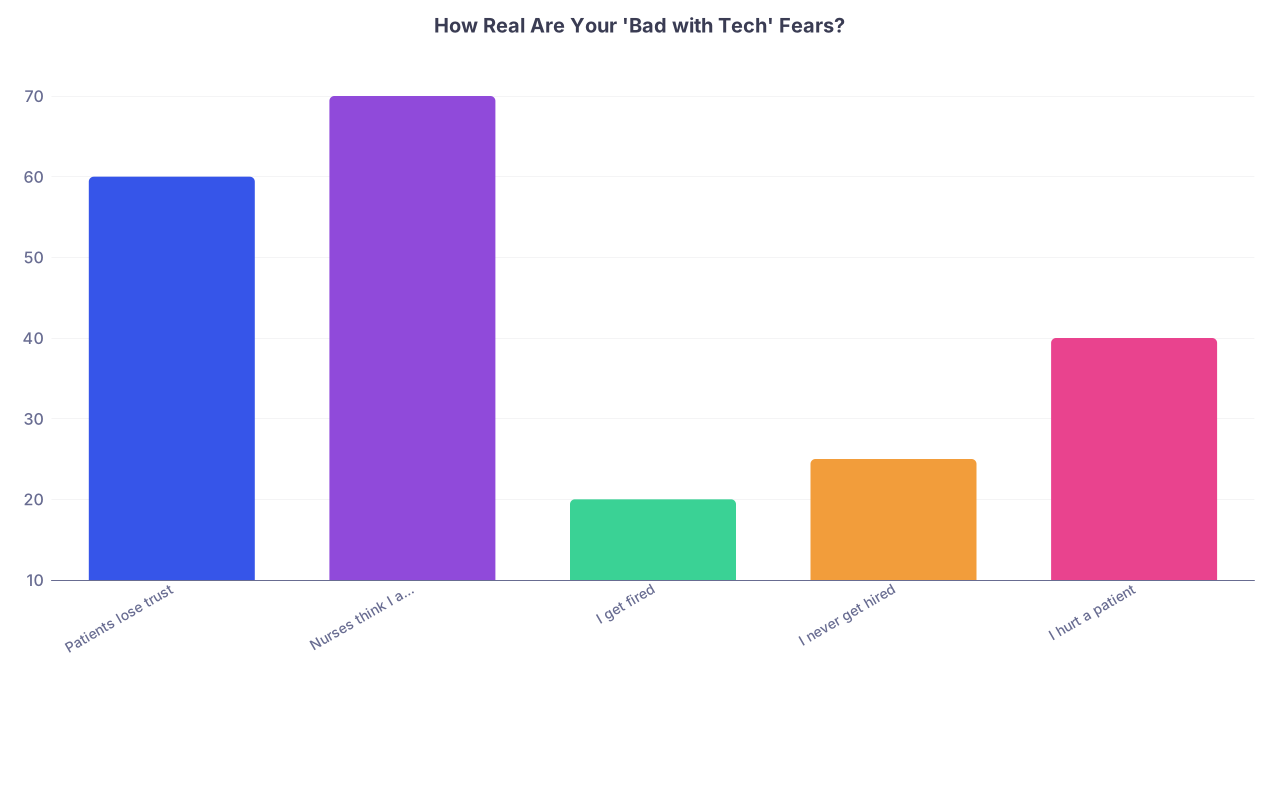
Let’s just name the worst-case scenarios your brain is whispering and rate them honestly.
| Category | Value |
|---|---|
| Patients lose trust | 60 |
| Nurses think I am incompetent | 70 |
| I get fired | 20 |
| I never get hired | 25 |
| I hurt a patient | 40 |
Those percentages are my rough “how often I actually see this happen because of tech” judgment, not formal data. But you get my point: not everything your brain is screaming about deserves equal weight.
“Patients will think I’m incompetent”
Patients care about three things more than anything:
- You listen
- You explain things clearly
- You seem to know what you’re doing medically
If you occasionally fumble finding a lab result but then give a thoughtful plan and explain it in plain language, most patients don’t care. They’ve fought with their own patient portals; they know systems are clunky. What worries them is when a doctor is clearly lost and dismissive.
If you say: “The system changed recently and it’s a bit clunky—give me one second to pull that up so I don’t miss anything,” you look thorough, not incompetent.
“Nurses and staff will hate me”
Here’s where tech anxiety becomes a self‑fulfilling prophecy. If you’re frozen and ashamed and never ask for help, yes—staff will get frustrated. Because they’re trying to move a unit full of sick people and you’re silently drowning in the order entry screen.
But the nurses I’ve worked with have way more patience for: “Hey, I’m still getting comfortable with this system—can you show me the fastest way you like us to enter XYZ?” than for the doctor who pretends to know, enters everything wrong, and then disappears.
The people who tank their reputation early are usually:
- Chronically late with orders because they’re too proud or scared to ask
- Blaming the system loudly and constantly, instead of learning shortcuts
- Making dangerous mistakes and shrugging it off
So yes, if your tech issues are causing errors and chaos daily, that matters. But the fix is learning and humility, not magically becoming “good with technology.”
“I’ll get fired or never hired”
Honestly? Strictly because of “bad with tech”? Very rare.
You might lose opportunities in heavily tech-heavy roles—like some informatics leadership spot—if you genuinely hate all technology. But a standard attending job? Most hiring committees care far more about:
- Your training, reputation, and references
- Your ability to work with a team
- Your clinical judgment and reliability
Can tech slowness hurt you indirectly? Yes. If you’re constantly behind on notes. If you refuse new systems. If you create billing/revenue problems because you never finish charts. But again, this is about willingness to improve, not perfection.
The Stuff That’s Overrated (And You Can Stop Stressing About)
Let’s cut a few anxieties off at the knees.
You do not need to:
- Know every EMR brand. They’ll train you. You can say “I have experience with Epic/Cerner/Meditech and I’m comfortable learning new systems.”
- Be a telehealth evangelist. Knowing how to log in, connect, troubleshoot audio/video, and document the visit is enough.
- Have perfect typing speed. Could it help? Sure. Is it mandatory? No. People use templates, voice dictation, scribes, all kinds of workarounds.
- Use every new “productivity app” people rave about on Med Twitter. Most attendings barely use half the features their EMR has.
The job market isn’t looking for futurist cyborg physicians. It’s looking for doctors who will not melt down every time IT sends an email about a system update.
How To Get From “Terrified” to “Functional” Without Becoming a Tech Person
You don’t have to become someone who loves tech. You do have to become someone who can live with it without panicking. Here’s the non-glamorous, realistic version of that.
1. Pick One System and Actually Learn It Decently
If you’re still in residency or a fellowship, use that EMR as your “training ground.” Don’t just survive it. Learn a few layers deeper.
Ask a superuser resident or a friendly nurse: “Show me 3 things that save you the most time on this system.” Spend an afternoon or two experimenting:
- Smartphrases / templates
- Order sets
- Quickly reviewing prior notes / summaries
- How to pull and trend labs, imaging, vitals efficiently
You’re not trying to master all EMRs. You’re trying to prove to yourself: “I can get significantly better with a little focused effort.” That kills a lot of the learned helplessness.
2. Build a “Tech Survival Checklist” for a New Job
Before you start an attending job, your brain will be like, “You’ll never figure out their system.” So pre‑empt that with a short, blunt checklist you can ask about in onboarding:
- How do I log in + what’s the backup if I’m locked out?
- How do I write notes and are there templates I can borrow?
- Where do I find old consults, outside records, and imaging?
- How do I page / message / call other services through the system?
- What’s the process if I think the system is giving me a wrong or dangerous suggestion?
Put it on paper. Ask it shamelessly during orientation. It makes you look organized, not incompetent.
3. Practice One Generic Skill: Not Freaking Out When Something Glitches
There will be a day when:
- The EMR is down
- Your telehealth platform won’t connect
- The printer dies mid-discharge paperwork
Everyone else will be annoyed. You will feel personally exposed as “the bad with tech one.”
The move here isn’t “know how to fix every system.” It’s:
- Breathe. Don’t start randomly clicking everywhere.
- Ask: “Is this a known issue?” (Someone usually already knows.)
- Use fallback: phone calls, paper orders, manual documentation—whatever the hospital policy is.
- Document what you did and why.
Being the person who calmly pivots to safe, low-tech backup systems actually makes you look more competent, not less.
The Quiet Truth: You’ve Already Been Learning Tech Under Fire
Look at the last few years of your life.
You survived:
- Whatever EMR your residency dumped on you
- Mandatory cybersecurity modules (“don’t click phishing emails or we all die”)
- New telehealth platforms during COVID that nobody understood
- Probably at least one hospital downtime event that turned everything into paper chaos
You did that while exhausted, while carrying 10–20 patients in your head, while getting paged about potassium levels and chest pain and “family wants to talk to you.”
That is not the profile of someone who “can’t handle technology.”
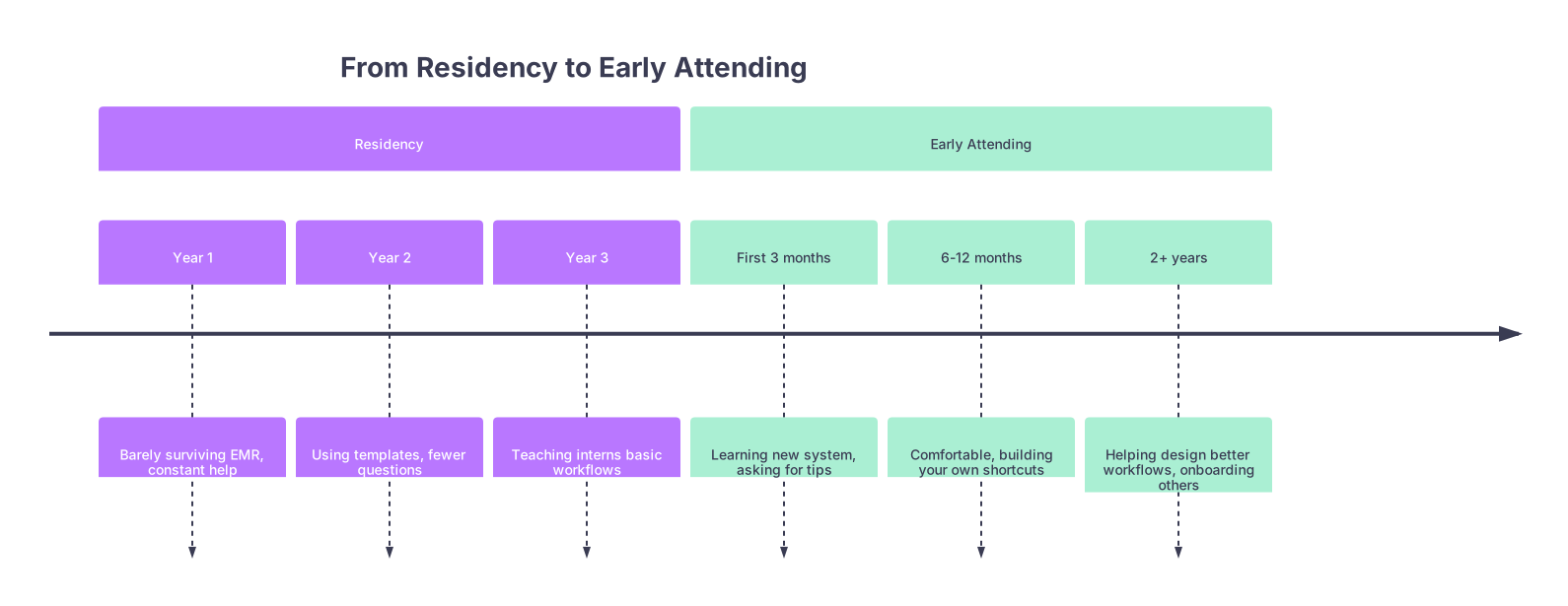
You might be slower than you like. You might feel clumsy. You might hate it. Fine. But your lived evidence is: you have been adapting to new tech for years. Under pressure. While sleep deprived.
So no, you’re not hopeless.
| Period | Event |
|---|---|
| Residency - Year 1 | Barely surviving EMR, constant help |
| Residency - Year 2 | Using templates, fewer questions |
| Residency - Year 3 | Teaching interns basic workflows |
| Early Attending - First 3 months | Learning new system, asking for tips |
| Early Attending - 6-12 months | Comfortable, building your own shortcuts |
| Early Attending - 2+ years | Helping design better workflows, onboarding others |
What Actually Impresses Employers (Even If You Don’t Love Tech)
Hiring committees don’t sit around saying, “We need a tech genius.” They say things like:
- “Are they teachable?”
- “Will they be a pain every time we change something?”
- “Do they handle stress or do they melt down and blame everyone else?”
So when they ask about technology in interviews, you don’t have to pretend you’re obsessed with digital health. You can say something like:
“I’ve used [Epic/Cerner/etc.] extensively in residency, and while I wouldn’t call myself a superuser, I’m very comfortable learning new systems. In my last rotation, I actually asked our superuser to show me efficiency tips, and it made a big difference in my documentation time.”
That hits exactly what they care about: safe, willing to learn, not resistant.
And if they ask some ridiculous question like, “How do you see AI transforming your practice?” you do not need a TED Talk answer. Something pragmatic is fine:
“I’m open to tools that reduce documentation burden or help with guideline reminders, as long as they’re transparent and don’t replace my judgment. I’m more interested in anything that gives me more time with patients and less time fighting the computer.”
That’s it. You sound sane. Not a Luddite. Not a tech bro. Just… reasonable.
The Bottom Line You Need to Hear
You don’t have to love technology. You don’t have to be gifted at it. You just can’t opt out of it.
If you’re willing to:
- Learn one system decently well
- Ask questions instead of silently drowning
- Use basic tools (templates, smartphrases, dictation)
- Stay calm-ish when things glitch
…then you are already good enough with technology for the vast majority of real-world jobs.
The rest is refinement. Not identity.
FAQ (Exactly the Stuff You’re Probably Still Stressing About)
1. I’m starting my first attending job soon and I’m terrified I’ll be the slowest one with the EMR. Will everyone notice?
They’ll notice for about a week. Everyone is watching everyone in the first week. Then people get busy and only care if you’re actively creating problems—unsafe orders, constant delays, no communication. If you’re a bit slow but you’re safe, transparent (“I’m still getting up to speed on the system”), and you actively ask for tips, most people will just file you under “normal new doc finding their rhythm.”
2. I honestly hate computers. Should I avoid certain jobs or specialties now that everything is digital?
You don’t need to change specialties or careers. But if you truly hate screens, maybe don’t choose the most documentation-heavy or telehealth-heavy roles (outpatient primary care in a system that lives and dies by clicks, for example) without a plan. Hospitalist roles with strong team support, or places that use scribes or robust templates, can be easier. The bigger variable is the culture: look for places where other attendings say, “Yeah, the EMR is annoying but we’ve figured out ways to make it manageable,” not “We all drown here and leadership doesn’t care.”
3. I’m bad with typing and I feel stupid when I see co-residents flying through notes. Is that a real liability?
It’s a mild disadvantage, not a fatal flaw. A lot of the fastest attendings I know are fast because they use smartphrases, templates, and voice dictation—not because they type 120 wpm. You can also improve typing slightly over time without doing some intense class. Ten minutes a day for a few weeks on a free typing site will nudge you from “painfully slow” to “fine.” Combine that with templates and your raw typing speed matters way less than you think.
4. Interviewers sometimes ask about telehealth or “digital health experience.” I basically just clicked links and did video visits. Is that enough?
Yes. Don’t overthink it. You can say: “During residency, I conducted telehealth visits using [platform] for follow-up and chronic disease management. I’m comfortable with basic troubleshooting and documenting those encounters. I see telehealth as a useful tool for the right patients, especially for access and convenience.” That’s plenty. Nobody expects you to have built an app.
5. What if I really do make a tech-related error that harms a patient? I’m terrified of that.
That fear is not irrational; tech has absolutely contributed to patient harm—wrong med selected from a drop-down, orders placed on the wrong patient, alert fatigue. The response isn’t “be perfect with tech,” it’s “build habits that catch errors”: always double-check patient identifiers, read order summaries before signing, sanity-check doses, pause when you’re interrupted mid-order. If something goes wrong, own it, disclose it, and learn from it. Institutions are increasingly aware that systems contribute to errors; you will not be uniquely damned for a tech-related error if you’re acting in good faith and trying to practice safely.
Key points to walk away with:
- The market wants safe, trainable, non-combative physicians—not tech geniuses.
- You’re already more capable with technology than your anxiety is giving you credit for.
- Willingness to learn and ask for help beats “natural” tech talent every single time.