

The way most residents “do mindfulness” is backwards. They wait until they are drowning, then throw a meditation app at the problem and hope it sticks.
You cannot afford that.
From PGY‑1 to PGY‑3, your job, your stressors, and your authority change radically every 6–12 months. Your mindfulness practice has to change with them. If it stays the same, it will quietly become useless background noise—another thing you “should” do but do not.
Here is how to build, upgrade, and weaponize your mindfulness practice across all three core residency years.
Big‑Picture Timeline: How Your Practice Should Shift
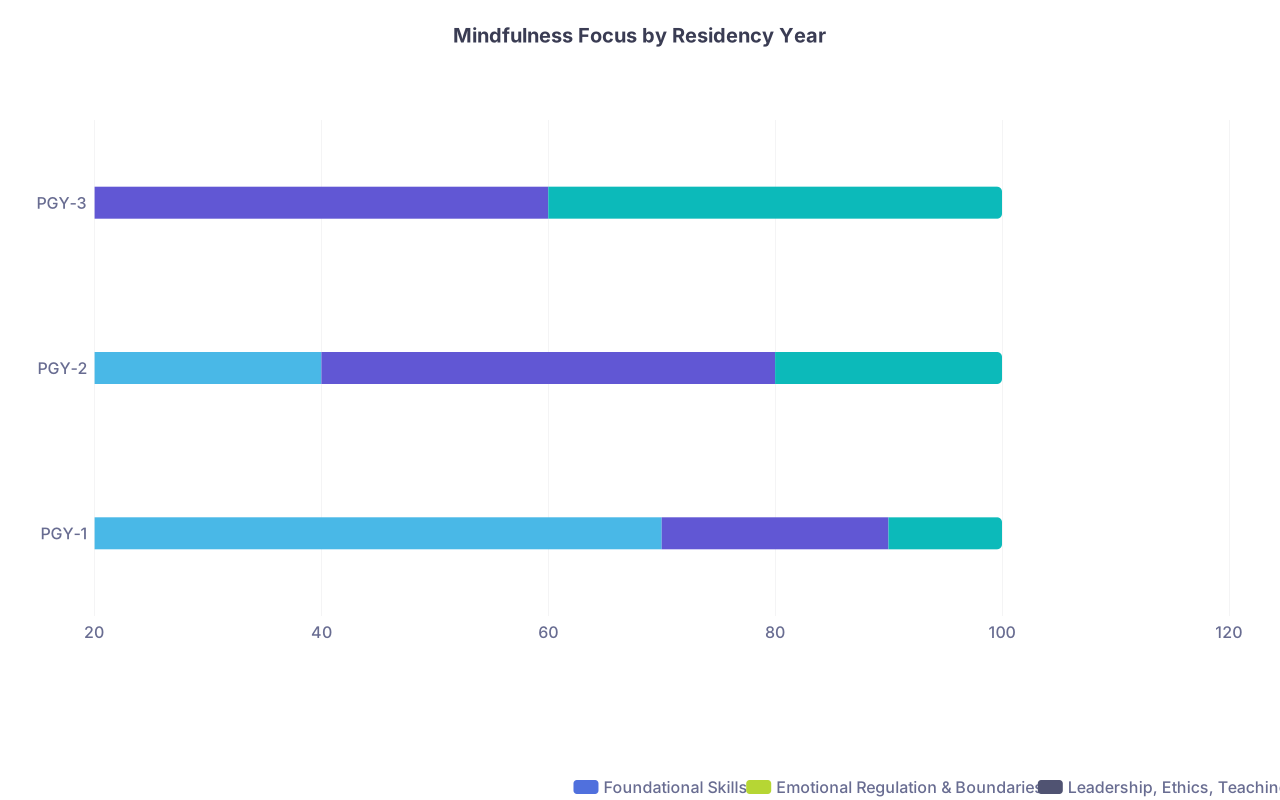
| Category | Foundational Skills | Emotional Regulation & Boundaries | Leadership, Ethics, Teaching |
|---|---|---|---|
| PGY-1 | 70 | 20 | 10 |
| PGY-2 | 40 | 40 | 20 |
| PGY-3 | 20 | 40 | 40 |
At a high level, the balance should look like this:
- PGY‑1: Build non‑negotiable basics — short, frequent, mechanical.
- PGY‑2: Upgrade to emotional regulation and boundaries — in the moment, with real stakes.
- PGY‑3: Integrate mindfulness into leadership, ethics, and teaching — you become the culture.
Now we go year by year, then month by month and week by week.
PGY‑1: Survival‑Grade Foundations (Months 1–12)
PGY‑1 is not about “insight.” It is about not falling apart.
Your cognitive load is maxed out: new EMR, pages, cross‑cover, endless scut. At this point you should think of mindfulness like hand hygiene: tiny, frequent, unglamorous, and absolutely mandatory.
Months 1–3: Shock Phase – Build Micro‑Habits
You are still learning where the bathrooms are. Expect minimal bandwidth.
Primary goal: Install micro‑practices that do not require motivation.
Monthly focus:
- Month 1: 60–90 seconds at a time, several times a day
- Month 2: A 5‑minute daily anchor + micro‑practices
- Month 3: Add brief post‑shift decompression
Daily structure that actually works:
Before first patient / sign‑out (1–2 minutes)
At your computer, feet on the floor, hands on thighs:- Notice 5 exhales. Just count them.
- On each exhale, silently: “Here.”
That is it. Anything more will get skipped on a busy call day.
Pre‑procedure or before difficult calls (30–60 seconds)
Before calling a consultant who hates residents, or consent for a risky procedure:- One slow inhale (4 seconds), one long exhale (6–8 seconds).
- Ask yourself: “What is my job in the next 60 seconds?”
Name it simply: “Listen. Be clear. Be calm.”
End‑of‑shift reset (3–5 minutes, ideally sitting in your car or on the train)
- Name three concrete moments from the shift (good, bad, neutral).
- For each: notice how your body feels right now when you recall it.
- One gentle breath into that area (jaw, chest, stomach). Do not fix; just notice.
You are not trying to be “calm.” You are training recognition.
Weekly check‑in (10 minutes, once per week):
Pick one same day (e.g., Sunday evening):
- Quick journal prompts:
- One moment I handled well…
- One moment I reacted on autopilot…
- What did my body feel like right before that autopilot reaction?
- Choose one cue for next week (e.g., “When my pager goes off, I will take one breath before moving.”)
Months 4–6: Consolidation – Turn Practice Into Muscle Memory
By now, you are a little less terrified and slightly more dangerous (in a good way).
At this point you should:
- Have a 5–10 minute most days practice that you do without overthinking.
- Recognize at least 1–2 of your own stress signatures (jaw clenching, rushing orders, getting snappy).
Upgrade your routine:
Morning 5–10 minutes (even post‑call):
- Set a 5‑minute timer.
- Choose one anchor:
- Breath at nostrils
- Feeling of your feet on the floor
- Sounds in the room
- Notice when your mind goes to work lists. Label it “planning,” then return to the anchor.
In‑clinic / on the floor: 3‑breath pause before entering rooms
- Hand on doorknob or outside curtain.
- Three breaths:
- “Body” – feel your feet.
- “Patient” – recall their name and one key concern.
- “Intention” – choose one word: “Listen,” “Clarity,” “Kind.”
Yes, it feels corny. Do it anyway. Patients notice the difference immediately.
Ethics connection (early and simple):
When you feel rushed and tempted to cut corners (ignoring a low B12, skipping a difficult discussion):
- Pause for one breath.
- Ask: “If this was my family member, would I still choose this?”
You will not always like the answer. That discomfort is productive.
Months 7–12: From Bare Survival to Early Insight
The novelty has worn off. Fatigue is more chronic. This is where many interns either burn out or mature.
At this point you should:
- Expand from “attention control” to basic emotional awareness.
- Start to notice your own defenses: sarcasm, emotional numbness, blaming nurses, etc.
Monthly progression:
- Month 7–8: Add short noting practice (label emotions and thoughts).
- Month 9–10: Mindful response practice during conflict (nurse triage, family anger).
- Month 11–12: Begin brief debriefs around ethically heavy cases.
Noting practice (8–10 minutes, 3–4x/week):
Sit, set a timer.
- When a thought/emotion emerges, label it very simply:
- “Worry”
- “Anger”
- “Planning”
- “Self‑criticism”
- Do not analyze. Just see it, label it, return to breath or body.
Over time, you will catch your “I am a terrible doctor” spiral earlier. That is the whole point.
Conflict example:
A nurse calls you for the third time about pain meds. You feel the eye‑roll rising.
- Micro‑pause: one breath before speaking.
- Silently name: “Annoyance.”
- Then answer.
That 2‑second gap is where ethical behavior lives. I have watched residents either learn this or become the attending everyone hates working with.
PGY‑2: From Self‑Control to Boundaries and Emotional Depth
PGY‑2 is different. More responsibility, more autonomy, more night float, more second‑order consequences. You now carry teams, admit volumes, and make real decisions.
Simple breath counting is no longer enough. At this point you should evolve your practice into something that can hold complexity: grief, moral distress, actual power.

Months 13–18: Emotional Regulation and Moral Distress
This is when the “I should have done more” loop can wreck you.
Core aims:
- Learn to recognize moral distress before it becomes cynicism.
- Upgrade from solo practice to brief team practices when possible.
Daily practice (10–15 minutes most days): Compassion + Body Scan hybrid
- 2–3 minutes – settle with breath.
- 5–7 minutes – mini body scan:
- Start at the face, move down to chest, abdomen, hands, back.
- Notice areas that feel heavy, tight, or numb.
- 2–5 minutes – compassion phrases (choose one focus: self, patient, colleague):
- “May I meet this with clarity.”
- “May I not turn away.”
- “May this patient be free from suffering, as much as possible today.”
You are not trying to “fix” anyone. You are training your nervous system to stay with hard things without collapsing or hardening.
Case‑based moral distress practice (weekly, 15–20 minutes):
Pick one hard case from the week:
- Write 3–5 sentences about:
- What happened.
- What you did.
- What you wish you could have done.
- Then sit for 10 minutes:
- On each inhale: feel whatever is there (guilt, anger, grief).
- On each exhale: “This is here.”
Stop negotiating with reality. Start acknowledging it.
That honesty prevents the slow slide into “nothing matters, everyone dies, just chart it and move on.”
Months 19–24: Assertive Boundaries and Team Dynamics
By late PGY‑2, you often function as a junior attending on nights. People now look to you. Your old patterns around conflict and over‑functioning will either implode or get cleaned up.
At this point you should:
- Use mindfulness in real time to set humane boundaries.
- Integrate brief practices into handoffs, codes, and family meetings.
On‑shift protocols that actually get used:
Pre‑shift intention (2 minutes, in call room or car):
- Ask 2 questions:
- “What am I afraid of tonight?” (missing a code, new specialty, being yelled at)
- “How do I want to show up despite that?” (steady, kind, clear)
- Choose one word. Write it on a scratch pad or your sign‑out sheet.
- Ask 2 questions:
Post‑code or bad outcome (90‑second reset): Step into a stairwell or empty room if possible.
- Feel your feet.
- One hand on chest, one on belly.
- Inhale 4, exhale 6–8, five times.
- Name: “That was hard.”
You are not weak for doing this. The residents who skip it are the ones who quietly start drinking more or exploding at small things.
Boundary script practice (10 minutes, twice per month):
Take common situations:
- Attending asking you to stay late again “for learning.”
- Family demanding unrealistic updates at 3 a.m.
- Consultant being dismissive.
Write and rehearse one mindful script for each, out loud:
- “I want to help, and I am at my limit tonight. I can stay 15 more minutes, then I must hand this off.”
- “I hear that you are very worried. I cannot give you new information right now, but I can tell you what we are watching for.”
Before saying it for real, do one breath, feel your feet, then speak. Mindfulness gives you the half‑second to choose this instead of snapping or caving.
Ethics layer in PGY‑2:
This is where you start seeing the system’s flaws clearly:
- Insurance blocking straightforward care.
- Discrimination toward patients or staff.
- Quiet shortcuts by burned‑out seniors.
Your practice now includes witnessing these without immediate reaction, then choosing a response:
- Pause.
- Name the ethical tension.
- Decide: speak now, document, escalate later, or seek advice.
Anything but reflexive silence.
PGY‑3: Integration – Leadership, Teaching, and Ethical Presence
PGY‑3 is not about you “coping” anymore. You are shaping the environment. Interns will copy your habits. Medical students will copy your tone. Nurses will decide whether to trust “the residents” based largely on you.
At this point you should use mindfulness as an operational tool for leadership and ethical clarity, not a private stress hack.
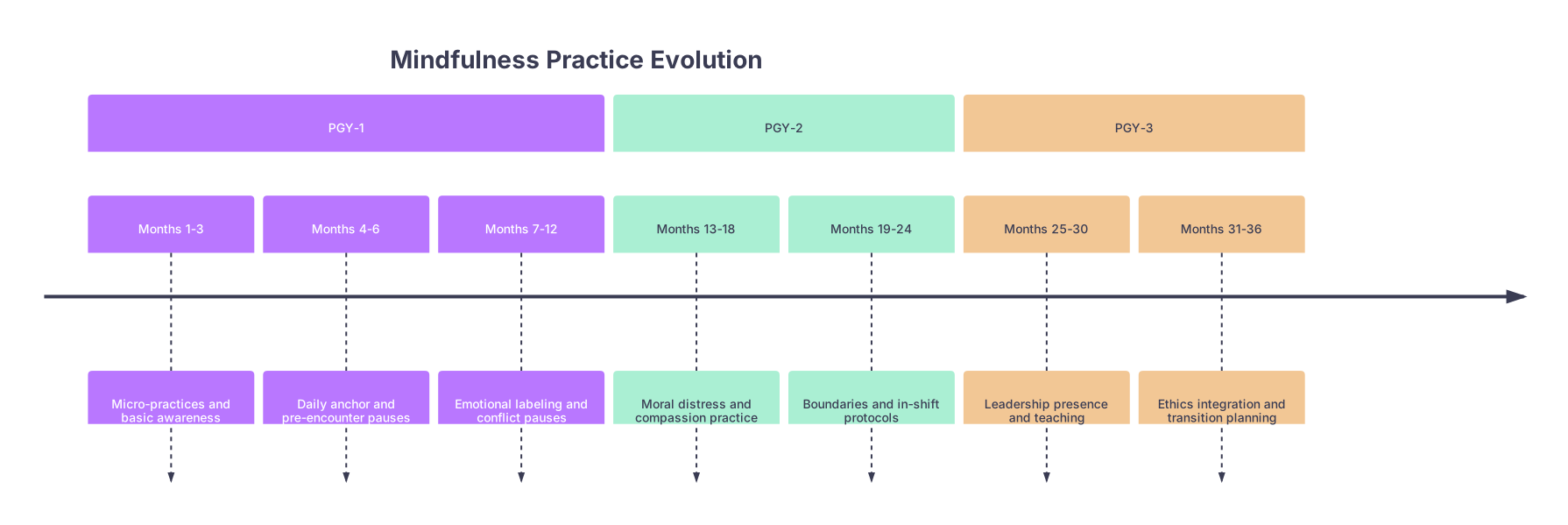
| Period | Event |
|---|---|
| PGY-1 - Months 1-3 | Micro-practices and basic awareness |
| PGY-1 - Months 4-6 | Daily anchor and pre-encounter pauses |
| PGY-1 - Months 7-12 | Emotional labeling and conflict pauses |
| PGY-2 - Months 13-18 | Moral distress and compassion practice |
| PGY-2 - Months 19-24 | Boundaries and in-shift protocols |
| PGY-3 - Months 25-30 | Leadership presence and teaching |
| PGY-3 - Months 31-36 | Ethics integration and transition planning |
Months 25–30: Leader Presence and Teaching Mindfulness
You are likely a chief on some rotations, running rounds, doing teaching sessions.
Core aims:
- Make your practice visible and normal.
- Use mindfulness to stabilize the team, not just yourself.
Daily structure (10–20 minutes):
Morning (10 minutes): grounding + intentional review:
- 3 minutes noticing breath or body.
- 7 minutes mentally walking through the day:
- Identify 2–3 “red‑flag” zones (dreaded family meeting, sick patient, high‑volume clinic).
- For each, choose a specific mindful behavior:
- “In that family meeting, I will pause 2 seconds before delivering bad news.”
- “On rounds, I will look at each intern while they present, not just the vitals.”
Visible micro‑practices with team:
- Before starting rounds:
“Let us take 30 seconds just to arrive. Feel your feet on the floor. One breath together.”
Some will roll their eyes. They will also feel better.
- Before starting rounds:
Teaching debriefs (5–10 minutes, once per week): Pick one case. With your team:
- Ask: “When did you notice your stress spike during this case?”
- Ask: “What did your body do?”
- Share your own answer. Normalize it.
Then offer one simple practice: a breath before speaking, naming emotion silently, etc.
You do not have to be a mindfulness guru. You just have to model that self‑awareness is part of being a decent physician.
Months 31–36: Ethics, Identity, and Preparing for Attending Life
Final year. You are making job decisions, thinking about fellowship, imagining life as an attending. Your stress shifts from “Can I do this?” to “Who am I going to be in this system?”
Your practice must expand from moment‑to‑moment regulation to big‑picture values and identity.
At this point you should:
- Link your mindfulness to explicit values and ethical commitments.
- Use it to make actual career decisions, not just to grind through the shift.
Monthly themes for PGY‑3 (last 6–9 months):
| Period | Primary Focus | Key Practice Type |
|---|---|---|
| Months 25-27 | Team presence | Visible micro-practices |
| Months 28-30 | Teaching & feedback | Reflective debriefs |
| Months 31-33 | Ethics and values clarity | Values-based reflection |
| Months 34-36 | Transition to attending | Future-self visualization |
Values‑based reflection (20–30 minutes, twice per month):
Sit with paper, not your phone.
- Write down 3–5 values that actually matter to you in medicine:
- Justice
- Competence
- Kindness
- Honesty
- Curiosity
- For each, answer:
- “Where did I act with this value in the last month?”
- “Where did I act against it?”
- Sit for 10 minutes:
- Breathe.
- Let the discomfort or pride show up.
- On each exhale: “This is how I am learning.”
Then choose one small behavioral adjustment for the next week. Not ten. One.
Future‑self practice (15 minutes, monthly):
This is not some cheesy vision board.
- Sit, breathe for a few minutes.
- Imagine one day as an attending, 5 years out:
- How do you walk into the hospital?
- How do you talk to nurses when you are tired?
- How do you handle a medical error?
- Notice your body’s reaction. Anxious? Excited? Numb?
Then ask: “What one habit do I need to start now to be that person?”
Very often, the answer is something simple: - “I need to admit when I am wrong faster.”
- “I need to stop avoiding difficult family conversations.”
- “I need to actually go home when I say I will.”
Your mindfulness practice now becomes a bridge from present you to that future version.
Attending‑level ethical scenarios (ongoing):
Use your practice in real decisions:
- Do you sign that op note where you saw a complication under‑documented?
- Do you challenge subtle but real discrimination on rounds?
- Do you speak up when a colleague is clearly impaired?
Operationalize it:
- Notice the ethical tension → body signal (tight chest, heat in face).
- Label it: “Moral discomfort.”
- Pause for three breaths.
- Ask three questions:
- “What is happening?”
- “What matters most here?”
- “What am I willing to stand behind 5 years from now?”
Then choose the next right small action: ask a question, request a private conversation, document something carefully, seek backup from ethics or a trusted attending.
That sequence, repeated over and over, is how you avoid becoming the jaded attending who tells horror stories at conferences and quietly hates their job.
Weekly and Daily Skeleton Across All Three Years
Different years, different content—but the basic scaffolding stays similar.
Baseline weekly structure (PGY‑1 to PGY‑3):
- 4–6 days per week:
- 5–15 minutes formal practice (breath, body scan, or compassion, evolving by year).
- Daily:
- 2–5 micro‑practices on shift (doorway breaths, pre‑call pauses, post‑code resets).
- Weekly:
- 10–20 minutes reflective journaling tied to:
- Emotional reactivity (PGY‑1)
- Moral distress and boundaries (PGY‑2)
- Values and leadership (PGY‑3)
- 10–20 minutes reflective journaling tied to:
On disaster weeks (ICU months, brutal nights, major personal crisis):
Drop the perfectionism.
- Cut formal practice time in half but do not let it hit zero.
- Make micro‑practices mandatory: one breath before every note, one 60‑second pause after every code or bad news.
Consistency beats intensity. Always.
Three Things to Remember
- Your mindfulness practice must change from PGY‑1 to PGY‑3 or it will stop working. What saves you as an intern will bore you as a senior.
- The real point is not serenity. The point is ethical, effective behavior under pressure—toward patients, colleagues, and yourself.
- You do not need 30 minutes on a cushion. You need 30 seconds, repeated 60 times, tied to the actual stress points of your day, upgraded year after year.


