
The most dangerous part of your first attending contract probably isn’t the base salary. It’s the on‑call language you barely skimmed.
You’ve been trained to read ECGs and CTs, not contracts. Recruiters know this. Hospital lawyers definitely know this. And buried in three bland sentences about “call responsibilities” you can accidentally sign away your nights, weekends, and sanity for the next three years.
Let’s walk through the biggest on‑call pay pitfalls I see new attendings walk straight into—and how you avoid becoming that cautionary tale everyone whispers about in the physician lounge.
1. Confusing “Call Stipend” With “Fair Compensation”
The first trap: mistaking any call pay for good call pay.
You see “$1,000 per 24‑hour call” and your resident brain thinks, “That’s amazing!” You forget you used to do 24‑hour calls for free.
That’s how people get suckered.
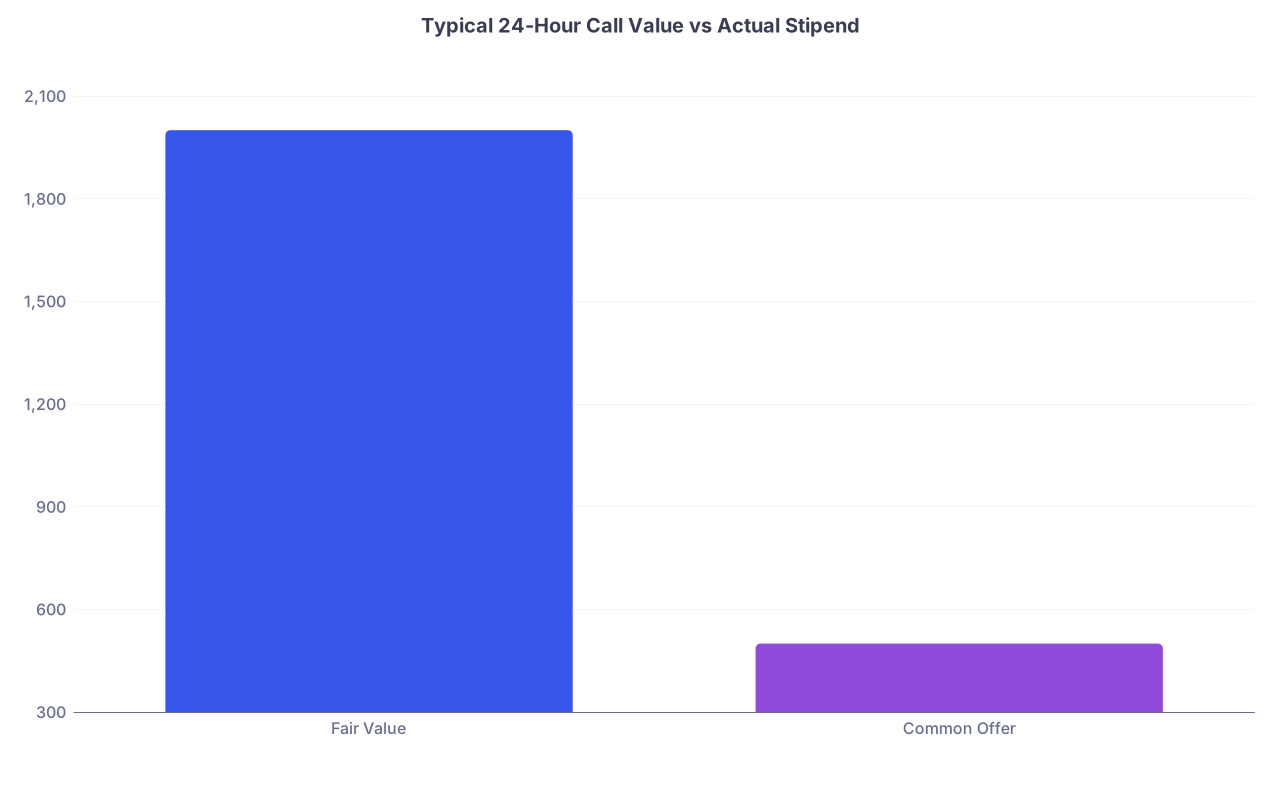
| Category | Value |
|---|---|
| Fair Value | 2000 |
| Common Offer | 500 |
A few ways this plays out:
Flat stipends that ignore actual work
You get:- $300/night for home call, whether you sleep 8 hours or are up all night
- $1,000 for 24‑hour in‑house call, even if you’re slammed with procedures
That’s not “generous.” It’s an all‑you‑can‑eat sweatshop buffet.
“Included in salary” = you’re working for free
Biggest scam language:“Call is considered part of your professional responsibility and is included in the base salary.”
Translation: all nights, weekends, holidays, and emergencies are free labor.Stipend that shrinks when collections go up
Some systems quietly lower call stipends over time:- Year 1: $1,000/call
- Year 2: $750/call
- Year 3: “We’re revising the model to align with market rates” → $500
Meanwhile, RVU or collections expectations don’t decrease.
What you must do instead
At a minimum, insist on clarity in three areas:
Is call:
- Paid per shift?
- Paid per hour?
- Totally unpaid?
Is the amount:
- Fixed for the length of the contract, or
- “Subject to change” by unilateral employer decision?
Is it separate from:
- Base salary
- RVUs/collections
- Productivity bonuses
If the contract says call pay “may be adjusted” or “is subject to employer policies” without numbers, you’re gambling your entire schedule on a policy manual you haven’t seen and they can change without your consent.
2. “Reasonable Call” Language That Lets Them Own Your Life
The laziest, most dangerous phrase in a physician contract:
“Physician agrees to take call as reasonably required by the practice/hospital.”
No numbers. No schedule. No upper limit. Just “as needed.”
That’s a blank check.
Common vague phrases that should make you hit the brakes
- “Reasonable call expectations”
- “Comparable to other members of the group”
- “As is typical for the specialty”
- “Subject to the medical staff bylaws”
You know what’s “typical” in some departments? 1 in 2 weekends. Or every other night. Or “jeopardy” coverage that magically becomes permanent coverage when they realize you never say no.
You’re not just agreeing to work hard. You’re agreeing that the employer gets to decide what “reasonable” means—after you’ve moved, bought a house, and pulled your kids out of their old schools.

| Step | Description |
|---|---|
| Step 1 | Sign Contract with Vague Call |
| Step 2 | Start Job |
| Step 3 | Colleague Resigns |
| Step 4 | Call Burden Increases |
| Step 5 | Employer Calls It Reasonable |
| Step 6 | You Have No Contractual Exit |
How to protect yourself
You want specific numbers in the contract:
Max number of:
- Weeknight calls per month
- Weekend calls per month
- Holiday calls per year
Explicit call type:
- Home call vs in‑house
- Primary vs backup/jeopardy
- Cross‑coverage of other services or just your own
Process for change:
- “Any material change to call frequency or structure requires mutual written agreement.”
If they refuse to put any numbers on call, you’re seeing the future:
- Short‑staffed group
- Rising volumes
- You becoming the default workhorse
Walk away from “trust us, it’s not that bad.” That’s recruiter talk, not a contract term.
3. Home Call vs In‑House Call: The Hidden Bait‑and‑Switch
Home call that behaves like in‑house call is one of the most common horror stories.
You’re told:
- “It’s just home call.”
- “You’ll probably sleep most nights.”
- “We’re not that busy after 10 pm.”
Six months in:
- You’re in the hospital 10–12 hours of a “home call” shift.
- The EMR shows dozens of after‑hours notes and orders.
- You’re still being paid a tiny “home call” stipend as if you were on your couch watching Netflix.

Red flags in “home call” language
Watch for these traps:
No distance or response-time definition
If the bylaws say you must be within 20–30 minutes and “immediately available,”
you’re not living your life—you’re tethered to the hospital.No differentiation between:
- True “phone only” call
- “Phone plus come in for anything serious”
No minimum threshold for reclassifying call
Example of language that protects you:“If the physician is required to be physically present in the hospital more than 4 hours during a home call shift, the shift will be compensated at the in‑house call rate.”
Without that kind of language, you can be working an extra 20–30 hours a week for pennies.
What to ask before signing
Do not accept “It’s usually quiet.” Ask for:
Call logs (de‑identified) for:
- Number of overnight pages
- Number of required in‑person visits
- Average hours in hospital while on home call
Historic data for:
- Volume trends over last 2–3 years
- Any known service expansion planned (new ED, new cath lab, trauma designation, etc.)
If they won’t show you data or at least give credible, concrete examples, that’s not an accident. That’s concealment.
4. The “Unlimited Call With RVUs” Productivity Trap
Here’s a sneaky one:
You’re told, “We don’t really pay a call stipend, but you keep all your RVUs from call. It’s very lucrative for high producers.”
Reality in many systems:
- You’re doing a mountain of non‑RVU, non‑billable work at 2 am:
- Family updates
- Chart review
- EMR messaging
- Coordination with consultants
- Call work cannibalizes your daytime productivity:
- Less clinic the next day because you’re post‑call fried
- Fewer elective cases because your schedule is blocked by emergencies
And if your base salary is RVU‑based, guess what:
You’re subsidizing the hospital’s 24/7 coverage with your sleep and your bonus.
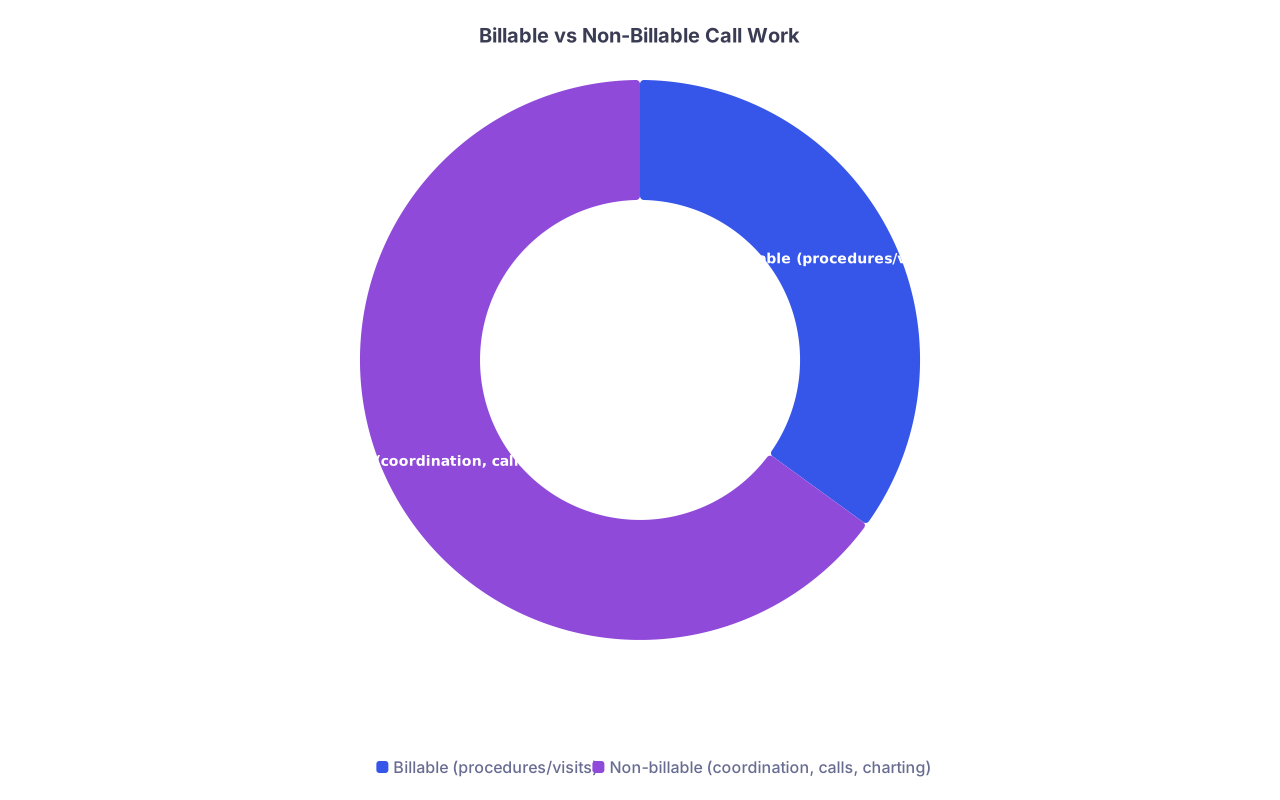
| Category | Value |
|---|---|
| Billable (procedures/visits) | 35 |
| Non-billable (coordination, calls, charting) | 65 |
Common mistakes:
Assuming every night call equals more RVUs
Wrong. Many urgent issues generate little or no billable work.Not realizing that the hospital gets:
- ED throughput
- Surgical coverage
- ICU staffing
all covered, while your actual pay per hour of call might be terrible.
Ignoring the fact that exhaustion → errors → complaints → remediation.
I’ve seen good physicians end up in “performance improvement” meetings while carrying insane call burdens nobody else wanted.
How to avoid the productivity trap
If they tout “call RVUs instead of stipends,” you need:
A clear breakdown:
- Average RVUs generated per call shift
- Average collections per call shift
- Typical patient mix after hours (insured vs uninsured, payer mix)
A floor:
- “Call shifts will be compensated at the greater of:
(a) $X per shift, or
(b) RVUs generated at the standard conversion factor.”
- “Call shifts will be compensated at the greater of:
If they balk at a minimum guarantee, they know the RVUs don’t justify the time.
5. Call Creep: What Happens When Staffing Changes
Contracts are often written for a perfect world: full staffing, stable volumes, no drama. You’re not living in that world.
Staffing changes. People leave. Volumes spike after a merger. Suddenly, “1 in 5 call” becomes “1 in 2” for the same pay, same base, same everything.
Here’s how it usually plays out:
- A partner retires or quits.
- Recruitment fails or drags on for a year.
- Administration “appreciates your flexibility.”
- Your life disappears.

| Step | Description |
|---|---|
| Step 1 | Original 1 in 5 Call |
| Step 2 | Partner Leaves |
| Step 3 | Short Term Coverage Request |
| Step 4 | Recruitment Delayed |
| Step 5 | New Normal 1 in 3 Call |
| Step 6 | Same Pay, Higher Burnout |
Contract red flags that allow call creep
- No maximum call frequency written anywhere
- Employer reserved right to:
- “Adjust call schedule as needed”
- “Redistribute call among physicians”
- No trigger for:
- Extra pay when call burden increases
- Early termination if call dramatically changes
You need these protections
Push for language like:
- “Call frequency shall not exceed an average of X weeknights and Y weekends per month without mutual written consent.”
- “If call frequency increases by more than Z% for longer than 90 days, the parties will negotiate additional compensation. If no agreement is reached, physician may terminate the agreement with 90 days’ notice without penalty.”
That last part is key.
Without a clean escape clause tied to call burden, you’re trapped. You can either tolerate abusive call or blow up your career move.
6. Backup, Second Call, and “Mandatory Help” You’re Not Paid For
Another subtle area: backup and informal expectations.
You might think, “I’m only on primary call 1 in 6.” Sounds great. But then you learn:
- On non‑primary nights, you’re often called in “for help”
- There’s a cultural expectation to back up the more junior person
- You’re answering calls and coming in without being officially “on call”
If the contract only pays for formal call shifts, and the culture expects constant informal availability, you’re giving away huge amounts of work and liability for free.
Classic example:
- Surgical subspecialties where the “big name” surgeon is always called, whether or not they’re on the schedule.
- Intensivists covering informal questions from the ED or hospitalists without being on a listed call shift.

Protect yourself with specifics
You want the contract to spell out:
What counts as “being on call”:
- Must your name be on an official call schedule?
- Are you paid for any unscheduled, requested in‑person coverage?
Backup call rules:
- Are there backup call shifts?
- Are those paid at a different rate?
- Do you get paid if called in from backup?
Expectations regarding:
- Answering calls while not on the schedule
- “Just take a quick look at this imaging”
- “Can you swing by for a quick consult?”
If they tell you, “We don’t really track that; we’re a team,” that’s code for “we expect free work.”
7. Holidays, Post‑Call Time, and the Myth of “Protected Rest”
One more area where people get burned: nobody defines what happens after call.
You might assume:
- Post‑call clinic is cancelled or lightened.
- You’re not expected to work a full production clinic the morning after being up all night.
- Holiday call pays extra.
Assumptions get you hurt.
| Model Type | Call Pay | Post-Call Clinic | Holiday Premium |
|---|---|---|---|
| Predatory | None | Full day | None |
| Bare Minimum | Small stipend | Half day | Same as usual |
| Reasonable | Market stipend | Clinic reduced | 1.5–2x rate |
| Physician-Friendly | Strong stipend | No clinic | Extra cash + day off |
Red flags here:
Zero mention of:
- Post‑call clinic expectations
- Work hours post‑call
- Compensation for post‑call work
Language like:
- “Physician will perform clinical duties as scheduled regardless of call responsibilities.”
- “No reduction in FTE for call duties.”
Holiday call that:
- Pays the same as a random Tuesday night
- Does not include a compensatory day off
Minimum protections to aim for
Try to get:
Explicit language:
- “If physician is in‑house for more than X hours overnight, next‑day clinic will be adjusted or cancelled.”
- “Physician will not be scheduled for elective procedures during post‑call mornings following in‑house call.”
Holiday definitions:
- What counts as a holiday
- Rate differential for holiday call (1.5–2x is common in decent systems)
- Whether a compensatory off day is provided
If they make you feel unreasonable for asking about post‑call fatigue and safety, they’re telling you how little they value your well‑being—or your license.
8. Call and Partnership: The “Sweat Now, Maybe Profit Later” Lie
In private groups, you’ll often hear:
“Call is heavier as an associate, but once you make partner, it gets better and more lucrative.”
Sometimes that’s true. Often it’s just how they justify:
- Garbage call schedules for new hires
- Substandard call pay
- Years of you “proving yourself” without any written guarantee of improved conditions
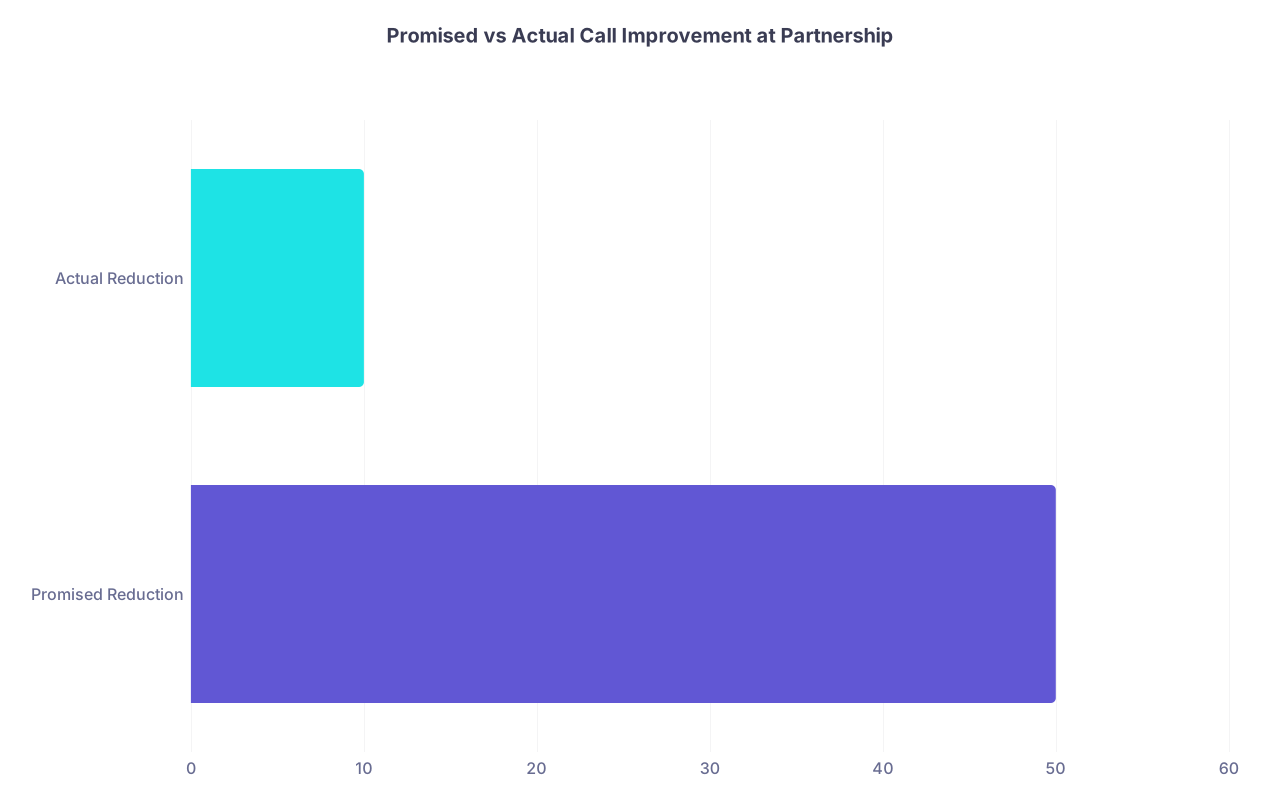
| Category | Value |
|---|---|
| Promised Reduction | 50 |
| Actual Reduction | 10 |
Key mistakes here
No written change in:
- Call frequency at partnership
- Call pay rate at partnership
- How call income is distributed among partners vs associates
Partnership track that’s:
- Vague (“usually 2–3 years”)
- Conditional on “mutual fit” without clear metrics
- Not guaranteed in writing
Partnership buy‑in that:
- Is huge
- Includes accounts receivable / buy‑in for call coverage structure
- But doesn’t come with any better call lifestyle than what you suffered as an associate
What to demand before signing
You want in writing:
Associate vs partner call expectations:
- “Associates take call 1 in X; partners 1 in Y.”
- Or at least, “Call is divided equally among all full‑time physicians regardless of partnership status.”
Clear, time‑bound path:
- “Physician will be offered partnership after X years if defined performance metrics are met.”
Call revenue distribution:
- “Call stipends or hospital coverage subsidies will be distributed [equally / by FTE / by call taken], and this method cannot be changed without majority vote including associates.”
If they say, “We’ll talk about that later once you’re here,” you already have your answer. Later never comes.
9. Future of Medicine: Why Call Will Get Worse If You’re Not Careful
Here’s the uncomfortable reality: call isn’t getting lighter in most places.
Pressure points:
- Shrinking physician supply in key specialties
(neuro, anesthesia, ICU, OB, GI, you know the list) - 24/7 expectations from patients and hospital marketing
(“Stroke center,” “Level II trauma,” “24/7 cath lab”) - Burnout and early retirement among older partners
which pushes more work onto the young
So if your call terms aren’t crystal clear now, they will almost certainly be abused later.

Expect:
- More telehealth at night
- More cross‑coverage expectations
- More “system-wide” call pools spanning multiple hospitals
All of those can be good—if you’re paid fairly and your time is respected.
They’re nightmares if:
- Your contract lets them expand your call radius without pay change
- They can add facilities to your coverage area unilaterally
- They roll in extra responsibilities under the vague banner of “call”
Before you sign, ask explicitly:
- “Could I be required to cover additional campuses or facilities under this call arrangement?”
- “Can the hospital system expand my call responsibilities without amending the contract?”
- “How has call volume changed here in the last 3–5 years?”
If they dodge, minimize, or go fuzzy on the future, you’ve learned something critical: they either don’t track it (bad) or don’t want you to know (worse).
10. How to Actually Review Your On‑Call Terms Without Getting Steamrolled
Last piece: you need a process, not vibes.
Here’s a blunt checklist that keeps you out of trouble:
Print the contract and physically highlight every appearance of:
- “Call”
- “Coverage”
- “Hospital service”
- “Emergency”
- “After hours”
For each highlighted section, write in the margin:
- How many? (shifts/month)
- How much? ($/shift or $/hour or RVUs)
- What type? (home vs in‑house, primary vs backup)
- What if it changes? (do I have recourse?)
Then ask for data, not adjectives:
- “Can you show me last year’s call schedule?”
- “Can I speak with a recent hire about call?”
- “What’s the average number of pages and in‑person visits per call shift?”
Run the math honestly:
- Total call hours per month
- Compensation per call hour
- Effective hourly rate including call, not just clinic/procedures
If you’re too exhausted from residency to do this yourself, pay a contract lawyer who specializes in physician agreements. Not your cousin the real estate attorney.

The Bottom Line: Don’t Volunteer for a Lifetime of Bad Call
If you remember nothing else, keep these three points:
Vague call language is not an accident. Every “reasonable” and “as needed” phrase is a tool that lets someone else expand your workload without paying you.
Home call, RVU call, and partnership promises are where the worst abuses hide. Get the numbers, get them in writing, and assume future staffing will get worse, not better.
Your first attending contract sets your baseline. If you start your career by giving away nights, weekends, and holidays for free, you’ll spend years trying to dig out of that hole.
Read every line about call like your future depends on it. Because it does.