
The worst money physicians waste isn’t on lattes or cars. It’s signing six‑figure contracts without spending a few hundred dollars on a lawyer who understands physician agreements.
Here’s the answer you’re looking for: it makes sense to hire a physician contract attorney far more often than most doctors think. But not every single time, and not at every income level. Let’s sort out when it’s smart, when it’s optional, and when skipping a lawyer is just reckless.
The Core Rule: Size, Risk, and Leverage
Let me give you the decision rule first, then we’ll unpack it.
You should hire a physician contract attorney when:
- The dollars are meaningful to you (or to your future self), and
- The risk of being trapped, underpaid, or exploited is more than trivial, and
- There’s at least some chance the contract terms are negotiable.
If all three are true, pay the lawyer.
For most physicians, that means:
- First attending job → yes, get an attorney
- Any job with a non‑compete or repayment clause → yes
- Any contract with productivity-based pay you don’t fully understand → yes
- Moonlighting/per diem/short locums shift → maybe, usually not
- Small, low‑stakes telemed/side gig with simple terms → usually not
The reason is simple: one or two bad clauses in a contract can cost you more than an entire year’s salary bump ever will. I’ve seen people pay $500 for a review and avoid a $75,000 repayment or a 24‑month non‑compete that would have wrecked their plans.
Situations Where Hiring a Physician Contract Attorney Is a No‑Brainer
Let’s be very concrete. If you see yourself in any of these, don’t overthink it—hire someone.
1. Your First Attending or “Real” Job
If you’re transitioning from residency/fellowship to:
- Hospital-employed attending
- Large private group partnership track
- Academic appointment with clinical load
…that contract sets your financial and lifestyle baseline for the next few years.
Why an attorney is worth it here:
- You don’t know what’s “normal” yet. You think you do from co-residents and Reddit. You don’t. A good physician contract lawyer has read hundreds of these and can tell you exactly where your offer sits in the real distribution.
- You’ll miss subtle traps. Things like “productivity expectations” plus “facility may alter call schedule at its discretion” plus vague “professionalism” clauses can combine to create a nightmare.
- You underestimate your leverage. New attendings routinely accept the first offer because they’re so relieved to have a job. A lawyer can give you specific, realistic asks that won’t blow up the offer.
2. Any Contract With a Non‑Compete or Restrictive Covenant
If you see phrases like:
- “Covenant not to compete”
- “Restrictive covenant”
- “Physician agrees not to practice within X miles for Y months”
Don’t guess. Get a lawyer.
Why?
- Enforceability is state-specific and nuanced. The fact your buddy’s non‑compete wasn’t enforced in State A means nothing about yours in State B.
- The details matter: Is the radius from every clinic location? The hospital campus? Some “service area” the employer defines? Is it 10 miles as the crow flies or driving distance?
- Non‑solicitation can be just as painful. Even if you can technically work across the street, a clause that bans you from seeing any of “their” patients or working with “their” referral sources can gut your ability to build a panel.
A physician contract attorney can often narrow the radius, shorten the duration, or limit it to specific sites or specialties in ways you’d never know to ask for.
3. Contracts With Big Repayment or “Clawback” Clauses
Red flags that scream “lawyer time”:
- Signing bonus that must be repaid if you leave before X years
- Relocation assistance with repayment on a sliding scale
- Student loan assistance tied to continuous employment
- Stipends during training or “salary guarantees” with true-up obligations
These sound generous up front and then become handcuffs.
You want a lawyer to:
- Quantify the worst-case number you’d owe and when
- Clarify whether “termination without cause” still triggers repayment
- Push for pro‑rata forgiveness and reasonable timelines
- Make sure you’re not on the hook if they terminate you without cause or materially change your job
I’ve seen physicians owe $60k+ because they missed one sentence tying repayment to “any termination for any reason.” A 30‑minute legal review would have caught that.
4. Complex Compensation Models (wRVUs, Collections, Shared Savings, etc.)
If your pay isn’t just “$X per year, plus clear bonus,” involve a lawyer. Especially when you see:
- wRVU-based comp with “targets” and “conversion factors”
- Collections-based models with vague overhead and expense allocations
- Call stipends tied to productivity or hospital metrics
- “Quality” or “value-based” bonuses tied to metrics they control

| Category | Value |
|---|---|
| Straight Salary | 20 |
| Salary + RVU | 45 |
| Collections | 15 |
| Hybrid/Quality | 20 |
Where lawyers earn their fee:
- Translating legal/comp jargon into, “Here’s what you’d actually earn if you work like a normal human in this specialty.”
- Catching one-sided “employer can change compensation methodology at any time” language.
- Pinning down definitions: what counts as “work RVU”? How often is it reconciled? What happens if they under-code or delay billing?
If your stomach sinks when you try to model your pay in a spreadsheet, stop. Hire help.
5. Partnership Track or Buy‑In Arrangements
Any time the word “partner” or “shareholder” appears, you’re not just signing an employment contract. You’re buying into a business.
You want a physician contract attorney (ideally one who also does health-care corporate work) when:
- There’s a delayed partnership track ("2 years then potential buy-in")
- Ownership shares are calculated by fuzzy metrics (“contribution to practice”)
- Buy‑in amount is “to be determined at that time”
- There’s a surgery center, imaging, or other ancillaries in the mix
You need clarity on:
- Exactly how the buy‑in price is set
- What you’re actually buying (just practice revenue, or ASC, real estate, labs?)
- How partners can be forced out and how they’re paid on exit
- Whether you’ll be treated differently as a new partner vs original partners
Hand-wavy answers like “Don’t worry, everyone makes partner” are exactly why you need a lawyer.
6. Termination, Call, and Schedule Language That Feels Off
Any of these should trigger a review:
- “Employer may assign additional duties as reasonably required”
- No cap on call frequency, or call defined vaguely
- Termination “for cause” with long, subjective lists (e.g., “failure to maintain harmonious relationships”)
- Unilateral changes in clinic location, hours, or specialty focus
An attorney’s job isn’t just wordsmithing—it’s scenario testing. They’ll say, “Ok, what if they decide to send you to the satellite clinic 45 minutes away three days a week? Under this language, they can.”
When You Can Probably Skip a Lawyer (Or Use a Cheaper Option)
Hiring a physician contract attorney doesn’t have to be a reflex. There are cases where the risk is low enough that you can reasonably sign without formal review.
1. Simple, Short-Term Moonlighting Gigs
Examples:
- Extra ED shifts at your own training hospital
- Hospitalist moonlighting with a standard, no‑non‑compete contract
- Urgent care or after-hours clinic shifts with per‑diem pay and no long tail
These often have:
- Clear hourly or per-shift pay
- No non‑compete
- Limited or no benefits
- Clear termination language (either side can stop with minimal notice)
Even then: read it carefully. Make sure there’s no weird malpractice tail clause that survives after you leave, no broad “exclusive services” language that blocks other work, and no non‑compete hidden in the fine print.
If everything is straightforward and the dollars are modest, a lawyer is optional.
2. Low-Dollar Telemedicine / Side Gigs With Standardized Contracts
Many telehealth platforms (e.g., brief asynchronous consults, low-rate video visits) offer boilerplate, take‑it‑or‑leave‑it agreements. They won’t negotiate terms for one physician.
Here, your decision is binary: sign as‑is or walk away.
You might still pay an attorney for one thing: a quick risk read. “Is there anything in here that’s insane or dangerous?” But don’t expect dramatic negotiation wins if the company truly doesn’t negotiate.
3. Renewals Where Nothing Important Is Changing
If:
- You had the original contract reviewed,
- You’re happy with the job,
- The renewal only updates dates and comp in a straightforward way…
You can sometimes skip a full re-review. You still read every word yourself. But you may not need to start from scratch with a lawyer unless they’re sneaking in new non‑compete language or major structural changes.
How to Judge If a Specific Contract Justifies an Attorney
Use this quick framework. Score each from 0–2, then look at your total.
| Factor | 0 Points | 1 Point | 2 Points |
|---|---|---|---|
| Dollar Impact (per year) | <$25k | $25k–$150k | >$150k or partnership potential |
| Contract Complexity | Simple hourly/salary | Some bonuses/benefits | wRVU, collections, buy‑in, or clawbacks |
| Restrictive Covenants | None | Mild non‑solicit or short non‑compete | Broad or unclear non‑compete |
| Duration / Lock-in | At‑will, 30 days notice | 60–90 days notice | Long notice, penalties, big repayment |
| Your Experience Level | Very experienced w/ contracts | Some experience | New grad or new to this practice setting |
- 0–3 points: Probably safe to skip, but at least read slowly and carefully.
- 4–6 points: Strong argument for hiring a physician contract attorney.
- 7–10 points: Don’t mess around. Get a lawyer.
What a Good Physician Contract Attorney Actually Does for You
This isn’t just “tell you if it’s legal.” Most of it is practical.
They should:
- Translate: Turn dense clauses into “here’s what happens to you in real life if X.”
- Benchmark: Tell you if your offer is way below or above typical for your specialty and region.
- Prioritize: Identify which 2–4 issues are worth pushing on and which are noise.
- Strategize: Suggest exactly how to phrase your asks so you don’t sound naive or combative.
- Protect: Fix landmines you wouldn’t recognize—malpractice tail allocation, vague “cause” definitions, lopsided arbitration, etc.
Expect something like:
- A written memo or marked-up contract
- A phone/video call to walk through key issues
- Concrete suggestions for counter‑offers (“Ask for 10 miles instead of 30, and limit it to clinic A and B”)
If all they do is say “this looks standard” without details, that’s not good enough.
How Much It Costs (And Why It’s Usually a Rounding Error)
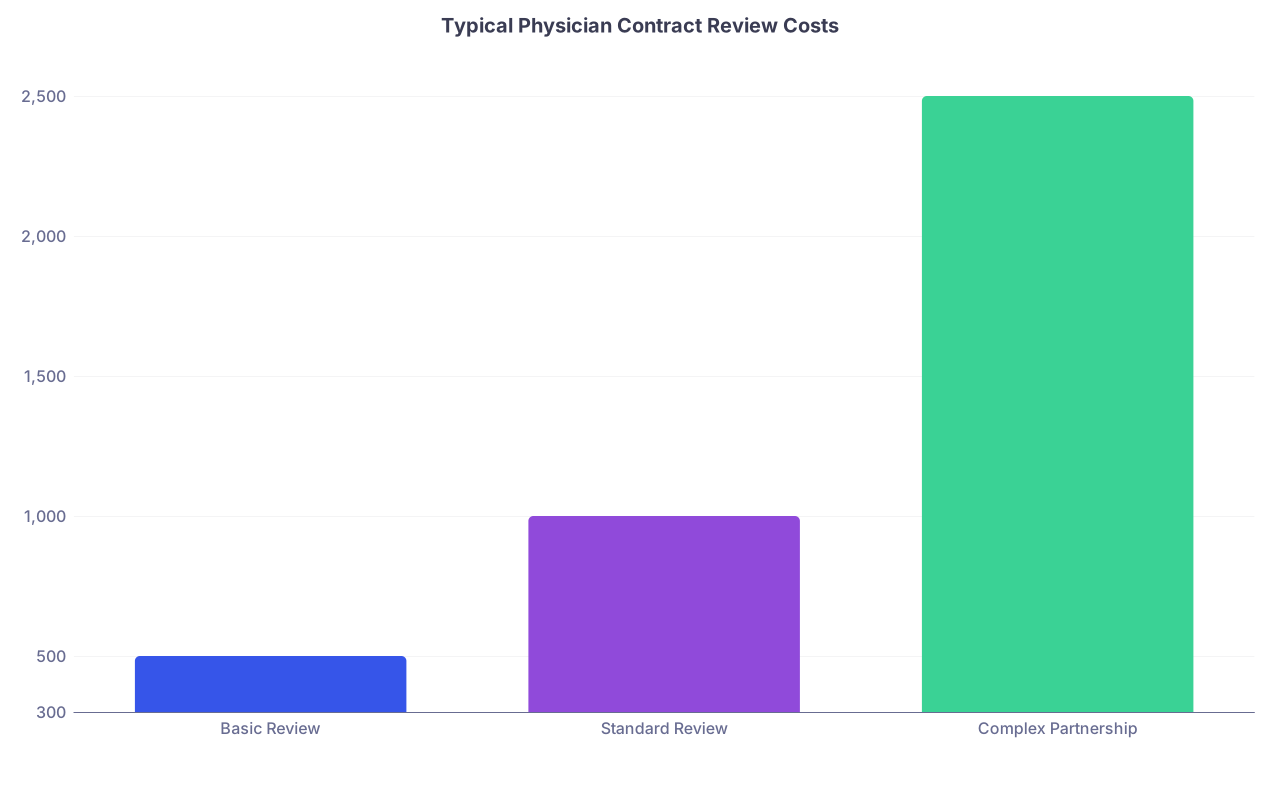
Typical ranges (US, as of recent years):
- Simple review with brief commentary: $300–$600
- Detailed review + call + negotiation strategy: $600–$1,500
- Complex partnership/ASC/corporate structure review: $1,500–$3,000+
| Category | Value |
|---|---|
| Basic Review | 500 |
| Standard Review | 1000 |
| Complex Partnership | 2500 |
If a $1,000 review improves your salary by just $5,000/year or gets you out of one bad clause, you’ve more than paid for it.
People will happily spend $2,000 on a vacation but balk at spending $800 protecting a $300,000/year job. That’s backwards.
How to Find a Good Physician Contract Attorney
You want someone who:
- Works with physicians routinely (not just generic employment law)
- Understands your specialty’s norms: RVUs in ortho vs psych aren’t the same world
- Knows your state’s laws on non‑competes, malpractice, etc.
Places to look:
- Colleagues a few years ahead of you – ask who they used and if they’d use them again.
- State medical society – many keep a list of health-care attorneys.
- Specialty societies – some have vetted vendors or recommendations.
Be wary of:
- Random “contract review services” with no named attorney
- People who push cookie-cutter “review templates” instead of reading your actual agreement
- Anyone who can’t discuss non‑compete enforceability in your specific state
How to Work With Your Attorney Efficiently (So You Don’t Waste Money)
You can keep this tight and efficient if you do a little prep:
- Send the contract in editable format if possible (Word > PDF).
- Include: your specialty, region, any other offers, and your top 3 priorities (e.g., non‑compete, schedule, buy‑in).
- Read the contract once yourself and list specific questions. Don’t show up saying, “So, what do you think?” without having looked.
- Ask them to flag:
- True deal-breakers
- High‑value negotiation targets
- Things to accept but watch

| Step | Description |
|---|---|
| Step 1 | Receive Contract |
| Step 2 | Self Read and Mark Questions |
| Step 3 | Hire Physician Contract Attorney |
| Step 4 | Attorney Review and Call |
| Step 5 | Negotiate Key Terms |
| Step 6 | Sign or Walk Away |
You’re paying for focused expertise. Don’t waste half the call having them explain basic definitions you could’ve Googled.
The Bottom Line: When It Makes Sense
To be blunt:
- If the job can change your life — income, geography, career trajectory — don’t sign blind.
- If the contract has teeth — non‑compete, clawbacks, complex comp, partnership — get a professional involved.
- If it’s a low‑stakes, flexible side gig with simple terms and no restrictive covenants, you can often handle it yourself.
The biggest mistake isn’t hiring a lawyer once too often. It’s hiring one for the first time only after you’ve already signed something ugly and want to know if there’s a way out.
Here’s your next step: pull up the last or current contract you signed (or the one sitting in your inbox) and score it using the 0–10 framework above. If you land at 4 or higher, email a physician contract attorney today and book a review before you sign anything else.