
The biggest mistake new attendings make is chasing the highest salary and ignoring the benefits that actually determine their quality of life.
You asked the right question. Let’s go straight through what really matters in a first attending job offer, what’s negotiable, and what’s just noise dressed up as “perks.”
1. Start With The Non‑Sexy Stuff: Malpractice, Disability, Tail
This is the boring page in the contract that ruins careers when people gloss over it.
Malpractice coverage: occurrence vs claims-made
You want to know three things:
- What type of malpractice policy?
- Who pays for it now?
- Who pays for it when you leave?

Here’s the hierarchy:
| Feature | Occurrence Policy | Claims-Made Policy |
|---|---|---|
| Coverage Trigger | When event occurs | When claim is filed |
| Needs Tail Coverage | No | Yes |
| Common in | Some hospitals | Many private groups |
| Tail Cost (you) | $0 | Often 1–2x premium |
If it’s claims-made (most private groups, many hospital-employed positions), you must see:
- Is tail coverage provided?
- Is it 100% employer-paid, shared, or on you?
- Is it contingent (e.g., only if you stay X years, or not if you’re terminated)?
Tail coverage can easily run $40,000–$120,000 depending on specialty and market. I’ve watched a new EM attending eat a $70k tail bill because they left at 18 months and the contract said tail was only covered after 3 years. Do not be that person.
Rule: If you’re paying tail personally in a first job, it better be an incredible opportunity, and you should assume you might still leave early. Otherwise, push hard to have tail covered or prorated over time.
Disability insurance: are you actually protected?
New attendings often think group disability is “fine.” It’s not.
Key questions:
- Is there group long-term disability?
- What’s the percentage of income covered? (50–60% is common.)
- Is the definition true own-occupation (you can do another job and still collect)?
- Is there a waiting period (usually 90 days)?
- Is it taxable or after-tax benefit?
You do not rely solely on employer disability, but a solid group plan lets you buy less expensive private coverage. Bad group disability means you’re paying more later, out of pocket, for a private policy to cover the gap.
Life insurance: nice but not critical
Basic group life (e.g., 1–2x salary) is fine but not decisive. If you have dependents, you’ll likely need a separate term policy anyway. This is not a deal-maker, but if a job has zero life insurance, that tells you something about how they value benefits.
2. Compensation Structure: Base, Bonus, Collections, RVUs
The top-line salary is not the real number. The structure is.
Understand how you’re paid
Common setups:
- Straight salary
- Salary + productivity bonus
- RVU-based comp
- Collections-based comp
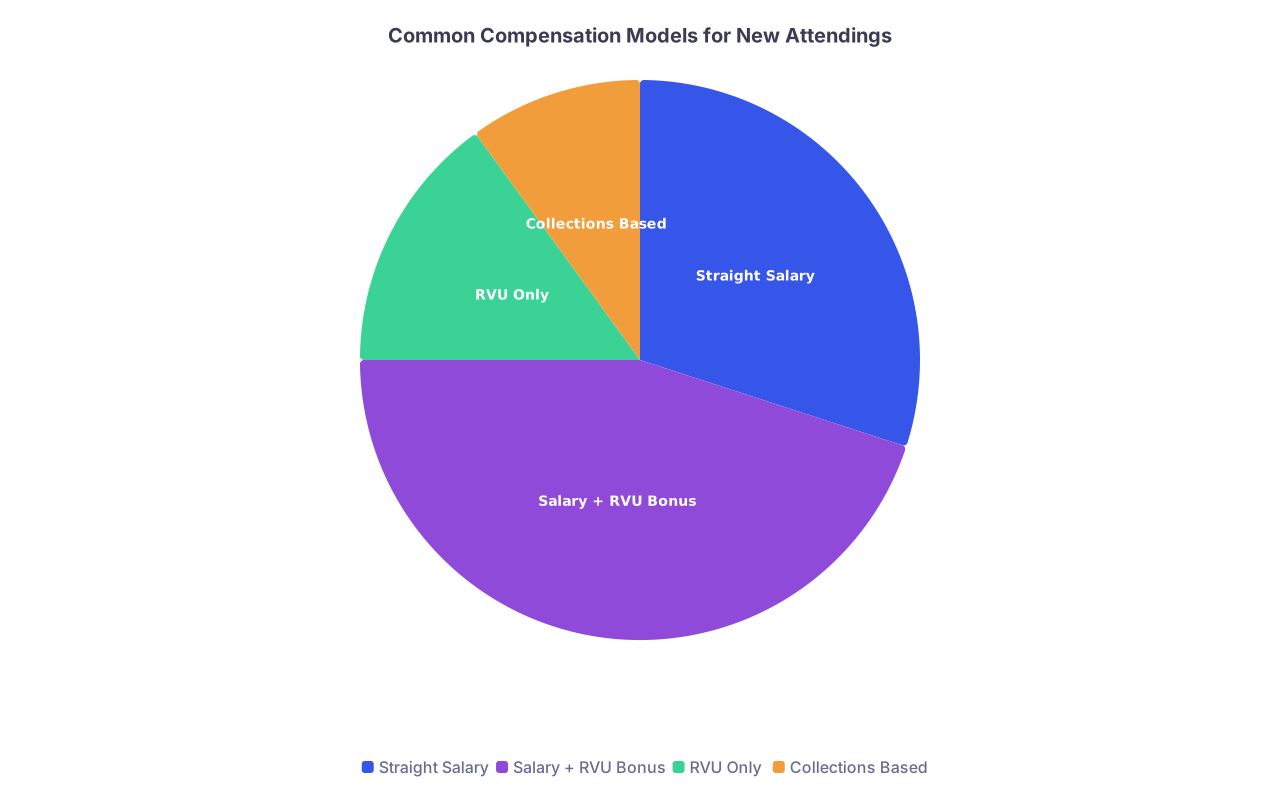
| Category | Value |
|---|---|
| Straight Salary | 30 |
| Salary + RVU Bonus | 45 |
| RVU Only | 15 |
| Collections Based | 10 |
If compensation is productivity-based, ask for real numbers, not vibes:
- Average RVUs per FTE last year for the group
- Median vs top quartile earners
- Realistic first-year expectations given ramp-up
If they say, “Our top earners make $500k,” ask what the middle of the pack makes. Top earners are often unicorns or partners with extra responsibilities.
Sign-on bonus and relocation
They matter, but only in context:
- Are they tied to a forgiveness schedule (e.g., 1/3 forgiven per year over 3 years)?
- What happens if you terminate early vs they terminate?
- Is relocation taxable to you? (Often yes.)
A flashy $50k sign-on that claws back everything if you leave before 3 years is a trap if the job is unstable or the environment looks sketchy.
3. Time: CME, Vacation, Schedule, Moonlighting
You’re not buying a job; you’re buying a life. Look hard at your time.
Vacation and CME: look at total protected time
Minimum I’d want to see as a new attending:
- 3–4 weeks PTO (some places separate vacation and sick)
- 1 week CME
- $2,000–$5,000 CME money
But here’s what’s more important: are these days truly off?
I’ve seen contracts with “4 weeks PTO” where clinic still scheduled patients and you had to “trade” days with colleagues to take actual time off. That’s not 4 weeks PTO. That’s a fantasy.
Schedule reality: not the brochure version
Ask specifically:
- Clinic/OR days per week
- Expected patient volume (new vs follow-ups)
- Call frequency and type (home call vs in-house; how busy is it actually?)
- Post-call expectations (clinic the next day or not?)
- Weekend/holiday coverage rotation
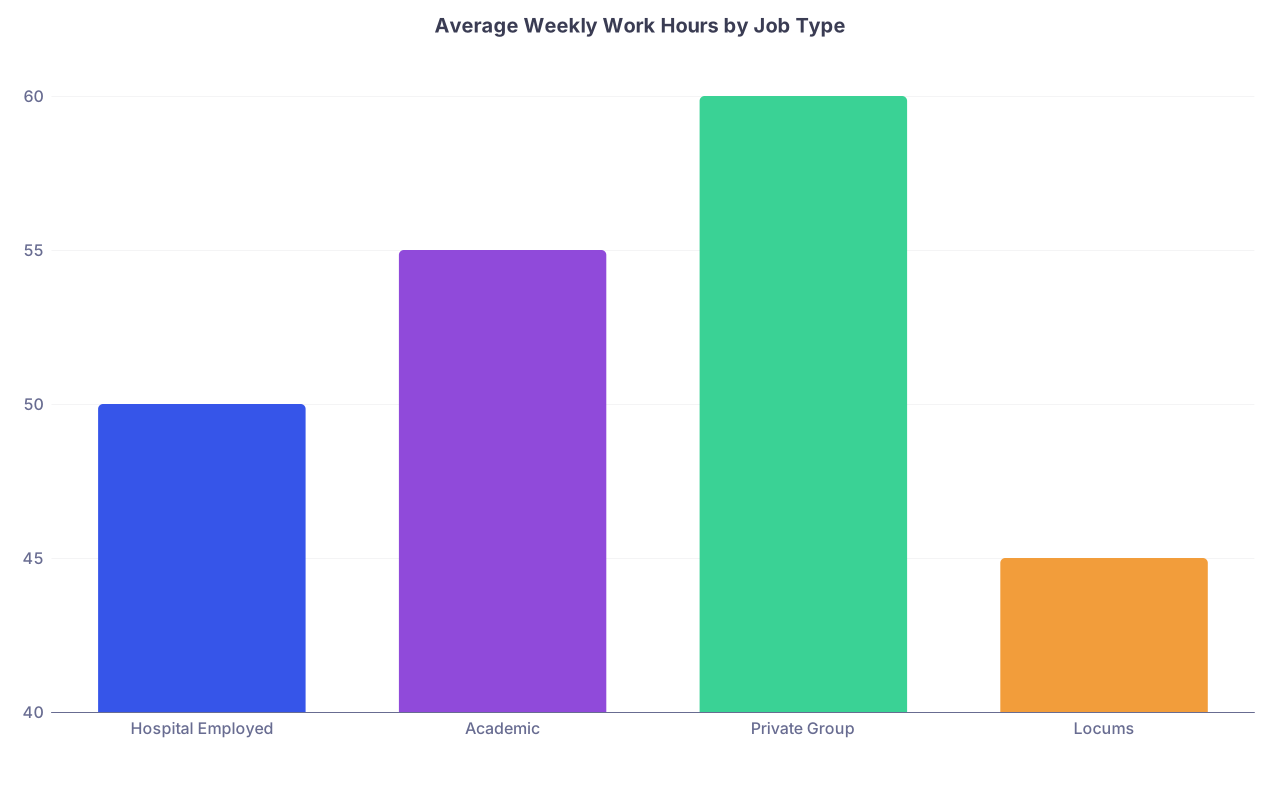
| Category | Value |
|---|---|
| Hospital Employed | 50 |
| Academic | 55 |
| Private Group | 60 |
| Locums | 45 |
Numbers above are illustrative, but you get the point: that “1:4 call” in a busy hospital can wreck you more than a 1:6 elsewhere.
Moonlighting and outside income
This is buried in many contracts and matters more than you think.
Look for:
- Is outside work allowed?
- If allowed, do you need written approval?
- Can you moonlight in competing hospitals or urgent cares?
- Does the employer claim ownership of anything you do professionally?
For many new attendings, moonlighting can add $20k–$80k/year early on, help you pay off loans, or let you test-drive other sites. A contract that bans all outside work, even low-risk telemedicine or teaching, is a meaningful limitation.
4. Retirement and Long-Term Financial Benefits
You won’t care about this in month one. You will care in year five.
Retirement contributions: free money (or not)
Key pieces:
- Is there a 401(k), 403(b), or 457(b)?
- Employer match or contribution? How much?
- Vesting schedule? (Immediate vs graded over years.)
| Job Type | Match/Contribution | Vesting |
|---|---|---|
| Academic Hospital | 5–10% of salary | 3–5 year graded |
| Large System | 4–6% match | 2–3 years |
| Private Group | Profit-sharing only | Variable |
A difference between a 3% vs 10% total employer contribution on a $300k salary is $21,000 per year. Over a decade, with growth, that’s hundreds of thousands of dollars.
Student loan repayment
This is less common than advertised, but when present, it’s powerful.
Watch for:
- True loan repayment vs a bonus labeled as such
- Who gets paid (you vs direct to servicer)
- Strings attached (must stay X years or repay)
If you owe high-six-figures, a job with robust loan repayment and PSLF-qualifying employment can be worth significantly more than an extra $20k in base salary.
5. Health Insurance and Family Coverage
This gets ignored until someone gets sick or has a baby.
Look at:
- Monthly premiums for you and for family
- Deductibles and out-of-pocket maximums
- Network (are the hospitals/doctors you want actually in-network?)

| Category | Value |
|---|---|
| Low-Premium High-Deductible | 9000 |
| Mid-Premium PPO | 6000 |
| High-Premium Low-Deductible | 3500 |
That “great salary” can vaporize fast if family coverage costs $1,500/month and you’re on the hook for a $6k–$10k deductible every year.
If you plan to have kids soon, how parental leave works, and whether it’s paid, is not a side issue. It’s central.
6. Partnership Track, Academic Titles, and Long-Term Upside
First attending job offers often dangle “partnership” or “academic rank” like shiny objects. You need details.
Partnership: define it or ignore it
Key questions:
- Is there a clear timeline to partnership?
- Is it automatic or invite-only?
- What’s the buy-in? (Dollar amount and financing.)
- What exactly do partners earn and own? (Equity in real estate? Imaging? ASC? Just higher RVU rates?)
If they will not show you a range of actual partner incomes and explain the path clearly, assume partnership is uncertain and value the offer as an employed job only.
Academic vs non-academic
Academic roles may offer:
- Lower salary but stronger retirement and benefits
- Protected time for teaching/research (sometimes theoretical, sometimes real)
- PSLF-eligible employment for federal loans
Non-academic/private often offer:
- Higher potential income
- Less bureaucracy, sometimes less job security
- More pressure on productivity
The right answer depends on your goals, but do not pretend a $40k difference in base salary tells the whole story. It does not.
7. Red Flags and “Perks” That Don’t Actually Matter
Some things look nice on the brochure and are mostly fluff.
Common red flags
- Vague call descriptions: “Reasonable call” with no numbers
- No transparency on what current attendings actually earn
- Short history of the group with lots of turnover
- No say in schedule or clinic template design
- Tail coverage 100% on you for any early exit
Perks that are usually overrated
- Free coffee, snacks, “wellness rooms”
- Fancy titles with no time or support behind them
- “Leadership opportunities” that are really just extra committees
- Gym discounts vs actual protected time for your life

I’m not against perks. I’m against people letting perks distract them from structural issues that actually decide whether they burn out.
8. How To Weigh Two Job Offers Side by Side
Forget the glossy PDFs. Build a simple comparison.
| Category | Offer A (Academic) | Offer B (Private Group) |
|---|---|---|
| Base Salary | $260k | $320k |
| Retirement | 10% contribution | 3% match |
| Malpractice | Occurrence | Claims-made, no tail |
| PTO + CME | 5 weeks total | 3 weeks total |
| Call | 1:6, home | 1:3, busy |
Then ask yourself:
- Which risks am I taking in each offer (money, tail, lifestyle)?
- What’s my exit cost if this doesn’t work out?
- In 5 years, which job sets me up better financially and emotionally?

| Step | Description |
|---|---|
| Step 1 | Receive Job Offers |
| Step 2 | Check Malpractice and Tail |
| Step 3 | High Risk - Discount Offer |
| Step 4 | Proceed |
| Step 5 | Compare Time Off and Call |
| Step 6 | Evaluate Compensation Structure |
| Step 7 | Review Retirement and Health |
| Step 8 | Consider Moonlighting Limits |
| Step 9 | Rank Offers by Fit and Risk |
| Step 10 | Tail Covered? |
That’s how you stay rational instead of hypnotized by one big number.
FAQs
1. What’s the single most important benefit in a first attending job?
If I have to pick one: malpractice coverage with tail clearly defined and preferably paid by the employer. A bad tail setup can cost you more than any sign-on bonus or small salary bump will ever make up.
2. How many weeks of vacation should I expect as a new attending?
In most non-surgical specialties, 3–4 weeks PTO plus about 1 week CME is typical. Academic jobs may offer more total time but lower salary. Less than 3 weeks PTO in a full-time attending job is a red flag unless the compensation is significantly higher and you truly want to grind.
3. Should I prioritize a higher salary or better retirement and benefits?
Early on, cash flow matters, but don’t ignore a strong retirement package. A job with $40k less in salary but a 10% employer retirement contribution, better health coverage, and covered tail can easily come out ahead in real, long-term value.
4. Is it worth taking a lower-paying job that allows moonlighting?
Often yes. If a job pays a bit less but allows you to moonlight freely, you can make up the gap—sometimes more—while keeping the option to scale back later. Just make sure moonlighting is clearly allowed in writing and you’re not constrained by non-competes or approval hoops.
5. How long should I plan to stay in my first attending job?
Plan as if you might leave in 2–3 years even if you hope to stay longer. That mindset forces you to care about things like tail coverage, vesting schedules, and exit costs rather than assuming everything will be perfect forever.
Key takeaways: do not get hypnotized by base salary alone; anchor your decision on malpractice/tail, actual time off, call, and retirement; and evaluate each offer through the lens of, “What happens if I need to leave sooner than I expect?” If you get those pieces right, the rest is much easier to fix or renegotiate later.