
The fastest way to get underpaid is to accept call pay without benchmarks.
You’re not crazy for asking, “Is this a fair call pay offer?” Most physicians never see real numbers from peers, and hospitals absolutely use that information gap to their advantage.
Let me walk you through how to sanity‑check a call pay offer, what benchmarks actually matter, and the specific comparison questions you should be asking before you sign anything.
1. Start With the Only Question That Matters
Here’s the core filter:
“If I removed call from this job, would the remaining base compensation stand up to market data?”
If the answer is no, they’re using “included call” as a subsidy to hide a weak base salary.
Then you layer on three things:
- What is the call burden? (frequency + intensity)
- What is the call structure? (in‑house vs beeper, primary vs backup, surgical vs medical)
- What is the call compensation? (per shift, stipend, wRVU bump, or “baked in”)
A “fair” offer is not just a dollar number. It’s dollars relative to burden.
2. Basic Benchmarks: Where Call Pay Usually Starts
You will never get universal numbers, but there are recognizable bands. Think in ranges, not absolutes.
| Setting Type | Common Call Pay Pattern |
|---|---|
| Academic Center | Call often “included”; low stipends |
| Large Private Hospital | Night/weekend stipends, tiered by risk |
| Community Hospital | Flat per‑day call or small stipend |
| Rural / Critical Access | Higher stipends to attract coverage |
| Highly Subspecialized | Premium rates, smaller call pool |
Very rough directional ranges for weekday beeper call (not in‑house), assuming moderate volume and you’re actually covering emergencies:
- Low‑end/undervalued: $0–$250 per 24 hours
- Common middle: $300–$800 per 24 hours
- Premium / high‑burden: $800–$2,000+ per 24 hours
In‑house call, continuous presence, or trauma / high‑acuity work? That number should go up significantly. Think of in‑house more like a night shift than “call.”
Specialty obviously matters. Anesthesia, neurosurgery, interventional cardiology, GI with ERCP, ortho trauma, and OB with high delivery volume should be at the top of those ranges. Low‑volume outpatient specialties at the bottom.
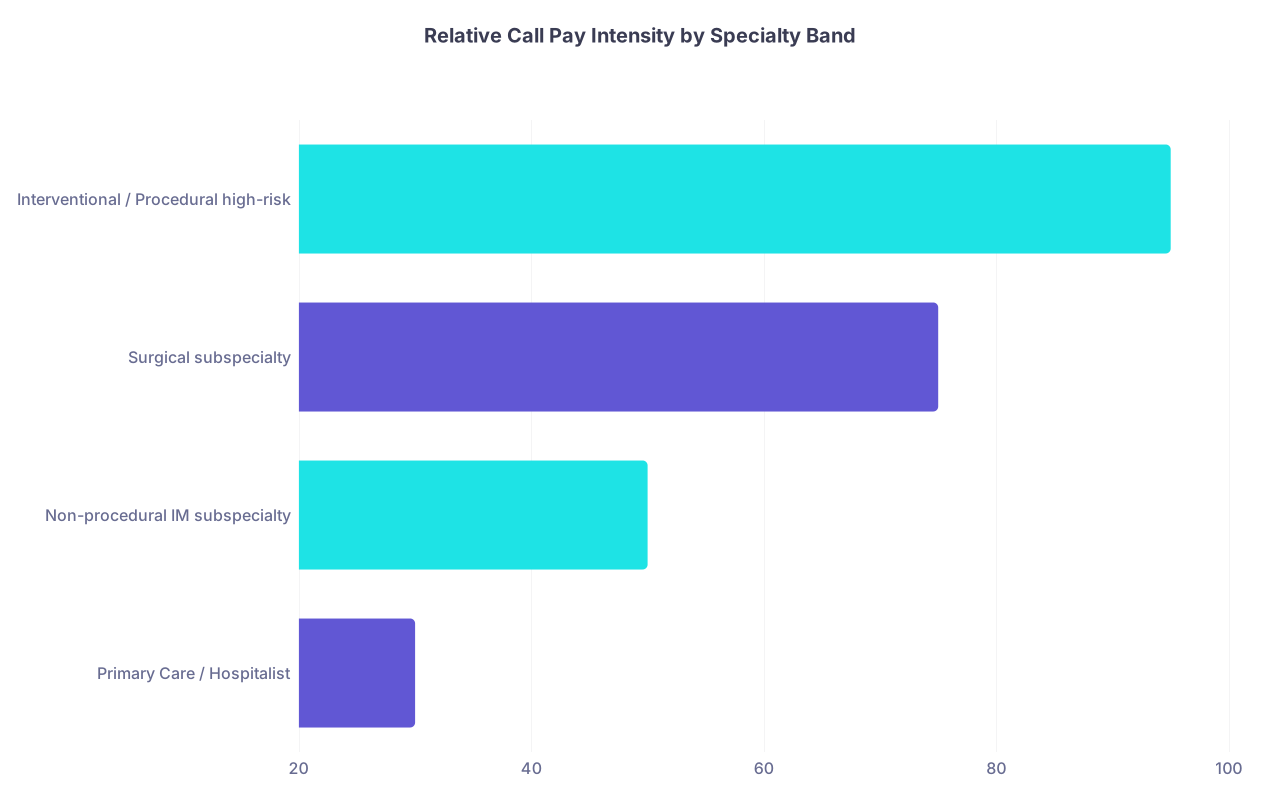
To keep this tangible, here’s how the market feel often looks by specialty band:
| Category | Value |
|---|---|
| Primary Care / Hospitalist | 30 |
| Non-procedural IM subspecialty | 50 |
| Surgical subspecialty | 75 |
| Interventional / Procedural high-risk | 95 |
This isn’t dollars, it’s relative market leverage. The more procedure‑dependent and irreplaceable you are on short notice, the more call pay tends to move.
3. The Three Axes of Call Fairness
When I review offers with physicians, I run them through three axes:
- Burden
- Control
- Compensation
If two are bad, walk away. If one is bad, you negotiate.
1) Burden: How Heavy Is This Call, Really?
Do not stop at “1 in 4 call.” Ask:
- How many true emergencies overnight in a typical weeknight? Weekend?
- Average pages per night?
- How often do people get called in after midnight?
- How many hospitals are you covering at once?
- Is this primary call, backup call, or both?
- Are you covering unassigned patients only, or all admits and consults?
Then quantify:
- 1:6, low volume, rarely called in after midnight? Cheaper call can still be fair.
- 1:2, frequent in‑person trips, or in‑house? If that’s unpaid or “included,” that’s a problem.
Call that wrecks your sleep two nights a week is not the same as quiet beeper call while you watch Netflix.
2) Control: Who Chooses the Schedule and Rules?
Control is underrated but brutally important.
Ask:
- Who sets the call schedule – physician group, hospital admin, or a scheduler?
- Can call be traded easily?
- Is call requirement fixed in the contract, or “as assigned by employer”?
- Are there clear limits? (e.g., no more than X 24‑hour calls per month)
- Does call increase automatically when new services open?
Bad sign: vague language like “physician will take call as reasonably necessary to support hospital needs.” That’s an invitation to slowly ratchet up your call for free.
3) Compensation: How, Not Just How Much
You’ll see a few structures:
- Flat per‑day or per‑night stipend
- Per‑shift in‑house hourly pay
- wRVU generation only (no stipend)
- “Included” call in base salary
- Hybrid: smaller stipend + extra wRVUs for call‑driven work
What’s dangerous: “included call” with no separate line item, no cap on how much call they can assign, and no adjustment if call intensity increases.
Better: base salary clearly described as “for clinic + daytime responsibilities, excluding call,” then a clean call schedule and rate on top.
4. Concrete Comparison Questions to Ask (And Actually Use)
This is where people usually fail—they don’t ask other physicians for numbers. You must.
Here are the questions to use when talking to colleagues at similar institutions or in similar markets:
- “What’s your typical call frequency (weekday and weekend) and is it in‑house or beeper?”
- “Do you get a stipend for call? If so, how much per weekday and per weekend day?”
- “If call is ‘included,’ what’s your total comp and how much call are you doing?”
- “Has your call burden changed over the last 2–3 years? Did your pay change with it?”
- “How many hospitals are you covering per call shift? Any double‑coverage issues?”
- “Are you compensated extra for second call, backup call, or covering another site last‑minute?”
- “Does your hospital use any benchmark or survey to set call pay?”
And for the employer directly:
- “What national or regional benchmarks are you using to justify this call rate?”
- “How does this rate compare to what you pay locums for the same call coverage?”
- “Is call pay adjusted automatically with volume or only renegotiated at contract renewal?”
- “What are the conditions under which call expectations can increase?”
If they can’t or won’t answer, they’re either disorganized or hiding something. Neither is good.
5. Compare to Locums and Internal Benchmarks
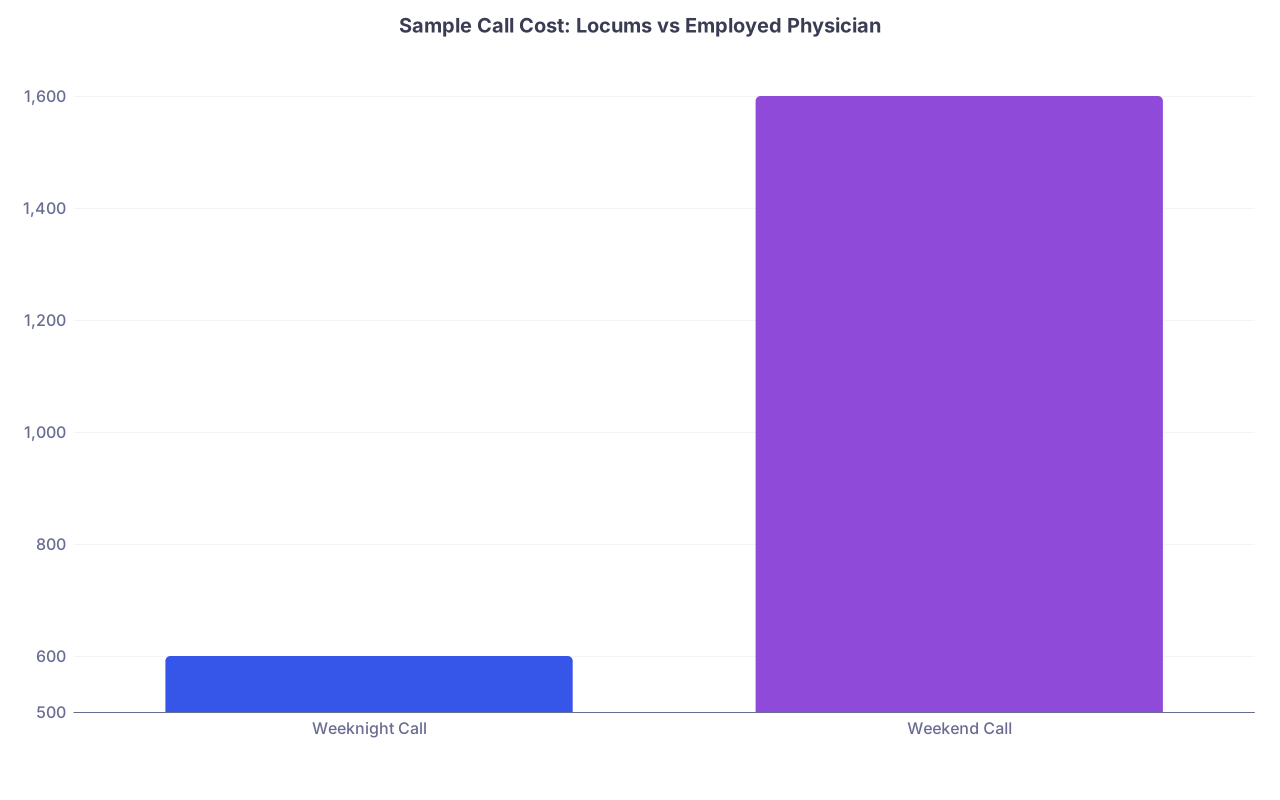
The simplest sanity check: What would they pay a locums physician to cover this exact call?
If they’d pay a locums $1,600 for 24‑hour weekend call but want to pay you $300 for the same shift as an employed physician, they’re not being generous—they’re buying your loyalty at a deep discount.
| Category | Value |
|---|---|
| Weeknight Call | 600 |
| Weekend Call | 1600 |
If you can, also ask:
- Are other specialties in the same hospital getting call stipends?
- Are partner/legacy physicians getting a better arrangement than new hires?
- Is there a medical staff development plan that mentions call coverage shortages?
You’re looking for inconsistencies. If ortho and OB get paid call but you (GI, cards, anesthesia) are “expected” to include it, they’ve made a strategic choice, not a financial necessity.
6. Watch These Red Flags in Call Pay Offers
There are patterns I’ve seen over and over in bad offers:
Unlimited “included” call
Language: “Call as needed to support hospital.” No frequency cap. No separate pay. This can quietly turn 1:6 call into 1:3 without new money.Mandatory second site coverage with no extra pay
You’re paid for call, but then they add a second hospital 40 minutes away for the same rate.No distinction between weekday and weekend call
A flat $300 “per day” whether it’s a sleepy Tuesday or a brutal Sunday. Weekend/holiday call should pay more.Call pay is “subject to annual review” with no floor
You negotiate a decent number now; they cut it in half next year. Put minimums in the contract.Penalties for refusing extra call but no bonus for picking it up
If saying no has consequences, saying yes should have compensation.
7. Reasonable Structures That Often Work
You’re not just looking to complain—you need a workable structure to propose. Here are structures that tend to be fair and administratively simple:
Tiered call rates
- Weeknight beeper: base rate (say $400–$600)
- Weekend 24‑hour beeper: 1.5–2x weeknight
- In‑house overnight: hourly rate closer to day shift hourly equivalent
Baseline included + premium for excess
- Contract includes up to X weekday calls and Y weekend calls per month
- Any call beyond that pays at a higher per‑shift rate
Separate pay for backup / second call
- 100% pay for primary
- 25–50% of primary rate for backup, depending on how often backup is actually called in
Make them write the structure clearly into the contract. No “we’ll figure it out later” verbal promises.
8. How to Benchmark Quickly Without Full Survey Access
You may not have access to MGMA or SullivanCotter, but you’re not helpless.
Use:
- Conversations with 3–5 peers in similar markets
- Locums agencies’ posted call rates for your specialty
- Your state specialty society listserv or private FB/WhatsApp groups
- Recruiters (they’ll often share ranges they see, especially if you ask narrowly: “For GI beeper call in the Midwest, what ranges have you seen in the last year?”)
Then put your data in a simple grid:
| Source | Weeknight Call | Weekend 24h Call | In-house? | Notes |
|---|---|---|---|---|
| Your Offer | $X | $Y | Y/N | Frequency, burden |
| Peer Job #1 | $ | $ | Y/N | Academic vs private |
| Peer Job #2 | $ | $ | Y/N | Call 1:4 vs 1:6 |
| Locums Quote | $ | $ | Y/N | Same hospital/region |
If your employed rate is consistently less than 40–50% of what they’d pay locums for the same work, that’s a strong negotiation point.
9. Negotiation Angles That Actually Work
You do not need to threaten to walk to improve a call offer, though that always helps.
Use:
Locums comparison
“I’ve seen locums rates of X for this exact call coverage. I understand I’m employed, but this offer is less than a third of that. Can we get this closer to Y so it’s at least in the same universe?”Volume and safety
“With the number of overnight emergencies and the risk profile, this is essentially another work shift. I’d like to see the call rate reflect that intensity.”Equity with other specialties
“I understand ortho and OB are receiving call stipends. Given the similar burden and liability, I’d like our arrangement to be in the same framework.”Defined ceilings
“I’m willing to include up to 4 weekday calls and 1 weekend call per month in my base. Beyond that, additional call should be compensated at $____ per 24 hours.”
You’re not asking for charity. You’re pricing risk, inconvenience, and bodily wear‑and‑tear.
10. Quick Reality Check Flow
If you want a simple mental algorithm, use this:

| Step | Description |
|---|---|
| Step 1 | Review Offer |
| Step 2 | Included call only |
| Step 3 | Stipend or shift rate |
| Step 4 | High risk - likely unfair |
| Step 5 | Check market total comp |
| Step 6 | Underpaid - negotiate |
| Step 7 | Borderline - check burden |
| Step 8 | Likely reasonable |
| Step 9 | Is call separately paid? |
| Step 10 | Is call frequency capped? |
| Step 11 | Compare to locums rate |
| Step 12 | Heavy call burden? |
If you land in F or I in that chart, you either renegotiate or you treat this offer as a backup, not your primary plan.
11. The Future: Call Pay Is Not Staying Flat
One last point. Call coverage is getting harder to secure, not easier. Younger physicians tolerate bad call less. Many are going part‑time or going locums.
That drives:
- Rising locums call rates
- Hospitals more willing to pay stipends where they used to rely on “professional obligation”
- More tiered systems (base requirement plus paid excess call)
You want your contract structured so that when the market tightens and call gets more expensive, you benefit too, not just the locums they bring in when you burn out.
FAQ: Common Call Pay Questions
1. Is it normal for call to be “included” in base salary with no extra pay?
Yes, it’s common, especially in academic centers and some hospital‑employed models. But “common” does not mean fair. It can be acceptable if: (a) call is light and predictable, (b) your total compensation is clearly above median for your specialty and region, and (c) call expectations are explicitly capped in the contract. If any of those three are missing, you’re quietly subsidizing the hospital.
2. How much more should weekend call pay than weekday call?
A reasonable structure is 1.5–2x the weekday rate for a 24‑hour weekend shift, especially if Saturday and Sunday are busy. If they insist on a flat rate for all days, push for either (a) a higher blended rate, or (b) explicit limits on the number of weekend calls you’re obligated to take.
3. Should backup call be paid, even if I rarely get called in?
Yes. You’re tethered to your phone and your location, and that has value. Backup pay is usually lower than primary—often 25–50% of the primary call rate—but “unpaid backup” is a classic way to squeeze more from you without paying for it. At minimum, insist that if you are called in as backup, you’re paid at full primary call or hourly rates.
4. Is it reasonable to renegotiate call pay after I’ve already signed?
It’s harder, but absolutely possible, especially if call burden has clearly increased or they’re struggling to find coverage. Your leverage is highest when they are desperate to fill gaps or facing unsafe coverage. Bring data: number of calls, pages, late nights, locums rates, and comparisons with other sites. Ask to amend the contract or add a call pay policy with defined rates.
5. What if my partners say, “We’ve always done call for free; it’s part of being a doctor”?
That’s cultural, not contractual reality. You do not have to perpetuate a bad tradition. You can respect the profession and still insist that high‑risk, sleep‑destroying labor be compensated. I’d respond with: “If call is part of being a doctor, then let’s at least distribute it fairly and write clear limits. And if the hospital is paying locums for call, we should not be doing the same work for free.” Culture follows money, eventually.
Key points to keep in your head:
- Fair call pay is always relative to burden and market—not just a single number.
- Compare against locums and peers; if you’re under 40–50% of locums rates for the same work, push back.
- Get call details, limits, and pay structures in writing, or expect them to drift in the hospital’s favor over time.