
The biggest mistake doctors make with side gigs and locums is assuming “someone else” has their malpractice covered. That assumption can ruin you.
You do not always need your own malpractice policy. But you absolutely need to know, in writing, who is covering what—and where the gaps are. Hoping HR “took care of it” is how people end up uninsured after the worst day of their career.
Let me walk you through how to figure this out without becoming an insurance expert.
Step 1: Understand the 3 Typical Coverage Setups
Most side gig and locums arrangements fall into one of three buckets:
| Setup Type | Who Buys Policy | Tail Coverage | Your Risk Level |
|---|---|---|---|
| Employer-covered (claims-made, tail provided) | Hospital/group | Employer | Low |
| Employer-covered (claims-made, *no* tail) | Hospital/group | You (if you want it) | Medium–High |
| You buy own occurrence policy | You | Not needed | Medium (but controlled) |
- Employer/group provides malpractice and tail
- Employer/group provides malpractice but not tail
- You carry your own policy (often “moonlighting” or part-time policy)
The question isn’t “Do I need my own malpractice policy?”
The real question is: “Is the coverage for this specific work complete and in writing—or do I have gaps I need to plug myself?”
Step 2: Ask These 7 Questions for Every Side Gig or Locums Job
Do this for each distinct role: telemedicine gig, urgent care shifts, locums assignment, expert witness, medical directorship, aesthetics, etc. Coverage usually does not automatically carry over from one to the other.
Here’s the short checklist:
Who is providing malpractice insurance for this work?
Exact legal entity. “You’re covered” is not enough. You want: “XYZ Medical Group will provide malpractice insurance.”What are the policy limits?
Typical: $1M/$3M or $2M/$4M (per claim / annual aggregate).
If they’re lower than your main job, you should know that consciously.Is it claims-made or occurrence coverage?
- Claims-made: Covers claims made while the policy is active
- Occurrence: Covers events that occurred during the policy period, no tail needed
Who pays for tail coverage if claims-made?
This is the landmine. Many small groups and side gigs quietly hand you the tail bill at the end.What exact activities are covered?
Read the scope: Clinical only? Supervisory? Procedures? Telemedicine across states? Aesthetic work?Are you covered for work at all sites you’ll be practicing?
Some policies are location-specific or state-specific. Locums especially: each facility may be endorsed separately.Are you an employee, contractor, or independent doc billing under your own NPI?
Independent status often shifts more risk to you, even when they “provide coverage.”
If you cannot get clear, written answers to those questions, you should assume gaps exist and start thinking about your own policy.
Step 3: When You Usually Don’t Need Your Own Policy
Let me be very direct: plenty of doctors moonlight or do locums without buying their own separate policy, and it’s fine—because the arrangement is structured correctly.
You probably do not need your own malpractice policy if:
- You are W-2 employed for the side gig
- The contract explicitly states the group/hospital provides malpractice
- The policy is either:
- Occurrence-based, or
- Claims-made with employer-paid tail on termination
- The scope is fully clinical within their usual services (e.g., ED moonlighting in the same system)
- You’re not doing independent billing or working under your own small LLC as a separate practice
This is typical for:
- Internal moonlighting shifts within your own residency or hospital system
- Many large national telemedicine companies (though not all—always verify)
- Some big locums agencies that carry their own umbrella coverage and tail
Still, “typical” doesn’t protect you in court. The contract language does. Always confirm.
Step 4: When You Probably Do Need Your Own Policy
Here’s where I start to get twitchy if I don’t see independent coverage:
Aesthetics, concierge, or cash-pay side practices
Botox in a med spa one evening a week. Hormone clinics. Medical weight loss. IV “wellness” lounges.
These are often run by business people who think malpractice is “overkill.” It is not.If you are the medical professional of record, you need your own policy. Full stop.
Independent contractor locums with vague contracts
Contract says: “Physician will maintain malpractice insurance adequate for practice.”
That usually means: no one is covering you except you.Telemedicine 1099 work where they say “you’re responsible”
Lots of small/startup telehealth companies push coverage onto physicians.
If they say “we don’t provide malpractice,” you either get your own or walk.Medical director roles (med spa, SNF, home health, hospice, etc.)
These roles often involve non-clinical liability (policies, oversight, supervision).
Many standard policies do not automatically cover some admin/oversight risk unless endorsed.Any situation where you’re billing under your own entity
If the revenue flows through “Your Name, PLLC” or “Your Clinic, PC” and you sign the contract as that entity, assume you need your own policy for that entity and yourself.Gaps in tail coverage from old jobs
If a prior employer did not provide tail, and you keep practicing in the same state/specialty, you might buy a “prior acts” or “nose” policy under a new carrier.
Not exactly a “side gig,” but often discovered the same way—when you finally look at the fine print.
Step 5: Claims-Made vs Occurrence – What Actually Matters
The insurance industry jargon makes this sound more complicated than it is.
Here’s the bottom line:
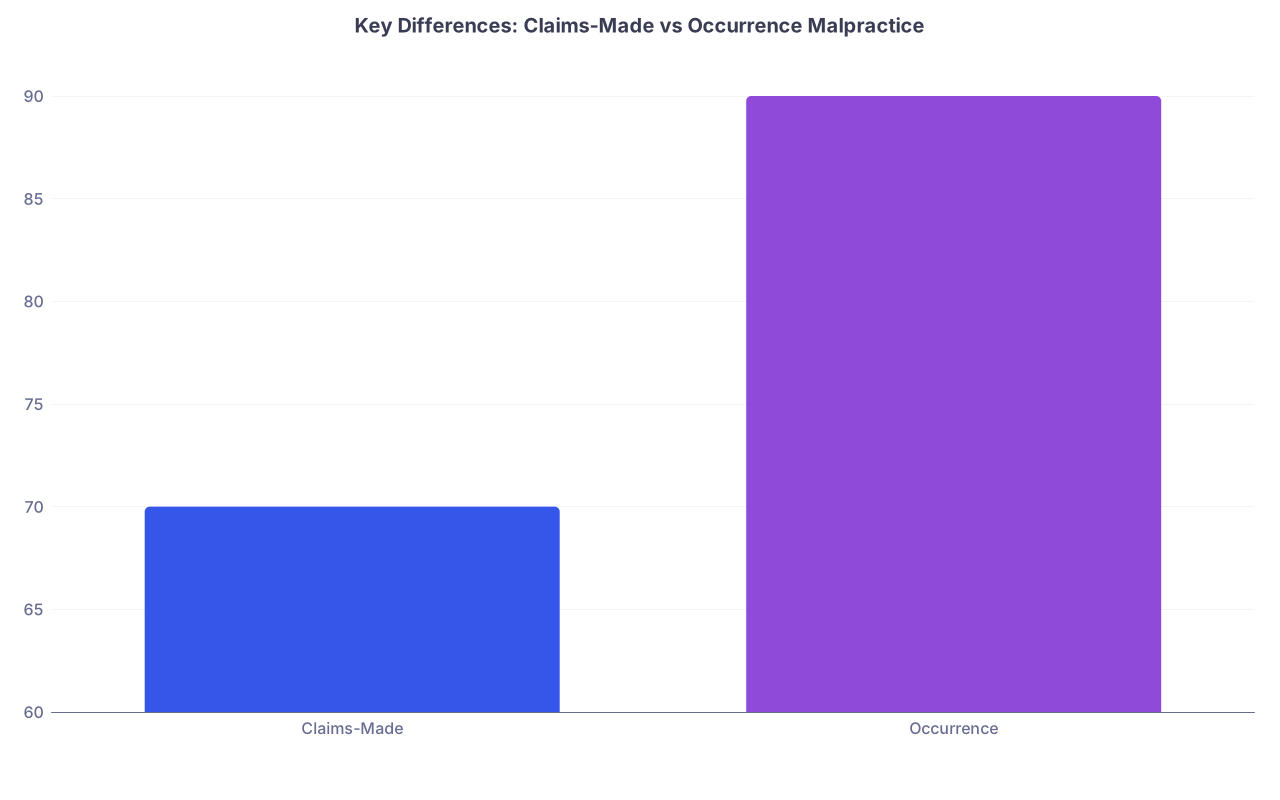
| Category | Value |
|---|---|
| Claims-Made | 70 |
| Occurrence | 90 |
That chart is symbolic: occurrence gives you more long-term simplicity; claims-made is cheaper up front but creates tail problems later.
Occurrence policy
- Covers any incident that happened while policy was active, even if you’re sued years later
- No tail needed
- Often more expensive per year—but cleaner for short-term gigs
Claims-made policy
- Only covers claims filed while the policy is active
- When you leave, coverage stops unless you:
- Buy tail, or
- Move coverage to a new insurer with “prior acts” coverage
For locums and side gigs, occurrence is often ideal because you might only be there 6–12 months. But many groups and agencies still default to claims-made because it’s cheaper for them.
Your critical question:
“If this is claims-made, who is paying for tail when I leave?”
If the answer is “you,” now you’re in “Do I need my own policy?” territory.
Step 6: Locums-Specific Pitfalls
Locums has its own set of traps. I’ve seen all of these:
Agency says: “We provide malpractice.”
But it’s a low-limit policy with exclusions for certain procedures you actually do.Hospital says: “You’ll be on our policy.”
But they never added you formally, or only covered you for inpatient, not outpatient work.Tail not addressed anywhere in the contract
“We’ve never had an issue” is not an answer.
For every locums assignment, confirm in writing:
- Named insurer
- Policy limits
- Claims-made vs occurrence
- Sites covered
- Any excluded procedures or settings
- Who is buying tail if claims-made
If anything feels shaky, a personal part-time policy can be your backstop. And yes, you can have your own policy even when another exists—insurers just coordinate coverage.
Step 7: Non-Clinical Side Gigs – Are You Still at Risk?
What about work like:
- Expert witness
- Consulting for a startup
- Chart review and utilization review
- Clinical content creation
- Teaching, CME speaking
Here the answer is “it depends,” but I’d break it down this way:
- Expert witness – Often requires specific professional liability coverage. Some carriers add endorsements, some don’t. You may need a separate policy.
- Utilization review / chart review – Risk is smaller but not zero. If you’re employed by a large org, they may cover you. If 1099, ask explicitly.
- Consulting / advising startups – Many startups want your name but not your risk. Press them about their corporate liability and whether their E&O or professional liability extends to you.
- Education / speaking – Generally low risk; usually covered under general professional liability, but ask.
If your side work involves giving medical opinions tied to patient care decisions—even indirectly—assume you need either:
- An employer/contractor policy that clearly covers that work, or
- Your own tailored policy
Step 8: How to Actually Buy Your Own Malpractice Policy (Without Getting Fleeced)
You do not call the company on the billboard and say, “Give me whatever.” You’ll overpay and be undercovered.
Instead:
- Contact at least two independent brokers who specialize in physician malpractice
- Tell them clearly:
- Your specialty, procedures, and states
- Whether this is part-time / moonlighting only or full-time
- Exact settings: telehealth, clinic, ED, OR, med spa, etc.
- That you want occurrence if possible for side gigs, or claims-made with affordable tail
- Ask for quotes for:
- A dedicated moonlighting/part-time policy
- Any available riders that cover things like:
- Medical director work
- Telemedicine across multiple states
- Aesthetics / cash-pay services
Then compare:
- Limits (do not go bargain-basement just to save a few hundred dollars)
- Exclusions (everyone skips this part, then regrets it)
- Cost of tail if claims-made
This is also where you look at coverage for your entity (e.g., “Smith Medical PLLC”) if you’re contracting through a business, not as an individual.
Step 9: Quick Decision Framework
If you want a simple rule of thumb, use this:

| Step | Description |
|---|---|
| Step 1 | New Side Gig or Locums Role |
| Step 2 | You need your own policy |
| Step 3 | Own policy usually not required |
| Step 4 | Does contract say employer provides malpractice? |
| Step 5 | Is coverage occurrence or claims-made with employer-paid tail? |
| Step 6 | Are you 100 percent comfortable with tail and scope gaps? |
If at any branch you feel uneasy or unclear, that’s your red flag to either:
- Get better contractual language, or
- Buy your own policy
Step 10: Stop Ignoring Tail Coverage
The quiet disaster scenario looks like this:
- You moonlight somewhere for 2 years under a claims-made policy
- They do not provide tail
- You leave
- Two years later, a claim appears
- There’s no active policy to respond
Without tail, claims-made coverage is basically a mirage once you leave.
If you’re going to do short-term side work or locums, either:
- Push hard for occurrence coverage
- Or negotiate written, employer-paid tail as a condition of working there
If they won’t budge and you still want the gig, run numbers on a personal policy and/or personal tail. Do not just “hope it works out.”
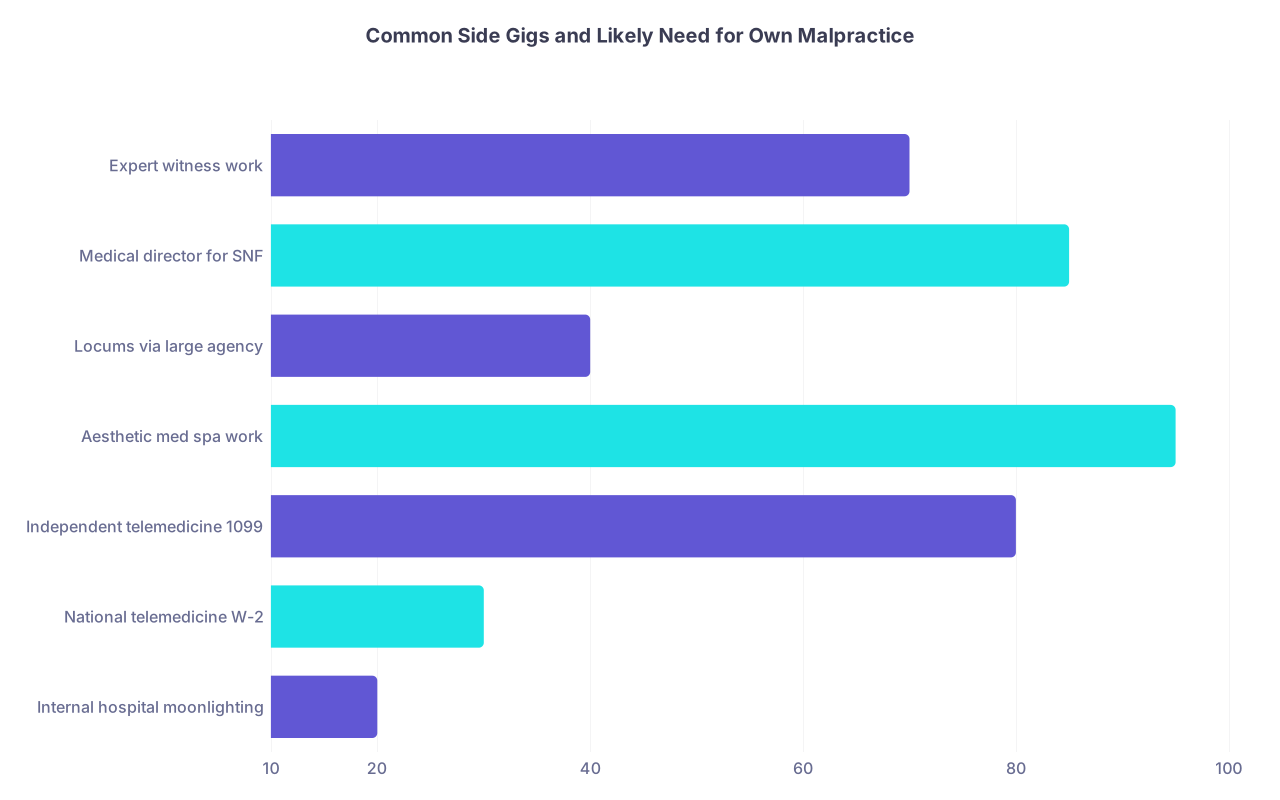
| Category | Value |
|---|---|
| Internal hospital moonlighting | 20 |
| National telemedicine W-2 | 30 |
| Independent telemedicine 1099 | 80 |
| Aesthetic med spa work | 95 |
| Locums via large agency | 40 |
| Medical director for SNF | 85 |
| Expert witness work | 70 |
Interpretation: the higher the value, the more likely you’ll need your own policy or at least very serious scrutiny. The exact numbers are illustrative, but the ranking is real.
FAQ: Malpractice for Side Gigs and Locums (7 Key Questions)
If a group says “you’re covered under our policy,” is that enough?
No. You need specifics:- Claims-made vs occurrence
- Policy limits
- Who buys tail
- Activities and locations covered
Verbal assurances are worthless when letters from attorneys start arriving. Get it in the contract or a written confirmation from the risk/credentialing department.
Can I be double-covered—by the group and my own malpractice policy?
Yes, and it happens all the time. The policies will sort out who pays first (primary) and who is excess. Occasionally this creates small annoyances in claim handling, but it is far better than being uninsured. Tell your broker that some work is “employer-covered” so they can structure it correctly.Do residents and fellows need their own policy for moonlighting?
Sometimes. Internal moonlighting within your own institution is often covered by the residency’s policy, but outside moonlighting (urgent care, telemed, community hospital ED shifts) might not be. You need written confirmation from:- Your GME office about what the residency policy covers
- The moonlighting site about their coverage
Many residents carry a cheap moonlighting policy just to sleep at night.
Is a $1M/$3M policy enough for locums and side gigs?
Often yes, but it depends on your specialty and state norms. Many hospitals require minimum limits. You generally want to match what’s standard in your region and specialty. Underinsuring to save a few hundred dollars is almost never worth the long-term risk, especially in high-liability fields (OB, neurosurgery, EM).What happens if I switch states or do telemedicine across multiple states?
Malpractice is state-specific. Just because you’re licensed does not mean your policy covers that state. If you’re doing telehealth or travel locums, you must confirm that:- The policy is licensed/written in all relevant states
- Cross-state telemedicine is explicitly covered
Your broker can structure multi-state coverage, but you have to ask for it.
Can my main full-time job’s malpractice policy cover my side gig?
Usually not, unless the side gig is formally part of that employer’s scope and they explicitly agree in writing. Most hospital or group policies exclude “outside activities” except maybe informal teaching. Do not assume your main job’s coverage extends to outside moonlighting, telemed, or aesthetics. It almost never does without a specific endorsement.How much does a separate moonlighting malpractice policy usually cost?
Ballpark numbers vary wildly by specialty, state, and limits, but:- Low-risk primary care moonlighting: maybe a few thousand per year
- Procedure-heavy or high-risk (EM, OB, surgery): significantly more
Part-time and moonlighting policies are generally cheaper than full-time. The right move is to get quotes rather than guess. A 10-minute call to a broker can replace a year of anxiety.
Open the contract for your current or next side gig or locums job right now and search for the words “malpractice,” “professional liability,” and “tail.” If you cannot clearly explain to another physician who covers what and when, send one email today asking for written clarification before your next shift.