

Most people in medicine are terrible at knowing when a contact genuinely likes working with them.
They confuse “polite,” “uses exclamation points,” and “didn’t yell at me on rounds” with “this person values me and would go to bat for me.” Those are not the same thing.
You’re asking a better question: How do I actually know if a networking contact in medicine likes working with me — not just tolerates me?
Here’s the answer you’re looking for.
The Core Truth: Watch What They Do, Not What They Say
In medicine, everyone is “nice.” Attendings say, “Happy to help.” Residents say, “Feel free to reach out.” Faculty sign emails with “Best” and a smiley.
None of that tells you if they like working with you.
You judge it by behavior. If you remember nothing else, remember this hierarchy:
- Words = cheap
- Tone = mildly helpful
- Time + access + risk = gold
Someone who genuinely likes working with you tends to do three things over time:
- They give you time they don’t strictly owe you.
- They open doors (even small ones) without you begging.
- They invest a bit of reputation by associating with you.
You don’t need all three, all the time. But if you’re not seeing any of this, you’re probably just “fine” to work with. Not bad. Not special.
Let’s break this down into things you can actually see.
Clear Behavioral Signs They Genuinely Like Working With You
Here’s what it looks like in the real world.
1. They engage proactively — without you constantly chasing
Red flag: you always initiate, they reply slowly, shortly, and never suggest a next step. That’s cordial distance.
Positive signs:
- They email you first with opportunities:
“Saw this QI project and thought of you.” - They check in:
“How did that abstract submission go?” - They remember details about your path and bring them up:
“You’re still thinking pulm/crit, right? I have someone you should meet.”
That proactive outreach is a huge tell. Busy clinicians don’t randomly follow up with people they don’t like working with.
2. They give you real time — not just hallway crumbs
Everyone will talk to you “if you catch them on the floor.” That’s baseline.
You’re looking for signs like:
- They offer a dedicated meeting:
“Let’s grab 30 minutes next week to map out your plan.” - They don’t rush you off Zoom/Teams/phone after 5 minutes when you booked 20.
- They run a few minutes over because they’re actually engaged in the discussion.
- They’re present. Not charting the whole time. Not clearly trying to escape.
No one gives up non-billable, non-RVU time for someone they don’t at least moderately enjoy working with.
3. They invite you into their “real” work, not just scut
If you’re only getting:
- Data entry
- Chart reviews forever
- Literature searches with no authorship
- “Can you just clean up this spreadsheet”
…you’re not a valued collaborator. You’re labor.
Indicators they actually like working with you:
- They loop you into idea-level conversations:
“We’re thinking about redesigning discharge education — what are you seeing on the wards?” - They offer visible roles: presenting a portion of a talk, being first author, speaking at a small conference, intro’ing you in meetings.
- They let you see the messy middle — not just the final “polished” piece they want you to format.
People don’t share their unfinished thinking with people they don’t trust.
4. They make light lifts for you without drama
This is where you see micro-signals of real support:
- They answer your emails with more than 3-word replies.
- They occasionally respond fast when it clearly helps you (e.g., before a deadline).
- They say things like:
- “Let me connect you with X, I think you’ll click.”
- “Use my name when you email them so they know how we’re connected.”
- “Tell them we’ve worked together and that I recommended you.”
Connecting you costs them a bit — time, inbox space, small reputation risk. If they do it voluntarily, they like working with you.
5. They’re honest with you — even when it’s slightly uncomfortable
If a contact only says, “You’re doing great!” and “Looks good!” with no specific feedback ever, two possibilities:
- You’re perfect (you’re not).
- They don’t care enough to help you grow.
Signs they actually care:
- They tell you when something’s off:
- “That draft is a bit unfocused — cut the intro.”
- “You came across a bit defensive in that meeting. Next time, try…”
- They give you the “behind the curtain” version of reality:
- “You’re competitive, but this program is a stretch — let’s talk strategy.”
- “This attending is political. Here’s how to handle it.”
People don’t risk awkwardness with someone they don’t value.
6. They stick with you when things aren’t perfect
Medicine is full of flaky “mentors” who vanish the minute things aren’t smooth. Watch what happens when you:
- Miss a soft deadline
- Ask a “dumb” question
- Have a project that hits a wall
- Decide to change specialties or research areas
If they:
- Stay engaged
- Help you course-correct
- Don’t weaponize your mistake later
…that’s a strong signal. Real supporters don’t need you to be perfect to keep investing in you.
The Grey Zone: When You’re Not Sure What You Are To Them
A lot of relationships sit in the middle. They’re… fine. Not hostile, not transformative.
You might be in this zone if:
- They’re polite and responsive, but never initiate.
- They give you work, but not visibility.
- They’ll write a letter, but it’ll be generic.
- They’re “happy to help” but never have time for actual helping.
In medicine, this is normal. You don’t need every contact to be a champion. You just need to know who’s who so you stop overestimating lukewarm relationships.
Here’s a quick sanity check:
| Signal Type | Weak (They’re Polite) | Strong (They Value You) |
|---|---|---|
| Initiation | You always reach out | They sometimes reach out first |
| Time | 5–10 min, squeezed in | Planned, protected time |
| Opportunities | Scut work only | Visible, developmental roles |
| Feedback | Vague praise | Specific, sometimes critical feedback |
| Advocacy | “You can list me as a contact” | “I’m happy to speak to them for you” |
If everything you see lives in the left column, that person is a contact, not a real supporter.
How to Test the Relationship Without Being Awkward
You don’t have to sit them down and say, “Do you like working with me?” That’s weird and puts them on the spot.
Instead, you lightly test the relationship with escalating asks that are totally appropriate in medicine.
Step 1: Ask for specific, but low-stakes input
Example:
- “Would you mind glancing at my abstract title and telling me if it’s clear?”
- “Do you think this program fits my profile, or am I way off?”
If they answer at all — and actually engage — that’s a green flag. If they blow you off repeatedly, treat this as a weak tie.
Step 2: Ask for a small connection
Example:
- “Is there anyone in cardiology you think would be good for me to talk to about research?”
- “If you know someone at [Institution], I’d really appreciate an intro or even just permission to mention we’ve worked together.”
Then watch:
- Do they say yes and never do it?
- Do they say no, but explain why and offer something else?
- Do they follow through within a reasonable time?
Execution matters more than the words.
Step 3: Ask about a more serious step (letters, co-authorship, etc.)
This is where clarity really shows up.
Good sign:
- “I’d be happy to write you a strong letter.”
- “Yes, if you keep up this level of work, I’d support that.”
Warning phrases:
- “I can write you a letter” (with flat affect, no “strong,” no enthusiasm).
- “If you need a letter, I can probably do something”
- “Just remind me closer to the deadline” — but they don’t ask for details or a CV.
You want people who want to be associated with you, not people doing you a perfunctory favor.
Common Misreads: What Doesn’t Mean They Like Working With You
Let me cut through a few illusions I see over and over:
- They use exclamation points in email → This is just how many physicians write now. Means nothing.
- They say “you’re doing great!” → Without any examples, this can be filler.
- They let you shadow repeatedly → Could mean they like teaching. Could also mean you’re not in the way.
- They’re nice to you on rounds → Basic professionalism, not affection.
- They gave you a project → Could be because you were in the room when they needed help.
Judge patterns. Not isolated moments.
How to Behave So People Actually Do Like Working With You
You can’t control how they feel, but you can absolutely tilt the odds.
Short list, no fluff:
- Be stupid-reliable. Early is on time. Meet deadlines. If you can’t, flag it early.
- Make their life easier, not harder. Clear emails, draft things for them to react to, don’t send chaos.
- Own your mistakes fast. “I missed X. I’ve already done Y to fix it. Here’s how I’ll avoid it next time.”
- Be low-drama. Don’t gossip in front of them about other faculty and programs. It’s a small world.
- Show progress. People like working with trainees who clearly get better over time.
Those behaviors don’t guarantee someone loves working with you. But without them, you’re dead in the water.
If They Don’t Really Like Working With You: Now What?
You’ll have contacts who are cold, transactional, or just “meh.” That’s fine.
Here’s what to do:
- Stop over-investing. Don’t keep chasing someone who’s giving you weak signals.
- Use them for what they’re good for. Maybe they’re good for one letter, one project, one connection. That’s it.
- Diversify your network. Aim for a mix: a few strong supporters, some neutral contacts, some peers who will grow with you.
- Don’t take it personally. Sometimes you’re just not their person. Sometimes they don’t have capacity. Move on.
Your career doesn’t depend on converting every attending into a fan. It depends on accurately identifying your real allies and leaning into those relationships.
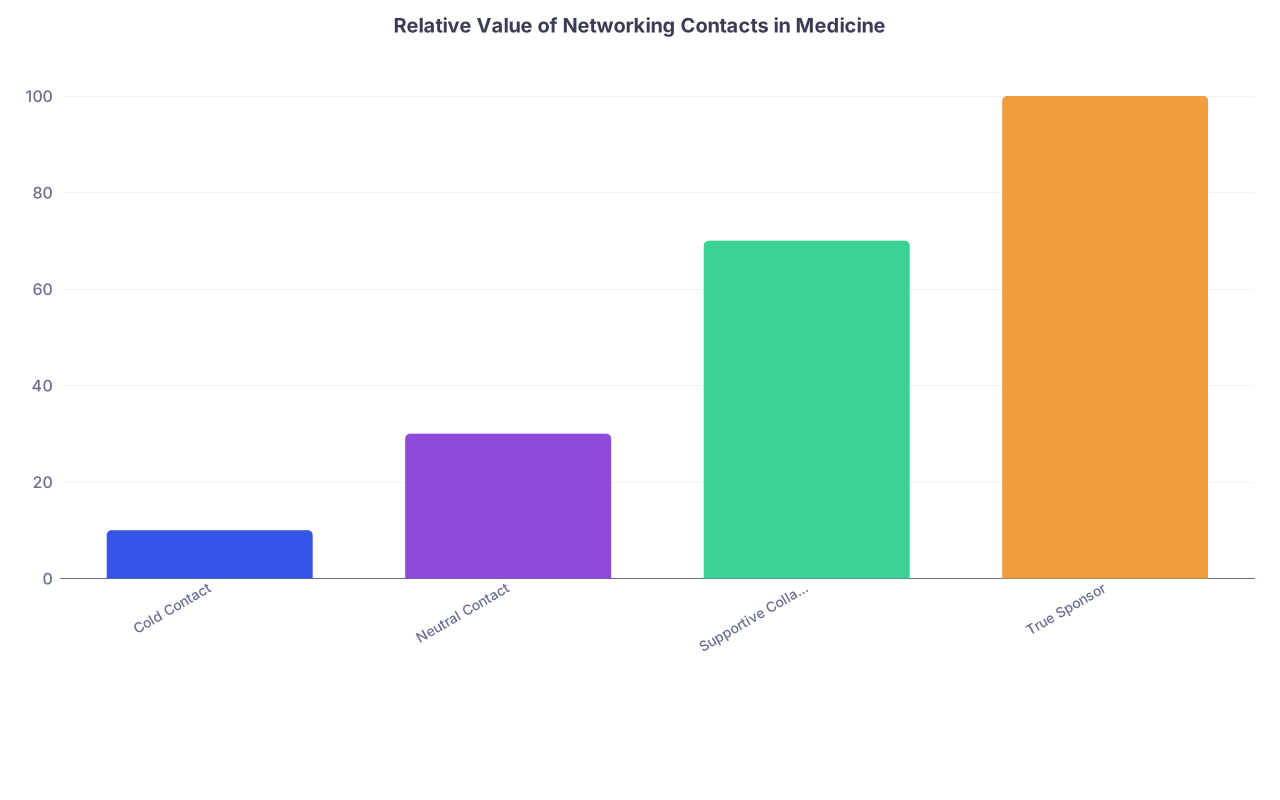
| Category | Value |
|---|---|
| Cold Contact | 10 |
| Neutral Contact | 30 |
| Supportive Collaborator | 70 |
| True Sponsor | 100 |

| Step | Description |
|---|---|
| Step 1 | Work with contact |
| Step 2 | Notice behavior over time |
| Step 3 | Keep as neutral contact |
| Step 4 | Ask for small input |
| Step 5 | Ask for intro or connection |
| Step 6 | Consider as mentor or sponsor |
| Step 7 | See proactive support? |
| Step 8 | Good follow through? |
| Step 9 | Consistent support? |
FAQ: Networking in Medicine and Knowing If They Actually Like Working With You
1. How long does it usually take to figure out if a contact really likes working with me?
Usually 2–3 meaningful interactions. Not months and months. After a few projects, meetings, or email exchanges, you’ll see clear patterns: Do they respond? Follow through? Offer next steps? If you’ve worked with someone for 6+ months and still have no sense of where you stand, that itself is information — it means they haven’t invested much.
2. Is it okay to directly ask someone if they’d be a “mentor” to me?
You can, but don’t lead with the label. Lead with behavior. Start by asking for small, specific help (feedback, a quick meeting, a targeted intro). If they consistently show up, then you can say: “I really value your guidance. Would you be open to more of an ongoing mentorship relationship?” If you ask for the title before you’ve tested the relationship, you set yourself up for a “yes” in name only.
3. What if they agreed to write a letter but I’m not sure it will be strong?
You’re allowed to ask directly: “Would you feel comfortable writing a strong, positive letter of recommendation for me?” If they hedge — “I can write a letter” without “strong” — that’s your answer. Better a clear “no” than a lukewarm letter. You can thank them and pivot: “I appreciate your honesty. In that case, I may ask someone who knows my work more closely.”
4. How do I avoid being annoying when following up with busy clinicians?
Be specific, spaced, and easy to help. Specific: one clear ask per email. Spaced: if there’s no hard deadline, wait 5–7 business days before a single polite follow-up. Easy: include all info they need in one place (draft, due date, who it’s going to). If you’re respectful, concise, and you don’t send daily nudges, you’re not “annoying” — you’re professional.
5. Can a contact still be valuable even if they don’t really “like” working with me?
Yes. Not everyone has to be your champion. Some people are purely transactional: one project, one introduction, one letter. Use that for what it’s worth and don’t try to turn it into something it isn’t. The mistake is not in having transactional contacts — it’s in mistaking them for real advocates and over-relying on them.
6. What’s one concrete move I can make this week to better understand my current relationships?
Do a 10-minute audit. List your top 5 contacts in medicine. For each, answer:
- Who initiates more, them or me?
- Have they ever opened a door for me without me explicitly asking?
- Would I trust them to write a strong letter?
Anyone who scores low on all three? Stop pouring energy into them as a future sponsor. Then pick the one person who scores highest and send a short, specific thank-you plus a clear, reasonable next ask. Build there.
Open your email right now and pick one contact you think likes working with you. Send them a short note with a specific, manageable ask — and then watch carefully how they respond. Their behavior will tell you exactly where you stand.


