

The wrong mentor can slow down your career more than having no mentor at all.
Let’s fix that.
Everyone in medicine tells you “find a mentor.” Almost no one teaches you how to tell if a mentor is actually a good fit for you. That’s how people end up wasting years chasing someone else’s dream, doing research they don’t care about, or feeling like an unpaid admin for a “famous” attending.
You’re not looking for a hero. You’re looking for a fit.
Here are five questions you should ask yourself before you commit to a mentor-mentee relationship.
1. Do I want this person’s life in 5–10 years?
This is the single best filtering question. If you ignore everything else and just use this one, you’ll avoid most bad fits.
Don’t just look at their CV. Look at their life.
Ask yourself:
- Would I be happy with their mix of clinical work, research, admin, and life outside medicine?
- Do I like their pace? Constantly on their phone? Never home? Or balanced?
- How do they talk about their work? Burned out? Energized? Bitter? Proud?
If your honest answer is “I don’t want their life,” they shouldn’t be your primary mentor. They can be a great situational mentor (help with a paper, project, or skill), but not your long-term guide.
I’ve seen students chase the big-name departmental rockstar who’s never home, constantly traveling, zero time for kids or hobbies. Then three years later, those same students say, “I like them, but I don’t want their life at all.” That’s a mismatch.
You’re not just picking skills. You’re picking a model for:
- How you handle success
- How you handle failure
- How you handle family, health, money, and time
If you wouldn’t swap lives with them in 10 years, don’t hand them the steering wheel now.
2. Are they actually available, or just “nice”?
Plenty of attendings are kind, generous, and absolutely useless as mentors because they’re never around.
A good mentor doesn’t just “support” you in theory. They:
- Reply to emails within a reasonable window (not months later)
- Show up to meetings on time most of the time
- Follow through on what they promise more often than not
- Make space for you in their schedule intentionally
You can test availability early without being weird:
- Send a short, clear email. Do they respond within 5–7 days?
- After you meet once, do they suggest a follow-up time, or is it vague “reach out anytime” energy?
- If they offer a project, do deadlines, expectations, and next steps actually get clarified?
| Signal | Good Fit Example | Red Flag Example |
|---|---|---|
| Email response | Replies in 3–7 days | Takes weeks or never replies |
| First meeting | Sets a follow-up before you leave | “Yeah, just email me sometime” |
| Project setup | Clear roles and deadlines | Vague promises, no concrete plan |
| Cancellations | Rare, with apology and reschedule | Frequent, last-minute, no follow-up |
If they’re constantly canceling, always “too busy,” or everything you do is last-minute chaos, you’re not being mentored. You’re being dragged.
Nice isn’t enough. Available and reliable beat “famous” every time.
3. Do they push me in a way that feels challenging but safe?
The best mentors do two things at once:
- They believe you can do more than you think.
- They make it safe to fail on the way there.
Here’s what that looks like in real life:
- They give you stretch assignments (presenting at conference, first-author project, leading a QI initiative) but don’t abandon you.
- They give feedback that’s blunt but not cruel. “This draft isn’t ready. Let’s fix it,” is mentoring. “This is terrible. I don’t know what you were thinking,” is not.
- They protect you in public and correct you in private.
What you’re trying to avoid is either extreme:
- The cheerleader: “You’re amazing!” but never gives you real feedback or responsibility. You feel good but don’t grow.
- The drill sergeant: Constant criticism, public shaming, anxiety every time you see their name on your schedule.
If you consistently walk away from interactions feeling:
- Stupid
- Afraid to ask questions
- Like you have to be perfect
- Or like your only value is productivity
…that’s a bad mentor fit, no matter how accomplished they are.
You want someone where your internal monologue after meeting is: “I have a lot to improve, but I know what to do next, and I think I can actually get there.”
4. Do they respect my goals—or just project theirs?
A lot of “mentoring” in medicine is actually projection. The attending who did a triple-fellowship and loves research assumes you should too. The private-practice doc who hates academia tries to talk you out of it.
Your job is to notice whether they listen, or just talk.
When you share your goals, watch what happens:
- Do they ask clarifying questions? (“When you say you like procedures, what have you actually enjoyed?”)
- Do they help you pressure-test your plan without trashing it?
- Do they adjust their advice to your reality? (US-IMG vs MD vs DO, family obligations, visa issues, financial constraints, etc.)
Here’s a simple test:
Say something that doesn’t fit the “default” path in their world.
Examples:
- “I’m not sure I want to do a fellowship.”
- “I care a lot about living near family.”
- “I’m not obsessed with research; I enjoy teaching more.”
A good mentor will respond with something like:
- “Okay, let’s think through what that means for your options.”
- “You can still build a strong application with that priority; here’s how.”
- “You don’t have to do what I did. Let’s find what fits you.”
A bad fit will:
- Dismiss it outright
- Minimize your non-career values
- Keep pulling every conversation back to the path they chose
You’re not a mini-version of them. If they can’t handle that, they’re not the right guide.
5. Is this relationship balanced—or am I just free labor?
Let me be blunt: Some “mentors” just want cheap help.
You’ll recognize this pattern:
- Every interaction is about their projects, their deadlines, their needs.
- You’re doing endless data entry, literature searches, or grunt work with no education, authorship, or growth.
- There’s no conversation about your CV, your career, your interests.
Sometimes early on you do need to do unglamorous work. But there should still be:
- Transparency: “This first project is going to be a lot of data cleaning; if it goes well, the next ones will give you more leadership and authorship.”
- Progression: Tasks get more complex and visible over time.
- Reciprocity: They advocate for you—letters, introductions, presentations, practicum spots.
Here’s what a healthy trade looks like:
You give:
- Time
- Reliability
- Effort
- Intellectual contribution
You get:
- Mentorship (real advice tailored to you)
- Growth opportunities (presentations, first/second authorship, leadership roles)
- Access (networks, committees, introductions)
If, after 6–12 months, you have:
- No strong letter of recommendation
- No clear skill gains
- No ownership of anything with your name on it
…you’re not in a mentoring relationship. You’re in a work relationship. And probably a bad one.
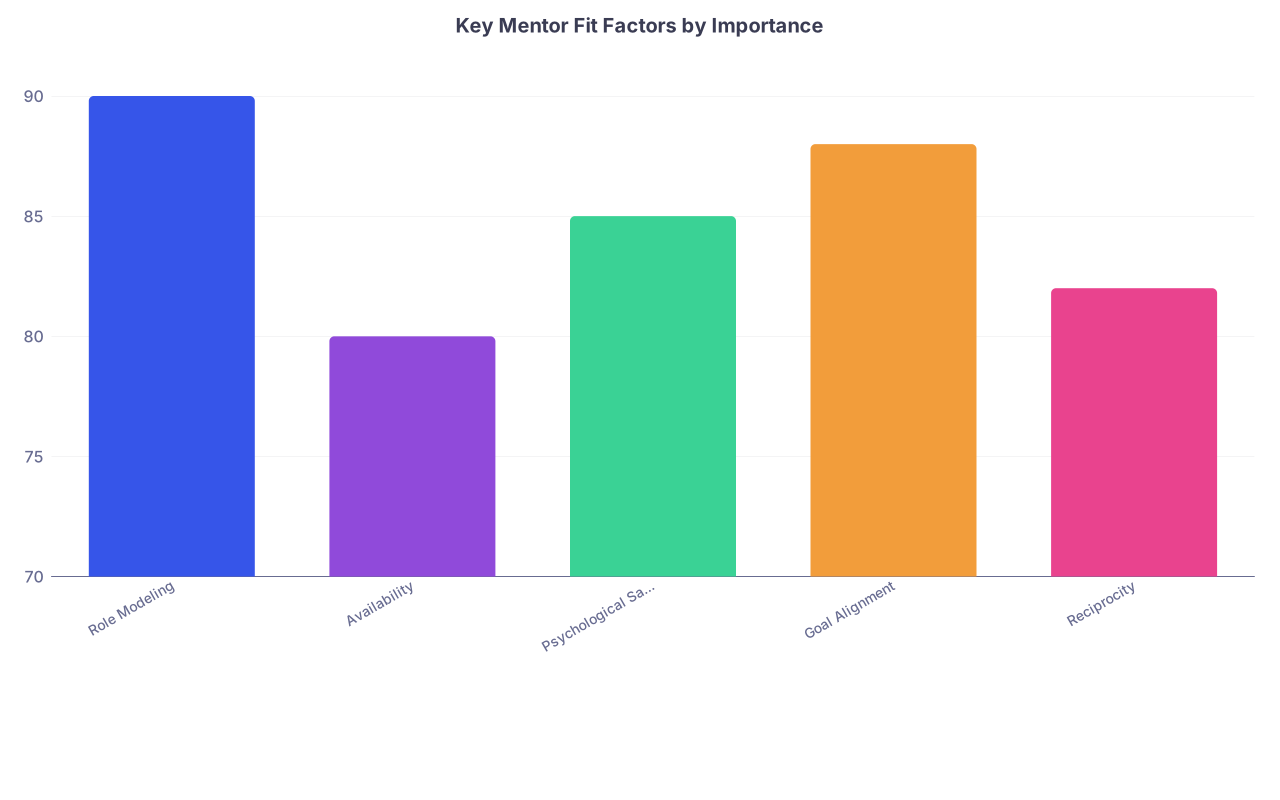
| Category | Value |
|---|---|
| Role Modeling | 90 |
| Availability | 80 |
| Psychological Safety | 85 |
| Goal Alignment | 88 |
| Reciprocity | 82 |
How to “Test Drive” a Mentor Before You Commit
You don’t have to decide after one coffee. In fact, you shouldn’t.
Think of the first 3–6 months as an audition. For both of you.
Here’s a simple flow to follow:

| Step | Description |
|---|---|
| Step 1 | Identify Potential Mentor |
| Step 2 | Initial Meeting |
| Step 3 | Small Project or Follow Up |
| Step 4 | Deprioritize Mentor |
| Step 5 | Increase Engagement |
| Step 6 | Ask for Formal Mentorship |
| Step 7 | Good Communication? |
| Step 8 | Aligned Goals and Style? |
Practical steps:
Start small
Ask for a 20–30 minute chat. Don’t open with “Will you be my mentor?” You’re just exploring.Run through the five questions quietly
While you’re talking, mentally scan:- Do I want their life?
- Are they present and engaged with me?
- Do I feel safe yet challenged?
- Do they listen to my goals?
- Does this feel like a two-way investment long-term?
Try a pilot project
If things seem promising, ask if you can help with one small, time-bound thing: a short project, abstract, or recurring meeting. Use that to test reliability, communication, and style.Decide your level of investment
After a few months, you’ll know. Then you choose:- Primary, long-term mentor
- Occasional career advisor
- Project-only collaborator
- Nice person you say hi to in the hallway, and that’s it
You don’t owe anyone lifelong loyalty because you answered one email.
Multiple Mentors: You Probably Need a “Board,” Not a Single Guru
Modern medicine is too complicated for a single perfect mentor.
Instead, think about building a small “board of directors” for your career:
- One person whose life path you’d happily copy
- One research or academic mentor
- One clinical mentor who teaches you how to be good with patients
- One life sanity mentor (someone who’s actually happy and functional)
Different people can fill different gaps. If you’re in med school or residency, this is especially important. Your “I think I want cards” mentor may not be the same as your “how do I not burn out” mentor.
And mentors can change as you change. The person who was perfect when you were an MS1 may not be the right voice when you’re picking between two fellowships with kids at home.
You’re allowed to evolve. Your mentor lineup should too.
Quick Reality Check: When a Mentor Is the Wrong Fit
To tie this together, here are blunt signs it’s time to step back:
- You consistently dread meeting them.
- You feel smaller, not bigger, after interactions.
- They never ask about your goals; they just assign tasks.
- You can’t imagine wanting their life in 10 years.
- You’re always apologizing, but nothing seems good enough.
- They’re chronically unavailable, even for important decisions.
If that’s where you are, you don’t need to “confront” them dramatically. Just:
- Stop taking on new work.
- Wrap up your current commitments as professionally as you can.
- Shift your energy toward building relationships that pass the five questions.
You only get one career. Don’t hand the blueprint to the wrong architect.
FAQ: Mentors in Medicine – 7 Common Questions
1. What if I’m at a small program and don’t see any perfect mentors?
You’re almost never going to find perfect. Aim for “good enough on the big things” (values, basic availability, non-toxic) and then supplement with external mentors. You can find people through specialty societies, conferences, alumni networks, or even cold-emailing faculty at other institutions with a focused, specific ask. Local plus remote is a totally valid setup.
2. Is it okay to outgrow a mentor?
Yes, and it’s normal. The mentor who helped you figure out “Do I want IM or surgery?” might not be the person to fine-tune your cardiology fellowship strategy. When you’ve clearly shifted phases, it’s fine to gradually reduce contact and increase work with others. If you have a good relationship, you can even say, “You’ve really helped me get to this step; I’m now looking for someone specifically in X area as well.”
3. How do I say no to a mentor who’s a bad fit but senior or influential?
You don’t need a dramatic speech. Decrease your availability, stop volunteering for new tasks, and keep communication polite and factual. If cornered, you can use neutral language: “I’m trying to streamline my commitments and focus more tightly on [specific goal], so I’m not able to expand my role on new projects right now.”
4. Should I prioritize a well-known, big-name mentor over someone more junior who has time?
Not automatically. A mid-career or junior faculty member who actually meets with you, reads your drafts, and advocates for you will usually do more for your trajectory than the superstar who barely remembers your name. If you can get both—big name as senior sponsor, junior as day-to-day mentor—that’s ideal. But if you have to pick, pick engagement over prestige.
5. How many mentors is too many?
If you can’t keep straight what you owe whom, you have too many. A practical ceiling for active mentors is usually 3–5 at once. More than that and you risk being stretched thin and doing low-quality work for everyone. You can still have a wider circle of “advisors” you check in with once or twice a year.
6. What do I do if my mentor pushes me toward something I really don’t want?
You draw the line. State your priorities clearly: “I appreciate your perspective. For me, [X] is non-negotiable (e.g., geography, family time, avoiding a certain specialty). Can we work within that constraint?” If they keep dismissing your values, that’s your sign to downgrade them from “mentor” to “person with an opinion.”
7. How do I ask someone to be my mentor without making it awkward?
You don’t need a ceremony. If you’ve already worked with them a bit and it feels like a good fit, say something like: “I’ve really appreciated your guidance these past few months. Would you be open to meeting a few times a year in a more formal mentorship role as I work through [goal]?” Simple, direct, and easy for them to say yes to—or suggest a different structure.
Key takeaways:
You choose mentors, not the other way around. Use these five questions—Do I want their life? Are they available? Do they challenge safely? Do they respect my goals? Is this reciprocal?—as your filter. And remember: you’re building a small board of mentors over time, not looking for a single perfect guru.


