You just signed the lease. Brand‑new private practice. Fresh EHR, empty schedule. Your website is live, the phone number works, and the only person who has called so far is your mother “just checking.”
You know clinically you’re solid. But without a referral network, you’re basically a very expensive hobby.
You’re not inheriting anyone’s panel. No retiring doc is handing you their patient list. Hospital-employed colleagues are “supportive” but vague. You’re starting from actual zero.
Here’s how you build a referral network from scratch like it’s your second job—because for the first 6–18 months, it is.
Step 1: Get Clear on Who Should Be Sending You Patients
Before you start “networking,” you need to know exactly who you’re trying to reach and what they should send you.
Most new docs skip this. They print generic brochures and wonder why nothing happens.
Ask yourself three questions:
- Who are the 3–5 groups most likely to refer to you?
- For what specific problems should they think of you first?
- How will sending patients to you make their life easier?
If you cannot answer those clearly, you’re not ready to start calling anyone.
Common referral sources vary by specialty, but here’s a quick reality check:
| Your Specialty | Top Referral Sources |
|---|---|
| Psychiatry | PCPs, therapists, hospitals |
| Orthopedics | PCPs, urgent care, sports medicine, PT |
| GI | PCPs, hospitalists, bariatrics |
| Neurology | PCPs, ED, hospitalists |
| Derm | PCPs, urgent care, rheumatology |
Now tighten it further.
Instead of: “I’m an outpatient psychiatrist.”
Use: “I’m a psychiatrist who can see new adult ADHD, anxiety, and postpartum depression within 2 weeks, accepts X and Y plans, and does shared-care med management with PCPs.”
That last sentence is something you can literally say to a referring provider in under 15 seconds. That’s the bar.
Write your “referral pitch” on paper:
- What you do
- Who you are ideal for
- How fast you can see them
- What insurance you take or your cash rate and clarity around it
- How you communicate back
Once you’ve written it, shorten it to a 10–15 second version you can say without sounding like a robot.
Step 2: Fix Your House Before Inviting People Over
Do not start calling other doctors if your practice infrastructure is chaos. Referrals die instantly if the first three patients have bad experiences.
Get these non‑negotiables in place:
A human who answers the phone during business hours
Not a 9‑layer phone tree. Not “leave a message, we’ll call you back in 48–72 hours.” A real person, or at minimum, same‑day callback reliability.A simple, obvious referral process
One fax number. One referral email. Or a super simple online referral form. And you have to actually check them, same day.Fast access slots protected on your schedule
If you tell PCPs “I can see your patients within 2 weeks,” then your template needs several reserved “new referral” slots each week. Guard them.Reliable, tight communication back to referrers
A short note after new consults. Major changes. No novels—1 page max, clear impression and plan. If you are slow at this, fix it before scaling.
If you’re unsure whether your systems are ready, test them:
- Have a friend call as a “new patient” and report back exactly what happened.
- Send yourself a fax referral from a different line and see how long it takes to reach you and get processed.
- Time how long it takes you to dictate/sign a brief consult letter.
You want this stuff boringly smooth before you start meeting people.
Step 3: Start With Low-Hanging Fruit — People Who Already Know You
Yes, you’re “building from scratch,” but odds are your career didn’t start yesterday. You’ve rotated, trained, moonlighted, worked locums.
Those people are your first network.
Make a list of:
- Attendings from residency/fellowship who are in the community now
- Co‑residents who went into PCP, EM, hospitalist, or complementary specialties
- NPs and PAs you worked with who now have their own panels
- Hospital staff (case managers, discharge planners, social workers)
You’re not asking for favors; you’re giving them a new resource.
Send something like:
“Hi [Name],
I just opened a [specialty] practice in [location]. I’m focusing on [specific problems], can see new patients within [time], and [take X/Y insurance or clear cash setup]. If you’re ever stuck trying to place someone with [brief examples], I’m happy to help. Attaching a one‑pager with referral info.
Would love to catch up by phone or coffee sometime, but no pressure.
[Your Name]”
Keep it short and concrete. Then attach a clean, one-page PDF that answers:
- Who you see
- What issues you handle
- How to refer (phone, fax, online form)
- How fast you see patients
- How you communicate back
Not a trifold brochure from 1999. One page, normal font, no clip art.
Step 4: Attack Primary Care and Key Feeders Systematically
If you’re in a referral-based specialty and you’re not aggressively building relationships with PCPs and key feeders, you’re playing on hard mode.
This is where people get squeamish. “I don’t want to be salesy.” Fine. But you do want to be busy and pay rent, yes?
Here’s how to do it without feeling gross.
Build a Hit List
Map a 15–20 minute drive radius from your office. Then list:
- Every PCP office
- Urgent care center
- Key complementary specialists (for example, for PM&R: ortho, neuro, pain)
- Hospital outpatient clinics
Use Google Maps, the hospital “find a doctor” page, insurance provider lists. Ugly but effective.
Then prioritize:
- Practices with multiple providers
- Clinics known for being overwhelmed with your types of problems
- Offices in underserved pockets (they’re usually desperate for access)
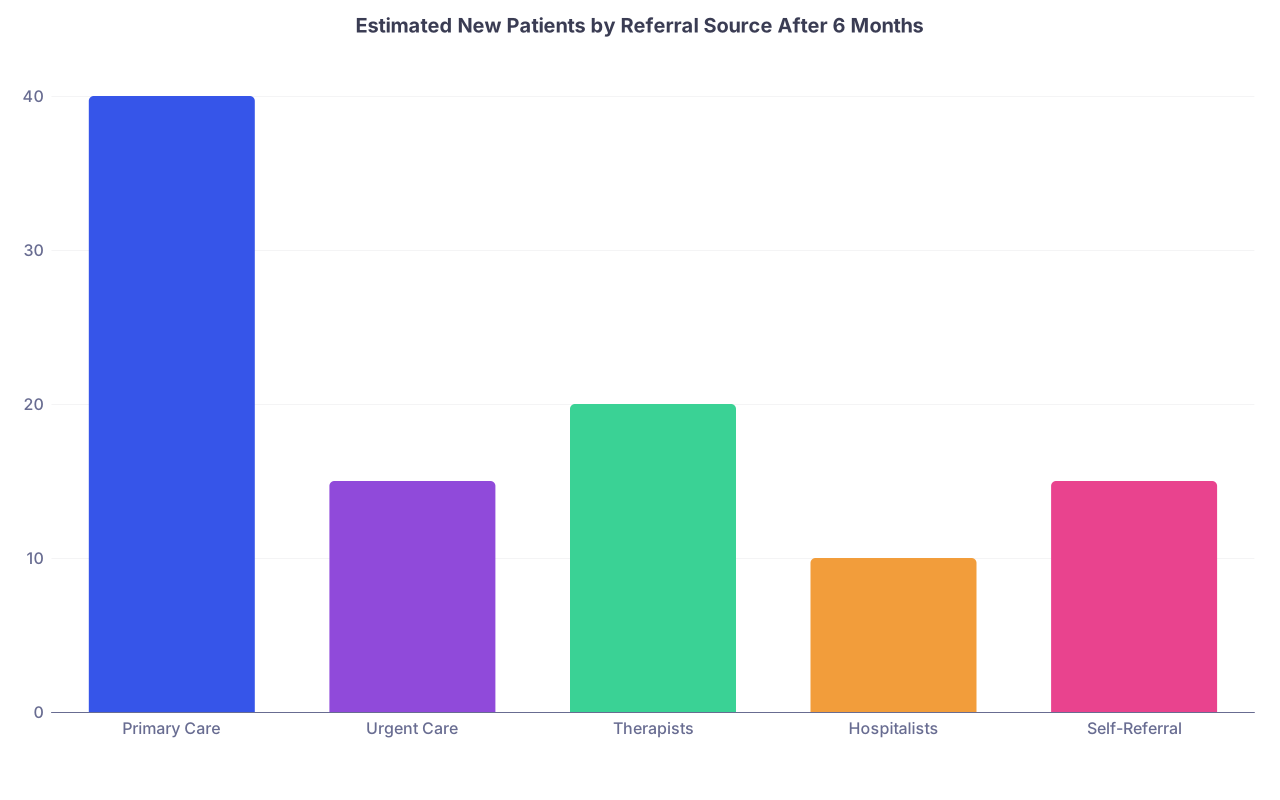
| Category | Value |
|---|---|
| Primary Care | 40 |
| Urgent Care | 15 |
| Therapists | 20 |
| Hospitalists | 10 |
| Self-Referral | 15 |
Make Contact in Layers
Layer 1: Intro packet
Mail or drop off a physical packet:
- Your one‑pager
- A stack of referral forms
- Business cards
- A short cover letter addressed to “Clinical Team” or specific provider if you know one
Layer 2: Phone call to the office manager or clinic lead
You’re not calling random front desk asking, “Can I talk to the doctor?” That’s how you get labeled as a pharma rep.
You say:
“Hi, this is Dr. X, I’m a new [specialty] in [area]. I sent over some information last week and wanted to see who in your office coordinates referrals for [your specialty] so I can make sure I’m useful to your team.”
You’re trying to reach:
- Office manager
- Lead MA
- Clinical coordinator
- Occasionally the doc, but not always
Then ask:
- “What kinds of [your specialty] referrals are hardest for you to place right now?”
- “What would make it easier for your team to refer to a new specialist?”
And then you shut up and listen.
They will tell you their pain points. Build your processes and messaging around solving those.
Layer 3: Short, focused visit
Yes, physically going to the office matters. Bring:
- Healthy snacks or coffee (not mandatory, but does not hurt)
- Your face
- One or two specific, repeated messages: “I can see your complex back pain within 7 days, and I send you a note same day after the visit”
Aim for 10–15 minutes. If the doc is too busy, talk to their MA or nurse. The staff often drive referral patterns more than you think.
Step 5: Your Behavior With the First 20 Referred Patients Matters More Than Any Marketing
The first 10–20 patients any given clinic sends you are a live audition.
If those patients come back saying, “That doc actually listened, I got in fast, and they sent a clear note,” that clinic will keep sending.
If they say, “I waited 3 months, the front desk was rude, and nobody knows what’s going on,” your network dies quietly and permanently.
Focus on these non‑negotiables for those early referred patients:
- Schedule them fast. Even if you go home a little later. It’s an investment phase.
- Be hyper‑communicative. Note back to the referrer within 24–48 hours.
- Do not trash-talk the referring provider. Ever. Patients will repeat it.
- Align with the PCP or referring provider’s goals when reasonable. You’re consulting, not trying to steal their patient.
I’ve seen PCPs completely switch their referral patterns after hearing from 3–4 patients that “this new doc is actually accessible and calls back.”
You do not need billboards. You need maybe 10–20 loyal referring providers sending you a handful of patients each month.
Step 6: Use Therapists, PTs, and Non-MD Clinicians the Right Way
A lot of specialists underestimate non‑physician referrers. Huge mistake.
Examples:
- Psychiatrists: therapists, school counselors, social workers, college counseling centers
- Ortho/PM&R: physical therapists, athletic trainers, chiropractors
- Sleep medicine: dentists, therapists, PCP NPs
These people often see patients long before a physician does—and they usually know exactly who is miserable and stuck.
How to approach them:
- Identify the big group practices and well‑reviewed solo clinicians nearby.
- Email them directly: “I see you work with a lot of [relevant population]. I just opened a practice in [area] and specialize in [X, Y]. Many of my patients benefit from combined care with therapists/PTs. Would you be open to a quick meeting to understand how we can help each other’s patients better?”
- If they say yes, do not waste the meeting talking only about yourself. Ask:
- “What’s hardest for you when you try to get your patients in with a [your specialty]?”
- “What info from me would make your therapy/PT work more effective?”
Offer:
- Short consultation slots for their complex cases
- Clear releases so you can coordinate care easily
- Occasional case conferences (even 10 minutes over phone)
Embed yourself as “the reliable doc” in their mental Rolodex.
Step 7: Be Present Where Discharges Happen
If your specialty touches hospital or ED patients at all, you want to be known to:
- Hospitalists
- ED docs
- Case managers
- Discharge planners
- Social workers
These folks are constantly scrambling: “This patient needs outpatient X in 1–2 weeks and everywhere is booked 3 months out.”
You want your name in their head at that exact moment.
Tactics:
- Reach out to the hospitalist/ED group leadership and say, “I’m available for expedited post‑discharge follow‑ups for [specific issues]. I take [insurances] and can see within [time]. Can I send you a referral info sheet for your team?”
- Meet with case management leadership. Bring printed cards they can literally hand to patients with your scheduling info.
If you’re willing to reserve a few weekly “post‑discharge” slots, say that. They will use them.
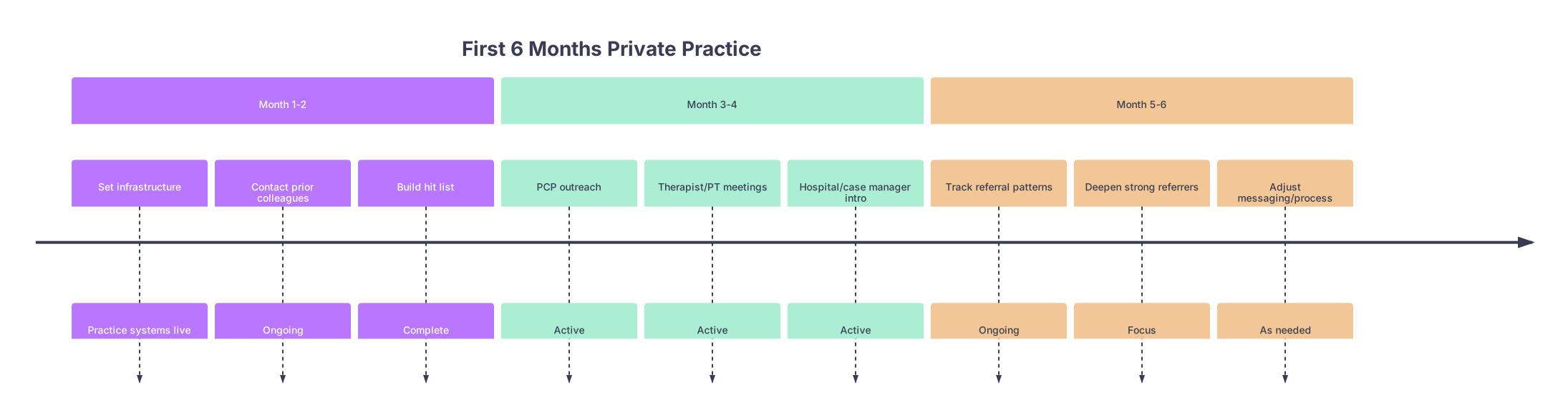
| Period | Event |
|---|---|
| Month 1-2 - Set infrastructure | Practice systems live |
| Month 1-2 - Contact prior colleagues | Ongoing |
| Month 1-2 - Build hit list | Complete |
| Month 3-4 - PCP outreach | Active |
| Month 3-4 - Therapist/PT meetings | Active |
| Month 3-4 - Hospital/case manager intro | Active |
| Month 5-6 - Track referral patterns | Ongoing |
| Month 5-6 - Deepen strong referrers | Focus |
| Month 5-6 - Adjust messaging/process | As needed |
Step 8: Make Yourself Easy to Remember and Easy to Use
Most referral failures are not about clinical skill. They’re about friction and forgettability.
You need two things:
- A simple brand line they can remember
- A frictionless way to act on it
Brand line examples (these are for actual spoken use, not fancy branding decks):
- “She’s the psych who will see your postpartum moms in under 2 weeks.”
- “He’s the ortho who actually tries non‑surgical options first.”
- “That derm clinic that will biopsy same week if you’re worried about melanoma.”
You want colleagues saying this about you in the hallway.
Then remove friction:
- Put your referral sheet on your website on a simple URL:
yourpractice.com/referrals - Include fax, phone, and secure email options
- Accept referrals from NPs, PAs, therapists where allowed—don’t make them go chase a physician signature for no reason
Train your staff to recognize when someone says, “We’re a clinic trying to refer” and treat that like VIP: same‑day response, gratitude, clarity.
Step 9: Track What’s Actually Working (and Drop What Isn’t)
You cannot fix what you don’t measure. And you definitely cannot scale it.
At minimum, track for every new patient:
- How did you hear about us? (With a dropdown list your staff must fill)
- Which specific clinic or provider referred?
Then review monthly:
- Top 10 referral sources by volume
- How many referrals from each source actually scheduled and showed
- Any negative feedback patterns
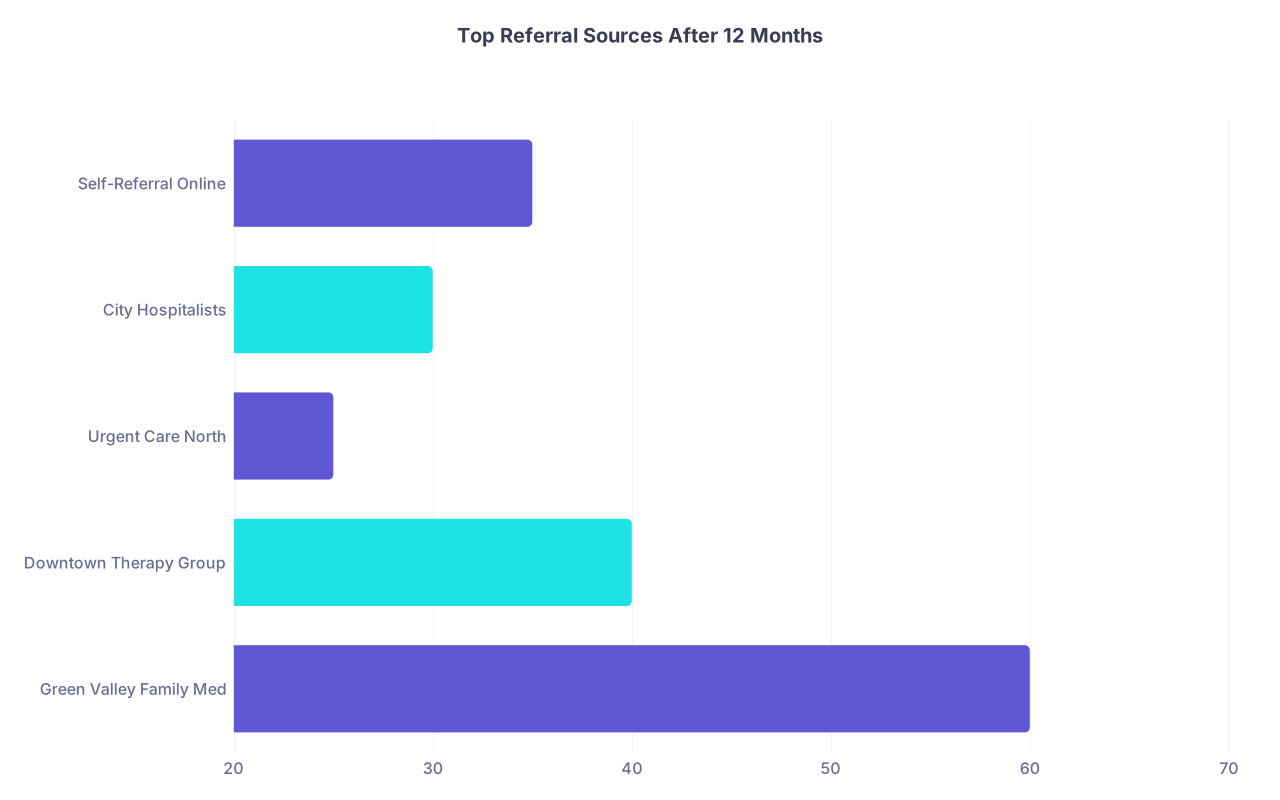
| Category | Value |
|---|---|
| Green Valley Family Med | 60 |
| Downtown Therapy Group | 40 |
| Urgent Care North | 25 |
| City Hospitalists | 30 |
| Self-Referral Online | 35 |
For the top 5–10 referrers, you do not just say “thanks” in your head. You:
- Send a short handwritten note or email: “I appreciate you trusting me with your patients.”
- Offer to make adjustments that would help them—like dedicated slots or custom feedback templates.
- Visit or call once or twice a year to maintain the relationship.
For referrers that send almost nothing after multiple touches, stop chasing. You’re not going to convert everyone. Focus where there’s traction.
Step 10: Use Modern Tools Without Hiding Behind Them
Can online marketing and social media help? Sure. But don’t kid yourself—it’s icing, not the cake, for most medical specialties.
Where digital helps your referral network:
- Clean, clear website: services, who you see, insurance, referral instructions
- Online booking (even if only for certain visit types)
- Physician-facing page: “For Referring Providers” with referral form and what to expect
- Occasional short educational videos or posts that your referrers can send to patients (“What to expect at your first rheumatology visit,” etc.)
Where people waste time:
- Instagram dancing videos hoping to “go viral” and magically fill a clinic with appropriate referrals
- Over-designed content while basic workflows are broken
- Paying big money for generic SEO when your biggest win is still one busy PCP 5 minutes away learning your name
Handle the basics first. Then layer in online presence that supports—rather than replaces—human relationships.

Common Mistakes New Private Docs Make in Networking
I’ve watched people botch this badly and then declare “private practice just doesn’t work in this market.” Usually not true. Here’s what they did wrong:
They hid in the office waiting for patients.
New private practice is outbound, not inbound, for the first year. If you spend all your non‑clinical time rearranging your EHR templates instead of talking to humans, that’s a choice.
They tried to be everything to everyone.
“No problem is too small, we see all ages, all conditions, all everything.” No one remembers that. Pick a few high-yield things and be the go‑to.
They made referrers feel stupid or criticized.
You can disagree with prior management without saying, “I don’t know why your doctor did this.” The second a PCP hears that line back via a patient, they’re done referring.
They didn’t staff properly.
If your phone is chronically unanswered, referral faxes are lost, or follow‑up notes never go out, you’re burning the network faster than you can build it.
They gave up after one contact.
“I dropped off cards and nobody referred.” Of course. This takes repeated, polite, professional touches over months, not one awkward visit with donuts.
How This Looks Week to Week in the First 6–12 Months
Let me make this painfully concrete. For the first 6–12 months, your non‑clinical schedule should roughly include:
- 2–4 hours a week of direct outreach (calls, visits, Zoom/coffee with clinicians)
- 1–2 hours a week of follow‑up (emails, notes back, making your processes smoother)
- 1 hour a week reviewing your referral data and deciding who to focus on
You’re not “networking” when you feel like it. You’re treating it as a structured, scheduled part of your job—because it is.

Playing the Long Game Without Being a Doormat
You’re not a vendor begging for business. You’re a consultant offering value.
You can:
- Set boundaries about what you do and don’t manage.
- Say no to clearly inappropriate referrals—but with a helpful suggestion.
- Focus your energy on relationships that respect your time and expertise.
At the same time, you should:
- Be easier to work with than the alternatives.
- Be reliably kind to staff and patients.
- Be the person people are relieved to call when they have a tricky case.
That combination—clear boundaries plus high reliability—is what keeps your referral network strong for years, not months.

Bottom Line: What Actually Builds a Referral Network
Strip away the fluff, and it comes down to this:
- Be crystal clear about who should send you what, and make it dramatically easier and faster for them compared with everyone else.
- Show up—repeatedly and professionally—in the lives of PCPs, therapists, hospitalists, and other key referrers, and then back up every promise with execution.
- Track what’s working, double down on the relationships that respond, and ruthlessly fix any friction in your own practice that makes referrers regret sending to you.
Do that for 6–18 months, and “starting from scratch” stops being a crisis and starts looking like leverage. You’re not just busy; you’re the person people think of first.