
What exactly are you agreeing to when you sign a contract for a brand‑new residency program that has never graduated a single resident?
If you do not know the answer before you sign, you’re the risk. Not the program.
New residency programs are exciting on paper—“innovative curriculum,” “close mentorship,” “build something from the ground up.” I’ve heard all the buzzwords trotted out on interview day. But the contract and benefits package is where the fantasy stops and your actual life begins.
Let me walk you through where people get burned.
1. The Illusion of “Standard GME Contracts”
Everyone assumes, “It’s ACGME‑accredited, so the contract must be standard.” That’s the first mistake.
Brand‑new programs often:
- Copy/paste another hospital’s template contract
- Forget to adapt it to actual current policies
- Add last‑minute clauses to cover their own risk (not yours)
I’ve seen interns in new programs discover in July that their written contract and the resident handbook outright contradict each other. Guess which one the hospital’s legal department points to when there’s a dispute? The one that protects them.
Red flag clauses in new program contracts
Do not gloss over these sections:
“Other duties as assigned” with no scope
This vague phrase can be abused. In young programs, admin is desperate for coverage. You might end up:- Covering another service because they “haven’t hired enough hospitalists yet”
- Doing moonlighting‑equivalent work but called “service reallocation”
- Working outside your specialty’s usual scope without added pay
Unclear work hour language
If the contract just says “resident agrees to comply with ACGME duty hours,” that protects the program from citations, not you from burnout. Look for:- Explicit call frequency expectations
- Max number of shifts per month
- Who logs hours (you vs. program vs. auto‑generated)
Termination at will
Some contracts sneak in language allowing termination “at the discretion of the program” with broad, non‑specific reasons like “fit” or “professionalism.” That’s too loose. You want:- Clear due process steps
- Written remediation processes
- An explicit right to appeal or to a grievance process
The contract vs. the sales pitch
On interview day you hear:
- “We’re committed to protecting your education time.”
- “Clinic is only 1 day a week.”
- “We’ll absolutely support board prep.”
Then the contract makes zero mention of:
- Protected didactic time
- Clinic caps
- Board review resources or paid time off for boards
If they truly intend to do those things, they can put them in writing. When they don’t, that’s not an innocent oversight—that’s them keeping flexibility to pull back when staffing or budget gets tight.
Do not accept “we’ll add that later” as reassurance. If it’s important enough for you to ask about, it’s important enough to specify.
2. Benefits That Sound Fine… Until You Need Them
New programs are notorious for “we’re working on that” benefits. Meanwhile you still have to live, get sick, have families, and pay loans.
Here’s where people get burned first year.
Health insurance that kicks in late
I’ve seen new programs where:
- Coverage doesn’t start until 30–60 days after your start date
- You’re “encouraged” to pay COBRA from your med school or prior job
- Details are still being negotiated with insurers in June
You start July 1. You get appendicitis July 10. Are you covered? If that answer is not in writing, don’t shrug it off.
You want:
- Exact start date of coverage (ideally day one)
- Plan name and tier (HMO/PPO, high deductible, etc.)
- Whether premiums are fully or partly paid by the hospital
Missing or weak disability coverage
This one is huge and routinely ignored.
As a resident, your earning potential is in the millions. In a new program, disability policies are often:
- Not finalized yet
- Group policies with terrible definitions of disability
- Lacking “own occupation” coverage
You need to know:
- Short‑term disability: when it starts, how much it pays, how long it lasts
- Long‑term disability: percentage of income, own‑occupation vs any‑occupation
- Waiting periods: 30, 60, 90 days—can you afford that gap?
If they say “we’re still setting that up,” translate that as: “If you get seriously sick this year, we’re going to improvise.”
Inconsistent or absent parental leave
New programs love to say, “We’re very supportive of families.”
Then you read the fine print:
- FMLA eligibility at 12 months—but you may not hit that before needing leave
- “At the discretion of the program director” language
- Forced use of vacation days to cover parental leave
And worst: no clarity on how leave affects graduation timeline.
If you’re in a 3‑year IM program and you take 8–10 weeks off, does that:
- Delay graduation?
- Require extra rotations?
- Affect board eligibility timing?
Those decisions are much messier when the program has never done it before. You do not want to be their test case.
3. Call, Coverage, and Schedule Promises That Crack
The most painful surprises in new programs are about coverage.
Remember: they have no senior residents. No established coverage pool. No history of “what’s reasonable.”
You are the stopgap.
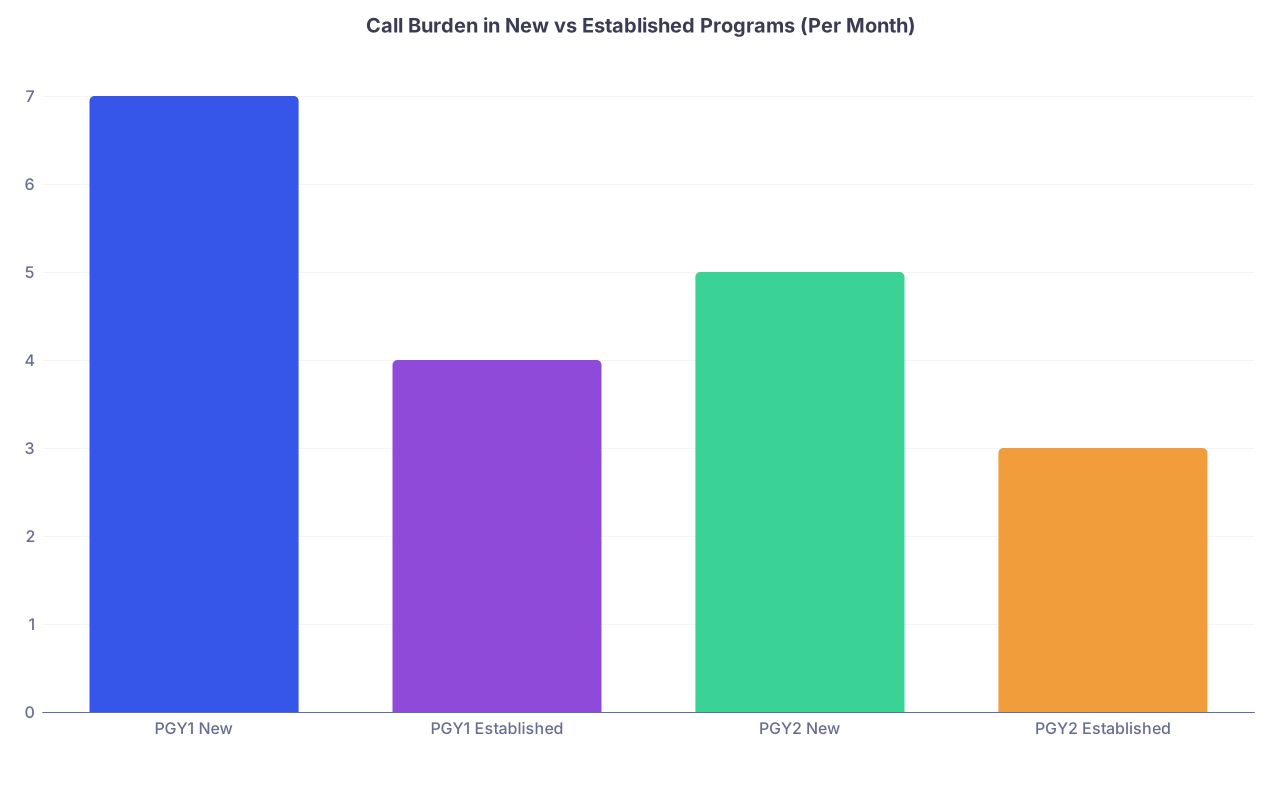
| Category | Value |
|---|---|
| PGY1 New | 7 |
| PGY1 Established | 4 |
| PGY2 New | 5 |
| PGY2 Established | 3 |
Numbers above aren’t from a specific program, but they reflect what I’ve repeatedly seen: new programs lean heavily on early residents.
Common schedule traps
Watch for these vague phrases in contracts or handbooks:
- “Call schedule subject to change based on clinical needs”
- “Residents may be reassigned to ensure adequate patient care coverage”
- “Additional duties as required to maintain accreditation standards”
In practice this can mean:
- You match into a “no 24‑hour call” program that suddenly adds it when faculty staffing falls through
- You signed up for 1:4 weekend call that ends up 1:2 because “we didn’t anticipate volume”
- Your outpatient‑heavy schedule becomes inpatient‑heavy when census spikes
Ask directly:
- How many residents per class are planned?
- How many are actually starting with your cohort?
- What happens if someone resigns—who covers that gap?
- Who currently admits and covers nights? Hospitalists? Fellows? Other residents?
If they dodge those questions, that’s your answer.
4. Educational Support That Exists Only in PowerPoints
Established programs have habits. Conference schedules. Long‑standing board review sessions. Budget lines for exam fees.
New programs often have… slides.

| Step | Description |
|---|---|
| Step 1 | Recruit Residents |
| Step 2 | Promise Strong Education |
| Step 3 | Draft ideal schedule |
| Step 4 | Cancel or shorten didactics |
| Step 5 | Hold full conferences |
| Step 6 | Residents self study at home |
| Step 7 | Clinical volume high |
The mistake residents make: believing educational promises that aren’t structurally protected.
Things that should be clearly spelled out
Protected didactic time
- Weekly schedule, length, and enforcement
- Explicit “not to be interrupted except for emergencies” language
Board exam support
- Paid board review course or not
- Paid time off for boards (USMLE Step 3, specialty boards)
- Reimbursement policy for first‑time board fees
Conference and CME funding
- Annual educational fund amount
- Limits on travel/conference reimbursement
- Whether PGY1s can use CME money or if it’s “PGY2+ only”
New programs will often say, “We absolutely plan to do that.” Good. Then they can plan to include it in the contract or written policy.
5. The Accreditation Mirage: “We’re Pre‑Accredited, So It’s Safe”
There’s a dangerous misconception: “If it’s ACGME accredited, everything is locked down and safe.”
No.
ACGME protects minimum training standards and program structure, not your day‑to‑day contract specifics or benefits.
Here’s how residents get lulled into complacency:
- They assume ACGME will step in if their benefits are substandard. (Wrong. ACGME cares about educational environment more than your dental plan or retirement match.)
- They assume ACGME will fix a toxic call schedule. (They might care if work‑hours are systematically violated and documented; they will not micromanage one program’s schedule design.)
- They assume ACGME will stop a program from closing. (They cannot guarantee a hospital won’t decide to shut down a program with financial problems.)
| Issue | ACGME Protects? | Contract/You Protect? |
|---|---|---|
| Basic duty hour limits | Yes | Partly |
| Health insurance quality | No | Yes |
| Salary amount | No | Yes |
| Program closure protections | Limited | Yes |
| Educational content/curric | Yes | Partly |
| Leave policies specifics | Limited | Yes |
The big pitfall: assuming “they wouldn’t dare” instead of asking “where is this written down, and what happens if they don’t do it?”
6. Program Closure and Contingency Planning (The Nightmare Scenario)
This is the fear nobody wants to talk about on interview day: what happens if the hospital merges, loses money, or decides GME is too expensive?
Established programs survive more often because they’re baked into the institution’s identity. New programs? Easier to cut.
You must look for:
- Program closure clause in the contract
- Explicit commitment to:
- Teach‑out plans
- Support for transferring residents
- Documentation of training for future programs
Bad sign: no language at all about what happens if the program closes.
Worse sign: vague “The institution reserves the right to discontinue the program at any time” with no resident protection.
Ask during interview or second look:
- “If there were major financial or structural changes to the hospital, what protections would residents have?”
- “Has GME leadership discussed contingency plans if a program needed to close?”
If they stare blankly, they haven’t thought about it. And if they haven’t thought about it for themselves, they definitely haven’t thought about it for you.
7. Financial Pitfalls: Hidden Costs and Weak Pay
New programs often underpay. Or look “competitive” on paper but nickel‑and‑dime you everywhere else.
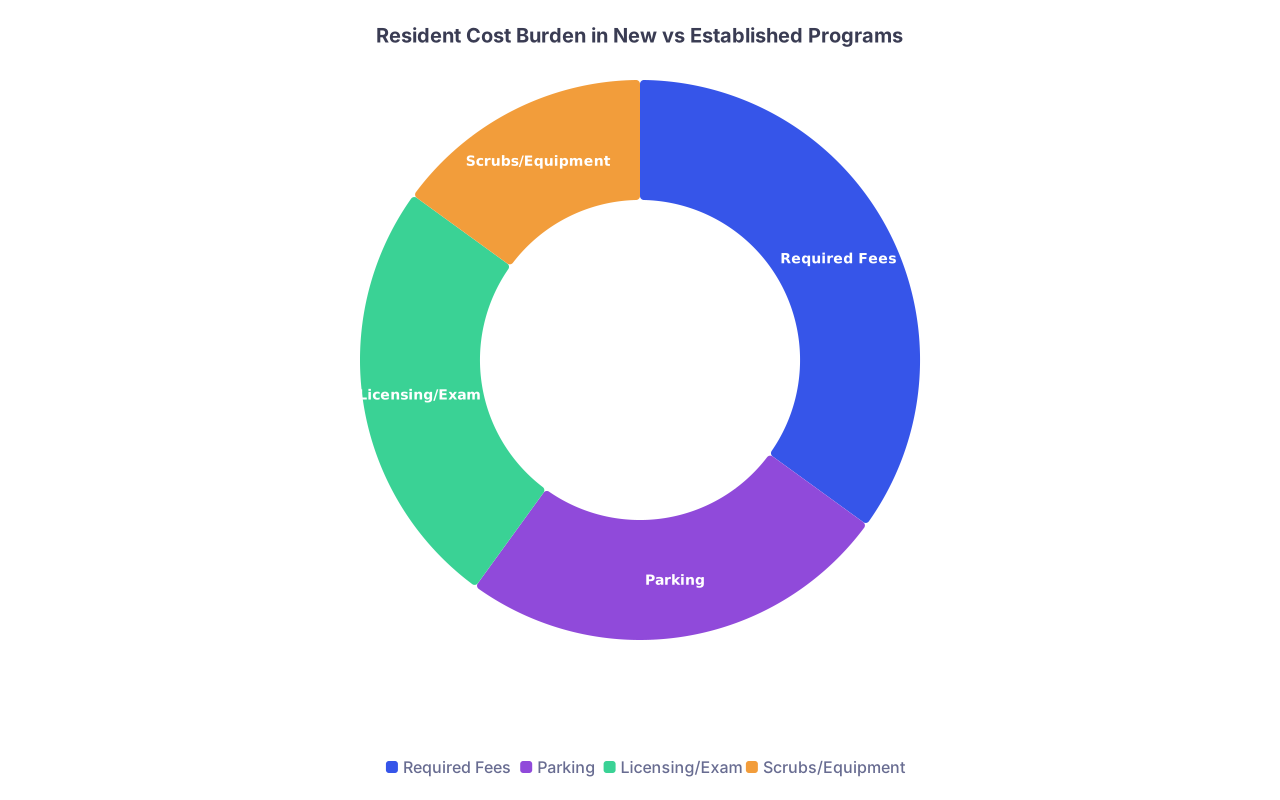
| Category | Value |
|---|---|
| Required Fees | 35 |
| Parking | 25 |
| Licensing/Exam | 25 |
| Scrubs/Equipment | 15 |
Where new programs quietly shift cost onto you:
- Licensing and exam fees
- Hospital might not pay for Step 3, COMLEX 3, or state license
- “Reimbursement up to $X” that doesn’t cover the full amount
- Parking and transportation
- Paid parking for attendings, but residents get stuck with monthly fees
- Shuttle systems that look fine on a map but are miserable at 5 a.m. post‑call
- Scrubs and white coats
- Minimal allocation (1–2 coats, few sets of scrubs)
- Paid laundering? Or are you washing your only pair at midnight?
Salary vs cost of living trap
A new residency in a “hot” city will brag about alignment with “regional GME salary benchmarks.”
Translation: they picked the lower end of whatever residents are currently tolerating.
Do not just look at the salary number. Compare:
- Local rent for a safe 1‑bedroom or shared 2‑bedroom
- Parking or transit costs
- State/local taxes
- Cost of child care if you have (or will have) kids
When the salary is just barely adequate and the benefits are thin, every “little” hidden cost hits much harder.
8. The “We’ll Fix It Later” Trap
This is the most common manipulation—sometimes intentional, often just naïve optimism.
You bring up a legitimate concern. They say one of the following:
- “We’re still finalizing those details, but it will be similar to our other programs.”
- “We’re planning to improve that before July.”
- “We’ll get resident input on that policy once you’re here.”
- “That’s a great point—we’ll work on adding that.”
If it’s not:
- In the contract
- In the official benefit documents
- In a formal policy communicated in writing
…then it does not exist.
New programs rely heavily on resident goodwill and flexibility. That’s fine if both sides are honest about the risks and tradeoffs. It’s dangerous when they’re using your future to patch their planning failures.

9. Practical Ways to Protect Yourself (Without Burning Bridges)
You do not need to be hostile. But you do need to be precise.
Here’s how to avoid being the “we’ll fix it later” victim.
1. Ask for documents, not vibes
Don’t rely on oral promises. Request:
- The actual resident contract before ranking them
- The full benefits summary for residents
- The resident handbook or draft policies, if available
If they say “we don’t have that yet,” ask:
- “What timeline do you anticipate for having the official contract and benefits finalized?”
- “Will this be available before the rank list deadline?”
If the answer is no, understand what that means: you’re ranking blind.
2. Ask pointed, uncomfortable questions
You’re not being difficult; you’re doing basic due diligence. Examples:
- “Which parts of the resident contract are still being negotiated or might change?”
- “Has the hospital ever frozen or cut GME funding in the past five years?”
- “If a resident becomes pregnant in PGY1, what is the typical leave length and how has that affected graduation timing in your other programs?”
- “Can you show me an example monthly call schedule you used for planning?”
Watch how they respond:
- Confident and specific? Good.
- Vague, defensive, or clearly annoyed? That’s your preview of future conversations.
3. Compare to nearby or sister programs
If this new program is at an institution that already has other residencies, ask:
- “Are salary and benefits identical to your IM/EM/GS residents?”
- “Do residents share the same policies and leave structures, or are they different by program?”
If you hear, “We’re aiming for them to be similar,” that means they’re not yet.
4. Use outside eyes
Ask a trusted senior resident, mentor, or even a lawyer (yes, people do this) to skim your contract. Not for the usual GME boilerplate. For the weird stuff:
- Termination conditions
- Non‑compete or moonlighting restrictions
- Liability coverage limits
- Arbitration clauses

10. When a New Program Might Still Be Worth It
I’m not saying “never go to a new residency program.” I’m saying do not walk in blind.
New programs can be great when:
- Benefits and contracts are fully aligned with established programs at the same institution
- They have a strong sponsoring institution with a long GME track record
- Leadership has real experience running other programs, not just “enthusiasm”
- They can show written evidence of:
- Protected educational time
- Reasonable call structure
- Clear leave, disability, and health benefits
If they can’t or won’t show you those things up front, you’re not a resident. You’re a beta test.
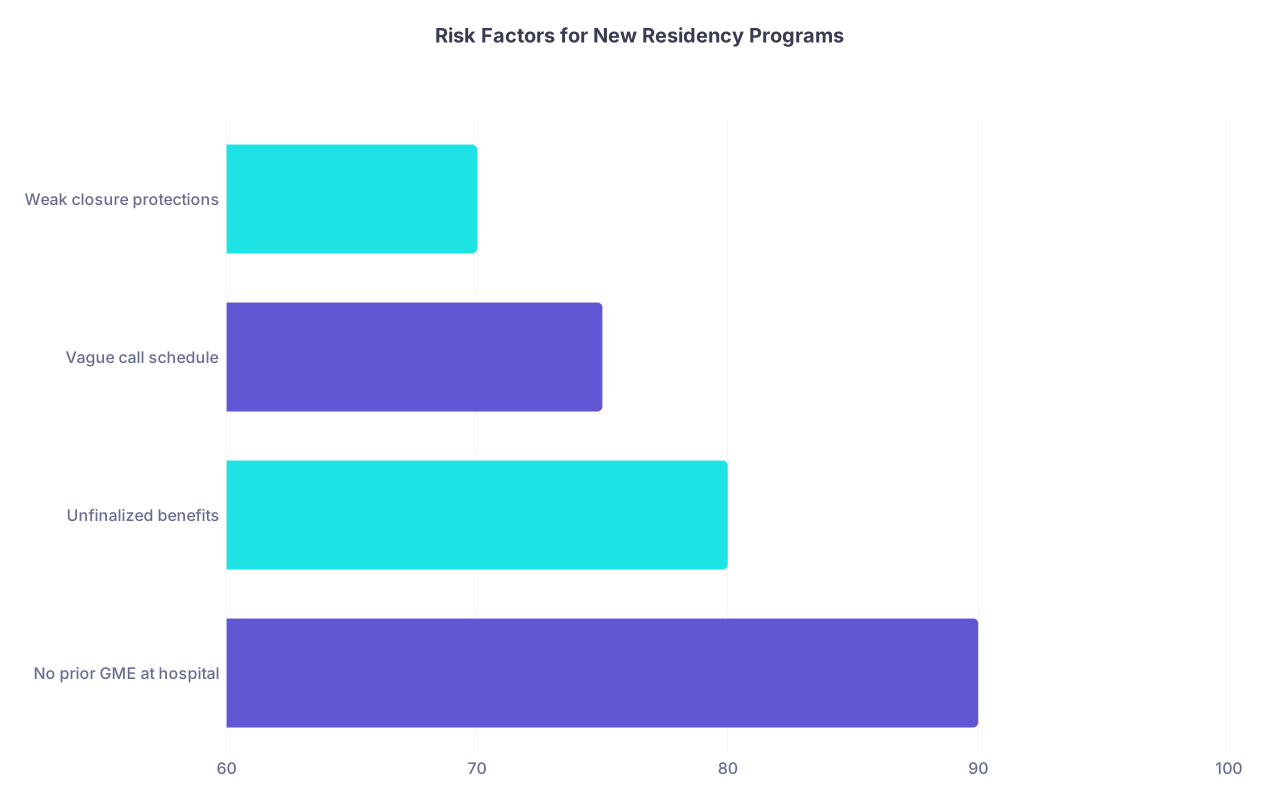
| Category | Value |
|---|---|
| No prior GME at hospital | 90 |
| Unfinalized benefits | 80 |
| Vague call schedule | 75 |
| Weak closure protections | 70 |
Those “risk scores” aren’t from a formal study—they’re reality‑based gut weights from seeing where people get burned. If a program hits 3 or 4 of those, you should think very hard before ranking it highly.

Key Takeaways
- Don’t trust vibes; trust documents. New programs sell vision, but your life runs on what’s in the contract and written policies.
- Benefits and protections in fresh programs are often half‑baked. Health insurance start dates, disability, parental leave, and call schedules are where people get hurt.
- If they can’t answer hard questions clearly—or refuse to put verbal promises in writing—you’re not “joining something exciting,” you’re volunteering to be their safety net.