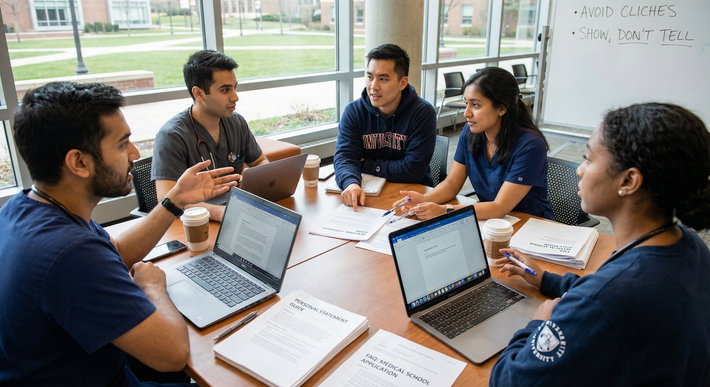
The obsession with sample personal statements is quietly killing a lot of residency applications.
Not because reading examples is inherently evil. But because most applicants do not “read for structure.” They copy tone, clichés, and narratives that were never theirs to begin with. Then they’re surprised when program directors skim their essay, shrug, and toss the file onto the “meh” pile.
Let me be blunt: copying sample personal statements hurts you more than it helps. And the data, the plagiarism tools, and real interview behavior back that up.
The myth of the “proven” personal statement
The popular story goes like this: someone matched dermatology, or ortho, or neurosurgery with “this exact personal statement.” Therefore if you just mimic that style—or reuse that story framework—you’ll hack the process.
That’s fantasy.
Residents are not matching because of a magical paragraph about their dying grandfather or the moment they held a retractor in M3 year and “just knew.” They match because of scores, letters, clinical performance, fit, and then—way down the list—an essay that doesn’t damage them.
Notice the wording: doesn’t damage them.
Most personal statements are neutral. A tiny fraction help. A depressing number hurt.
Copying samples tilts you toward that last category.
Here’s what’s actually happening inside programs:
- Many programs now run applications through similarity-detection tools (Turnitin-type systems or homegrown comparisons across prior cycles).
- PDs and associate PDs read hundreds of statements in niche specialties. They can spot patterns and recycled tropes from two pages away.
- Committees increasingly treat generic or cliché-heavy essays as an alignment/red-flag issue, especially in competitive fields.
This is not theoretical. I’ve seen programs quietly flag essays that mirror last year’s chief resident’s statement a bit too closely. Same structure, same metaphors, slightly different nouns. That applicant did not become a resident there.
What the data and tools actually show
No, there isn’t a randomized trial of “copy vs. original personal statements.” But there’s enough indirect data and internal behavior to draw clear lines.
First, plagiarism and AI-detection tools:
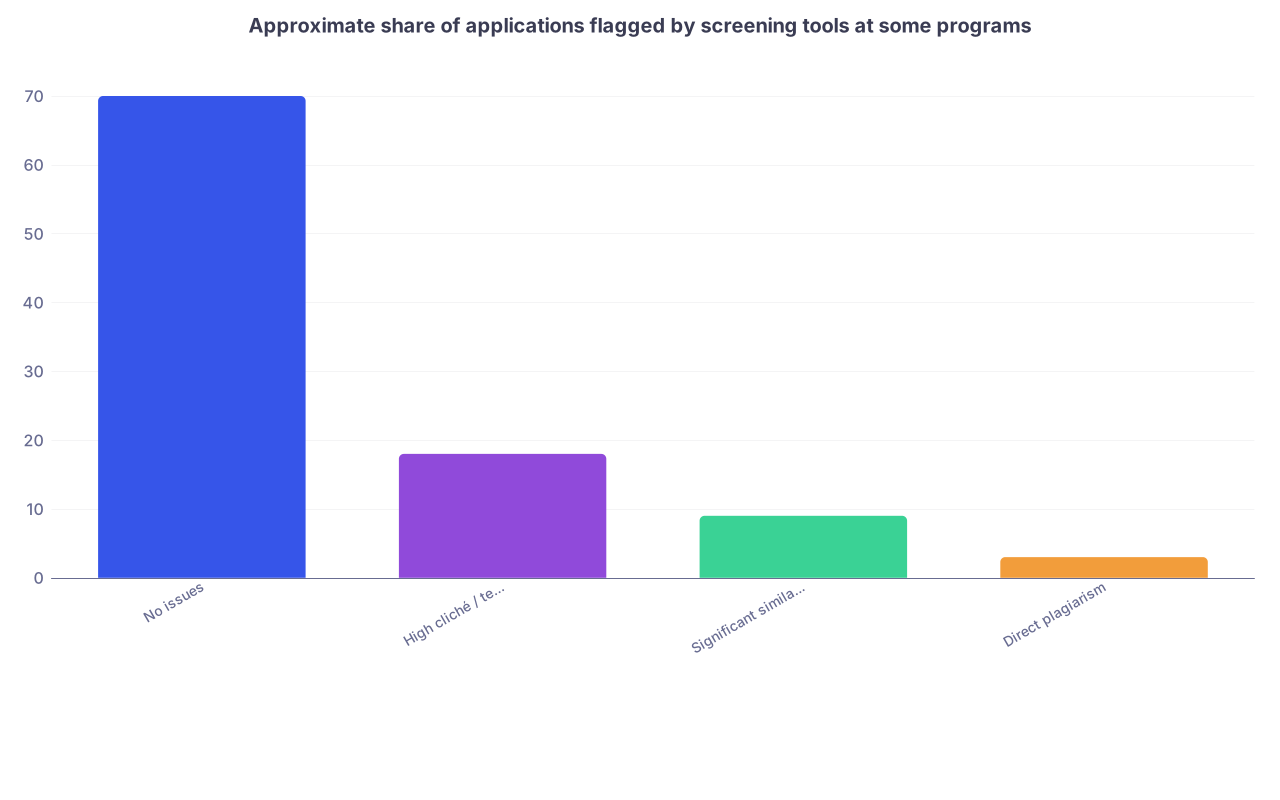
| Category | Value |
|---|---|
| No issues | 70 |
| High cliché / template | 18 |
| Significant similarity | 9 |
| Direct plagiarism | 3 |
At several institutions that have spoken publicly or off-the-record:
- A majority of essays are clean but forgettable.
- A substantial minority show high cliché density and alignment with “known templates” (common online samples, consultant boilerplate, etc.).
- A non-trivial fraction show significant similarity to prior-year statements.
- A small but real slice are basically copy-paste jobs.
What happens to that last group? Often not a formal “plagiarism trial.” Just quiet discounting of the application. Nobody goes to bat for the student whose essay feels inauthentic and weirdly similar to last year’s stack.
Second, behavior of selection committees:
- Surveys of program directors (NRMP data, PD surveys) consistently rank the personal statement as “moderately important” and, crucially, more useful for red flags and fit than for “wow” value.
- I’ve sat in meetings where two otherwise similar applicants were compared: “This one at least sounds like a real person who worked in our kind of environment. This one sounds like ChatGPT plus Reddit.” Guess who got ranked higher.
You want your essay to pass two tests:
- Not obviously fake.
- Coherent with the rest of your file and your specialty choice.
Copying samples fails both more often than it passes.
How copying actually backfires (in specific, painful ways)
Let’s break down the damage, because it’s not just “ethically questionable.” It’s strategically dumb.
1. You inherit clichés that scream “template”
If I had a dollar for every statement that starts with some variant of “The first time I saw a patient crash in the ICU…” or “As I held my grandmother’s hand while she battled cancer…” I’d own my own hospital by now.
You know where a lot of those openings come from? Old sample statements.
People copy the emotional blueprint: childhood illness, family tragedy, one dramatic night on call. They adjust a few details, but the skeleton is the same.
After you’ve read 300 of these, the pattern is painfully obvious. You stop believing any of them.
Program directors are not heartless. They’ve just been desensitized by repetition. Copying samples means you’re voluntarily walking into that buzzsaw.
2. Your voice stops sounding like… you
A real M4 or PGY-1 sounds a certain way on the page. Slightly formal, yes, but grounded in actual clinical moments. When applicants copy samples, they often adopt a weirdly grandiose tone you only see in bad essays and pharmaceutical marketing.
Phrases like:
- “I stand humbled by the resilience of the human spirit”
- “This experience crystallized my commitment to a life of service”
- “In that moment, I knew I was called to [specialty]”
I can tell when someone who talks like a normal person in an interview “wrote” this kind of melodrama. They didn’t. They Frankensteined it from samples.
This mismatch is not a minor style quibble. Interviewers notice when your ERAS hobbies section, your LORs, and your in-person demeanor don’t line up with the polished, cinematic version of you on the page. That inconsistency chips away at trust.
3. Your narrative contradicts your actual record
When you copy another person’s arc, you often inherit their timeline. Then your story stops matching your CV.
I’ve seen things like:
- Personal statement: “I knew from the first day of my surgery rotation that the OR was my home.”
- Application: No sub-I in surgery, applied late, more research and electives in a completely different field.
This happens because people are aping generic storylines—“lifelong passion,” “instant calling”—that don’t fit their actual behavior.
A more honest (and far more powerful) story might be: “I thought I was going into X. Then I hit this turning point. Here’s how I processed that.” But you never get there if you’re busy forcing your life into someone else’s narrative mold.
4. Your essay becomes impossible to defend in an interview
This is the big one.
Programs increasingly use the personal statement as fodder for interview questions:
- “Tell me more about the case you described in your opening.”
- “You mentioned a long-standing interest in global health—where has that shown up in your training so far?”
- “You wrote that feedback was a turning point in your growth. What exactly did your senior resident say?”
If your essay is stitched together from borrowed scenes and generic insights, these questions become landmines. You either:
- Wave vaguely and give shallow answers, which screams “this was embellished,” or
- Contradict what you wrote, which is worse.
I’ve watched faculty walk out of those interviews saying, “That statement was clearly coached or written for them. Pass.”
Copying a sample buys you 30 minutes of drafting comfort and risks 30 minutes of interview damage. Not a good trade.
The quiet arms race: similarity detection and risk avoidance
Programs aren’t just reading more critically. They’re comparing more systematically.
Some realities few applicants talk about:
- Many specialties and institutions now have large internal archives of prior statements, sometimes going back years.
- When a current applicant’s essay strongly resembles one from a previous cycle, it sets off alarms—even if nobody files an official accusation.
- The safest path for a program, from a risk standpoint, is to avoid the applicant whose integrity or authenticity is in question.
There’s also the AI factor. Plenty of applicants are feeding “write me a personal statement for internal medicine” into bots and then lightly editing. The result? A rising flood of essays that all feel the same—over-polished, oddly vague, and emotionally generic.
Programs respond to this by turning up their skepticism. That means the bar for “this feels like a real human wrote it” is creeping upward.
If your essay sounds like the training data, you lose.
What actually helps: using samples the right way
Here’s where I’m not contrarian: exposure to good writing can help. But you have to treat samples like anatomy diagrams, not like an organ donor.
You study them for patterns, not parts to transplant.
The safe and actually useful way to use sample personal statements looks like this:
- You read 3–5 varied examples (different voices, different specialties).
- You pay attention to structure: where they start, how many concrete scenes they include, how they transition from anecdote to reflection.
- You notice how they end cleanly without epic promises to change all of medicine.
- Then you close every tab and write from scratch, using your own cases, your own phrases, your own timeline.
If you cannot explain, out loud, why each specific story or sentence belongs to your life and your training, it shouldn’t be in your statement. That’s the standard.
To make this concrete, think in terms of ingredients rather than templates:
| Approach | Outcome |
|---|---|
| Studying structure (intro–body–close) | Better organization, still your voice |
| Noting how they describe cases briefly | Tighter clinical storytelling |
| Copying sentence patterns and metaphors | Generic, detectable, inauthentic tone |
| Reusing the same “turning point” arc | Mismatch with your actual CV and path |
That’s the line. Learn the skeleton. Don’t steal the skin.
A practical, non-fluffy way to write something real
Let me outline a method that actually works and doesn’t require copying anyone.
Step 1: Start from your actual behavior, not your fantasy narrative
Pull up your CV and rotation list. Ask:
- What did I actually do more of than my peers?
- What kind of patients or clinical settings did I repeatedly seek out?
- What feedback themes show up in my evals? (Teachability, calm under pressure, thoroughness, communication.)
That’s your raw material. Not a dramatic childhood vignette you think you’re supposed to have.
Step 2: Pick 1–2 specific clinical moments that show, not tell
Forget the “life story.” You need a couple of tight scenes.
Examples:
- A night on your sub-I when you realized why you like longitudinal care.
- A clinic encounter where you fumbled something, got feedback, and changed.
- A team dynamic that clarified what kind of resident culture you thrive in.
If your anecdote could be dropped into 50% of your classmates’ statements and still work, it’s probably too generic.
Step 3: Write a deliberately ugly first draft
No inspirational quotes. No “ever since I was a child.” Just:
- What happened
- What you did
- What you learned
- How that connects to the specialty and the resident you want to become
You’re not writing for publication. You’re creating material you can refine. Most of the “polish” that people chase by copying samples is surface-level. Programs care far more about coherence and honesty.
Step 4: Check alignment with the rest of your application
Before you start wordsmithing, run a brutal alignment check:
- Does this story fit with my letters, my grades, my experiences?
- Would my attendings who wrote LORs recognize this version of me?
- If asked about any sentence in here during an interview, could I expand with concrete details?
If the answer is no, rewrite until it’s something you can defend comfortably in a room full of attendings.

| Step | Description |
|---|---|
| Step 1 | Draft personal statement |
| Step 2 | Remove or change scenes |
| Step 3 | Adjust narrative focus |
| Step 4 | Clarify and simplify claims |
| Step 5 | Polish language, keep voice |
| Step 6 | Reflects real experiences? |
| Step 7 | Matches CV & LOR themes? |
| Step 8 | Comfortable defending in interview? |
You’ll notice what’s missing: “Compare to samples and see if it sounds similarly impressive.” That’s how you drift into fraud-lite.
The uncomfortable truth about “average” essays
A lot of applicants secretly fear that if they don’t use dramatic stories or copy the poetic style of samples, their statement will be “too boring.”
Reality check: programs would rather read a clear, grounded, slightly “boring” essay that sounds like the person in front of them than another technically beautiful but suspiciously generic tearjerker.
I’ve watched genuinely average prose help an applicant because:
- It matched their letters.
- It showcased mature reflection on real, unglamorous work.
- It avoided buzzwords and made specific, believable claims.
Meanwhile, another applicant with a “perfect” statement obviously derived from online samples got tanked in the room because nobody trusted the packaging.
You are not being graded on literary fireworks. You are being evaluated on judgment, self-awareness, and honesty. Copying sample personal statements fails all three.
Why copying hurts more than it helps: the bottom line
Let me strip it down.
Copying from sample personal statements:
- Makes you sound generic in a system that already flattens you into scores and checkboxes.
- Increases the risk that your essay will contradict your record, your letters, or your actual personality.
- Raises red flags with similarity detection tools and seasoned readers who’ve seen the same stories recycled for years.
- Sets you up to get exposed in interviews when you’re asked to defend or expand on borrowed narratives.
Using samples only as structural references while you write from your own cases, language, and trajectory:
- Keeps your voice consistent across ERAS, letters, and interviews.
- Produces a statement you can talk about comfortably under pressure.
- Signals maturity and authenticity—two traits that actually move the needle when your file is sitting next to 50 others with similar stats.
If you remember nothing else, remember this:
- The goal of your personal statement is not to impress; it’s to be trusted.
- Any sentence you wouldn’t comfortably defend, in detail, in front of a skeptical attending does not belong in your essay.