
“Follow your passion” is lazy, feel‑good advice that ruins residency personal statements.
You are not applying to be an inspirational speaker. You are applying for a job in a risk‑averse system that runs on evidence, reliability, and pattern recognition. Programs are not hunting for the person who “loves helping people” the most. They’re hunting for the person who will show up at 4:30 a.m., not melt down on night float, and make their lives easier, not harder.
And yet, half the personal statements I see are passion essays. Deeply felt. Totally useless.
Let’s dismantle this.
The Fantasy vs. The Reality: What PDs Actually Read For
Here’s the core problem: passion is cheap. Every applicant is suddenly “deeply passionate” about their specialty between June and September.
I’ve sat across from program directors flipping through PDFs. They are not saying, “Wow, this person has so much passion.”
They’re saying: “Can this person function here without being a disaster?”
Program directors and selection committees use personal statements for very specific, unromantic purposes:
- To screen out red flags they can smell through prose.
- To understand big picture career direction (and whether it matches what their program does).
- To sanity‑check your application narrative against your CV.
- To break ties between applicants who look identical on paper.
- Occasionally, to advocate for a borderline applicant whose story explains context.
Now compare that with what “follow your passion” produces:
- Generic origin stories: “I’ve wanted to be a doctor since I was 5.”
- Overused turning points: “During my third‑year rotation, I realized my true calling.”
- Adjectives instead of evidence: “I am passionate, hardworking, compassionate, dedicated…”
These do almost nothing for the committee’s actual needs. They do, however, increase your risk of sounding identical to 200 other applicants.
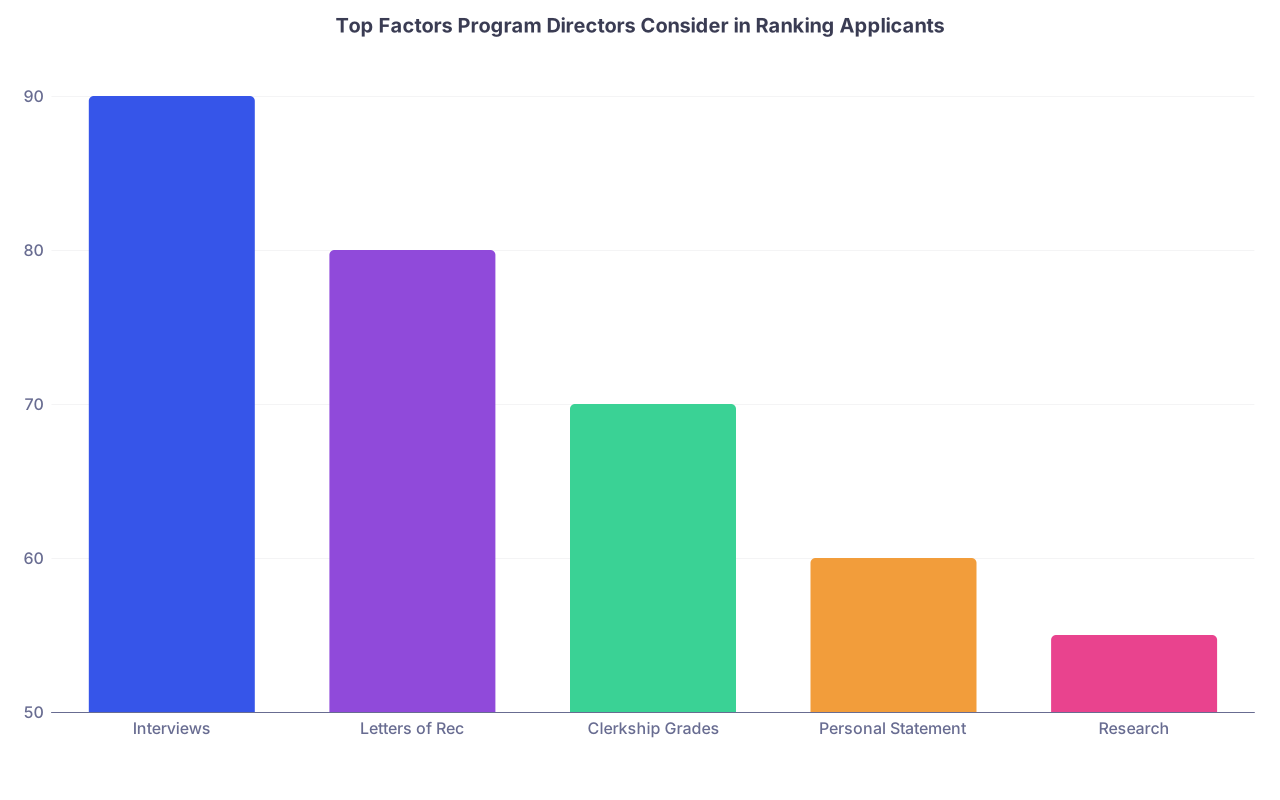
Here’s what the data actually show when program directors are surveyed (NRMP Program Director Survey, various years):
| Category | Value |
|---|---|
| Interviews | 90 |
| Letters of Rec | 80 |
| Clerkship Grades | 70 |
| Personal Statement | 60 |
| Research | 55 |
The personal statement matters, but not as a passion showcase. It matters as a filter and as a tiebreaker. That’s a very different job than “tell your most heartfelt story.”
The Passion Trap: Why “Tell Your Story” Backfires
Passion isn’t just overused. It’s structurally bad as a backbone for your statement.
Here’s how the passion script usually goes:
- Vague childhood inspiration.
- Emotional clinical anecdote where you “realize” your calling.
- Broad declarations about how much you care / want to advocate / love the field.
- A closing paragraph promising lifelong dedication.
And on the other side of the screen, a PD reading their 37th essay of the day sees… nothing. No signal. Just another person who “loves the OR” or “values continuity of care.”
The problems with passion‑centered statements are predictable:
1. They’re non‑falsifiable.
You say you’re passionate. Compared to whom? Based on what? Programs can’t measure that. They default to what they can measure: your record and how you talk about it.
2. They avoid the uncomfortable but important stuff.
Real training involves failure, frustration, and conflict. Passion essays often dodge those because they’re busy being inspirational. The result? You sound naïve.
3. They mismatch the power dynamics.
Residency is work. You are being hired. An attending hiring a colleague doesn’t care that the candidate “always dreamed of being a surgeon.” They care: can this person handle a list of 20 patients and not drop the ball?
4. They blur you into everyone else.
Almost everyone applying to pediatrics “loves working with children.” Almost everyone applying to EM “thrives in a fast‑paced environment.” The more you lean on those clichés, the less distinct you become.
So no, your job is not to “follow your passion” on the page. Your job is to show—concretely—how your experiences, choices, and behavior predict being a safe, productive resident in that specialty.
What Programs Actually Infer From Your Statement (That You Don’t Realize)
Let me be blunt: attendings and PDs are reading your statement for risk.
They are scanning for any hint of:
- Unprofessional attitudes (blaming, arrogance, saviorism)
- Poor insight or lack of accountability
- Emotional volatility without evidence of coping skills
- Unrealistic expectations of the specialty or training
- Toxic interpersonal patterns (“others always…” “I was the only one who cared…”)
“Passion” language often masks these. Or worse, amplifies them.
I’ve seen statements where:
- An applicant “passionately” described multiple conflicts with nurses and other residents… and cast themselves as the sole hero who cared about patients.
- Another waxed poetic about “breaking the cycle of incompetence” in primary care. Yes, that line ended their interview chances at several community‑heavy programs.
- Another wrote an entire essay about being “called” to medicine, but didn’t mention a single concrete clinical behavior they changed or skill they built.
Meanwhile, the applicants who did well did something much less romantic: they treated the statement as structured evidence.
They used it to:
- Connect dots in their CV (why a research year, why the late specialty switch, why the gap).
- Demonstrate how they think about patients and teams.
- Show their pattern: encounter → insight → action → outcome.
They didn’t tell me they were passionate about critical care. They showed me how they responded the first time a patient coded, what they learned, and how that changed their approach on subsequent rotations.
That’s the difference.
The Evidence‑Based Alternative: Signal, Don’t Perform
If “follow your passion” is the myth, what actually works?
Think like a clinician: you’re presenting data, forming a diagnosis about yourself as a trainee, and making a management plan for your own career.
A strong residency personal statement quietly answers four questions:
- What kind of work and environment have you actually chosen when you had options?
- How do you respond to difficulty, uncertainty, or failure?
- What is your realistic understanding of this specialty’s day‑to‑day?
- Where do your skills and track record suggest you will add value?
Notice: none of these require the word “passion.” Or “calling.” Or “lifelong dream.”
They require specifics.
Let’s put this up against the passion script vs. a results‑oriented script:
| Aspect | Passion Script Example | Evidence Script Example |
|---|---|---|
| Motivation | “I’ve always been passionate about surgery.” | “I chose extra sub‑I time over a research elective.” |
| Clinical anecdote | “I realized my calling with Patient X.” | “After missing Y, I changed how I pre‑round and sign out.” |
| Self‑description | “I am compassionate, hardworking, dedicated.” | “On nights, I developed a checklist that cut errors in half.” |
| Closing | “I will be a lifelong advocate for my patients.” | “I’m looking for a program where I can keep doing X and expand Y.” |
Which one gives a PD something to work with? Which one can a letter writer corroborate? Which one sounds like a future colleague instead of a college admissions essay?
You know the answer.
How to Build a Statement Without Hiding Behind “Passion”
Let’s get tactical. Here’s a structure that works far better than “tell your passion story,” especially for residency.
You don’t need to follow this like scripture, but steal the logic.
1. A Clear, Grounded Opening
Drop the childhood dream. Start in training, not in preschool.
Something like:
- A specific moment on a rotation that changed how you practiced (not how you felt about yourself).
- A tension or trade‑off in the specialty that you’ve actually confronted.
- A brief snapshot of the kind of workday that energized you.
The key: it should be recent, clinical, and show you doing something, not just feeling something.
2. The Pattern of Your Choices
Instead of “I’m passionate about X,” show the pattern of how you’ve spent your time when it was up to you.
- Did you pick extra clinic sessions in continuity clinic because you liked following up on diagnostic uncertainty?
- Did you keep returning to the ICU even when it was emotionally draining?
- Did you do QI instead of bench research because systems and workflow grabbed you?
Those are far more believable than any “since I was a child” narrative.
3. One or Two Concrete Growth Moments
Not trauma dumping. Not martyrdom. A real situation where you were stretched.
For example:
- A bad outcome that forced you to upgrade your communication, documentation, or preparedness.
- A conflict with a consultant that taught you how to advocate while staying collaborative.
- A time you were overwhelmed and actually changed your process rather than just suffering.
You’re not confessing to be dramatic. You’re showing that you can self‑correct. Programs love that.
4. A Realistic View of the Field
This is where many “passion” essays implode. They frame specialties in Instagram terms.
Anesthesia is not just “precision and physiology.” It’s 6 a.m. starts, demanding surgeons, repetitive tasks, vigilance with long stretches of monotony punctuated by adrenaline.
Show me you understand that. Something like:
“I enjoy the mix of routine and crisis in anesthesia—the quiet stretches where attention is sustained, and the short, intense episodes where decisions have immediate consequences.”
That line tells me you’ve been there. Not just watched a YouTube video.
5. A Forward‑Looking Fit Statement
This is not, “I am passionate about joining your residency program.” That’s fluff.
Tell programs:
- What kind of training environment you’re actually seeking (size, patient population, academic vs. community, research / QI / teaching emphasis).
- What you realistically bring on day one (not “boundless enthusiasm,” but maybe: experience with QI projects, strong comfort with underserved populations, prior leadership in resident‑adjacent roles).
- What direction you’re leaning (academic vs. community, fellowship vs. generalist), while staying open.
It should sound like a professional looking for the right workplace, not a pilgrim looking for their “home.”
A Quick Reality Check: Content vs. Vibes
Let’s be clinical about this: how much does the vibe of “passion” actually move decisions?
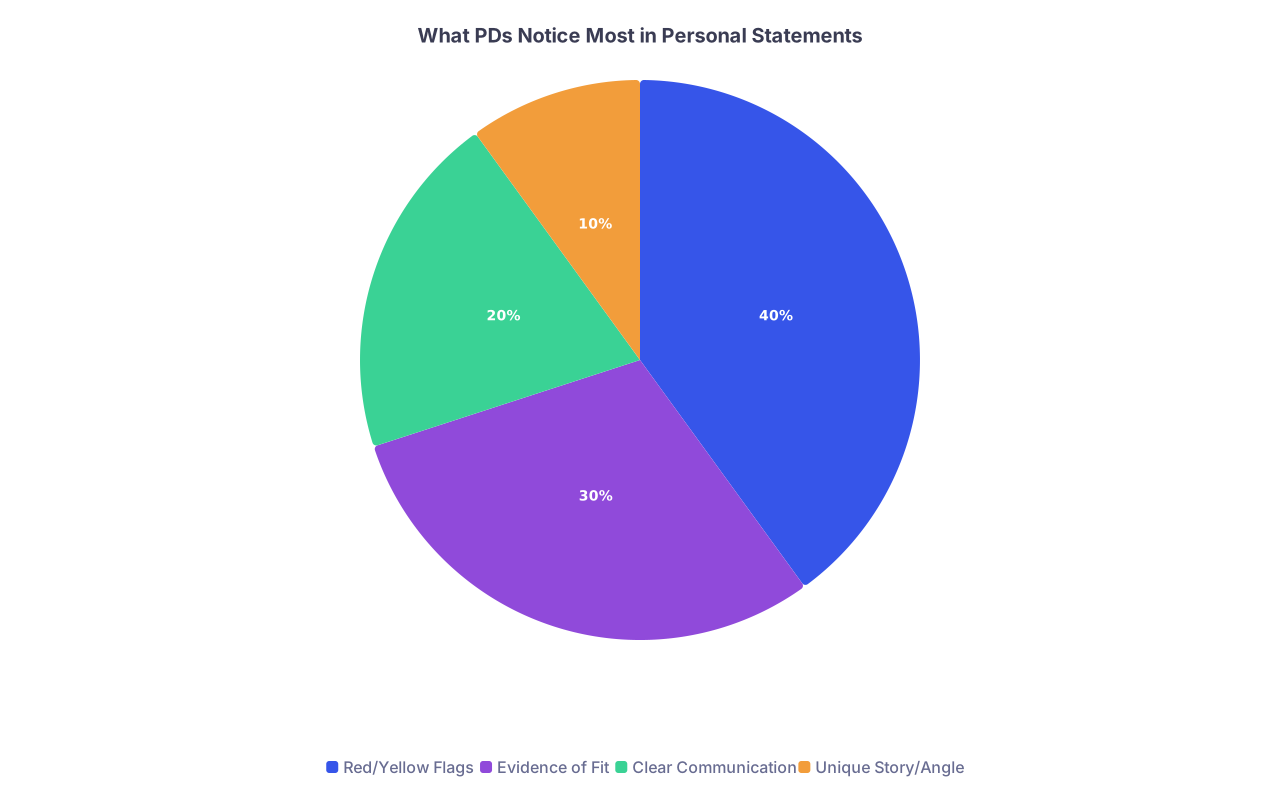
Programs say “personal statement” is moderately important. But what within the statement influences them?
From post‑cycle PD interviews and anecdotal reports:
| Category | Value |
|---|---|
| Red/Yellow Flags | 40 |
| Evidence of Fit | 30 |
| Clear Communication | 20 |
| Unique Story/Angle | 10 |
Passion barely makes the list. At best, it’s in “unique story/angle,” but only when attached to real, verifiable behavior.
What matters far more:
- Are you coherent, concise, and professional on the page?
- Do your experiences logically support your specialty choice?
- Do you sound like someone they’d want to talk to for 30 minutes without wincing?
- Does anything you say throw up a red, or at least yellow, flag?
This is why “write your passion” is terrible guidance. It points your attention at the wrong thing and encourages emotional overreach instead of disciplined, professional storytelling.
The Harsh but Helpful Truth
Let me strip it down.
Residency programs assume you care about the specialty. You applied. You spent hundreds of dollars. You rearranged your life for this.
They do not need you to swear you’re passionate. They need:
- Evidence you understand what you’re signing up for.
- Proof you’ve made choices consistent with that understanding.
- Signs you’ve grown from difficulty rather than being crushed by it.
- Indications you’ll be a stable, collaborative, low‑maintenance colleague.
You can absolutely convey genuine enthusiasm. Just do it through what you chose, did, and learned—not through adjectives and childhood stories.
If you remember nothing else:
- “Follow your passion” produces generic, unhelpful statements. Replace it with: “Show your pattern of choices and growth.”
- Programs use your statement as a risk/fit filter, not as a passion contest. Write accordingly.
- Specific, behavior‑based examples of how you work and think will beat soaring, emotional prose every single time.
Stop trying to inspire them. Convince them.