
What actually happens if you just… ignore your non‑compete and take the better job across town?
If you listen to hospital HR, recruiters, and half your co-residents, the answer is: instant career death, lawsuit, license risk, maybe exile to rural nowhere. That story is wildly exaggerated.
Let me be blunt: physician non‑competes are not the iron cages people think they are. They’re contracts. And contracts get tested, negotiated, limited, and sometimes tossed out altogether.
Yes, they can matter. Yes, they can bite you if you treat them casually. But the reality is a lot messier—and usually less catastrophic—than the scare stories you hear in the call room.
Let’s dismantle some myths and walk through what actually determines whether your non‑compete is enforceable, how often physicians really get hammered, and what leverage you have even after you already signed.
Myth #1: “If You Sign a Non-Compete, You’re 100% Stuck”
This is the big one. The “I signed, so I’m doomed” myth.
Reality: enforceability depends on four things far more than on your signature:
- State law
- Scope (time, geography, activity)
- Employer behavior
- Your actual move (are you competing or just working?)
Let’s talk law first, because this is where the fear story falls apart.
| State | General Physician Non-Compete Status | Notes |
|---|---|---|
| California | Prohibited / Void | Longstanding ban on most non-competes |
| Texas | Allowed but tightly regulated | Must have buyout, reasonable limits |
| Massachusetts | Allowed, increasing skepticism | Courts scrutinize reasonableness |
| Colorado | Largely restricted for physicians | Patient choice carve-outs |
| North Dakota | Prohibited | Non-competes mostly void |
This is not theory. There are states where your non‑compete is basically a scare tactic on paper:
- California, North Dakota, Oklahoma: non‑competes are essentially void for employees. If you’re practicing in LA and your contract says 20‑mile non‑compete, that clause is mostly decorative.
- Several states carve out special protections for physicians (Colorado, New Mexico, etc.), often preserving your right to continue treating established patients or narrowing the enforceable parts.
Then there are “middle” states:
- They allow non‑competes but only if “reasonable” in:
- Duration (often 1–2 years max)
- Geographic scope (10–20 miles vs the entire state)
- Scope of practice (you can’t ban a cardiologist from doing any medical work)
Courts actually look at facts. They ask:
- Is this protecting a legitimate business interest (not just punishing you)?
- Does it preserve patient access to care?
- Is this hospital the only game within 50 miles?
- Is a 50‑mile radius for a pediatrician in a rural region effectively forcing relocation out of state?
I have seen judges shrink non‑competes on the spot: 2‑year to 12 months, 50 miles to 10, entire specialty to a narrower niche. It’s called “blue penciling.” Your signature doesn’t lock everything in stone.
So no, signing doesn’t mean “I have no options.” It means “I’ve accepted a fight that might be winnable or at least negotiable.”
Myth #2: “If You Violate It, They’ll Definitely Sue You”
Programs, hospital administrators, and some senior docs love this one. It keeps people obedient.
Here’s what the data and real-world behavior show: most employers do not rush to court.
Why? Lawsuits are:
- Expensive (six figures is not unusual)
- Public (terrible optics: “Hospital sues local pediatrician for treating children”)
- Slow (months to years)
- Uncertain (judges can narrow or kill clauses)
Employers typically escalate in stages:
- You resign and join a nearby group.
- They send a stern letter reminding you of the non‑compete.
- They maybe send a cease-and-desist letter from outside counsel.
- Then they look at:
- How big a threat you actually are
- How strong the clause is under local law
- Whether they want the PR headache
Only a fraction of cases hit court. And a fraction of those result in the “nuclear” outcome you’re picturing (full ban from practicing in the area). Many end up in:
- Narrowed restrictions (you can practice, but not market to certain referral sources)
- Settlement (shorter restriction, limited distance, or buyout)
- Stalemate (you keep working; they grumble and move on)
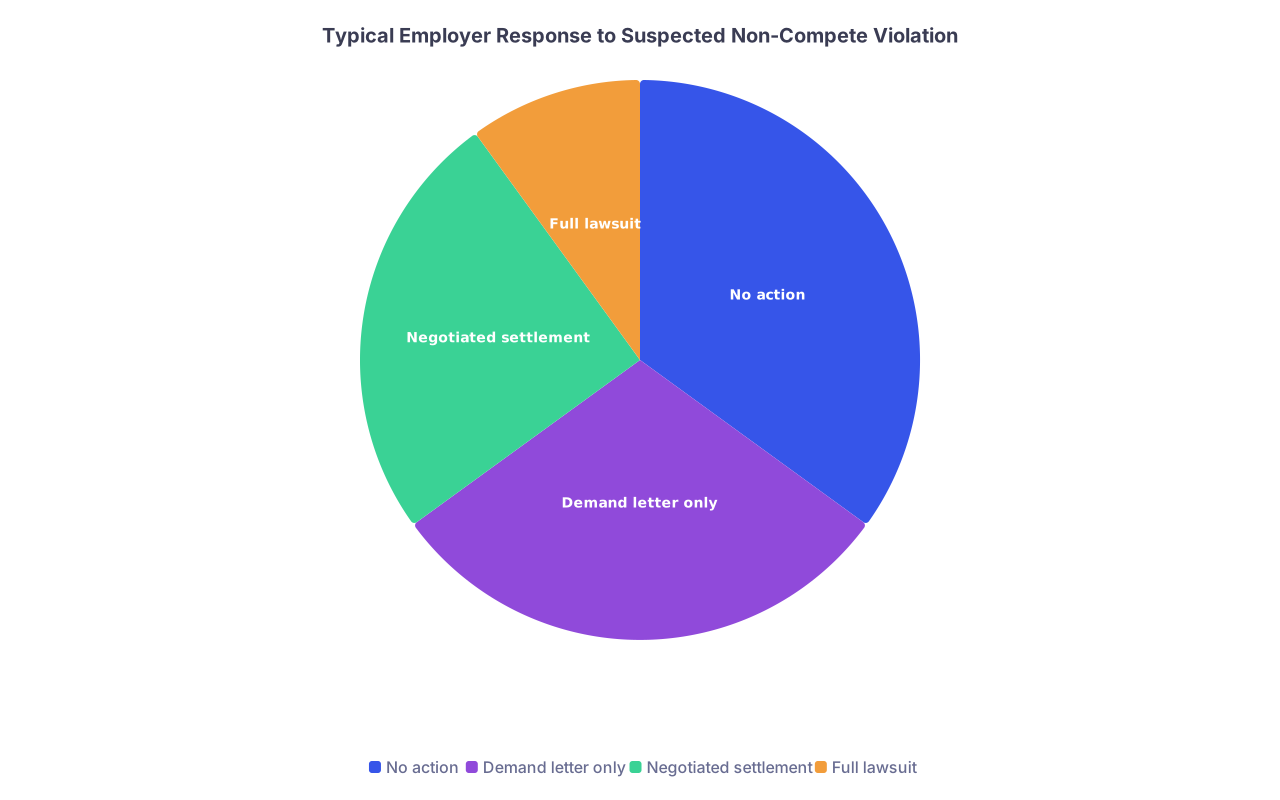
| Category | Value |
|---|---|
| No action | 35 |
| Demand letter only | 30 |
| Negotiated settlement | 25 |
| Full lawsuit | 10 |
These numbers are approximate, but they match what attorneys who actually litigate this stuff report: non‑compete fear massively exceeds non‑compete enforcement.
Am I saying “ignore your contract, nothing will happen”? No. I’m saying the default assumption—“If I try to stay in this city, I’m automatically destroyed”—is not how this plays in the real world.
Myth #3: “Non-Competes Are All or Nothing”
Another lie you’ve probably absorbed: either the non‑compete is fully enforceable, or it’s fully void. On/off. Black/white.
Contracts do not work like that.
Courts and negotiators carve these things up. They ask:
- Is 24 months too long? Maybe 12 is fine.
- Is 50 miles too broad? Maybe 10 or 15 around specific clinics is okay.
- Does it really need to block all clinical work or just the same subspecialty, same patient base, same call panel?
I’ve seen non‑competes gutted down to a couple of zip codes and a mailing restriction to recent patients, while the physician keeps full-time work 8 miles away.
Here’s how typical “reasonableness” actually shakes out in many markets:
| Term Type | Aggressive Claimed Term | What Often Survives Scrutiny (Approx.) |
|---|---|---|
| Duration | 24–36 months | 6–12 months |
| Radius (urban) | 25–50 miles | 5–15 miles |
| Scope | Any clinical practice | Same specialty / same patient base |
| Region | Entire state or multi-state | Specific counties / defined zip codes |
No, you can’t bank on these numbers exactly. But they’re realistic. I’ve watched this pattern repeat with hospital systems from Boston to Houston.
So you don’t ask, “Is my non‑compete enforceable?” You ask:
- Which parts are probably enforceable?
- What is my realistic worst-case?
- What levers can I pull to make this less painful?
The “all-or-nothing” fear is lazy thinking—and exactly what employers want you to believe.
Myth #4: “Non-Competes Are About Protecting Patients and Training”
This is the marketing spin: non‑competes protect patient continuity, institutional investment in you, and “team stability.”
Strip that down. They’re about economics and leverage.
Let’s be honest:
- You largely trained at your residency/fellowship, not at Hospital X who hired you last year.
- Patients usually follow physicians, not buildings, if they’re allowed to know where you went.
- The hospital’s real fear is loss of referrals, procedural volume, and downstream revenue.
Courts know this. And that matters.
When non‑competes clash with patient access, judges get queasy about enforcement. Especially in:
- Underserved areas
- Narrow specialties (peds subspecialists, oncologists, neurosurgeons)
- Markets where there are only 1–2 major employer options
Some states explicitly build this into statutes for doctors. Colorado, for instance, doesn’t enforce clauses that prevent you from treating patients who want to follow you, though the employer can sometimes seek lost profits. That’s a headache, but it’s not the same as a total local practice ban.
So when a hospital lawyer says, “We just want to protect our investment,” that’s framing. The legal question is narrower: is this restriction reasonably tailored to protect a legitimate business interest without unnecessarily harming the public?
“Because we don’t like competition” does not qualify.
Myth #5: “If You Already Signed, You’ve Lost All Leverage”
This one keeps more people stuck than any clause.
You sign as a PGY‑4 or a fellow, you’re just relieved to have a job in the city you want, and you swallow a 2‑year, 25‑mile non‑compete. Fast-forward 18 months: new leadership, ugly culture, red flags everywhere. You want out, but you’re convinced you forfeited all options when you signed.
Not true. You still have levers. Several of them.
1. Facts on the ground
If the employer:
- Materially changed your role
- Cut your pay significantly
- Closed locations
- Failed to provide promised resources (OR time, equipment, staff)
You may have arguments that the original contract’s assumptions are broken. That matters when a judge decides whether enforcing the non‑compete would be “equitable.”
2. Negotiated exit
Hospitals and large groups negotiate exits constantly. Some realistic asks:
- Shortened non‑compete period
- Reduced radius
- Carve‑outs for certain locations or employers
- Agreement not to pursue enforcement if you avoid specific clinics or referral sources
Yes, this usually involves a lawyer. No, it doesn’t always turn into war. A surprising amount of this is back‑channel emails between counsel that never hit a docket.
3. They also have risk
If they go after you aggressively and lose—or even just look heavy-handed—they:
- Signal to other recruits that working there is risky
- Create bad press in a community that may already be suspicious of big health systems
- Spend a lot of money on an uncertain win
Smart systems pick their battles. And they back off when a good lawyer makes it clear the optics will be ugly and the law is not obviously on their side.
Myth #6: “No One Is Changing This System Anytime Soon”
Look around. The ground is shifting under non‑competes.
- Several states have already banned or heavily limited non‑competes, especially for certain categories of workers.
- The Federal Trade Commission has moved (controversially, yes) toward restricting many non‑competes nationwide; even if that rule gets chopped, it’s a signpost of where policy is headed.
- Medical societies are finally waking up to how non‑competes worsen burnout, restrict patient access, and help consolidate corporate control over physicians.
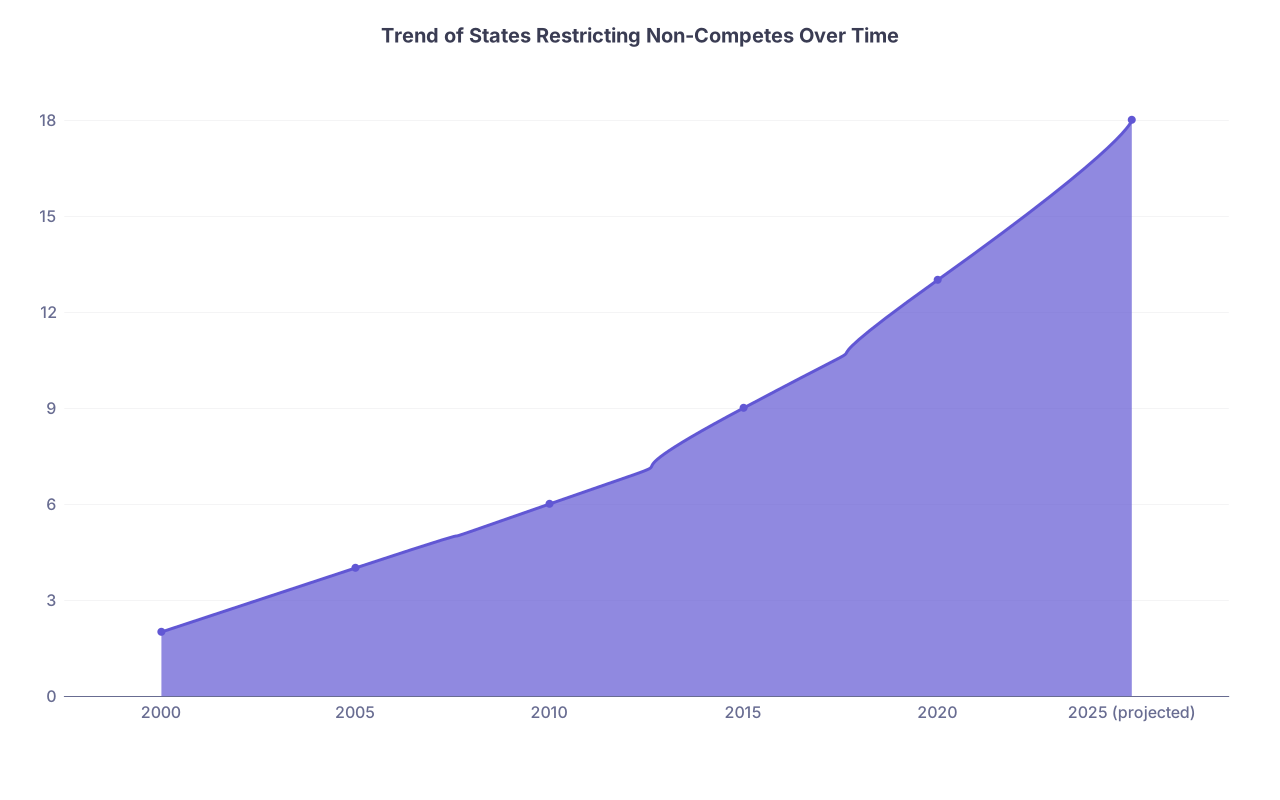
| Category | Value |
|---|---|
| 2000 | 2 |
| 2005 | 4 |
| 2010 | 6 |
| 2015 | 9 |
| 2020 | 13 |
| 2025 (projected) | 18 |
The number isn’t the exact statute count; it reflects the direction: more states limiting, not expanding, these restrictions.
Will this magically fix your current contract? No. But it does shift the enforcement culture. Judges don’t interpret contracts in a vacuum—they’re influenced by broader policy winds, especially around physicians and health access.
The more the narrative shifts toward “non‑competes hurt patients and worsen access,” the less eager courts are to rubber‑stamp them in medicine.
How to Play This Smart If You’re Post-Residency
So what do you do with all this, practically?
Stop catastrophizing. Assume risk, not apocalypse. You might have to move a few miles, wait a few months, or negotiate. That’s very different from “I’ll never work in this city again.”
Know your state law. Not a blog, not your co‑resident, not a recruiter. A local health-care employment lawyer. Half the “you’re screwed” stories would vanish if people actually checked the statutes and case law.
Map realistic scenarios.
- Worst case: you must go 15–20 miles away for 12 months.
- Medium case: you negotiate a narrower carve-out.
- Best case: clause is barely enforceable and the employer uses it only as a scarecrow.
Use non‑competes as leverage, not just a threat. You can extract concessions:
- Written confirmation of limitations or carve‑outs
- Clarified definitions of “competing” entities
- An agreed buyout formula or early termination exception
Before you resign, plan. Quietly:
- Get your contract and any amendments in front of an attorney.
- Get a written offer from the new employer.
- Have a plan for how you’ll communicate with patients that stays within (or carefully tests) legal limits.
You’re not a powerless resident begging for a spot anymore. You’re revenue-generating clinical labor in a physician shortage market. Start acting like it.
The Bottom Line
Non‑competes feel like prison bars when you first read them. But once you look at how they’re actually enforced, judged, and negotiated, they’re closer to badly drawn lines on a map—lines that get redrawn all the time.
Three takeaways:
- Non‑competes are not automatically enforceable just because you signed. State law, reasonableness, and patient access all matter.
- Enforcement is often partial, negotiated, or avoided—not the career‑ending hammer you’ve been taught to fear.
- Even post‑signing, you still have leverage: legal, practical, and reputational. Use it instead of assuming you’re trapped.