
In‑house physician recruiters do not work for you. They work for the hospital or group that pays their salary, bonuses, and benefits—period.
That does not make them evil. It just means if you walk into negotiations thinking, “She seems so nice, she said she’ll advocate for me,” you’re starting the game already down a goal.
Let’s pull the curtain back on how this actually works.
Who In‑House Recruiters Really Answer To
I hear this all the time from new attendings: “The recruiter told me she’d try to get the comp committee to bump my offer. She’s on my side.”
No. She is managing you. For her employer.
An in‑house recruiter’s job description is crystal clear if you bother to read it on hospital HR sites:
- “Meet physician recruitment targets within budget”
- “Maintain competitive but cost-effective compensation offers”
- “Ensure alignment with organizational compensation strategy”
Notice what is missing: “Maximize candidate compensation and contract protections.”
They usually sit in HR, strategy, or a “physician services” department. Their metrics are tied to filling positions and controlling costs, not ensuring you retire early.
A typical recruiter’s incentives look something like this:
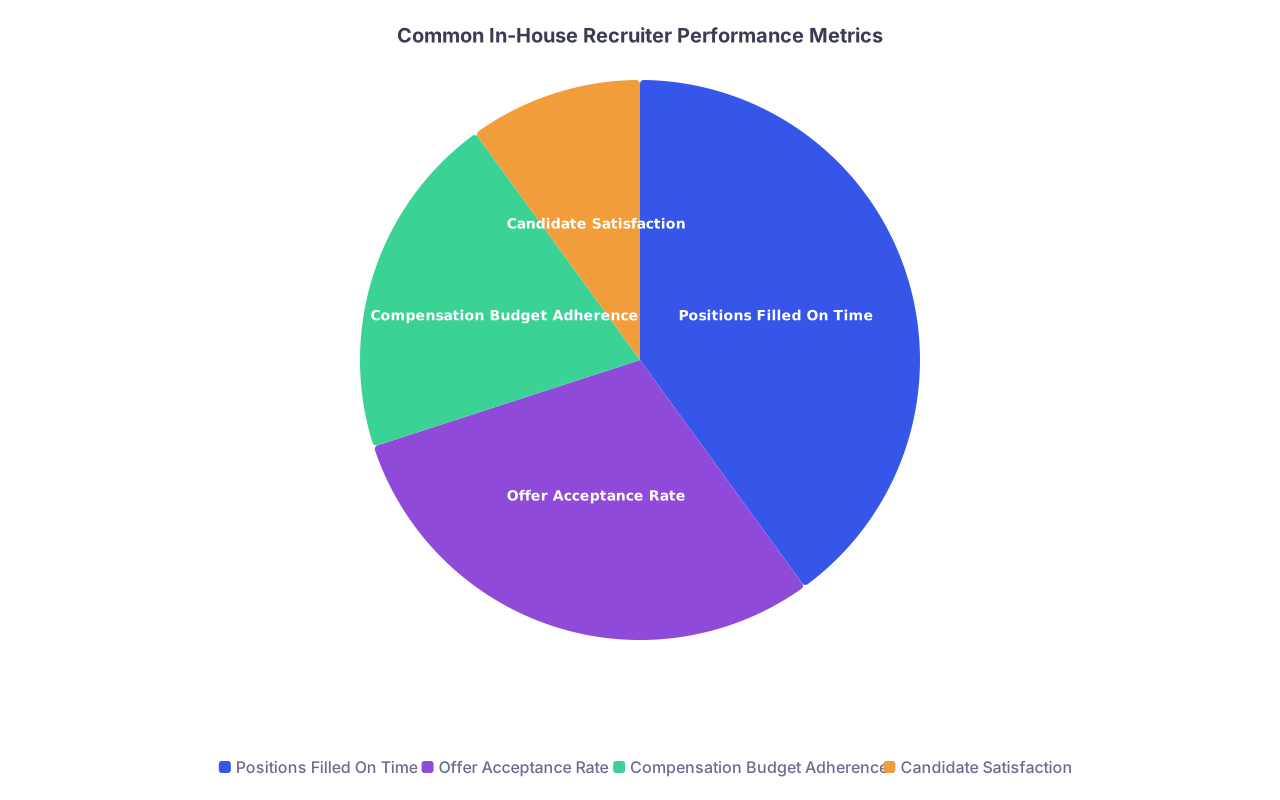
| Category | Value |
|---|---|
| Positions Filled On Time | 40 |
| Offer Acceptance Rate | 30 |
| Compensation Budget Adherence | 20 |
| Candidate Satisfaction | 10 |
Even when there’s a “candidate satisfaction” metric, it’s usually a light survey after onboarding. You giving the hospital a 4/5 because “everyone seemed nice” does not mean you got a good deal.
The employer’s goals are straightforward: fill coverage gaps, keep comp within their internal tiers, and avoid legal landmines. The recruiter’s job is to make that happen with minimal friction.
You? You’re the friction.
The “Friendly Guide” Persona Is a Strategy
Most in‑house recruiters are genuinely personable. They’ll remember your partner’s name, ask about your kids, send you links to school districts or real estate contacts. That’s not random kindness; that’s relationship management.
It works because physicians are used to hierarchy and trust. You’re trained to follow guidance from attendings, program directors, chiefs. So when someone in a “coordinator” or “recruiter” role says “This is our standard contract,” many of you treat that as a guideline from above, not an opening bid.
I’ve watched this play out on actual calls:
You: “I was hoping we could move the base salary closer to 300 instead of 270, especially given my fellowship training.”
Recruiter: “I totally understand, and I really want you to feel valued. I’ve tried to push that in the past, but we’re very locked into our compensation bands. What I can do is see about a small sign-on bonus bump or maybe help with relocation.”
Translation: “I’m going to keep you inside our cost structure and distract you with one-time cash.”
They’ll use soft language:
- “We usually do…”
- “The committee prefers…”
- “We’re not really allowed to…”
None of that is about the law. It’s about internal policy and budget. Those can move—if you push from a position of knowledge, not gratitude.
What The Data Actually Shows About “Standard” Offers
Let’s talk numbers, because this is where people get absolutely fleeced.
Every year, MGMA, AMGA, and others publish compensation data. Hospitals use that data extensively. They often target the 25th–50th percentile for starting offers, especially in less competitive markets, then let “productivity upside” theoretically get you to the 75th+ percentile. (Which many never hit, thanks to RVU games, panel saturation, or call requirements that squeeze your clinic volume.)
Here’s the key point: what they open with and what they can do are not the same thing.
I’ve seen this repeatedly:
- Rural IM hospitalist offered 260k base, “non-negotiable.” After candidate quietly shows a competing offer and market data, base moves to 290k plus an extra week of PTO.
- Surgical subspecialist told that “everyone starts at 60% of collections after overhead.” Candidate pushes with specialty-specific benchmarks, it jumps to 65% and a guaranteed minimum for two years.
- Outpatient psych position listed at 240k. Candidate brings in data showing median in that region closer to 280–300k. Final contract lands at 275k plus a 25k sign-on and 10k moving.
The recruiter did not “fight” for those numbers out of loyalty. They only moved once the physician made it obvious they knew the benchmarks and alternatives.
| Role | Initial Base | Final Base | Extra Concessions |
|---|---|---|---|
| Rural Hospitalist | 260k | 290k | +1 week PTO |
| Surgical Subspecialist | 60% RVUs | 65% RVUs | 2-year income guarantee |
| Outpatient Psychiatrist | 240k | 275k | 25k sign-on, 10k moving |
When you accept the first offer because “the recruiter said it’s standard for our system,” you’re subsidizing the hospital’s margin. Nicely.
How In-House Recruiters Shape Your Perception
One of the oldest tricks is anchoring. They set expectations early, then everything after that looks reasonable by comparison.
You’ll hear things like:
- “Most of our new grads start around 240–250, with upside once you’re established.”
- “We usually do 3 weeks of vacation plus 1 week CME for new physicians.”
- “Our non-compete is pretty standard—lots of systems here use similar language.”
Let me be blunt: in many markets, those numbers are low, the PTO is stingy, and the non-compete is aggressively employer-friendly. But if you do not look at your regional and specialty data, you will not know that.
Here’s a simple example. For a typical non-surgical specialty in a medium market, you might see this spread:
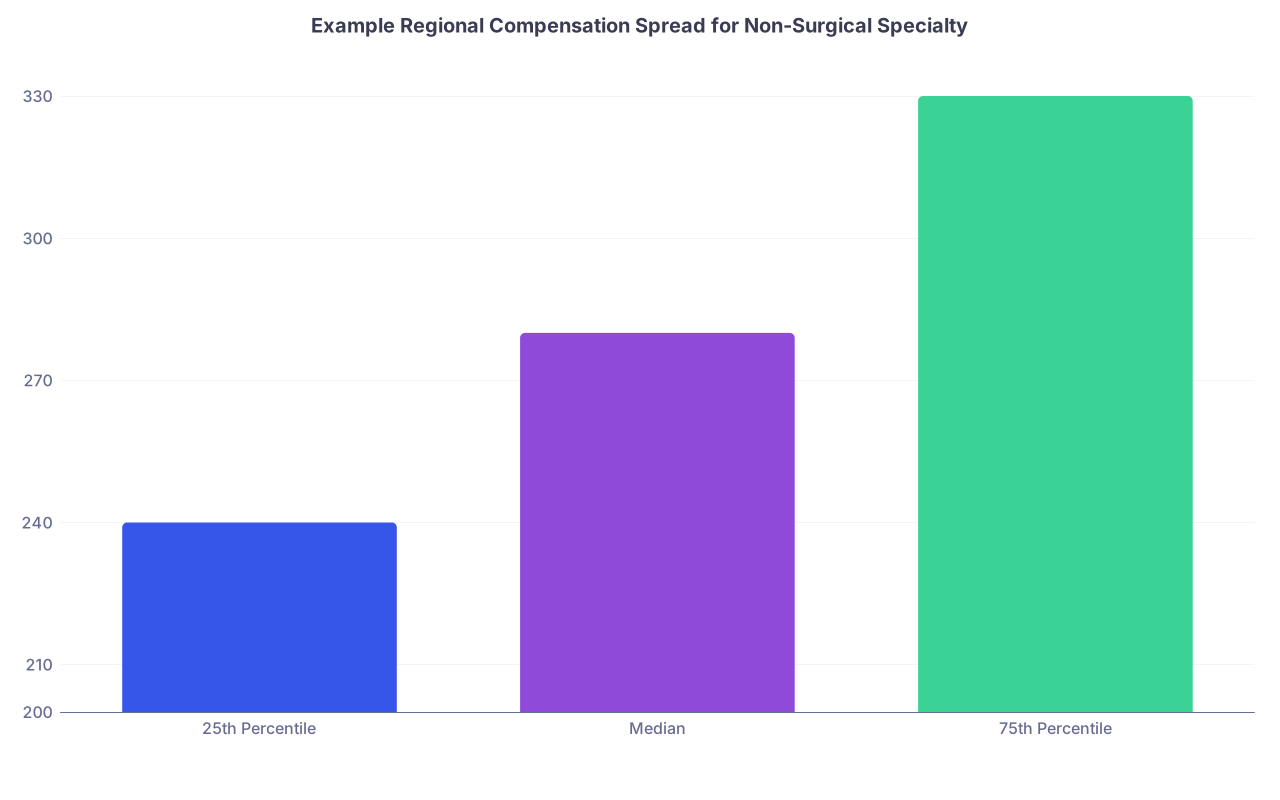
| Category | Value |
|---|---|
| 25th Percentile | 240 |
| Median | 280 |
| 75th Percentile | 330 |
Guess where many new-grad offers cluster? Right at 240–260. Then they wave a theoretical “productivity” carrot in front of you that depends on variables they fully control: scheduling, referral patterns, APP staffing, call burden.
The recruiter’s job is to make that 240–260 feel normal and competitive. If you say yes quickly, they’ve hit their goal with minimal cost creep.
Common Lines That Should Set Off Alarms
Let’s go through some greatest hits I’ve heard dozens of times, usually right before someone signs a mediocre deal.
“We can’t change the boilerplate language; legal won’t allow it.”
This usually refers to termination clauses, non-competes, call requirements, and malpractice tails. Parts of the contract really are standardized, but plenty of systems carve out addenda, side letters, or amendments for specific issues when they have to.
Rough translation: “We could change it but do not want to, and you sound pliable enough that we probably won’t have to.”
“Our physicians are all treated the same; we want equity.”
Sounds fair. Who wants to be the special snowflake? But “equity” is often cover for “we use this to keep our costs predictable, and if you do not ask for exceptions, we love that.”
Lots of groups absolutely differentiate for hard-to-recruit specialties, higher volume, and competitive candidates. They just don’t hand those exceptions out because you’re nice.
“This is very competitive for our area.”
Maybe. Maybe it’s 20–30k below what the independent groups across town are paying. Unless you pull the numbers yourself or talk to peers who’ve actually seen multiple offers in that market, you have no idea.
“We rarely have issues with this non-compete; it’s really just a formality.”
Until it isn’t. I’ve seen physicians stuck driving 90 minutes each way because the “formality” turned into a very real enforcement battle once they tried to join a nearby competitor.
The recruiter’s job is not to lie outright, but they will absolutely frame things in a way that keeps you calm and moving toward signature.
Where Their Interests and Yours Overlap (Barely)
It’s not 100% adversarial. There are a few places your incentives actually line up with theirs.
They want you not to quit after a year. Turnover makes them look bad and is expensive. So they do care—within limits—that your setup is not a complete disaster. They might nudge the department to adjust call distribution, tweak onboarding support, or add an APP if burnout is obviously driving departures.
They want you to be basically satisfied. Angry, vocal physicians poison the well for future recruits. So they tend to address glaring issues that are easy-ish to solve: delayed credentialing, onboarding chaos, missing EMR templates, that sort of thing.
But they do not get a bigger bonus because your tail coverage is paid or your non-compete radius is narrow. They get a bigger bonus because the position is filled and you are still there when their retention metrics are counted.
That’s not villainy. It’s just business. You need to treat it like business too.
How to Use In‑House Recruiters Without Getting Used
Here’s the productive way to think about them: they are your primary information interface with the employer. Not your advocate. Not your advisor. A conduit.
That means your job is to extract information and commitments, not to seek validation.
Ask questions that reveal constraints:
- “What band or range are you targeting for this specialty and experience level?”
- “Who has final approval on compensation exceptions? Under what circumstances have they made exceptions before?”
- “Have you ever carved out modifications to the non-compete in an addendum?”
Good recruiters will answer more than you expect if you ask specifically and calmly. They’re used to physicians being vague and deferential. Do not be.
Use them to understand internal politics:
- “Who actually controls the schedule and template building?”
- “Has this group had turnover in the last 3–5 years? Why did people leave?”
- “How are RVUs attributed when APPs are involved? Who decides?”
You’re not interrogating them; you’re doing due diligence. A recruiter who bristles at those questions is telling you something useful about the culture.
Then do your real advocacy somewhere else:
- With an experienced physician contract attorney who is not paid by the hospital.
- With senior physicians in the group who will quietly tell you what is actually negotiable.
- By anchoring with your own data: MGMA, AMGA, specialty society surveys, real offers from competitors.
And yes, push back in writing. “Given MGMA 50th percentile for this specialty and region is X, and considering my fellowship and existing volume, I’m looking for a base closer to Y with Z weeks PTO and either paid tail or a retention bonus structure that covers it.”
You’re not begging. You’re stating a professional expectation.
The Post‑Residency Trap: Gratitude vs Leverage
The most dangerous thing about in‑house recruiters is not what they say. It’s how residents and fellows feel when they hear it.
You’re finally being courted. After years of “You’re lucky to be here,” the tone flips to “We’d love to have you.” They fly you out, put you up in a nice hotel, take you and your partner to dinner. The recruiter texts you photos of the clinic and says, “Can’t wait for you to join us!”
You feel seen. Wanted. It’s intoxicating after training.
And then you negotiate like someone who is afraid to disappoint a new friend.
That’s the trap. Gratitude and flattery where there should be hard-nosed evaluation and clear-eyed math.
You are not being unreasonable by expecting market-appropriate pay, a sane schedule, enforceable call limits, and non-compete language that does not chain you to a 90-mile exile. You are asking to not get steamrolled by an institution that negotiates physician contracts by the hundred.
The recruiter has done this dozens, maybe hundreds of times. You’ve done it…once? Twice? Maybe never. That asymmetry is huge. Their “friendliness” smooths it over.
Do not let it.
The Bottom Line: Who They Work For, And What You Should Do
Let me land this cleanly.
First: in‑house recruiters are not on your side. They are on the employer’s side. Their paycheck, metrics, and career advancement depend on serving that side effectively.
Second: their job is to make employer-friendly offers feel normal, reasonable, and even generous, especially to new attendings who are tired and flattered and just want to be done.
Third: you can work with them productively—but only if you treat them as information sources and logistics coordinators, not as your advocate or advisor.
If you remember nothing else, remember this:
- “Standard” is not the same as “fair.” It’s just what they can usually get away with.
- Do your own homework—data, peers, independent counsel—before believing a recruiter’s version of “competitive.”
- Be polite, be professional, but negotiate like the only person whose long-term life depends on this contract is you. Because that’s the one part of this entire process that is absolutely true.