
The most dangerous part of opening a practice isn’t the EMR or the staff. It’s the lease you signed and barely understood.
I’ve watched physicians who are brilliant in the OR get absolutely steamrolled by landlords and brokers. Not because they’re dumb. Because commercial leasing is a rigged game where everyone else in the room does it every day—and you do it maybe twice in your career.
Let me walk you through how savvy physicians actually negotiate “doctor‑friendly” commercial leases. Not the fairy tale version your broker pitches you. The version that keeps you from bleeding cash, getting trapped, or losing your practice to a technicality.
How the Game Is Really Played (And Why Physicians Get Targeted)
Here’s the part no one tells you: landlords love physicians as tenants.
You’re sticky, low default risk, prestige for the building, and you spend a lot of money on build‑out you can’t easily walk away from. That combo makes you a dream tenant. It also makes you easy to over‑charge and over‑control.
Behind closed doors, here’s how owners, property managers, and brokers talk about you:
- “Doc money” – code for “they’ll overpay and won’t fight it.”
- “Med build‑out” – means the landlord expects you to sink $100–$300/sq ft in improvements that stay with the building.
- “High switching cost” – if they can get you hooked on the space, they can push aggressive renewal terms later because they know you can’t just move in 60 days.
And your broker? Unless you’re extremely careful, that “tenant rep” often gets paid more if you sign a longer, more expensive lease. Landlord broker and tenant broker split a commission based on total rent value. Longer term + higher rent = bigger check. For them, not you.
So your default position is this: everyone around the table is financially rewarded for you paying more and having fewer outs.
The only way you win is by knowing what actually matters in a “doctor‑friendly” lease—and forcing those terms in.
The Numbers Landlords Don’t Expect You to Understand
Before we get to clauses and legal traps, we need to talk economics. Because landlords know you’re a novice at this part and they exploit that.
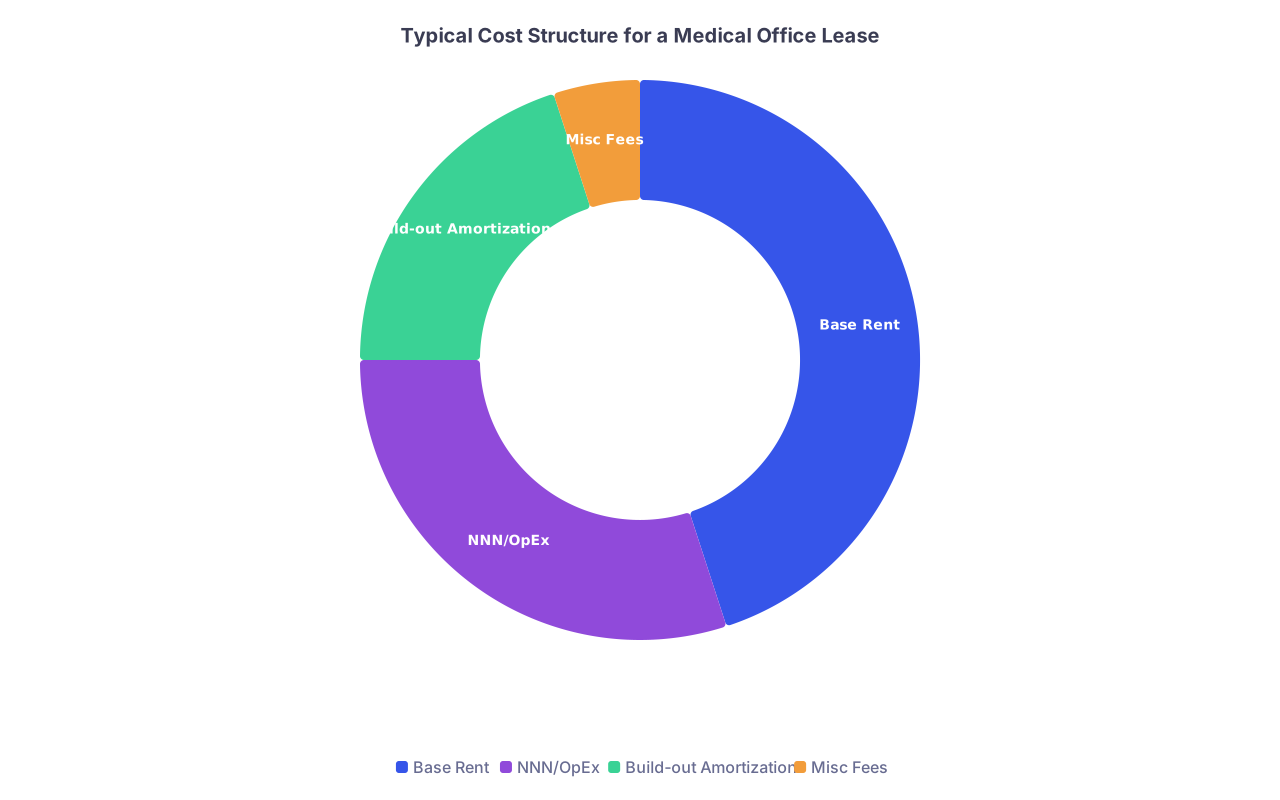
| Category | Value |
|---|---|
| Base Rent | 45 |
| NNN/OpEx | 30 |
| Build-out Amortization | 20 |
| Misc Fees | 5 |
For a medical office, your true occupancy cost isn’t just base rent. On a per‑square‑foot basis, you’re looking at:
- Base rent (the headline number they sell you)
- NNN / operating expenses (CAM charges, taxes, insurance)
- Build‑out amortization (hidden in “above market” rent)
- Nonsense fees (admin, marketing, “management,” etc.)
A savvy physician looks at total effective rent, not just base rent.
Let me give you an actual scenario I watched unfold at a suburban medical office building:
- Suite A: Advertised at $32/sf base + $10/sf NNN. Landlord offers $40/sf tenant improvement (TI) allowance.
- Suite B (same building): Advertised at $28/sf base + $10/sf NNN. Landlord offers $20/sf TI.
Every naive doc picked Suite A because the space “looked nicer” and the TI sounded generous.
What actually happened:
- Build‑out cost for both was around $135/sf.
- In Suite A, landlord quietly amortized the additional $75–$95/sf build‑out “gap” into a higher base rent and stiff annual escalations.
- Over a 10‑year term, tenants in Suite A paid six figures more than in Suite B for essentially the same functional space.
Doctor‑friendly leasing starts by treating every offer as a math problem, not a decor problem.
You want:
- Transparent TI structure.
- Known NNN history and caps.
- Escalations that don’t balloon your costs.
Most landlords will move on these if they believe you’ll walk. They just won’t offer it up front.
The Terms That Decide Whether Your Lease Is “Doctor‑Friendly” or a Trap
Now we get to the part where attorneys and brokers love to blow smoke. They’ll toss legal jargon at you until you stop asking questions.
I’ll translate what actually matters.
1. Term Length: Why 10 Years Can Be a Trap
Landlords love 10–15 year medical leases. So do many hospital systems when they’re the guarantor.
Smart physicians are more cautious.
The math is simple: your build‑out amortization period needs enough term to make it worthwhile. But you also need real exit options as medicine, reimbursement, or your life changes.
Savvy structure looks like:
- 5–7 year initial term.
- Two or three 5‑year options to renew at defined terms or defined formulas (e.g., 95–100% of “fair market value” with objective comparables, not whatever they feel like).
I’ve seen too many physicians lock in for 10–12 years “because tenants get more TI,” then regret it when:
- Payer mix shifts and the location no longer works.
- The building loses parking, access, or key co‑tenants.
- A better opportunity appears (surgery center, JV, partial sale).
The “doctor‑friendly” play: negotiate a term long enough to justify the TI and your equipment, but protect yourself with options, sublease rights, and early termination language.
2. Personal Guarantees: The Hidden Noose Around Your Neck
Here’s a secret straight from landlords: physicians often sign personal guarantees with barely a question. Other professional tenants fight this tooth and nail.
If you practice under an entity (PC, PLLC, LLC), but your lease has a personal guarantee attached, you’ve just blown a huge layer of protection.
I’ve seen attending physicians with solid practices have their personal assets dragged into negotiations because they personally guaranteed a 10‑year lease and then had to close or relocate in year three.
Savvy physicians negotiate:
- Limited guarantees – capped amount (e.g., 6–12 months of rent) or declining over time.
- “Burn‑off” guarantees – personal guarantee goes away entirely after certain conditions (e.g., 3 years of on‑time payments).
- No joint and several guarantees among multiple physicians – so one partner doesn’t get ruined when another disappears.
You will be told “this is standard, everyone signs it.” That’s a half‑truth. It is standard for unsophisticated tenants. Institutional tenants, large practices, and yes, savvy physicians, often negotiate their way out of full personal guarantees.
3. Assignment, Subletting, and Exit Clauses
This is where deals live or die when life happens: selling your practice, merging, getting acquired by a hospital, retiring, or moving out of state.
Doctor‑friendly leases include:
- Reasonable right to assign the lease to another physician group or healthcare entity with landlord consent that “shall not be unreasonably withheld, conditioned, or delayed.”
- No automatic rent “reset to market” on assignment—huge one. I’ve seen landlords weaponize this to kill practice sale deals.
- No requirement that you remain personally on the hook after assignment (this is a sneaky one; landlords love to keep you as the backup checkbook).
I watched a practice sale in the Midwest implode because the original lease said:
- Any assignment triggered “rent adjustment to then‑current market rate as determined by landlord.”
- Original tenant physician remained fully liable “notwithstanding any assignment.”
Buyer backed out. Seller lost a seven‑figure deal. Why? Because twelve years earlier they hadn’t spent $1,500 to have someone who knew this stuff mark up the lease.
4. Use Clause, Exclusivity, and Competing Practices
Landlords will absolutely lease to your direct competitor two doors down if you don’t protect yourself.
A doctor‑friendly lease has:
- A broad use clause: “General medical office, including but not limited to diagnosis, treatment, minor procedures, and ancillary services such as imaging, physical therapy, and lab services.” You do not want to be forbidden from adding services later because your lease only said “pediatrics office.”
- Exclusivity provision: bars landlord from leasing to competing specialties or services in the building or project. This is heavily negotiated, but physicians who insist often get:
- Specialty exclusivity (e.g., no other GI, or no other dermatologist in building).
- Service exclusivity (e.g., no other imaging center, no competing urgent care).
Hospital‑owned buildings will fight you harder on this. Independent landlords less so. But it’s rarely completely off the table unless you never bring it up.
5. NNN, CAM, and “Operating Expenses” – Where the Bodies Are Buried
Almost every physician who’s been burned by a lease has a CAM horror story.
Year 1 looks fine. Year 3, you get a “reconciliation” bill the size of a new SUV for “unexpected increases in operating expenses.”
Here’s what’s really happening: a lot of landlords treat NNN like an open bar. They throw in salaries, capital improvements, corporate overhead, and junk that doesn’t belong there, on top of legitimate costs like taxes, insurance, cleaning, common area utilities.
You want:
- A detailed definition of “operating expenses,” with an explicit exclusion list (landlord capital improvements, leasing commissions, legal fees for other tenant disputes, marketing their building, etc.).
- Audit rights: the right to inspect or audit the CAM/NNN books annually, with fee reimbursement if you find materially inaccurate charges.
- Caps on controllable expenses: often a 3–5% annual cap on controllable operating expenses (excluding things like property taxes and insurance that truly are external).
This is one of the biggest leak points in a “cheap” lease. The headline rent may be lower, but your NNNs creep up relentlessly and nobody tells you you could have negotiated caps.
6. Build‑Out, TI, and Ownership of Improvements
Medical build‑outs are expensive. Plumbed exam rooms, lead‑lined walls, oxygen, procedure rooms, imaging, specific HVAC demands. That’s your money turning a generic shell into a specialty space.
The landlord wants you to pay for that, then hand it over to them for free if you leave.
A doctor‑friendly approach focuses on three things:
- TI allowance: You push for the largest landlord contribution you can get, tied to a transparent construction budget and schedule. And you make sure it’s disbursed in a way that doesn’t choke your contractor.
- Control of design: You, or your architect, control design and contractor choice as much as the landlord will allow. Building‑appointed contractors tend to run 15–30% higher.
- Restoration: You negotiate out or sharply limit any “restore to original condition” requirement at end of lease. Removing specialty items is one thing. Tearing down every wall you paid for is insanity.
I’ve seen landlords sneak in language requiring full demolition at lease end. Which means you either eat a giant bill to trash your own build‑out or you fight them in court. Both are stupid outcomes that a few sentences in the lease could have killed.
Comparing “Standard” vs “Doctor‑Friendly” Terms
Here’s the kind of delta I see all the time between what physicians are offered and what physicians could get if they pushed like a businessperson, not like a supplicant.
| Lease Element | Standard Physician Deal | Doctor-Friendly Target |
|---|---|---|
| Initial Term | 10 years, few options | 5–7 years + multiple 5-year options |
| Personal Guarantee | Full term, unlimited | Limited or burn-off after 2–3 years |
| CAM/NNN | Broad, uncapped, no audit | Defined, exclusions, caps, audit rights |
| Assignment | Landlord discretion, rent reset | Reasonable consent, no automatic reset |
| Exclusivity | None | Specialty or service exclusivity |
Landlords will not volunteer this version. You have to ask, and you have to be willing to walk.
How Savvy Physicians Actually Run the Process
You don’t start with the lease. That’s mistake number one.
You start earlier, when you’re “just touring spaces.” That’s where your leverage is highest and mistakes are cheapest.

| Step | Description |
|---|---|
| Step 1 | Define Needs and Budget |
| Step 2 | Hire True Tenant Rep and Healthcare Attorney |
| Step 3 | Shortlist 3 to 5 Properties |
| Step 4 | Request Competing LOIs |
| Step 5 | Negotiate Key Business Terms in LOI |
| Step 6 | Draft and Mark Up Lease |
| Step 7 | Final Negotiation and Concessions |
| Step 8 | Sign Lease and Start Build Out |
Let me spell out how the physicians who don’t get screwed usually do it:
Define your non‑negotiables before anyone shows you space
Parking expectations, proximity to hospital or referrers, square footage range, budget range (all‑in, not just base rent), need for imaging/procedures, growth potential. If you let the broker define your needs, you’ll end up in the building they’re pushing hardest.Hire a true tenant rep who does healthcare
Not your friend who “does some commercial.” You want someone who has done dozens of medical deals in the last few years and can rattle off the names of local orthopedic, GI, derm, or primary care groups they’ve placed. If they get cagey about their commission structure, walk.Get at least 2–3 competing Letters of Intent (LOIs)
This is where the smartest docs quietly win. They do not emotionally commit to a space off a first tour. They get multiple LOIs and force landlords to compete. TI goes up. Free rent goes up. Rent bumps go down. Assignment language starts to soften.Negotiate the business points in the LOI, not the lease
You want rent, TI, term, options, assignment framework, and big‑ticket landmines largely handled in the LOI. If you hand your attorney a lease with a vague LOI, you’re paying them to fight an uphill battle that should have been slammed in the LOI for free.Then involve a healthcare real estate attorney
Not your cousin who does divorces. Not your med‑mal guy. A real estate attorney who has medical office deals in their portfolio. Have them mark up the lease and explain the tradeoffs. Don’t let them negotiate in a vacuum—tie legal positions to business priorities.Time your ask
Ask for the moon early: TI, free rent, caps, exclusivity, assignment. Then, as you narrow the fight, you strategically give on cosmetic items to protect the big‑ticket items. Landlords want to feel like they “won” something. Give them the cheap wins; keep the expensive ones.
When You Should Not Sign the Lease
There are situations where the smartest physicians I know walked, even late in the game.
Here are red flags that should make you pause hard:
- Landlord absolutely refuses any limit on personal guarantee.
- Operating expense definitions are vague, and they refuse caps or meaningful audit rights.
- No assignment rights other than to your wholly owned entity (kills practice sale flexibility).
- Use clause is narrow and they won’t broaden it (you’re locking your future for pennies).
- They insist on the right to move you (“relocation clause”) to another suite at their discretion without ironclad protections—and compensation.
Walking away costs time and maybe some architectural drawings. Staying in a bad lease can cost your practice, your marriage, and your sleep. I’ve watched all three happen.
Savvy physicians would rather eat a few months delay and find the right building than sign into a decade‑long relationship with a predatory landlord.
Why This Matters for Physician Real Estate Investing
If you’re thinking more broadly about physician real estate investing—owning the building, buying into a condo suite, forming a physician‑owned MOB—your understanding of leases becomes your entire business model.
Leases are the asset.
When you’re the landlord one day:
- You want to write tenant‑friendly enough leases that attract and retain quality practices.
- But also landlord‑smart leases that protect asset value and cash flow.
Physicians who understand both sides can:
- Negotiate better when they’re tenants.
- Structure stronger deals when they’re owners.
- Create real wealth by controlling the dirt under their practice.
The ugly truth: many physician‑owned buildings underperform not because the location is bad, but because the docs used the same sloppy lease templates their landlords abused them with years earlier.
Learn how to negotiate a doctor‑friendly lease now, and you’ll be a much more dangerous investor later.
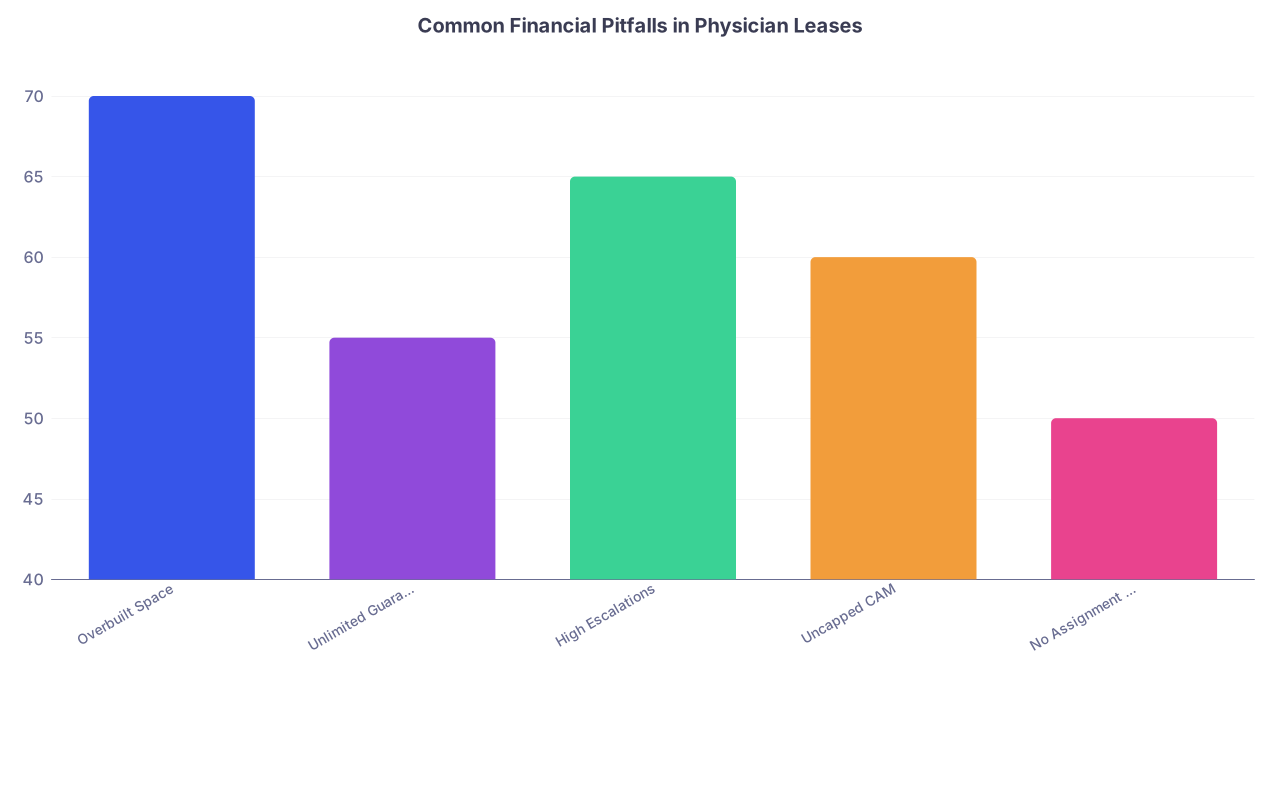
| Category | Value |
|---|---|
| Overbuilt Space | 70 |
| Unlimited Guarantee | 55 |
| High Escalations | 65 |
| Uncapped CAM | 60 |
| No Assignment Rights | 50 |
Numbers approximate percentage of physician leases I’ve seen with each issue. It’s not rare. It’s the default.
Your job is to not be the default.