
You are sitting in your office after clinic. It is 6:45 p.m. The last patient left 30 minutes ago, staff is gone, lights are half off, and you are staring at an email from a medical office REIT offering to buy your building for “top-of-market pricing” and lease it back to you for 15 years. Seven figures. Wire in 60 days.
Your practice is profitable, the building is paid off, and most of your net worth is trapped in this one asset you barely think about. Your CPA likes the idea of “unlocking equity.” Your partner is worried you are “selling the family farm.” The REIT rep keeps saying, “Everybody is doing this; it is a no-brainer.”
It is not a no-brainer. It is a very specific, high-stakes financial and legal maneuver that can be excellent or terrible depending on how you structure it and where you are in your career.
Let me break this down properly.
1. What a Sale–Leaseback Actually Is (and Why Investors Love Your Building)
A sale–leaseback is simple in concept:
You sell your practice building to an investor and simultaneously sign a lease to stay in the building as a tenant for a defined period (often 10–20 years). You go from owner-occupier to tenant. Immediately.
Economically, you are swapping:
- Illiquid equity in a single property
for - Cash (or near-cash) now, plus a long-term lease obligation
The investor is buying two things:
- The physical asset (land + improvements)
- Your rent stream, backed by your practice (and possibly by you personally)
They care more about #2 than #1. A non-credit tenant medical office with stable history is catnip to yield-hungry investors. They love:
- Sticky tenants (medical users move infrequently; build-outs are expensive)
- Above-average rent growth potential (especially if you have not been paying yourself market rent)
- Longer lease terms than typical small businesses
If you own a:
- Single-tenant medical office building, or
- Condo in a MOB with exclusive use and good financials
and your practice is profitable, you are target #1 for sale–leaseback buyers.
But the “mechanics” and “should I do it?” are two different questions. We will do both.
2. Core Mechanics: How a Sale–Leaseback Is Structured, Step by Step
Think of a properly run sale–leaseback in discrete phases.

| Step | Description |
|---|---|
| Step 1 | Initial Strategy |
| Step 2 | Valuation and Rent Analysis |
| Step 3 | Buyer Outreach |
| Step 4 | Letter of Intent |
| Step 5 | Lease Negotiation |
| Step 6 | Due Diligence |
| Step 7 | Closing and Funding |
2.1 Strategy Phase: Define Your “Why” and Constraints
Before you talk to any buyer, answer three non-negotiables:
How long do you realistically plan to practice in this location?
Five years? Ten? Twenty? Planning to bring in partners? Planning to sell the practice?How important is location control?
Are you in a destination ortho hub where the building is your brand, or a generic suburban MOB where moving 2 miles would be fine?What is the primary goal of the transaction?
- De-risk and diversify your net worth
- Raise capital for practice expansion / ASC build / new service line
- Personal liquidity pre-retirement
- Debt paydown or estate planning
If you skip this step and jump straight to “highest price wins,” you are already behind.
2.2 Valuation: Translating Your Building into an Investor Deal
Investors do not think, “It cost $4M to build in 2015.”
They think, “What is the net operating income (NOI), and what cap rate applies to this risk profile?”
Basic formula:
- Rent (triple net or modified) – Landlord operating expenses = NOI
- Purchase price = NOI / Cap rate
Example:
You and your partners currently pay yourselves $20/sf in rent for 10,000 sf = $200,000/year. You cover most expenses directly (NNN-ish).
A buyer looks at market rent for your use: say $30/sf = $300,000/year. At a 6.25% cap:
- NOI assumed: $300,000
- Price = $300,000 / 0.0625 = $4,800,000
You see the problem and the opportunity:
- If you underpay rent now, the investor “re-states” rent to market and can justify a higher price.
- But that same step locks you into a higher rent obligation for 10–20 years.
So there is a lever here: the rent you agree to directly drives the value. There is no free lunch.
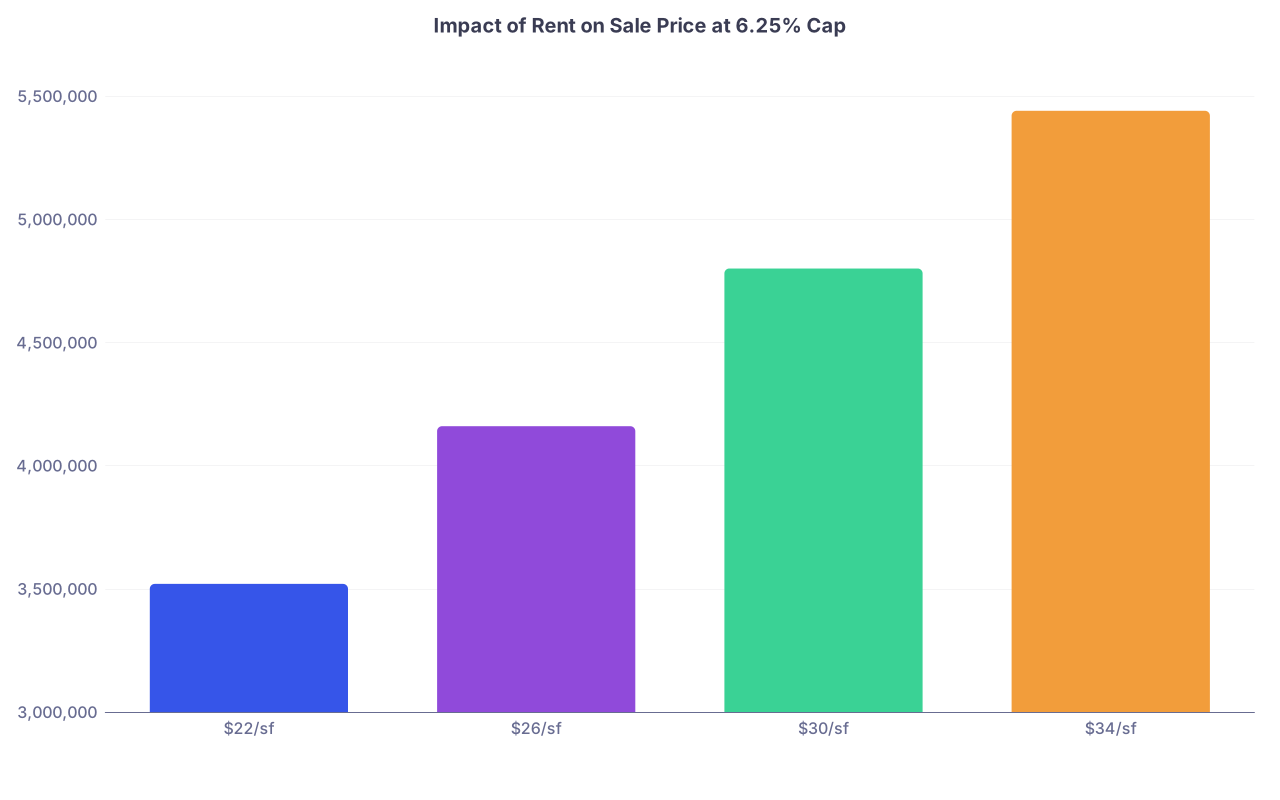
| Category | Value |
|---|---|
| $22/sf | 3520000 |
| $26/sf | 4160000 |
| $30/sf | 4800000 |
| $34/sf | 5440000 |
(Assuming 10,000 sf and NNN structure)
2.3 Buyer Types and How They Play the Game
Most physicians talk to whoever emailed them first. That is lazy. You want to understand the buyer universe:
| Buyer Type | Typical Deal Size | Term Preference | Flexibility | Pricing Aggressiveness |
|---|---|---|---|---|
| Public REIT | $5M–$50M+ | 10–20 years | Low–Medium | High on prime assets |
| Private Equity Fund | $3M–$30M | 10–15 years | Medium | High–Medium |
| Family Office | $2M–$20M | 7–15 years | High | Medium |
| Local High-Net-Worth | $1M–$10M | 5–10 years | Highest | Medium–Low |
I have seen three patterns repeatedly:
- REITs pay top dollar but want long leases, firm bumps, and very landlord-friendly terms.
- Family offices and local investors can be reasonable and relationship-focused but may be slower or less sophisticated (which is sometimes good, sometimes a mess).
- Private funds sit in the middle: institutional enough to close, still hungry enough to compete.
You want competition. You want at least 2–3 serious offers at LOI stage.
2.4 LOI and Lease: Where You Win or Lose
The LOI is not “nonbinding” in the way brokers like to pretend. It sets:
- Purchase price (and often cap-rate-based adjustments)
- Lease term, rent, and basic escalations
- Responsibility for TI, commissions, closing costs
- Key conditions (financing, appraisal, specific contingencies)
Then the lease negotiations start. Here is where physicians routinely give away months of income because they do not understand what actually matters.
Core economic points in the lease:
- Base rent and measurement (per RSF vs usable)
- Lease term (10 vs 15 vs 20+ years)
- Escalations (2% vs 3% annual, or fixed step-ups)
- NNN vs Modified Gross vs Gross; who pays CAM, taxes, insurance
- Reset/renewal mechanics and options
- Personal guarantees or corporate guarantees
- Assignment and subletting flexibility (very relevant to practice sale)
You need a commercial real estate attorney and, ideally, a broker on your side who is not paid exclusively by the buyer. The buyer’s “standard lease” is standard in the same way a plaintiff’s standard demand letter is “fair.”
3. Financial Analysis: Does the Trade Actually Make Sense?
Now let’s talk numbers in a way physicians actually think.
You need to line up:
- What you give up as landlord
against - What you gain in cash and what you pay going forward as a tenant
3.1 Current Versus Pro Forma: Do Not Compare Fantasy to Reality
First distinction:
What are you actually doing today with the property?
Common reality:
- Rent is under market because “we are paying ourselves”
- You do not allocate a real reserve for capital improvements
- The building is debt-free (or nearly)
So you feel like: “My building costs me nothing.”
That is false. It is just opaque.
You must model two columns:
- Status quo (owner-occupier)
- Post-transaction (tenant with liquid capital)
Key components:
Owner-occupier column:
- Imputed rent (what you could reasonably charge the practice at market)
- Operating expenses you actually pay
- Property taxes
- Depreciation (and potential future tax recapture)
- Return on equity (current value minus any debt)
Tenant column:
- Contract rent including escalations
- NNN costs if applicable
- Up-front cash proceeds net of taxes and closing costs
- Reinvestment yield or debt paydown impact of those proceeds
You are comparing:
Return profile on trapped equity vs return profile on freed capital net of new rent burden.
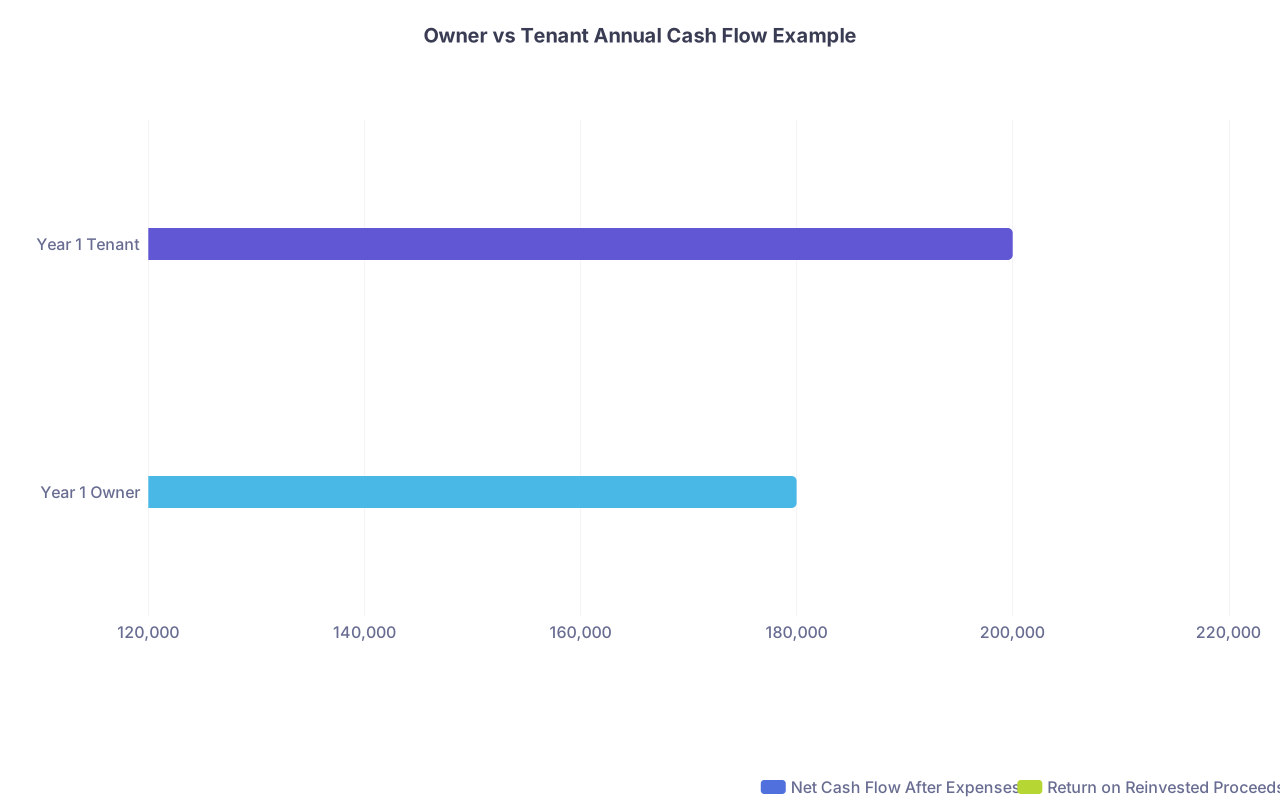
| Category | Net Cash Flow After Expenses | Return on Reinvested Proceeds |
|---|---|---|
| Year 1 Owner | 180000 | 0 |
| Year 1 Tenant | 120000 | 80000 |
In this simple example:
- As owner, you “net” 180k (after real expenses) from the building.
- As tenant, the practice nets 120k after higher rent, but your sale proceeds invested at, say, 8% yield generate 80k/year.
Combined? 200k vs 180k. Spread is modest. But you offloaded risk and unlocked liquidity.
The details matter: tax, yield assumption, and rent structure can easily flip the sign.
3.2 Tax: It Is Not Just “I Will Pay Capital Gains”
Two main tax layers:
- Capital gains and depreciation recapture on sale
- Ongoing treatment of rent vs distributions
Capital gains:
- Basis = original cost + improvements – accumulated depreciation
- Sales price – basis = gain
- Gain allocated between unrecaptured §1250 depreciation (up to 25%) and long-term capital gains
If you have owned for 15+ years, fully depreciated, and the city exploded in value, the tax hit can be eye-watering. But you can blunt it with:
- 1031 exchange (complex if you also sign a lease; still doable with competent advisors)
- Qualified Opportunity Zone reinvestment (rarely a slam dunk but occasionally relevant)
- Installment sale structure in select cases
Ongoing:
- As owner, “rent” you pay to your own LLC flows through, and you get depreciation.
- As tenant, rent is fully deductible to the practice, but you lost depreciation shelter.
- The investment returns on your sale proceeds are taxed depending on what you buy (REIT dividends, index funds, private real estate funds, etc).
You want your CPA doing a 10–15 year pro forma, not a back-of-the-envelope “tax will be around X.”
3.3 Cap Rate, Implied Cost of Capital, and the Real Spread
When you sell at a given cap rate, the buyer’s required return on unlevered cash is that cap rate. But they will typically use leverage, which amplifies equity returns.
Let us say:
- You sell at a 6.25% cap and your rent essentially sets NOI.
- You then take the proceeds and invest in a diversified portfolio you reasonably expect to earn 6–8% after fees over time.
If you think in simplistic terms—“I sold at 6.25% and then invested at 7%”—you might say, nice arbitrage. That is not enough.
Questions you should ask yourself:
- How stable are my practice and my market?
- How much of my total net worth is correlated with this one location and demographic?
- What are realistic ranges for the returns of alternative investments?
The transaction makes more sense when:
- You are too concentrated in one property
- You have legitimate uses for the capital with attractive risk-adjusted returns (e.g., buying into an ASC, retiring practice debt at 8%, or paying down high-interest personal debt)
- You are within 5–10 years of a practice sale and want to get ahead of real estate decisions
It makes less sense when:
- Your only “investment” plan is a savings account or broad index funds but you already have a massive equity portfolio and this property is your only hard asset
- Your rent post-transaction is significantly above market, with aggressive escalations, and your practice margins are not robust
4. Legal and Structural Issues: Where Physicians Get Burned
This is the part everyone skim-reads and later regrets.
4.1 Lease Term and Exit Optionality
Typical sale–leaseback pitch: 15-year absolute NNN lease with 2.5–3% annual bumps.
From the buyer’s viewpoint, this is perfect. Predictable cash flow, no landlord responsibilities, long term.
From your side, you are handcuffing your practice to this building as long as the lease lasts, unless:
- You negotiate assignment rights on a sale of the practice
- You negotiate early termination options (rare, costly, sometimes clever to structure)
- You have sublease flexibility, with reasonable landlord consent standards
If you are 63 and planning to retire at 68, signing a 15-year lease without clean assignment mechanics to a future buyer is reckless. I have watched practice sales crater because the assigned lease’s economics made the buyer walk.
You want:
- Lease that is assignable upon sale of substantially all practice assets without landlord being unreasonable
- Ideally, a defined process and objective criteria for landlord consent
- Clarity on guarantor release upon assignment (if there is a personal guarantee)
4.2 Personal Guarantees and Cross-Default Nightmares
Ugly scenario I’ve seen:
- You sell the building. Sign a 15-year lease with 10-year personal guarantee.
- Lease includes cross-default with your bank loan covenants.
- Practice hits a rough patch, violates a covenant on separate financing.
- Landlord asserts default on the lease, accelerates rent, and comes after you personally.
Overkill? No. I’ve seen investors push for these terms. Your job is to say no.
You want:
- Limited or no personal guarantee. If unavoidable, cap its duration and amount.
- No cross-default to unrelated loans. Cross-default only for material lease breaches.
- Clear cure periods for monetary and non-monetary defaults.
4.3 Maintenance, Repairs, Casualty, and “Oh, the Roof Failed”
Triple net is not as simple as “tenant pays everything.” The lease has to say who does what.
Major categories:
- Structural repairs (roof, foundation, load-bearing walls)
- Building systems (HVAC, plumbing, electrical)
- Interior build-out, medical equipment, backup power, etc.
- Capital vs ordinary repairs
From a buyer’s standpoint, they would love “absolute NNN”—you handle everything short of land subsiding into the ocean. From your standpoint, that is often acceptable if:
- The building is relatively new or well-maintained
- The lease term is not crazy long without TE (tenant improvement) or repair allowances
- The rent level and cap rate you are getting reflect that higher tenant burden
If the building is older—original roof, old chiller, legacy plumbing—you might be stepping into a time bomb where you “freed equity” only to slowly feed it back into CapEx you are now solely responsible for.
You solve this by:
- Doing real property condition assessments pre-LOI
- Negotiating clear boundaries: landlord responsible for structural and major systems, tenant for routine maintenance
- Possibly escrowing funds or getting landlord commitments for near-term capital items

4.4 Use Restrictions, Expansion, and Practice Evolution
Medical practices never stay frozen. You may:
- Add a surgery center or procedure suite
- Bring in a partner in a new subspecialty
- Add imaging that changes parking or radiation considerations
Your lease has to allow for:
- Reasonable expansion or modification of space
- Installation and removal of fixtures and equipment (with clear restoration obligations)
- Changes of use within a defined medical universe
I have seen leases drafted so narrowly that adding a new modality technically required landlord consent, which then turned into an opportunity for the landlord to “renegotiate” rent mid-stream. Avoid that trap.
5. Risk Analysis: Clinical, Practice, and Personal Angles
Now the part everyone pretends they understand: risk.
5.1 Concentration Risk vs Control Risk
Owning your building:
- High concentration risk (a lot of net worth in one property)
- High control (you decide if you renovate, refinance, etc.)
Sale–leaseback:
- Lower concentration in this specific property (if you reinvest broadly)
- Lower control (you are now a tenant; decisions are governed by lease and the landlord’s incentives)
Ask yourself:
- If the market tanks 30% and you still own the building, does that actually hurt you in a meaningful way, or is it just paper loss?
- If your landlord decides to flip the asset, bring in a new property manager, or push enforcement hard, how much does that change your operating life?
Some physicians overvalue control and underestimate the value of diversification. Others cling to “we have always owned our building” and ignore the fact that their building now represents 40–60% of their net worth in a single zip code.
5.2 Practice Durability and Competitive Landscape
Sale–leaseback makes sense when:
- Your practice has durable competitive advantages: strong referral patterns, limited local competition, payer mix that is stable.
- The building is in a location that will still be desirable for medical use in 10–20 years.
It is much riskier when:
- You are heavily dependent on one hospital system or one payer contract.
- The building is in a marginal or transitional area that might shift away from medical.
If your practice margins are thin, locking in aggressive rent escalations is dicey.
Run real pro forma stress tests:
- What happens if payers cut rates 10%?
- What if volume drops 15% for 2–3 years?
- Can you still service rent and maintain physician compensation without imploding?
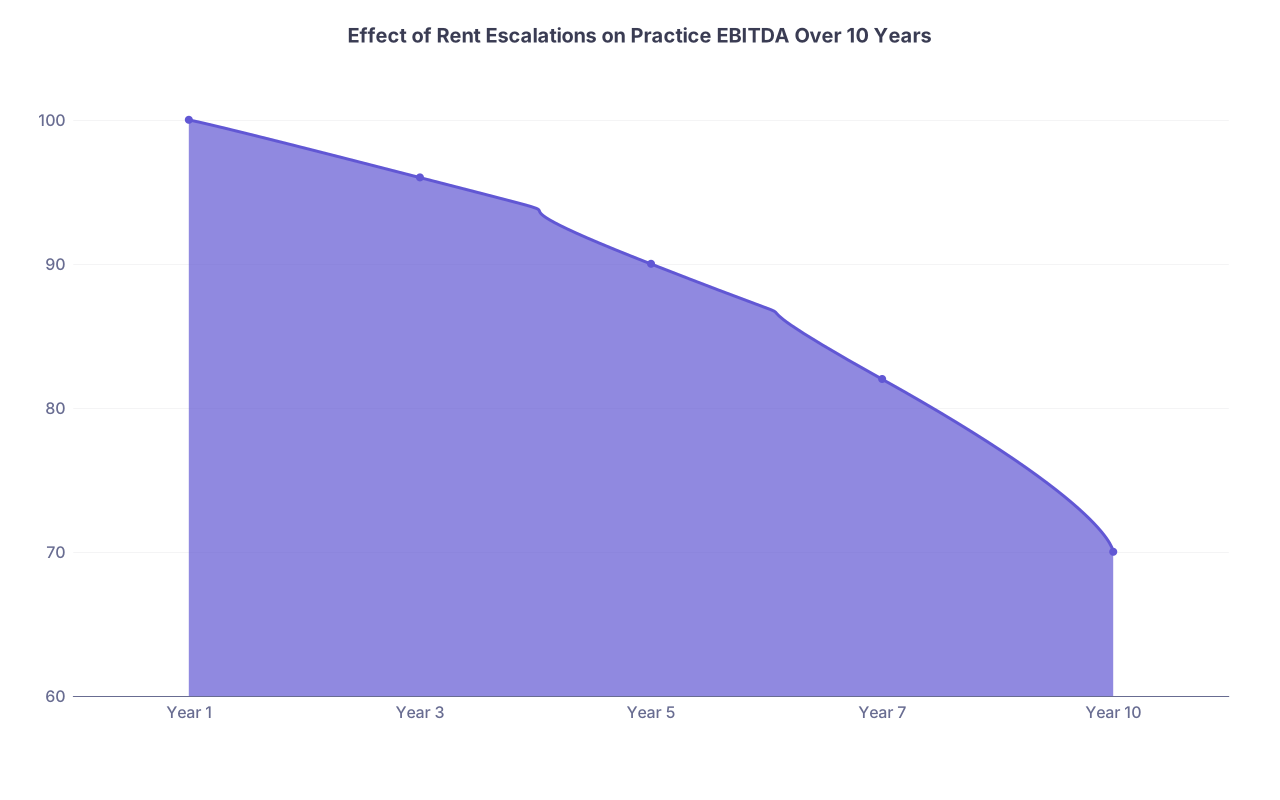
| Category | Value |
|---|---|
| Year 1 | 100 |
| Year 3 | 96 |
| Year 5 | 90 |
| Year 7 | 82 |
| Year 10 | 70 |
(Indexed EBITDA with 3% rent bumps and flat reimbursement; you see the squeeze.)
5.3 Succession and Future Partners: Who Really Benefits?
Think about generational fairness.
Common scenario:
- Founding partners own the building 100%.
- Younger partners own zero real estate.
- Founders do a sale–leaseback, extract large proceeds, and lock the practice into a long-term rent obligation.
If you do not involve the next generation in structuring, you end up with resentment and misalignment. The founders walk away with liquidity; the younger docs inherit higher fixed costs and less flexibility.
You can manage this by:
- Being explicit about how sale proceeds are distributed vs retained in the practice or used to fund growth
- Considering giving younger partners the opportunity to co-invest in whichever vehicle receives proceeds (e.g., a new real estate entity or fund)
- Aligning lease terms with realistic practice succession timelines

6. When a Sale–Leaseback Makes Sense (and When It’s a Bad Idea)
Let me be blunt: there is no universal answer. But there are patterns.
6.1 Strong “Yes, Explore It” Situations
I tend to like sale–leasebacks for physicians when:
The building is a large piece of your net worth and not your comparative advantage
You are in the business of delivering care, not being a landlord. If the building is 40% of your balance sheet, that’s exposure.You have high-value uses for the capital
- Buy into a surgery center with historically high returns
- Expand to a second or third location with proven demand
- Pay off high-interest practice or personal debt
You are 5–10 years from a practice exit
De-risking and simplifying your personal balance sheet before a sale can be smart. Just align lease terms with likely practice buyers’ expectations.You can secure a lease that is fair, assignable, and not overly aggressive on rent/bumps
Long-term predictable occupancy with professional landlords is not a bad thing if the numbers pencil out.
6.2 Strong “Be Very Careful” Situations
I would be cautious—or outright say no—when:
Your practice margins are already thin and reimbursements are under pressure
You do not need more fixed costs that escalate every year faster than your top line.The building is older and under-maintained
A “tenant responsible for everything” lease plus an old asset equals future capex landmines.You have no clear plan for the sale proceeds
If the best you can articulate is “I guess we will invest in some mutual funds,” I would think hard. Especially if you already have a healthy liquid portfolio.You are early in your career with unclear long-term location strategy
A 15-year lease at a site you might outgrow in 6 years is not clever.
7. Practical Execution: How to Run the Process Like an Adult
If after all this, you still think this might be right for you, here is how to not do it like an amateur.
7.1 Build the Right Team Early
Bare minimum:
- Commercial real estate attorney experienced in sale–leasebacks and medical office
- CPA who understands both practice and real estate structures
- Independent broker or advisor who will run a process (not just bring you “a friend with capital”)
Do not use the buyer’s attorney. Do not rely solely on the REIT’s “standard form.”
7.2 Run a Competitive Process
Do not entertain just one offer because they sent a glossy brochure.
You want:
- Offering memoranda sent to a curated list of potential buyers
- At least 2–3 serious LOIs to compare
- Back-and-forth negotiation with leverage

| Step | Description |
|---|---|
| Step 1 | Prepare Financials and OM |
| Step 2 | Send to Target Buyers |
| Step 3 | Receive Multiple LOIs |
| Step 4 | Shortlist Top 2 to 3 |
| Step 5 | Negotiate Terms and Lease |
| Step 6 | Select Final Buyer |
| Step 7 | Close Transaction |
Sometimes the highest price is not the best deal if the lease they require is brutal.
7.3 Model Downside Scenarios Before You Sign
Sit with your CPA and:
- Build 10–15 year cash flow models with stress tests
- Model practice sale in 5–7 years with assignment of the lease
- Consider what happens if the building’s area improves dramatically or decays
If the deal only works under rosy assumptions, you are gambling, not planning.

Key Takeaways
- A sale–leaseback is not “free money”; it is a trade: equity and control in exchange for liquidity and a long-term lease obligation.
- The lease is where most of the real economics and risk live—term, rent, escalations, assignment, and repair obligations matter more than the headline price.
- It can be an excellent move when it de-risks your balance sheet and funds high-value opportunities, but it is a bad idea when it simply shifts you from being a concentrated owner to a squeezed tenant with no clear upside.