The fastest way for a physician to lose six figures in real estate is to sign the wrong medical office lease.
Not a bad investment. Not a recession. A lease. Signed in a hurry between cases, barely skimmed, “standard language” according to the landlord’s broker.
Let me break this down specifically: if you practice in a medical office building (MOB), your lease is a major financial asset or liability—whether you own the building, plan to someday, or “just” rent. And most physicians misunderstand the core lease structures that quietly control their rent, operating costs, and negotiation leverage for the next 5–15 years.
This is the 101 you should have gotten before you ever signed your first MOB lease.
The Four Big Lease Structures You Need To Recognize On Sight
Forget the marketing language. “Physician-friendly,” “turn‑key,” “full service.” Useless. What matters is how money, risk, and control are actually allocated.
The main structures you will see in medical office buildings:
- Gross (or Full-Service Gross)
- Modified Gross
- Triple Net (NNN)
- Absolute Net / Bondable (rare in MOB, but you must know it if you ever become a landlord or do a sale–leaseback)
If you cannot read a term sheet and immediately say, “That is effectively a modified gross with a base year” or “This is hard NNN with expense pass-throughs,” you are negotiating blind.
Let’s go through them in physician‑level detail.
1. Gross & Full-Service Gross: The “All-In” That Is Never Really All-In
In a gross lease, you pay one blended rent number. The landlord pays most or all building expenses (taxes, insurance, common area maintenance, utilities, janitorial). You cut one check. It feels simple.
In full-service gross (FSG), especially in multi-tenant MOBs, that blended number is explicitly said to include utilities and janitorial, sometimes even parking. This is common in larger, institutionally owned medical office buildings—especially those attached to or affiliated with hospitals.
But here is the trick: you are almost never shielded from increases in those expenses over time.
Two mechanisms show up all the time:
Base Year – Year 1 operating expenses are set as your “base.” Any increase in expenses above that base in future years is pushed back to you as additional rent. Taxes go up because the building just sold? Insurance spikes? CAM costs rise? That overage is yours.
Expense Stops – The landlord agrees to cover expenses up to a certain dollar amount (the “stop”). Anything above that, you pay.
So your “simple” $35/SF full-service rate in a Class A MOB with a 2026 base year can quietly become $40–42/SF effective rent by year 5 when property taxes and insurance have their usual upward creep.
Here is how that looks side by side.
| Lease Type | Base Rent Simplicity | Who Pays Increases? | Typical in MOBs? |
|---|---|---|---|
| Gross | High | Often landlord | Small local |
| Full-Service Gross | High (but tricky) | Usually tenant | Hospital MOBs |
| Modified Gross | Medium | Shared | Mid-size MOBs |
| Triple Net (NNN) | Lower base, higher add-ons | Tenant | Many newer MOBs |
Where physicians get burned:
- They hear “full-service” and assume fixed cost.
- They do not ask what year is the base, what is included, and what caps (if any) exist.
- They do not request historical operating expenses to see the trend line.
Let me translate: full-service gross is often just triple net in disguise, with a prettier marketing label and slightly different accounting.
2. Modified Gross: The “Middle Ground” That Is Custom-Configured
Modified gross is a catch‑all term. It means “somewhere between pure gross and pure net,” with the specific carve‑ups negotiated.
You might see:
- Landlord pays: taxes, insurance, exterior maintenance, structural
- Tenant pays: interior janitorial, suite utilities, maybe a share of common utilities or CAM
- Or: landlord pays everything except utilities and interior janitorial
- Or: landlord covers building insurance and taxes up to a stop; you share any increase.
So you must stop asking “Is it modified gross?” and instead ask, “Which exact expenses am I responsible for, and how are they allocated and escalated over time?”
In medical office buildings, modified gross shows up a lot in:
- Smaller suburban MOBs owned by local physicians or small groups.
- Older complexes that evolved from general office to medical use over time.
- Buildings where some tenants are on older gross leases and new tenants are put on “modified” structures to help the landlord claw back rising costs.
The upside if you are a physician-tenant: modified gross can be negotiated creatively. You can sometimes trade:
- A higher face rent for better protection against CAM escalations, or
- Accept more expense responsibility in exchange for large tenant improvement allowances.
But only if you actually understand what is on the table.
3. Triple Net (NNN): The Dominant Structure in Modern MOBs
If you take nothing else from this article, absorb this: most modern, professionally managed medical office buildings are effectively NNN, even if someone calls them something else.
In a triple net (NNN) lease:
- You pay base rent (for the space itself), plus
- Nets: your pro‑rata share of:
- Property Taxes
- Property Insurance
- Common Area Maintenance (CAM) and operating expenses
Put those together and you get your effective rent.
So that attractive $24/SF NNN MOB lease may actually cost you:
- $24/SF base
- $5.50/SF taxes
- $2.00/SF insurance
- $6.00/SF CAM/utilities
- = $37.50/SF all‑in
Which might be more than the competing “full service gross” space down the street at $35/SF with a 2025 base year and moderate escalations.
This is where physicians routinely misjudge.
To compare spaces, you must compare effective annual cost over the lease term, not just the face rate or the structure name.
Here is a simple visualization of how the split works:
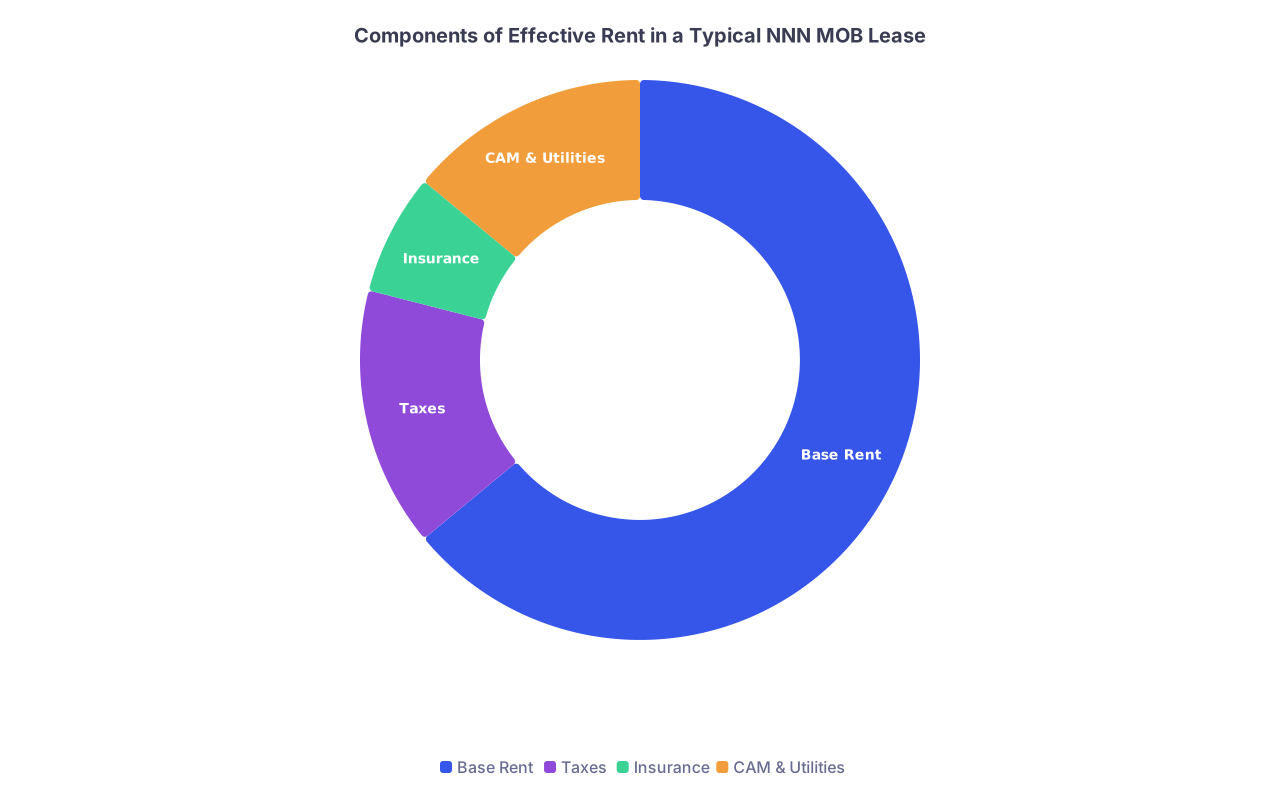
| Category | Value |
|---|---|
| Base Rent | 64 |
| Taxes | 15 |
| Insurance | 7 |
| CAM & Utilities | 14 |
What matters in NNN for physicians:
Pro‑rata Share – Usually based on your rentable SF divided by total rentable SF. But:
- Is the denominator the whole building or just the MOB portion?
- Are vacant spaces excluded or effectively subsidized for by other tenants?
- Is there any cap on how much your share can change if the landlord remeasures?
CAM Definition – In MOBs, CAM can legitimately include:
- Parking lot maintenance
- Lobby upkeep
- Elevators, HVAC, security
- Management fees
- Sometimes shared medical waste, biohazard, or compliance‑driven costs But landlords also try to slip in:
- Capital improvements that should be their problem
- Administrative “allocations” well above market
- Costs related to other tenants’ unique buildouts
Operating Expense Caps – You want caps on controllable expenses, ideally:
- 3–5% per year, non‑compounded
- Excluding true non‑controllable items like taxes and insurance, but even those can sometimes be partially limited.
NNN is not evil. It is simply transparent. But if you do not model it carefully, your “reasonable” rent becomes “how are we paying more for office space than we do in malpractice premiums?”
4. Absolute Net / Bondable: For When You Become the Landlord
Absolute net (also called bondable) is rare for routine physician tenants in MOBs, but shows up when:
- A large group does a sale–leaseback of its own building.
- A health system or ASC operator structures a long‑term ground lease.
- A creditworthy medical tenant anchors a building and the owner wants to sell to institutional investors.
Under an absolute net lease, the tenant basically carries everything:
- Base rent
- 100% of taxes, insurance, and operating expenses
- All capital expenditures, even structural
- Often even rebuild and restoration after casualty
From an investor perspective, this is gold. From a physician-practice perspective, it is a long-term operational marriage with the real estate.
If you ever do a sale–leaseback of your building to free up capital, the lease you sign back as a tenant is where most of the value—or the future headache—is created. I have seen physicians sign 20‑year absolute net leases with 2% annual increases, feeling brilliant for unlocking cash…then struggle years later with a facility that needs a new roof and chiller they are legally obligated to fund.
This is advanced level, but I mention it because too many physicians walk into sale–leaseback deals structured entirely to serve the buyer’s IRR, not the practice’s long‑term stability.
How MOB Lease Structure Interacts With Medical Realities
Medical office is not generic office with exam tables. Your lease structure must fit the clinical and regulatory realities you live in.
A few examples that I see physicians miss:
High TI = Long Term = Lease Structure Matters More
Medical buildouts are expensive:
- Plumbing to every exam
- Lead‑lined walls for imaging
- Med gas
- Custom millwork
- IT and low‑voltage for EMR and devices
- Accessibility and code requirements
You easily cross $100–$200/SF in tenant improvements (TIs) for many specialties. That locks you into longer terms—often 7–10+ years—to justify the spend or the allowance the landlord gives you.
If you are going to be in one space for a decade:
- The annual escalation clause matters a lot.
- Your exposure to uncontrolled expenses matters even more.
- The ability to expand or contract inside the building becomes a real strategic issue.
This is where most physicians focus on getting “free rent” upfront and completely ignore how the lease structure will behave in years 6–10, exactly when your group may be bigger, more complex, and harder to move.
Regulatory and Operational Burden Shows Up in CAM
In pure office, CAM often covers fairly predictable things.
In medical office, CAM may legitimately include:
- Enhanced janitorial for clinical areas
- Specialized HVAC filtration
- Sharps and medical waste infrastructure
- Life safety and emergency power systems
- Additional security requirements
Those costs are not going down. A building that is converting from general office to more medical will often see its operating expenses step up significantly over the first 3–5 years. If your lease structure automatically passes through all those increases with no caps, you are paying for the landlord’s “upgrade to medical” strategy.
You want to ask explicitly:
- How much of CAM relates to regulatory or medical‑specific upgrades?
- Are any of these truly one‑time capital projects that should be amortized or landlord‑funded?
- Can we carve out or cap certain newly introduced cost categories?
The Real Cost of Rent: Running the Numbers Correctly
You would not sign an anesthesia contract without reading the line items. Do the same for your lease.
Look at a basic 5,000 SF internal medicine practice in a Class B MOB. Two offers:
- Offer A: $35/SF full service gross, 3% annual escalations, 2025 base year, 10‑year term.
- Offer B: $24/SF NNN, with 2026 estimated NNNs at $12/SF (taxes+insurance+CAM), 3% annual cap on controllable expenses, same 10‑year term.
Many physicians see $24 vs $35 and assume B is cheaper. Maybe. Maybe not.
Let us model year 1 all‑in cost (ignoring parking, storage, etc.):
- Offer A: $35/SF x 5,000 SF = $175,000 in year 1.
- Offer B: ($24 + $12) = $36/SF effective x 5,000 SF = $180,000 in year 1.
Offer B is already higher on day one.
Now, if operating expenses in the full‑service building go up 5% annually and the landlord passes above‑base amounts through in full, while in the NNN building you have a 3% cap on controllable expenses, the long‑term curve may favor B despite the higher starting point.
You will not know unless you actually project both scenarios.
Here is a simplified visualization of how effective rent can diverge for two “similar” options:
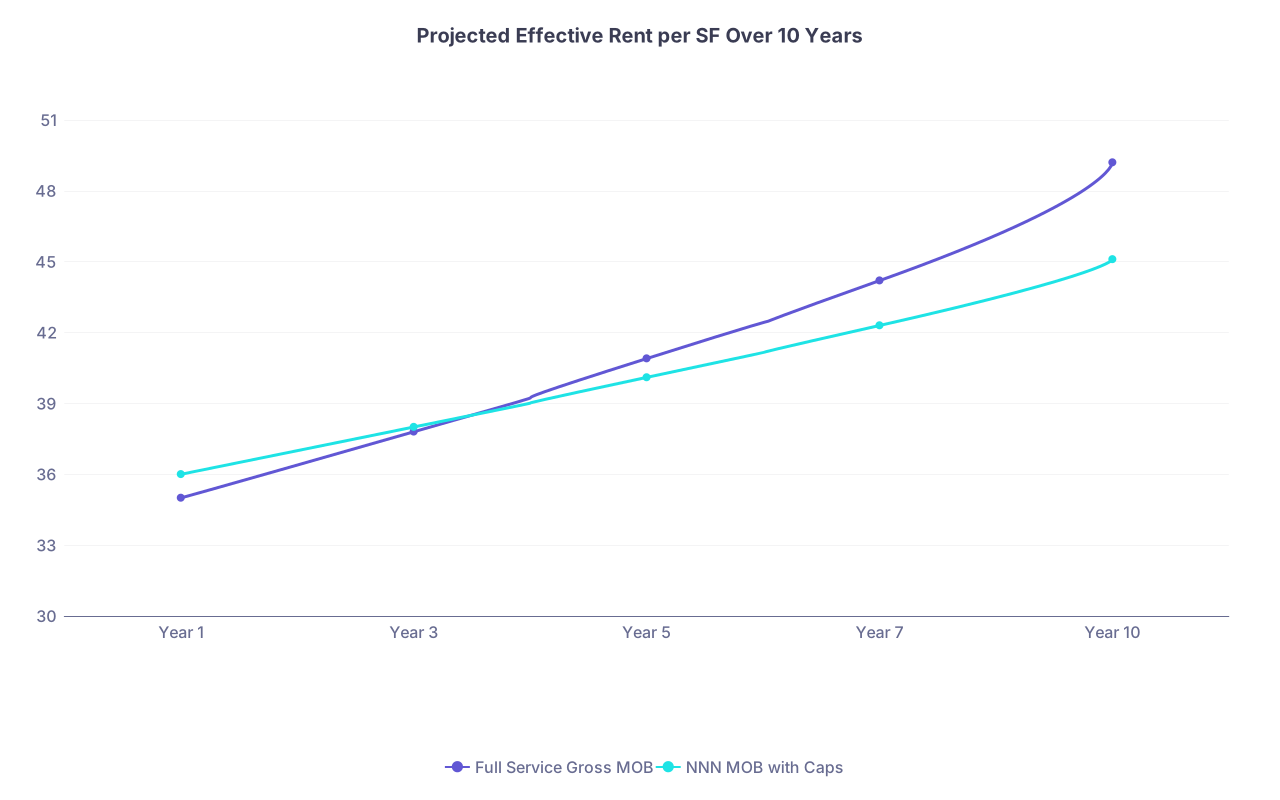
| Category | Full Service Gross MOB | NNN MOB with Caps |
|---|---|---|
| Year 1 | 35 | 36 |
| Year 3 | 37.8 | 38 |
| Year 5 | 40.9 | 40.1 |
| Year 7 | 44.2 | 42.3 |
| Year 10 | 49.2 | 45.1 |
The point: lease structure is not about what you pay this year. It is about the trajectory of what you are obligated to pay for the next decade.
Physician Traps Hidden Inside Lease Structures
Some of the worst physician lease stories I have seen were not from outrageous base rents. They were from quiet little clauses embedded around the structure.
Here are the big ones to watch and actually negotiate.
1. Operating Expense Definition and Audit Rights
If your lease says you pay “all operating expenses as reasonably determined by landlord,” that is a blank check.
You want at minimum:
- A clear definition of what qualifies:
- Operating: day‑to‑day running of the building.
- Capital: major improvements, replacements, expansions.
- If capital items are included at all, they should be:
- Amortized over their useful life.
- Only to the extent they reduce operating costs or are legally mandated.
- Audit rights:
- Once per year.
- If your audit finds overcharges above a threshold (e.g., 3–5%), landlord covers audit cost and corrects.
Landlords will push back. That is fine. You do not need perfection. You just need guardrails.
2. Pass-Throughs on Landlord’s Debt or Selling Costs
I have literally seen leases where the landlord tried to pass through:
- Loan prepayment penalties
- Leasing commissions for other tenants
- Legal fees for selling the building
Buried in vague language about “expenses necessary to operate and maintain.”
Those are landlord costs. Full stop. If your lease structure’s CAM definition is not tight, you can end up effectively paying for your landlord to refinance or sell at a gain.
3. “Market Rate” Renewal Options Tied to Structure Changes
Many physicians love seeing “option to renew at then‑current market rate.” It feels like flexibility.
The problem: there is usually no detail on:
- How “market” is determined.
- Whether your lease structure stays the same.
I have watched groups go from:
- A fairly manageable modified gross structure in initial term
- To an aggressively NNN structure with broad expense pass‑throughs at renewal
- Because they exercised an option that only protected term, not economics.
When you secure options, try to lock in:
- Either a pre‑defined formula (e.g., 95% of market rate as determined by two appraisals) and confirmation that the structure (gross/NNN, CAM caps, etc.) remains on the same framework.
- Or at least a cap on the delta from end‑of‑term rent (e.g., not more than 10–15% above prior year).
Ground Floors, Imaging, Surgery: Special Cases in MOB Leasing
Not all medical tenants behave the same, and landlords know it. Lease structures are often tweaked depending on what you do in the building.
Ground-Floor, High-Traffic Practices
Think urgent care, high‑volume primary care, some dental, retail‑style specialists. These tenants:
- Drive more parking and common area use.
- Often have higher visibility and signage.
- Sometimes need enhanced HVAC or hours access.
Landlords may:
- Add parking CAM charges or higher pro‑rata shares.
- Be more aggressive with percentage rent concepts in hybrid retail‑medical settings (yes, some try this).
- Charge premium base rent, but that can be fine if your patient capture is higher.
You want to understand:
- How your use profile affects CAM allocation.
- Whether your extra costs are proportional to the benefit.
Imaging, Radiation Oncology, and Heavy Equipment
These users often need:
- Structural reinforcement
- Specialized power
- Lead‑lining
- After‑hours HVAC
Lease structures here often include:
- Higher base rent to offset landlord’s capital contribution.
- Direct metering of utilities with no sharing.
- Specific separate line items in CAM for “special equipment infrastructure.”
You need very clear language about:
- Who owns the buildout components.
- Who pays for major repairs/replacement.
- What happens at lease end (removal, restoration, or “as‑is”).
ASC/Procedure Suites
Surgery centers are in their own universe. If you are a physician‑owner in an ASC:
- Longer terms (10–20 years) are standard.
- NNN or absolute net is common.
- Lenders often require very tight documentation around CAM, maintenance, and capital responsibility.
The financial and legal stakes are higher, and your lease structure is effectively part of your credit profile when you go to refinance or sell shares. Sloppy here is very expensive later.
From Tenant to Owner: Reading Leases Through an Investor Lens
You said this is under Physician Real Estate Investing, so I am going to flip the lens for a minute.
If you ever:
- Buy into a medical office building,
- Purchase the building your group uses,
- join a physician‑led real estate syndicate,
you must stop reading leases like a tenant and start reading them like a lender and investor.
The key questions become:
Income Predictability
NNN with well‑defined CAM and solid caps = more predictable net income.
Gross with fuzzy expense handling = more volatility and risk.Tenant Stickiness
High TI buildouts, longer terms, limited relocation options in the market.
That is stickiness. It is why MOBs with stable medical tenants trade at lower cap rates.Risk Allocation
Absolute net shifts almost all risk to tenant. Great for you as landlord. Potentially dangerous for your colleagues as operators if overdone.Sale Value Alignment
If you plan to hold long‑term, you may be more generous in structure to keep high‑quality tenants and avoid turnover.
If you want to sell to an institutional buyer, they like long‑term NNN with predictable escalations.
Here is how different structures look through an investor’s risk/return lens:
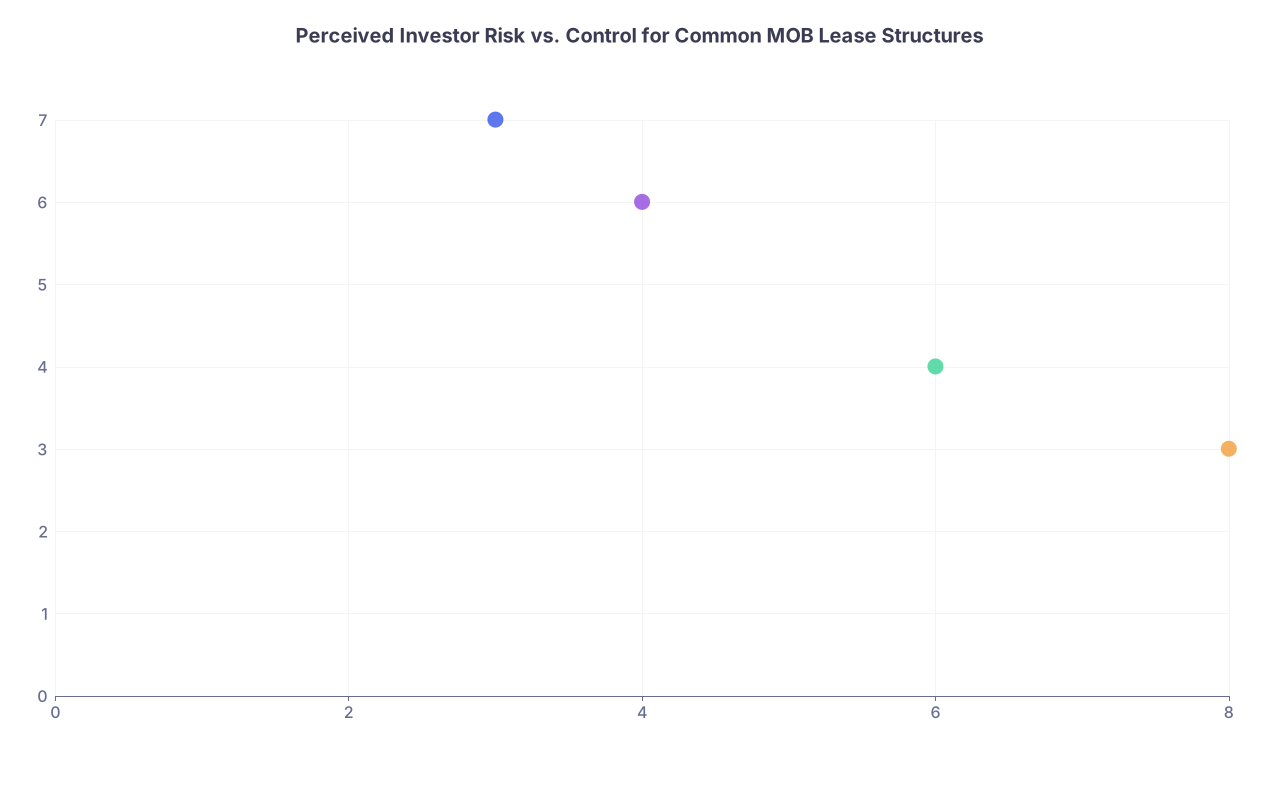
| Category | Value |
|---|---|
| Gross | 3,7 |
| Modified Gross | 4,6 |
| NNN | 6,4 |
| Absolute Net | 8,3 |
(x‑axis ~ landlord risk, y‑axis ~ landlord control; rough conceptual view)
Sophisticated physician‑investors use structure intentionally:
- For small, single‑tenant buildings they occupy, they sometimes choose modified gross or light NNN to keep some flexibility.
- For multi‑tenant MOBs they own as investments, they push toward NNN with standardized CAM handling to make the asset easier to finance and sell.
Negotiating From a Position of Structural Understanding
By now you have seen the pattern: lease “type” is just shorthand. The real game is in:
- Definitions,
- Inclusions and exclusions,
- Escalations,
- Caps and carve‑outs.
To actually negotiate well, you do not need to become a real estate attorney. You do need a structured way of thinking.
Here is a simple mental checklist for your next MOB lease discussion:

| Step | Description |
|---|---|
| Step 1 | Receive Term Sheet |
| Step 2 | Gross or FSG |
| Step 3 | Modified Gross |
| Step 4 | NNN or Absolute Net |
| Step 5 | Confirm base year and inclusions |
| Step 6 | Itemize landlord vs tenant costs |
| Step 7 | Review CAM, taxes, insurance details |
| Step 8 | Check escalation and expense pass through |
| Step 9 | Request caps and audit rights |
| Step 10 | Verify reasonableness |
| Step 11 | Compare effective rent projections |
| Step 12 | Decide negotiate, accept, or walk |
| Step 13 | Identify Lease Type |
| Step 14 | Any caps on increases? |
You want, in writing, before you sign:
- Exact base rent schedule.
- Defined operating expense structure:
- What you pay.
- What landlord pays.
- How increases are calculated.
- Historical operating expense data for 3+ years, if building is existing.
- Clear CAM definition with exclusions and any caps.
- Confirmation of lease structure at renewal, not just “market.”
Do not be shy about asking for this. A landlord comfortable with their numbers will provide it. A landlord hiding a messy structure will stall, waffle, or hide behind “this is standard.”
Standard is usually code for “in our favor.”
When To Bring In Help (and What Kind)
You should not rely on the landlord’s broker to “explain the lease structure.” Their job is to get the deal done, on landlord terms.
Three types of professionals actually protect you:
Tenant‑rep broker with real MOB experience
Not your cousin who sells suburban houses. Someone who has negotiated dozens of physician leases. They will:- Know local market NNN vs gross norms.
- Have a feel for reasonable CAM levels.
- Understand hospital‑linked quirks.
Real estate attorney who routinely reviews MOB leases
Not just any business lawyer. Medical adds layers:- Stark/AKS considerations for hospital‑linked landlords.
- Co‑tenancy and exclusivity issues.
- Buildout and use restrictions specific to healthcare.
Occasional accountant/financial modeler
For larger groups or ASC deals, a quick model of 10‑year effective rents under different escalation and structure assumptions is worth far more than the fee.
Your job as physician‑owner is not to become all three. It is to understand enough of the structure to ask the right questions and recognize when a term sheet is fundamentally misaligned with your financial and clinical reality.
The Point Of All This
Lease structure is not theory. It is:
- How much leverage you have at renewal.
- How painful it is to grow or shrink.
- How much of your increased overhead over the next decade is truly predictable versus at someone else’s discretion.
If you understand gross, full‑service gross, modified gross, NNN, and absolute net well enough to explain them in plain language to a partner, you are ahead of most physicians signing seven‑figure lease obligations.
From there, the next layer is using structure strategically:
- To set your practice up for long‑term stability.
- To align your leases with your real estate investing goals.
- To avoid being locked into a clinically good but financially toxic space.
Once you have that foundation, you are ready for the next step: deciding whether you should keep renting in someone else’s MOB, buy into a physician‑owned building, or build your own and structure the lease to favor both your practice and your investment vehicle.
But that decision—own vs lease vs hybrid—is a bigger strategic move, and that is a story for another day.