
The standard physician salary model is built for someone who has a spouse at home—or no life at all.
If you’re the main caregiver at home, and also a physician, you’re trying to play a game that was not designed for you. The usual advice—“just work more RVUs” or “pick up extra shifts”—is useless. You do not have more hours. You have fewer. So your leverage has to come from how you structure those hours and how you get paid for them.
Let’s walk through what actually works for physicians who are the primary caregiver: what compensation models to avoid, which ones give you some air, and how to negotiate so you’re not punished for doing the bulk of the caregiving.
Step 1: Get Clear on Your Real Constraints (Not the Fantasy Version)
Before you even think about RVUs vs salary vs partnership, you need to define your real life, not your aspirational life.
You’re the main caregiver, so be brutally specific:
- School schedule and pickups.
- Daycare drop-off/closing times.
- Bedtime routine.
- Standing appointments: therapies, specialists, parent–teacher meetings.
- Backup care options (do you have any? grandparents? paid sitter? none?).
Now convert that into hard rules about work.
For most primary caregiver physicians, the real constraints look like:
- No regular 12-hour shifts.
- No “stay late whenever needed” clauses.
- No call that routinely runs into the morning after you’re supposed to be home.
- No expectation of being text-available all evening.
Do this on paper. Literally map your possible work blocks:
Morning: 8–2, 7–3, 9–3
Evening: none / limited telehealth / one late clinic per week
Weekends: yes/no/1 per month only
Because your compensation model has to match this calendar. If you don’t define the calendar, the job will.
Step 2: Understand the Main Compensation Models—And How They Treat Caregivers
Every model has a value statement underneath it. You need to know which ones punish your constraints.
1. Pure RVU / Productivity-Based Comp
This is the “you eat what you kill” model.
- You’re paid almost entirely based on wRVUs or collections.
- Often includes a “draw” or low base salary.
- Heavy pressure to increase volume, shorten visits, add evening clinics, do procedures.
Why it’s usually terrible for primary caregivers:
- Your workday is capped by family; you can’t just stack more patients.
- Any time out—school calls, sick kid, IEP meeting—hits your production.
- Partners without caregiving responsibilities will out-earn you and may resent your “lower productivity.”
When it can still work:
- If you have high-yield procedures you can do in short blocks (e.g., dermatology, GI scoped half-days, interventional pain).
- If you can control your template fiercely and have a full pipeline.
- If you have strong support at home during work hours (nanny, partner with truly flexible job).
Reality for most main caregivers: This model penalizes your life. You’re trading mental bandwidth and guilt for marginally more income.
2. Pure Salary (Straight Comp)
Fixed salary, sometimes with small bonuses.
- Predictable pay.
- Easier to budget.
- Often used by academic centers, large hospital systems, and some FQHCs.
Why it’s better for caregivers:
- Your income doesn’t collapse if daycare calls you twice in one week.
- Less pressure to “make up” lost RVUs by staying late or adding shifts.
- Easier to negotiate part-time or 0.6–0.8 FTE with proportional benefits.
Tradeoffs:
- Ceiling on income.
- You may still have “expectations” of productivity that can create friction.
- Raises can be slow or tied to opaque departmental politics.
If you’re the main caregiver and you want sanity and predictability: this is often the safest floor.
3. Base Salary + RVU/Bonus Hybrid
Common in hospital-employed positions.
Typical setup:
- Guaranteed base salary (say, $220k).
- RVU target (5,000 wRVUs).
- Bonus for exceeding the target; sometimes clawbacks if you are way under.
Why this can work for you:
- You get stability with some upside.
- You can negotiate a reasonable RVU target that fits your schedule.
- You can mentally treat the bonus as gravy, not as rent money.
Where it goes wrong:
- Target set based on a full 1.0 FTE, but your actual schedule is 0.7 FTE in real life.
- Department culture that shames low-RVU docs.
- “Voluntary” Saturday clinics or evening hours that become de facto expectations.
If you go this route, your central fight is: aligning RVU targets with your true FTE and blocked schedule. Not their fantasy FTE.
4. Partnership / Eat-What-You-Kill Private Practice
Classic specialty groups: ortho, GI, cards, anesthesia, derm, etc.
Big upside. Also big risk.
Upside:
- Once you’re a partner, you share in profits, not just salary.
- Can structure your own clinic days.
- Potential for high hourly earnings if the business is efficient.
Downside for primary caregivers:
- Path to partnership is usually a productivity/availability grind.
- Partners can be hostile to schedule accommodations until you’ve “proven yourself.”
- Business admin and meetings add to your invisible workload.
This can work well if:
- You’re in a group where at least one current partner is also a primary caregiver or part-time; they’ve already opened that door.
- You have 3–5 years of higher intensity before kids enter a phase when you need more flexibility.
- You understand the numbers and know the practice is healthy.
If you’re already deep into caregiving with minimal backup, entering a hardcore eat-what-you-kill track is almost always a painful mismatch.
5. Hourly / Shift-Based Models (including Locums, ED, Hospitalist)
Hourly pay or per-shift pay.
Pros:
- Very clear: you’re paid for time worked.
- Part-time is structurally built into the system.
- Easier to say “I work 7 shifts a month, that’s it.”
Cons:
- Shifts are often nights, weekends, holidays.
- Trading time blocks, not building long-term comp growth.
- If childcare coverage is rigid (school/daycare), off-hours shifts can be a logistical nightmare.
For some caregivers, this becomes a good bridge model: you buy yourself flexibility now, with the understanding that it isn’t your forever-income plan.
Step 3: Align the Model With Your Life Stage
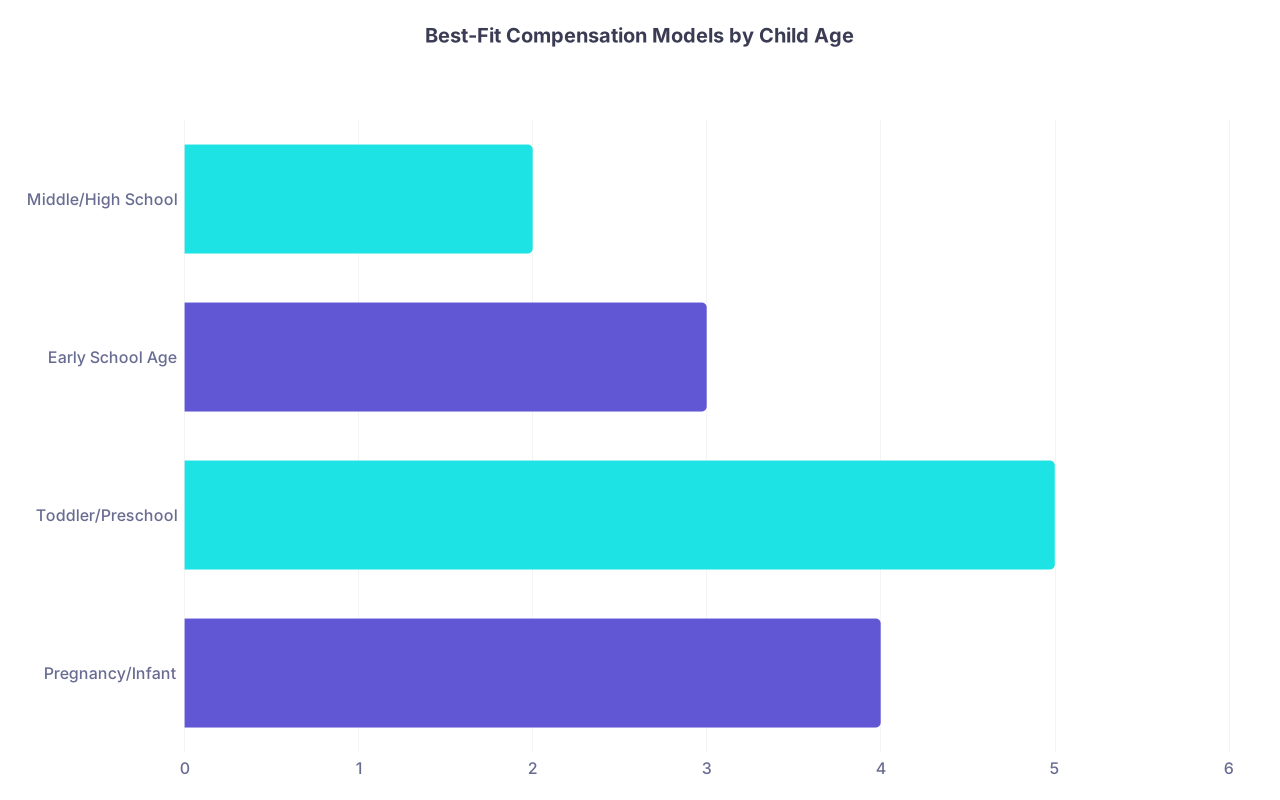
Your caregiver responsibilities aren’t static. The best comp model for you when you have a 2-year-old is different from when your youngest is in middle school.
| Category | Value |
|---|---|
| Pregnancy/Infant | 4 |
| Toddler/Preschool | 5 |
| Early School Age | 3 |
| Middle/High School | 2 |
(Think of those values as “need for flexibility” – higher number means you’ll want more schedule control and stability.)
Here’s how I’d think about it:
Pregnancy / Infant:
- Sleep is chaos.
- Childcare is expensive and fragile.
- Appointments are frequent.
Best fits: pure salary, low-RVU hybrid, 0.6–0.8 FTE, remote/telehealth side income, non-clinical roles.
Toddler / Preschool:
- Daycare hours narrow your workday.
- Kids get sick constantly.
- Behavior/therapy/speech appointments may start showing up.
Best fits: Same as above, plus carefully structured hybrid, very selective shift work if you have backup at home.
Early School Age:
- School day opens a 6–7 hour block.
- After-school pickups are hard stops.
- Extracurriculars appear, but you have more predictable long stretches.
Best fits: Salary or hybrid with tightly bounded clinic hours, maybe one late clinic per week if it buys schedule control elsewhere.
Middle / High School:
- Less physical care, more emotional/transportation/logistical care.
- You may have more early-morning flexibility but less evening freedom.
Best fits: More options open—partnership tracks, higher-RVU models—if you want to ramp up.
You’re allowed to plan your comp model as a sequence, not a forever marriage. 5–7 years of a lower-ceiling salary for sanity while kids are young is not a failure. It’s a strategy.
Step 4: Negotiate FTE, Not Just Salary
Most caregivers make the same mistake: they let the employer define “full-time.” Then they feel constantly behind.
You have to flip that.
Your leverage point is not just the dollar figure. It’s FTE definition plus schedule.
| Model | Weekly Clinical Hours | Typical Schedule Example |
|---|---|---|
| 1.0 FTE | 36–40 | Four 9–10 hour days |
| 0.8 FTE | 28–32 | Three full days + one half |
| 0.7 FTE | 24–28 | Three shorter clinic days |
| 0.6 FTE | 20–24 | Two full days + one short |
| 0.5 FTE | 16–20 | Two clinic days |
You want to negotiate like this:
- Define your maximum in-person hours per week.
- Add a small, realistic buffer for admin (charting, messages).
- Turn that into an FTE and a template.
For example:
- “I can commit to three clinic days per week, 8:30–3:30, no evenings, no weekends.”
- “That’s 18 hours patient-facing, 4 hours admin, so 0.6 FTE.”
- “Let’s set the RVU target and salary based on that 0.6, and I’ll take call at the equivalent 0.6 rate.”
Do not accept “1.0 FTE but you can leave at 3 if you’re done.” That’s how you end up with nights of charting and resentment.
Step 5: Specific Models That Often Work Better for Main Caregivers
Here’s where we get practical. Situations and what tends to fit.
Scenario A: You’re Outpatient, Main Caregiver, Need 8–3:30 Workdays
You might be in pediatrics, family med, psych, IM.
Best comp structure:
- 0.6–0.8 FTE salaried, with a small RVU bonus.
- Clinic hours: 3–4 days per week, fixed start/stop tied to school/daycare.
- Call: reduced, proportional to FTE.
Key legal/financial points to cover:
- Spell out your expected RVU target in the contract for your FTE. Not “to be determined.”
- Cap the number of patients per day so you’re not pushed beyond what fits your schedule.
- Include language around protected admin time (e.g., 4 hours/week) built into FTE, not “after hours.”
Scenario B: You’re Hospital-Based (Hospitalist, Nocturnist, ED) With Another Adult at Home Nights/Weekends
You’re the primary caregiver during weekdays, but your partner can cover evenings/weekends.
Best comp structure:
- Shift-based model with fixed pay per shift.
- Lower monthly shift count (e.g., 7–10 shifts/month) at higher hourly rate.
- No expectation of “extra” shifts to be considered a “team player.”
You negotiate:
- Which days of week you work (e.g., only weekends + 1–2 weekday nights).
- Fixed minimum notice for schedule changes.
- Protected no-work days that line up with key family obligations.
This is one scenario where higher-paying nocturnist roles can actually help the main caregiver: you compress income into fewer days and keep weekdays for childcare.
Scenario C: You’re in a Procedural Specialty, Want to Maintain Skills, But Caregiving is Crushing You
Think: GI, cardiology, anesthesia, OB, some surgical subspecialties.
You’re the main caregiver and are burning out trying to keep up with full-call, full-case-load.
Better options:
- Part-time employed with hospital support, fixed block time for procedures on 1–2 days/week, salaried.
- Or, join a group where you take fewer calls and less block time, trading income for predictability.
Comp considerations:
- Ask for a lower partnership buy-in if you’re not going to be full productivity (or a different partner tier, though this has politics).
- Or stay employed rather than partner, but insist on a salary reflecting your specialized skills even at lower FTE.
This is where people get stuck in guilt: “I trained this long, I can’t give up the partnership upside.” But if you’re drowning in childcare plus Q4 call, you’re already giving up something—usually your own health.
Step 6: Use Non-Clinical and Telehealth Work as Pressure Valves
You do not have to make all your income from in-person clinical time.
There are three big levers that work well for main caregivers:
Telehealth clinical work
- Psychiatry, family med, urgent care triage, sleep medicine, weight management.
- You can often do short evening or nap-time blocks from home.
- Paid per visit or per hour; you choose how many blocks to open.
-
- Utilization review, chart review, medical writing, pharma consulting, informatics.
- Often fully remote with flexible hours.
- Hourly or salaried, sometimes 1099.
Academic/teaching side roles
- Medical school small group facilitator.
- Residency didactics.
- OSCE examiner.
| Category | Value |
|---|---|
| In-Person Clinical | 65 |
| Telehealth | 20 |
| Non-Clinical Work | 15 |
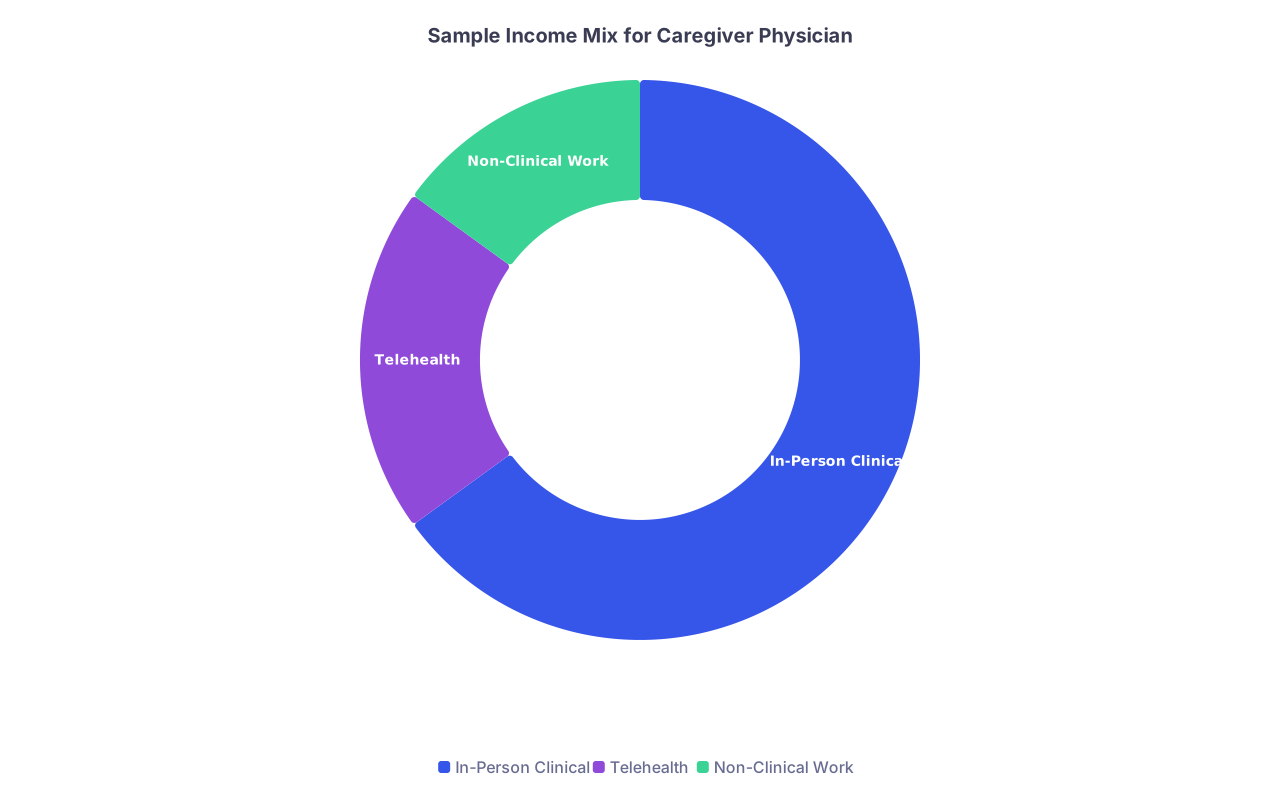
A realistic target for many main caregivers:
- In-person clinical: 0.5–0.7 FTE, stable salary.
- Telehealth: 1–2 sessions/week.
- Non-clinical: 5–10 hours/month.
You use these add-ons to smooth financial gaps without blowing up your home schedule.
Step 7: Protect Yourself Legally in the Contract
You don’t just need the idea of flexibility. You need it written down.
Key clauses and details to insist on:
FTE and Schedule Definition
- “Physician will work 0.7 FTE, defined as X clinic sessions per week, each Y hours.”
- “Clinic sessions will be scheduled between [time] and [time], Monday–Friday.”
RVU/Bonus Structure (if present)
- Target RVUs explicitly tied to FTE percentage.
- Clear language: no clawbacks if you meet agreed FTE and schedule.
Call and Coverage
- Call frequency proportional to FTE.
- If call involves in-house or late-night duties, define post-call expectations clearly (e.g., you’re not in clinic the next morning).
Remote Work / Telehealth
- If any part of your work can be done from home, define it. One afternoon a week remote clinic can change your childcare logistics.
Termination / Cut in Hours
- Watch for clauses that let them unilaterally increase FTE or adjust schedule “based on departmental needs.”
- Push for mutual agreement language regarding major schedule changes.
If you can afford it, have a healthcare contract attorney look at your first contract in this season of life. One badly written clause about “reasonable additional duties” can balloon your actual hours by 20–30% with no extra pay.
Step 8: Money Math: How Much Do You Actually Need?
A lot of caregivers stay in punishing comp models because they never sit down and do the basic math.
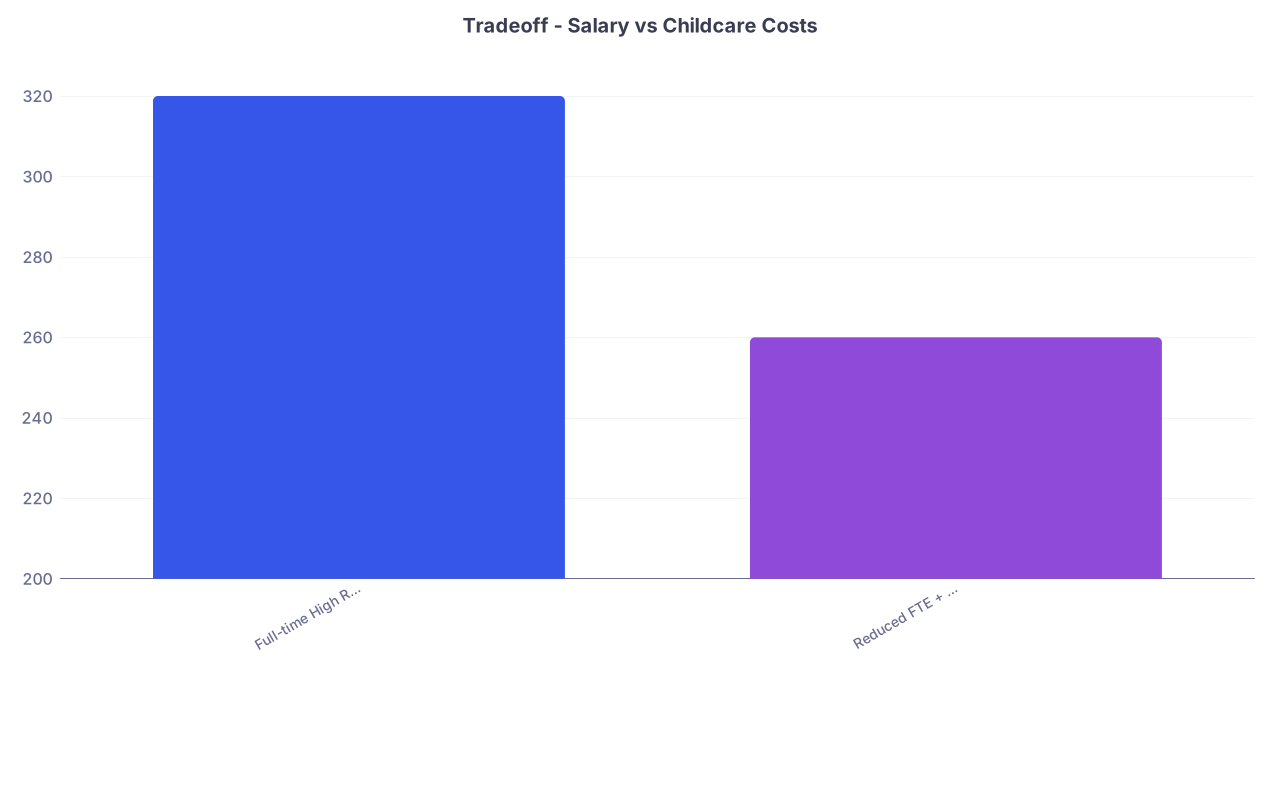
What if you:
- Drop from $320k to $240k salary.
- Hire a part-time sitter for coverage gaps at $25/hour.
- Free up two evenings and your mental bandwidth.
You’re buying back your life with part of that salary cut.
| Category | Value |
|---|---|
| Full-time High RVU | 320 |
| Reduced FTE + Childcare | 260 |
Example (rough numbers):
- Full-time high-RVU model: $320k, constant stress, no sitter, you do everything.
- Reduced FTE (0.7): $225k.
- Add 10 hours/week of sitter help for 48 weeks: $25,000/year.
- Net after sitter: $200k.
- You’ve effectively “paid” $120k/year to not be on a hamster wheel and to have backup.
Is that affordable in your life? Maybe, maybe not. But at least you’re making a conscious decision.
The key is to design to your required number, not some prestige salary.
Step 9: Scripts You Can Use When You Negotiate
You do not need to disclose your caregiving situation. But you do need to be clear about your availability.
You can say:
- “For this phase of my career, I’m looking for a 0.7–0.8 FTE structure with clinic hours between 8:30 and 3:30 and no standing evening clinics. I’m happy to take proportional call.”
- “I’m very productive and efficient when I’m in clinic, but I’m not available for late add-on clinics or extra weekends. Let’s set mutually realistic expectations up front.”
- “My priority is a role I can sustain for the next 5–7 years. I’m willing to trade some upside bonus potential for stable base compensation and predictable hours.”
If they push back with “nobody else here does that,” your answer is simple:
- “Then this probably isn’t the right fit, and I appreciate your time.”
You’re not trying to convert a macho RVU culture into a caregiver-friendly utopia. You’re trying to find a place whose incentives align with your reality.
Step 10: Accept That This Is a Season, Not a Permanent Verdict
Being the main caregiver now does not mean you’ll always be the lower-RVU, lower-income partner.
What it does mean:
- For several years, your primary optimization target is schedule control and predictability, not maximum comp.
- You will likely under-earn your “training potential” during that window.
- That’s not a failure. It’s a trade you’re consciously making.
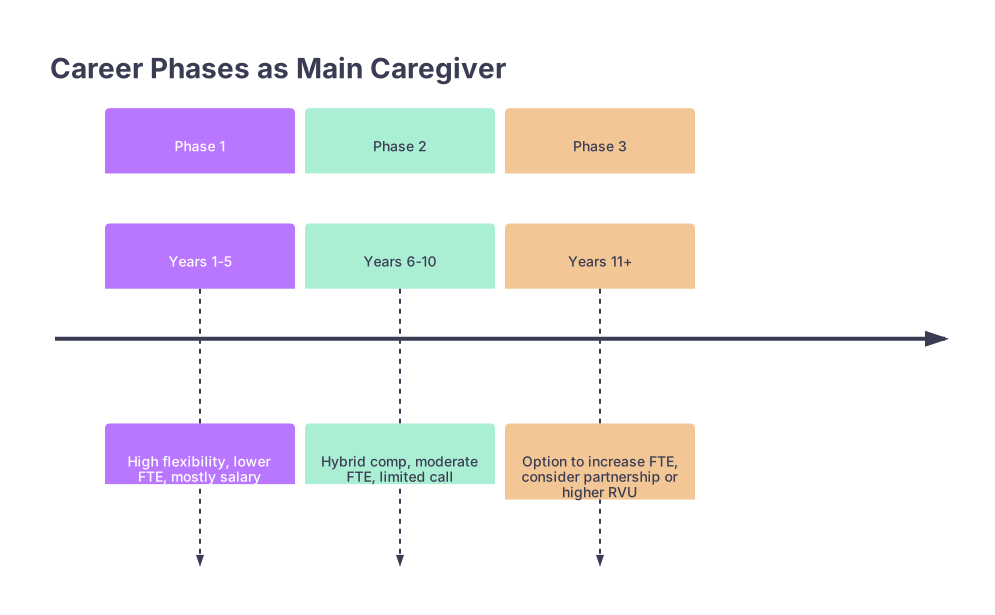
You can plan a ramp:
| Period | Event |
|---|---|
| Phase 1 - Years 1-5 | High flexibility, lower FTE, mostly salary |
| Phase 2 - Years 6-10 | Hybrid comp, moderate FTE, limited call |
| Phase 3 - Years 11+ | Option to increase FTE, consider partnership or higher RVU |
Design your compensation model to keep you in the game without burning out or blowing up your family. That’s the actual win.
Two or three things to remember:
- The default physician pay structures were not built for someone in your situation. You have to consciously pick and negotiate models that match your caregiving reality.
- Salary or hybrid comp with clearly defined FTE and schedule is usually your friend; vague “productivity expectations” and open-ended RVU pressure are not.
- Treat this as a season. It’s fine to accept lower upside now for a model you can actually sustain while being the main caregiver at home.