
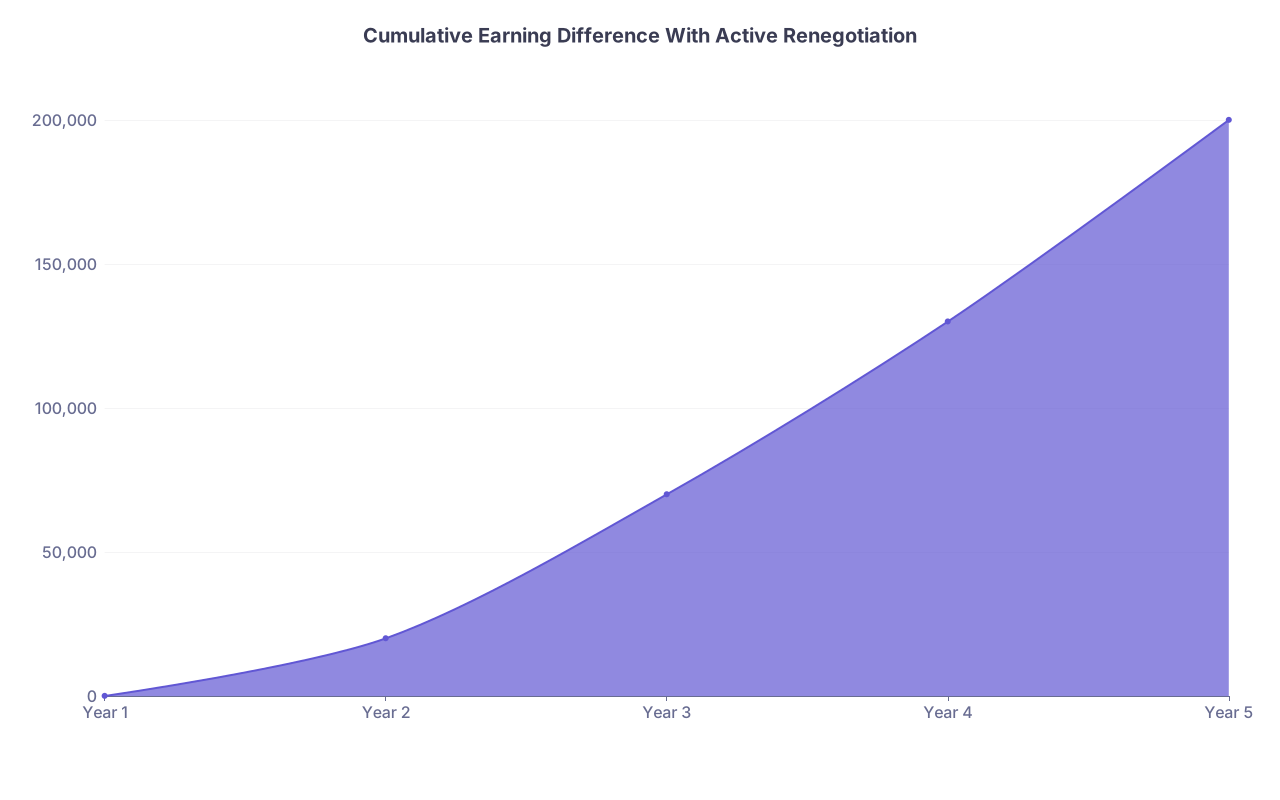
The biggest mistake new attendings make is treating their starting salary as permanent instead of temporary leverage.
Your first five years out of training are not “set it and forget it.” They are a series of very predictable inflection points where you should be re‑pricing your value. If you wait for your employer to bring it up, you will lose six figures of lifetime income. Easily.
I am going to walk you through those first five years in order: what is happening, what numbers should trigger a renegotiation, and exactly when to ask.
Year 0–1: The Setup Year (From Signing Through Month 12)
At this point, you should stop thinking like a resident and start thinking like a contract on a clock.
6–9 Months Before Start Date: The Real “First Negotiation”
You technically start your attending life the day you sign your first contract, not your first day seeing patients.
From the moment the draft hits your inbox, the countdown starts.
Your goals in this window:
- Lock in:
- Fair base salary (at least MGMA median for your region and specialty; higher if hard-to-recruit)
- Reasonable wRVU threshold / productivity target
- Defined review/renegotiation timeline in the contract (usually 12–24 months)
- Avoid:
- Auto-renewal terms that lock you into weak compensation for long periods
- Non-competes that cripple your leverage later
- Opaque bonus formulas (“at the discretion of the employer” is code for “you will not like this”)
| Lever | What You Want Early | Red Flag Version |
|---|---|---|
| Base salary | ≥ regional median | Below 25th percentile |
| wRVU target | Achievable volume | “To be determined” |
| Bonus structure | Written, formulaic | Discretionary only |
| Review timeline | 12–24 months | No review language |
| Non-compete radius | Narrow, short term | Broad, 2+ years |
If your contract does not explicitly state a review at 12 or 24 months, push for it now. “Compensation will be reviewed in good faith after 12 months based on productivity and market conditions” is a perfectly reasonable clause.
Months 0–3: You Are on Probation (Whether They Say It or Not)
You just started. This is not the time to renegotiate. It is the time to generate future leverage.
At this point, you should:
- Track your:
- New patient slots per week
- Clinic utilization rate
- wRVUs by month
- Call shifts covered compared to what was promised
- Document:
- When you are added to referral patterns
- Any leadership or admin tasks you are informally doing (clinic lead, EMR champion, etc.)
- Service expansions you help build (new clinic session, new procedure, etc.)
Do not ask for more money during these first three months unless your employer is blatantly violating the contract (e.g., call is triple what is written, or your schedule is half full due to their failures).
This period is about building a data trail.
Months 4–6: First Reality Check
By mid‑year, you can see how your productivity is trending.
At this point, you should:
- Compare:
- Your actual wRVUs vs. target (pro‑rated for the year)
- Expected schedule vs. actual (are you double-booked? Are you staying late daily?)
- Call burden vs. contract language
- Start building a simple spreadsheet of:
- Monthly wRVUs
- Collections (if visible)
- Call shifts
- Extra unpaid work (committees, teaching, admin)
You still probably do not renegotiate yet. But you may need to clarify expectations. For example:
- “The original expectation was X patients per day; I am consistently at X+6 with a 2‑month wait time. How is compensation handled for sustained volume above target?”
You are planting seeds and documenting misalignments.
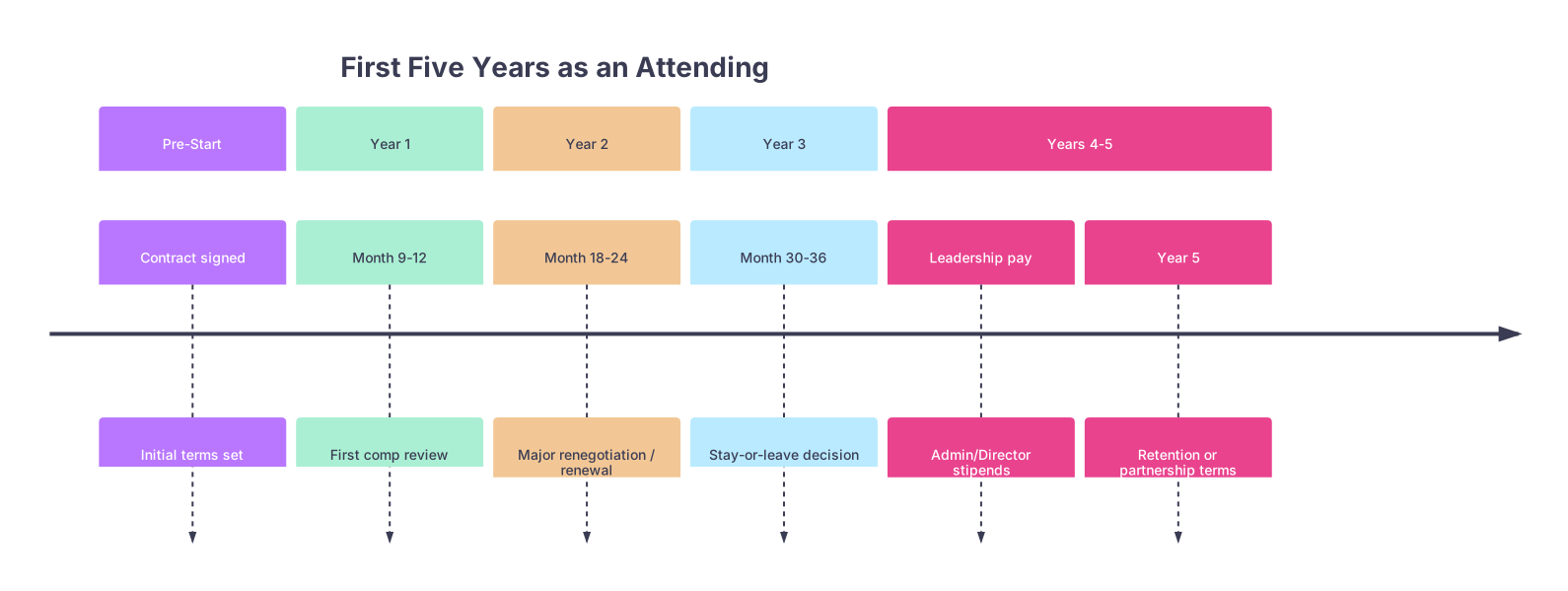
Months 9–12: First True Renegotiation Window
This is your first real chance to adjust your compensation if:
- You are consistently exceeding wRVU targets or panel size expectations
- Your clinic is booked out far in advance
- You have taken on significant extra duties that were not in the original deal
At this point, you should:
Schedule a formal meeting 2–3 months before your annual review.
Never ambush. Put it on the calendar.Prepare a one‑page summary that shows:
- Your wRVUs vs. target (with numbers, not feelings)
- Comparative data: MGMA or other sources for compensation and wRVUs in your specialty
- Specific contributions:
- “Opened an additional clinic half‑day that generates X wRVUs/month”
- “Serving as unofficial lead for XYZ service”
Make a concrete ask:
- Raise to market median or above if you have outperformed
- Lower wRVU thresholds or higher conversion factor
- Call pay increase if call volume is high
You are not just asking for “more.” You are tying it to:
- Documented productivity
- Market benchmarks
- Your additional contributions
This is your First Inflection Point. Do not let the year close without some adjustment or at least a written commitment to adjust at month 18–24.
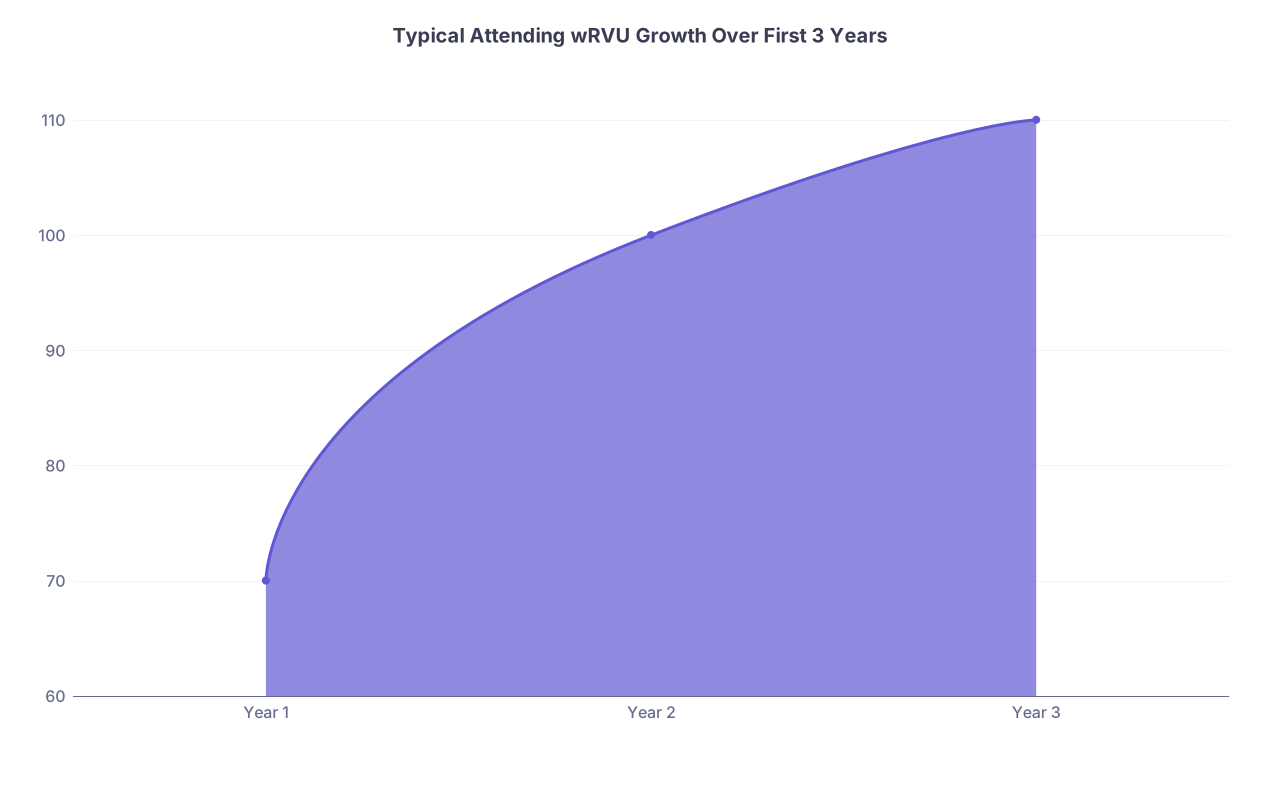
Year 2: From “New” Attending to Producer
By year 2, the “I’m just starting” excuse is gone—on both sides.
| Category | Value |
|---|---|
| Year 1 | 70 |
| Year 2 | 100 |
| Year 3 | 110 |
(Values as % of mature productivity.)
Months 13–18: The Volume Mismatch Becomes Obvious
At this point, you should:
- Recognize your true trajectory:
- If you are on pace to hit or exceed “mature” wRVUs for your specialty, you are underpaid if still on a “starter” salary.
- If you are below expected volume due to system issues (no marketing, blocked access, poor staffing), your contract might be fundamentally misaligned with reality.
This is Renegotiation Moment #2 if your productivity is clearly outstripping your original “ramp‑up” assumptions.
Your angle here:
- “The original salary assumed a ramp‑up period. I have reached mature productivity faster than expected. The current compensation no longer reflects that. I’d like to align my package with our specialty’s current benchmarks and my actual numbers.”
Specific moves:
- Convert from:
- Heavy base + weak productivity
to - Slightly lower base + strong wRVU or collections‑based incentive
- Heavy base + weak productivity
- Add:
- Formal medical director or leadership stipend if you are doing that work already
- Protected time explicitly tied to compensation, not donated time
Months 18–24: Contract Renewal / Early Escape Clause
Many first contracts are written as 2‑year terms, or they have an informal understanding that you will reassess at 2 years. This is where leverage rises sharply.
At this point, you should:
- Quietly:
- Get outside offers or at least serious conversations with other groups or systems
- Confirm your current compensation against fresh survey data (MGMA, AMGA, Doximity, etc.)
- Objectively:
- Decide if this employer can ever pay competitively, or if they are structurally constrained (rural hospital with poor payer mix, large academic center that will not move above bands, etc.)
Renegotiation Moment #3 (Major):
This is the time for bigger structural changes:
- Base salary bump to regional 60–75th percentile if you are a strong producer
- wRVU rate increase if your base is “fine” but incentive is weak
- Call pay overhaul if you are carrying disproportionate burden
- Buy‑in pathway discussion if you are in private practice or a hybrid model
If they stall you with “we’ll look at it next year,” you should assume inertia is the real answer. Start planning exit options while you still have energy and no golden handcuffs.
Year 3: The “Are You Staying or Leaving?” Year
By year 3, patterns are fixed. You are either the reliable workhorse or the rising star they do not want to lose. Use that.

Early Year 3 (Months 25–30): Market Check and Internal Reality Check
At this point, you should:
Do a ruthless comparison:
- Total compensation (salary + bonuses + call pay + stipends)
- Retirement contributions (employer match, profit sharing)
- Partnership or promotion track
- Non-compete constraints if you were to leave
Get 2–3 real external data points:
- Informal emails from recruiters
- Actual offers from nearby systems or groups
- Locums rates in your specialty and region
If you discover that you are 20%+ underpaid relative to what you can get across town, this is not a rounding error. This is a sign.
Mid–Late Year 3: Strategic Renegotiation or Exit
Renegotiation Moment #4: The “Retain Me” Conversation
You do this once, maybe twice in your career with maximum leverage.
At this point, you should:
Decide your bottom line before the meeting:
- The minimum compensation you would accept to stay
- Non-monetary changes you require (schedule, call, admin support)
Bring:
- Your 2–3 years of productivity data
- Concrete external benchmarks and, if you are ready to use it, actual competing offers
- Your proposal in clear terms:
- “Increase base from X to Y, and wRVU rate from A to B, plus protected admin time at Z FTE.”
Be prepared to follow through:
- If they say no and you stay anyway, your leverage drops to zero for years.
This is often when a group will quietly bump you into a higher comp tier, formalize a leadership role, or put you on a partnership track—if they truly value you.
If they do not, do not waste year 4 and 5 hoping they will change.
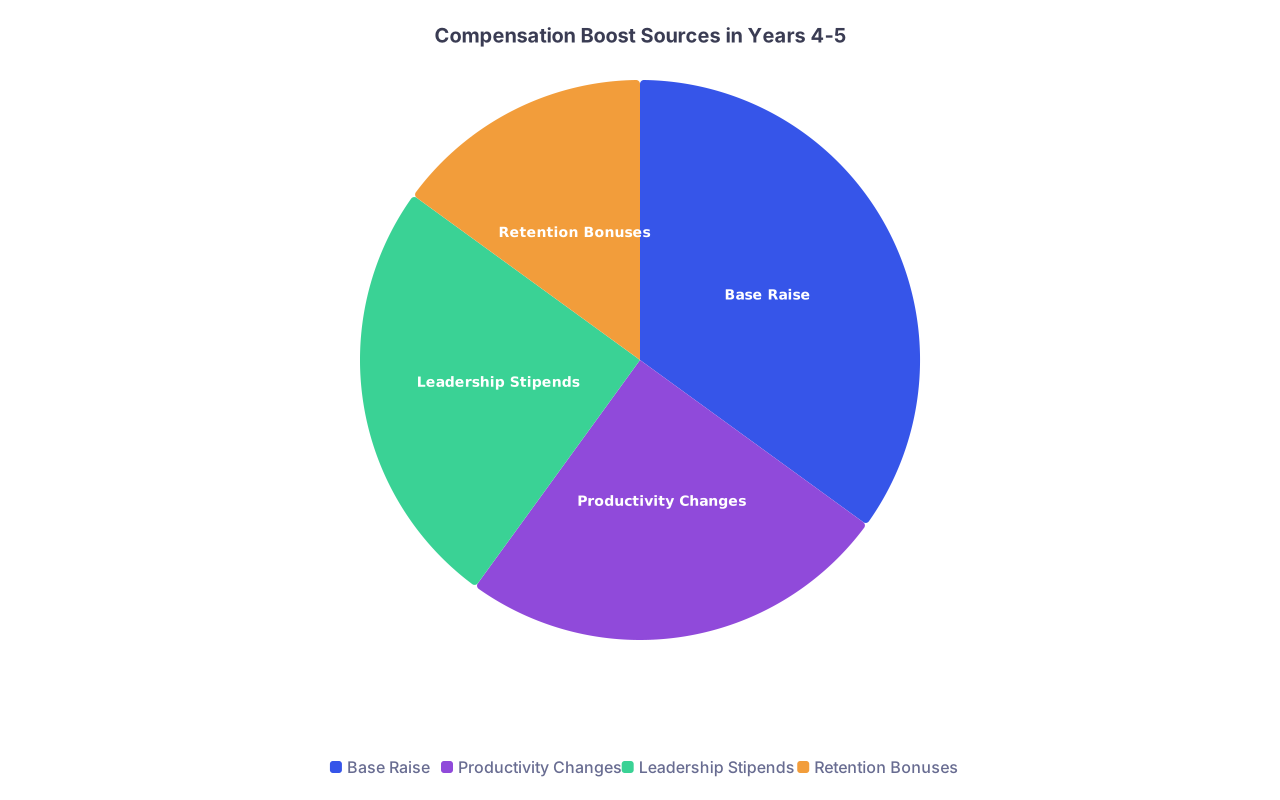
Years 4–5: Consolidation, Leadership, and Long‑Term Positioning
If you are still with the same employer by year 4, it means one of two things:
- They adjusted, and the deal is now decent or good
- You stayed despite underpayment, usually due to location, family, or inertia
Either way, these years are not static. They are where hidden value often emerges—admin roles, program building, partnership, and retention packages.
| Category | Value |
|---|---|
| Base Raise | 35 |
| Productivity Changes | 25 |
| Leadership Stipends | 25 |
| Retention Bonuses | 15 |
Year 4: Turning Contributions into Line-Item Compensation
By now, you likely have accumulated some of the following:
- Committee roles (quality, safety, hiring, EHR optimization)
- Teaching responsibilities (residents, students)
- Program building (new clinic, expanded service line, new procedures)
- Informal leadership (everyone comes to you to fix problems)
At this point, you should:
- Make a list of every responsibility you hold that is not direct patient care.
- Assign:
- Time estimates (hours per month)
- Impact (e.g., improved throughput, reduced readmissions, higher patient satisfaction)
Renegotiation Moment #5: Leadership Compensation
Targeted moves:
- Convert unpaid leadership into:
- Medical director stipend
- Protected admin FTE that is formally part of your job description
- Tie future expectations to compensation:
- “If I continue to lead this program and manage these responsibilities, I expect a director stipend of X and 0.1 FTE admin time.”
Your message: you are not asking for charity; you are pricing work the organization already relies on you to do.
Year 5: The Long Game — Retention and Structural Change
Year 5 is where long‑term structure matters more than the next $10,000. Partnership, equity, or career‑path decisions dominate.
| Period | Event |
|---|---|
| Pre-Start - Contract signed | Initial terms set |
| Year 1 - Month 9-12 | First comp review |
| Year 2 - Month 18-24 | Major renegotiation / renewal |
| Year 3 - Month 30-36 | Stay-or-leave decision |
| Years 4-5 - Leadership pay | Admin/Director stipends |
| Years 4-5 - Year 5 | Retention or partnership terms |
At this point, you should decide which track you are on:
Track A: Long‑term with current employer
- Push for:
- Partnership/ownership terms (if private group)
- Clear ladder of titles and stipends (if academic / hospital)
- Retirement contribution maximization
- Defined future salary bands tied to role and productivity
- Push for:
Track B: Exit and reset
- Use your 5 years of experience to:
- Negotiate a second attending contract closer to your true market value
- Ensure your new contract includes everything you wish your first one had: explicit review timelines, transparent formulas, and realistic expectations
- Use your 5 years of experience to:
Year‑5 Renegotiation Focus Points:
- Retention bonus or step‑up in pay to match market
- Formal, contract‑based leadership or director roles
- Partnership equity structure and buy‑in details:
- Timeline
- Valuation
- Expected earnings post‑buy-in vs. pre‑buy-in
- Non-compete renegotiation:
- Narrow the radius and term if you have the leverage
You want the end of year 5 to look like this: either you are in a durable, fairly paid role with upside, or you have just taken a better job with a contract you negotiated like someone who has learned this playbook.
Practical Timing: When in the Year to Push
You do not renegotiate randomly. There are predictable “yes seasons” and “no seasons.”
| Timing | Why It Works |
|---|---|
| 2–3 months pre-review | Budget still flexible |
| After a big win | Goodwill is highest |
| Before contract renewal | They fear losing you |
| After major volume jump | Your value is undeniable |
Avoid:
- Mid‑budget freeze periods
- Right after system‑wide layoffs or public financial crises
- In the middle of a major personal leave or performance issue
Quick Year‑by‑Year Checklist

Year 1
- Track wRVUs and call compared to contract
- Confirm first compensation review date in writing
- At 9–12 months, present data and request alignment with actual productivity
Year 2
- Compare your pay to current market data
- If outperforming, push for mid‑term adjustment (base, wRVU, or call pay)
- At 18–24 months, negotiate like a free agent with external data in your pocket
Year 3
- Obtain at least 2 realistic external offers or serious inquiries
- Decide if you are staying only if they match a clear, written target
- Have the “retain me or I will leave” meeting and mean it
Year 4
- Inventory all leadership, teaching, and program roles
- Convert unpaid responsibilities into stipends and protected time
- Align your non‑clinical work with explicit compensation
Year 5
- Decide long‑term track: partnership, leadership, or relocation
- Negotiate retention, partnership terms, or a stronger exit contract
- Revisit non‑compete, retirement, and upside structure
| Category | Value |
|---|---|
| Year 1 | 0 |
| Year 2 | 20000 |
| Year 3 | 70000 |
| Year 4 | 130000 |
| Year 5 | 200000 |
The Bottom Line
- Your first five attending years are a sequence of specific, predictable renegotiation moments: 9–12 months, 18–24 months, year 3, and again in years 4–5 around leadership and retention.
- Data beats feelings. Track your productivity, responsibilities, and market benchmarks from day one, and walk into each inflection point with numbers and a clear ask.
- Leverage decays if you do not use it. When the calendar hits those key windows, you either renegotiate deliberately—or you silently agree to stay underpaid.