

The dangerous lie is that you can “always add one more thing” in medical school. You cannot. Your clinical performance, your reputation, and your mental health all have a hard ceiling. Side hustles slam into that ceiling fast if you do not set boundaries by year.
I am going to walk you from M1 to graduation and into residency, and at each point, I will tell you the same ruthless truth: what side work is reasonable, what is stupid, and exactly when to back off.
Big-Picture Ground Rules (Before Any Year Starts)
At this point, before you even label yourself M1, you need non‑negotiable rules. Without these, “just a little consulting” will eat your life.
Here are the only rules that work:
Your primary job is being a medical student.
If a side hustle repeatedly interferes with:- Required sessions
- Studying for major exams (blocks, NBME, Step 1/2)
- Sleep
you cut the side hustle. No debate.
Never trade licensing or professionalism for cash.
- No clinical work that misrepresents your role.
- No prescribing or “medical advice” side gigs.
- No sketchy telehealth “medical director” roles as a student. Yes, they exist. Yes, they are a bad idea.
Cap your hustle hours.
Hard ceilings:- Pre‑clinical: 5–8 hours/week max.
- Clinical: 3–5 hours/week, and often less.
- Dedicated Step/Level time: 0. Not “maybe.” Zero.
Side hustle must fit your energy level, not just your schedule.
A “2‑hour block after call” on your calendar is not a real 2‑hour block. You will be mentally wrecked. Plan like a tired human, not a calendar robot.
Now let us walk the years.
M1: “Build Skills, Not Income”
This is the year everyone overestimates. New M1s think: “I did a full course load in undergrad plus worked 20 hours a week. I can handle this.” Then they hit their first anatomy block and drown.
At this point in M1, your focus should be:
- Learning how you study
- Passing comfortably
- Building professional habits
- Maybe, maybe laying the groundwork for future income
Reasonable M1 Side Hustle Types
Think low‑stress, low‑commitment, and skill‑building:
- Content creation:
- Writing MCAT or pre‑med blogs
- YouTube / TikTok (non‑medical advice: study tips, productivity, day‑in‑the‑life)
- Simple remote work:
- Light editing or proofreading
- Basic tech work if you already have skills (web dev, design)
- Tutoring non‑medical content:
- MCAT
- Undergrad sciences
- SAT/ACT if you did that before
No one in M1 should be:
- Starting a full startup
- Doing high‑pressure consulting
- Logging more hours in the hustle than in Anki
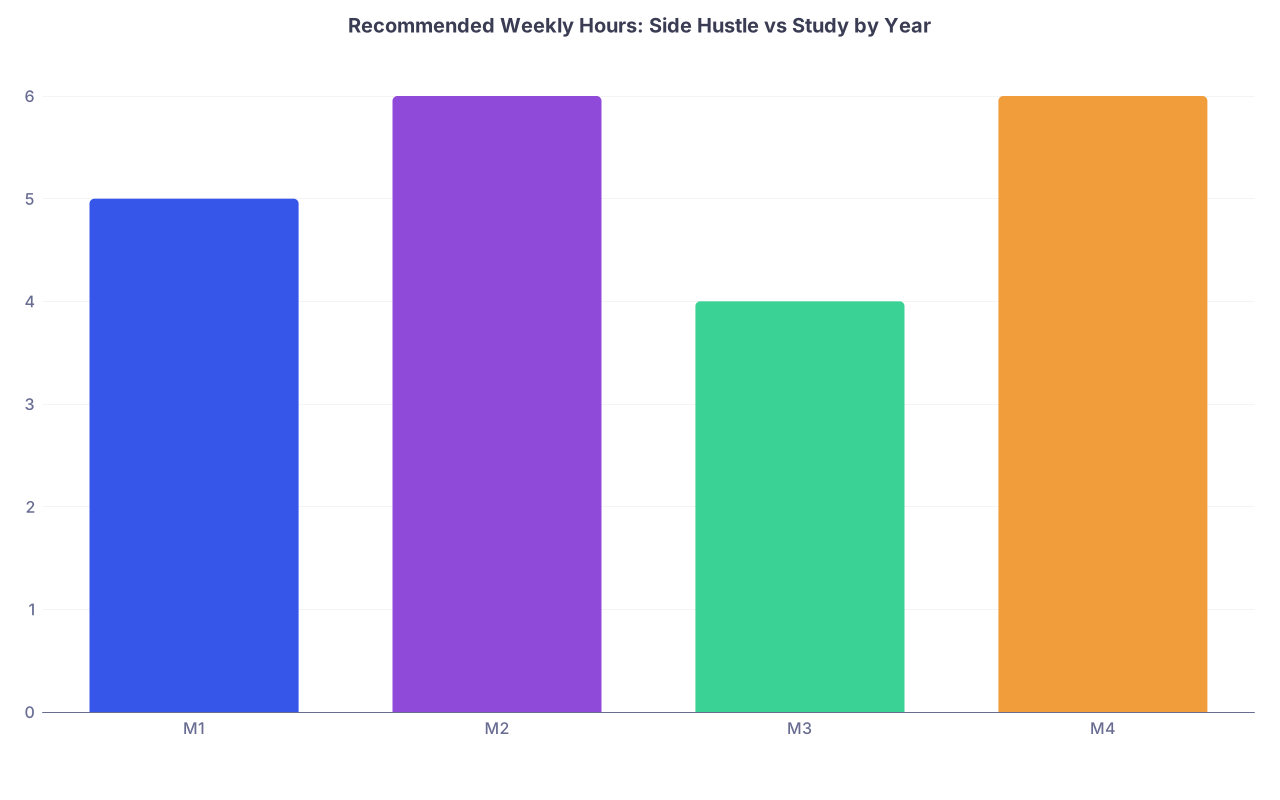
| Category | Value |
|---|---|
| M1 | 5 |
| M2 | 6 |
| M3 | 4 |
| M4 | 6 |
M1 Timeline: Month‑by‑Month
Aug–Oct (First semester, early blocks)
At this point you should:
- Assume 0–3 hustle hours/week until your first exam results.
- Focus on:
- Learning your school’s exam style
- Building a consistent daily schedule
- If you absolutely must start something:
- One tiny, asynchronous thing (e.g., writing 1 blog post/week)
Red flag: if you are thinking about monetizing before you pass your first block with margin, your priorities are off.
Nov–Dec
If your grades are stable and stress is manageable:
- You can expand to 3–5 hours/week of:
- Light tutoring 1–2 sessions/week
- Content creation batch‑recorded on weekends
Set a rule:
If cumulative exams drop below where you are comfortable (or faculty even hints at concern), you pause the hustle for 4–6 weeks. No heroics.
Jan–Apr (Spring semester)
You should:
- Recalibrate after winter break and new blocks.
- Maintain side work only if:
- You are reliably passing
- You still have ≥1 full day off/week
This is a good time to plant future seeds:
- Learn basic skills:
- Simple WordPress
- Video editing (DaVinci Resolve, Final Cut)
- Newsletter platforms (Substack, Beehiiv)
- Start small:
- Write 10–20 evergreen posts
- Record a small set of videos
- Build a basic personal website
May–Aug (Summer after M1)
This is prime time.
At this point you should:
- Decide: research, clinical experience, or hustle‑heavy summer. You cannot max all three.
- Reasonable combos:
- 30–40 hr/week research + 5–10 hr/week side work
- 20 hr/week research + 10–15 hr/week side work
Good summer hustle options:
- Building out a real tutoring brand
- Creating a structured online course
- Doing more serious freelance work if you have marketable skills
M2: “Careful Expansion, Then Full Stop for Boards”
M2 is deceptive. The first half often feels under control. Then boards prep hits and crushes anyone who overcommitted.
At this point in M2, your motto should be:
Grow early, shrink hard before dedicated.
M2 Fall (Aug–Dec)
You should:
- Cap your hustle at 5–8 hours/week, front‑loaded on lighter weeks.
- Preserve:
- 1 full evening with no school or side work
- 1 partial day mostly academic‑free
Good M2 hustle structures:
- Small, consistent:
- 2–3 tutoring sessions + 1 content day/week
- Project‑based:
- Websites, design, or consulting projects with clear deadlines between exam blocks
Watch for early warning signs:
- You drop question blocks to “make time” for work.
- You are behind in Anki/Zanki/lightyear decks for more than 3–4 days.
- You start studying “around” your hustle instead of the other way.
When that happens, you are already late to scale back.
M2 Pre‑Dedicated (Jan–Feb)
At this point, as you ramp up boards prep:
- Side hustle should drop to 0–3 hours/week.
- All work must be:
- Asynchronous
- Pause‑able
- Not tied to someone else’s strict schedule
Good examples:
- Ad revenue from content already created
- Affiliate income
- Very occasional, high‑value session (e.g., 1–2 high‑paying tutoring sessions/week, if they truly do not hurt prep)
If you feel compelled to keep full hustle hours here, you are prioritizing the wrong thing. Step/Level scores follow you for years. That brand deal will not.
Dedicated Boards Period (Typically 4–10 weeks)
Hard rule: 0 hours of active side hustle per week.
You may:
- Let passive things run (ads, subscriptions).
- Schedule content you already created.
You may not:
- Launch new projects.
- Take on new clients.
- Stack daily calls “just for 30 minutes.”
Create clear communication:
- Tell any clients/students you work with your blackout dates.
- Put autoresponders on email/social: “I will be unavailable from X to Y due to exam preparation.”
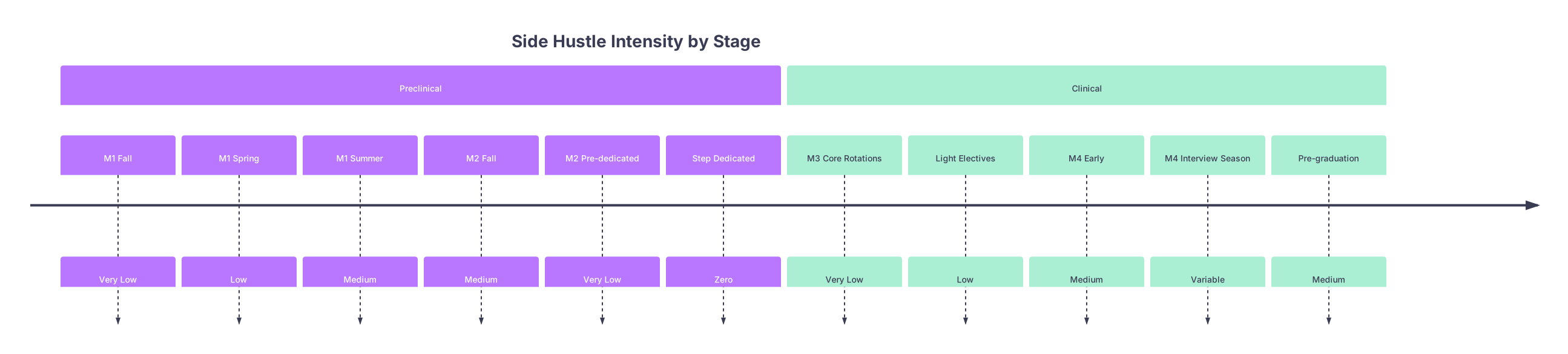
| Period | Event |
|---|---|
| Preclinical - M1 Fall | Very Low |
| Preclinical - M1 Spring | Low |
| Preclinical - M1 Summer | Medium |
| Preclinical - M2 Fall | Medium |
| Preclinical - M2 Pre-dedicated | Very Low |
| Preclinical - Step Dedicated | Zero |
| Clinical - M3 Core Rotations | Very Low |
| Clinical - Light Electives | Low |
| Clinical - M4 Early | Medium |
| Clinical - M4 Interview Season | Variable |
| Clinical - Pre-graduation | Medium |
M3: “Clinical First, Hustle Last”
Third year is where side hustles quietly destroy people. Not because of hours, but because of perception.
Attendings notice:
- That one student always on their phone “checking something.”
- The resident who says, “Oh yeah, she’s got a YouTube channel; she edits after call.”
You do not want to be that story.
At this point in M3, your priorities are:
- Clinical performance
- Shelf exams
- Building a reputation as reliable and present
General M3 Boundaries
Absolute caps:
- 3–5 hours/week on average.
- Some rotations: 0.
You must be able to:
- Drop the hustle entirely for 4–6 weeks on high‑demand rotations (surgery, some IM, OB).
- Protect sleep. If you are sacrificing post‑call rest to squeeze in work, you are doing it wrong.
Best M3 hustle types:
- Asynchronous, low‑urgency content:
- Batch filming on a free post‑call day every few weeks
- Writing on lighter weekends
- Minimal‑commitment tutoring:
- Only on very predictable rotations
- With a clear “I may pause during busy months” clause
Avoid:
- Any hustle that requires:
- Fixed daily time blocks
- Fast response times
- Daytime meetings
Rotation‑by‑Rotation Reality Check
This varies by school and site, but rough guidance:
| Rotation | Typical Side Hustle Room | Notes |
|---|---|---|
| Surgery | None or near-zero | Long hours, early starts |
| Internal Medicine | Very low | Maybe 2–3 hr on some weekends |
| Pediatrics | Low | Variable, some lighter weeks |
| OB/GYN | Very low | Unpredictable hours |
| Psychiatry | Low–moderate | Often more predictable days |
| Family Med | Low–moderate | Clinic hours, some evenings free |
How to handle it:
- Before each rotation:
- Estimate your baseline capacity: 0, 2–3, or 4–5 hours/week.
- Pre‑tell clients/followers what the next 4–6 weeks will look like.
- During week 1:
- If you are coming home destroyed, cut the hustle.
- If you are coming home with mental bandwidth, start small (1–2 hours).
M4: “Strategic Flexibility”
M4 is weird. Parts of it are the most relaxed time you will have in your career. Other parts (sub‑internships, away rotations) are brutal.
At this point in M4, you should use side hustles to:
- Build proof of concept for something you might want in residency.
- Generate a small buffer of cash before life gets more expensive.
- But not sabotage audition rotations or interview performance.
M4 Early (Sub‑Is, Aways)
These months act like an extended job interview.
Your side hustle boundaries:
- During any sub‑I or audition rotation:
- Treat it like M3 surgery or medicine.
- 0–3 hours/week maximum, and 0 is often the right answer.
- You are trying to earn:
- Strong letters
- “Team player” reputations
- Potential advocates in that program
If an attending asks, “What do you do outside of medicine?” and your answer sounds like your business is your real job, it can backfire. They want to hear commitment to the field first.
M4 Mid‑Year (After Interviews Start)
This is where you can cautiously lean back in.
At this point you should:
- Map your schedule month by month:
- Heavy interview months: lower hustle.
- Lighter stretches or electives: more hustle.
Reasonable structure:
- 6–8 hours/week on average, with peaks at 10–12 hours on very light rotations / research blocks.
- Focus on:
- Consolidating your brand: a course, a newsletter, or a niche service.
- Systems that will survive PGY‑1.
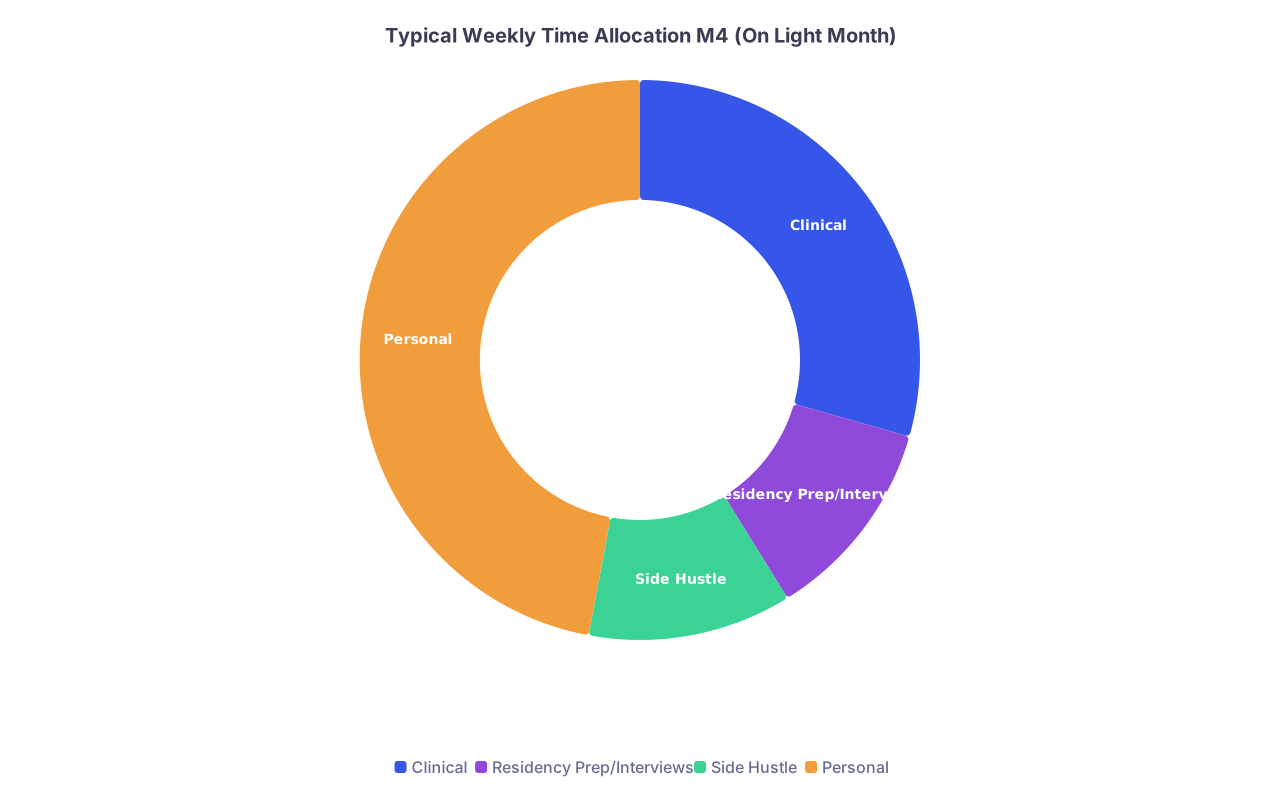
| Category | Value |
|---|---|
| Clinical | 20 |
| Residency Prep/Interviews | 8 |
| Side Hustle | 8 |
| Personal | 32 |
Final Months Before Graduation
At this point, you are:
- Finished with serious clinical evaluations.
- Mostly waiting for graduation and onboarding.
Prime time to:
- Build and batch:
- Record multiple months of content
- Pre‑write newsletters
- Build products you can sell passively
- Clean up structure:
- Set up LLC (if appropriate)
- Separate bank accounts
- Clarify how this will fit into intern year
But keep it realistic:
- Do not build yourself a second full‑time job that will explode the moment intern year hits.
Transition to Residency: Redrawing the Lines
The article’s title stops at graduation, but your planning should not. If you build a side hustle in med school, it will follow you into PGY‑1.
At this point, as you approach residency, you should:
Decide your primary goal for PGY‑1.
- Crush clinical work and pass boards.
- Or split modestly: maintain a bare‑bones version of your hustle for continuity.
Design a “minimum viable hustle.”
- The smallest version that:
- Keeps the lights on (audience, clients, algorithm).
- Does not touch:
- Post‑call days
- Night‑float months
- In‑training exam prep periods
- The smallest version that:
Pre‑build automations.
- Schedule content months ahead.
- Use tools:
- Email sequences
- Social scheduling
- Delegate if possible:
- Editors
- Virtual assistants
- Designers

Practical Weekly Templates By Year
These are not prescriptions. They are sanity checks.
M1 Typical “Hustle‑Compatible” Week (During Stable Block)
- 40–45 hr: Classes + studying
- 3–5 hr: Side hustle (1–2 short sessions)
- 10–15 hr: Life (exercise, chores, relationships, sleep margin)
If you are trying to do 10+ hustle hours in M1 regularly, you are overreaching.
M2 (Pre‑Dedicated) Stable Week
- 45–50 hr: Class, dedicated board prep
- 5–6 hr: Side hustle (mostly weekend or 1 focused evening)
- The rest: Life and recovery
M3 Typical Core Rotation Week
- 55–70 hr: Clinical + shelf prep
- 0–3 hr: Side hustle, max 1–2 chunks
- The rest: Sleep, basic human maintenance
M4 Light Elective / Post‑Interview Week
- 20–30 hr: Clinical/interview tasks
- 6–10 hr: Side hustle
- Comfortable space for life, exercise, and actual rest

Common Boundary Mistakes (And Fixes)
1. Monetizing Too Early
Problem:
- M1 with a half‑baked brand, already chasing sponsors.
Fix:
- First year: focus on genuinely helpful content and consistent output.
- Monetization in small, low‑stress ways later:
- Affiliate links
- Light tutoring
- Simple digital products
2. Not Communicating Pauses
Problem:
- You disappear for 8 weeks on a tough rotation, then wonder why clients vanished or your metrics tanked.
Fix:
- Tell your audience/clients clearly:
- “I will be quieter from X to Y because of rotations/exams, I will be back with Z.”
- Use pinned posts, email headers, autoresponders.
3. Building Hustles That Require Peak Brain Power Daily
Problem:
- You schedule “creative deep work” after 10‑hr clinical days.
Fix:
- Shift heavy thinking to:
- Lighter rotations
- Weekends
- Breaks and summers
- Use tired‑brain tasks on weekdays:
- Admin
- Light editing
- Responding to messages (in limited doses)

Quick Year‑by‑Year Boundary Snapshot
| Year | Active Hustle Hours/Week | Main Priority |
|---|---|---|
| M1 | 0–5 (rarely 8) | Learning how to study, adjust |
| M2 | 3–8, then 0 in dedicated | Boards + controlled expansion |
| M3 | 0–5 | Clinical performance, reputation |
| M4 | 0–10 (highly variable) | Auditions, interviews, then systems |
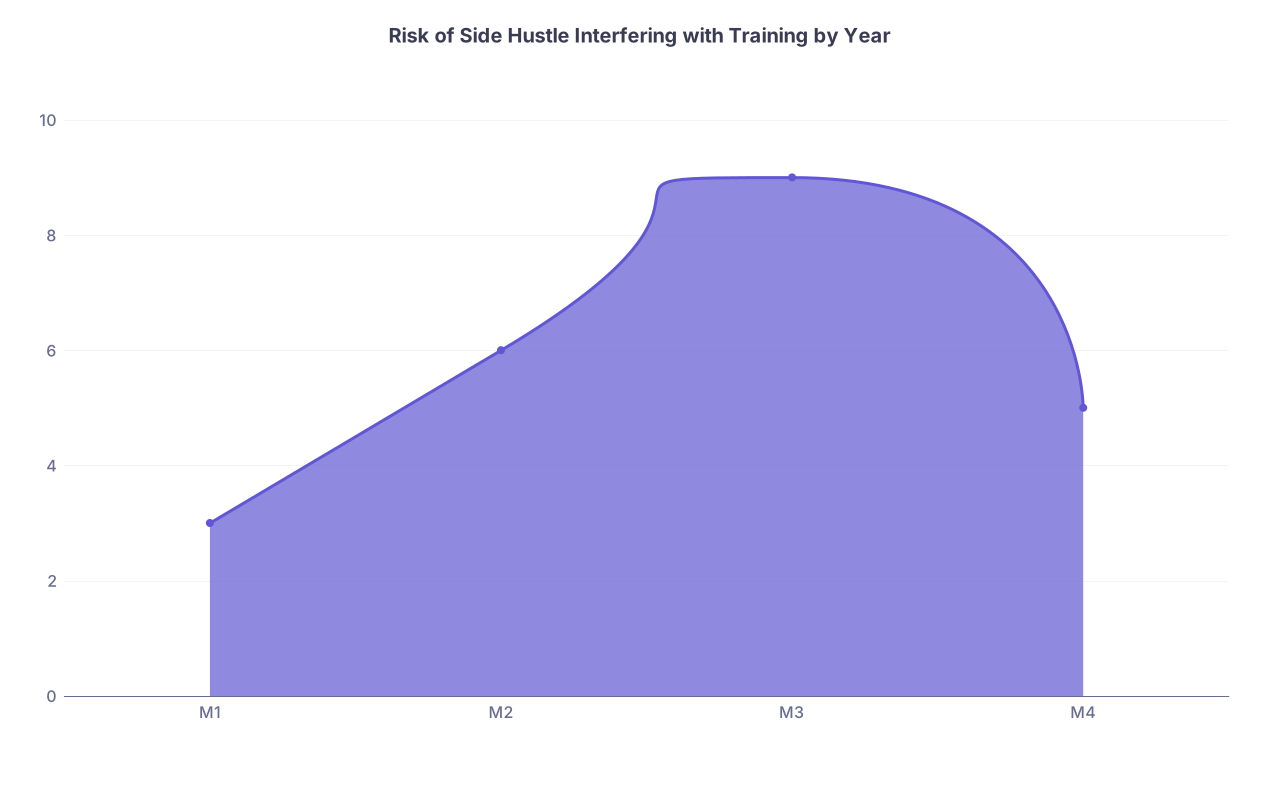
| Category | Value |
|---|---|
| M1 | 3 |
| M2 | 6 |
| M3 | 9 |
| M4 | 5 |
FAQ (Exactly 4 Questions)
1. How do I know if my side hustle is actually harming my med school performance?
Look at hard data, not vibes. If your exam scores trend down, your question bank completion rate drops, or you consistently feel behind, the side hustle is a problem. Also listen for subtle feedback: if residents or attendings hint that you seem distracted, take that seriously. That is your signal to cut back for at least one full block or rotation.
2. Is it ever smart to take a leave of absence to grow a side business during med school?
Sometimes, but rarely. It makes sense only if the business is already generating meaningful income and you have a clear plan and support from your institution. I have seen one or two people pull this off well; I have seen far more derail their training and never really recover academically. If your plan relies on “I will just blow this up in a year and then come back,” you are probably overestimating both your business and your future bandwidth.
3. What kinds of side hustles pair best with an unpredictable medical schedule?
Asynchronous and batchable ones. Content creation (when you batch film/write), digital products, and ultra‑flexible tutoring are usually the best fits. Anything that requires you to show up on a strict daily schedule or attend frequent live meetings is a poor fit once you hit clinical years. You want projects that can survive two weeks of near‑zero input during bad rotations.
4. How honest should I be about my side hustles on residency applications and interviews?
Selective and strategic honesty works best. If your side work demonstrates skills programs value—teaching, leadership, tech, quality improvement—highlight that. Frame it as secondary to your medical training, not your main identity. Avoid sounding like you plan to treat residency as a side gig to fund your business. Most program directors respect focused residents who have structured, contained outside projects; they worry about divided loyalties and burnout.
Key points:
- Each year of med school supports a different ceiling for side hustles; if you ignore that, something breaks—usually your scores or your reputation.
- Your side work must always be flexible, pause‑able, and clearly secondary to your training, especially in M2 dedicated, M3 cores, and M4 audition rotations.
- The only sustainable strategy is to build systems and skills slowly, respecting your bandwidth at each stage, so that by the time you graduate, your hustle fits around medicine—not the other way around.


