

The most dangerous side gig you will ever take is the one you start too early and too blindly.
If you want physician side gigs that are safe, compliant, and actually worth your time, you cannot wing this. You build it year by year, from MS1 to attending, like you build your clinical judgment: slowly, on purpose.
Below is a chronological roadmap. Follow it roughly in order. At each stage, I will tell you:
- What you should focus on now
- What side-gig skills you should quietly build
- What you must avoid unless you want to meet lawyers and program directors the hard way
You are playing a long game here. You are not flipping sneakers on StockX. You are building a parallel professional identity that will need to survive credentialing committees, state medical boards, and malpractice carriers.
Big Picture: How Side Gigs Fit Across Training
Before we go year-by-year, you need the 10,000‑foot structure.
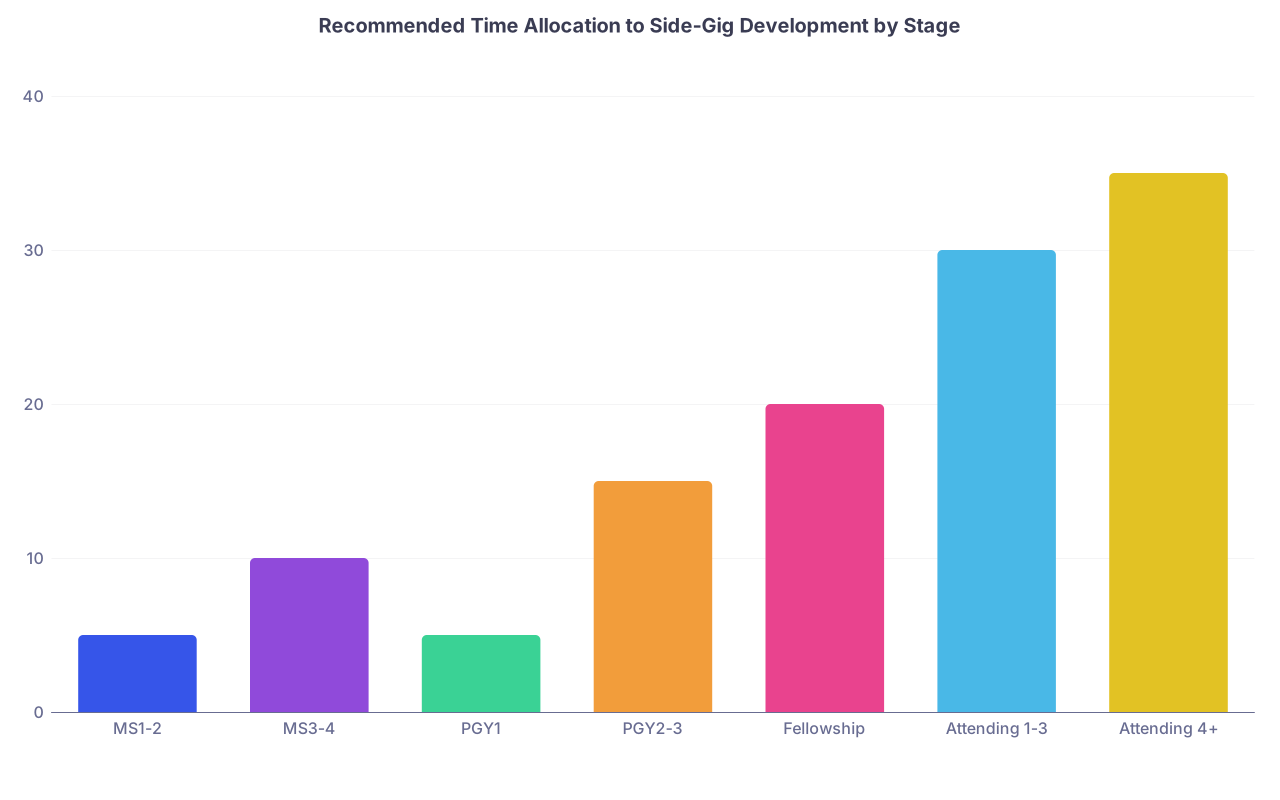
| Category | Value |
|---|---|
| MS1-2 | 5 |
| MS3-4 | 10 |
| PGY1 | 5 |
| PGY2-3 | 15 |
| Fellowship | 20 |
| Attending 1-3 | 30 |
| Attending 4+ | 35 |
Read this as percent of your professional “development energy,” not hours of your week. You do not get to work 30% of your time on gigs as an MS2. You just orient a slice of your planning and learning in that direction.
Now, let’s walk it chronologically.
MS1: Lay the Foundation, Not the LLC
At this point you should forget about “earning” and obsess about skills and reputation.
Core priorities this year
- Survive and excel academically
- Learn how to communicate clearly in writing and speaking
- Start understanding what doctors actually do outside clinic
Side‑gig mindset: seeds only
You are too early for most real physician side gigs. But you are right on time to start building the raw materials they require.
At this point you should:
Track what energizes you.
After major blocks (anatomy, physiology), ask:- Did I like teaching my classmates?
- Did I enjoy explaining concepts in chat groups or on a whiteboard?
- Did I end up making study guides that others use?
These signals scream “future teaching/tutoring/online course” potential.
Start a low‑risk, non‑clinical online presence.
I am not talking about a TikTok where you rant about your school.- Simple professional LinkedIn profile
- Optional: personal site with your name, school, interests, and a basic “About” section
- Keep it HIPAA-proof and dean-proof
Practice content creation in a safe sandbox.
At this point you should:- Write short explainer posts on general science or study strategies (no clinical advice)
- Try recording 60–90 second video explanations for classmates (private group is fine)
- Join or observe established medical education platforms (e.g., Anki groups, student-run blogs)
Learn the legal language early.
One evening, read:- Your school’s social media policy
- A basic summary of HIPAA (you can find 2–3 page cheat sheets)
- A couple of stories of students getting disciplined online
This sounds boring. It is. But I have watched residents lose jobs over a careless Instagram story.
Do NOT:
- Offer any medical “advice” online
- Brand yourself as any kind of “expert” clinician (you are not)
- Sign any contract that uses your name with “MD” after it
You are building the scaffolding: professionalism, communication, and credibility.
MS2: Skill Development and Quiet Experiments
Now you understand med school. USMLE/COMLEX is looming. Still not your time to “monetize,” but you can start structured experiments.
At this point you should refine three skill tracks
Pick one or two, not all three:
Education Track (future tutoring, board review, courses)
- Make high‑yield notes, diagrams, or Anki decks and share with a small audience
- Guest write for a student‑run med blog or interest group
- Volunteer as a near‑peer tutor through your school; this is an underrated trial run
Writing / Content Track (future medical writing, editing)
- Submit short pieces to:
- Student newspapers
- Specialty interest group newsletters
- Online platforms like in‑training.org or KevinMD (student pieces get accepted)
- Practice writing clear 800–1200 word essays with a point and a structure
- Submit short pieces to:
Technical / Data Track (future consulting, informatics, startups)
- Take one basic online course:
- Intro to statistics with R or Python
- Beginner SQL
- Basic health economics/health policy
- Do a small project with a mentor that involves data cleaning or analysis
- Take one basic online course:
The one thing you must do by end of MS2
Draft a personal policy for future side gigs. Literally a one‑page document:
- I will not provide direct medical care for money until: __________
- I will not sign any non‑compete without a lawyer reviewing it.
- I will not work for any company that wants me to promote products without full disclosure.
- I will not offer “medical advice” online; only general education.
Print it. Save it. You will need to remind yourself when a “great opportunity” hits your inbox in residency.
MS3: Clinical Reality Check and Reputation Building
This is the year that crushes people. Shelf exams, call, notes, the first time an attending chews you out at 2 a.m.
Side gigs? They drop way down the priority list. But not to zero.
At this point you should protect your future reputation
Be the reliable one on rotations.
The attending who writes, “Very professional, would trust with patient care,” is worth more than five tiny side hustles. Your reputation is your main asset for future consulting, expert witness work, or academic roles.Capture stories and patterns.
After interesting cases or system failures, jot 2–3 bullets:- What went wrong?
- What process or tool would have helped?
- Could this be written up or turned into an educational piece later?
This is raw material for future QI projects, blog posts, or consulting.
Maintain a minimal online presence.
You can:- Occasionally post professional reflections (de-identified, thoughtful, not ranty)
- Update LinkedIn with clinical interests and research projects
Do NOT:
- Start “clinical advice” side channels (“Ask a med student anything about your symptoms”)
- Live‑tweet from patient care areas
- Monetize any patient stories in any form
At this point you should assume program directors and future employers will read anything with your name on it.
MS4: Strategic Positioning and Non‑Clinical Exposure
You are applying to residency. Interviews, sub‑Is, travel. Time is tight, but now you start shaping your future side‑gig lane.
At this point you should pick a likely direction
You do not need to lock it in, but you can lean. Three broad, safe, long‑term categories:
| Lane | Typical Gigs |
|---|---|
| Education | Tutoring, board review content, online courses, CME talks |
| Non-clinical Professional | Medical writing, consulting, medico-legal review, utilization review |
| Entrepreneurial | Telehealth practice, digital health startup, niche clinic, tech product |
You should:
Align electives and projects with your lane.
- Education: help faculty with curriculum changes; build a teaching module
- Non‑clinical: do a QI or systems project, policy elective, or informatics rotation
- Entrepreneurial: choose a rotation or elective at a startup, innovation center, or telehealth group if your school offers it
Talk to one attending doing each type of work.
Ask blunt questions:- “What do you wish you had done differently in training?”
- “What got you in trouble early on?”
- “What would be appropriate for a resident versus an attending?”
Clean up your digital footprint before Match.
- Google yourself
- Lock down personal accounts
- Make your professional bio coherent: who you are, what you care about, what you are not yet (you are not an expert in anything)
Money can wait. Clarity cannot.
PGY1 (Intern Year): Buy Yourself Safety, Not Income
Intern year is where good side‑gig plans go to die. You are exhausted, disoriented, and barely staying afloat.
At this point you should assume no major side‑gig time for 6–12 months.
What you can safely do as an intern
Protect your license and job first.
Review:- Your residency contract for outside work clauses
- GME policy on “moonlighting” and “conflict of interest”
- State medical board rules on telemedicine and advertising
If you have never read those documents, you are not ready to monetize anything clinical.
Micro‑side gigs that are low risk and low bandwidth:
- Paid survey platforms specifically for physicians (once you have your license)
- Occasional medical writing assignments that do not involve prescribing or public health claims
- Tiny contributions to question banks or tutoring organizations, if your program allows and it does not cut into duty hours
Build systems, not revenue.
- Set up a simple bookkeeping system (e.g., separate bank account + basic spreadsheet or accounting software)
- Get a generic professional email address (firstname.lastname.md@…)
- Start tracking:
- Licenses
- CME
- Contract copies
- Any 1099 income (even if it is $100)
Avoid:
- Clinical moonlighting before your program clearly approves it
- Telehealth gigs that promise quick money for “simple visits” and expect high prescribing volumes
- Anything that feels like a side employer owns your time or your reputation
PGY2–PGY3 (Core Residency Years): Testing Real Side Gigs
By mid‑PGY2, you usually have some control and enough competence not to be dangerous outside supervision.
This is your test phase.
At this point you should launch 1–2 tightly scoped projects
Match your earlier lane:
If you lean Education
- Apply to create or review questions for smaller exam prep companies.
- Offer structured board tutoring through a reputable platform (or your institution).
- Start a small, well‑defined course:
- “4‑week ECG basics for new interns”
- “How to present on rounds without embarrassing yourself”
You are not building a mega‑brand. You are testing if you like teaching enough to do it outside your W-2 job.
If you lean Non‑Clinical Professional
- Medical writing:
- Apply to freelance platforms that work with pharma/education (with strict disclosure policies)
- Write patient education material for hospitals or nonprofits
- Utilization review / chart review:
- Explore small, reputable vendors that work with part‑time physicians
- Keep the cases simple at first; you are still learning
If you lean Entrepreneurial
You are at high risk of overreaching here. At this point you should:
- Join someone else’s project as a junior advisor, not founder:
- Digital health startup wants a resident to review clinical content? Fine, if your institution approves it.
- Local private practice wants you to help with workflow analysis? Also fine.
Do not open your own telehealth LLC mid‑residency unless you genuinely know what you are doing, have legal counsel, and your PD signs off. I have seen careers stall over one sloppy telehealth side hustle.
Fellowship (Optional Years): Specialization and Network
If you do fellowship, you get a bonus phase. Narrower specialty, more credibility, slightly more control.
At this point you should formalize your side‑gig specialty
Get official roles that mirror future gigs.
- Education:
- Chief resident/fellow teaching roles
- Curriculum committees
- CME talk opportunities
- Non‑clinical:
- Hospital committees (informatics, quality, utilization)
- Policy or advocacy groups in your specialty
- Entrepreneurial:
- Innovation labs
- Hospital partnership with startups
- Research with tech collaborators
- Education:
Negotiate early clarity on outside work.
- Talk with your fellowship director about what is acceptable
- Put agreements about moonlighting and consulting in writing
- If needed, talk with legal/compliance about conflict of interest
Start thinking structurally:
- Will you operate through an LLC?
- What insurance or legal protections will you need for non‑clinical consulting or telehealth?
- How will you document time and boundaries so your main employer is comfortable?
This is where you turn ad‑hoc gigs into a coherent side career.
Attending Years 1–3: Launch Safely and Deliberately
Now you have the MD, board certification (or on the way), and a real salary. Temptation spikes: locums, telehealth, consulting, expert witness, YouTube.
This is where people either build something sustainable or light themselves on fire.
At this point you should pick one primary side‑gig pillar
Do not try to launch five things in your first attending year. Choose one pillar and one backup.
Examples:
Pillar: Clinical moonlighting / telehealth
Backup: Small amount of education work (tutoring, talks)Pillar: Medical writing / consulting
Backup: Limited clinical per diem shifts for income smoothingPillar: Education brand (courses, content)
Backup: Occasional consulting or speaking
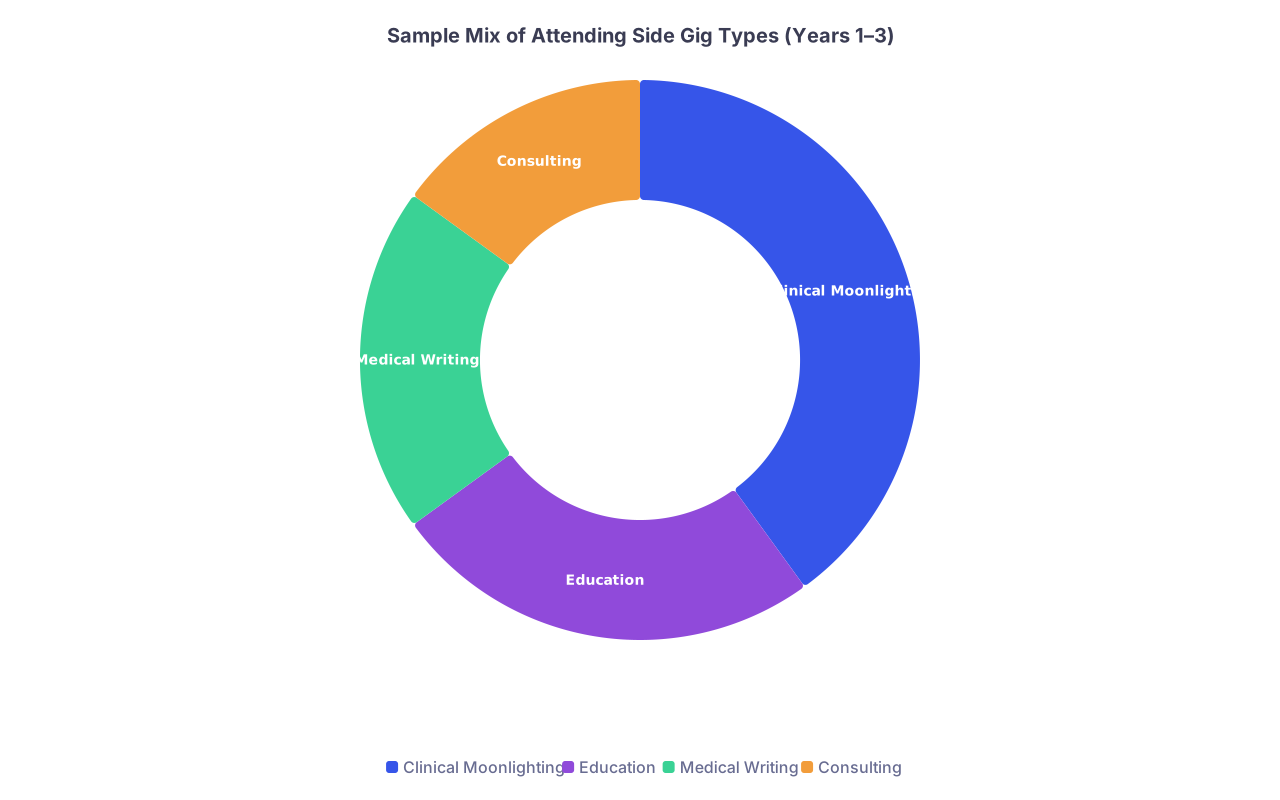
| Category | Value |
|---|---|
| Clinical Moonlighting | 40 |
| Education | 25 |
| Medical Writing | 20 |
| Consulting | 15 |
Concrete steps in early attending years
Lock down compliance.
- Review your employment contract:
- Non‑compete language
- Moonlighting restrictions
- Use of your name and title in external work
- Run your plans by:
- HR or legal (if large institution)
- A healthcare attorney (for more complex gigs)
- Review your employment contract:
Formalize your structure.
- Create a simple LLC or professional corporation for 1099 work where appropriate
- Open a dedicated business bank account
- Track:
- Invoices
- Expenses
- Estimated tax payments
Start with structured, reputable organizations.
- Board prep companies
- Established utilization review firms
- Major telehealth platforms with clear prescribing and documentation guidelines
- Academic or CME organizations
Do not start by trying to be a social media celebrity selling supplements. From a risk perspective, that is like learning to drive by starting on the freeway in the rain.
Attending Years 4+: Scaling and Guardrails
If you do this right, by year 4 or so you have:
- Clinical confidence
- An institutional reputation
- A couple of side gigs that you understand inside out
This is when you ask, “Do I scale, specialize, or trim?”
At this point you should refine and protect
- Evaluate each side gig annually on three axes:
| Axis | Question to Ask |
|---|---|
| Income | Is this worth my effective hourly rate after taxes? |
| Risk | Does this meaningfully increase my legal/reputation risk? |
| Fulfillment | Would I still do this for half the pay? |
Cut ruthlessly. The gig you resent will either harm your main job or your sanity.
Consider moving up the value chain.
- From generic telehealth to niche expert teleconsulting
- From generic tutoring to owning a small education platform
- From commodity chart review to higher‑level consulting or advisory roles
- From one‑off talks to recurring CME series or course licensing
Install guardrails as you scale.
- Written SOPs (how you accept work, how you say no)
- Clear weekly “no side gig” days where you do nothing but your main job and your life
- Occasional compliance/legal review of your activities, especially if you cross state lines or add new clinical offerings
At this stage, you are less “finding side hustles” and more building a portfolio career.
Putting It Together: Your Personal Timeline
Let me give you a compressed visual of how this plays out.
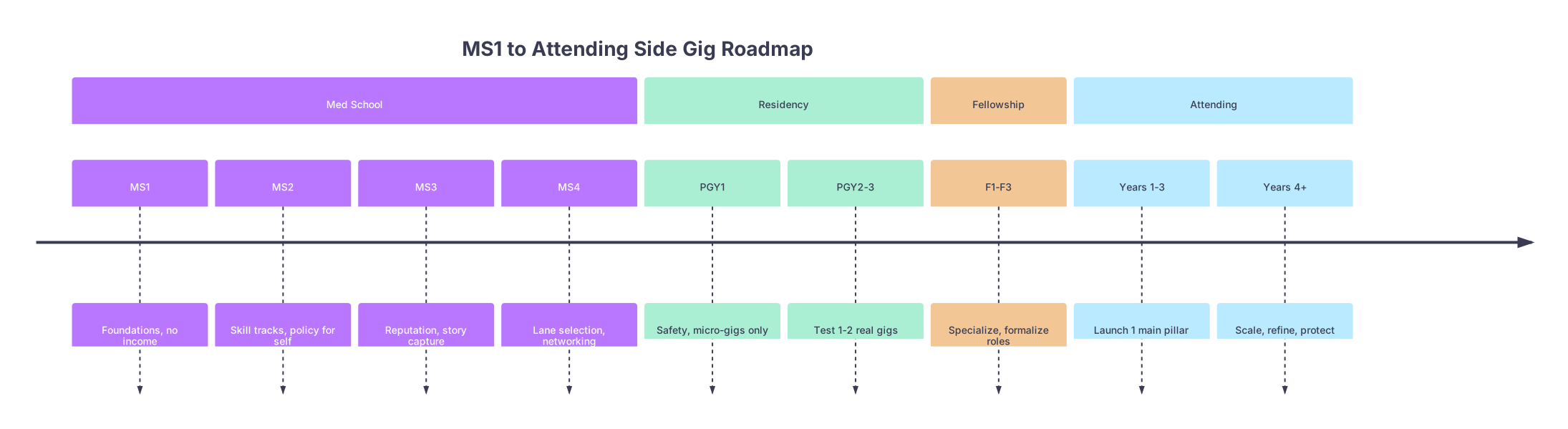
| Period | Event |
|---|---|
| Med School - MS1 | Foundations, no income |
| Med School - MS2 | Skill tracks, policy for self |
| Med School - MS3 | Reputation, story capture |
| Med School - MS4 | Lane selection, networking |
| Residency - PGY1 | Safety, micro-gigs only |
| Residency - PGY2-3 | Test 1-2 real gigs |
| Fellowship - F1-F3 | Specialize, formalize roles |
| Attending - Years 1-3 | Launch 1 main pillar |
| Attending - Years 4+ | Scale, refine, protect |
And yes, reality will be messy. You will have rotations that wreck your plans. Family obligations. Burnout spikes. That is exactly why a time‑anchored roadmap beats vague dreams.
What You Should Do Today
Do not try to “build a brand” this afternoon. Do something proportional to your stage.
If you are MS1 or MS2:
Open a blank document and write your one‑page Personal Side‑Gig Policy. Set your red lines now, before money blurs them.If you are MS3 or MS4:
Email one attending who does non‑clinical work you admire and ask for a 20‑minute call: “I am trying to plan my long‑term career. Could I ask you about how you started your [education/consulting/etc.] work?”If you are resident or fellow:
Pull out your contract and GME policies. Highlight every line that mentions “outside employment,” “moonlighting,” or “conflict of interest.” That is your actual playing field.If you are an early attending:
List your current or planned side gigs in one column, and in another column write “income / risk / fulfillment.” Circle the one that best balances all three. That is the only one you are allowed to expand for the next 6 months.
Pick the action that matches your stage and do it before you close this tab.


