

It is 9:30 p.m. You just signed your last note of the day. Your EMR inbox still looks feral, your kids are asleep, and you are staring at yet another email from a college sophomore asking, “Can we chat about how to get into med school?”
You could ignore it. You could squeeze in a 20‑minute phone call and give the same generic advice you have repeated 200 times. Or you could do what smart physicians have started doing quietly: turn your very specific experience into a precision coaching side business that actually pays, actually helps, and does not depend on RVUs.
Let me break this down specifically.
This is not “be a generic life coach” fluff. This is: how to build a targeted, evidence‑anchored, high‑value coaching service for premeds and residents that leverages what you already know cold—and pays like a serious side hustle, not Starbucks money.
1. What “Precision Coaching” Actually Means (And What It Is Not)
Precision coaching is not “I’m a doctor, therefore I can coach anyone on anything.” That is lazy and it fails.
Precision coaching is narrow, outcome‑driven, and built on asymmetric information. You know things your clients do not—and cannot Google. That is why they pay you.
Think in terms of specific transitions where the stakes are high, the anxiety is high, and the information is noisy:
- Premed: “I’m a sophomore at a mid‑tier state school with a 3.3 and no research. Can I still get in and how?”
- MS3: “My evals say I’m quiet and need to be more assertive. How do I fix that before sub‑Is?”
- Resident: “I want to match a competitive fellowship from a community program; what is the actual playbook?”
- IMG: “I had one failed Step attempt. Where does that put me and how do I present this?”
Precision coaching means you pick an angle and go deep. Examples:
- “Evidence‑backed MCAT + application strategy for non‑traditional premeds.”
- “High‑impact rotation performance coaching for IM residents aiming for cards or GI.”
- “Surgical residents: communication and leadership coaching for chief year and beyond.”
- “IMG‑focused US residency application triage and optimization.”
Notice the pattern: clearly defined population + clearly defined outcome.
What it is not:
- “I help medical professionals live their best lives.”
- “I do wellness coaching for everyone in healthcare.”
Those might sound nice on Instagram. They do not sell at a premium unless you are already famous.
2. Pick Your Niche Like a Clinician, Not a Blogger
You already think in phenotypes and risk stratification. Use that same mindset here.
Start by asking three ruthless questions:
- Where do I have unfair insight?
- Where are the stakes high enough that people will pay?
- Where do I actually enjoy the conversations?
Examples from real physicians I have seen:
- Cardiology attending at a mid‑tier academic center:
- Niche: IM residents and IMGs targeting cardiology fellowships in the US.
- Product: Fellowship application portfolio review + strategy + mock interviews.
- EM physician with admissions committee background:
- Niche: Non‑traditional and lower‑stat premeds applying to US MD/DO.
- Product: Application positioning, school list triage, and personal statement rescue.
- Academic surgeon with a reputation for strong resident teaching:
- Niche: MS3s/MS4s who are weak on the wards—especially introverted or anxious students.
- Product: “Clinical performance bootcamp” with video‑based roleplay and feedback.
If you are early in your side‑hustle life and you want something simple, you can shape it by phase and leverage, like this:
| Niche Type | Ideal Client | Your leverage |
|---|---|---|
| Premed admissions strategy | Sophomore–post‑bacc | School selection, PS, committee expectations |
| MCAT + application integration | Junior with MCAT upcoming | Study optimization + narrative alignment |
| Clerkship performance coaching | MS3/MS4 | Attendings’ actual expectations on rotations |
| Residency application & ranking | MS4 | PD mindset, LOR strategy, rank list nuance |
| Fellowship targeting | PGY‑1 to PGY‑3 | Niche fellowship pathways, unwritten rules |
If you try to be all of the above at once, you will water everything down. Begin with one or two segments where:
- You have credibility (lived it, mentored it, or sat on selection committees).
- You can produce clear, measurable wins (interview invites, score jumps, eval improvements).
3. The Core Offer: What You Actually Sell (And For How Much)
This is where most physicians get stuck. They say yes to random calls and then feel guilty charging.
You are not selling your time. You are selling decisions, clarity, and probability shifts.
A solid precision coaching offer for premeds or residents typically has three layers:
- Diagnostic: You assess their current state with more sophistication than any pre‑health advisor.
- Roadmap: You produce a concrete, time‑bound plan.
- Implementation support: You help them execute and course‑correct.
Let’s make this tangible.
For Premeds: A High‑Yield Package
Say your niche is “premed admissions strategy for non‑traditional applicants.”
Your flagship package might look like:
- Pre‑call intake questionnaire (detailed GPA trends, activities, school constraints).
- 60–90 minute strategy consult on Zoom.
- Customized 6–12 month action plan (course mapping, MCAT timeline, gap year optimization).
- One personal statement draft edit with tracked changes and comments.
- Two 30‑minute follow‑up calls during the cycle.
That is not a “chat.” It is a product.
What do you charge? Depends on your market and confidence, but reasonable ranges:
- For that package: 600–1200 USD.
- Standalone PS/edit services: 250–500 USD.
- Hourly “ask me anything”: 200–400 USD (and only if it does not cannibalize packages).
Premeds are price sensitive but also irrationally willing to spend if they believe:
- You are a “real doctor” who understands admissions.
- You can help them avoid a wasted cycle (which costs 1–2 years and thousands of dollars).
For Residents: A Higher‑Ticket, Lower‑Volume Offer
Residents have less money but higher stakes on specific outcomes, such as fellowship.
Example: “Fellowship Match Precision Package” for IM residents:
- Deep‑dive intake: CV, Step scores, publications, program type, career goals.
- 90‑minute strategy call:
- Target list by tier and probability.
- Publication and project positioning.
- Away rotations or visiting scholar strategy if relevant.
- Comprehensive CV overhaul and letter writer game‑plan.
- Two mock interviews (with specialty‑specific questions and feedback).
- Rank list review and risk analysis.
Pricing: 1200–3000 USD depending on your pedigree and demand. And yes, people pay that when you are clearly positioned and have even a small portfolio of success stories.
If you feel queasy about those numbers, hold that thought. We will talk about ethics and value later. But undercharge and you will resent the work and quit.
4. Structure Your Process Like a Clinical Pathway
You are already good at systems. Run your coaching like a mini‑clinic, not a random string of Zoom calls.
Here is a simple process map that works well:

| Step | Description |
|---|---|
| Step 1 | Prospect finds you |
| Step 2 | Inquiry form |
| Step 3 | Free 15 min fit call |
| Step 4 | Send proposal and invoice |
| Step 5 | Refer or decline |
| Step 6 | Intake questionnaire |
| Step 7 | Initial 60-90 min session |
| Step 8 | Deliver written roadmap |
| Step 9 | Follow up sessions |
| Step 10 | Close loop and request feedback |
A few specifics that matter:
Inquiry form:
Capture:- Stage (premed year, MS3, PGY‑2).
- Scores (GPA, MCAT, Step, etc.).
- Primary goals (e.g., “get into any MD/DO” vs “match GI from community IM”).
- Deadline pressures (applying this cycle vs next).
That single form lets you filter out people you cannot actually help and protects your time.
Fit call:
Keep it tight—10–15 minutes. The goal is not to solve their life. It is to decide:- Do they have a realistic target?
- Do they understand this is paid, not “mentorship”?
- Do you like the problem?
If yes, you summarize: “Here is the gap. Here is what we would work on. This is the fee. I send you a summary with payment link; if you pay, we schedule.”
Intake + initial session:
You want to show up already knowing their numbers and timelines. Live time is for:- Clarifying non‑numeric constraints (family, visas, finances).
- Gut‑check of their goals against reality.
- Co‑creating priorities so they buy into the plan.
Written roadmap:
This is where most “coaches” fail. They talk a lot, then vanish.Your roadmap is a PDF or document with:
- 1–3 top goals (e.g., “increase interview invites at mid‑tier IM programs this cycle”).
- Timeline broken by month or rotation.
- Concrete tasks with owner and deadline.
Example snippet for a PGY‑2 IM aiming for heme/onc:
- February–March:
- Secure 2nd heme/onc project with Dr. X.
- Draft abstract on current QoL project; submit to ASCO.
- Schedule first mock interview in April.
That roadmap is what makes you look like a professional, not a well‑meaning upperclassman.
5. Deep Content: What You Actually Teach Premeds vs Residents
This is where your clinical authenticity matters. You must go beyond “work hard, stay organized.”
For Premeds: Specific Levers, Not Pep Talks
Here is what precision coaching for premeds looks like when done correctly:
GPA and course strategy:
You do not just say “raise your GPA.” You dissect:- Science vs cumulative GPA.
- Trend analysis (upward vs downward).
- Which future courses can realistically move the needle.
- When a formal post‑bacc or SMP is actually needed vs a few targeted upper‑divisions.
MCAT as a strategic weapon, not a trauma:
You anchor:- What score range makes sense for their GPA and target programs.
- How to integrate MCAT prep with research or clinical hours, not against them.
- When a retake is worth it and when it is a sunk‑cost trap.
Activity triage:
You sort through a mess of “volunteered at hospital gift shop, 15 hours” and “shadowed my uncle, 8 hours” and redesign their profile into:- 1–2 longitudinal clinical experiences.
- 1 meaningful service or leadership role.
- 1–2 intellectually heavy or research‑oriented roles.
Narrative construction:
This is the real asymmetric value. You help them:- Decide on the story spine: adversity, curiosity, service, etc.
- Avoid clichés that adcoms hate (“I’ve always wanted to help people”).
- Frame weaknesses (e.g., low freshman GPA) as part of a believable trajectory.
Application cycle timing and school list:
Instead of applying to 35 random schools, you teach them:- How to stratify by median metrics, mission fit, and geography.
- How to time submission for maximum advantage.
- When to pivot to DO or consider offshore—and when not to.
You are not a therapist here. You are a strategist.
For Residents: Performance and Positioning
Residents need something different: behavior feedback and political acumen no one teaches explicitly.
Key coaching domains:
In‑rotation behavior calibration:
You translate vague eval comments into specific behaviors:- “Needs to be more confident” → speak up with an assessment and plan before being asked; volunteer for presentations; pre‑chart.
- “Needs improvement in teamwork” → check in with nurses, follow up on orders, communicate changes to cross‑cover.
Often you will use roleplay. Make them present a patient to you and then dissect it.
Portfolio building with surgical precision:
You decide, together:- Which research or QI projects have actual signaling value.
- Which conferences matter for their specialty.
- How many publications or posters reach “good enough” for their target tier.
Letters and political capital:
Residents almost always underestimate:- How early they must identify letter writers.
- The power of being the reliable resident on a specific service.
- The impact of quiet reputation between attendings.
You help them script ask‑conversations with attendings, choose rotations strategically, and avoid landmines.
Application positioning:
For fellowship or even job hunts, you:- Frame gaps (visa issues, score failures, program tier).
- Highlight strengths (unique skills, language, niche interests).
- Craft a personal statement that is not a rehash of their CV.
This is where your experience as an attending or senior fellow is gold. You have seen who gets letters like “top 10% of residents I have ever worked with” and who does not.
6. Pricing, Ethics, and Not Becoming a Parasite
Let us deal with the objection you are probably feeling: “Is this predatory? Students are already broke.”
Here is the line I use:
Charging fairly for high‑leverage, honest guidance is not predatory. Selling hope without realism is.
Your ethical obligations as a physician coach:
Be brutally honest about probability.
If an applicant has a 2.8 cGPA, 495 MCAT, and no recent coursework, you do not sell a 1500‑dollar package on “we can make your dream happen.” You explain:- The realistic pathways (post‑bacc, SMP, alternative careers).
- Where coaching might help and where it is premature.
- That your services will not override numbers at scale.
Never guarantee admissions or match.
You can say:- “My role is to move you from the bottom of the pile to the competitive middle or above.”
- “I help you avoid unforced errors and maximize the odds at your current stat profile.”
You never say, “I will get you in.”
Reserve free or low‑cost slots deliberately.
If guilt is eating you alive, structure it.- 1–2 pro bono clients per quarter from disadvantaged backgrounds.
- Sliding scale for specific categories (first‑gen, severe financial hardship) with proof, not vibes.
But do not turn your entire business into free labor. You will stop doing it.
Stay in your lane.
You are not their psychiatrist. You can recognize distress and suggest real therapy. Do not try to treat burnout, depression, or trauma through “mindset coaching.”
On pricing: undercharging is also unethical if it makes the work unsustainable, because then your high‑quality service disappears and students are left with generic mass‑market editing mills.
For context, here is how precision coaching stacks against common student spends:
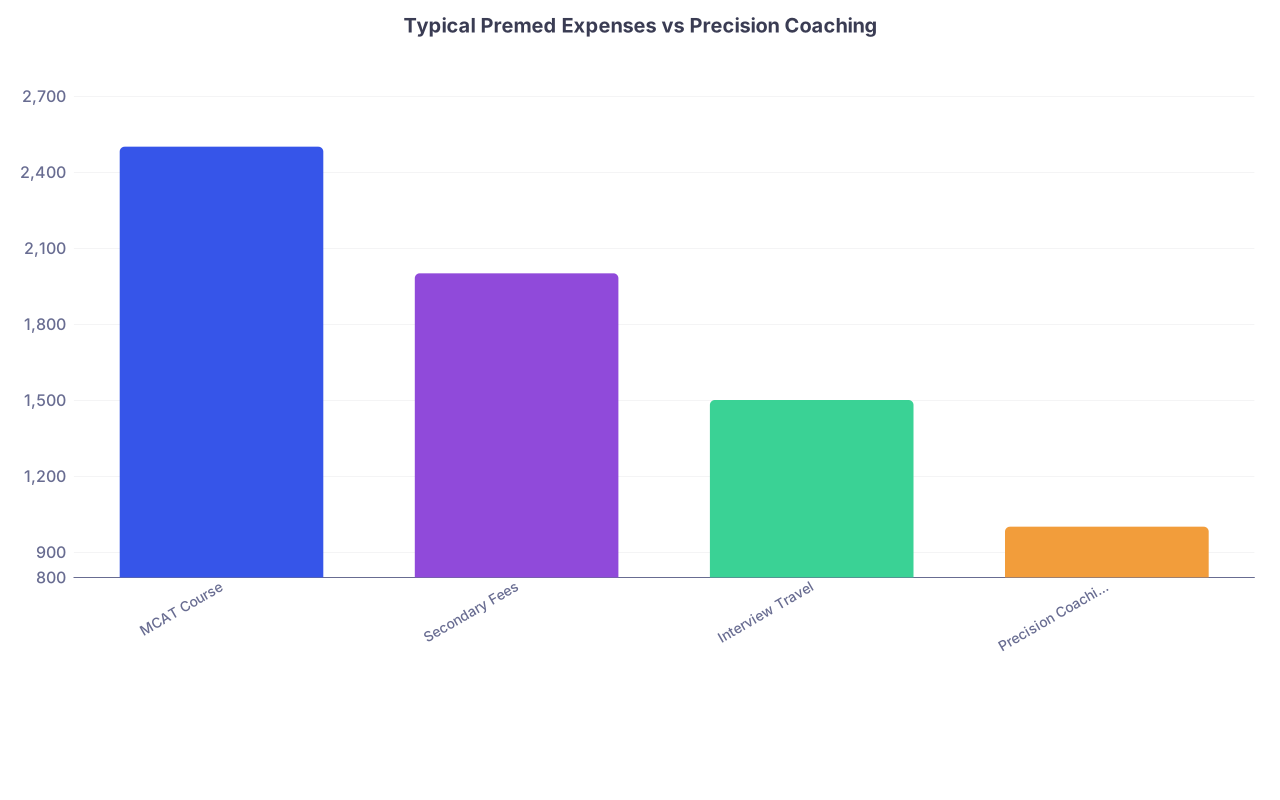
| Category | Value |
|---|---|
| MCAT Course | 2500 |
| Secondary Fees | 2000 |
| Interview Travel | 1500 |
| Precision Coaching Package | 1000 |
Plenty of students drop several thousand dollars on mediocre MCAT courses or random secondary fees. A focused 750–1500‑dollar strategy engagement is not insane in that ecosystem, if it tangibly improves their odds or shortens their path by a year.
7. Operational Nuts and Bolts (Without Building a Full Company)
You do not need a startup. You need a small, well‑run practice.
Bare minimum tech stack:
- Scheduling: Calendly, Acuity, or similar.
- Video: Zoom or Google Meet.
- Payments: Stripe, PayPal, or integrated scheduler payments.
- Docs: Google Docs/Drive for roadmaps and edits.
- Simple website: Squarespace, Ghost, or even a well‑built one‑page site.
You can build an MVP version of this in a weekend.
Protect yourself legally:
- Talk to a lawyer about:
- A simple service agreement that clarifies this is educational, not medical care.
- Disclaimers: no guarantees, no doctor‑patient relationship, jurisdiction limitations.
- Separate business entity if your risk tolerance is low:
- Simple LLC is enough for most; talk to an accountant about tax implications.
Time management is non‑negotiable. If you do not set boundaries, this side hustle will cannibalize your real life.
A realistic scenario:
- 2 evenings per week, 1–2 sessions each.
- 1 weekend morning per month for deep‑dive work (editing, roadmaps).
- Cap your active client load (for example, 6–10 at a time).
At reasonable pricing, that can generate a very real supplemental income without burning you out.
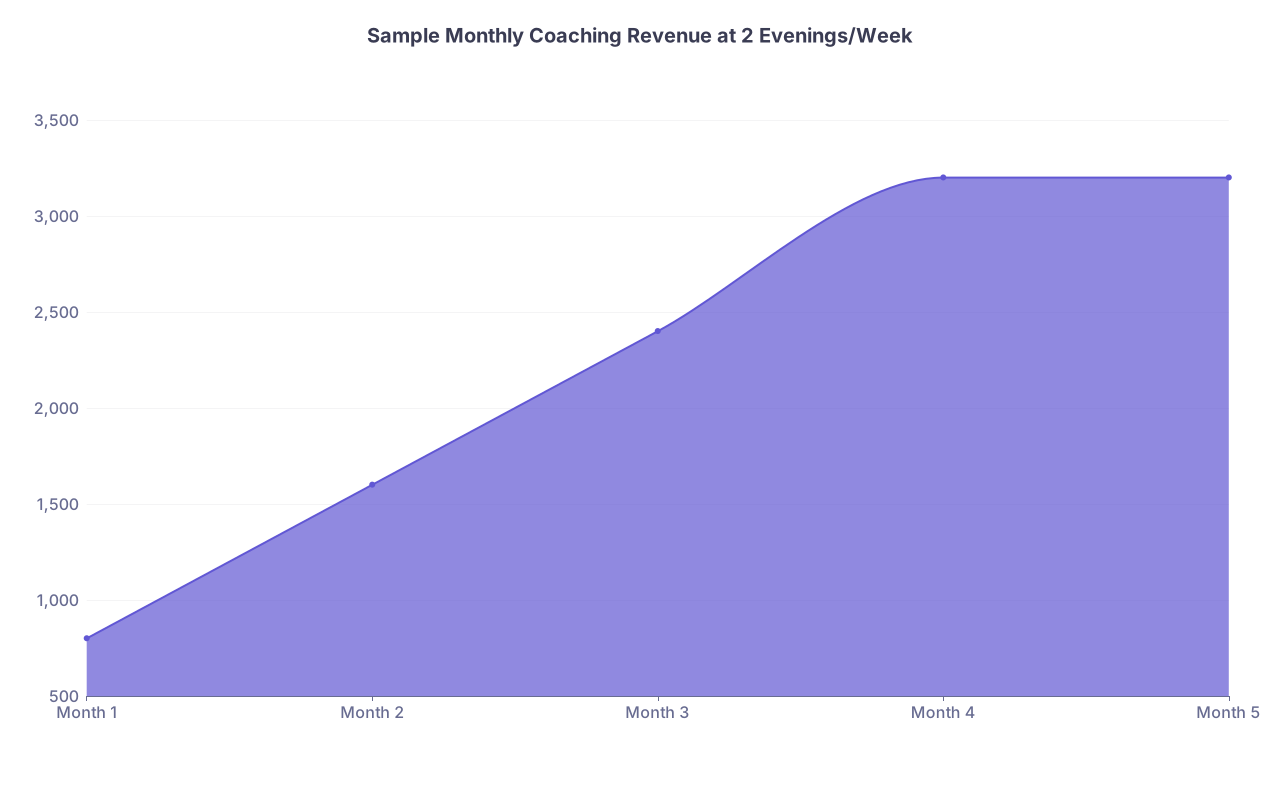
| Category | Value |
|---|---|
| Month 1 | 800 |
| Month 2 | 1600 |
| Month 3 | 2400 |
| Month 4 | 3200 |
| Month 5 | 3200 |
This is not fantasy. A handful of well‑designed packages and a reputation that spreads by word‑of‑mouth can land you here quickly.
8. Getting Clients Without Becoming a Social Media Influencer
You do not need 50,000 followers. You need a steady trickle of the right people.
High‑yield channels for physicians:
-
- Colleagues’ kids and mentees.
- Your med school’s premed advising office (they often want external resources for edge cases).
- Residents and students you have already advised informally.
You send one clear email: “I am offering structured, paid coaching for [X] type of students. Here is who I help, here is how, here is the link.”
Targeted online presence.
- One page site with:
- Who you are (1–2 paragraphs).
- Who you help (clear segments).
- What results look like.
- How it works and the price range.
- A handful of deep‑dive blog posts or videos:
- “How IM residents from community programs can still match cards.”
- “The truth about reapplying after a bad MCAT.”
- “Common MS3 behaviors that quietly destroy evals.”
These act as filters. People who resonate will reach out already partly sold.
- One page site with:
Speaking and workshops.
- Offer a free Zoom session to:
- A university premed club.
- A residency’s noon conference.
- An IMG‑heavy Facebook group.
You teach something real for 30–45 minutes. At the end: soft call to action—“If you want 1:1 help applying this to your situation, here’s how to work with me.”
- Offer a free Zoom session to:
Referrals and word‑of‑mouth.
Over time, this is the main engine. When someone gets into med school or matches their top fellowship, they talk. You encourage this: ask for a testimonial (scrubbed of identifying details) and a short blurb you can put on your site.
9. Case Examples: What This Looks Like in Real Life
Let me sketch three composite cases that mirror what I have seen physicians build.
Case 1: The Premed Strategist
- Background: Academic hospitalist, former med school admissions committee member.
- Niche: Non‑traditional premeds (career changers, post‑bacc, first‑gen).
- Offer:
- Admissions strategy packages.
- Application season “war room” check‑ins (monthly from May–October).
- Volume: ~6–8 active clients per cycle.
- Revenue: Low five figures annually at ~5 hours/week during peak season, less in off‑season.
- Edge: Deep understanding of how older applicants are judged and what makes them believable.
Case 2: The Fellowship Architect
- Background: Cardiology attending, well‑connected regionally.
- Niche: PGY‑1–3 IM residents at community and lower‑tier academic programs.
- Offer:
- “Fellowship Readiness Audit” (single session + written plan).
- Higher‑ticket “Full Cycle Fellowship Package” for PGY‑3s.
- Volume: 3–5 full‑cycle clients per year, 10–15 audits.
- Revenue: Mid five figures, heavily concentrated around application season.
- Edge: Knows exactly how much research, where to apply, and how PDs actually screen.
Case 3: The Clerkship Whisperer
- Background: Academic surgeon with resident teaching awards.
- Niche: MS3/MS4 students struggling clinically or anxious about surgery/IM rotations.
- Offer:
- 4‑session “Clinical Performance Bootcamp”:
- H&P and oral presentation performance.
- OR etiquette and expectations.
- Shelf‑score + eval synergy.
- Mock attendings’ rounds with feedback.
- 4‑session “Clinical Performance Bootcamp”:
- Volume: 1–3 students per month, more before core surgery block seasons.
- Revenue: Modest but satisfying; side benefit is better local student performance, which also helps the department.
All three of these physicians are doing this without quitting their jobs, without running giant online empires, and without living on Instagram.
10. Where This Is Going: The Future of Physician‑Led Precision Coaching
Right now, this space is fragmented:
- Big commercial premed and residency services staffed mostly by non‑physicians or a grab‑bag of “advisors.”
- Random upperclassmen or residents charging 50–100 USD per hour on social media.
- A handful of disciplined physicians running quiet, high‑quality, boutique practices.
Here is what I expect over the next decade:
- More formal physician‑only networks offering vetted coaching and shared infrastructure (legal, payments, marketing).
- Stronger data feedback loops:
- Aggregated anonymized results (“clients with X profile who took Y path had Z% match rate”), which lets you refine your advice.
- A move toward longitudinal mentorship products:
- 1–3 year guiding relationships with fewer clients, combining performance coaching, career strategy, and transition support.
- Potential integration with med schools and residencies:
- Schools may hire external physician coaches to support at‑risk students, rather than building all resources in‑house.
If you start now, you are early. You get to define your niche before the space becomes crowded with polished but generic offerings.
You are at your desk, end of another long day. You already do this work informally—proofreading emails, advising on rank lists in the resident lounge, talking a premed through their panic.
The difference is whether you choose to formalize it, sharpen it, and get paid to do it well.
If you put the structure in place—clear niche, defined offers, ethical boundaries, and a simple system—you can turn those scattered conversations into a precise, high‑impact side hustle that actually moves careers forward.
With that foundation, the next step is deciding your first experiment: one niche, one offer, three clients. Run it for a cycle, refine, then decide how far you want to take it. The broader ecosystem of physician side hustles is evolving fast—but your own small, sharp coaching practice can start with your very next “Can we talk about med school?” email. That next conversation can be the first client in a business that grows quietly alongside your clinical career.


