
The default advice that “medical students should avoid side hustles” is outdated—and often wrong.
You should not blindly avoid all extra work, but you also should not romanticize “entrepreneur med student” culture. The right side hustle can accelerate your career and financial stability. The wrong one will tank your grades, your mental health, and maybe your professionalism file.
Here’s the risk–benefit breakdown you actually need.
The Core Question: Should You Start a Side Hustle in Med School?
Short answer:
- If you’re struggling academically, burned out, or barely holding your life together → no, you have no business starting a side hustle.
- If you’re stable, organized, and have a very specific goal a side hustle would serve (skills, money, connections) → yes, with strict guardrails.
The key is that “medical student with side hustle” is not an identity. It’s a strategic decision.
Use this filter:
- Does this side hustle threaten your primary mission: becoming a competent, ethical physician?
- Can you stop it instantly if school demands spike?
- Does it build something you care about long-term (skills, portfolio, network) rather than just a few extra dollars?
If the answer to all three is yes, you’re in a safer zone. If not, you’re playing with fire.
The Real Benefits (Beyond a Few Extra Dollars)
Let’s be honest: most students think about side hustles because medicine is expensive and stipends are laughable. But the best side hustles for med students don’t just pay—they compound.
1. Skill Building That Actually Matters
The right side hustle can give you skills you will not get from lectures or rounds:
- Writing and communication (medical blogging, ghostwriting, content for health sites)
- Tech and data (basic analytics, product sense, informatics)
- Business and negotiation (contracting, pricing, client management)
- Leadership and project management (small teams, timelines, deliverables)
I’ve seen students who did consistent medical writing walk into residency interviews with actual portfolios: named publications, content for major health sites, evidence of long-term follow-through. That stands out more than yet another “I was secretary of the Surgery Interest Group.”
2. Financial Cushion (But Don’t Exaggerate It)
You’re not going to retire from med school side gig money. But you can:
- Cover board prep costs without more high-interest debt
- Pay for away rotations, conferences, or interviews
- Reduce the frequency of “I put that on a credit card and hope future-me deals with it”
For a realistic view:
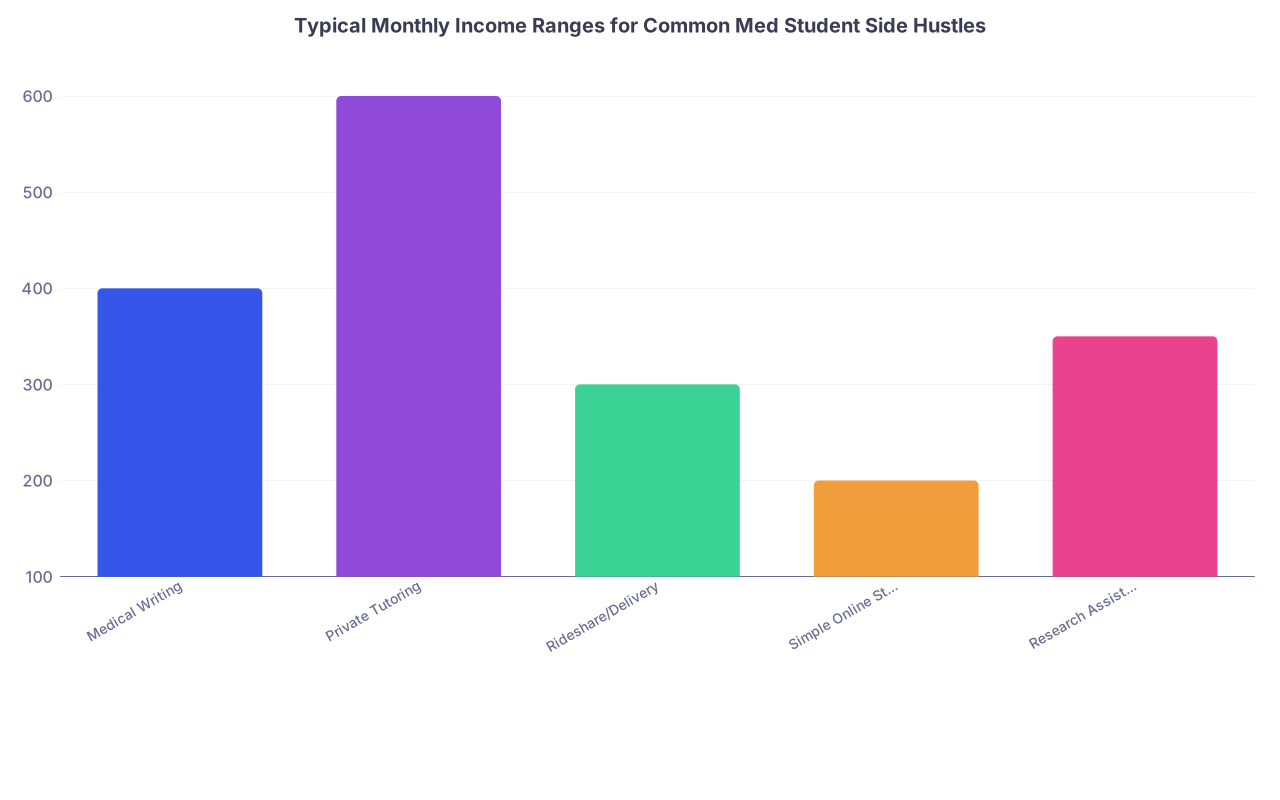
| Category | Value |
|---|---|
| Medical Writing | 400 |
| Private Tutoring | 600 |
| Rideshare/Delivery | 300 |
| Simple Online Store | 200 |
| Research Assistance/Freelance | 350 |
Not nothing. Not life changing. But it can move the needle, especially over a few years.
3. Career Optionality
Residencies and future employers notice candidates who’ve done something interesting and sustained:
- A med student who built a small patient-education website and tracked user analytics looks different from one who just “likes digital health.”
- Someone who actually shipped a simple app for patient reminders has more credibility than someone who only talks about “wanting to do health tech.”
The right side hustle becomes a career story. It shows you can start something, persist, and deliver.
The Risks People Underestimate (And Often Regret)
Here’s where people get burned. These are not hypothetical.
1. Academic and Performance Collapse
Med school is already a full-time job plus overtime. Add another job and you risk:
- Dropping from solid B+/A work to barely passing
- Failing Step/Level exams or needing retakes
- Missing key clinical learning because you’re exhausted from late-night hustle work
And programs notice trajectories. A transcript that slides downward while you launched a flashy project is not a good look.
2. Burnout and Mental Health
You’re not a machine. Even if you can cram 80 hours of school and 20 hours of extra work into a week, that does not mean you should.
Warning signs you’re over the edge:
- Studying with your laptop open to your “business” dashboard every few minutes
- Feeling guilty any time you’re not “productive”—even on your one free Saturday
- Dreading both school and your side hustle because there’s never a real break
Once you hit that point, everything suffers—clinical performance, relationships, judgment.
3. Professionalism and Boundary Problems
This is where students can get into real trouble:
- Posting patient-related content on social media “for the brand”
- Selling study materials that include proprietary or copyrighted content
- Using hospital Wi‑Fi and time to run your business
- Partnering with sketchy health products or “wellness” scams under your future-MD name
Schools and hospitals care about this a lot more than you think. I’ve seen students get formal professionalism write-ups for online health “advice” that crossed lines, even if well-intentioned.
Good vs Bad Side Hustles for Medical Students
Let’s draw a hard line. Some side hustles fit med school. Some don’t.
| Category | Examples |
|---|---|
| Relatively Safer | Medical writing, targeted tutoring, low-time asynchronous consulting, simple digital products, remote research assistance |
| Higher Risk | Rideshare at night, demand-heavy startups, influencer/content pivoted on patients, MLM/health products, time-rigid service jobs |
“Relatively Safe” Side Hustle Patterns
They have:
- Flexible hours
- Asynchronous work (you can do it at 10 pm or 5 am if needed)
- Easy pause/stop switch during exams or busy rotations
- Clear professional boundaries
Examples that tend to work:
- Medical writing for health blogs, CME companies, or patient education platforms
- MCAT/USMLE/COMLEX tutoring on your own schedule (once you’ve scored well)
- Creating Anki decks or digital templates and selling them (if fully original)
- Assisting with data analysis, systematic reviews, or stats for projects (properly IRB-compliant and supervised)
“Bad Idea” Patterns
They are:
- Time-rigid (fixed shifts that conflict with call, exams, rotations)
- Physically exhausting (night driving, manual labor)
- Ethically gray (health-related MLMs, questionable supplements)
- Brand-first, judgment-second (influencer medicine with poor boundaries)
If your side hustle requires you to routinely choose it over sleep, studying, or patient care, it’s the wrong fit for this phase of life.
A Simple Decision Framework: Should You Start One?
Use this like a pre-op checklist. If you fail any step, you do not “go to OR” on your side hustle.

| Step | Description |
|---|---|
| Step 1 | Thinking of a side hustle |
| Step 2 | Do not start. Fix academics first |
| Step 3 | You can test a very small version |
| Step 4 | Passing all classes easily? |
| Step 5 | Step 1/2 prep stable? |
| Step 6 | Average work hours per week? |
| Step 7 | Mental health stable? |
| Step 8 | Hustle flexible and pausable? |
| Step 9 | Conflict with professionalism? |
That’s it. You’re looking for: academic margin, time margin, mental margin, and professional safety.
If you’re good on those, the next question is: why?
Define the Goal: What Is This Side Hustle For?
“Make more money” is vague. “Pay for Step 2 resources without new debt” is concrete.
Common valid goals:
- Pay for exams, resources, or rotations with cash instead of loans
- Build a portfolio (writing, coding, design, education) for a specific career angle
- Explore a potential non-clinical path in a low-risk way
- Support family obligations without dropping out
Every decision flows from this goal:
- Type of work you pick
- How many hours you’re willing to put in
- When you stop (goal accomplished, you’re done—or you scale)
If you cannot state your goal in one sentence, you’re not ready. You’re just chasing distraction or FOMO.
How to Design a “Med School-Proof” Side Hustle
Here’s the practical piece no one explains.
1. Cap the Time First
You decide the maximum hours you’re willing to give before you pick the side hustle. Not the other way around.
For most students who are doing well, that number is probably:
- Pre-clinical: 5–8 hours per week
- Clinical years: 2–5 hours per week
- During board prep: 0 hours, full stop
Now reality check it:
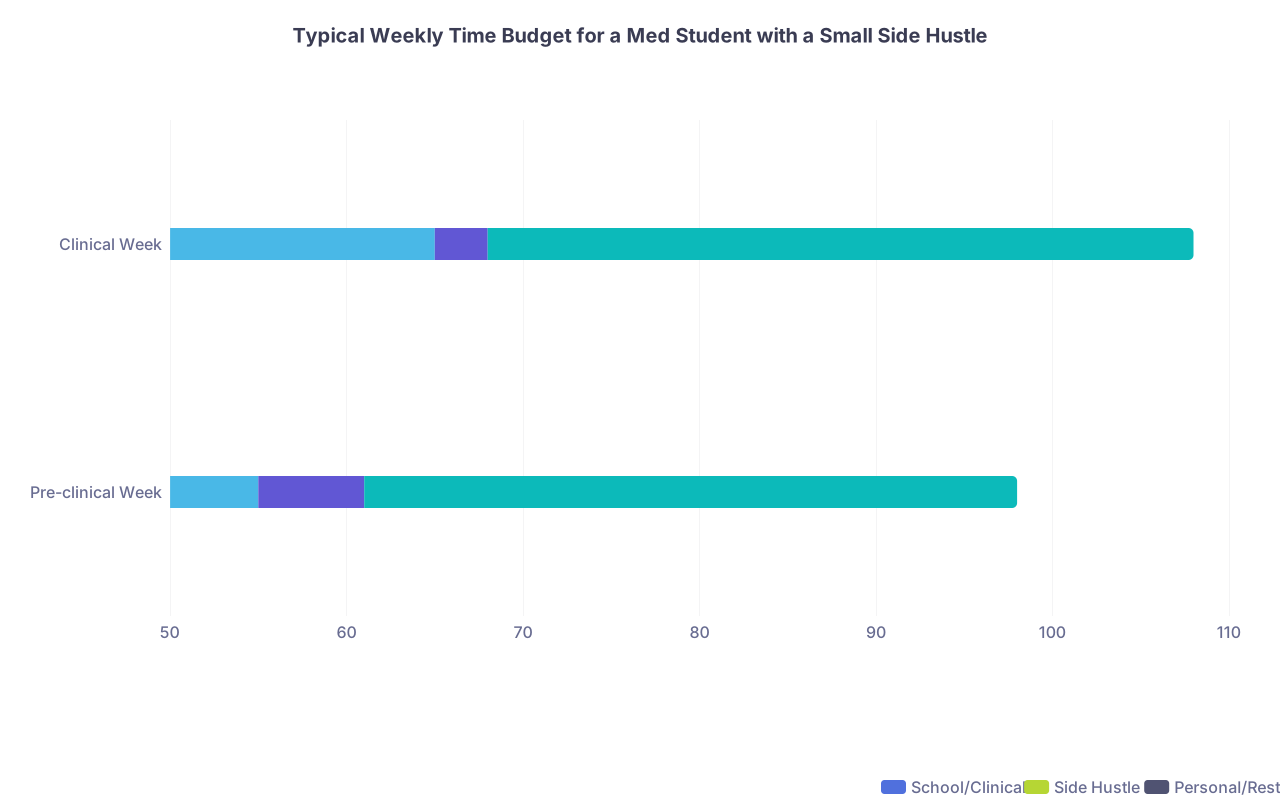
| Category | School/Clinical | Side Hustle | Personal/Rest |
|---|---|---|---|
| Pre-clinical Week | 55 | 6 | 37 |
| Clinical Week | 65 | 3 | 40 |
If that “personal/rest” chunk drops much lower long-term, expect trouble.
2. Build Hard Stop Rules
You need pre-written rules like a flight manual:
- If I drop below X grade in [class/rotation], I pause the side hustle immediately.
- Two weeks before any major exam, I do zero side hustle work.
- If I feel the urge to work on the hustle during clinical hours, I shut it down for a month.
Write these down. Tell a friend or mentor. If you can’t imagine following them, your ego is already too attached.
3. Choose “Single-Player” Work Over “Always-On” Work
You want work that:
- Doesn’t depend on you being online at specific hours
- Doesn’t involve constant DMs, customer service, or real-time interaction
- Can be batched on Sunday afternoons or lighter evenings
Bad: daily live streams, constant social media engagement, 1:1 daily coaching, fixed-shift retail.
Better: project-based writing, editing, design, recorded content, batch tutoring sessions, monthly deliverables.
The Ethics and Legal Piece You Can’t Ignore
Ignore this and you’re gambling your degree away for a few hundred dollars.
Protect Privacy Like Your Career Depends on It (Because It Does)
Non-negotiables:
- Never discuss identifiable patient cases online, even “anonymized” but clearly traceable
- Do not post from inside patient-care areas or show screens, charts, whiteboards
- Do not share screenshots of anything from your school’s LMS, exam banks, or proprietary content for money
If your hustle touches medicine at all, assume your dean, program director, and hospital lawyer could see it. Would you still be comfortable?
Check Your Contracts and Policies
You likely have:
- Student handbooks with professionalism/social media rules
- Honor codes prohibiting commercial use of certain materials
- Employment contracts if you work part-time in a clinical or research role
Read them. Quickly. Before you “launch.”
What Side Hustles Actually Fit Each Phase of Training
Here’s a realistic stage-based view.
| Phase | Better Fits |
|---|---|
| Pre-clinical | Medical writing, MCAT tutoring, digital note templates, basic research assistance |
| Dedicated board study | None. Total pause. |
| Core clinical | Very small, flexible writing or editing, occasional tutoring, low-commitment digital products |
| Electives / lighter blocks | Short experimental projects, app/content MVPs, more intensive writing if schedule allows |
Notice the gap: during hardcore board prep, the right side hustle level is zero.
How to Start Small Without Blowing Up Your Life
If you’ve passed all the filters and still want to do it, here’s the sane way to start:
- Pick one narrow, low-risk idea (e.g., “2 hours/week of freelance medical writing”).
- Run a 4‑week experiment with:
- Fixed weekly hours
- One specific outcome (e.g., one paid article or one paying tutoring client)
- Track:
- Hours spent
- Money earned
- Impact on sleep, mood, and academic performance
- At week 4, decide:
- Continue as is
- Scale back
- Stop completely
Treat it like a clinical trial: clear hypothesis, tight protocol, honest data, willing to stop if harms show up.
The Bottom Line
Starting a side hustle in medical school is not inherently smart or stupid. It’s dangerous if done blindly, powerful if done deliberately.
You’re not trying to become a “doctor-entrepreneur influencer” while still borrowing money to pay rent. You’re trying to:
- Protect your primary investment (your training)
- Build a small layer of financial and career resilience
- Develop skills that make you more effective and less boxed-in as a future physician
Do that, and a modest, well-structured side hustle can be one of the best decisions you make in training.
Start chasing vanity metrics, clout, or quick cash, and it’ll be one of the fastest ways to sabotage the thing you’ve worked hardest for.
FAQs
1. Is it ever okay to use my “future MD” status in marketing a side hustle?
You can be transparent about being a medical student when relevant (e.g., “written by a medical student”), but you must not imply you’re a licensed physician or give medical advice. Avoid “Doctor-led” or “MD-backed” branding until you are, in fact, an MD and understand the liability and licensing implications. When in doubt, understate.
2. Can I do a side hustle during dedicated Step 1/Step 2 study time?
You shouldn’t. Those 4–10 weeks are the worst time to split attention. Even a few hours a week can drag down your performance on exams that still influence residency applications. Pause everything non-essential, then restart if you still want to after scores are in and stable.
3. What side hustles give the best long-term ROI for future physicians?
Anything that builds durable skills and assets: medical or health writing, digital education products, coding or informatics projects, small-scale health tech experiments, or serious quality-improvement/research consulting. Rideshare or random gig apps are fine short-term cash but don’t compound into real career leverage.
4. How do I talk about my side hustle on residency applications?
Frame it like any serious project. Emphasize consistency, outcomes, and what you learned: managing deadlines, communicating with non-medical audiences, leading small teams, handling money responsibly. Be ready to explain time management and reassure program directors it never compromised your training or professionalism.
5. Should I form an LLC or just take payments personally?
For small, low-income experiments, many students operate as sole proprietors and track income/expenses for taxes. Once you’re making consistent money or taking on any liability (especially anything health-related), talking to an accountant and possibly an attorney about an LLC or other structure is smart. Do not overcomplicate it on day one, but do not ignore it once real money or risk appears.
6. What’s one red flag that my side hustle is hurting me?
If you ever catch yourself thinking, “I’ll just skip this lecture/clinic/study session; I can’t fall behind on my business,” you’ve crossed the line. The side hustle should be the first thing to shrink or disappear when life tightens, never the thing you protect by sacrificing your training.
Open your calendar and last week’s schedule right now. If you added 5 hours of focused side hustle work, what would you remove—specifically—to make room? If you do not like that answer, you are not ready to start.