

The standard advice about physician side hustles does not work for solo parents. It was written for people who have backup.
You do not. Which means the rules are different.
You can not build a side gig around “evenings and weekends” if evenings and weekends are when your toddler melts down, your 9‑year‑old needs help with math, and you’re the only adult in the room. You can not reliably do “3–4 calls per month” of anything that might blow up at 2 a.m. You definitely cannot pretend you have infinite emotional bandwidth.
So let’s design side gigs for the actual life you have: solo parent, in training or early attending, trying to keep your license, your sanity, and your kids’ stability.
This is how to think about it and what to actually do.
Step 1: Get Brutally Honest About Your Real Constraints
Before you even look at a list of “side hustles for doctors,” you need your non‑negotiables on paper. Not in your head. On paper.
Think in four buckets:
Time windows
When, realistically, can you work uninterrupted?- 5–6 a.m. before kids wake up?
- Nap time on weekends?
- 2‑hour block during daycare/school if you have a clinic-free morning?
- Night shifts already wrecking you?
Do not list theoretical time (“after bedtime if I’m not tired”). Only list time you could use 4 weeks in a row without your life falling apart.
Childcare reality
Name it clearly:- Full‑time daycare or school with aftercare
- Patchwork family help “when they’re available” (read: not reliably)
- Zero backup except you
- Shared custody with set kid‑free days
If you do not have reliable backup, you must avoid anything where someone else controls your schedule (extra call, per diem urgent care, etc.).
Energy ceiling
Look at a normal rotation: how do you feel after it?- On wards: Are you dead by 7 p.m.?
- In clinic: Can you actually think after 6 patients, much less 16?
- ICU or ED: Do you dissociate scrolling your phone between shifts?
If your baseline is already “threadbare,” your side gig has to be low‑stress and low‑stakes, even if that means slower money.
Financial target
You need a number. Not “some extra.” A range.- “I want $500/month to cover childcare upgrades.”
- “I need $1,500/month to pay down loans faster.”
- “I’d like $3,000/month so I can go 0.8 FTE in three years.”
Your target drives how scalable your gig needs to be.
Write this on a single page. That page becomes your “filter” for every side gig idea. If it doesn’t fit your life constraints, it is a no. No matter how lucrative it sounds.
Step 2: Know Which Side Gigs Are Terrible for Solo Parents
There are side gigs I almost always tell solo parents in training to skip. Not because they’re evil, but because they assume you have spare time and spare nervous system.
Here’s the short blacklist for most solo parent trainees:
- Extra in‑house call or moonlighting shifts with unpredictable clinical acuity
- Telehealth with same‑day or tight response windows, especially nights or weekends
- Anything where “emergencies” or “launch dates” are normal (eComm, live webinars, etc.)
- Brick‑and‑mortar businesses where you must be physically present (med spa, clinic, etc.) while parenting solo
The common thread: other people’s emergencies become your emergencies. That does not mix with solo bedtime duty and school pickup.
Instead, you want side gigs with:
- Asynchronous work (you decide when to do it)
- No hard real‑time commitments (or very rare)
- Week‑to‑week variability allowed without losing the gig
- Low emotional load relative to core clinical work
We’ll get concrete in a second.
Step 3: Design Around Asynchronous, “Pause‑able” Work
Your ideal side gig has three properties:
- You can do it in small chunks (30–60 minutes).
- You can scale up or down monthly.
- If your kid gets sick for a week, nobody dies and nobody fires you.
That narrows the field a lot, which is good. Fewer options makes decisions easier.
Common realistic categories:
- Medical writing & editing
- Question‑writing (USMLE, COMLEX, specialty boards, prep companies)
- Consulting (med‑legal chart review, payer work, small industry projects)
- Remote non‑urgent chart review (utilization review, peer review)
- Digital products / content that’s not schedule‑bound
- Teaching/tutoring that you batch
Let’s sanity‑check a few of these specifically for solo parents.
Step 4: Side Gigs That Actually Work (and How to Structure Them)
1. Question Writing and Test Prep Work
If you’re in training or recently out, question‑writing is one of the cleanest fits.
What it looks like in real life:
- You sign a contract to write, say, 20–40 questions/month for an exam bank or test prep company.
- You get guidelines, a style manual, and content specs.
- You submit on a flexible schedule before the monthly deadline.
- You get paid per accepted question.
Why it works for solo parents:
- Fully asynchronous.
- Can be done in 30–60 minute sprints at home.
- No patient contact; no malpractice tail.
- Easy to ramp down during nightmare rotations.
What can go wrong:
- Underestimating how long good questions take.
- Getting stuck in revision cycles that eat your time.
- Low pay from exploitative companies.
Reasonable outcomes: a motivated solo parent can do 10–20 solid questions a month alongside training without imploding. That can be a few hundred to a couple thousand dollars, depending on the company and your efficiency.
Where to look:
- Commercial test prep (UWorld, Amboss, Kaplan, BoardVitals, niche exam banks)
- Specialty societies that run their own question banks
- Smaller startups on LinkedIn looking for content experts
You start by sending a crisp email: board scores, level of training, why you’re reliable. Mention that you prefer batch, deadline‑based work (signals you get the async game).
2. Medical Writing and Editing
This is the classic “I wrote some blog posts and now I make money from home” path. It is oversold, but it can absolutely work if you’re structured and realistic.
Types of work:
- Patient‑facing education content for health sites
- Clinician‑facing CME content or newsletters
- Ghostwriting articles for health brands or other physicians
- Editing manuscripts, grants, or educational materials
Why it works for your situation:
- Deadlines are usually weeks, not hours.
- You can pick projects by size.
- You can stop accepting work when life explodes.
The danger: accepting live, recurring deliverables (like a weekly blog) that you cannot miss without feeling like you’re failing everyone. Those add chronic mental load. For solo parents, that can be worse than a lower‑pay gig that’s more flexible.
How to structure this:
- Prefer one‑off or short‑series projects with a clear end.
- Ask for longer deadlines than you think you need (2 weeks instead of 1).
- Build a template day: 45 minutes early morning = 500–800 words drafted.
Where to find it:
- LinkedIn (yes, really—post once about wanting medical writing work and then DM people)
- Agencies that specialize in medical communications
- Cold emails to digital health companies, patient education platforms, health startups
You don’t need a portfolio of 20 pieces. Three solid samples are enough to land your first paying client.
3. Chart Review / Utilization Review / Peer Review
This is not sexy. It is also relatively predictable and can be good money for the time.
Typical structures:
- Utilization review for insurers: reviewing charts asynchronously, checking against criteria.
- Peer review: looking at quality of care, documentation issues.
- Med‑legal expert work: case reviews, written opinions (this usually comes a bit later career‑wise).
Why it works:
- It’s reading and judgment, not real‑time patient care.
- Workload can often be adjusted.
- Can be done from home during school hours or early mornings.
Catches:
- Some roles expect set hours (9–5 remote), which kills flexibility.
- You must get crystal clear about no fixed shifts if you’re the only parent available for school calls, pediatrician visits, etc.
When you talk to recruiters, say this explicitly: “I’m looking for volume‑based or case‑based work I can complete within a 72‑hour window, not fixed shifts.” If they balk, move on.
4. Teaching, Tutoring, and Mentoring – Designed Right
If you like one‑on‑one work and explaining concepts, this can be both fulfilling and flexible. But the format matters.
Bad version for solo parents:
- 3–4 students a week, evenings only, narrow 6–9 p.m. window.
- You’re already fried and your kid needs bedtime.
- Every cancellation or sick day creates chaos.
Better version:
- Limit teaching to 1–2 sessions per week.
- Choose weekend daytime or a mid‑day block when you have childcare.
- Offer short series (4–6 sessions total) so you’re not locked into long commitments.
You can tutor for:
- MCAT, USMLE, COMLEX
- Specialty board exams
- OSCE or clinical reasoning sessions
Or, you can run small cohorts instead of 1:1, if you want to scale.
One more safeguard: build in a cancellation buffer. Example: you schedule 6 sessions across 8 weeks, so you have room for kid‑sick days without blowing the calendar.
5. Digital Products and Content that Aren’t Scheduled
Everyone wants “passive income.” Most of it is fake. But there are semi‑passive plays that work if you do not rush and you’re ok with slow build.
Think:
- A small, paid PDF guide for premeds, residents, or patients.
- A mini‑course on a very specific topic (e.g., “Surviving Surgery Intern Year as a Parent”).
- Templates (email scripts, handouts, checklists) for a narrow audience.
The crucial rules for solo parents:
- No live cohorts that require you to show up at specific times, over and over.
- No massive, 20‑hour “course” builds while you’re on ICU.
- Start embarrassingly small: a $19 guide you can build in two or three 60‑minute sprints.
If it takes you 3–6 months to create and launch your first tiny product while parenting solo and doing residency, that’s still a win. The point is: you’re creating something that can earn when you’re at soccer practice or on nights.
Step 5: Map Your Week Like a Project Manager, Not a Hero
Solo parents in training often run on “vibes scheduling” — “I’ll just squeeze it in when I can.” That works for 4 days. Then daycare calls with a fever and the whole week collapses.
You need a simple, boring, repeatable map for side‑gig time.
Start with this:
Identify 2–4 fixed work blocks per week for side gig only.
- Example:
- Tue 5:30–6:30 a.m.
- Thu 5:30–6:30 a.m.
- Sat 2–4 p.m. (during nap/another caregiver)
That’s 4–6 hours. That is plenty for most of the gigs we’re discussing.
- Example:
Tag each block with a purpose.
- Tue: “Client A – question writing”
- Thu: “Client A revisions; pitch emails if done early”
- Sat: “Build digital product / content creation”
Protect those blocks like you protect clinic or sign‑out.
- No doomscrolling.
- No cleaning the fridge.
- No charting unless something is on fire.
Add 1 floating hour in your week for “life happens.”
- If you blow a morning because your kid was up all night, that floating hour catches the spillover.
- If you don’t need it, you rest.
Then test for one month. If you routinely miss blocks, you have too many. Cut back before adding more work.
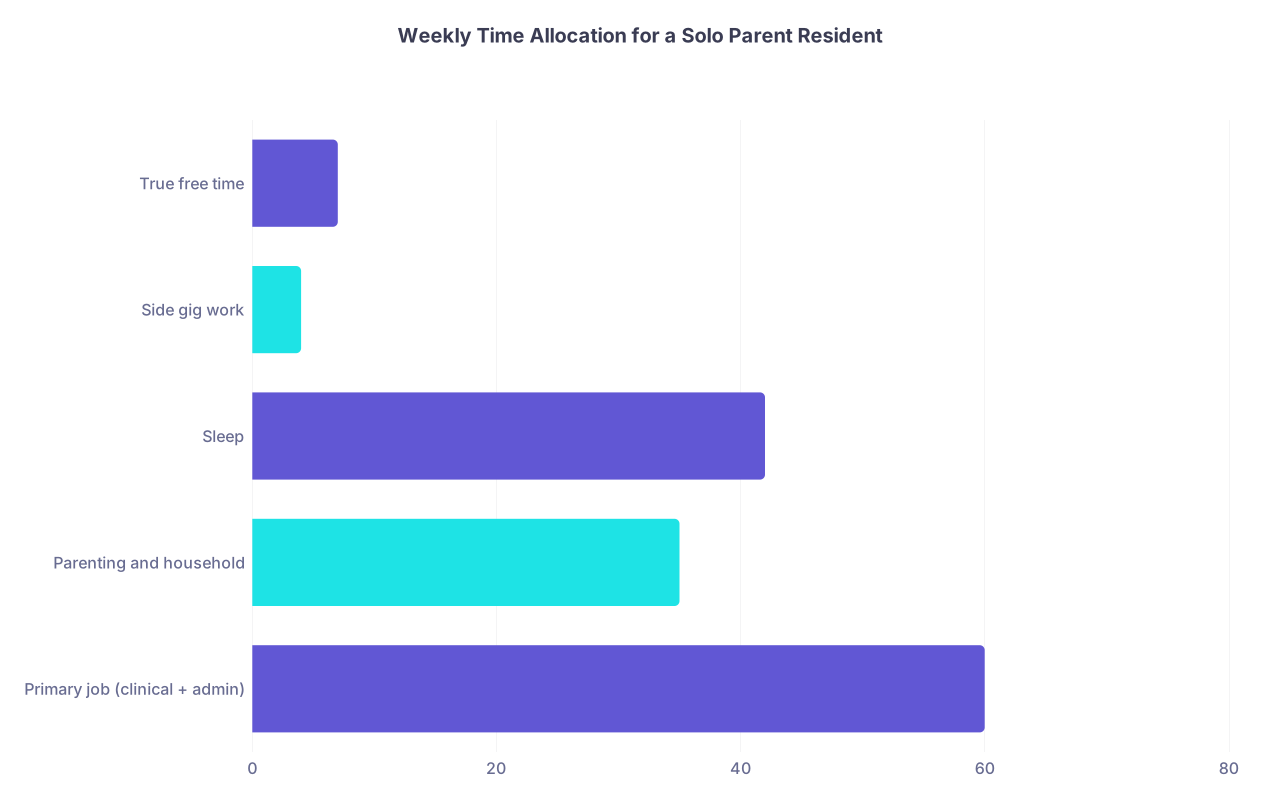
| Category | Value |
|---|---|
| Primary job (clinical + admin) | 60 |
| Parenting and household | 35 |
| Sleep | 42 |
| Side gig work | 4 |
| True free time | 7 |
Step 6: Build “Emergency Off‑Ramps” into Every Gig
You can not afford brittle commitments. You need escape hatches designed in from the start.
When you negotiate any gig, ask yourself: “What happens if my kid ends up in the ED and my life is sideways for 3 weeks?”
You want contracts where:
- Your obligations are month‑to‑month or project‑based, not multi‑year.
- There’s a clean written off‑ramp with notice (30 days is fine).
- Deadlines have flex buffers (e.g., 5 business days, 72 hours, or clear end‑of‑month targets).
Then say it out loud to the person hiring you:
“I’m a solo parent in full‑time training. I’m extremely reliable. But I need work that is deadline‑driven, not hour‑locked, and I’ll always communicate early if there’s a conflict.”
The right clients will respect that. The wrong ones will flinch or ghost you. Let them.
Your script when things go sideways:
- “Hey [Name], I had an unexpected family medical situation this week. I can either [A] deliver on [new date X] or [B] step back from this project so you’re not waiting on me. Which is better for you?”
That preserves professionalism but protects you and your kid.
Step 7: Prioritize Mental Load, Not Just Hours
A lot of solo parents make this mistake: they think “it’s only 5 hours a week, I can handle it.” Then they find themselves mentally chewing on a client task at 11 p.m. while trying to remember if they signed the school field trip form.
Mental load matters more than raw hours.
Low mental load gigs for solo parents:
- Question writing once you’re used to it
- Standardized chart review with clear criteria
- Editing where structure is provided
Higher mental load (consider later, when you have more margin):
- Founding a startup or app
- Running a big public‑facing brand on social media
- Coaching, deep mentorship with lots of emotional work
You can do those someday. But not all at once with night float and a 3‑year‑old.
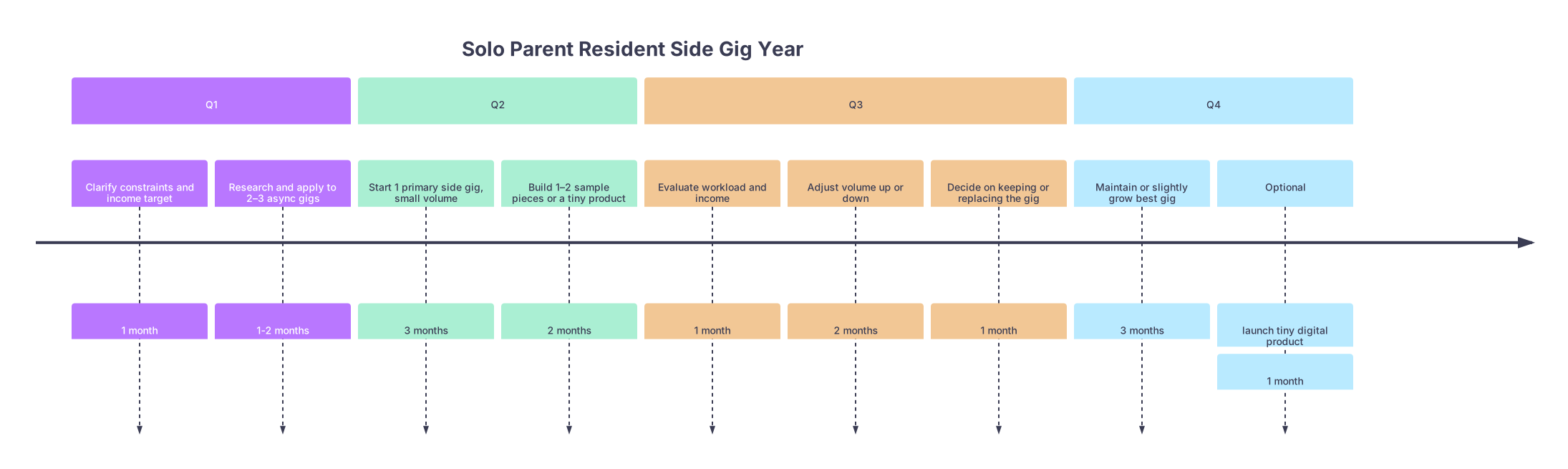
Step 8: Make a Simple 12‑Month Plan, Not a Fantasy
You don’t need a 5‑year empire blueprint. You need a one‑year arc that respects training cycles and childcare.
Use a rough 12‑month sketch:
| Period | Event |
|---|---|
| Q1 - Clarify constraints and income target | 1 month |
| Q1 - Research and apply to 2–3 async gigs | 1-2 months |
| Q2 - Start 1 primary side gig, small volume | 3 months |
| Q2 - Build 1–2 sample pieces or a tiny product | 2 months |
| Q3 - Evaluate workload and income | 1 month |
| Q3 - Adjust volume up or down | 2 months |
| Q3 - Decide on keeping or replacing the gig | 1 month |
| Q4 - Maintain or slightly grow best gig | 3 months |
| Q4 - Optional | launch tiny digital product |
If you’re in residency:
- Protect your hardest rotations (ICU, wards) as minimal side‑gig months.
- Use lighter months and electives to push side work a bit more or build assets.
This is the opposite of the “grind all year” culture. You are not that person right now. You are running two full‑time jobs already: medicine and parenting.
Step 9: Use Technology Like a Person Who Values Their Future Self
You don’t need 20 tools. You need like four, and they should actually lighten your load.
- A task manager (Todoist, Notion, Apple Reminders) with separate areas: “Residency,” “Parenting,” “Side gig.”
- A shared calendar if you have any co‑parent, sitter, or grandparent involved.
- A password manager since you’ll accumulate logins for clients and platforms.
- Templates for email responses (saved in drafts or a text expander) so you don’t burn time writing the same thing 10 times.
And yes, you can and should use AI tools to:
- Rough‑draft emails
- Suggest question stems or writing outlines (you still do the real content)
- Turn transcripts or rough notes into cleaner drafts
The rule: AI helps you go from 0 to 60%. You are the last 40%. That’s the part you’re getting paid for.
Step 10: Run Every Opportunity Through One Simple Filter
By now you’ll start seeing random side gig pitches: “join our telehealth platform,” “be an early advisor,” “create content for equity.”
Before you say yes to anything, run it through this filter:
| Question | If the answer is "No" → |
|---|---|
| Is the work mostly asynchronous? | Probably decline |
| Can I do it in 30–60 min chunks at home? | Decline |
| Can I scale it down for 1–2 bad months without burning a bridge? | Be very cautious |
| Is the pay meaningful for the time and stress? | Ask for better terms or pass |
| Does it protect my license and mental health? | Hard pass if not |
If you get 3–4 solid yeses, you at least have a maybe. Anything shy of that is usually not worth your limited life energy.
Quick Reality Check: Money Expectations
Let me be blunt: during residency or early attending years as a solo parent, the point of a side gig is optionality, not replacing your salary.
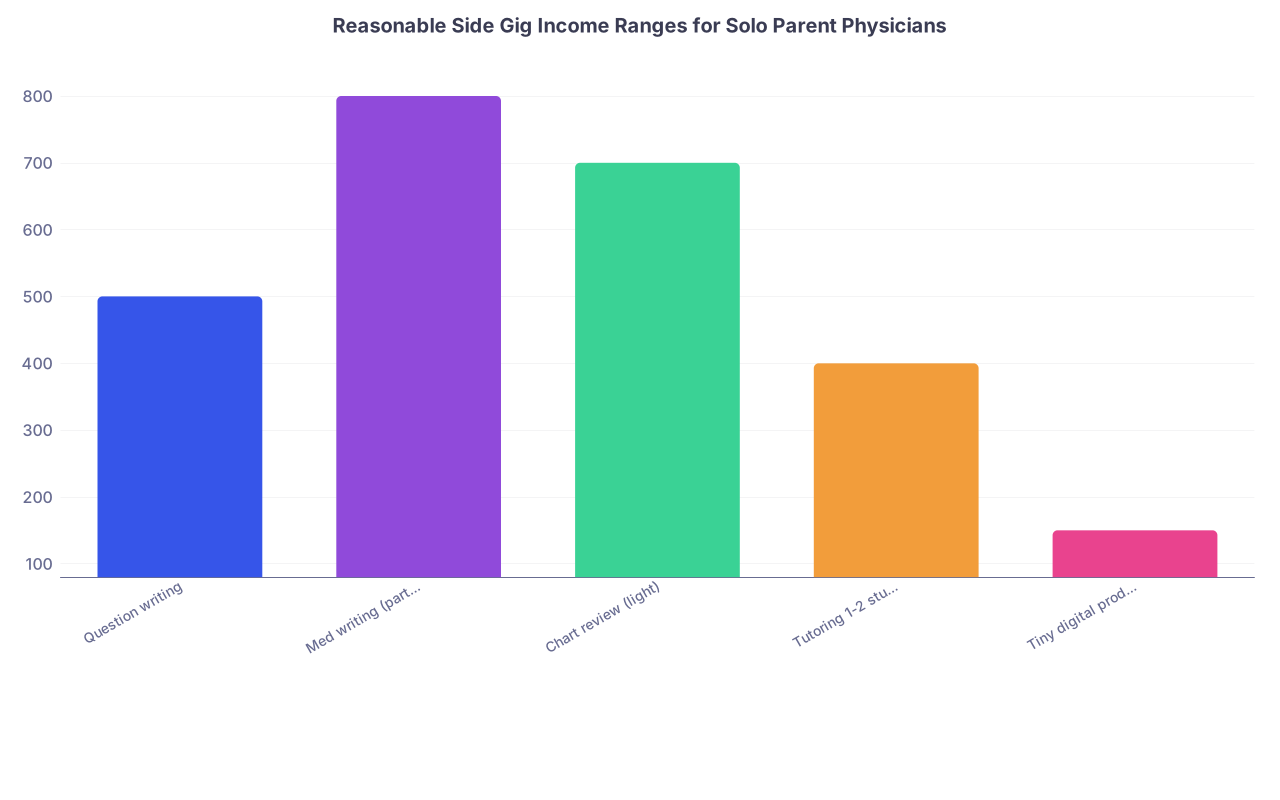
Reasonable, reality‑based monthly ranges if you’re careful:
| Category | Value |
|---|---|
| Question writing | 500 |
| Med writing (part-time) | 800 |
| Chart review (light) | 700 |
| Tutoring 1-2 students | 400 |
| Tiny digital product (early) | 150 |
Can these go higher? Yes, with time and systems. But if you’re making $500–$1,500/month consistently from a flexible gig that does not wreck your parenting or your training, you’re winning. That’s more leverage than it looks like: upgraded childcare, lower loan pressure, or the ability to drop one clinical shift later.
How to Start This Month (Not “Someday”)
You’re busy. So here’s a four‑week starter plan that fits into real life.
Week 1 – Clarify and Cut
- Write your constraint page (time, childcare, energy, income target).
- Decide on one category to target first (questions, writing, chart review, tutoring).
- Identify your 2–3 weekly side‑gig blocks and put them in your calendar.
Week 2 – Portfolio Lite
- Create 1–2 simple samples:
- Two board‑style questions; or
- One 800‑word patient education article; or
- A mock chart review summary.
- Clean up your LinkedIn or CV to highlight that skill and your specialty.
Week 3 – Outreach Sprint
- Send 5–10 targeted emails or applications: boards, test banks, med‑comms agencies, tutoring platforms.
- Use one of your time blocks just for this.
Week 4 – Start Small, Track Honestly
- If you land something, accept the smallest workable volume.
- Track: hours spent, energy before/after, money earned. After a month, you’ll know if this gig fits your solo‑parent life.
If nothing bites yet, repeat Week 3 with slightly updated materials and consider a second category.
The Bottom Line
Three things I want you to walk away with:
- Your side gig must fit the life you actually have, not the fantasy life of someone with a stay‑at‑home partner and no call. Asynchronous, low‑stakes, batchable work wins for solo parents in training.
- Boundaries and structure are not luxuries. Fixed work blocks, clear off‑ramps, and realistic expectations are what keep you from quietly burning out under the weight of “just a few extra hours.”
- A small, steady, flexible income stream is more powerful than a chaotic “big opportunity” that hijacks your time and your nervous system. You’re building leverage and options, not proving anything to anyone.
You’re already doing two hard jobs. The right side gig should make your future wider, not your present narrower.


