
The romantic idea that “any side hustle is good extra money” for physicians is wrong. The data shows a clear hierarchy: some projects are high-yield businesses disguised as hobbies, others are time-sinks dressed up as “passive income.”
Let’s treat this the way you would treat an unfamiliar lab panel: categorize, quantify, compare. Dollars per hour. Dollars per year. Risk and volatility. Then rank.
The Big Buckets: How Physician Side Hustles Actually Cluster
Most physician side hustles fall into six broad categories. You can add fringe stuff (crypto, random startups), but these six drive the majority of real, repeatable income I see:
- Clinical-adjacent work (locums, telemedicine, expert witness, chart review, utilization management)
- Industry roles (pharma/biotech consulting, medical device advisory, MedTech startups)
- Content and education (courses, books, podcasts, YouTube, question banks, coaching)
- Ownership plays (clinics, ASC shares, imaging centers, real estate, MSOs)
- Digital products and software (apps, tools, SaaS, niche platforms)
- Low-yield “generic” side hustles (surveys, mystery shopping, generic investing blogs, etc.)
Most physicians jump into the wrong tier for their goals. They pick low-yield, low-leverage work because it feels “safe” or “not too salesy.” The numbers usually punish that choice.
Here is the top-level comparison first.
| Category | Typical Annual Range* | Typical Effective Hourly Range* |
|---|---|---|
| Locums / Extra Shifts | $20k – $150k | $120 – $350+ |
| Telemedicine | $10k – $80k | $80 – $200 |
| Expert Witness / Legal | $20k – $250k+ | $300 – $800+ |
| Chart Review / UM | $10k – $60k | $100 – $200 |
| Pharma / Device Consulting | $25k – $200k+ | $200 – $600+ |
| Education / Content (mature) | $10k – $300k+ | $50 – $500+ (once built) |
*Typical ranges for actively engaged physicians in the US with at least 1 year in that activity. Not guarantees, but reality-checked ranges from reported contracts, compensation surveys, and what I have personally seen.
The punchline: if you want max cash per hour, expert witness and specialized consulting are usually at the top. If you want high total dollars with predictability, locums and telemedicine win. If you want scalable upside, content and ownership plays eventually dominate—but they often pay poorly in year 1–2.
1. Clinical-Adjacent: Fastest Path to Cash, Not Always the Best Yield
Locums and Extra Shifts: High Total Dollars, Moderate Efficiency
Locums is not really a “side hustle” for full-time hospitalists, but for many outpatient docs it functions that way: picking up weekend ER coverage, inpatient rounds, rural call.
What the numbers usually look like:
Typical locums hourly rates (2024–2025 ballpark):
- Hospitalist: $150 – $275/hour
- EM: $200 – $325/hour (wide variation by location)
- Anesthesia: $200 – $350+/hour
- Primary care outpatient: $110 – $180/hour
Annual side income:
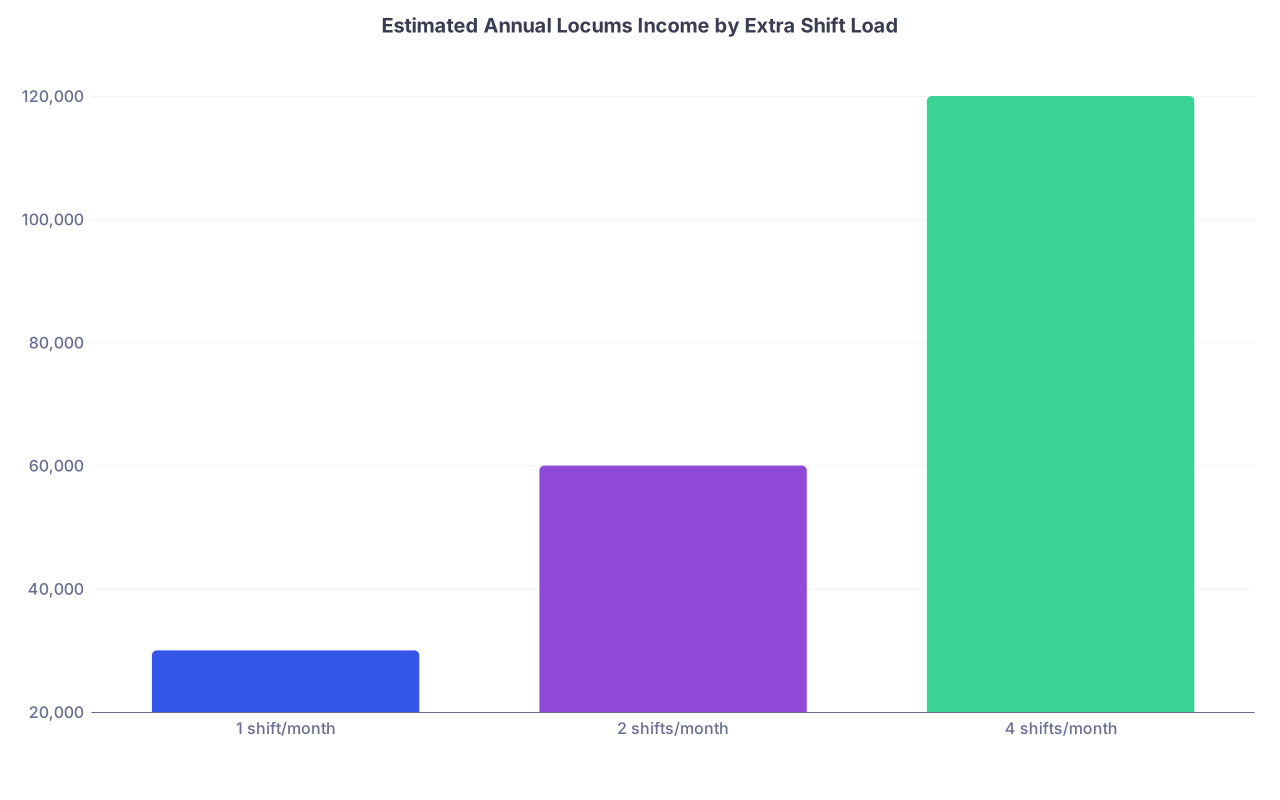
- One weekend per month of hospitalist work (~24 hours): $150/hour → ~$43,000/year
- Ten 12-hour ED shifts per year at $250/hour → ~$30,000/year
| Category | Value |
|---|---|
| 1 shift/month | 30000 |
| 2 shifts/month | 60000 |
| 4 shifts/month | 120000 |
The data shows locums dominates early in absolute income because you can scale directly with hours. No audience building. No product. No marketing.
But the effective rate is capped by what the market pays for your specialty. It is still “sell one hour, get paid once.” That is the key limitation.
Who wins here:
- Hospital-based proceduralists
- EM, anesthesia, critical care, hospitalists in high-demand geographies
Who loses:
- Already burned-out clinicians using locums as a “fix” for money problems. You trade more hours for more income with no leverage.
Telemedicine: Lower Ceilings, High Flexibility
Telemedicine pays less per unit time than high-end locums, but it offers better control and less friction (no commute, lighter documentation in many models).
Common ranges for part-time telemedicine:
- Per consult: $25 – $75 per visit (urgent care, primary care style)
- Per hour (realistic, not hype): $80 – $200/hour depending on:
- Platform (direct contract vs marketplace)
- Specialty (psychiatry, sleep, endocrine often pay more)
- Volume and patient mix
Annual side income for a realistic engagement:
- 4 hours/week at $120/hour → ~$25,000/year
- 8 hours/week at $150/hour → ~$62,000/year
Telepsych often leads:
- $150 – $250/hour feasible for board-certified psychiatrists
- 4–6 hours/week → $30,000 – $70,000/year
Compared to locums, telemedicine trades down some hourly rate but gains:
- Higher schedule flexibility
- Lower non-clinical overhead (no in-person staff, no commute)
- Less acute stress in many roles
Chart Review & Utilization Management: Quiet, Mid-Pay, Low Stress
Chart review, disability evaluations, peer review, and utilization management (UM) are the sleeper hits for physicians who are done with drama.
Typical numbers:
- hourly compensation: $100 – $200/hour
- engagement structure: 5–20 hours/week on a 1099 or part-time W2 basis
- annual side income:
- 5 hours/week at $125/hour → ~$32,000/year
- 10 hours/week at $150/hour → ~$78,000/year
The effective hourly rate is not as sexy as expert witness work, but the characteristics matter:
- Very predictable hours and workflow
- Much lower malpractice exposure (usually covered by company)
- “Think work” instead of “crisis management”
On a dollars-per-stress-unit basis, UM and chart review are often top quintile.
2. Legal & Expert Witness: Top of the Hourly-Rate Food Chain
Expert witness and medico-legal consulting consistently sit at the top of physician side hustle pay per hour actually spent working.
Typical fee structures I see:
- File review: $300 – $600/hour (specialties like neurosurgery, cardiothoracic, interventional fields skew higher)
- Depositions: $400 – $800/hour, often with minimum blocks (e.g., 4-hour minimum)
- Trial testimony: $500 – $1,000+/hour or flat day rates of $5,000 – $10,000
Realistic annual numbers for someone not turning this into their main job:
- Light engagement: 1–2 cases per quarter, 10 hours per case effective → 40–80 hours/year
- At $400/hour → $16,000 – $32,000/year
- Moderate engagement: 1 case/month → ~120 hours/year
- At $450/hour → ~$54,000/year
- Heavy side engagement: 2–3 active cases/month → 200–300 hours/year
- At $500/hour → $100,000 – $150,000/year
The effective hourly rate can be even higher if:
- You bill retainers
- You charge separately for travel and testimony days
- You work in high-risk subspecialties
The data pattern:
- High variance but extremely high ceiling per hour
- Requires strong CV, comfort with adversarial questioning, and careful conflict management
- Often starts slow, then spikes once a few plaintiff or defense firms trust you
Is it the best paying per hour? In many cases, yes. Is it the best for everyone? No. Some physicians hate the adversarial dynamic.
3. Pharma, Device, and Industry: Mid-to-High Pay With Leverage
Industry consulting and advisory work pays less per hour than expert witness on average, but has different advantages: connections, equity, and recurring engagements.
Common forms:
- Advisory board roles
- Speaking and training for pharma or device companies
- Clinical trial design, protocol review
- MedTech startup advisory, including equity
Typical numbers:
Advisory boards and consults
- Hourly: $200 – $500/hour for experienced physicians
- Day rates: $2,000 – $6,000/day for in-person advisory or strategy sessions
Speaking and educational work for industry
- Per talk: $1,000 – $5,000+ depending on reputation and market
- Annual side total for a busy speaker: $25,000 – $100,000+
Startup advisory with equity
- Cash: sometimes $0–$10,000/year
- Equity: 0.1–1.0% in early-stage, typically vesting over years
- Short term, this can look like “low pay.” Long term, one exit can dwarf a decade of locums if the startup actually hits.
Let me be blunt: if your main question is “what pays this year?” then equity-heavy roles will look disappointing. If your horizon is 5–10 years, the expected value is much more interesting.
| Category | Value |
|---|---|
| Locums / Extra Shifts | 200 |
| Telemedicine | 140 |
| Chart Review / UM | 150 |
| Pharma / Device Consulting | 300 |
| Expert Witness | 500 |
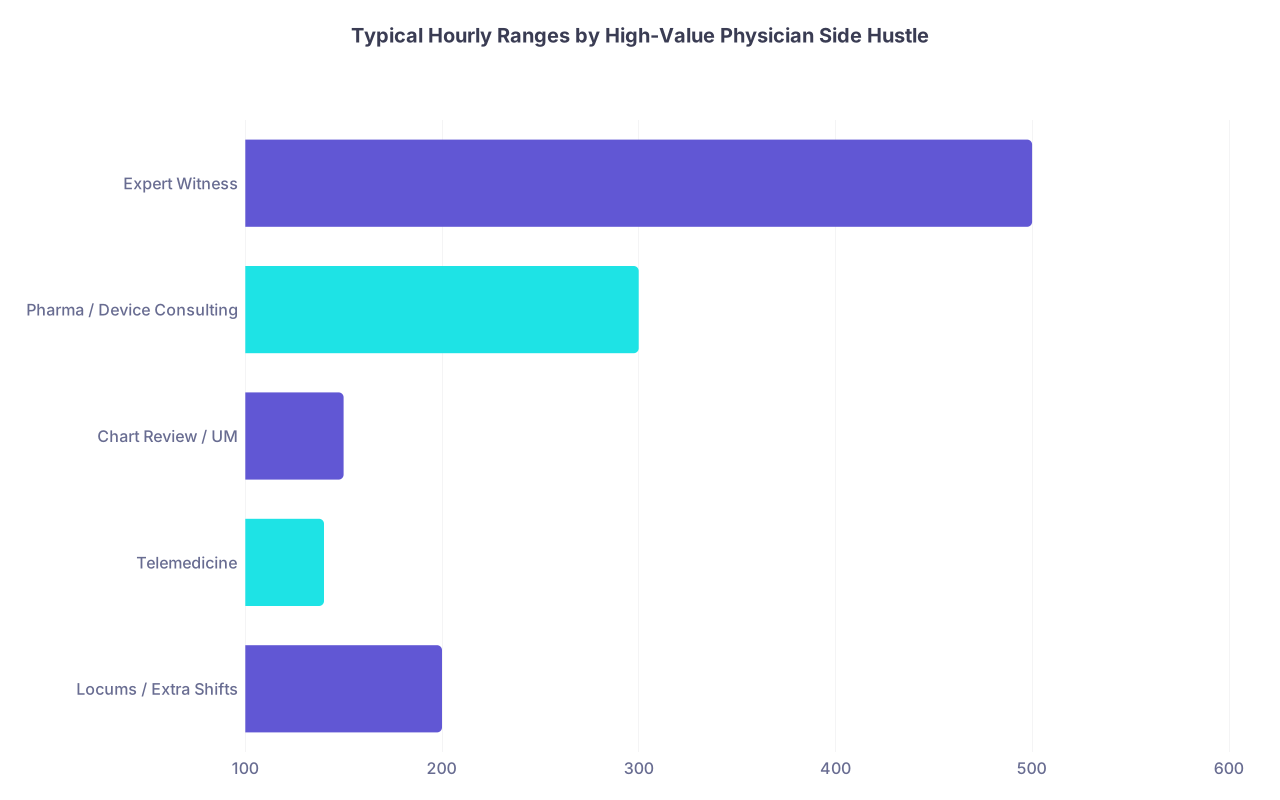
The data shows a clear stratification. Expert witness and high-level consulting live at the top of the rate curve.
4. Content, Coaching, and Education: Low Pay Upfront, Scalable Later
This is where many physicians get misled by survivorship bias. They see the one doctor with a giant course or YouTube channel and assume content is “easy passive income.” The data says otherwise.
Online Courses, Cohorts, and Memberships
For physicians who teach:
- Board review
- Procedures
- Business / finance for docs
- Niche topics (OB ultrasound, EM ultrasound, lifestyle medicine, etc.)
You mostly see three revenue bands:
Hobby level (most creators)
- Revenue: $1,000 – $10,000/year
- Effective hourly: often < $30/hour in year 1 (low audience, high build time)
Serious but not huge
- Revenue: $10,000 – $100,000/year
- This is achievable with:
- A list of a few thousand email subscribers
- One or two good product launches per year ($500–$1,500 per course)
- Once built, effective hourly can climb into $100–$300/hour range during launch periods and >$50/hour on average.
Top-tier physician educators
- Revenue: $100,000 – $500,000+/year (a minority, but they exist)
- Multi-course ecosystems, memberships, often with a team
- At this level, revenue is decoupled from hours; you are essentially running an education company.
Books and Traditional Publishing
Let’s be harshly honest: books are status tools and lead generation, not primary income for most physicians.
- Typical advance for a niche physician non-fiction book: $5,000 – $25,000
- Royalties after earn-out: slow trickle
- Effective hourly rate: usually terrible if you count writing time seriously
The exceptions:
- Self-published niche books priced higher ($30–$100) with a focused audience (e.g., procedural handbooks)
- Paired with courses or consulting; the book becomes a funnel.
Coaching and 1:1 Services
Physician-to-physician coaching (career, burnout, business, leadership, life) or admissions coaching (pre-meds, residents) can pay well quickly.
Typical:
- $150 – $500/hour or package equivalents
- Someone serious, with consistent clients, can hit $30,000 – $100,000/year on part-time hours
But again: this is still trading time for money, just at above-average rates. It can be very good income, but it is not inherently more scalable than clinic work unless you build group formats or programs.
The bottom line in this category: content and coaching rarely win on dollars this year compared to locums or expert witness. They win on:
- Flexibility
- Long-term leverage (people keep buying a built course)
- Exit potential if you build a brand or company
5. Ownership Plays: When Side Hustle Becomes a Business
Now we get to the stuff that quietly produces the biggest numbers, but requires capital, risk, and time.
Common “ownership” side plays for physicians:
- Minority ownership in ASCs, imaging centers, labs
- Owning or co-owning a practice while also having employment elsewhere
- Real estate: especially medical office buildings, or broader commercial/residential portfolios
- Management services organizations (MSOs)
These can absolutely pay the best. But not in the way people think.
ASC and Imaging Center Shares
Typical distributions:
- A small equity stake (1–5%) in a solid ASC can produce:
- $20,000 – $100,000+/year in distributions depending on size, payer mix, and case volume.
- Imaging centers: similar ballpark, with wide variation.
Effective hourly rate? Impossible to quantify traditionally because once the investment is made:
- You might spend <10 hours/year in meetings.
- Yet receive tens of thousands of dollars.
On a time basis, this blows everything else away. On a risk and capital basis, it is more complex:
- Requires buy-in (often $50,000 – $500,000+)
- Business risk, regulatory risk, payer risk.
Real Estate
Real estate is not a “physician-only” side hustle, but doctors often lean into it for good reason: reasonable leverage and semi-passive cash flow.
Common patterns:
- Small portfolio (1–3 rentals): $5,000 – $20,000/year net cash flow
- Larger portfolio (10+ doors or small commercial): $30,000 – $200,000+/year net
Again, effective hourly can be extremely high once the systems are built. But year 1–3 often show:
- Negative or tiny cash flow
- Learning curve and management headaches
I have seen attendings hit $100,000/year in real estate cash flow within 5–7 years with disciplined scaling. That is absolutely competitive with any side clinical work—but the return is driven by capital invested plus time.
Ownership plays are where “money makes money” instead of “time makes money.” Which is why they usually dominate over a 10–15 year horizon.
6. Low-Yield Activities: Why Most “Easy” Side Hustles Disappoint
Physician surveys, “review panels,” generic investing blogs, random affiliate marketing sites—the effective hourly rates here are often embarrassingly low.
Examples:
Online surveys and panels for physicians:
- $50 – $150 per survey that takes 20–60 minutes.
- That is $75 – $200/hour when you actually get invited and qualify.
- The problem is volume. You might get a handful per month. So annual income is rarely above $2,000 – $5,000 for most.
Generic blogs with ads:
- Without significant traffic (50,000+ pageviews/month), ad revenue is tiny.
- Years of writing for $100 – $500/month is common.
- This can become meaningful if turned into a legitimate brand, but most never reach that threshold.
These are fine if you like them as hobbies. They are terrible if your goal is “best paying.”
Head-to-Head: Which Physician Side Hustles Actually Pay Best?
Let’s stack the contenders based on two metrics:
- Effective hourly rate (mature)
- Realistic annual side income for a serious but still practicing physician
| Side Hustle Type | Typical Hourly (Mature) | Realistic Annual Side Income |
|---|---|---|
| Expert Witness / Legal | $300 – $800+ | $50k – $200k+ |
| Pharma / Device Consulting | $200 – $600+ | $25k – $200k+ |
| Locums / Extra Shifts | $120 – $350+ | $20k – $150k |
| Telemedicine | $80 – $200 | $10k – $80k |
| Chart Review / UM | $100 – $200 | $20k – $80k |
| Education / Content (mature) | $50 – $500+ (varies) | $10k – $300k+ |
If you care purely about best pay per hour worked, the ranking usually looks like this:
- Expert witness / medico-legal consulting
- High-level industry consulting and advisory work
- Mature content / education businesses (after the build phase)
- Locums and high-paying telemedicine or procedural moonlighting
- Chart review / UM / telemedicine standard rates
- Surveys, small blogs, generic low-leverage tasks
If you care about best total pay with minimal complexity in year 1–2:
- Locums / extra shifts
- Telemedicine (especially telepsych)
- Chart review / UM
- Expert witness (if you already have the CV and early referrals)
If you care about best long-term wealth creation:
- Ownership plays (ASC shares, practices, real estate, startup equity)
- Scalable content and education brands
- High-level consulting plus smart investment of that income
Practical Matching: Which Lane Fits You?
You do not need twenty side hustles. You need one or two that fit your constraints.
Quick matching framework:
You want maximum dollars this year with skills you already have:
- Locums / extra shifts
- Telemedicine (preferably in high-rate niches like psych, sleep, endocrine)
- Chart review / UM if you can land a contract
You want maximum hourly rate and you are comfortable under scrutiny:
- Expert witness work
- Defense consulting, plaintiff consulting, file reviews
You want long-term flexibility and optional freedom from clinical work:
- Build an education/product brand in a niche you actually care about
- Pair it with one ownership play (real estate, small practice equity, or ASC/imaging stake)
You are burned out and want low-drama, “quiet” work:
- UM and chart review
- Pharmaceutical safety/med affairs roles
- Select telemedicine setups with predictable hours
Where the Data Points
Patterns are very consistent across specialties and geographies:
- The highest hourly rates for physicians come from expert witness work and high-level consulting.
- The highest total dollars early on come from extra clinical work (locums, telemedicine, moonlighting).
- The highest lifetime leverage comes from ownership and scalable products, but they look underwhelming in year 1–2.
If you ignore the noise and focus on $/hour and $/year, the best-paying physician side hustles are not mysterious. They are just mismatched with what many doctors think they want: income without discomfort, risk, or sales.
The real, data-backed answer is simple:
- Start with a clinical-adjacent side hustle for immediate cash.
- Layer in expert witness or industry work as your reputation matures.
- Gradually move capital and time into ownership and scalable products if you want serious long-term upside.
Those three moves, executed over 5–10 years, out-earn every “easy” side hustle physicians are sold.