
The idea that you can simply “switch to a less competitive specialty” after a bad Match is one of the most persistent and dangerous myths in medical training. It sounds logical. It just happens to be wrong in all the ways that matter.
You are not playing on “easy mode” just because the average Step score is lower or the NRMP chart paints a specialty as “less competitive.” The bottlenecks, politics, and risks just move to a different place in the process.
Let’s separate the story people tell from what actually happens.
The Myth: “I’ll Just Pivot to Something Less Competitive”
The story usually goes like this.
You aimed high: dermatology, plastics, ortho, ENT, ophtho, urology, IR, whatever. You did research, aways, letters. Then:
- You did not match. Or
- You matched prelim but not advanced. Or
- You matched, but you hate it and want out.
Someone — a dean, a resident, an attending, Reddit — says: “Just switch to a less competitive specialty. Do IM/FM/psych. You’ll be fine.”
The hidden assumptions behind that sentence are the real problem:
- That “less competitive” = easy to get into
- That programs in those specialties are desperate and will take anyone
- That switching is straightforward administratively
- That you will automatically be happier in the new field
All four are shaky. Some are flat-out false.
What “Less Competitive” Actually Means (And What It Doesn’t)
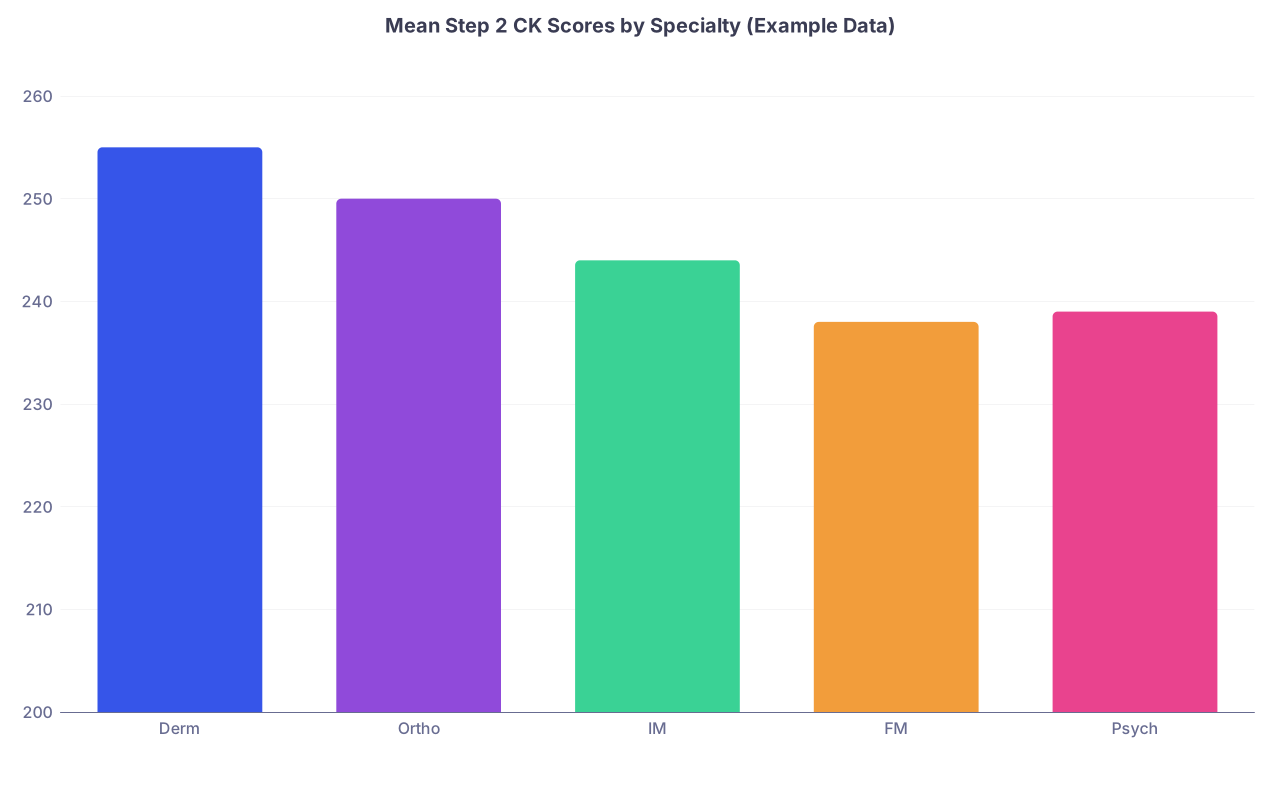
NRMP loves bar graphs. Program directors love to wave those graphs at you. You’ve seen them: mean Step 2 scores by specialty, fill rates, DO/IMG percentages.
Here’s the uncomfortable truth: “less competitive” is an aggregate, not a guarantee.
| Category | Value |
|---|---|
| Derm | 255 |
| Ortho | 250 |
| IM | 244 |
| FM | 238 |
| Psych | 239 |
Yes, family medicine and internal medicine sit below derm and ortho. That does not mean:
- Every program is easy
- Every year has open spots that want your exact profile
- Every switching resident or SOAP applicant gets absorbed
“Less competitive” specialties are stratified inside themselves. The community FM program in the Midwest that struggles to fill is not the same market as the university IM program in a major city that gets 4,000 applications for 20 spots.
I’ve seen this play out in real time: an unmatched derm applicant with 250s on Steps and 10 pubs scrambling to get even a courtesy interview at a mid-tier IM program because the PD is spooked about “flight risk” and “fit.”
You’re not competing against “average applicant to that specialty.” You’re competing against this year’s specific pool of desperate, strategic, and sometimes overqualified candidates. Big difference.
Reality Check #1: The SOAP Is Not a Safety Net, It’s a Bloodbath
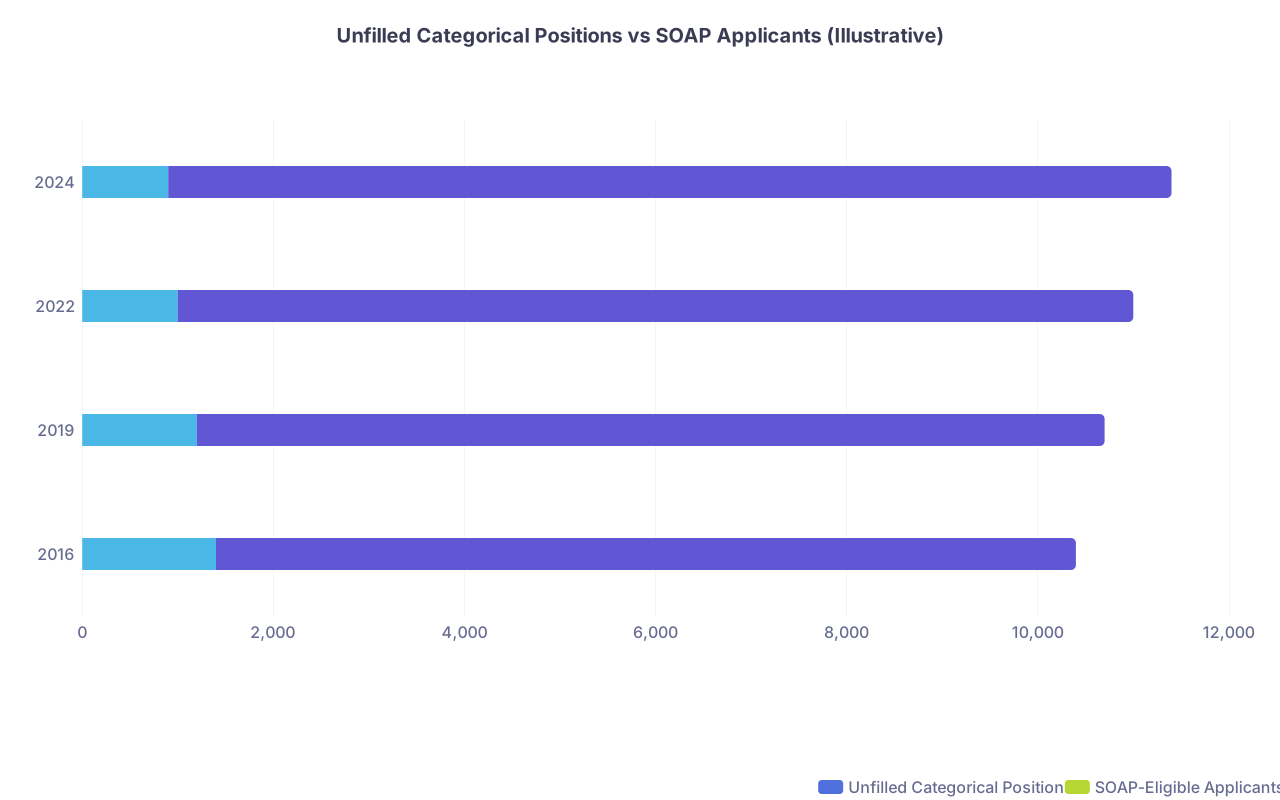
There’s a fantasy that the SOAP is full of open “less competitive” categorical positions that will happily take anyone with a pulse and an MD.
That was closer to true 10–15 years ago. Not now.
| Category | Unfilled Categorical Positions | SOAP-Eligible Applicants |
|---|---|---|
| 2016 | 1400 | 9000 |
| 2019 | 1200 | 9500 |
| 2022 | 1000 | 10000 |
| 2024 | 900 | 10500 |
The actual NRMP numbers fluctuate, but the pattern is stable:
- SOAP-eligible applicants massively outnumber unfilled categorical spots.
- Many of those spots are prelim-only, TY, or in locations most people do not want.
- Some specialties (like psych and categorical IM in desirable regions) have essentially zero SOAP positions many years.
So if your plan is “I’ll not match in X, then SOAP into an easy Y,” you’re betting your career on:
- Programs choosing you over IMGs, DOs, and U.S. grads who actually applied to that specialty
- There being meaningful numbers of Y spots in SOAP that year
- Your application settings, LORs, and PS (all tailored to X) not spooking Y programs
I’ve watched unmatched surgery applicants get zero SOAP interviews in FM because every FM PD reading their app saw one thing: “They don’t want us, they’re just stuck.”
Is that entirely fair? No. Does it happen constantly? Yes.
Reality Check #2: Program Directors Worry About Flight Risk More Than Your Step Score
Here’s something applicants chronically underestimate: PDs care a lot about not getting burned.
They’d rather take a slightly weaker candidate who is 90% likely to stay than a “stronger” candidate who smells like they’re using the program as a pit stop.
When you “switch” to a less competitive specialty — especially post-Match or after a failed attempt — your file often screams:
- All your LORs: “This student is an outstanding candidate for [original specialty].”
- Your research: 6 ortho pubs and a poster at AAOS.
- Your experiences: 3 aways in ENT, none in FM.
- Your personal statement: desperately re-written in 48 hours to sound like you’ve always loved psych.
PDs aren’t stupid. They’ve seen this before. Some burned badly — resident leaves after PGY-1, or miserably slogging through a field they never actually wanted.
So instead of thinking, “I’m over-qualified, they’ll be thrilled,” realize many PDs are thinking, “Why would this person stay? What happens when they try to reapply to their dream specialty?”
You have to solve that problem explicitly:
- Real exposure to the new field (electives, shadowing, real time on service)
- At least one serious letter from someone in that specialty who can vouch for your commitment
- A believable narrative for the switch that isn’t just “I couldn’t match X”
Without that, your Step score doesn’t save you.
Reality Check #3: Not All “Less Competitive” Specialties Are Good Exit Ramps
There’s the cliché list: IM, FM, Psych, Peds, Path, PM&R, Neurology.
Students talk about them like they’re interchangeable backup plans. They’re not.
Here’s how they actually differ when you’re switching:
| Specialty | Backup Friendliness | Key PD Concerns |
|---|---|---|
| Family Medicine | High | Location preference, commitment to primary care |
| Internal Medicine | Moderate | Flight risk to fellowships/other fields |
| Psychiatry | Moderate | Sincere interest, late converts from other fields |
| Pediatrics | Moderate-Low | True interest vs default choice |
| Pathology | Variable | Prior exposure; many applicants have none |
| PM&R | Low-Moderate | Actually more competitive than people think |
A few hard truths:
- FM really does absorb a lot of people, but mostly those who can show some genuine fit (community interest, continuity care, primary-care-oriented story).
- IM is not the universal safety net it used to be, especially in desirable locations or big-name academic programs. Those have their pick of applicants who put IM first.
- Psych has been heating up for years. Many PDs are wary of people who pivot to psych solely because “it’s less competitive now” (it’s not that much less anymore).
- PM&R is frequently mis-labeled as “easy backup” by people who haven’t looked at actual match stats. Some cycles, PM&R is viciously tight.
- Path and neuro can be friendlier if you have realistic expectations and real exposure. But they’re niche, and job markets in some regions are not what students think.
“Backup friendliness” is not the same as “I can switch last minute with zero groundwork.”
Reality Check #4: Internal Transfers Are Rare, Political, and Painful
Another fantasy: “I’ll start in prelim surgery or a TY, then I’ll just slide into a categorical IM or FM spot later.”
Possible? Occasionally. Reliable? Not at all.
Internal transfers or second-year entry into another program depend on:
- A spot existing (someone quits, gets terminated, visa issues, expansion)
- Funding being available for an off-cycle resident
- Your current PD not tanking your transfer with a lukewarm or negative reference
- The receiving PD believing you’re not importing problems
Behind closed doors, PDs absolutely call each other and speak frankly. If you’ve had professionalism flags, attitude issues, or even just mediocre evaluations, that follows you. Inter-program “weird vibes” kill a lot of hoped-for transfers.
Also: many programs simply do not want off-cycle residents. It messes up staffing, jeopardizes ACGME requirements, and complicates call schedules.
So yes, I’ve seen PGY-1s in prelim gen surg successfully jump into categorical IM or FM. I’ve also seen just as many:
- Stuck in serial prelim positions
- Dropping out after PGY-1 with no categorical spot
- Repeatedly applying to other fields with no luck because their story and letters never quite add up
If your entire career strategy is “I’ll just transfer later,” you’re playing roulette with your only degree.
Reality Check #5: A Bad-Fit “Easier” Specialty Can Make You Miserable
This part almost never gets talked about openly because it sounds ungrateful.
You can absolutely match into a less competitive specialty, be “safe,” and still hate your life.
I’ve watched:
- A surgical person white-knuckle their way through outpatient-heavy FM, dying a little inside with every 20-minute URI visit
- A procedure-hungry student move into psych “for lifestyle,” then find the chronicity, documentation, and low procedure volume suffocating
- A basic-science-oriented person retreat to path, only to realize they miss patient contact and team dynamics more than they thought
The equation isn’t:
Low competitiveness → high happiness
High competitiveness → chronic misery
That’s Reddit logic, not reality.
You need to be brutally honest with yourself:
- Can you tolerate the bread-and-butter of that field for decades, not just residency?
- Are you running toward the new specialty or just away from failure in the old one?
- Are you okay with the typical job markets, salaries, and practice patterns in that field?
Because switching “down” into a specialty you fundamentally do not like just relocates the suffering from Match season to the rest of your career.
What Actually Works When You Pivot
Now for the pragmatic part. Yes, people switch successfully. I’ve seen many do it. They had patterns in common.
1. They Stop Lying to Themselves About the Numbers
They sit with actual data, not vibes:
- How many categorical positions in the new specialty exist in SOAP, on average?
- How many are in regions they’d realistically live in?
- How do their scores, transcripts, and MSPE stack up against that specialty’s current match data?
- How many attempts have they already made?
This is where NRMP’s Charting Outcomes and program fill rate reports are useful, not as ego fuel but as cold reality.
2. They Build a Coherent Story — Slowly
The ones who succeed do not wake up on Match Monday and suddenly “always have loved psych.”
They:
- Schedule electives or sub-Is in the new specialty
- Get at least one strong letter that says, “This person would be an asset in [new field]”
- Rewrite their CV to highlight experiences that align with the new specialty
- Craft a personal statement that admits the pivot in a straightforward, non-dramatic way
Not: “Derm rejected me so now I’m trying IM.”
Better: “I realized the aspects of medicine I enjoy most are longitudinal, diagnostic, and team-based. Here’s how that’s shown up concretely over the past year.”
Is there some spin in that? Of course. But at least it’s anchored in actual behavior, not just last-minute rhetoric.
3. They Use Time Strategically (Not Just Emotionally)
Failing to match or wanting to switch hurts. Your instinct is to “fix it now.” Sometimes the better play is to take the longer route:
- A research year in the new specialty with real clinical exposure
- A non-resident clinical role (prelim year, hospitalist extender, etc.) that keeps you in the hospital and generating new letters
- Reapplying in a future cycle with a surgically cleaned-up narrative
Is this fun? No. Does it beat panicking into a random specialty you’ll resent in five years? Yes.

| Step | Description |
|---|---|
| Step 1 | Unmatched or Want to Switch |
| Step 2 | Apply Thoughtfully to Fit Programs |
| Step 3 | If Matched - Commit and Build Career |
| Step 4 | Research/Clinical Year in New Field |
| Step 5 | Consider Prelim/TY or Different Plan |
| Step 6 | Reapply With Stronger Story |
| Step 7 | SOAP Options Available |
| Step 8 | Willing to Take Gap Year |
The Harshest Truth: Sometimes the “Less Competitive” Switch Is Not the Right Move
Everyone wants a clean solution: just pivot, just SOAP, just switch. The system almost encourages magical thinking because the alternative — admitting real limits — is uncomfortable.
But there are scenarios where:
- Your exam history is heavily blemished
- You’ve already gone through multiple unmatched cycles
- Your record has serious professionalism or remediation marks
- You’re unwilling to move geographically or accept less desirable programs
In those cases, there may not be a realistic “switch to easier specialty” path that leads to board-certified practice. That’s painful, but pretending otherwise just wastes years.
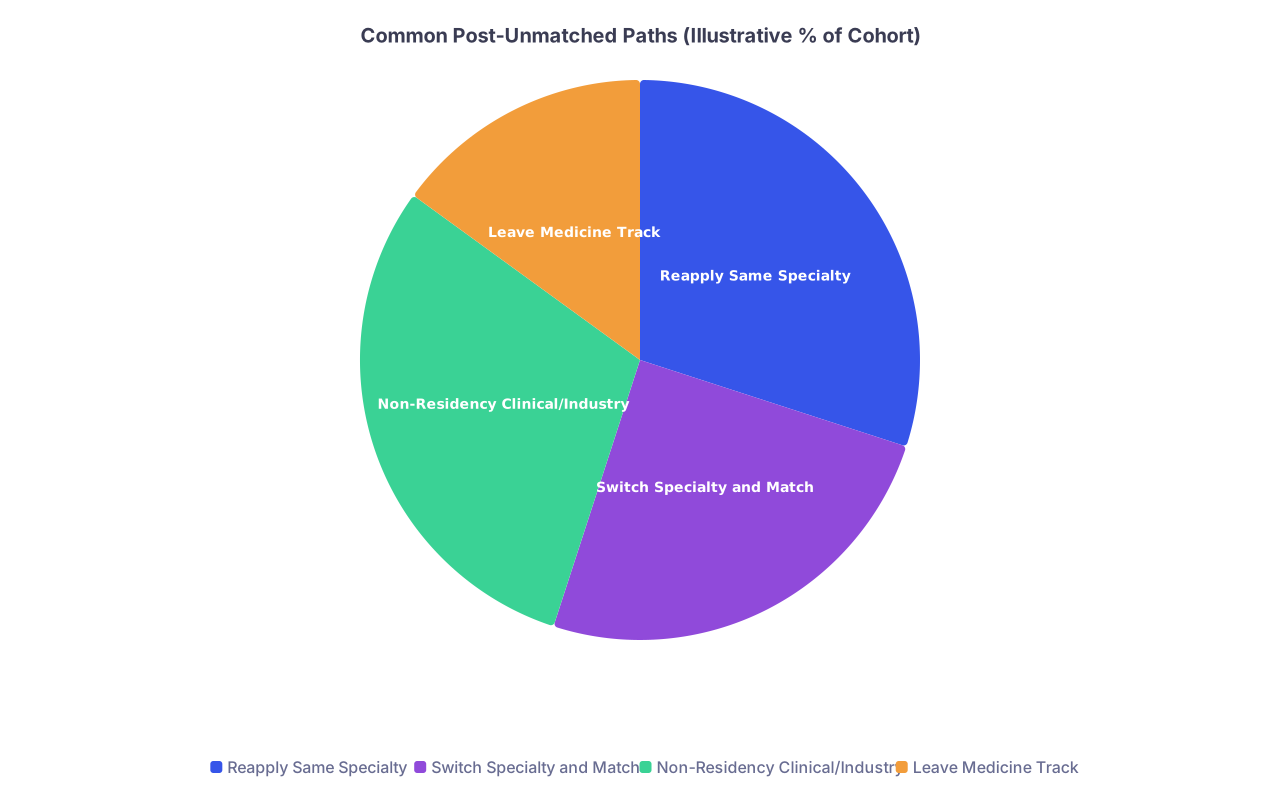
Some people pivot to non-residency clinical roles, public health, industry, informatics, consulting. Those paths can be successful and respectable. They just require you to stop worshipping the Match as the only version of success.
| Category | Value |
|---|---|
| Reapply Same Specialty | 30 |
| Switch Specialty and Match | 25 |
| Non-Residency Clinical/Industry | 30 |
| Leave Medicine Track | 15 |
The numbers vary by school and cohort, but the pattern is real: a substantial fraction do not solve it simply by sliding into a less competitive field.
Bottom Line: Myth vs Reality
Strip away the comforting stories and you’re left with this:
- “Less competitive” doesn’t mean “easy to get into,” especially for late-switchers or unmatched applicants. The SOAP is not a safety net; it’s a lottery with bad odds.
- Program directors fear flight risk and bad fit more than your Step score. If you can’t build a believable, evidence-backed story for the new specialty, you’re an unattractive candidate, even with strong numbers.
- A reactive pivot into a specialty you do not genuinely like just trades short-term relief for long-term misery. Extra time, a slower, more deliberate pivot, or even a non-residency path is often wiser than forcing a bad-fit “backup” career.
You can absolutely build a great life in a so-called “less competitive” specialty. Just do it with your eyes open — not because the myth told you it would be easy.