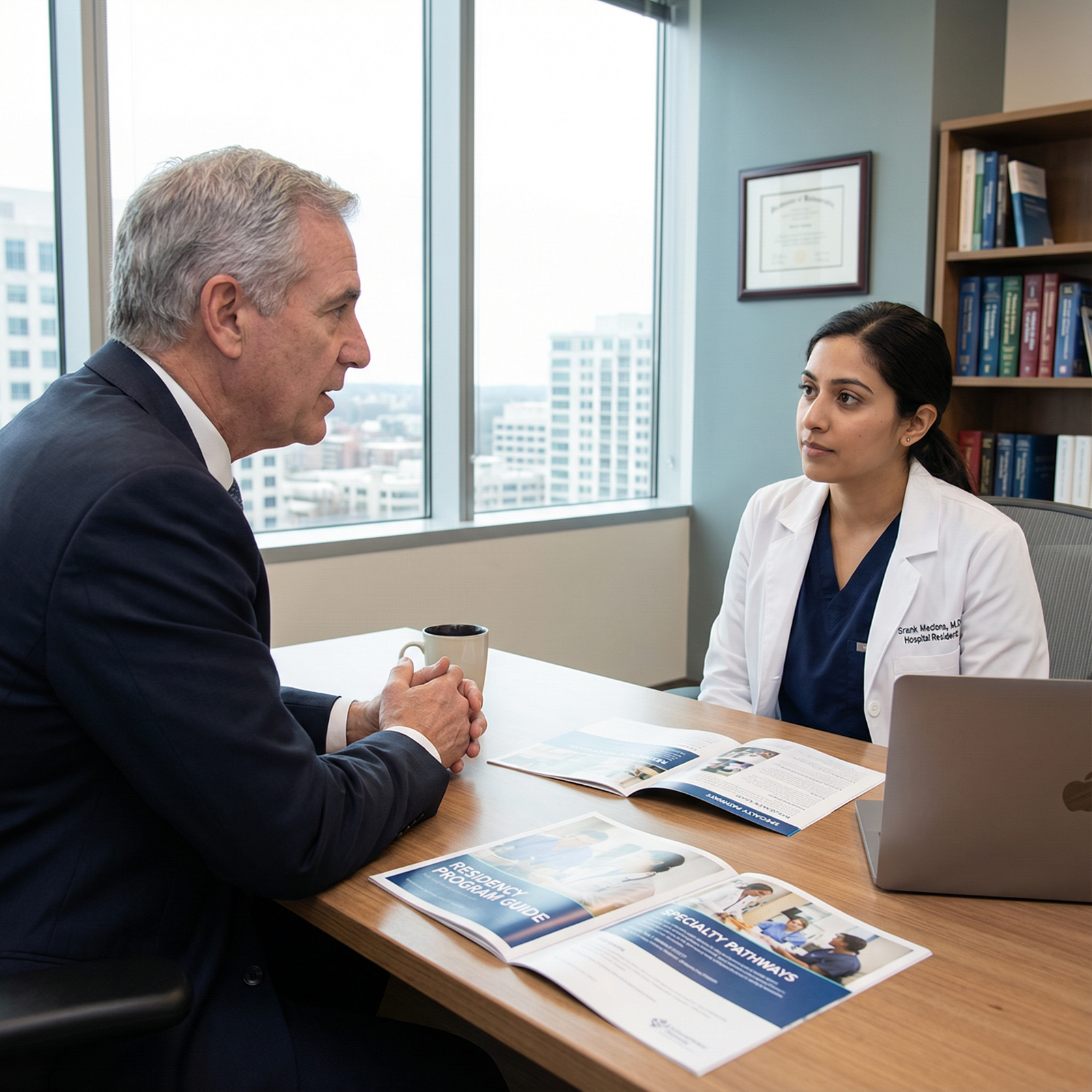
Most people waste their prelim year. You cannot afford to be one of them.
You matched prelim when you wanted categorical. Or your advanced spot fell through. Or you realized halfway through intern year that you chose the wrong specialty. Regardless, you are in a one-year job with a hard expiration date—and you need to convert it into a stable categorical position.
This is not a feel‑good situation. It is a strategy problem. The good news: there is a repeatable playbook that I have seen work over and over if you execute it early and aggressively.
Below is that playbook.
Step 1: Get Clear on Your Actual Goal
Before you send a single email, you need a specific target. “Find a categorical somewhere” is not a plan.
Your situation usually falls into one of these buckets:
You want categorical in the same specialty as your prelim year
- Example: Prelim IM → Categorical IM
- Easiest path structurally, still competitive
You want categorical in a different specialty
- Example: Prelim surgery → Categorical IM / anesthesia / EM
- Doable, but you must control your narrative and get the right letters
You had an advanced spot but lost it / want to switch
- Example: Prelim medicine + advanced neuro → decide you want IM categorical instead
- Time-sensitive, requires clean communication and documentation
You also need to decide:
- Do you need a PGY-1 categorical position?
- Can you enter as a PGY-2 transfer?
- Are you willing to repeat intern year if needed?
Be honest with yourself: if your Step scores, evals, or professionalism history are weak, you may need to be willing to repeat a year. Many people do this quietly and end up exactly where they wanted.
Step 2: Fix Your Reputation Internally (Month 1–2)
If you think your letter writers will “just say something nice” while you coast, you are setting yourself up to fail.
You must become the prelim who is:
- First in
- Last out
- Never late
- Zero drama
Because those same attendings and chiefs will be writing emails saying, “We need to keep this person if anything opens up.”
Concrete actions your first 4–6 weeks:
Have a blunt career talk with your PD and APD
- Schedule a short meeting in the first month.
- Script (rough):
“I want to be transparent. My long-term goal is a categorical spot in [specialty]. I am here to work hard, be an asset to this program, and earn your support. I would really value your honest feedback along the way and any advice on positioning myself for a categorical role, here or elsewhere.” - Do not sound entitled. You are asking for mentorship, not demanding a job.
Ask directly if the program ever converts prelims to categorical
- Some IM and surgery programs do this almost every year when people leave, fail Step 3, or switch specialties.
- Others never do. Better to know early.
Crush the things residents usually blow off
- Pre-rounds polished and ready
- Notes in early, not at 4 pm
- Anticipate pages and orders instead of reacting
- Be the intern who never complains about cross-cover
Choose your “brand” intentionally
- Reliable and calm under pressure
- Teachable, not defensive
- Good with nurses and staff (this gets back to leadership fast)
You are not just being a good intern. You are building a file of “yes, we want to vouch for this person” in the exact people whose emails will decide if a PD takes a chance on you.
Step 3: Build a Real Support Network (Months 1–3)
You do not win this alone. You need senior people actively willing to make calls and send emails for you.
Who you absolutely need
-
- Gatekeeper for verification forms, GME paperwork, and credibility.
- You want them in your corner early, not surprised in January.
One or two powerful letter writers in your desired specialty
- If you want categorical IM, you need respected IM faculty who can say:
“This prelim has functioned at or above the level of our categorical interns. I would rank them highly if they were in our pool.”
- If you want categorical IM, you need respected IM faculty who can say:
At least one chief resident ally
- Chiefs hear about open spots first.
- They can quietly flag: “We may have a PGY-2 opening in July,” months before anything posts online.
How to lock this in:
Ask attendings:
“If I continue working at this level, would you be comfortable supporting me for a categorical position in [specialty] later this year?”
Then keep them updated every 2–3 months.Ask a chief resident:
“I am trying to convert my prelim year into a categorical spot. If you hear of any PGY-2 or categorical openings in [specialty], I would be very grateful if you could let me know.”
People help residents who are clear, hardworking, and not needy. Hit that combination.
Step 4: Understand Your Pathways (And Pick One Primary)
There are three main mechanisms to turn your prelim year into a categorical spot:
| Pathway | Difficulty | Timing Risk | Repeating PGY-1? |
|---|---|---|---|
| Internal conversion (same program) | Low–Medium | Low | Usually no |
| Transfer into open PGY-2 spot | Medium–High | Medium | No |
| Reapply to categorical PGY-1 | Medium | High | Yes |
1. Internal conversion (best case)
You stay at your current program, same specialty, and slide into a vacated categorical spot.
This happens when:
- Someone quits
- Someone is terminated / fails Step 3
- Someone transfers out
- Funding shifts allow an extra position
Your job:
- Stay on your PD’s radar as “the prelim we want to keep if anything opens.”
- Remind them gently around November–January:
“I remain very interested in staying here as a categorical if any positions open up for next year.”
Do not bug them monthly. Twice the whole year, strategically, is plenty.
2. Transfer directly into a PGY-2 spot
You complete prelim year and start as a PGY-2 categorical elsewhere.
You need:
- ACGME-defined “adequate” prelim year for that specialty
- PD letters confirming your performance
- A program with an open PGY-2 position
The catch: PGY-2 spots are rarely posted early. They pop up when someone leaves unexpectedly.
This is where networking and timing matter more than ERAS.
3. Reapply for categorical PGY-1
This is the full reset button:
- You re-enter the match or apply off-cycle to start as a new PGY-1.
- Common when switching specialties (e.g., prelim surgery → IM, FM, anesthesia).
Yes, repeating intern year stings. But you get:
- A true clean slate in your new specialty
- A better long-term fit
- A stronger application after a year of real clinical work
Do not automatically resist repeating PGY-1. For many people, it ends up being the right strategic move.
Step 5: Build a Targeted Application Strategy (Months 4–6)
By late fall of your prelim year (or the year before, if you know early), you should be preparing a focused, aggressive application strategy.
Update your core documents
CV
- Add: “PGY-1 Preliminary [Specialty], [Hospital], [Start Year]–present”
- Include specific rotations, leadership, quality improvement, committees.
- Show progression: “Intern-level procedural competency in X, Y, Z.”
Personal statement
- Direct, honest, and forward-looking.
- Basic structure:
- Brief context: how you ended up in a prelim role
- What you learned and why that reinforced your chosen specialty
- Clear explanation of why you are now seeking categorical training
- Evidence of maturity and commitment (with examples from your year)
Avoid whining. Avoid long backstories about your “journey.” Programs want to see: you learned, you matured, and you know exactly what you want.
-
- At least 2 from your current prelim institution.
- At least 1–2 from your desired specialty.
- One should ideally be your current PD or an associate PD.
Ask early enough that they can comment on a meaningful stretch of time (not just one week on wards).
Step 6: Where to Actually Find Categorical and PGY-2 Spots
Most residents look in exactly two places: ERAS and random whispers. That is not enough.
Use a structured multi-channel search:
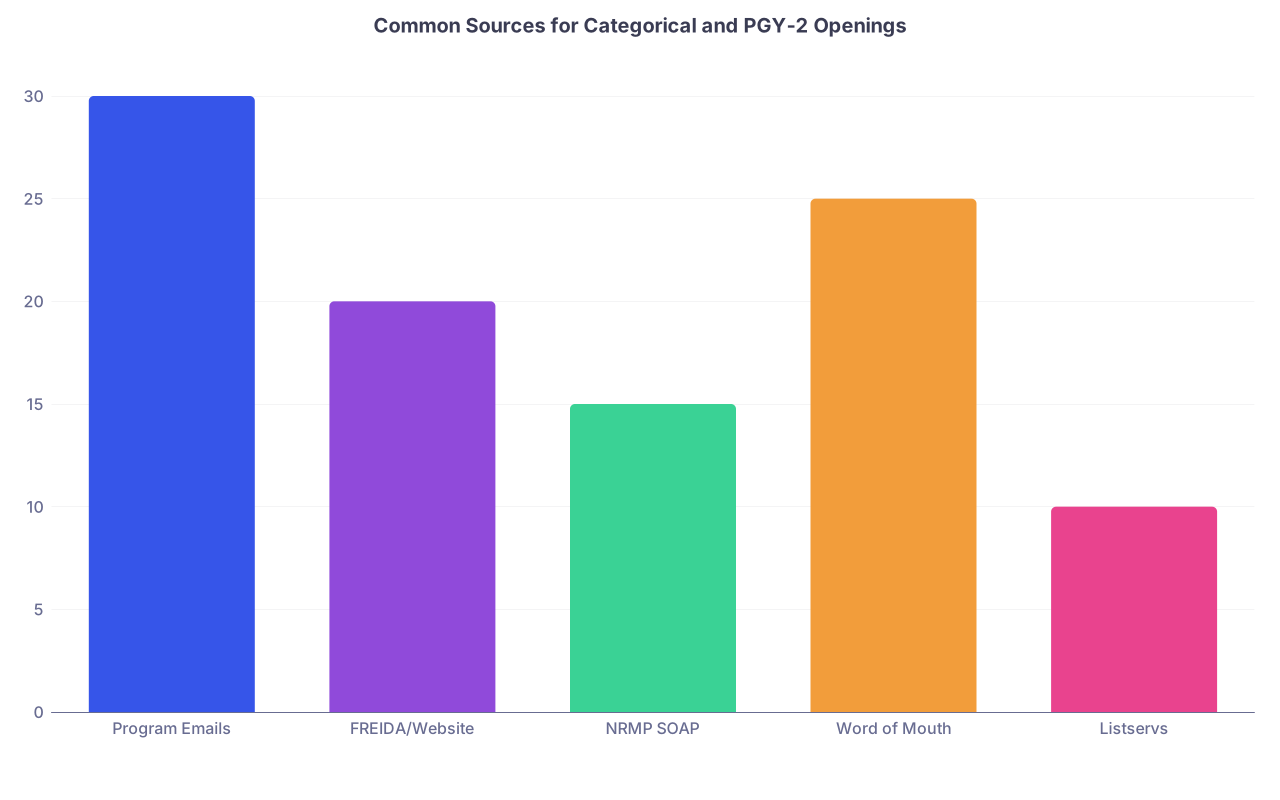
| Category | Value |
|---|---|
| Program Emails | 30 |
| FREIDA/Website | 20 |
| NRMP SOAP | 15 |
| Word of Mouth | 25 |
| Listservs | 10 |
A. Direct program outreach (your best weapon)
This is the part everyone is afraid of. It is also where people actually win.
You create a targeted list of programs:
- In your desired geographic region(s)
- Historically have prelims or have had transfers
- Slightly less competitive than your dream tier at first (you need a foothold)
Then, you send short, direct emails to:
- Program Director
- Program Coordinator
Sample email (tweak to your tone):
Subject: Potential PGY-2 / Categorical Opening in [Specialty]
Dear Dr [Last Name],
I am currently a PGY-1 preliminary [specialty] resident at [Hospital]. My long-term goal is categorical training in [specialty], and I am seeking either a PGY-2 position starting [Month, Year] or a categorical PGY-1 role if available.
I have attached my CV and a brief summary of my rotations to date. If your program anticipates any openings, I would be grateful for the opportunity to be considered. My current program director, Dr [Name], is very supportive of my plans and is happy to be contacted directly.
Thank you for your time and consideration,
[Your Name]
[Current Program]
[Phone]
[Email]
Half will never reply. That is fine. You are playing a numbers game.
B. FREIDA and program websites
- Look for wording like “accepts PGY-2 transfers” or “recent mid-year vacancies”.
- Some programs list “unexpected openings” on their websites or GME pages.
C. Specialty-specific listservs and societies
Many specialties use:
- Association listservs (e.g., for IM, surgery, anesthesia)
- Slack groups or private forums
- National society job boards
Ask your faculty or chiefs:
“What listservs or boards do you use to find residents when a spot opens suddenly?”
D. SOAP and post-SOAP scramble (if timing fits)
If your prelim year ends June 30 and you are applying for new PGY-1 positions that start July 1, you may end up in the SOAP or post-SOAP landscape.
Not ideal. But it can work, especially for:
- Family medicine
- Internal medicine
- Psychiatry
- Pediatrics
(depending on your scores and geography)
Step 7: Timing – Your Real Calendar
Here is how this typically looks in a PGY-1 prelim year:
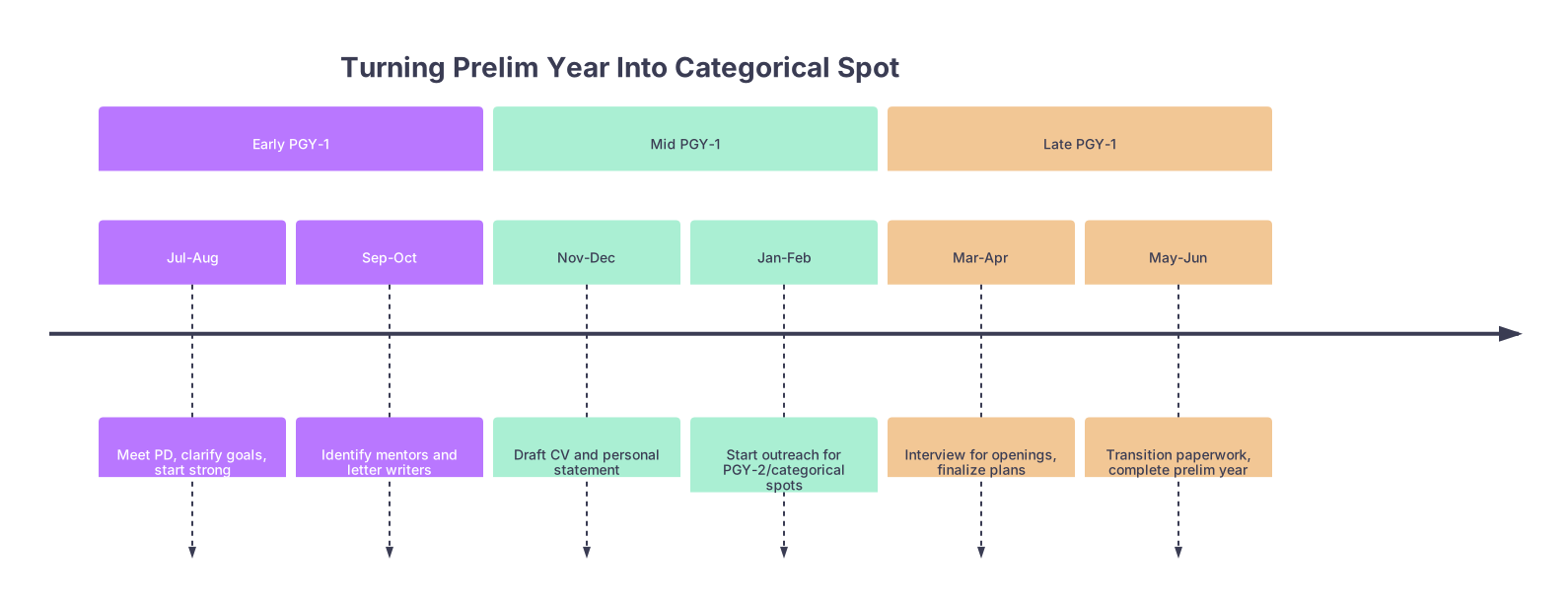
| Period | Event |
|---|---|
| Early PGY-1 - Jul-Aug | Meet PD, clarify goals, start strong |
| Early PGY-1 - Sep-Oct | Identify mentors and letter writers |
| Mid PGY-1 - Nov-Dec | Draft CV and personal statement |
| Mid PGY-1 - Jan-Feb | Start outreach for PGY-2/categorical spots |
| Late PGY-1 - Mar-Apr | Interview for openings, finalize plans |
| Late PGY-1 - May-Jun | Transition paperwork, complete prelim year |
Non-negotiable timing rules:
- Conversations with PD: by September
- Clear decision on primary pathway (internal vs transfer vs reapply): by November
- Letters requested and documents ready: by December–January
- Active outreach to external programs: January–April (but start earlier if you already know your plan)
- Acceptable “scramble” window: any time an opening appears, often spring and early summer
Step 8: Fix Your Risk Factors Before They Sink You
Programs are cautious with transfers. They assume there is some problem. Your job is to prove otherwise.
Here are the usual red flags and how to blunt them.
A. Weak or erratic evaluations
If you know you had a rough early rotation:
- Request mid-year feedback from PD or APD.
- Say directly:
“I know my first month on [service] was not my best work. I am working on [specific things]. Do you feel you are seeing improvement?” - Ask to be scheduled again with strong evaluators once you have improved.
You want at least 2–3 months of clearly positive evals by mid-year.
B. Step 3 or licensing delays
Programs hate uncertainty around licensing. Fix this proactively.
- Schedule Step 3 as early as your schedule allows.
- Use your lightest month for exam prep.
- Pass it before you apply for PGY-2 spots if you can.
If Step 3 is risky for you, delay only if your PD agrees and you have a plan.
C. Questionable professionalism history
This is hard but not impossible.
- Own it plainly when asked. No excuses.
- Show concrete behavioral changes:
- Timeliness
- Documentation habits
- Communication with staff
- Your PD letter must explicitly say: “We have seen consistent professionalism and reliability.”
If your PD will not write that, you likely need a clean PGY-1 restart at a new place.
Step 9: Interviewing As a Prelim – How to Tell Your Story
On the interview trail, your story must be:
- Simple
- Consistent
- Future-focused
Three questions you will absolutely get:
- “Why are you in a prelim spot instead of categorical?”
Bad answers:
- Long saga about the Match.
- Blaming other programs or advisors.
- “I do not really know.”
Good structure:
- One sentence about what happened.
- One sentence about what you learned.
- Two to three sentences about why you are now a strong fit for categorical training.
Example:
“I initially matched to a preliminary position in internal medicine because my application was not as strong as it needed to be for categorical slots. During this year I have confirmed that I want to build a career in hospital-based internal medicine, and I have consistently received strong evaluations for my clinical work and teamwork. I am now seeking a categorical spot where I can complete my training and contribute over the long term.”
- “Why leave your current program?” (if you are transferring)
Emphasize fit and structure, not people or drama.
“My current program is strong, but it is designed primarily as a preliminary track supporting advanced specialties. I am looking for a program with a stable cohort, long-term continuity clinic, and more mentorship in [subfield], which your program offers.”
- “What will you bring as someone who already did a prelim year?”
You actually have advantages over brand-new interns:
- You know the EMR, workflows, and basic inpatient medicine.
- You are more efficient with pages and cross-cover.
- You can often supervise or support weaker interns informally.
Say that explicitly.
Step 10: Worst-Case Planning (Because You Need a Floor)
Sometimes, despite doing everything right, you do not land a categorical spot immediately. You need a fallback that protects your license, income, and CV.
Realistic floor options:
A second prelim year in a different specialty or location
- Not ideal, but sometimes used as a bridge while continuing to search for categorical.
- Be cautious about looking aimless; you must have a clear plan.
Non-ACGME clinical fellowships or hospitalist junior roles
- Some hospitals hire “clinical fellows” or “junior hospitalists” that function like supervised attending-lite roles.
- Keeps your clinical skills active while you reapply.
Research year with heavy clinical involvement
- Better if it is tightly tied to your target specialty.
- Helps if your application is weak academically and you need pubs or a new narrative.
Do not disappear for a year with nothing clinical. Gaps kill momentum, and you will spend the next cycle explaining them.
Visual: Example Weekly Time Allocation While You Are Juggling This
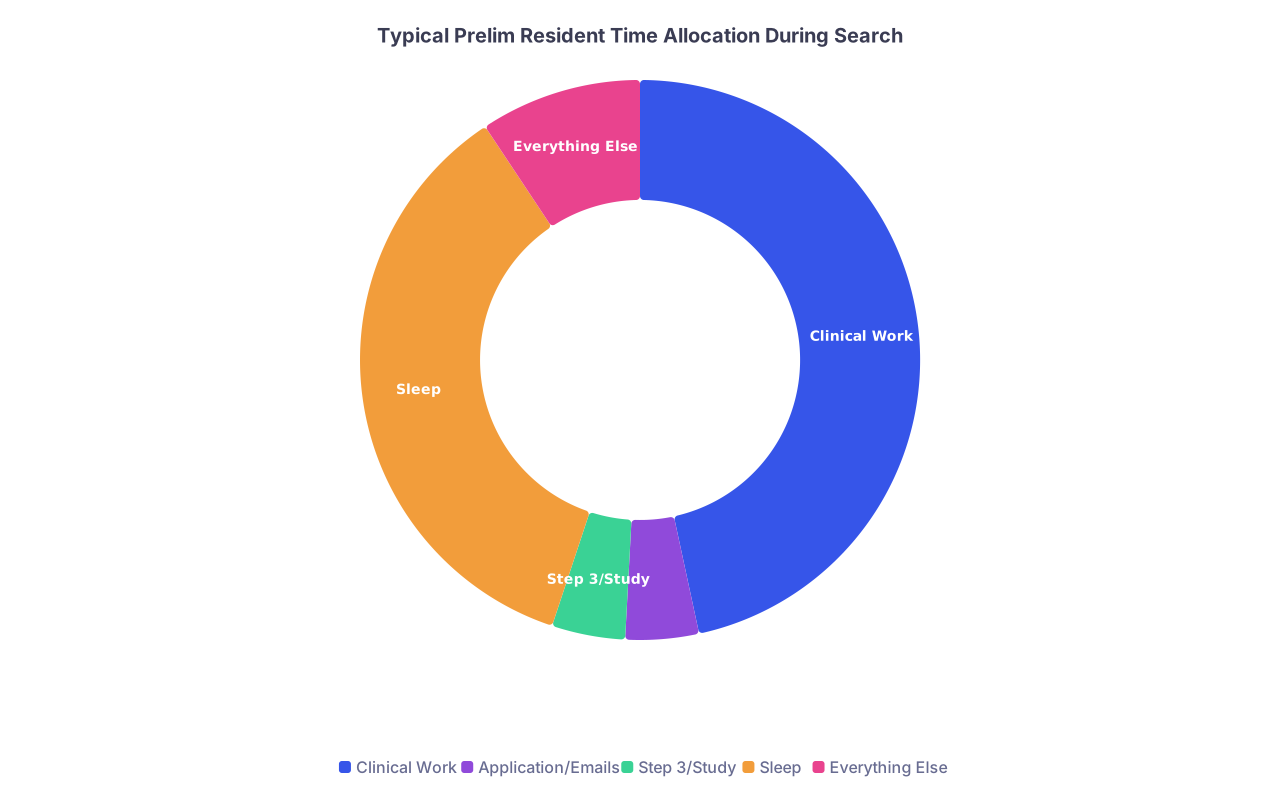
| Category | Value |
|---|---|
| Clinical Work | 55 |
| Application/Emails | 5 |
| Step 3/Study | 5 |
| Sleep | 42 |
| Everything Else | 11 |
Yes, it is brutal. For 3–4 months you will be:
- Working full clinical hours
- Studying for Step 3 or boards
- Updating CVs and sending emails
- Interviewing on precious golden weekends or post-nights
This is a sprint, not your whole career. Treat it like an intense block and push through.
Tactics That Actually Move the Needle (From People Who Made It)
Here is what I repeatedly see in residents who successfully convert prelim to categorical:

They talk to their PD early and often enough
- The residents who get blindsided are the ones who keep everything secret until February, then suddenly announce they want a categorical spot.
They overperform on a few key rotations
- Wards with the PD.
- ICU with influential faculty.
- Any rotation where they know a letter may come from.
They keep a running list of every attending who says “you are doing great”
- Then they go back later and ask for letters or advocacy.
They cold-email more than feels comfortable
- 20–50 programs is not crazy if you are aiming for PGY-2 transfers.
- Most of those emails will never be answered. The 1–2 that hit are all you need.
They control the story about “why prelim”
- No self-pity. No drama.
- Just: “I was not competitive enough then. I am different now, here is proof.”
Quick Flowchart: Decide Your Primary Path

| Step | Description |
|---|---|
| Step 1 | Prelim PGY-1 |
| Step 2 | Plan to reapply in new specialty |
| Step 3 | Focus on internal conversion |
| Step 4 | Search PGY-2 spots elsewhere |
| Step 5 | Apply and transfer |
| Step 6 | Consider repeat PGY-1 |
| Step 7 | Want same specialty? |
| Step 8 | Program converts prelims? |
| Step 9 | PGY-2 spots available? |
This is the decision tree you should have in your head by November.
Frequently Asked Questions
1. Is it realistic to expect my prelim program to convert me to categorical?
Yes, but only in some programs and only if:
- They have a history of doing it.
- You are clearly among the strongest prelims.
- A categorical resident actually leaves or they get extra funding.
If your PD says, “We never convert prelims,” believe them. Then make external transfer or reapplication your primary strategy and treat internal conversion as a lottery ticket, not the plan.
2. Do I need to use ERAS again to find a categorical or PGY-2 spot?
Not always. For PGY-2 transfers and off-cycle categorical positions, many programs handle applications outside ERAS via:
- Direct emails with your CV and letters
- Institution-specific portals
- GME office processes
For entering as a new PGY-1 categorical through the regular Match, you will usually use ERAS and NRMP again. For unexpected mid-year vacancies, it is mostly old-school: email, phone calls, and document uploads.
3. How many programs should I contact about potential PGY-2 or categorical openings?
More than you think. A reasonable range:
- 20–30 programs if your application is strong and you are geographically flexible.
- 40–60 programs if you have red flags, want a competitive specialty, or are regionally constrained.
You are not spamming random places. You are sending concise, respectful inquiries to programs where you would actually consider training.
4. Will repeating intern year hurt me long-term?
No. Residency is a long game, and repeating PGY-1 is common for:
- People switching specialties
- International grads aligning with US requirements
- Residents with early career missteps who want a true reset
Most attendings do not care that you did two PGY-1 years. They care that you are competent, reliable, and well-trained. If repeating a year gets you into the right specialty and environment, it is often the smartest move you can make.
Key points:
- You turn a prelim year into a categorical spot by treating it like a one-year audition, not a holding pattern.
- The residents who succeed start early, lock in strong PD support, and aggressively pursue internal conversion, transfers, and reapplication in parallel.
- Control your story, overperform clinically, and be relentless but professional in outreach. One “yes” is all you need.