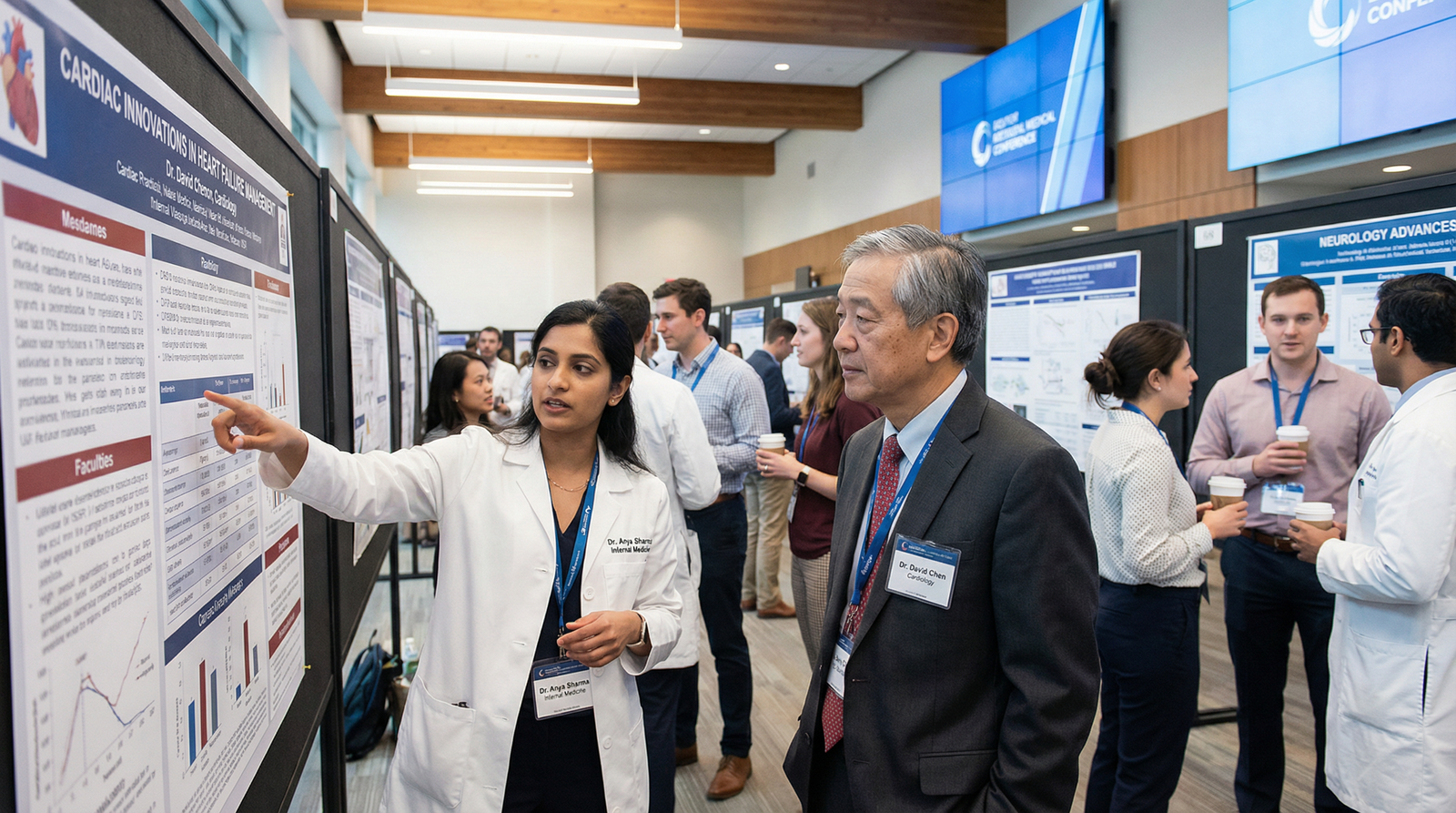
The match did not go your way. Talking about your “passion for research” will not fix that. Producing results will.
You are not going to rescue a damaged application with vague plans, padded CV lines, or another “chart review in progress.” You fix it with targeted, strategic research and quality improvement (QI) that directly addresses why you failed to match — and proves that you are not the same applicant anymore.
This is how you do that, step by step.
Step 1: Diagnose Why Your Application Failed (Brutally Honestly)
You cannot design the right research or QI projects if you do not know what you are trying to fix.
You are in the Post Match Options phase. You likely fall into one (or more) of these buckets:
| Profile | What PDs Assume |
|---|---|
| Low scores / exam failures | Risky to rank, may struggle with boards |
| Weak clinical performance / MSPE comments | Professionalism or work-ethic concern |
| Limited specialty commitment | Might switch; not serious about the field |
| Thin or scattered CV | No depth, no follow-through |
| Poor interview performance | Poor insight, communication, or maturity |
You are going to use research and QI to directly counter those assumptions.
Do a 30–Minute Forensic Review of Your Application
Pull up your ERAS from this cycle and ask yourself, out loud, these questions:
Scores / Exams
- Any Step/Level failures?
- Scores below the median for your specialty?
- Did you hide it or address it weakly in your personal statement?
Specialty Commitment
- How many specialty-specific letters (e.g., IM letters for IM)?
- Any specialty-specific research, QI, or scholarly work?
- Any away rotations or meaningful exposure beyond clerkship?
Trajectory
- Did your CV show growth, or just random activities?
- Any long-term projects or leadership roles?
Signal to Programs
- Would a PD looking at your file say: “This person is clearly all-in on [specialty]”?
If you are unsure how programs saw you, ask someone who knows:
- A trusted faculty advisor
- A PD or APD at your home program
- A mentor in your desired specialty
Ask them one direct question:
“If you were a PD, what are the top two reasons you would not have ranked me?”
Write the answers down. That list becomes your project design brief.
Step 2: Choose the Right Strategy – Research vs QI (or Both)
Not all projects are equal. A poorly chosen retrospective chart review does almost nothing for a damaged application.
You need to pick based on:
- Your primary weakness
- Your timeline (you are between match cycles)
- Your access to mentorship and data
Quick Comparison: What Each Can Repair
| Goal | Better Tool | Why |
|---|---|---|
| Show academic potential | Research | Abstracts, manuscripts, stats skills |
| Prove clinical maturity / systems thinking | QI | Directly tied to patient care and workflow |
| Signal specialty commitment | Both | Specialty-focused topic in either format |
| Fix “thin CV” / no depth | Longitudinal QI + research | Shows follow-through and impact |
Rule of thumb:
- If your problem is “I look like I cannot handle academic work” → emphasize research.
- If your problem is “I worry programs about reliability, systems awareness, or clinical performance” → emphasize QI.
- If your problem is “I do not look committed to this specialty” → do specialty-specific research or QI, even if small.
Step 3: Build a One-Year Repair Plan Around the Next Match Cycle
You essentially have one year to rewrite your story.
Use this simple frame:
- Months 0–2: Get positioned (find mentor, join ongoing projects, complete required QI training at your institution if needed)
- Months 2–6: Execute data collection / implementation
- Months 6–9: Analyze data, write abstract, submit to a conference
- Months 9–12: Draft manuscripts, finalize poster/presentations, bake results into your ERAS
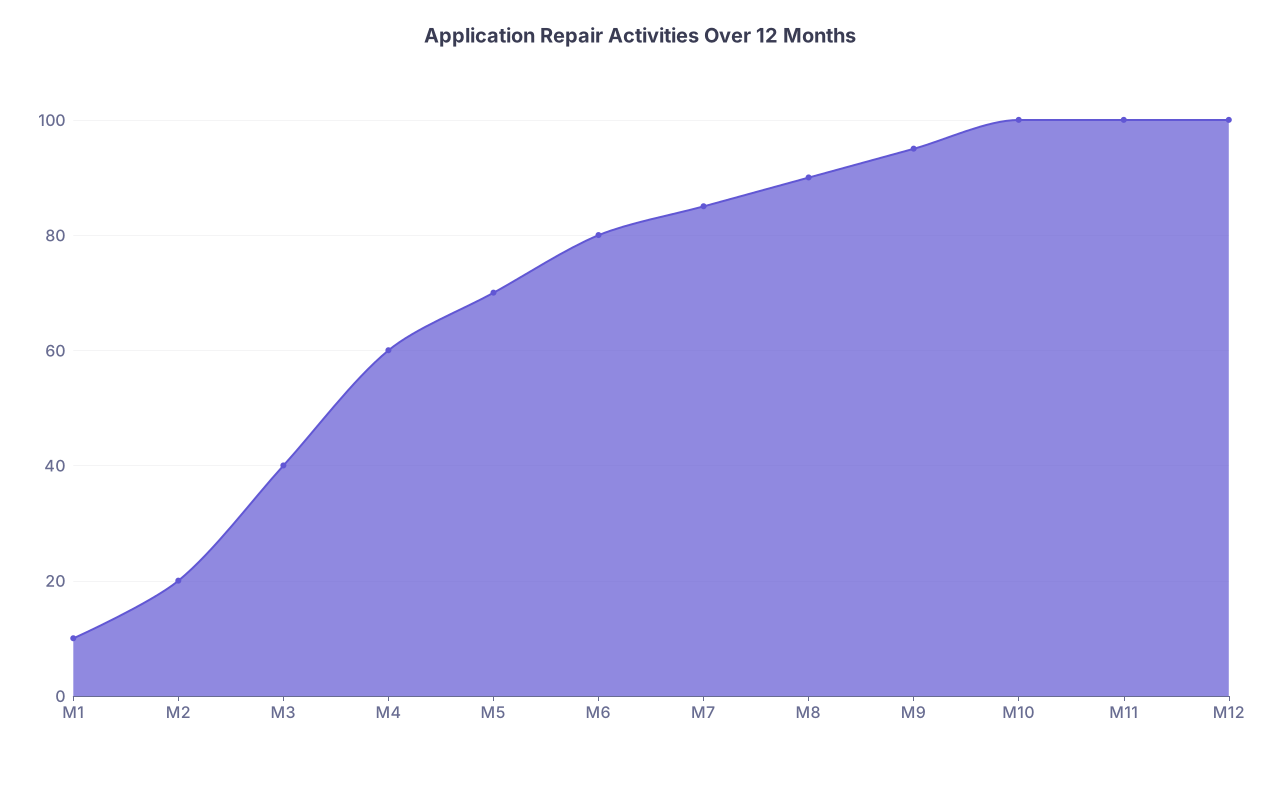
To see how this actually looks, here is a realistic one-year project rhythm for a re-applicant:
| Category | Value |
|---|---|
| M1 | 10 |
| M2 | 20 |
| M3 | 40 |
| M4 | 60 |
| M5 | 70 |
| M6 | 80 |
| M7 | 85 |
| M8 | 90 |
| M9 | 95 |
| M10 | 100 |
| M11 | 100 |
| M12 | 100 |
That “100” is not perfection. It is “enough visible, finished work that a PD can clearly see a changed trajectory.”
Step 4: Pick High-Yield Project Types by Scenario
Now we get practical. You are in a post-match scramble, not a PhD program. You do not have 3 years to build a multicenter RCT. You need projects that:
- Can actually be completed within 6–9 months
- Produce something tangible (poster, abstract, submitted paper)
- Are strongly anchored to your target specialty
Scenario 1: Low Scores / Exam Failure
PD fear: “If I rank this person, they might fail Step 3/boards and drag our stats down.”
Your response: “Look at this structured, measurable, academic work I just completed. I can function in an academic environment, hit deadlines, and finish complex tasks.”
High-yield project ideas:
Education-focused QI
- Example: “Standardizing intern handoff education on the medicine wards and measuring error rates or pages after sign-out.”
- Shows: systems thinking, ability to plan, implement, and measure.
Testable, methodical clinical research
- Example: “Predictors of 30-day readmission in heart failure patients at our institution.”
- Straightforward stats, clear outcome, realistic N.
Board-relevant topic
- Tie your project to something that screams board exam knowledge:
- DKA management protocol improvement
- Sepsis bundle compliance
- Appropriate imaging for low back pain
- Tie your project to something that screams board exam knowledge:
Non-negotiables:
- You must have a mentor with a track record of finishing projects.
- Aim for at least:
- 1 submitted abstract
- 1 in-preparation or submitted manuscript by the time ERAS opens
Scenario 2: Weak Specialty Commitment
PD fear: “They applied here, but their file looks like they woke up and chose this specialty last month.”
Your response: “Since last match, I have lived inside this specialty — research, QI, clinical observership, conferences.”
High-yield project ideas by specialty:
Internal Medicine
- QI: Improving follow-up of abnormal lab results or imaging.
- Research: Prevalence/outcomes of a common inpatient issue (AKI, hyponatremia, COPD exacerbations).
Emergency Medicine
- QI: Door-to-antibiotic times for septic patients.
- Research: Patterns of ED utilization (frequent flyers, bouncebacks).
Pediatrics
- QI: Vaccination completion rates in a clinic.
- Research: Hospital length-of-stay predictors for bronchiolitis.
Psychiatry
- QI: Metabolic monitoring in patients on atypical antipsychotics.
- Research: Readmission rates after psychiatric hospitalization.
You are not trying to reinvent the field. You are trying to show: “I have been thinking about and working in your world for the last year.”
Scenario 3: Weak Clinical Performance / MSPE Concerns
PD fear: “Professionalism issues, inconsistency, or trouble working in teams.”
Your response: “Here is a QI project where I coordinated across nurses, residents, pharmacists, or admins and saw it through.”
For this group, QI is usually more valuable than pure research.
High-yield QI concepts:
- Reducing delays in discharge summaries
- Improving medication reconciliation completion
- Standardizing a nursing-physician communication tool
- Implementing a checklist (pre-op, pre-discharge, etc.)
Why these work:
- They force you to work with multiple disciplines.
- They create visible behavior: meetings, emails, presentations.
- Your mentor can actually comment on your reliability, leadership, and follow-through in a letter.
Step 5: How to Actually Find and Join Real Projects (Without Wasting 6 Months)
This is where most unmatched applicants lose time. They “join projects” that never go anywhere.
You are going to be more ruthless.
Target Mentors, Not Projects
You are not looking for “any project.” You are looking for:
- Faculty who publish or present regularly
- Faculty in your target specialty
- Faculty with a history of bringing students/residents onto presentations
Use:
- PubMed (search your institution + specialty)
- Department websites (look at recent publications, QI committees)
- Residents and fellows (ask: “Who actually gets things published around here?”)
Email Template That Does Not Get Ignored
Subject line:Unmatched applicant seeking concrete research/QI work in [Specialty]
Message (short, direct):
Dr [Name],
I am a [US-IMG/DO/MD, grad year] who applied to [Specialty] this cycle and did not match. I am committed to reapplying in [year] and strengthening my application specifically through meaningful research or QI work in [narrow area if possible – e.g., inpatient heart failure, ED operations].
I reviewed your recent work on [one specific paper/QI project – name it] and would like to ask if you have:
- Any ongoing projects where you need help with data collection, chart review, or IRB coordination, or
- Institutional QI initiatives I could join and take ownership of a defined piece (e.g., data tracking, protocol implementation).
I can commit [X hours/week] reliably through the next 12 months and my main goal is to produce at least one abstract or manuscript submission before ERAS opens.
Would you be willing to meet for 15–20 minutes to discuss where I might fit into your work or your division’s projects?
Thank you for considering this,
[Name, degree, contact, brief one-line CV highlight]
This signals seriousness, timeline awareness, and that you understand the output that matters (abstracts/manuscripts).
Step 6: Design Projects to Finish Fast and Show Results
You want projects that:
- Have clearly defined scope
- Do not depend on 10 other people doing their jobs perfectly
- Can produce at least a poster or abstract in 6–9 months
Good structures:
For Research (Retrospective, Feasible Projects)
- Single center
- Clearly defined inclusion criteria (e.g., all adults admitted with DKA over 3 years)
- 1–3 primary outcomes, not 10
- Prespecified subgroups only if necessary
Basic workflow:
- Write 1-page concept + meet with mentor
- IRB submission (if needed)
- Build data dictionary
- Extract data (chart review, EMR queries)
- Analyze with mentor/statistician
- Draft abstract → submit to:
- Specialty regional meetings
- National conference if feasible
For QI (PDSA-Based)
Use a very simple PDSA (Plan–Do–Study–Act) structure.

| Step | Description |
|---|---|
| Step 1 | Identify Problem |
| Step 2 | Define Measurable Aim |
| Step 3 | Plan Intervention |
| Step 4 | Implement Small Test |
| Step 5 | Collect Data |
| Step 6 | Analyze and Adjust |
| Step 7 | Expand or Repeat Cycle |
| Step 8 | Present Results and Write Up |
Example:
- Problem: Only 40% of discharge summaries sent to PCP within 48 hours.
- Aim: Increase to 70% within 6 months.
- Intervention: Standard discharge summary template + reminder in EHR + brief intern education.
- Measures: % sent within 48 hours before vs after intervention.
You do not need a Nobel-level idea. You need proof that you can:
- Identify a systems problem
- Implement a change
- Measure the effect
- Present it coherently
Step 7: Translate Your Work into PD-Friendly Outputs
Working hard is invisible. You must convert effort into things that matter on ERAS.
At minimum, you want by next ERAS:
- 1–2 submitted or accepted abstracts
- 1–2 posters or oral presentations (even local/regional)
- 1 manuscript submitted (accepted is ideal, but “submitted” is still better than “in progress”)
- 1 letter of recommendation that explicitly references your project performance
How to List Projects on ERAS So They Look Strong
Bad:
“Chart review on pneumonia patients – in progress.”
Better:
“Co-investigator, retrospective study on 30-day readmission predictors in patients hospitalized for pneumonia at [Institution]. Responsible for data extraction of 200 charts and preliminary analysis. Abstract submitted to [Conference Name].”
For QI:
Bad:
“QI project on discharge summaries.”
Better:
“Led QI project to increase rate of discharge summaries sent to PCP within 48 hours on the general medicine service. Designed intervention, coordinated with IT and nursing leadership, collected pre/post data on 150 discharges. Achieved improvement from 42% to 76%. Presented at [Hospital QI Day / regional meeting].”
Step 8: Use These Projects to Change Your Narrative in Personal Statements and Interviews
This is where people blow it. They do the work, then describe it in the blandest way possible.
Your goal in the next cycle is to speak in before / after terms:
- Before: “I had a Step 1 failure and limited specialty exposure.”
- After: “Over the past year, I have completed a QI project in [specialty area], co-authored a [conference] abstract on [topic], and worked weekly in [clinic/ward] with [mentor]. These experiences changed how I think about [specialty] and how I function in clinical teams.”
PDs are not looking for perfect records. They are looking for trajectory and insight.
Use your projects to:
Show you can reflect:
“When I started this project, I underestimated how difficult it would be to get buy-in from nursing. I had to learn to listen more and adjust the intervention to their workflow.”Show you can finish things:
“We hit a wall with data extraction because of EMR limitations. I took the lead on revising our plan with our statistician and limited the sample to what we could accurately capture. That is how we were able to submit on time for [meeting].”Show commitment to the specialty:
“Working on [specific topic] reinforced for me how much I enjoy solving [this type of clinical problem] — it has made me more confident that [specialty] is the right fit.”
Step 9: Common Pitfalls That Waste Your Post-Match Year
I have watched people repeat the same mistakes and end up unmatched twice. Do not join them.
Pitfall 1: “In Progress” Hell
End of the year, their CV is full of:
- “Data collection in progress”
- “Manuscript in preparation”
- “Planning a QI project”
Programs do not care. They have learned that 80% of “in progress” items never finish.
Fix:
From day one, agree with your mentor on specific deadlines:
- Abstract submission target
- Conference target
- Manuscript draft date
If your mentor cannot commit to a rough timeline, pick a different project.
Pitfall 2: Overcommitting to 5 Projects and Finishing None
Three chart reviews + two QI ideas + a random case report. You will not finish all of them.
Fix:
Pick 1–2 main projects and one backup small item (e.g., a case report) in case the main one stalls. Finish those instead of touching ten things superficially.
Pitfall 3: Working with Unproductive Mentors
Some faculty collect “research mentees” like trading cards and produce nothing.
Red flags:
- They cannot show you anything first-author in the last 2–3 years.
- They are “too busy” to meet for 15–20 minutes to define a project.
- Prior students quietly tell you, “We never finished that paper.”
Fix:
- Talk to prior mentees first.
- Ask them bluntly: “Did you actually get a poster/paper out of working with Dr [X]?”
Step 10: If You Are Completely Outside the System (No Home Institution Access)
It is harder. Not impossible.
Options:
Formal Research Fellowships / Post-Match Research Positions
- Some departments (especially in IM, cards, onc, EM, surgery) offer one-year research positions targeted at unmatched or pre-residency applicants.
- Pros: Built-in projects, access to mentors, letters.
- Cons: Competitive, may pay poorly, must relocate.
Remote QI / Data Projects
- Some faculty will let you help with:
- Data entry for ongoing chart reviews
- Literature reviews
- Drafting sections of manuscripts
- Less ideal than being on-site, but still something.
- Some faculty will let you help with:
Online QI Courses + Local Implementation
- If you are working clinically in another role (e.g., research assistant, scribe, or even outside medicine), you may be able to design microscale QI-like initiatives (this is weaker, but better than nothing if framed well).
Still apply the same principle:
You want something finished and visible: abstract, poster, letter that speaks to your work.
Step 11: Track and Present Your Progress Like a Professional
You are essentially in a one-year self-improvement “fellowship.” Treat it like one.
Maintain:
- A one-page running CV updated monthly
- A spreadsheet with:
- Project title
- Role
- Mentor
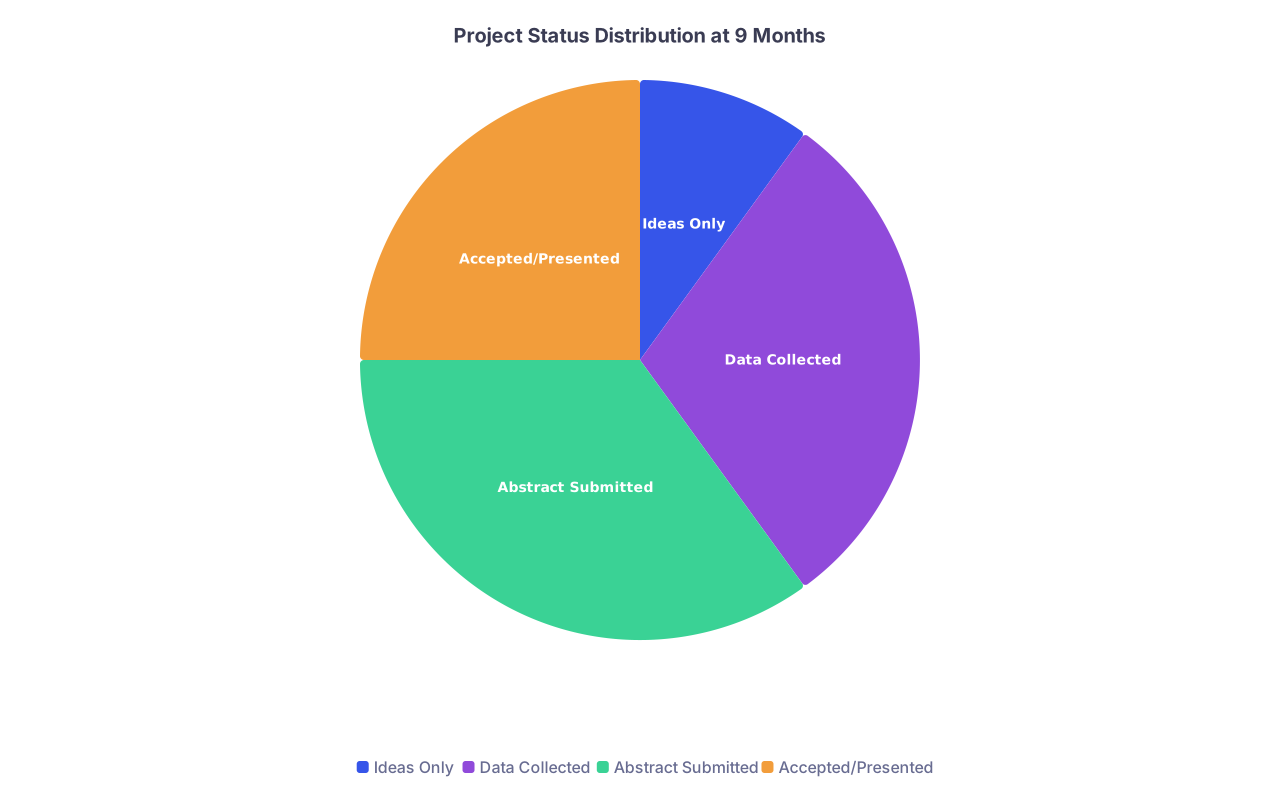
- Status (idea / data collection / analysis / abstract submitted / accepted / manuscript submitted)
- Dates
| Category | Value |
|---|---|
| Ideas Only | 10 |
| Data Collected | 30 |
| Abstract Submitted | 35 |
| Accepted/Presented | 25 |
Your goal by ~month 9:
- Very few “Ideas Only”
- A large chunk in “Abstract submitted” and “Accepted/Presented”
Show this progress explicitly when you talk to PDs and faculty:
“Since last cycle, I have joined two projects in [specialty]. One abstract has been submitted to [conference], and we are preparing the manuscript now. A second QI project just completed its first cycle, and we are finalizing data for our local QI day.”
That sounds like someone who uses time well. That is the impression you are buying with your effort.
Step 12: Integrate This Work with Your Application Strategy, Not Separate From It
Research and QI are not standalone decorations. They must be part of a coordinated repair plan alongside:
- Smarter application list (more community programs, more geographic spread)
- Updated letters that comment on your last year, not just med school
- A rewritten personal statement with a clear narrative of growth
- Strategic communication with PDs (emails, post-interview updates referencing your new work)
Remember what PDs actually want to know when they see your reapplication:
- Did you drift for a year, or did you move forward?
- Did you ignore your weaknesses, or did you attack them directly?
- Can you now survive and contribute in my residency?
Good research and QI projects — chosen and executed strategically — let you answer “yes” with evidence.
Open your CV right now. Identify the biggest hole that made PDs hesitate this cycle. Then write down one research or QI project idea that directly targets that weakness and commit to emailing three potential mentors about it by the end of today.