

You close the browser tab with your NRMP result and just stare at the wall. Unmatched. Your phone buzzes with group texts about Match Day pictures and you flip it face down because you also have $280,000 in federal loans coming out of deferment soon. No job, no residency salary, and six figures of debt feels like it’s sitting on your chest.
If that’s where you are, I’m not going to tell you “it’ll all work out.” It might. But only if you stop spiraling and start treating this like what it is: an urgent financial and strategic problem you can absolutely manage if you act deliberately over the next 2–4 weeks.
Let’s walk through what to do, in order.
Step 1: Stabilize Your Immediate Financial Situation (Next 30–60 Days)
Right now, you have two jobs: stop the financial bleeding and buy yourself time to think.
1. Get a brutal, honest cash picture
Open a blank page and list:
- Cash in checking/savings
- Any credit card balances and interest rates
- Any personal loans
- Monthly fixed expenses (rent, car, insurance, phone, subscriptions)
- Variable baseline (food, gas, etc. at bare minimum)
Then do the math: how many months can you survive with zero income if you strip your lifestyle to the studs?
If you’re too stressed to do this alone, grab a friend or family member and screen-share. I’ve literally sat on Zoom with grads while they pulled up every account.
2. Cut expenses ruthlessly, not cosmetically
You are in “preserve runway” mode, not “I’ll try to save a bit.” Think: what would I cut if I had to?
- Move home or get a cheaper room if that’s at all possible. Pride is expensive.
- Cancel everything nonessential: streaming, gym, subscriptions, meal kits.
- Downgrade your phone plan. Eat at home. You get the idea.
You’re trying to create a 12-month runway where your basic living costs are as low as they can reasonably go. You don’t need comfort. You need time.
3. Understand your loan status and deadlines
You cannot bury your head here. Get onto your federal loan servicer’s site and write down:
- Total loan amount
- Type (Direct, Grad PLUS, Perkins, private)
- Grace period end dates or first payment date
- Current interest rates
For most recent grads:
- Federal loans: you’ll get a 6-month grace period after graduation, not after Match. If you’re already past that, you’re in repayment.
- Private loans: grace periods vary and are often less generous. Some may already be accruing interest aggressively.
If you don’t know, call the servicer and ask specific questions like, “When is my first required payment?” and “What are my options for income-driven repayment?”
Step 2: Lock Down Loan Damage Control
Your unmatched status doesn’t give you special magic with lenders. But you still have leverage: you’re technically low-income, and that opens doors.
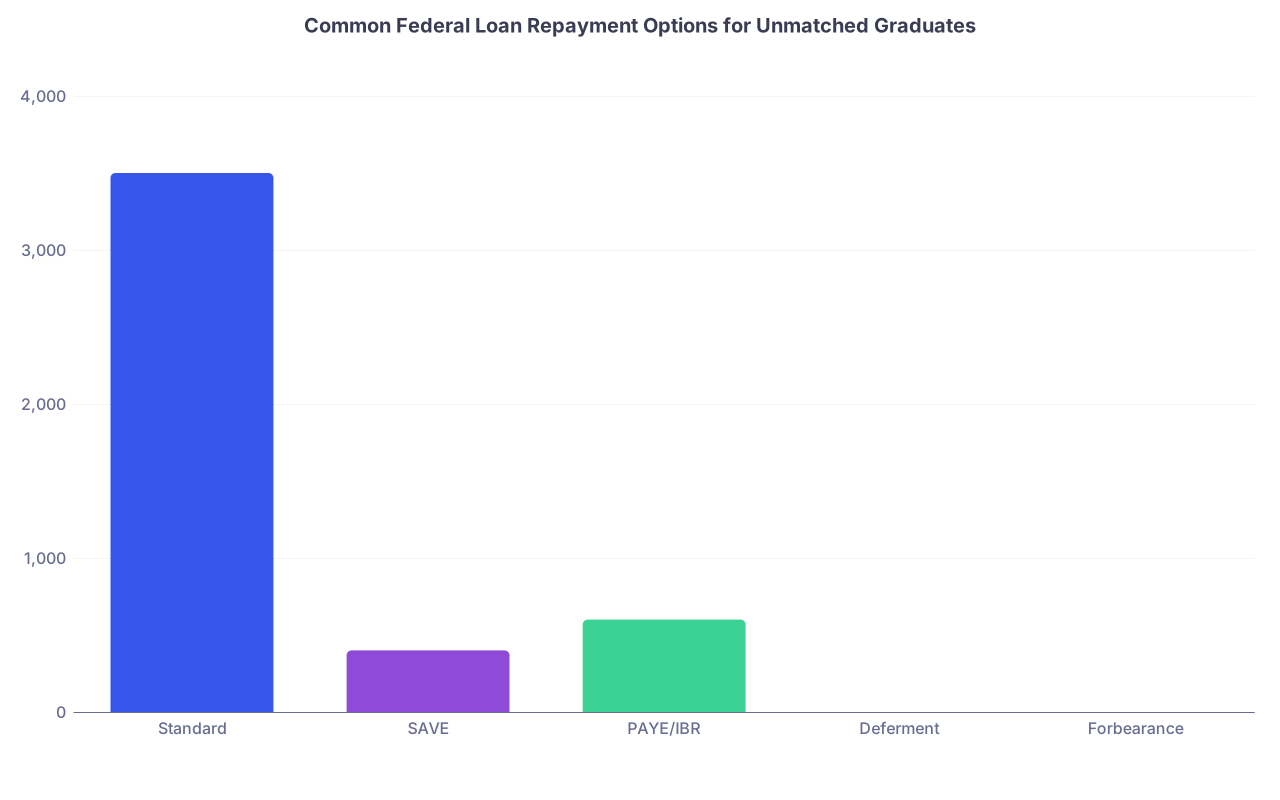
| Category | Value |
|---|---|
| Standard | 3500 |
| SAVE | 400 |
| PAYE/IBR | 600 |
| Deferment | 0 |
| Forbearance | 0 |
(Values are illustrative monthly payments for a high-debt borrower.)
1. For federal loans: get on an income-driven plan now
If you have no income or very low income, your payment on plans like SAVE (the new REPAYE replacement) may be close to zero.
Action steps:
- Go to studentaid.gov
- Use the loan simulator with your actual numbers.
- Submit an application for an income-driven repayment plan (SAVE if offered).
If your current income is zero, that’s your income. You’re not lying. Save screenshots or PDFs of your application.
Why this matters:
- You avoid delinquency and default mess.
- You keep options open for future Public Service Loan Forgiveness (PSLF) if you eventually work in qualifying employment.
- You mentally remove “huge loan payment” from your immediate anxiety list.
Do not wait until you have a job. Apply now based on current income.
2. Use deferment/forbearance surgically, not as a default
Everyone’s first instinct: “Can I just put loans in forbearance?” You can, but:
- Interest usually keeps accruing
- You’re not making progress toward PSLF or forgiveness
- It can snowball the total balance brutally over a few years
When deferment/forbearance is appropriate:
- You have a short-term gap (3–6 months) and expect real income soon
- You’re dealing with a personal crisis and cannot manage even $0 paperwork
For most unmatched grads planning a 1–2 year reapplication push, income-driven repayment is usually smarter than endless forbearances.
3. If you have private loans, get on the phone
Private lenders do not care about PSLF, but they do care about not losing money.
Call and say something like:
“I just completed medical school but did not match into a paid training program. My current income is $X and my minimum payment is not sustainable. What temporary hardship or modified repayment options are available? Do you offer interest-only payments or reduced payments for 6–12 months?”
Push for:
- Temporary interest-only payments
- Extended terms to drop monthly payments
- Hardship forbearance if you’re truly stuck
Document every call, name, and agreement.
Step 3: Decide Your Strategic Path: Reapply vs. Pivot
You can’t plan your finances in a vacuum. You need a working answer to: Am I trying again or walking away from residency?
You don’t need a 100% locked-in decision in week one. But you do need a leaning because it changes what jobs you take, where you live, and how you spend your time.

| Step | Description |
|---|---|
| Step 1 | Unmatched with Debt |
| Step 2 | Reapply in 1 year |
| Step 3 | Delay 2 plus years |
| Step 4 | Permanent pivot |
| Step 5 | Clinical gap-filling job |
| Step 6 | Academic or research job |
| Step 7 | Nonclinical higher income |
| Step 8 | Reapply? |
Option 1: Reapply in 1 year (most common)
If you’re planning to re-enter the Match next cycle, the goal is “support myself financially while improving my application.”
Constraints:
- You need time for: research, clinical exposure, Step 2 CK or OET improvements, better letters, networking.
- You cannot be completely removed from clinical medicine for a year and expect programs to ignore that gap.
You want a job that:
- Pays enough to cover your lean expenses
- Leaves 10–20 hours per week for application improvement
- Preferably is clinically or academically adjacent
Option 2: Reapply later (2+ years) or not at all
If you’re leaning toward a longer break or permanent pivot:
- Income priority jumps way up.
- Clinical relevance becomes less important (though every year away from medicine makes re-entry harder—programs absolutely care about recency).
Step 4: Choose Income That Supports Your Strategy
Here’s where people either set themselves up to succeed or accidentally trap themselves in a 60-hour unrelated job that kills their reapplication chances.
Good job types if you plan to reapply next cycle
You want something in or near healthcare. Hiring managers love MD/DO grads because you can handle complexity and talk to patients.
Common realistic options:
Clinical research coordinator / research assistant
- University hospitals, cancer centers, big academic centers
- Pros: research output, letters from MDs, flexible-ish hours
- Cons: Pay can be mediocre; apply broadly.
Medical scribe (in-person or remote)
- ED, outpatient, telemedicine scribes
- Pros: Clinical exposure, your MD background makes you fast, decent schedule flexibility
- Cons: Lower pay; not ideal if you have large family support needs.
Clinical assistant / patient navigator / care coordinator
- Roles with titles like “care coordinator,” “population health associate,” “clinic assistant”
- Pros: Direct patient interaction, often 9–5, sometimes solid benefits.
- Cons: You may have to swallow being overqualified.
Teaching roles
- MCAT instructor, USMLE tutor, college adjunct for anatomy/biology
- Pros: Flexible, can pay well if you’re good, keeps knowledge sharp.
- Cons: Market may be saturated; inconsistent hours at first.
Formal post-match/prelim year opportunities (rare but real)
- Unfilled or off-cycle prelim/TY positions, especially in internal medicine or surgery
- If you can secure even a late-start PGY1, that’s often gold for reapplying.
| Role Type | Clinical Relevance | Typical Hours | Pay Level* |
|---|---|---|---|
| Research Coordinator | High | 40 | $ |
| Medical Scribe | Moderate-High | 30–40 | $ |
| Care Coordinator/Navigator | Moderate | 40 | $ |
| MCAT/USMLE Tutor | Indirect | 10–30 | $-$$ |
| Nonclinical Tech/Analytics | Low | 40+ | $$ |
*Relative scale, not absolute.
Jobs that may pay better but can sabotage a reapplication
- High-intensity nonclinical roles (consulting, banking, full-time tech)
- Anything with 60–70 hour weeks and no flexibility
- Remote work where you slowly detach from all things clinical and do nothing to maintain knowledge
These might make sense if you’re leaning toward Option 2 or 3 (long delay or permanent pivot), but they’re usually a trap if you say you’ll reapply in a year and then never fix your application weaknesses.
Step 5: Build a 12–18 Month Financial Plan Around Your Strategy
Now combine everything:
- Your lean monthly expenses
- Your likely income from a realistic job you can actually get
- Your loan payments on income-driven plans or temporary hardship options
Your goal is simple: don’t go further into consumer debt while giving yourself a real shot at your next move.
A concrete example
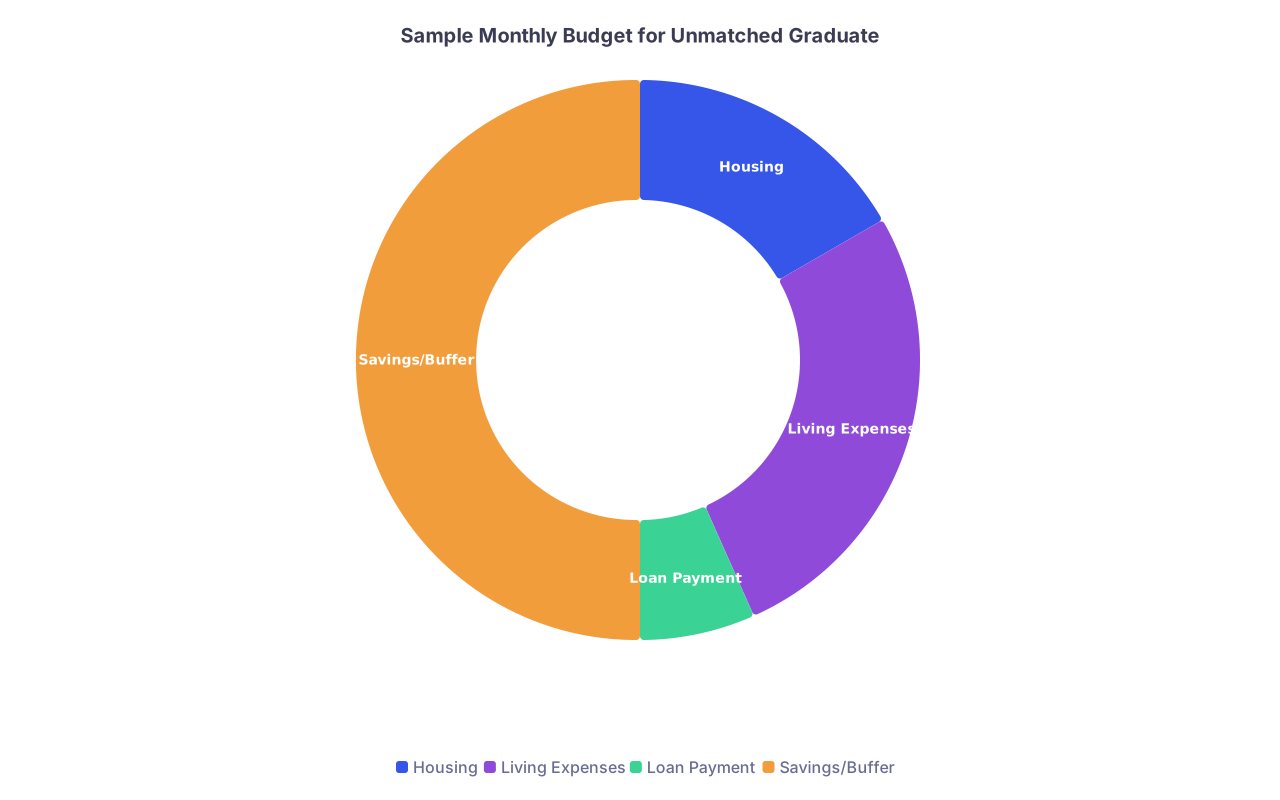
Let’s say:
- Federal loans: $280k, all Direct
- Living situation: move back home, pay $500/month “rent”
- Other expenses (phone, food, transport, etc.): $800
- Total lean monthly: $1,300
- You get a research coordinator job at $48,000/year (~$3,000/month take-home after taxes)
- On SAVE with low documented income initially, your federal payments may be $0–$200/month
Suddenly you’re not drowning. You:
- Cover your $1,300 expenses
- Add $200 toward loans
- Have ~$1,500 cushion for savings/emergency and test fees/app costs next cycle
That’s exactly the kind of boring, unglamorous setup that gives you options.
| Category | Value |
|---|---|
| Housing | 500 |
| Living Expenses | 800 |
| Loan Payment | 200 |
| Savings/Buffer | 1500 |
If the math doesn’t work
If your projected numbers never show you getting into the black, you need to adjust one of three dials:
- Lower expenses further (roommates, different city, sell car, etc.)
- Target higher-income roles (MCAT/USMLE tutoring, pharma, analytics, etc.)
- Consider moving temporarily to a lower cost-of-living area
What you cannot do is pretend the numbers will magically improve later. If the spreadsheet says “- $600/month,” you will end up on credit cards and that’s a very slippery slope.
Step 6: Use This Year to Fix the Actual Reasons You Went Unmatched
This is the “strategic” part. Plenty of people go unmatched with debt and spend a year sort of working, sort of studying, and then send the same application back into the void.
That’s a good way to have no residency and the same loans.
You need a diagnosis of your application. Not vibes. Data.

1. Get blunt feedback from people who actually see applications
Email or meet with:
- Your medical school’s Dean’s office / career advising
- Program directors or APDs at places where you interviewed
- Trusted attendings who know your work
Ask very direct questions:
- “If you had to name the top 2–3 reasons I didn’t match, what would they be?”
- “If I reapply, what would you need to see change to feel comfortable ranking me?”
- “Is my specialty choice realistic given my record, or should I seriously consider X or Y?”
You want specifics: Step failures? Weak letters? No research? Poor interview skills? Specialty far more competitive than your metrics?
2. Align your year with your specific deficits
Some examples:
- Low Step 2 CK score → dedicate structured time to retake (if applicable), document the improvement, and be ready to explain the narrative.
- Lack of US clinical experience (especially for IMGs) → prioritize observerships, paid assistant roles, or any hands-on exposure you can get.
- No research in a competitive specialty → research job is now priority #1.
- Red flags (failures, professionalism concerns) → you need strong, recent letters from supervisors who can vouch for your reliability and growth.
3. Keep at least a toe in clinical work
Programs hate big unexplained clinical gaps.
Even if your main job is research or nonclinical, try to:
- Volunteer at free clinics (if allowed by your status)
- Scribe, even part-time
- Shadow regularly and have that documented
- Teach clinically relevant content (step prep, anatomy, etc.)
Make sure you can truthfully say, “I remained engaged with clinical medicine through…”
Step 7: If You Decide to Pivot Away From Residency
Some of you are reading this and already know: you’re done chasing residency. That’s valid. But you have to treat it as a real, permanent-feeling decision, not a vague “maybe later” while you take random jobs.
1. Accept the trade
If you stop pursuing residency:
- You may never practice as a physician
- That MD/DO becomes a strong credential, but not a license
- Your highest-leverage asset becomes your ability to understand complex systems, science, and people, not your ability to bill RVUs
What you get in exchange:
- Ability to pursue higher-paying roles faster
- More control over geography and hours
- Possibly less burnout and stress long-term
2. Target nonclinical paths that actually pay
Real examples where unmatched doctors have landed:
- Medical affairs or MSL roles in pharma/biotech
- Health tech companies (clinical product, implementation, data science, medical content)
- Healthcare consulting
- Public health roles, epidemiology, policy
- Education (test prep leadership, curriculum development)
These often pay significantly more than a PGY1 salary. But they require a deliberate search, networking, and sometimes upskilling (basic data analytics, coding, business concepts).
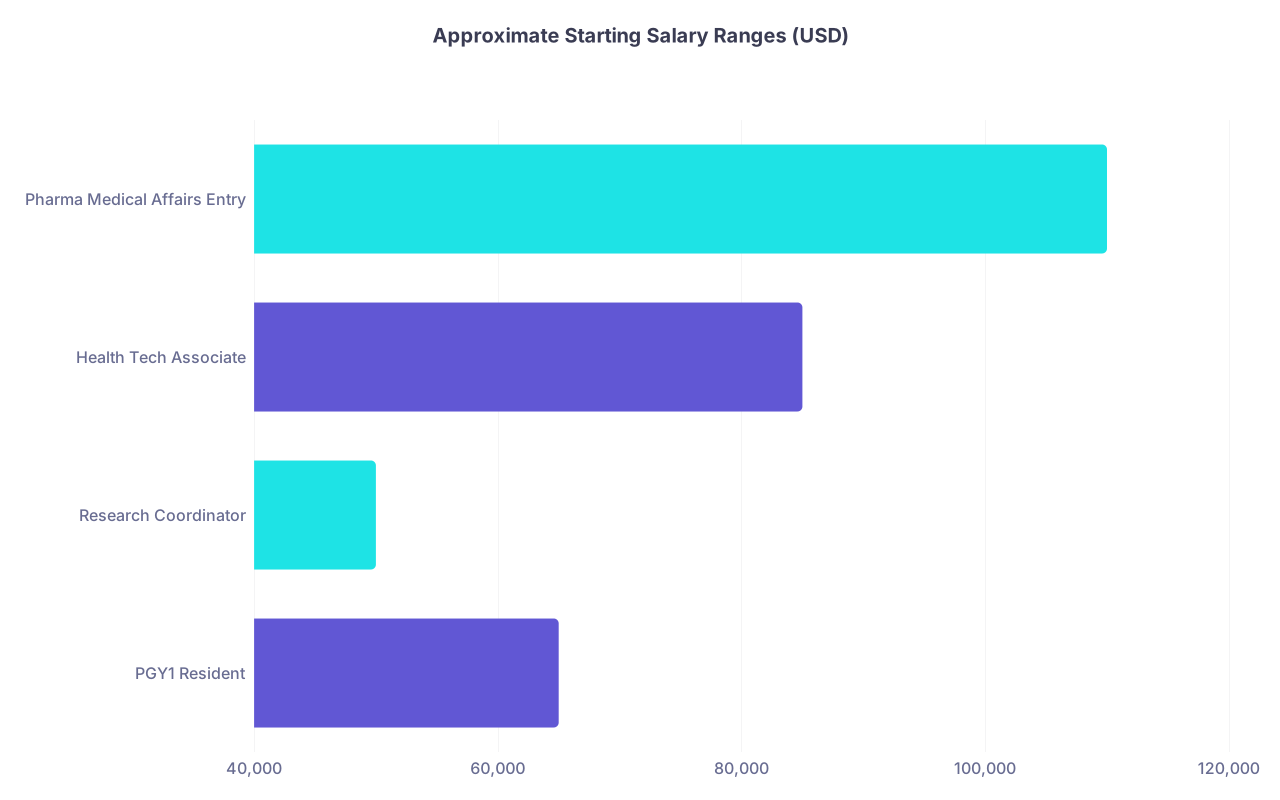
| Category | Value |
|---|---|
| PGY1 Resident | 65000 |
| Research Coordinator | 50000 |
| Health Tech Associate | 85000 |
| Pharma Medical Affairs Entry | 110000 |
Step 8: Emotional Triage (Because It Affects Your Money Decisions)
People make terrible financial decisions when they’re ashamed or panicking. I’ve watched unmatched grads:
- Hide from loan servicer emails until they’re in delinquency
- Take the first job offered, even if it wrecks their reapplication chances
- Reapply to 80 programs with the same weak application because they’re too ashamed to ask what went wrong
You can’t afford that.
Two practical things that actually help:
Build a tiny “board of advisors”
- One peer in the same boat
- One mentor/attending
- One non-medical adult who is good with money
Use them to sanity-check big decisions.
Schedule “money hour” once a month
- Log into all financial accounts
- Update your budget
- Check loan status and credit score
- Adjust as needed
You don’t need to love it. You just need to show up and not let this stuff rot in the background.

Quick Timeline: What To Do This Month vs. This Year
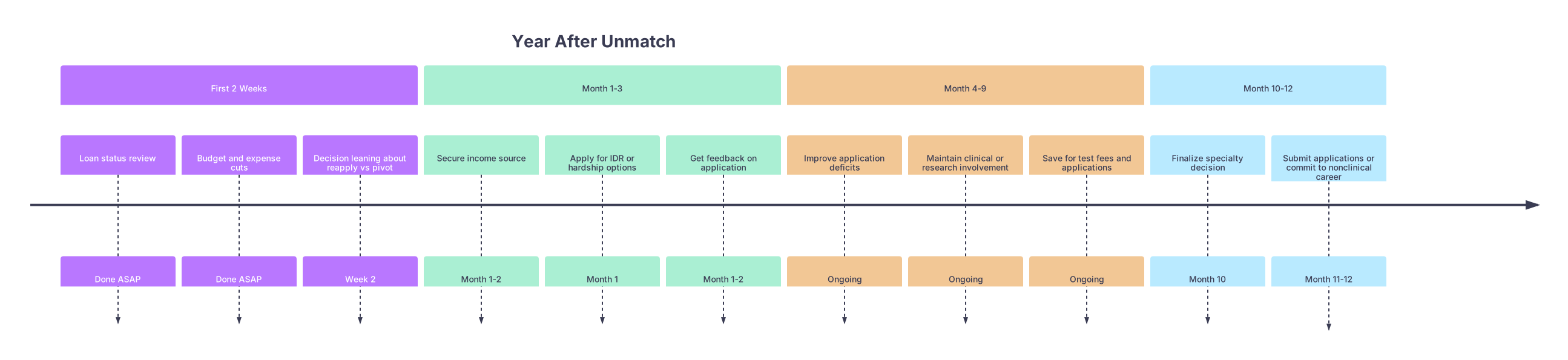
| Period | Event |
|---|---|
| First 2 Weeks - Loan status review | Done ASAP |
| First 2 Weeks - Budget and expense cuts | Done ASAP |
| First 2 Weeks - Decision leaning about reapply vs pivot | Week 2 |
| Month 1-3 - Secure income source | Month 1-2 |
| Month 1-3 - Apply for IDR or hardship options | Month 1 |
| Month 1-3 - Get feedback on application | Month 1-2 |
| Month 4-9 - Improve application deficits | Ongoing |
| Month 4-9 - Maintain clinical or research involvement | Ongoing |
| Month 4-9 - Save for test fees and applications | Ongoing |
| Month 10-12 - Finalize specialty decision | Month 10 |
| Month 10-12 - Submit applications or commit to nonclinical career | Month 11-12 |
FAQs
1. Should I borrow more (credit cards, personal loans) to “invest” in a stronger reapplication?
Usually, no. If you’re talking about high-interest debt to pay for yet another “premium” advising service, expensive courses, or a luxury away rotation, that’s almost always a bad trade. The acceptable exceptions are:
- Modest, controlled borrowing for required exams (Step 2 CK, OET, etc.) when you have a clear plan and timeline.
- One strategically chosen away rotation in a realistic specialty where you already have strong connections.
Even then, you should first see if you can squeeze the cost from tightening your budget or increasing work hours slightly. Digging a deeper high-interest hole to “save” your application is how people end up with $350k+ debt and still no residency.
2. Is it ever smart to take a high-paying nonclinical job for a year and then jump back to residency?
Sometimes, but be honest about the risk. If you disappear into a 70-hour health-tech or consulting role and do nothing clinically related for a year, many programs will see that as a big red flag. It can be done if:
- You keep an explicit clinical thread (volunteering, shadowing, teaching clinical content).
- You use the job to build relevant skills (quality improvement, data analytics, process improvement in healthcare).
- You can clearly articulate why you’re coming back to residency and not just hedging.
But if your heart is already halfway out the door, the “one year then I’ll try again” line usually turns into a permanent pivot.
3. How honest should I be with loan servicers and employers about being unmatched?
With loan servicers: completely honest about your income and status. They don’t care about your ego. They care about numbers. Your unmatched status is simply context for low income.
With employers: selective and strategic. For clinically adjacent roles (research, scribe, coordinator), saying you’re a recent med grad reapplying to residency is fine and often a plus. For nonclinical roles where they might worry you’ll leave in a year, emphasize your commitment to doing excellent work there for at least X period, and only share reapplication plans if asked directly. You don’t owe every interviewer your entire emotional saga of the Match.
Open a blank document or sheet right now and write three lines:
- “Lean monthly expenses: $____”
- “Realistic job(s) I will apply to this week: _______”
- “My leaning (reapply vs pivot) and what that means for this year: _______”
Seeing those three things in writing forces your brain out of “this is a catastrophe” and into “this is a hard problem I’m actively solving.” That shift is the difference between debt running your life—and you running the plan.


