

What do you do when it’s October of your prelim year, you’re on your third night float in a row, and you suddenly realize: “I picked the wrong specialty”?
You’re not the first. And you’re not stuck. But the clock is running, and the way you handle the next 3–6 months will decide if you land in a better-fit specialty or end up scrambling for whatever is left.
Let’s walk through what to do right now if you’re already in a prelim year and want to switch.
First: Get Very Clear on Your Actual Situation
Before you make any moves, you need a brutally honest inventory of where you stand. Not vibes. Data.
Ask yourself these questions and write the answers down. Literally. On paper.
What kind of prelim year are you in?
- Prelim medicine (categorical-style IM without guaranteed continuation)
- Prelim surgery
- Transitional year (TY)
- Another structured PGY-1 (like prelim neuro or anesthesia)
What was your original plan?
- Matched into:
- Advanced specialty that requires a prelim (e.g., anesthesia, derm, radiology, ophtho, rad onc, neurology at some places)
- Just doing a prelim because you did not match categorical anywhere
- Matched into:
Current commitment:
- Do you already have an advanced PGY-2 spot lined up for next year?
- Or are you free after this year ends?
Your academic/record profile:
- USMLE/COMLEX scores (Step 1 pass/fail still matters via your Step 2)
- Any failures, leaves, professionalism concerns
- Strength of your current evaluations in prelim
- Visa status if applicable
Timing:
- What month is it right now?
- Have ERAS already opened/been submitted for this cycle?
You need this laid out before you talk to anyone. Because attendings and PDs will ask. And they can smell “I haven’t thought this through” a mile away.
Decide Which of Three Tracks You’re Actually On
Most prelim residents trying to switch fall into one of three situations.
| Scenario | Status Next Year | Main Goal |
|---|---|---|
| A | No PGY-2 spot | Get categorical spot ASAP |
| B | Have advanced spot | Decide to abandon or not |
| C | TY/prelim as gap year | Pivot strategy or specialty |
Scenario A: You Only Have a Prelim Year, Nothing After
Example: You’re a prelim medicine intern at a community hospital. You didn’t match categorical IM last year. You took prelim thinking you’d “figure it out later.” It’s now October. You realize you actually want family med or psych or anesthesia.
Your reality:
You’re effectively re-entering the Match as a PGY-1 with one year of GME and no guaranteed PGY-2. Programs will wonder:
- Why didn’t you match categorical last year?
- Why are you switching now?
- Are you running from something or to something?
You need:
- A coherent story
- Strong letters from your current program
- A clear application plan for this cycle (or next)
Scenario B: You Matched an Advanced Spot and Want Out
Example: You matched:
- Prelim surgery + advanced radiology
or - TY + advanced anesthesia
And halfway through your prelim you realize: “I do not want to do radiology/anesthesia/ophtho/etc for the rest of my life.”
That’s higher stakes. Because:
- You have a PGY-2 spot you’re planning to walk away from
- Your current and future PDs will both be involved
- Burning bridges is very possible if handled poorly
You need:
- To be absolutely sure you’re switching to something, not just away from discomfort
- To time conversations carefully
- To understand NRMP rules and contract obligations
Scenario C: Transitional Year With No Defined Path
Example: You’re in a nice cushy TY, originally thinking anesthesia or radiology. Scores are decent. Now you’re realizing you actually want IM, EM, or maybe even psych.
You often have more flexibility, but less leverage. TYs can be seen as “generic interns” unless you show clear direction fast.
Step 1: Confirm You Actually Want to Switch (and to What)
Do not blow up your current path because you had three bad rotations or one malignant senior.
You switch specialties for:
- Persistent mismatch between your values/energy and the day-to-day work
- Repeated dread that doesn’t improve rotation to rotation
- Clear attraction to a different specialty you’ve seen enough to understand
You do not switch solely because:
- “The hours are bad” (they’re bad almost everywhere as an intern)
- One attending humiliated you on rounds
- The learning curve feels steep
Here’s what to do this month:
Write out your day vs. your ideal
Take one of your call days, and list:- What parts drain you the most?
- What parts are the least miserable? (Note: “least miserable” matters more than you think right now.)
- When do you actually feel engaged?
Shadow or rotate in the specialty you’re eyeing
If you’re prelim IM and thinking about anesthesia, ask your chief or PD if you can do:- A 2–4 week elective in anesthesia
- Or at least a couple of shadow days on your golden weekends or days off
Same if you’re prelim surgery but looking at EM, IM, or radiology.
Talk to someone one or two years ahead in that specialty
Not a chair. Not a PD. A PGY-2 or PGY-3 who will tell you the unvarnished version:- “Yes, EM is more your style if you like fast decisions and hate notes”
- “No, you will hate derm if you like acutely sick patients and call excitement”
If, after doing this, you still feel pulled strongly toward a specific specialty and dreading staying in your current one long term, then you’re not overreacting. You’re probably right to pivot.
Step 2: Figure Out Your Timeline – This Cycle vs Next
Your next major decision:
Are you trying to switch for this coming July, or are you accepting that you might not switch until the following July?
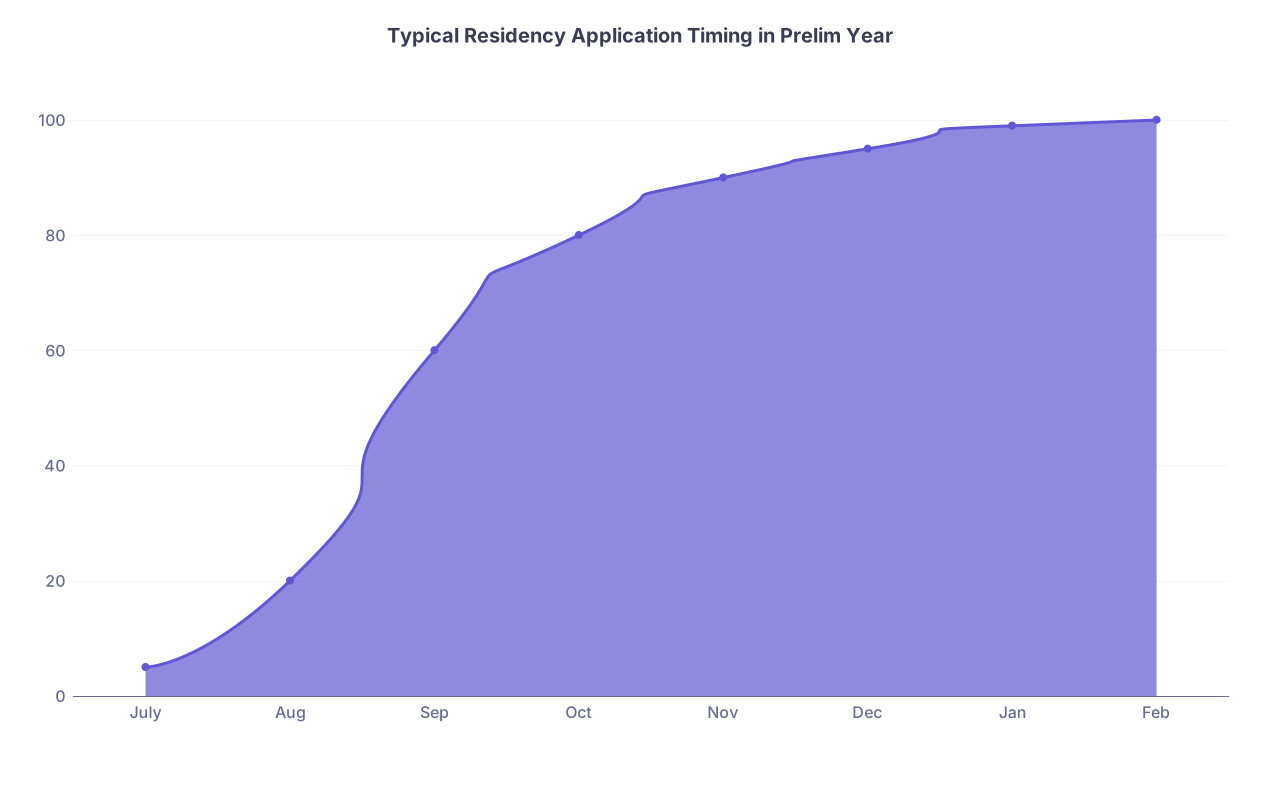
Here’s the rough reality on timing:
| Category | Value |
|---|---|
| July | 5 |
| Aug | 20 |
| Sep | 60 |
| Oct | 80 |
| Nov | 90 |
| Dec | 95 |
| Jan | 99 |
| Feb | 100 |
That line is how “closed” the realistic options become as the year moves forward (100 = basically closed).
Translation:
- July–September: Best shot to enter the main ERAS cycle as a switcher
- October–December: Late, but some programs will still look. Especially less competitive specialties or unfilled/community programs
- January–February: Mostly relying on:
- Off-cycle positions
- Mid-year transfers
- SOAP in March if you go unmatched
If it’s:
- June–August: You should be preparing a full ERAS application now
- September–October: Still apply, but you’re behind. You must be targeted and aggressive.
- November or later: Realistically, you’re probably aiming for:
- Off-cycle PGY-1/PGY-2 positions
- Next year’s Match
Step 3: Decide Who to Tell, and in What Order
This part you have to handle like an adult. Sloppy conversations ruin options fast.
1. Confidential external reality check (before telling your PD)
Talk to:
- A faculty mentor from med school you trust
- Or a senior resident/fellow in the specialty you want to switch into
- Or your med school’s dean of students/academic advisor (they’ve seen this before)
Goal: sanity check your plan and your competitiveness.
Questions to ask directly:
- “With my Step scores and this prelim year, would I be a realistic candidate for [specialty]?”
- “Would you apply this cycle or next if you were me?”
- “What are my biggest red flags?”
Only after that do you go internal.
2. Then your current program leadership
You will almost certainly need:
- A letter from your prelim PD
- Verification of your PGY-1 training
- Possibly support for off-cycle or categorical applications
So you cannot blindside them in March with “oh by the way I’m trying to leave.”
How to approach it:
- Ask for a meeting with your PD
- Go in with:
- Clear reasoning (“I’ve learned a lot about myself in these first months…”)
- A destination specialty, not just “I hate this”
- Reassurance about your performance for the rest of the year
Script you can adapt:
“Dr. Smith, I’m grateful for the opportunities here and I’m committed to finishing this year strong. Over the past few months, through rotations and talking with mentors, I’ve realized that long-term my interests and strengths align better with [new specialty] than [current path]. I want to be transparent with you early and get your guidance about how to approach applications while honoring my responsibilities to this program.”
If you do this early, many PDs will:
- Respect your honesty
- Help shape your application
- Connect you with colleagues in the new specialty
If you do this late and half-baked, many PDs will:
- Block you
- Refuse a strong letter
- Quietly tell others you’re unreliable
Step 4: Build a Clean Story for Your Switch
Programs do not want to hear:
- “I hated my prelim”
- “Surgery is toxic”
- “IM is miserable”
- “I just can’t handle these hours”
They want:
- A narrative of growth
- Evidence that you understand their specialty
- Proof you’re not going to bail again
Your story needs three parts:
What you learned about yourself in your prelim year
“During my prelim medicine year, I realized I’m most engaged in…- longitudinal patient relationships
- acute decision making in the ED
- procedural work in the OR but not clinic
- diagnostic reasoning with imaging”
Why [new specialty] is the better fit
Be specific:- For EM: fast-paced, team-based, shift work, breadth of pathology
- For IM: complex inpatient medicine, multi-problem solving, long-term chronic disease care
- For anesthesia: physiology focus, acute perioperative management, procedures, shorter patient interactions
- For psych: longitudinal relationships, narrative focus, diagnostic and therapeutic collaboration
Evidence that your interest is real, not impulsive
- Elective rotations
- Shadowing
- Research or QI in the new field
- Concrete mentorship relationships
You use this same framing in:
- Your personal statement
- PD emails
- Interviews
- Conversations with faculty
Step 5: Application Mechanics as a Prelim Switcher
Now the nuts and bolts.
ERAS Strategy
You are not a traditional PGY-1 applicant anymore. Programs will filter you differently.
You should:
Apply broadly.
Broader than you think. Especially if:- Your scores are average or below
- You’re switching into a moderately or highly competitive field
Target programs that:
- Have a history of taking prelims or PGY-1/PGY-2 transfers
- Are community or university-affiliated community hospitals
- Aren’t the top 10 name-brand places that can choose from perfect MS4s
If you’re moving from:
- Prelim IM → Categorical IM or FM or psych:
Very doable if your performance is strong and your story is good. - Prelim surgery → EM, IM, anesthesia:
Common enough that PDs won’t be shocked. - TY → any categorical:
Seen all the time, but you need substance (letters, performance) not just “I did a TY.”
Letters of Recommendation
- Current prelim PD or associate PD
- One strong attending in your current field who can say:
- You work hard
- You function at or above PGY-1 level
- You are safe, reliable, teachable
Specialty-specific letters:
- At least one (preferably two) from attendings in the new field
- If you didn’t do rotations in that field as an MS4, you need to hustle now:
- Ask for elective time if your schedule allows
- Use your days off strategically to shadow and build relationships
Do not:
- Reuse a glowing letter from your prior intended specialty where you talked about being “100% committed to radiology for life”
PDs do read between the lines.
Programs to Target
You should consciously decide what level of competitiveness you’re aiming for.
| Destination | As Prelim IM | As Prelim Surg | As TY |
|---|---|---|---|
| IM | High | Medium | High |
| FM | Very High | Very High | Very High |
| Psych | High | Medium | High |
| EM | Medium | Medium | Medium |
| Anesthesia | Medium | Medium | Medium |
| Radiology | Medium-Low | Medium | Medium-Low |
| Derm/Plastics/ENT | Very Low | Low | Very Low |
Not impossible to switch into ultra-competitive fields. But if you’re already mid-prelim, have average scores, and no existing connection, chasing derm from a prelim medicine year is fantasy.
Step 6: What If You Already Have an Advanced Spot for Next Year?
This is the trickiest group.
Scenario:
- You’re a prelim surgery intern.
- You’re holding an advanced radiology spot starting PGY-2.
- You now want EM.
You need to decide:
Are you truly willing to walk away from a guaranteed advanced spot?
That’s a serious move. It might mean:- One or more extra gap years
- Financial hit
- Visa complications if you’re an IMG
What are your contractual obligations?
- Some advanced programs will expect notification by a certain date if you’re not coming
- You may technically be in breach if you ghost them after Match
- Real-world outcome: your name will be known for bailing, and that can leak
Who do you talk to first?
- Start with a mentor outside both programs
- Then your prelim PD
- Only once you have a viable plan do you contact the advanced PD
How to frame the conversation with the advanced PD (if you decide to back out):
“Dr. Lee, I’m very grateful for the opportunity to train in your program. Over the course of this intern year, I’ve learned that my professional interests align better with [new specialty] than with [advanced specialty]. I wanted to let you know as early as possible so your program has time to adjust future planning. I understand the difficulty this creates and I’m happy to assist however I can.”
Is this going to make them thrilled? No. But it’s the least-bad version.
Step 7: If You Miss This Cycle – How to Use the Extra Year
Sometimes, despite doing everything right, timing and numbers just don’t work. You finish your prelim. You don’t have a categorical or PGY-2 spot yet.
This is salvageable, but only if you don’t drift.
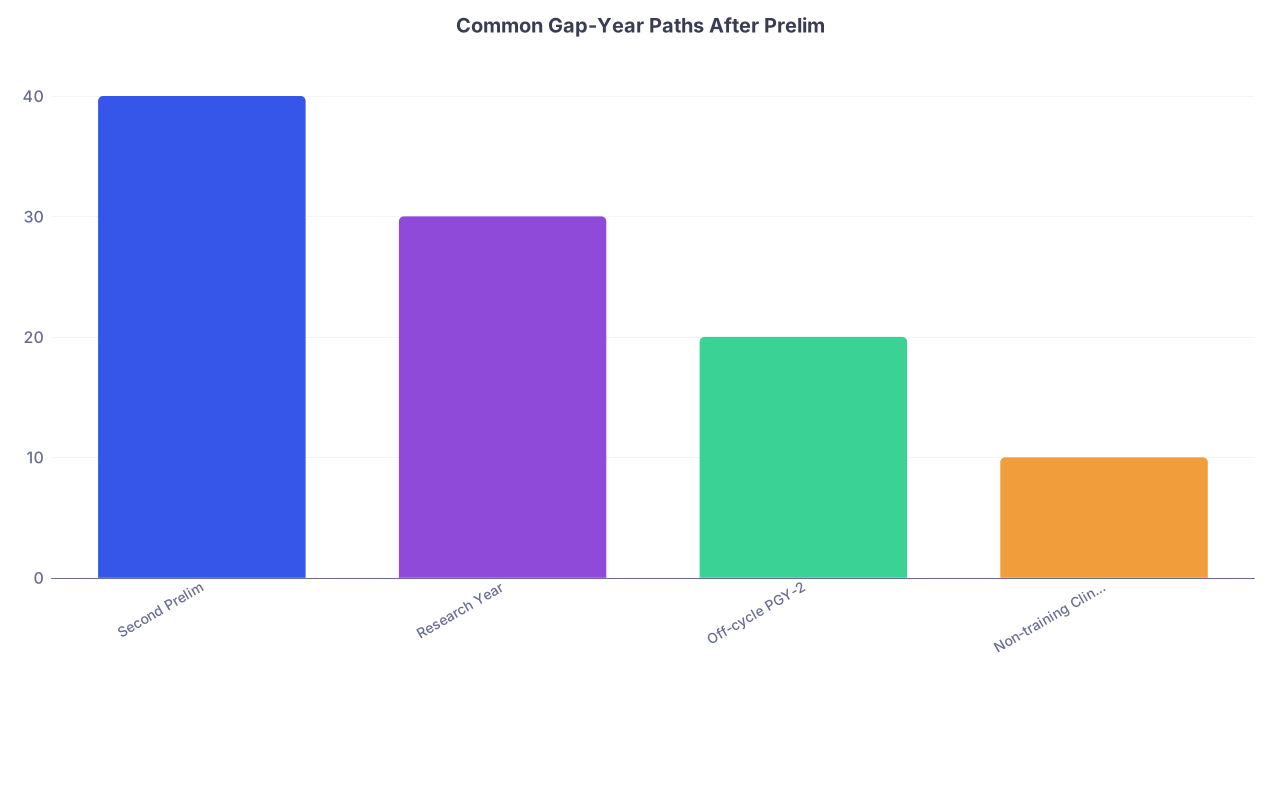
Here are realistic bridge options:
- A second prelim year (not ideal, but sometimes necessary)
- A research year in your target specialty
- A non-standard PGY-2 position (off-cycle opening)
- Locums or non-training clinical work (less common for early grads)
| Category | Value |
|---|---|
| Second Prelim | 40 |
| Research Year | 30 |
| Off-cycle PGY-2 | 20 |
| Non-training Clinical | 10 |
How to not waste that year:
- Stay clinically active if at all possible
- Continue getting letters from people in the new specialty
- Do something tangible: QI project, research with posters, curriculum work, etc.
- Reapply early and broadly the next cycle
Step 8: Don’t Blow Up Your Current Reputation While Planning Your Escape
Here’s where people screw this up:
They mentally quit their prelim year once they decide to switch. Performance drops. Professionalism slips. PD notices. Suddenly that glowing letter becomes a polite “meh” letter. Or worse.
You cannot afford that.
So:
- Show up on time
- Do your notes
- Be teachable
- Take feedback without defensiveness
- Support your co-interns
Program directors talk. If your current PD calls a future PD and says, “Honestly, I’d take this person back in a heartbeat,” you’re golden. If they say, “We’re not renewing them,” you’re done.
Step 9: Emotion Side – How to Stay Functional While Your Plan Changes
You’re sleep-deprived, doubting yourself, and staring at a future you might be about to detonate. Not exactly calm-decision territory.
A few simple rules that help:
Do not make a specialty switch decision on night float
Give yourself 2–3 weeks back on days before finalizing.Talk to exactly 2–3 trusted humans about this
Not every co-intern. Not anonymous Reddit doctors.
Two to three people who know you and will call you out if you’re being impulsive.Separate “I hate being an intern” from “I hate this specialty”
Everyone hates parts of intern year.
You’re looking for a mismatch that persists even on your better days.
A Quick Example: How This Can Actually Play Out
Let’s do a real-world style example.
- You: Prelim IM at a mid-tier university-affiliated hospital
- Scores: Step 1 pass, Step 2 = 233
- Original plan: Wanted radiology, didn’t match, took prelim
- Now: Realizing you actually love inpatient medicine and continuity
What you do:
- August: Decide you want IM. You schedule a meeting with your PD.
- PD: Relieved you’re not bailing on medicine entirely. Offers to:
- Write you a letter
- Slot you into a senior-friendly team where you can shine
- September: You update ERAS, write a personal statement for IM focusing on:
- What you learned in prelim
- Why you want to stay in IM long-term
- Letters:
- PD letter
- Two medicine attendings from your current hospital
- Application:
- 60–80 IM programs: mix of community and academic, heavy focus on places that historically take PGY-1 transfers
- January–February:
- You get 8–10 interviews
- March:
- You match into a categorical IM spot at a solid community program
- July:
- You start PGY-2 there, with your prelim year counting as PGY-1
Is that glamorous? No. Is it exactly how many people end up in the right place? Yes.
Final Thoughts: The 3 Things That Actually Matter
You can switch specialties from a prelim year. People do it every cycle. But you have to decide early, aim specifically, and accept that some doors are closed.
How you handle your current program will follow you. Transparency, professionalism, and not mentally checking out are non-negotiable if you want strong letters and back-channel support.
Your story must be growth, not escape. Programs will support a resident who discovered a better fit. They will avoid someone who just wants to run away from hard work.
If you’re in the middle of this and want help with your specific numbers, rotations, and timing, bring me your stats and rough target specialty next—I’ll walk you through what’s realistic and what’s fantasy.


