
The belief that any prelim year will work for any advanced specialty is flat-out dangerous. It is how smart people end up boxed into careers they never actually wanted.
You do not want to be the PGY-2 who realizes, “Wait…this prelim year doesn’t count for what I’m trying to do.” I’ve watched that happen. It’s ugly. And usually avoidable.
Let me walk you through the traps.
What a Preliminary Year Actually Is (And What People Get Wrong)
A preliminary year is not a generic “throwaway” intern year.
A prelim year is:
- A PGY-1 year that is:
- Either Preliminary Medicine
- Or Preliminary Surgery
- Or a less common specialty-specific TRAD/PY (transitional/preliminary year) in some institutions
- Often one year only, not a full categorical track
- Usually designed to:
- Meet ACGME minimums for clinical base year requirements
- Prepare you for an advanced PGY-2+ residency (like radiology, anesthesia, derm, rad onc, neurology, ophthalmology, PM&R, etc.)
Here is the first mistake: people think “prelim = generic intern year” and “advanced program = anything that starts at PGY-2.” So they assume any PGY-1 with “preliminary” in front of it will plug in neatly.
It does not work that way.
Different specialties — and even different programs within the same specialty — have specific requirements for what that intern year must include. And they are not all interchangeable.
| Advanced Specialty | Often Acceptable PGY-1 Types |
|---|---|
| Anesthesiology | TY, Prelim Medicine, sometimes Prelim Surgery |
| Neurology | Prelim Medicine, TY (with enough medicine months) |
| Diagnostic Radiology | TY, Prelim Medicine, occasionally Prelim Surgery |
| Radiation Oncology | TY, Prelim Medicine (medicine-heavy preferred) |
| Dermatology | TY, Prelim Medicine, rarely Prelim Surgery |
That table is typical, not absolute. Programs vary. Requirements evolve. If you just “assume it’s fine” because a friend matched that way once, you’re setting yourself up for a rude shock.
The Core Dangerous Assumption: “Any Prelim Year Counts”
Here is the myth in its pure form:
“As long as I do some kind of prelim or transitional year, advanced programs will accept it.”
No. They might. They might not. And “might” is not good enough when you’re building a medical career.
The Real Rules Hiding Beneath the Myth
Most advanced specialties have:
- ACGME-mandated requirements about what your clinical base year must contain
- Board-certifying body rules about what counts (e.g., ABR for radiology, ABA for anesthesia, ABPN for neurology)
- Program-specific preferences (and sometimes hard rules) that go beyond the bare minimum
Example I’ve seen play out:
- MS4 wants neurology
- Does a Prelim Surgery year at a place that promised “you’ll get some medicine exposure”
- Ends up with barely any true internal medicine rotations
- Neurology program director: “We can’t count this as a valid clinical base year per our standards.”
- Result: extra year(s), re-applying, massive frustration
They did not fail because they weren’t smart or hardworking. They failed because they trusted the assumption that “intern year is intern year.”
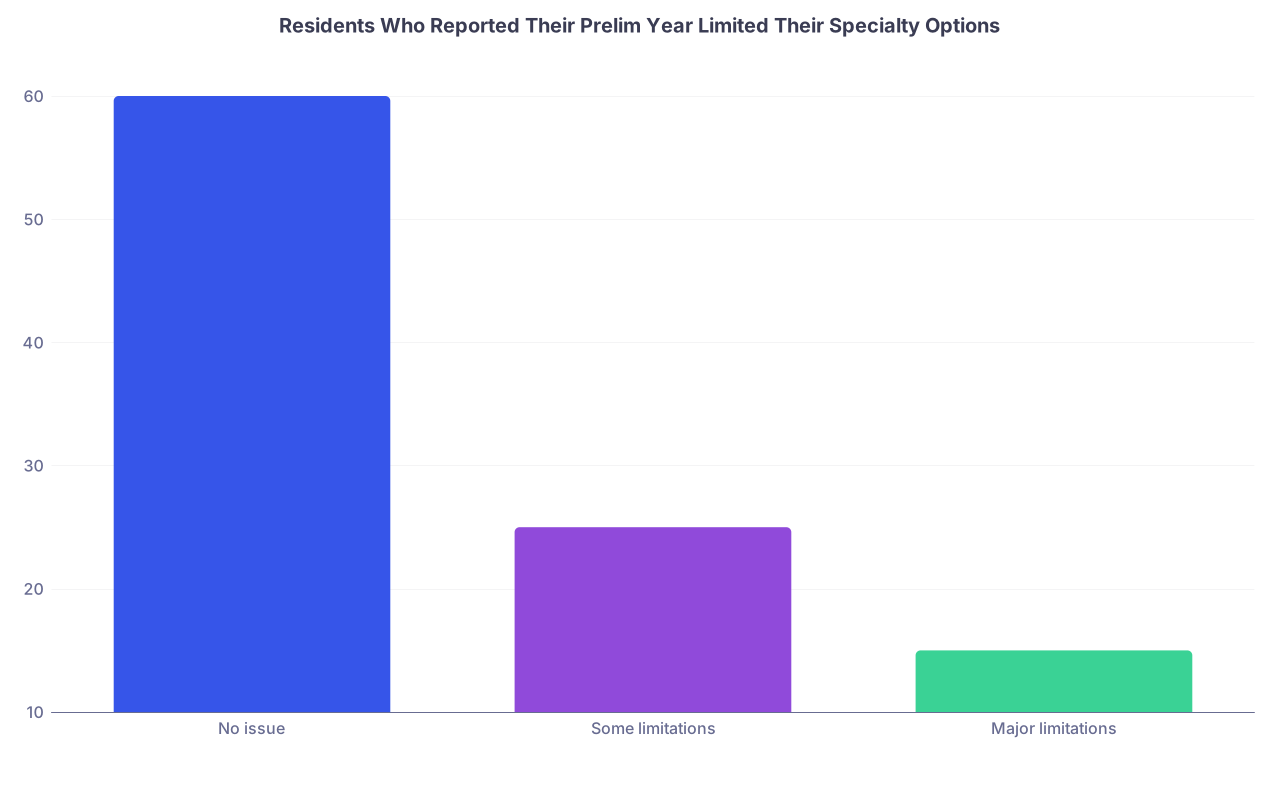
| Category | Value |
|---|---|
| No issue | 60 |
| Some limitations | 25 |
| Major limitations | 15 |
That 15% who report major limitations? Those are real people who now have:
- Extra years of training
- Additional loans or lost attending income
- A mismatch between what they trained for and what they actually want to do
Prelim vs Transitional vs Categorical: Don’t Confuse These
A lot of confusion comes from mixing up three different things that sound similar.
1. Categorical Positions
- You match directly into a full program (PGY-1 through completion)
- Example: categorical internal medicine, categorical general surgery, categorical neurology (many programs)
- No separate prelim year needed if your advanced training is built in
You do not treat a categorical spot as a generic prelim year. If you leave after PGY-1, you’re now the person explaining why you dropped out of a categorical program. Programs do not love that story.
2. Preliminary Positions
- One-year tracks, usually Medicine or Surgery
- Specifically designed to be a PGY-1 year that precedes an advanced specialty
- But content is heavily skewed:
- Prelim Medicine: inpatient wards, ICU, consults
- Prelim Surgery: OR, floor, sometimes trauma, ICU, fewer pure medicine months
A neurology or derm program is not automatically thrilled about you spending most of your PGY-1 retracting tissue and dictating post-op notes.
3. Transitional Year (TY)
- Broad-based PGY-1 with:
- Mix of internal medicine
- Some emergency medicine
- Electives in specialties
- Often lighter call than pure prelim surgery
- Highly coveted by competitive advanced fields (derm, radiology, rad onc, ophtho)
But again: not all TYs are created equal. If it’s stuffed with electives and barely any real inpatient medicine, some boards/programs will raise eyebrows.

Specialty-Specific Landmines People Ignore
Let’s talk about where people really get burned.
Neurology: The “It’s Basically Medicine, Right?” Trap
Neurology programs and boards typically want:
- A solid amount of internal medicine during your PGY-1
- Clear evidence you can handle medically complex patients, not just post-op care
Common bad assumption:
- “I’ll do a Prelim Surgery year then switch to Neuro. It’s still sick patients.”
- Reality: Many neurology programs explicitly prefer or require Prelim Medicine or TY with medicine-heavy months.
If your PGY-1 has:
- 7 months surgery
- 2 ICU
- 1 ER
- 2 electives loosely related to medicine
Your file may get a quiet “no thanks” before you ever interview.
Anesthesiology & Radiology: “They’ll Take Anything” Myth
These fields often do accept:
- Transitional Year
- Prelim Medicine
- Occasionally Prelim Surgery
But individual programs can be picky:
- Some want more inpatient medicine
- Some care about call experience and ICU time
- Some want documented exposure to perioperative medicine, not just surgery floor scut
I’ve heard program directors say:
- “We prefer TY or Prelim Med. A pure surgery prelim without enough medicine is a harder sell.”
- “We’ve had residents come in weak on basic medicine after surgery prelims. We try to avoid that now.”
If you just grab the first prelim year you match into and assume it’s all good, you may be locking yourself out of a subset of solid anesthesia or radiology programs.
Dermatology & Radiation Oncology: Quietly Strict
These specialties are small. They talk. They remember.
Many derm and rad onc programs:
- Strongly prefer Transitional Year or Prelim Internal Medicine
- Want letters from medicine-type attendings
- Want to see you handled real inpatient medical problems, not just surgical follow-ups
A surgery-heavy prelim can:
- Undermine your case that you’re clinically ready
- Make it harder to get relevant letters
- Signal that derm/rad onc was an afterthought, even if that’s not true
Program Requirements vs Board Requirements: Two Sets of Rules
The next mistake: thinking “boards say X, so programs must accept X.”
You have two bosses:
The Board (ABA, ABR, ABPN, etc.)
- Sets minimum requirements for PGY-1 content
- Example: X months medicine, ICU, etc.
The Individual Residency Program
- Can be stricter than the board
- Can say: “Yes, the board allows that, but we don’t.”
So even if the board technically allows your surgery-heavy prelim as an acceptable base year for, say, neurology, the actual neurology programs might still not want you.
And they’re the ones choosing residents.
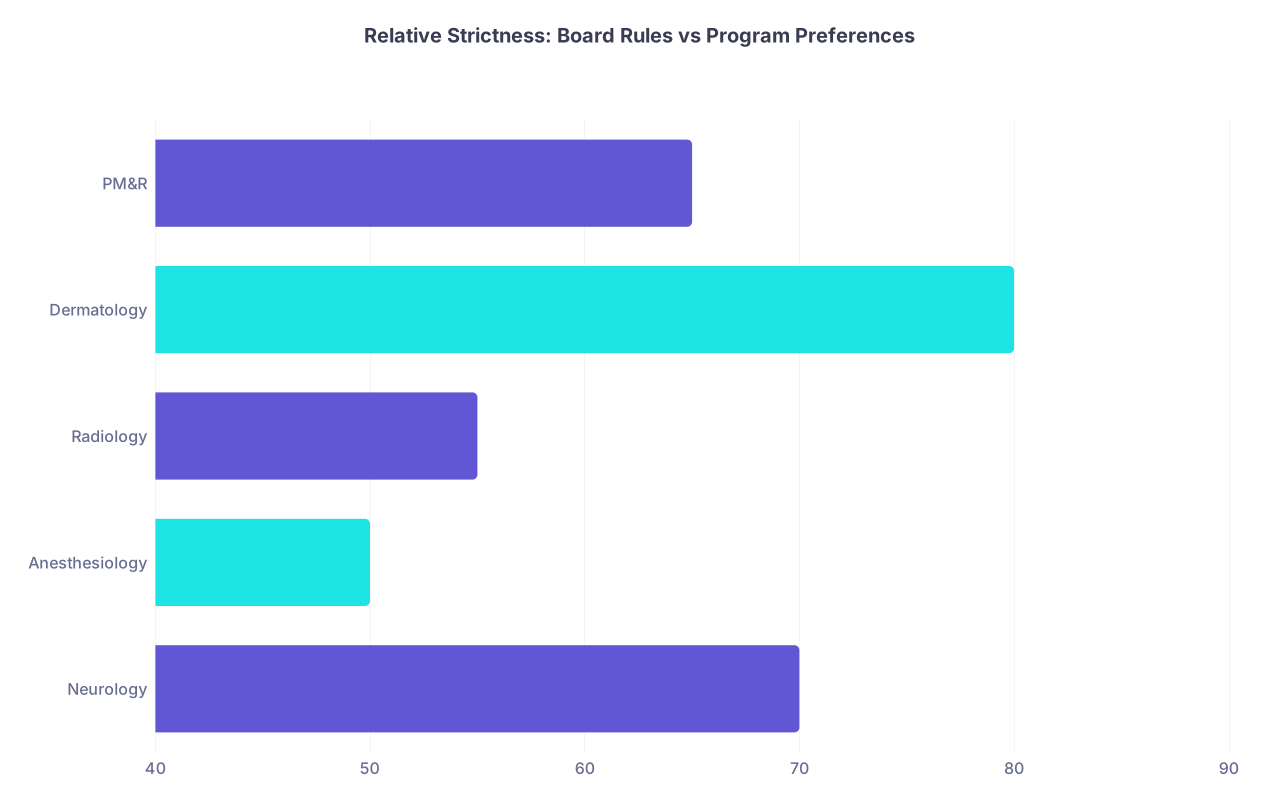
| Category | Value |
|---|---|
| Neurology | 70 |
| Anesthesiology | 50 |
| Radiology | 55 |
| Dermatology | 80 |
| PM&R | 65 |
(Think of those numbers as “how much programs go beyond board minimums,” not hard data. The point: programs often expect more than the bare minimum.)
The Hidden Red Flags in Prelim-Year Choices
Here are the signals that you’re about to make a bad move.
Red Flag #1: “I’ll Decide My Advanced Specialty Later”
If you’re saying:
- “I’ll just match any prelim now and I’ll sort out the rest when I’m an intern…”
You’re gambling.
Because:
- Some prelims prepare you well for a wide range (medicine-heavy TY)
- Some lock you into a narrower path (surgery-heavy prelim)
- It’s much easier to pivot during MS3/MS4 than after you’re already a contracted PGY-1 locked into a schedule
If you’re undecided but leaning non-surgical:
- Lean away from surgery prelims unless you’re very sure you’d be okay with a surgical field or EM.
Red Flag #2: Not Reading the Fine Print on Program Websites
I’ve watched people do this:
- Apply to neurology, rank a random prelim surgery high because “it’s close to home”
- Never read that the neuro program they like states clearly: “Preferred: Preliminary Medicine or Transitional Year”
- Later wonder why interviews didn’t come
You must actually go to:
- Program websites
- ACGME / board sites
- FREIDA and individual program PDFs
And read the words. Slowly. The details matter.
Red Flag #3: Blindly Trusting “My Friend Did It”
Your classmate matched:
- Prelim Surgery → Anesthesia
- Or TY → Radiology
- Or Prelim Med → Derm
Good for them. Different year. Different program director. Different competitiveness environment.
“I know someone who did it” does not equal “this is a good path.” It just means it can work, not that it will work for you, in this cycle, with your scores and letters.

How to Choose a Prelim Year Without Trapping Yourself
Let’s get practical. Here’s how to avoid the big mistakes.
Step 1: Be Honest About Your Likely Specialty Bucket
You don’t need a perfect decision. You need a direction.
Broad buckets:
- Primarily medical/non-surgical (neurology, derm, psych, radiology, rad onc, PM&R, anesthesia, ophtho)
- Primarily surgical (ortho, ENT, neurosurg, urology, plastics, general surgery subspecialties)
If you’re anywhere near sure you want one of the “medical-ish” advanced fields, a medicine-heavy TY or Prelim Medicine keeps the most doors open.
If you’re flirting with true surgical fields:
- A Prelim Surgery might make sense.
- But recognize: it usually closes doors to some non-surgical advanced programs or makes them harder.
Step 2: Check Board Requirements Yourself
Do not outsource this to Reddit or senior residents.
Go to:
- ABA (anesthesia)
- ABR (radiology)
- ABPN (neurology/psych)
- ABPMR (PM&R)
- ABOG, ABOto, etc.
Look for:
- “Clinical base year” or “PGY-1 requirements”
- Required rotations and minimum months
See what they actually require. Some of it will shock you.
Step 3: Check the Programs You Actually Want
Pick:
- 5–10 target programs in your likely specialty
For each:
- Read their website’s “Requirements” / “Program Structure” section
- Look for phrases like:
- “We require”
- “We prefer”
- “We accept”
- “Applicants must have completed”
If multiple top programs clearly prefer Prelim Medicine, that’s your signal. Believe them.
Step 4: Avoid Overly Narrow or Odd Prelim Designs
Be careful with:
- Prelim years that are 95% surgery if you’re not committed to a surgical field
- TY programs with tons of electives and minimal true inpatient medicine
- Programs that can’t clearly outline how many months of:
- Inpatient medicine
- ICU
- Night float
- ER you’ll actually get
If you can’t map out your PGY-1 in terms that make sense to your future specialty, that’s a problem.

| Step | Description |
|---|---|
| Step 1 | Choose likely advanced specialty bucket |
| Step 2 | Review board PGY1 rules for medical specialties |
| Step 3 | Review board PGY1 rules for surgical fields |
| Step 4 | Check 5 to 10 target programs |
| Step 5 | Rank TY or Prelim Medicine higher |
| Step 6 | Consider Prelim Surgery |
| Step 7 | Confirm PGY1 structure fits requirements |
| Step 8 | Apply and rank with eyes open |
| Step 9 | Medical or Surgical? |
| Step 10 | Most programs prefer Med-heavy? |
The Emotional Trap: “Any Match Is Better Than No Match”
Here’s the uncomfortable truth: a desperate prelim choice can feel like a win now and haunt you later.
I’ve seen applicants:
- Panic in February
- Over-rank prelim surgery spots they never really wanted
- End up scrambling later when those years don’t translate cleanly into their desired advanced field
Yes, not matching is terrible. But matching into:
- A prelim that doesn’t line up with your goals
- In a place with no mentorship for your specialty
- With a schedule that blocks audition rotations and interviews
…can cost you years.
You’re not just choosing:
- “Do I match or not?”
You’re choosing:
- “What does PGY-2, PGY-3, and the rest of my career look like?”
Short-term survival thinking leads to long-term career pain. Be careful.

If You’re Already in a Prelim Year and Worried
Maybe you’re reading this as an intern and thinking, “Well, great, I already chose the wrong thing.” Not necessarily.
Do this, now, not six months from now:
Clarify Your Target Specialty
- Stop pretending you “might do anything.”
- Pick the most realistic option you care about.
Audit Your Current PGY-1
- Count how many months you have or can switch into:
- Inpatient medicine
- ICU
- ER
- Relevant electives to that specialty
- Talk to your chiefs or PD about rearranging rotations if needed.
- Count how many months you have or can switch into:
Email or Meet With a Program Director in Your Target Specialty
- Show them your rotation schedule.
- Ask a direct question: “Will this year satisfy what your program and board want for a PGY-1?”
- If not, ask: “What could I change in the remaining months to fix that?”
Document Everything
- Keep schedules
- Keep written confirmations
- When applying, explain clearly how your PGY-1 meets the requirements
Do not wait until ERAS season and hope no one notices.
The Real Point: Treat Your Prelim Choice as a Career Decision, Not a Holding Pattern
The mistake you must avoid is thinking of the prelim or transitional year as a “placeholder” while your real training starts later.
That’s backwards.
Programs are reading your prelim choice as:
- Evidence of your judgment
- Evidence of your planning ability
- Evidence of your commitment to your chosen field
You want your PGY-1 to say:
- “I understood what my specialty expects.”
- “I positioned myself well.”
- “I didn’t treat a critical year as disposable.”
Your Next Step Today
Do not just nod and move on.
Open a browser right now and:
- Pick one advanced specialty you’re seriously considering.
- Visit two actual residency program websites in that field.
- Find their section on intern year / PGY-1 / clinical base year requirements.
- Compare those requirements to the kind of prelim or TY you were planning to apply to or have already ranked.
If there’s any mismatch, fix your strategy now — before you let a one-year choice quietly dictate your entire career.