
The law will not protect you from the fallout of a badly handled conversation with a patient.
Public health rules might shield your license. They will not fix a broken therapeutic relationship, an angry family, or a front‑page story with your name on it. If you’re practicing medicine in 2024, you will get caught between what your patient wants and what public health law demands.
Let’s talk about what to do when you are actually sitting in the room. Not in theory. In real time.
1. First Rule: Don’t Argue With The Law in Front of the Patient
You can disagree with a policy. You cannot wish it away when you’re on duty.
The moment you realize you’re in a conflict between patient needs and a legal or public health requirement, your brain should run through three tracks at the same time:
- What does the law actually require?
- What does good clinical care suggest?
- How do I protect the relationship while I do something the patient may hate?
If you start venting about “ridiculous regulations” or “the health department making us do this,” you create three problems:
- You undermine trust in the system and in yourself.
- You invite the patient to see you as an ally against the law, which you can’t sustain.
- You trap yourself: either you cave to what they want (and break the law) or you look like a sellout.
Here’s a cleaner script when you’re forced to enforce something the patient doesn’t like:
“I’m required by state law to do X in this situation. Let me walk you through exactly what that means, what gets shared, and what I can still keep between us. Then we’ll talk about what you need and how I can support you through this.”
You establish three things in one breath:
- There is a rule.
- You understand it.
- You’re still on their side within the limits of that rule.
If you cannot clearly state what the law really says, pause. Tell the patient:
“I want to get this right. Give me a few minutes to confirm what I’m required to do, then I’ll come back and we’ll go over it together.”
Then go find the actual policy, not what the senior resident vaguely remembers from 2018.

2. Mandatory Reporting: When Silence Is Not an Option
This is where most people get burned. Abuse, violence, communicable diseases, fitness to drive. You want to protect the patient. The law says: tell someone.
Common scenarios:
- A teen discloses sexual abuse but begs you not to tell anyone.
- An older adult with epilepsy admits to driving against advice.
- A patient with active tuberculosis wants to just “go home and rest.”
- A partner assault survivor is terrified of police or child protective services.
Here’s the basic structure you should run every time:
Check the trigger
Is this actually in the mandatory reporting list in your jurisdiction? Don’t rely on vague memory. Many clinicians over- or under-report because they never bothered to learn the specifics.Clarify what must be reported
Often you’re required to report the suspicion or the diagnosis, not every detail of the conversation. Knowing that lets you be accurate without oversharing.Tell the patient clearly and early
Do not pretend you can keep it secret and then “oops” report later. That’s how you destroy trust permanently.
Use something like this:
“Because of the laws where we are, if I think someone might be hurting you (or a child, or a vulnerable person), I’m required to make a report to [agency]. That’s not about me doubting you; it’s about my legal duty. What I can do is stay with you in this, explain exactly what I’m sharing, and help you plan for what comes next.”
- Separate the law from judgment
This line helps:
“This isn’t a punishment. It’s a safety rule that applies to everyone in this situation, even if they don’t want it.”
- Stay physically present for the consequences
Do not make the report and vanish. If someone is being called, if security or public health is coming, stay in the room if you safely can. Patients remember who stayed when things got ugly.
3. Infectious Disease Conflicts: Isolation, Quarantine, and Angry Patients
COVID tore off the bandage on this one, but it was always there: TB, measles, meningitis, STIs, and whatever the next outbreak brings.
Typical conflicts:
- Patient refuses isolation precautions (“I’m not staying in that room with the door closed all day.”)
- You’re required to notify public health about a positive result, but the patient is terrified of being “on a list.”
- A parent won’t let you test their child for a reportable disease.
- They demand you write a fake work/school note that contradicts your public health instructions.
Here’s the stepwise response that actually works in practice.
Step 1: Name your dual duty
Say it explicitly:
“I have a responsibility to you as my patient, and I also have a responsibility to protect other people from getting sick. Sometimes those two things pull in different directions. I’m going to be honest with you about both.”
Patients can handle complexity if you give it to them straight.
Step 2: Break down what is required vs. recommended
You need to know what’s:
- Legally mandated (e.g., reporting certain lab results, forced isolation orders in some TB cases)
- Strongly recommended but not legally coercive (e.g., extra days off work)
- Completely optional (e.g., certain public health surveys)
| Action Type | Often Mandatory? |
|---|---|
| Reporting specific lab results | Yes |
| Isolation for active TB | Often |
| Isolation for mild viral illness | Sometimes |
| Public health contact tracing interview | Usually No |
| Extra work/school exclusion beyond guidance | No |
Clarify to the patient:
“Here’s what I must do by law. Here’s what I strongly recommend for your health and others, even though it’s not legally forced.”
That distinction can reduce defiance. People hate feeling tricked into compliance.
Step 3: Use “contain, then collaborate”
If there’s an immediate, high‑risk issue (e.g., airborne disease, measles in an ED waiting room), you prioritize containment first. Then you work on buy‑in.
Containment actions:
- Mask the patient.
- Move them to proper isolation.
- Notify infection control/public health quickly.
- Limit their movement.
Then, when the fire is at least smoldering instead of raging:
“We moved quickly just now because there’s some real risk to others. Now let me slow down and explain what’s going on, what it means for you, and what choices you still have.”
This order matters. If you try to litigate every detail first while they’re breathing virus over 20 people, you’re doing it wrong.
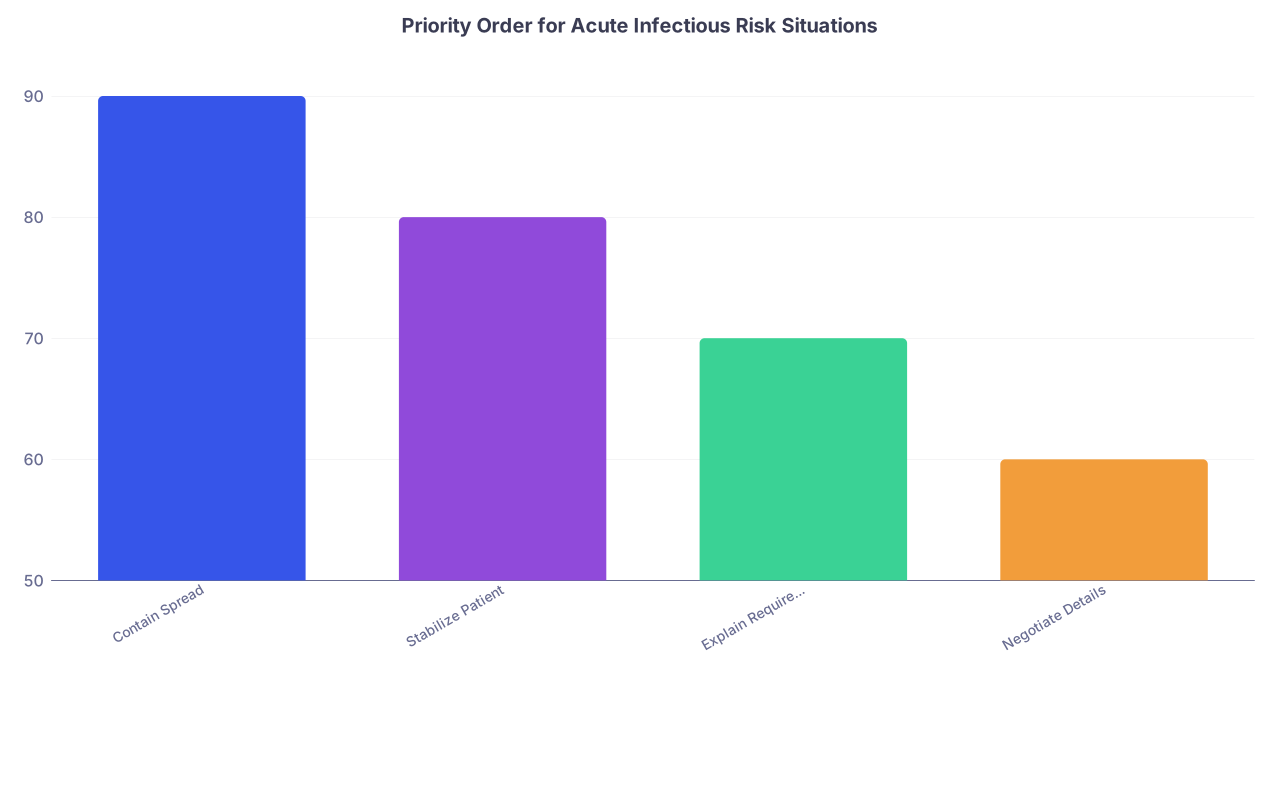
| Category | Value |
|---|---|
| Contain Spread | 90 |
| Stabilize Patient | 80 |
| Explain Requirements | 70 |
| Negotiate Details | 60 |
4. Law vs. Ethics: When Obedience Feels Wrong
There are days when following the rule feels like harming the person in front of you. Example patterns:
- Immigration or residency status tied to public health records.
- Criminalization of certain behaviors (e.g., HIV disclosure laws, drug use during pregnancy in some states).
- Laws that force you to report pregnant substance use to child protective services, when you know it’ll drive this patient away from prenatal care.
You are not going to fix the structural injustice in the 15 minutes you have. But you do have more tools than just “shrug and obey” or “quietly break the law.”
Here’s the practical middle path:
Clarify the floor, not the ceiling
Determine the absolute minimum you are legally required to do or disclose. Don’t volunteer extra details “just in case” without thinking.Use precise language in documentation
Sloppy notes cause a lot of preventable harm. Write what you actually know. Avoid embellishment or moral color. Distinguish between patient report and your clinical findings.Offer harm‑reduction framing
Example with pregnant substance use in a punitive jurisdiction:“You’re not the first person in this position. My job is to help you stay as healthy as possible and reduce risk to you and the baby. There are some things I’m required to document/report, and there are also supports we can connect you with that are actually helpful. We can walk through both.”
Do your advocacy in the right forum
Argue against bad laws with your professional society, legislators, and hospital leadership. Not by secretly ignoring the statute at 3am in the ED. That’s how individuals get destroyed while the system continues untouched.
If you genuinely believe a law compels you to cause unjustifiable harm, you’re in civil disobedience territory. That’s not a “clinical decision,” that’s a personal and political one—and you should go into it with your eyes open, understanding the legal and professional risks.
5. How to Talk When the Patient is Furious
Anger is not a sign you did something wrong. It’s a sign something matters.
The most common mistake clinicians make here is defensive lecturing: “Well, actually, the state requires…” Nobody hears the nuance once they’re at a 9/10 anger level.
Use this sequence instead:
Name and validate the reaction, without apologizing for the law
“I can see you’re really angry about this. A lot of people are when they hear there are legal requirements attached.”
Re‑locate your role
“My role here is to be as honest as possible about what has to happen and then make sure you’re not facing it alone.”
Offer one concrete control point
People tolerate bad news better if they have one thing they can still choose.
Examples:
- They can choose who else is in the room when you call public health.
- They can choose which contact number the health department uses.
- They can decide whether to tell their employer now vs after they talk to HR.
Do not negotiate the non‑negotiable
If you waffle on whether something is mandatory, you will make it worse. Better to be firm and kind than vague and “nice.”
“I’m not able to change the fact that this has to be reported. Where you do have choice is how we handle it together, who we involve, and what support you want.”
6. Protecting Yourself: Documentation, Colleagues, and Calling for Backup
You’re not a martyr. You’re a professional in a system that will throw you under the bus if things go badly and your notes are a mess.
Do three things every time you’re in one of these situations:
Include:
- What law or policy was relevant (“Mandatory reporting of suspected child abuse as per [jurisdiction]”)
- What you explained to the patient
- Their reaction and any refusal
- Who you consulted (supervisor, risk management, public health officer)
- What you ultimately did and why
You’re not supposed to solo‑pilot a legally loaded case as a med student or intern. Phrases that work with seniors:
“This case may trigger mandatory reporting and there’s some tension with what the patient wants. I want to make sure I’m handling the legal and ethical parts correctly. Can you walk through it with me?”
- When in doubt, call the actual public health authority
Not the rumor mill. Real health departments usually have a contact line for clinicians. They’d rather answer your “Is this reportable?” question now than deal with an outbreak later.

| Step | Description |
|---|---|
| Step 1 | Recognize legal issue |
| Step 2 | Confirm law or policy |
| Step 3 | Clarify minimum required |
| Step 4 | Discuss options with patient |
| Step 5 | Explain duty to patient |
| Step 6 | Offer support and limited choices |
| Step 7 | Document and consult senior |
| Step 8 | Mandatory action? |
7. Building Your Own Ethical Spine (So You Don’t Snap Under Pressure)
You can’t improvise your values in the middle of a crisis. You need some pre‑loaded defaults.
Here’s a framework I’ve seen work for trainees and seasoned clinicians:
- Three questions to ask yourself in any conflict:
- If this were my family member, what would I hope their clinician did?
- If this ended up on the front page, could I explain my choice without lying?
- If the patient could see my entire note and email trail, would I stand by it?
If your answer to any of these is “no way,” rethink.
Have a short list of professional non‑negotiables Examples:
- I don’t lie in official documents.
- I don’t promise confidentiality where I know I can’t keep it.
- I don’t abandon patients during the hardest conversations.
Practice the hard sentences out loud
You will not suddenly become eloquent under stress. Say these kind of lines before you need them:
- “I’m obligated to report X, and I’d rather you hear that from me directly than be surprised later.”
- “This is one of those moments where public health law and personal preference don’t line up.”
- “I can’t change the requirement, but I can stay next to you while we work through what it means.”
It sounds cheesy to rehearse. Do it anyway. Your future self will thank you.
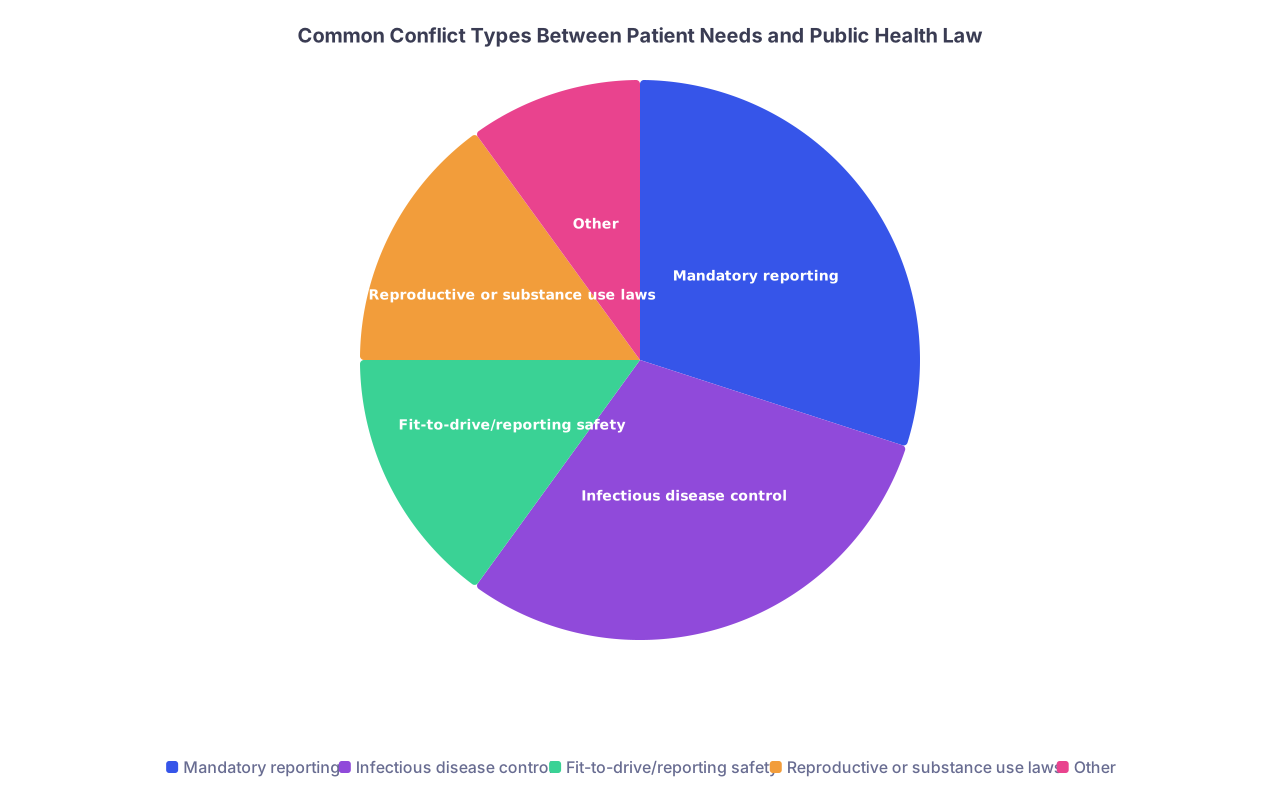
| Category | Value |
|---|---|
| Mandatory reporting | 30 |
| Infectious disease control | 30 |
| Fit-to-drive/reporting safety | 15 |
| Reproductive or substance use laws | 15 |
| Other | 10 |
8. When the System Is the Problem: Quiet Ways to Make It Less Bad
You’re one person in a messy policy environment. Still, there are realistic moves you can make.
- Learn your local laws properly. Not a sexy suggestion, but it will reduce harm more than any inspirational TED talk about ethics.
- Push your department to create short, clear guidance sheets for high‑risk situations: “What To Do If: Suspected Child Abuse / TB Diagnosis / Reportable STI in a Minor / Unsafe Driver with Seizures” etc.
- After a tough case, debrief. Not just “that sucked,” but: “What will we do the same next time? What would we change?”
- Get involved with your hospital’s ethics committee or infection control meetings once in a while. You’ll see how decisions are really made, which is different from how they’re advertised.

FAQ (Exactly 4 Questions)
1. What if I personally disagree with a public health law I’m required to follow?
You still have to follow it while you’re wearing the clinician hat, unless you’re prepared to accept legal and professional consequences for civil disobedience. The honest path is: comply with the minimum legal requirement, be transparent with patients about what that means, and then fight the bad law through advocacy channels—professional societies, legislators, media, organizational policy. Venting to patients without changing your actions just makes you feel better and them feel worse.
2. Can I ever choose not to report something that’s technically reportable?
If a situation clearly meets a mandatory reporting threshold in your jurisdiction, intentionally not reporting is exposing yourself to real risk—license, employment, even criminal. The gray area is when you’re not sure whether it meets the criteria. That’s where you buy time, consult seniors, talk to legal/risk management, and, when appropriate, call public health anonymously for general guidance. Do not “decide” alone out of fear or discomfort.
3. How much do I tell the patient about what’s being reported and to whom?
As much as you reasonably can, as concretely as possible. “I have to report this” is too vague. Better: “I’m required to send your positive test result and your contact information to the county health department. They may call you to talk about who you’ve been in contact with. They’re not the police; they’re focused on stopping spread.” Patients handle specifics far better than a vague sense they’re being “turned in.”
4. What if my attending tells me to do something that seems illegal or unethical related to public health rules?
You’re not obligated to blindly obey. Ask for clarification: “Can you help me understand how this fits with our reporting requirements?” Document that you raised the concern. If it still feels off, escalate—program director, ethics committee, risk management. Protect yourself: do not put your name on blatantly false documentation, and do not promise patients confidentiality where you know there’s a legal exception. Hierarchy is real, but it doesn’t absolve you if things implode later.
Key takeaways:
- Know the difference between what the law requires and what you’re merely encouraged to do, and be precise with patients about that.
- Tell the hard truth early, stay in the room when it gets uncomfortable, and document both the conflict and your reasoning.
- Build your own ethical spine now, so when patient needs and public health law collide, you bend thoughtfully instead of snapping in panic.