You are on a hot July afternoon clinic day. The hospital’s HVAC is struggling, the waiting room is packed with COPD exacerbations and dehydration, and your EMR banner just pushed another “air quality alert” notice that everyone ignores. You have 12 minutes per patient, a full inbox, and exactly zero time for abstract debates about “climate change.”
But here is the problem: climate change is not abstract anymore. It is sitting in your waiting room, on your inpatient list, and in your call schedule. And health policy around climate is quietly being written—with or without input from clinicians.
Let me break down what you can actually do. Not vague “advocate for change.” Specific actions, at three levels:
- In the exam room
- In your institution
- In the policy arena
And we will keep it framed tightly around public health policy and your professional ethics, not generic “go green” advice.
1. Reframing Climate Change as a Core Clinical Issue
Stop thinking of climate as a side topic. It is a risk multiplier for the diseases you already manage.
The short clinical truth: climate change worsens
– Cardiorespiratory disease (heat, air pollution, wildfire smoke)
– Infectious disease (vector-borne, water-borne)
– Mental health (disaster, displacement, chronic eco-anxiety)
– Maternal/child health (heat, nutrition, displacement)
And it does not hit everyone equally. It punishes the same groups that already get the worst care.
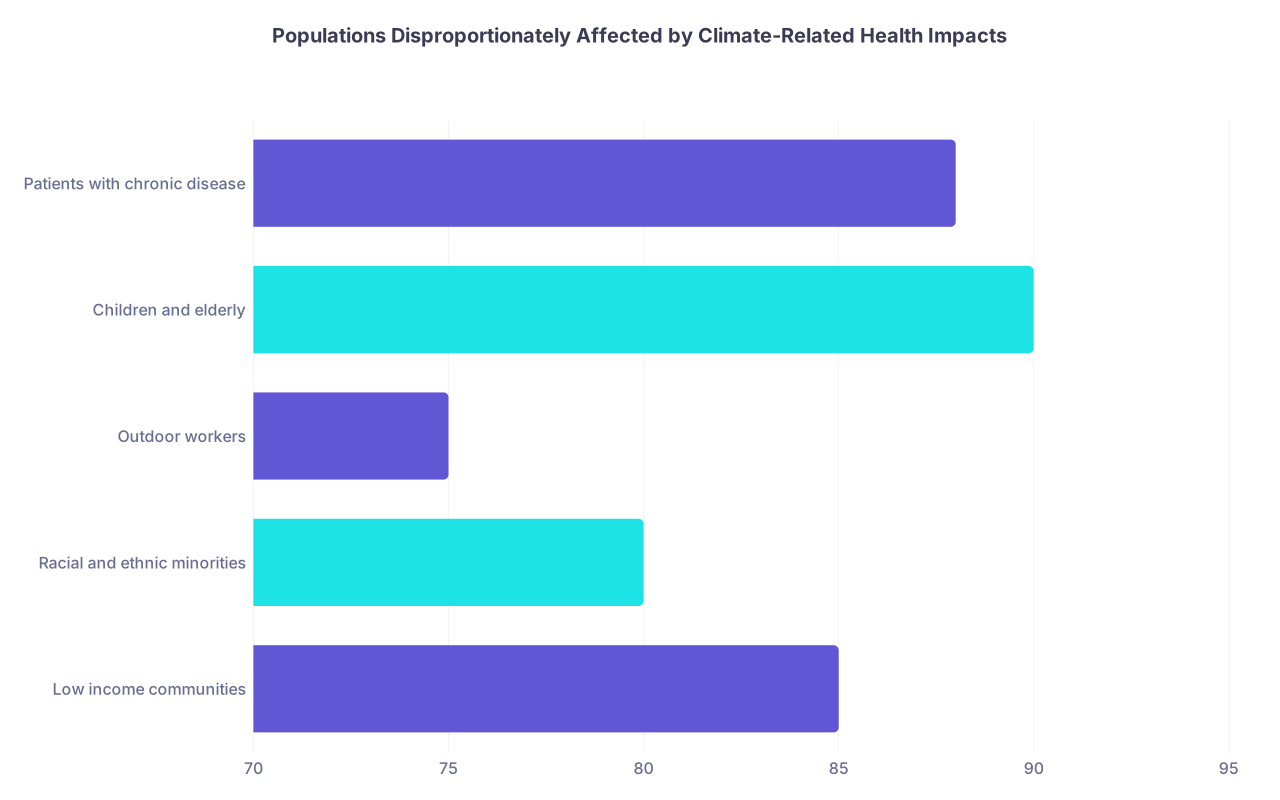
| Category | Value |
|---|---|
| Low income communities | 85 |
| Racial and ethnic minorities | 80 |
| Outdoor workers | 75 |
| Children and elderly | 90 |
| Patients with chronic disease | 88 |
You are already ethically obligated to mitigate predictable, preventable risk for your patients. Climate is now one of those risks.
A practical reframe for yourself and for your colleagues:
“Climate change” → “Rapid environmental shifts that increase my patients’ risk of heat stroke, asthma attacks, kidney injury, PTSD, preterm birth, and death.”
That is not politics. That is clinical.
2. Exam Room Actions: Climate-Informed Clinical Practice
You will not “solve” climate change in a 15‑minute follow-up. But you can reduce real risk for the patient in front of you. That is your lane, and it is powerful when scaled.
2.1 Integrate Climate Risk into History and Counseling
You do not need a 40-point climate history. You need a few precise questions layered into what you already ask.
Working with a COPD/asthma patient? Add:
- “On days with poor air quality or smoke, where do you usually spend your time?”
- “Do you have an air conditioner or any way to filter air in your home?”
- “Do you watch or get alerts about air quality or heat warnings?”
Cardiac/renal patients, pregnant patients, older adults:
- “How is your home cooled in the summer? Any problems keeping it cool?”
- “If there were a multi-day heat wave, who checks on you?”
- “Do you have a plan if your power goes out during very hot or cold weather?”
Mental health, trauma, or disaster‑affected patients:
- “Have you recently been affected by storms, fires, floods, or evacuations?”
- “How safe do you feel in your current housing after that event?”
You are not doing climate research. You are doing risk stratification.
Now layer in brief, targeted counseling.
Examples you can use almost verbatim:
Respiratory disease during poor air quality / wildfires
- “On days when air quality is bad or there is wildfire smoke, try to stay indoors with windows closed, use a portable HEPA filter if you have one, and avoid outdoor exercise. If you need to go out, a well-fitted N95 or KN95 can help reduce inhaled particles.”
- “Let us make sure your rescue inhaler is up to date and you know when to increase your controller medication based on symptoms or peak flow.”
Heat‑related risk (elderly, CKD, heart failure, psych meds, diuretics):
- “If the temperature is over about 90°F (32°C), that can be dangerous for you, especially with your heart and kidney conditions. Drink regularly unless I have limited your fluids, stay in the coolest part of the home, and if you start feeling confused, weak, or stop sweating, you need urgent evaluation.”
- “If you do not have air conditioning, I want you to use public cooling centers, libraries, or malls during heat waves. I can connect you with social work to find options.”
Pregnancy:
- “Late pregnancy plus high heat raises your risk of dehydration, contractions, and high blood pressure. On very hot days, reduce time outdoors, hydrate aggressively, and call us earlier for headaches, dizziness, or decreased fetal movement.”
You are operationalizing climate knowledge into individual patient safety. That is medicine, not activism.
2.2 Build a “Climate-Adjusted” Problem List and Plan
Certain diagnoses should automatically trigger a mental “climate risk” flag.
- COPD/asthma, CHF, advanced CKD
- Schizophrenia or serious mental illness on antipsychotics or lithium
- Elderly living alone
- Homelessness or unstable housing
- Pregnancy (especially 3rd trimester)
You can formalize this in your documentation:
Problem: “High heat vulnerability – elderly with CHF, lives alone, no AC”
Plan: Document heat safety counseling, referral to social work, note about avoiding diuretic up-titration during heat wave without follow-up.Problem: “Air quality sensitivity – moderate persistent asthma, lives near freeway”
Plan: Document air quality counseling, prescribe rescue inhaler refills ahead of wildfire season, print out plan for adjusting activity on AQI >100 days.
It looks mundane in the chart. But if you do it systematically across a panel, your practice becomes climate-aware without adding a separate “climate visit.”
2.3 Use EMR and Care Pathways, Not Just Individual Memory
Relying on each clinician to “remember” heat risk is a failure mode. Bake it into systems.
Ask your clinic (or, if you have access, build):
Smart phrases / dot phrases:
.heatsafety: Inserts standard, evidence-based heat counseling text you can modify..aqiadvice: Inserts air quality / wildfire smoke advice.
Alerts tied to external data:
- Heat index > X for your zip code → EMR banner reminding to screen for heat risk in high‑risk diagnoses.
- AQI > 100 → prompt to reinforce inhaler plan, adjust outdoor activity counseling.
Standard orders:
- “Heat wave bundle”: consult to social work for cooling resources, home health check‑in, med review focusing on diuretics and nephrotoxins.
If your institution has zero tools like this, you have just found your first internal policy project (we will get to that).
3. Institutional Actions: Changing How Your Hospital or Clinic Operates
Here is where climate and health policy really intersect: institutional decisions about energy, purchasing, and care models are policy choices. They shape emissions, resilience, and patient risk.
You probably cannot rewire the hospital yourself. But you can be uncomfortably specific about what needs to change and where clinicians can push.
3.1 Tackle the Hidden Monster: Healthcare’s Own Emissions
Healthcare systems are major polluters. Rough ballpark: if global health care were a country, it would rank around the fifth largest emitter. Your ethical duty is not just to protect patients from external climate threats, but also not to worsen those threats unnecessarily.
The biggest drivers in hospitals and large clinics:
- Energy (heating, cooling, power)
- Anesthetic gases
- Inhalers (MDIs vs DPIs)
- Single-use disposable products, especially in procedural areas
- Travel (commuting, conferences, patient travel)
You do not need to become an engineer. You need to press your leadership with targeted asks and support.
Examples:
Anesthesiology / OR clinicians:
- Push for policy to phase out desflurane use except in narrow indications; favor lower‑impact agents and total intravenous anesthesia when clinically appropriate.
- Advocate for OR waste segregation policies with clear signage and staff training.
- Request an annual report: estimated greenhouse gas emissions by anesthetic agent, with a reduction target.
Pulmonologists / primary care:
- Promote dry powder inhalers (DPIs) over metered dose inhalers (MDIs) when clinically reasonable and affordable.
- Ask pharmacy and formulary committees for a climate impact column when reviewing inhaler options.
Any clinician group:
- Support energy efficiency and on-site renewable energy projects. Ask your CMO/COO: “What is our current energy mix, and what is the decarbonization timeline?” Yes, that is an uncomfortable question. Good.
| Area | Example Policy Change |
|---|---|
| Anesthesia | Phase out desflurane except rare cases |
| Inhalers | Favor DPIs over MDIs when appropriate |
| Energy | Commit to 100% renewable electricity by X year |
| Supply chain | Reduce single-use where safe; green purchasing standards |
| Transportation | Incentives for low-emission commuting |
You are not the facilities manager. But you are the person who can say, point blank: “Our institution is contributing to the same environmental instability that is harming our patients. That conflicts with our mission.”
3.2 Build Climate Resilience Into Clinical Operations
Climate change is already destabilizing health system operations: power outages, flooded EDs, overwhelmed ICUs after heat waves. Resilience is not a buzzword; it is patient safety planning.
Push your institution on three fronts:
- Infrastructure resilience
- Care delivery continuity
- Protection for vulnerable patient groups during climate events
Specific questions you can bring to an ED, primary care, or hospital quality committee:
- “What are our protocols during multi‑day heat waves? Do we proactively reach out to high‑risk patients, or do we just wait for them to show up in the ED?”
- “Do we have a plan for medication cold chain during prolonged outages?” (insulin, biologics)
- “How is the hospital prepared for wildfire smoke infiltration or severe air pollution days? Are there high‑filtration zones? Guidance for staff with asthma?”
Practical projects clinicians have successfully pushed through:
Heat wave response playbook:
- EMR registry of high-risk patients (elderly living alone, CHF, CKD, SMI, pregnancy).
- Automated message or nurse calls before and during heat waves with clear instructions and resource links.
- Clear criteria for ED vs clinic vs telehealth management.
Climate disaster continuity planning:
- Telehealth capability tested and ready before hurricane or wildfire season.
- Pre-identified alternate care locations and scripts for patient redirection.
You should ask to see your hospital’s emergency preparedness plan. If climate risks (heat waves, wildfire smoke, flooding, hurricanes) are an afterthought, you have your agenda.
3.3 Put Climate in the Curriculum and Quality Metrics
If your hospital or med school does not formally teach climate and health, it is behind. And yes, you can impact that, even as a trainee.
Leverage three levers:
Education
- Propose a climate and health module for residents or students: 2–3 lectures or workshops embedded in existing public health or ethics content.
- Use cases: heat stroke in a homebound patient, asthma during wildfire season, hospital evacuation after flooding. Make it clinical, not theoretical.
-
- Suggest incorporating climate‑sensitive metrics:
• Rate of heat-related ED visits per 1000 high-risk patients
• Asthma exacerbations during wildfire season with pre-emptive plan documented - Advocate that environment‑related metrics sit alongside readmission and infection rates in QI dashboards.
- Suggest incorporating climate‑sensitive metrics:
Professional development
- Get CME credit for climate‑and‑health training. Many institutions will fund or at least tolerate anything with a CME stamp.
You are changing what the institution defines as “standard” practice. That is structural, not cosmetic.
4. Policy-Engaged Clinician: Moving Outside Your Building
This is where many clinicians freeze. “I am not a policy person.” Then you read the draft statute written without a single clinician voice and wonder why it misses basic health realities.
You do not need to become a full‑time advocate. You do need to show up strategically.
4.1 Understand the Policy Levers That Touch Health
At the population level, climate and health policy sits in a few key buckets:
- Air quality regulation (PM2.5, ozone, industrial and transport emissions)
- Heat and housing policy (building codes, energy assistance, cooling centers)
- Land use and transportation (walkable cities, pollution exposure, injury risk)
- Disaster preparedness and response (funding, coordination, mental health)
- Energy policy (fossil fuels vs renewables)
Most of these are not labeled “health bills.” They sit in environmental, housing, or transportation committees. But they directly change your patients’ risk profiles.
Your role is to bring health evidence and real clinical stories into those rooms.
4.2 Concrete Actions You Can Take Without Torching Your Schedule
Let me be blunt: a lot of “advocacy” in medicine is performative. Endless meetings, minimal impact. Focus on high-yield moves.
Join (or activate) your specialty society’s climate/health policy work
- Most major societies (e.g., American College of Physicians, AAP, ACOG, ATS, ANA) now have climate or environmental health policy positions.
- Add your name when they ask for sign‑ons. Volunteer to review health‑related content in their policy statements.
- When your society sends an action alert on a climate‑health bill, actually make the call or send the email. Legislators notice when it comes from clinicians in their district.
Testify or submit comments on specific policies
- Local: city council hearings on heat emergency plans, air quality regulations, zoning near highways or industrial sites.
- State/national: hearings on energy, transportation, or environmental justice bills with clear health implications.
- You can also submit written comments to regulatory agencies (e.g., EPA rules on power plant emissions). These often explicitly ask for health expert input.
Your testimony does not need to be academic. It needs to be precise, human, and grounded:
- “In the last 5 years at [Hospital Name], we have seen a clear rise in heat‑related hospitalizations among elderly patients, especially low‑income and Black communities without reliable air conditioning. This policy would reduce that burden by…”
- Partner with community and public health organizations
- Co‑sign letters with trusted community groups (environmental justice orgs, housing coalitions) that already know the policy process but need health data and stories.
- Support public health departments in designing climate‑resilient health programs.
You are lending the credibility and clinical detail that community advocates often are missing. They are lending you political and organizing experience you likely do not have.
5. Ethical Grounding: Why Climate Action Is a Professional Duty
Let us tie this back to ethics, because that is your anchor when someone says, “Stay in your lane.”
Core ethical pillars apply:
- Beneficence: Acting to benefit patients includes preventing foreseeable harm from environmental exposures and climate‑amplified risks.
- Nonmaleficence: Healthcare’s own emissions and waste contribute to climate harm. Reducing unnecessary emissions is avoiding harm.
- Justice: Climate impacts are not evenly distributed. Disadvantaged communities bear disproportionate burdens while contributing less to the problem.
- Professional integrity: You are obligated to use your expertise to inform public decisions that affect health, not only individual clinical decisions.
How this plays out practically:
Justice and vulnerable populations
- You know which neighborhoods flood first, which zip codes have the highest asthma admissions, which patients will never be able to “just stay indoors” during smoke days because they work outside.
- Failing to incorporate climate risk into care for those patients is an equity failure.
Dual loyalty issues
- When your institution’s business interests (cheap desflurane, disposable everything, fossil‑heavy investments) conflict with patient and public health, you are in a classic dual‑loyalty bind. Ignoring it does not make it go away.
- Bringing climate considerations into institutional decision‑making is not optional ethics wallpaper. It is core to aligning practice with mission.
Professional identity
- Physicians, nurses, PAs, and other clinicians historically led on tobacco, seatbelts, HIV, and opioid policies. Climate will be judged similarly in 20 years.
- Saying “I do not have time to think about that” is an ethical decision, not a neutral one.
You do not have to become a full‑time climate activist. But you cannot honestly claim to practice ethical, population‑aware medicine while pretending climate is unrelated to your work.
6. Practical Roadmap: What To Do in the Next 3–12 Months
Let me make this painfully concrete. A staged approach that does not blow up your life.
Step 1 (Next Month): Micro‑Shifts in Your Own Practice
- Add 2–3 climate‑related questions to your standard history for high‑risk patients (heat exposure, air quality, housing stability).
- Start using a heat or air quality counseling script in your EMR (create your own dot phrase if none exist).
- Identify 5–10 patients at clear risk for heat‑related illness. Make sure they understand warnings, have a basic plan, and are connected to support if needed.
Step 2 (Next 3–6 Months): One Institutional Project
Pick one, not ten.
- If you are in primary care: Propose a heat wave protocol for your clinic, including registry criteria, call scripts, and patient education materials.
- If you are in a hospital/academic center: Join or start a green team or climate/health working group focused on one concrete policy—like reducing desflurane use or creating wildfire smoke guidance.
- Present your idea at a quality committee or department meeting. Ask for explicit leadership support and a timeline.

| Step | Description |
|---|---|
| Step 1 | Start - Aware of climate health link |
| Step 2 | Change personal clinical practice |
| Step 3 | Lead one small clinic or unit project |
| Step 4 | Join institutional climate or green team |
| Step 5 | Engage with specialty society policy |
| Step 6 | Participate in public climate health advocacy |
Step 3 (Next 6–12 Months): One Policy Engagement
- Sign up with your specialty society’s climate/health or advocacy committee email list.
- Respond to one action alert with a personalized letter or call.
- Optionally, testify once at a local hearing (even 2–3 minutes of clear clinical framing is more than most legislators ever hear).
Pick realistic, specific targets. Do them. Then reassess.
7. Common Pitfalls and How to Avoid Them
You will see the same failures over and over. I have.
The “all or nothing” trap
- People think: “If I cannot overhaul my entire hospital’s carbon footprint, why bother?” That is a lazy excuse. Focus on the 1–2 levers you can move. Amplify with others.
Confusing messaging with substance
- Posters, Earth Day booths, and social media posts are fine. But if the OR still runs desflurane all day and your clinic ignores heat risk, you are doing climate branding, not climate medicine.
Staying siloed
- If your climate work does not touch patients, institutional operations, or policy, it is probably not moving the needle. You need some interface with all three over time, even if you start in one domain.
Ignoring frontline staff
- Nurses, techs, environmental services, social workers know exactly where waste and inefficiency live. If your climate work does not include them, it will be shallow and fragile.
FAQ (Exactly 6 Questions)
1. How do I talk about climate change with patients without sounding political?
Anchor everything in concrete, personal health risk, not abstract causes or global debates. For example: “High heat and poor air quality, which are getting more frequent here, worsen your heart failure and asthma. Here is what we can do to reduce your risk.” Do not start with climate science lectures. Start with “this is how weather patterns are affecting your condition and what we can do now.”
2. I am a trainee. Do I really have any influence on institutional climate policies?
More than you think, if you are strategic. Trainees often push curricula changes and QI projects that faculty then adopt. Propose a climate‑and‑health QI project; use it for scholarly output. Join the hospital’s green team or start one at the residency level. You may not move the entire energy portfolio, but you can absolutely change inhaler choices, OR practices, and education content.
3. Is switching from MDIs to DPIs actually a big deal for climate?
Yes, with caveats. Many MDIs use hydrofluoroalkane propellants with global warming potentials thousands of times higher than CO₂. DPIs avoid this. At scale, a shift to DPIs can meaningfully reduce a health system’s climate impact. But you still prioritize clinical appropriateness, patient ability to use the device, and cost. Climate is an important tiebreaker, not a reason to compromise care.
4. How do I respond to colleagues who say climate is “not our lane”?
Point out that climate amplifies the diseases they already treat and drives ED volumes, admissions, and costs. Remind them that medicine has always engaged in public policy when it affects health—tobacco, drunk driving, seatbelts, lead, HIV. Climate is no different in principle, only in scale. If we ignore it, decisions will still be made—just without clinical input.
5. I work in a small clinic with limited resources. What is realistically possible?
You can still integrate climate risk into routine care, especially via counseling about heat, air quality, and disaster preparedness. You can build simple EMR templates, create a short list of local cooling centers or shelters, and coordinate with your local public health department. No one is asking small clinics to decarbonize the grid. But they can absolutely improve local resilience and protect high‑risk patients.
6. How do I learn more without diving into a PhD in climate science?
Look for clinician‑focused resources: WHO’s climate and health materials, major specialty society climate position statements, and dedicated platforms like the Lancet Countdown on health and climate change. Most offer concise briefs tailored to health professionals. One or two well‑selected CME courses on climate and health will give you plenty of grounding to act confidently without turning you into a climatologist.
With these pieces in place—climate‑aware clinical practice, targeted institutional pressure, and measured policy engagement—you are no longer just reacting to whatever the weather throws at your patients. You are shaping the conditions they live and get care in.
The next step is figuring out how to sustain this over a career: building teams, mentoring younger clinicians in climate‑conscious practice, and integrating this work into your academic or leadership path. That is the long game, and it is coming whether you plan for it or not.