
The biggest myth about maternal mortality review committees is that they are “just data meetings.” They are not. They are where clinical reality is translated into law, funding priorities, and institutional rules that decide who lives and who dies.
You sit in that room, read a case where a 24‑year‑old bled to death after delivery because no one activated a massive transfusion protocol, and then you vote on a recommendation that may force every hospital in your state to standardize hemorrhage carts. That is not abstract quality improvement. That is policy.
Let me break this down specifically.
What Maternal Mortality Review Committees Actually Do
Forget the vague talk about “stakeholder convenings.” At their core, maternal mortality review committees (MMRCs) do four things:
- Identify and review maternal deaths.
- Decide which deaths are pregnancy-related.
- Judge preventability.
- Convert those judgments into system-level recommendations.
Each of those has real ethical weight and policy impact.
Most state-level MMRCs in the United States are authorized by statute or health department rule. They usually include:
- OB/GYNs and maternal–fetal medicine specialists
- Anesthesiologists
- Emergency physicians
- Internal medicine or family medicine physicians
- Nurses (L&D, ICU, public health)
- Epidemiologists/data analysts
- Representatives from Medicaid, public health agencies, community organizations
- Sometimes doulas, midwives, and patient advocates
Cases are typically identified from:
- Vital records (death certificates with maternal codes)
- Birth/fetal death certificates
- Hospital discharge data
- Sometimes medical examiner/coroner reports and EMS data
Then comes the real work: reconstructing what actually happened.
Records pulled can include prenatal notes, delivery records, operative notes, nursing flowsheets, medication administration records, ED records, ICU notes, labs, imaging, and sometimes social work notes, police reports, or child protective service documentation. It is invasive. It has to be.
A well-run committee will:
- Use a standardized abstraction tool (e.g., the CDC’s MMRIA system).
- Review de-identified or partially de-identified cases to minimize bias.
- Assign a primary reviewer (often a clinician) to summarize.
- Discuss as a group and reach consensus on key questions.
Those questions are not just clerical; they are moral judgments:
- Was this death related to pregnancy or not?
- Was it preventable? If so, at what level (patient, provider, facility, system)?
- What were the contributing factors?
- What specific actions might have changed the trajectory?
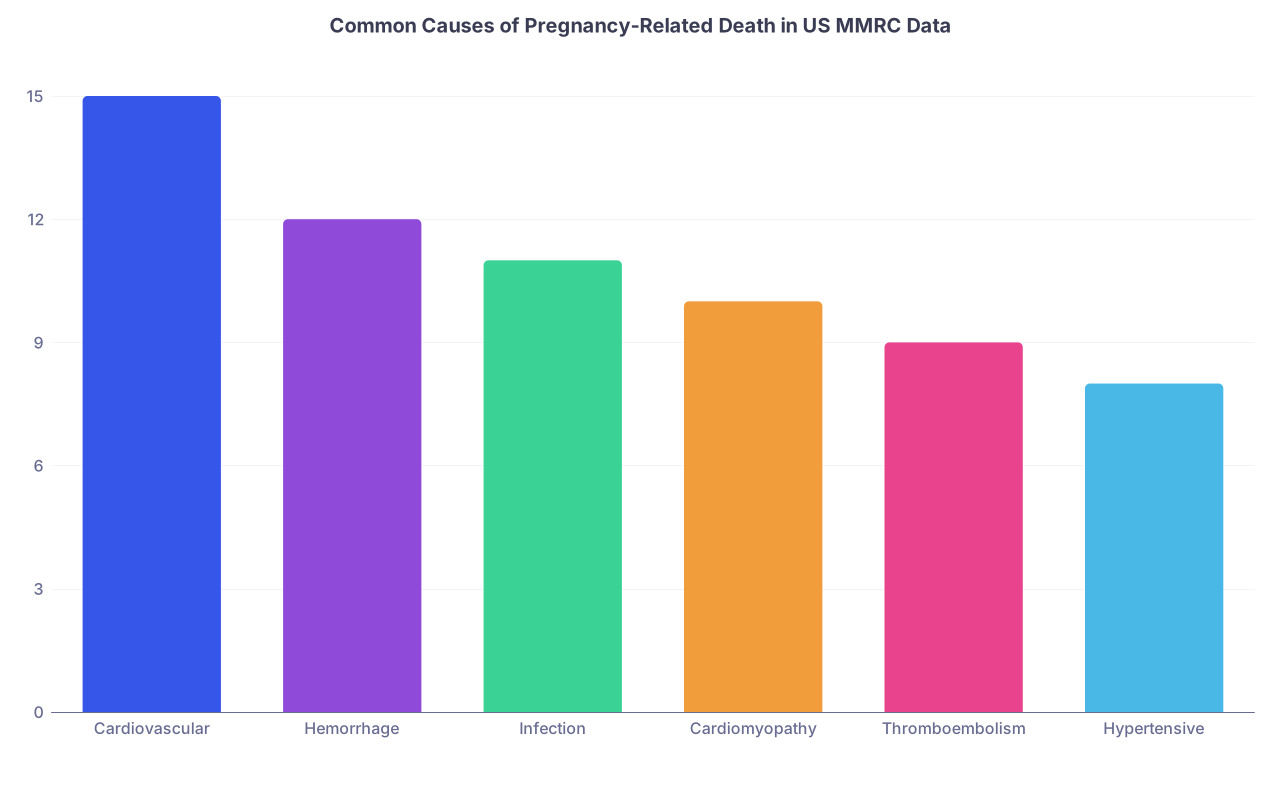
| Category | Value |
|---|---|
| Cardiovascular | 15 |
| Hemorrhage | 12 |
| Infection | 11 |
| Cardiomyopathy | 10 |
| Thromboembolism | 9 |
| Hypertensive | 8 |
Those broad categories then get dissected into proximate causes and upstream failures—exactly the level at which policy can intervene.
Where Physicians Sit in the Room – And Why It Matters
Here is the uncomfortable truth: physicians in MMRCs often dominate interpretation, even when they do not hold formal voting majorities. That can be good or bad depending on how you show up.
The Roles Physicians Play
In most MMRCs, physicians serve in at least four roles simultaneously:
Clinical interpreter
You read between the lines in charts—what “patient refused” really meant, whether a blood pressure of 170/110 was actually recognized as severe preeclampsia, whether the anesthesia note that says “patient stable” is believable given the vitals.Standard-of-care barometer
You anchor the discussion: was this within standard practice, or clearly substandard? Committees lean heavily on that judgment when deciding preventability.System translator
You explain how hospital call schedules, EHR alerts, or OB coverage patterns work in practice. Non-clinicians know the theory. You know the actual workflow; how a postpartum patient can sit in triage for 2 hours while the board is full.Policy gatekeeper (informal)
When the committee starts phrasing recommendations—“All hospitals should…”—you are often the one who says, “That is operationally impossible” or “If you write it like that, no one will implement it.” That is raw policy-shaping power.
I have seen discussions where the epidemiologist presents a clear pattern—postpartum cardiomyopathy deaths disproportionately affecting Black women in the first 6 weeks postpartum—yet the recommendation list stays stuck at “improve provider education.” A single cardiologist speaking up to demand mandated postpartum follow-up visits and EKG access changed that entire recommendation set.
Power Dynamics You Need To Recognize
If you are a physician walking into an MMRC, recognize these built-in dynamics:
- Your words weigh more than you think. A passing comment like “Well, this is just how busy L&D is…” can dilute a system-level failure into an accepted reality.
- Nursing and midwifery voices are often more attuned to workflow failures, but will defer to physicians on clinical judgment. If you ignore their insights, you neuter the process.
- Community members may be the only ones calling out racism, language barriers, or disrespectful care that does not show up in lab values. If you are silent when they speak, the recommendations will default to “education and awareness” instead of structural changes.
Your ethical obligation is not just to be “accurate.” It is to actively counteract the professional deference that can blunt the committee’s findings.
How Review Decisions Become Policy Fixes
People underestimate this mechanism. Let me spell it out.
Step 1: Classification and Narrative
Every case ends with a few key labels:
- Pregnancy-related vs pregnancy-associated vs not related
- Cause of death, typically categorized (e.g., hemorrhage, cardiomyopathy)
- Preventability (usually “preventable,” “possibly preventable,” “not preventable”)
- Contributing factors (patient, provider, facility, system, social)
But the real leverage lives in the narrative summary and the “what might have changed the outcome” section.
When you argue, “If this rural hospital had a clear transfer protocol and tele-OB backup, this death was almost certainly preventable,” you are wiring in the justification for telehealth funding, transport regulations, and rural workforce initiatives.

| Step | Description |
|---|---|
| Step 1 | Maternal Death Occurs |
| Step 2 | Case Identified by Health Dept |
| Step 3 | Records Abstracted |
| Step 4 | MMRC Meeting |
| Step 5 | Identify Contributing Factors |
| Step 6 | Document Nonpreventable |
| Step 7 | Committee Recommendations |
| Step 8 | State Report Published |
| Step 9 | Legislators and Agencies |
| Step 10 | Policy and Funding Changes |
| Step 11 | Preventable? |
Step 2: Aggregation and Pattern Recognition
Once you have dozens of cases, epidemiologists aggregate:
- What proportion were preventable? (Many states land around 60–80% preventable or possibly preventable. That shocks legislators.)
- Which causes are most common?
- Where in the perinatal period deaths cluster (pregnancy, delivery, postpartum up to 1 year)?
- Disparities by race, insurance, geography.
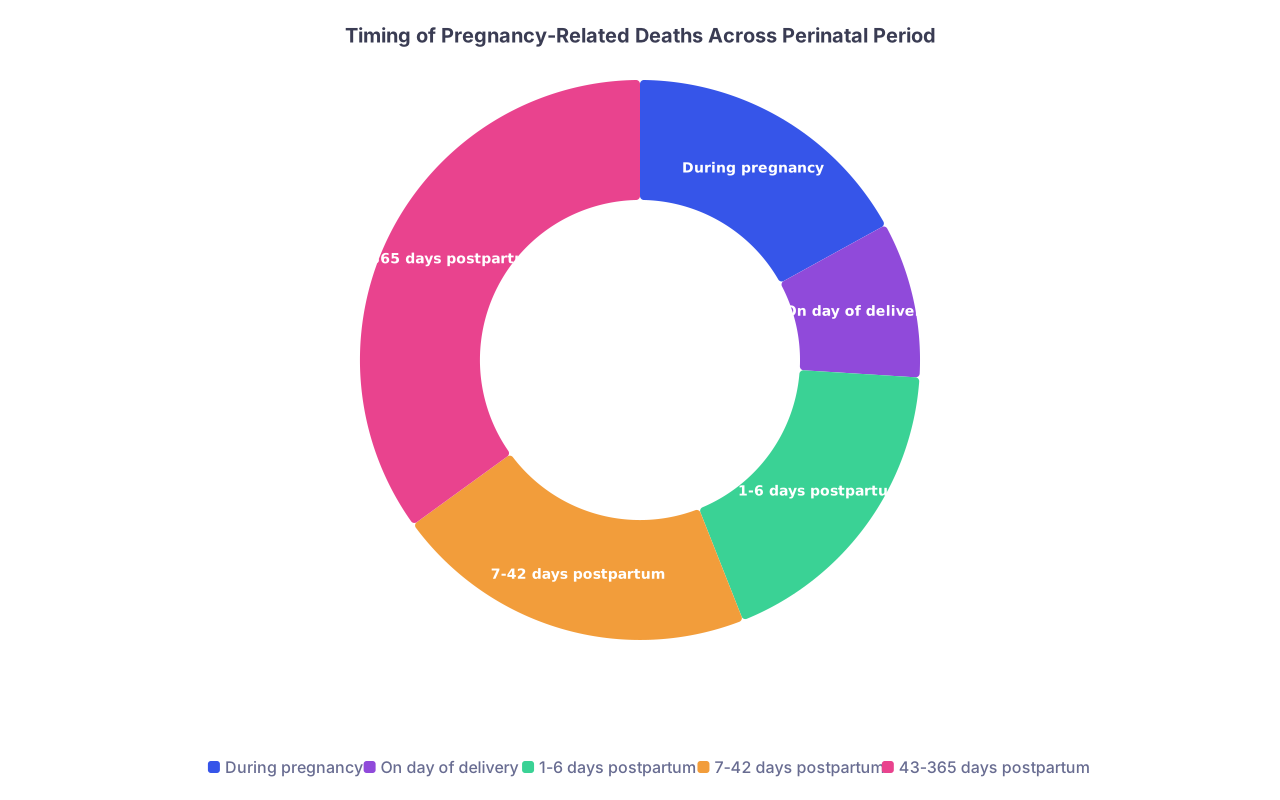
| Category | Value |
|---|---|
| During pregnancy | 17 |
| On day of delivery | 9 |
| 1-6 days postpartum | 18 |
| 7-42 days postpartum | 21 |
| 43-365 days postpartum | 35 |
Those summary stats become the backbone of MMRC reports. And those reports are not academic. They are policy documents.
Step 3: Recommendations with Teeth
Weak MMRCs issue vague, repetitive recommendations: “Increase provider education,” “Raise awareness,” “Improve access to care.” Nothing changes.
Strong MMRCs, the ones where physicians take policy seriously, do this differently. Recommendations are:
- Specific: “Require all birthing hospitals to maintain obstetric hemorrhage carts with standardized content and quarterly drills.”
- Assigned: “State Medicaid will cover at least 12 months of postpartum care; the Department of Insurance will enforce network adequacy for OB providers.”
- Measurable: “By 2027, 90% of birthing facilities will have implemented validated severe hypertension treatment bundles with door-to-treatment times under 60 minutes.”
Those end up in:
- State legislation (e.g., extending Medicaid postpartum coverage to 12 months, maternal health commissions, telehealth expansion for maternal care).
- Regulatory changes (licensing requirements for birthing centers, reporting mandates for severe maternal morbidity).
- Hospital accreditation standards and payor quality metrics (use of AIM bundles, maternal early warning systems).
That line—from your discussion in a small conference room to a statewide mandate—is direct, not hypothetical.
Ethical Tensions for Physicians on MMRCs
You are not just “reviewing cases.” You are sitting in a space loaded with conflict-of-interest, bias, and power. If you do not think about that explicitly, you will perpetuate the status quo.
Conflict-of-Interest and Professional Loyalty
You will see cases from:
- Your own hospital system.
- Colleagues you know personally.
- Practice patterns you share.
You will read a chart and immediately recognize: this is how I handle postpartum hypertension at 3 a.m. too. That is the moment you are tempted to classify the death as “possibly preventable” instead of “preventable,” or to describe it as an unfortunate outlier rather than a systemic failure.
The ethical move is not to pretend you are unbiased. It is to:
- Disclose connections when relevant.
- Refrain from dominating discussion on cases that mirror your own practice.
- Push for language that addresses systems rather than scapegoating one clinician—but still acknowledges clear deviations from evidence-based care.
“Protecting the profession” at the expense of honest analysis is a serious ethical failure in this context.
Bias and Blame
Cases involving substance use, housing instability, or missed appointments are where bias shows up hardest. I have heard some version of “The patient just never followed up” in nearly every MMRC room I have sat in.
Your ethical responsibility is to reframe:
- Missed postpartum visits as access failures (no transportation, lack of paid leave, child care, or insurance continuity).
- “Noncompliance” as a symptom of structural barriers or distrust from prior disrespectful care.
- “Poor historian” as “no one ever explained this in language she understood.”
If you allow the narrative to collapse into “patient factors,” the recommendations will be toothless. “We need more patient education brochures” instead of “We need paid maternity leave and Medicaid coverage past 60 days.”
Respect for Families and the Dead
These are not fictional vignettes. A real person died, leaving behind real children, partners, parents. You are reading their final hours in cold documentation.
Ethically, that demands:
- No demeaning commentary.
- No voyeuristic fascination with “crazy cases.”
- A presumption of dignity, especially when the chart frames the patient negatively.
Some MMRCs invite family perspectives or include family interviews in the abstraction process. Physicians often resist this, worrying about “bias” or “subjectivity.” That is nonsense. The chart is subjective too; it is just the provider’s perspective.
If you want to understand whether racism, disrespect, or dismissal of symptoms contributed, family voices are essential.
How Physicians Can Shape Stronger, Sharper Recommendations
If you sit on one of these committees, you have three jobs beyond case review: sharpen, operationalize, and advocate.
Sharpen: Move from Vague to Mechanistic
Every time you hear a recommendation like “increase awareness of postpartum warning signs,” translate it into a mechanism.
Instead of:
- “Educate providers on hemorrhage management.”
Push for:
- “Mandate standardized obstetric hemorrhage protocols, including quantitative blood loss measurement, risk stratification on admission, and an escalation pathway with clear time targets for IV uterotonics, transfusion, and OR activation.”
That level of detail does two things:
- It signals to regulators and payors what to require.
- It makes it clear to hospitals that this is not optional “education”; it is system redesign.
Operationalize: Attach Levers and Accountability
A good recommendation answers: Who needs to do what, with what authority, and by when?
You can nudge the committee there by asking out loud:
- “Who actually has the power to make this happen—hospitals, Medicaid, legislature, licensing boards?”
- “How would we measure whether this was implemented?”
- “What is the unintended consequence if this becomes a mandate for small rural hospitals?”
| Topic | Weak Recommendation | Strong Recommendation |
|---|---|---|
| Hemorrhage | Improve provider education on hemorrhage | Require standardized hemorrhage carts, QBL, drills in all facilities |
| Hypertension | Raise awareness of severe hypertension | Mandate treatment bundles with door-to-medication goal under 60 mins |
| Postpartum coverage | Improve postpartum follow-up | Extend Medicaid coverage to 12 months postpartum by statute |
| Rural access | Support rural hospitals | Fund tele-OB, transport protocols, and incentives for rural OBs |
You, as a practicing clinician, know exactly how vague mandates get ignored. Use that cynicism productively.
Advocate: Do Not Stop at the Committee Door
MMRCs do not lobby. Individual clinicians can.
If you care about these recommendations becoming reality, you should be:
- Presenting MMRC findings at your hospital’s quality committee and board.
- Speaking (as a private citizen) to legislators when relevant bills come up—especially around Medicaid postpartum extension, perinatal regionalization, and hospital closure oversight.
- Working with your specialty society to align clinical guidelines with MMRC recommendations.
That is not “politics.” That is evidence-based practice at the population level.
Building Your Own Competence and Ethics Around MMRC Work
You want to be effective in this space? Treat it as a discipline, not a side hobby.
Learn the Epidemiology and the Landscape
You cannot contribute well if your knowledge of maternal mortality is limited to anecdotes from your own practice.
At minimum, you should know:
- Your state’s maternal mortality ratio and how it has trended.
- The leading causes of pregnancy-related death in your state vs national data.
- The size of racial disparities and where in the perinatal period they are largest.
- How many deaths your MMRC deems preventable.
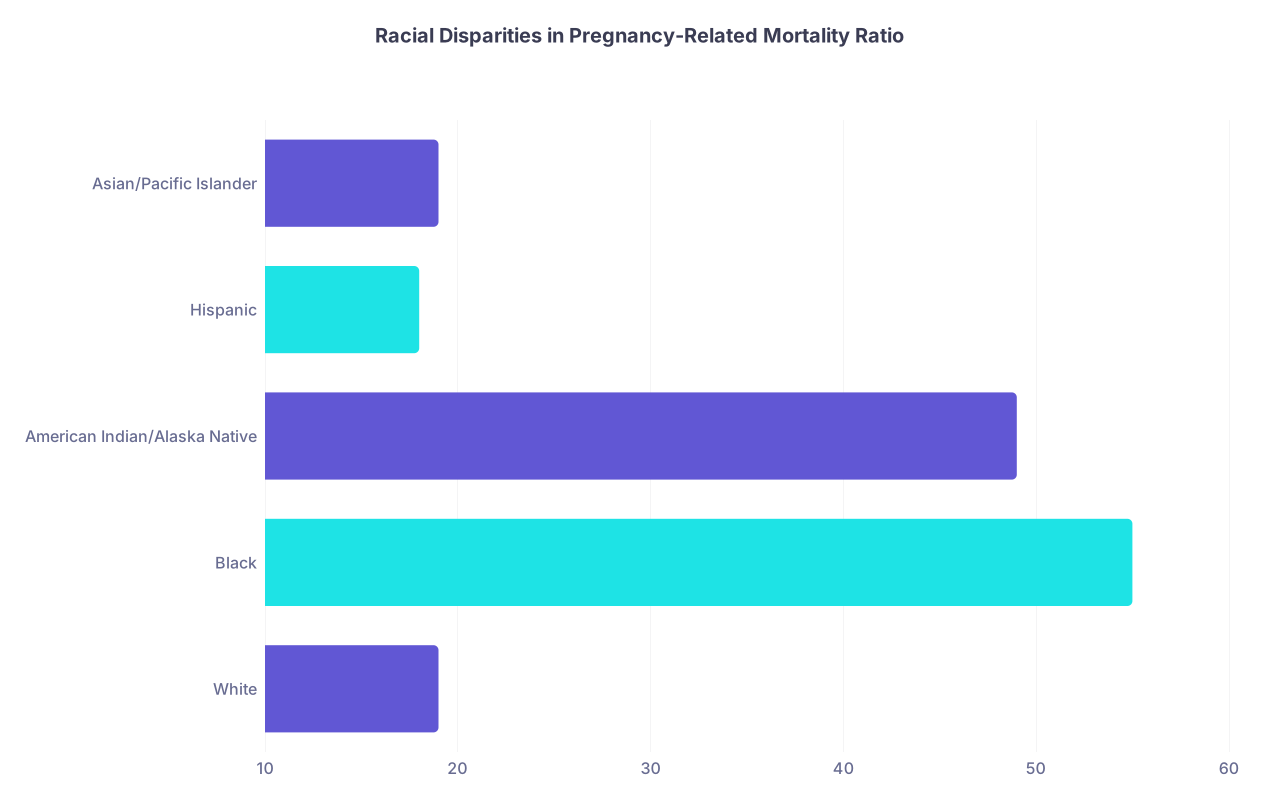
| Category | Value |
|---|---|
| White | 19 |
| Black | 55 |
| American Indian/Alaska Native | 49 |
| Hispanic | 18 |
| Asian/Pacific Islander | 19 |
Numbers like that change the tone of the room. They prevent the discussion from drifting into “these are sad but rare tragedies.” They show patterns.
Build Skills in Systems Thinking
Being the “smartest clinician” in the room is not enough. You need to think like a system designer.
That means asking:
- Where in the workflow did signals get missed?
- What was the handoff structure between outpatient and inpatient?
- How do billing, scheduling, and coverage patterns warp clinical decisions?
- What financial or regulatory incentives are pushing people toward unsafe configurations (e.g., closing L&D units, undertraining hospitalists in OB emergencies)?
If you have not spent time with quality improvement frameworks (Root Cause Analysis, failure mode and effects analysis, Plan-Do-Study-Act), fix that. MMRCs are deep QI with mortal stakes.
Confront Your Own Bias and Comfort
If you are not actively uncomfortable at some point in this work, you are not paying attention.
Cases will highlight:
- Times when “standard practice” is deadly for minoritized patients.
- Situations where doctors dismissed symptoms that turned out to be fatal—headache, shortness of breath, “anxiety postpartum.”
- The violence of poverty and racism wrapped in clinical language.
Your job is not to defend the system that trained you. Your job is to help redesign it.
That may mean recommending:
- Mandatory anti-racism and implicit bias training tied to licensure.
- Community health worker integration into postpartum care.
- Language access requirements with real enforcement.
Some colleagues will roll their eyes and call that “political.” Let them. You have the charts. You saw the death.
Guard Against Burnout and Numbness
Reviewing dozens of deaths per year is not emotionally neutral. People either get numb or avoidant.
Healthy strategies:
- Debrief within the group explicitly about emotional impact a few times per year.
- Rotate especially traumatic cases (e.g., deaths involving violence, suicide) among members.
- Remember that pushing a policy change through—even a small one—is a tangible act of honoring those patients.
If you find yourself joking about cases to cope, step back. That is your warning light.
If You Are Not On an MMRC (Yet): How to Engage
You do not have to be “senior faculty” to matter in this space.
Residents, fellows, early attending physicians can:
- Ask your department leadership whether your state has an MMRC and who from your institution serves on it.
- Request de-identified summaries of MMRC findings to inform residency M&M conferences.
- Align your QI projects (hemorrhage protocols, hypertension bundles, postpartum follow-up systems) with MMRC priorities.
- Participate in statewide perinatal quality collaboratives, which often implement MMRC recommendations at the hospital level.
If you are mid-career and interested in direct participation:
- Reach out to your state health department’s maternal health or women’s health branch about openings.
- Let your specialty society (ACOG chapter, SMFM, family medicine society) know you are willing to serve. Committee slots often get filled by whoever says yes, not some mythical “perfect candidate.”
This is not glamorous work. There are no grand rounds spotlights. But if you want to actually reduce maternal mortality, this is where the serious levers live.