
The myth that “your notes are just for billing and continuity of care” is dangerously outdated. They are a surveillance tool. By design.
If you are documenting patient encounters in 2025 and you do not understand how your notes feed local, state, federal, and even global public health surveillance, then you are practicing blind. Ethically blind, legally exposed, and often technically manipulated by systems you never helped design.
Let me break this down specifically.
1. The Surveillance Pipeline Hidden Inside Your Chart
Public health surveillance is not just labs and case report forms anymore. It is your history, your assessment, your ICD-10 codes, and sometimes the stray sentence you thought “no one else” would ever read.
Here is the basic pipeline you are actually operating inside:
- You write a note and enter orders in the EHR.
- The EHR translates diagnoses, problems, labs, and procedures into codes and structured data.
- The hospital’s reporting engine runs rules: “If X condition and Y lab, then report to Z agency.”
- Data leave your institution—often automatically—through electronic case reporting (eCR), lab reporting, syndromic surveillance feeds, or custom interfaces.
- Public health agencies aggregate those data to monitor disease trends, outbreaks, injuries, and specific conditions.
- Researchers, policymakers, and, increasingly, the public see the downstream statistics.
Your narrative note is not the main unit of surveillance. But it drives everything else:
- It justifies which ICD-10 codes are selected.
- It can be parsed (NLP) for syndromes and risk factors.
- It anchors whether the case is “confirmed,” “probable,” or simply noise.
If you think “the lab will handle all the reporting,” you are wrong in multiple categories: STIs, TB, occupational injuries, suspected abuse, vaccine-preventable diseases, and more. In many jurisdictions, clinicians—not labs, not hospitals—are explicitly named as the mandated reporters.
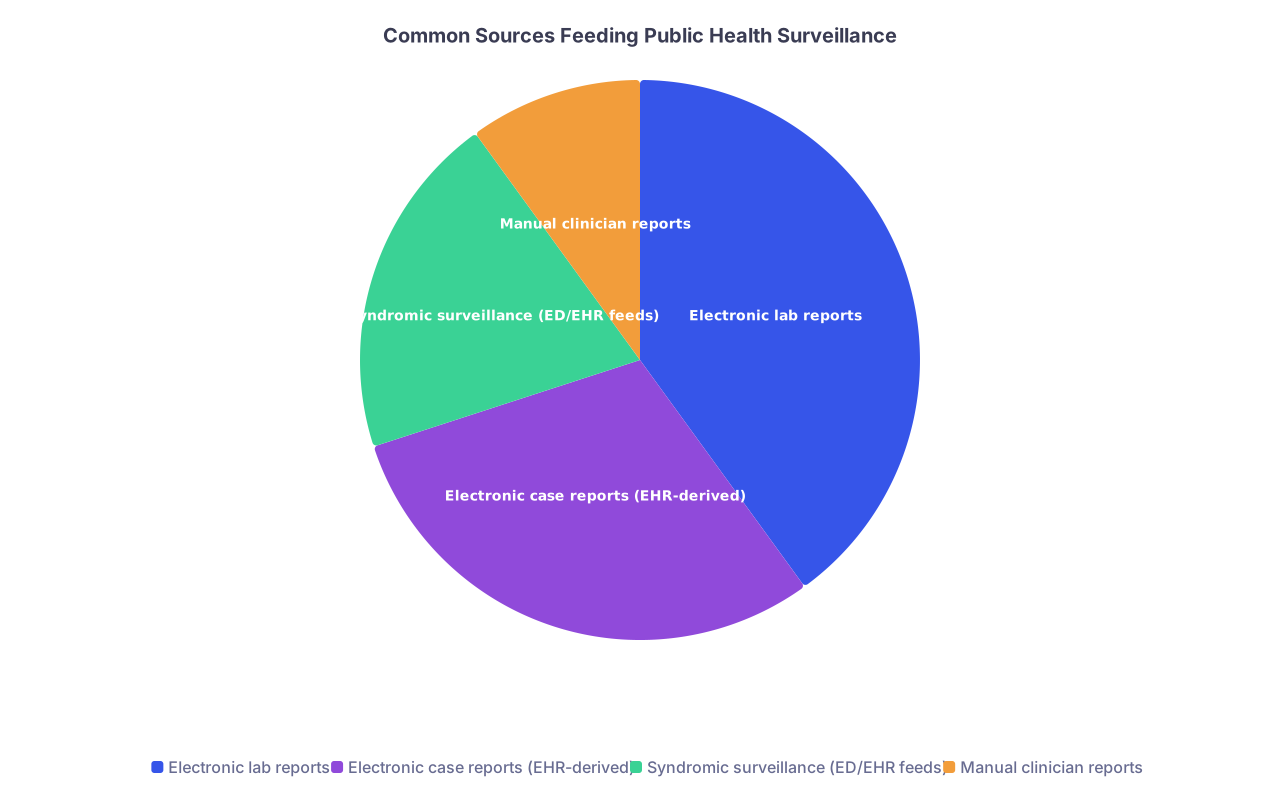
| Category | Value |
|---|---|
| Electronic lab reports | 40 |
| Electronic case reports (EHR-derived) | 30 |
| Syndromic surveillance (ED/EHR feeds) | 20 |
| Manual clinician reports | 10 |
That pie chart is generous to manual clinician reports. In reality, underreporting is massive. And a lot of that underreporting is because clinicians were never taught how their documentation triggers—or fails to trigger—surveillance.
2. What Exactly Gets Reported From Your Notes?
Public health is not vacuuming up your entire SOAP note wholesale (with some research exceptions). What flows upstream is highly structured. But that structure is built on what you choose to document and how.
Here is what actually gets pulled from your work:
a) Diagnoses and Problem Lists
This is the big one. Your assessment is translated into ICD-10 (and sometimes SNOMED) codes that are:
- Used for quality metrics
- Submitted to insurers
- Queried by hospital-reporting engines
- Included in electronic case reports (eCR) to health departments
Example: You document “suspected measles” and pick B05.9 (Measles without complication). That code triggers:
- Immediate lab-report flag
- An eCR rule (in many states) that generates an automated case report to the local health department
- A human review by infection prevention if your hospital actually configures it correctly
If you instead write “viral exanthem, r/o measles” and code nonspecifically (e.g., B09 “Unspecified viral infection characterized by skin and mucous membrane lesions”), you may not trigger the same surveillance. You have already altered the public health signal.
b) Lab Orders and Results
Your orders matter as much as your diagnoses:
- Ordering a PCR panel for respiratory pathogens may push positive influenza, RSV, or SARS-CoV-2 results into state reporting systems.
- Ordering HIV, syphilis, or chlamydia testing often auto-triggers electronic lab reports (ELR) when positive.
- Failure to order the right tests means the surveillance system is blind, no matter how perfect your note looks.
In many systems, the case definition for surveillance is some combination of:
- A specific lab test result (e.g., positive PCR for Salmonella)
- Plus a mapped diagnosis code
- Plus some demographics (age, sex, location, etc.)
You own the diagnosis piece. Labs own the test/result piece. Public health needs both.
c) Demographics and Risk Factors
Most of this comes from registration and intake forms, but you often add the nuance:
- Travel history.
- Occupational exposures.
- Risk behaviors (e.g., injection drug use, new sexual partners, homelessness).
- Pregnancy status.
- Immunization status.
Those details could sit only in your free text. Or they can be captured in structured fields (travel history templates, social history checkboxes, risk factor drop-downs) that then flow to surveillance.
If your EHR team has done a halfway decent job, your structured entries for “works in long-term care,” “health care worker,” or “lives in shelter” may get mapped to public health-specific fields like “healthcare-associated case” or “institutional exposure.”
When they have not? The health department gets a “case with missing risk factor data” and burns time calling back or simply counts it as “unknown.” Scale that over tens of thousands of cases and you can see why public health trend data often looks fuzzy.
d) Clinical Syndromes From Free Text
Older systems mostly ignored your prose. That is changing fast.
Many jurisdictions use syndromic surveillance systems (e.g., ESSENCE, BioSense) that ingest emergency department (and sometimes urgent care) data feeds. Those feeds usually include:
- Chief complaint (often straight from triage or patient phrasing)
- Triage notes
- Selected diagnosis codes
Natural language processing (NLP) tools scan these fields looking for patterns:
- “Fever, cough, shortness of breath” → respiratory syndrome.
- “Diarrhea, nausea, vomiting” → GI syndrome.
- “Overdose, heroin, naloxone” → opioid overdose syndrome.
You are not “directly” reporting anything when you type “patient reports three days of bloody diarrhea after eating at local fair.” But your institution may be sending that ED chief complaint and your codes to a state system that flags a potential outbreak of foodborne illness.
Syndromic surveillance is purposely broad and messy. It cares about trends, not exact diagnoses. Over-documenting fluff in chief complaints that mixes symptoms, chronic issues, and vague language can muddy those signals. Precision here does not just help your future self; it cleans the public health data as well.
3. The Legal Mandates Sitting Behind Your Documentation
You do not get to opt out of being part of the surveillance fabric. Every U.S. state and most countries have explicit mandated reporting laws for certain conditions.
Let us look at the layers.
Statutory and Regulatory Mandates
States set their own lists of “reportable conditions.” These usually include:
- Vaccine-preventable diseases (measles, pertussis, mumps, etc.)
- Sexually transmitted infections (syphilis, gonorrhea, chlamydia, HIV)
- Tuberculosis and latent TB infection in some places
- Foodborne and waterborne illnesses (Salmonella, E. coli O157, hepatitis A, Giardia)
- Zoonoses (rabies, West Nile, Lyme disease, etc.)
- Healthcare-associated threats (C. difficile, CRE, MRSA bacteremia, etc.)
- Emerging pathogens (COVID-19, mpox, whatever is next)
And then there are cross-cutting categories:
- Suspected child abuse or neglect
- Elder or vulnerable adult abuse
- Certain injuries (e.g., gunshot wounds, some burns, occupational injuries)
Who is the mandated reporter? Typically:
- “Physicians and other health care providers”
- Clinical laboratories
- Hospitals, clinics, and sometimes schools or childcare settings
Failure to report can carry:
- Civil penalties (fines)
- Professional discipline (board actions)
- In egregious cases, criminal sanctions
| Category | Example Condition | Typical Timeframe | Usual Reporter(s) |
|---|---|---|---|
| Infectious disease | Measles | Immediate (24 hr) | Clinician + Lab |
| STI | Syphilis | Within a few days | Clinician + Lab |
| Abuse/neglect | Suspected child abuse | Immediate | Clinician |
| Injury | Gunshot wound | Immediate | Clinician + Facility |
| Occupational exposure | Needle-stick (HCW) | Days–weeks | Employer + Clinician |
Here is the catch: the law is usually written at a crude level. “Physician shall report suspected measles.” It does not say “click this button in Epic.” Your institution implements this via:
- EHR rules that auto-generate electronic case reports (HL7 eICR)
- Infection prevention workflows
- Paper or web-based reporting forms that clinicians or staff complete
If you do not know what your local workflow is, your “mandated” reporting is being done for you—or not done at all—based on the invisible configuration of your EHR.
HIPAA, Public Health Exceptions, and Patient Consent
You are allowed, and sometimes required, to share protected health information (PHI) with public health authorities without patient authorization. This is not optional.
Under HIPAA (in the U.S.):
- Covered entities (your clinic or hospital) may disclose PHI to public health authorities authorized by law to collect it for preventing or controlling disease, injury, or disability.
- This includes reporting of disease, vital events (births, deaths), and surveillance.
- Patient consent is not required for these mandated disclosures.
So when you tell a patient “some of this information will be reported to the health department,” you are describing a legal reality, not asking permission.
Ethically, you should understand where that boundary lies:
- You may not send PHI to random researchers or NGOs without appropriate authorization or de-identification.
- You must send PHI when the law says you are a mandated reporter—even if the patient objects.
The tension between autonomy and public health is not abstract. It is built into the way your note is used.
4. How EHRs Turn Your Notes Into Surveillance Data
Let us get technical. Because this is where your “innocent” documentation style has very real consequences.
Electronic Case Reporting (eCR)
Electronic case reporting is the current backbone of modern surveillance. It does this:
- Watches for specific triggers in the EHR (diagnosis + lab result + sometimes location).
- When a trigger fires, automatically compiles a case report (demographics, clinical info, labs, risk factors if structured).
- Sends it via standardized messaging (HL7 CDA or FHIR-based) to the appropriate health department.
- Health department systems auto-ingest, de-duplicate, and either auto-classify or route to human investigators.
The key point: those triggers depend on:
- Specific ICD-10 codes you or the coder select.
- Specific lab test codes (LOINC) and results entered by lab systems.
- Sometimes specific flags (e.g., pregnancy status, hospitalization).
If you are vague in your coding, you might avoid an unnecessary trigger. You might also suppress a needed one.
Example scenario I have seen repeatedly:
- You see a patient with classic primary syphilis and positive RPR/TP-PA.
- You document “syphilis” but the coder applies only a nonspecific code or miscoded STI-related code that is not on the eCR trigger list.
- Lab reports go through, but the case record is incomplete, pregnancy status is missing, risk factors are absent.
- The health department must chase down missing info, often weeks later, sometimes never.
Or worse:
- You document “rule out meningococcemia” and code it as the definitive diagnosis.
- eCR fires an immediate report, authorities start contact tracing and prophylaxis discussions, all based on a working diagnosis that you quietly changed two days later without correcting the original code.
You are not just documenting. You are firing off triggers that land on someone else’s desk.
Syndromic Surveillance Feeds
For emergency departments and urgent care:
- HL7 ADT and ORU messages containing chief complaint, triage notes, initial diagnoses, and some disposition info are sent in near-real-time to a state or national syndromic surveillance system.
- Public health analysts monitor these for unusual spikes: respiratory illness, GI illness, overdoses, suicide attempts, asthma exacerbations, heat-related illness.
Your practical footprint:
- How you phrase chief complaints.
- How consistently you use certain diagnosis codes for similar clinical pictures.
- Whether you document key features (like “heat exposure,” “smoke inhalation,” “flood-related”) in structured fields versus burying them in a dense paragraph.
Do you need to optimize for syndromic surveillance? No. But once you know this exists, you tend to clean up your chief complaints and initial impressions. “Cough x3 days” beats “feels crappy and wants test.”
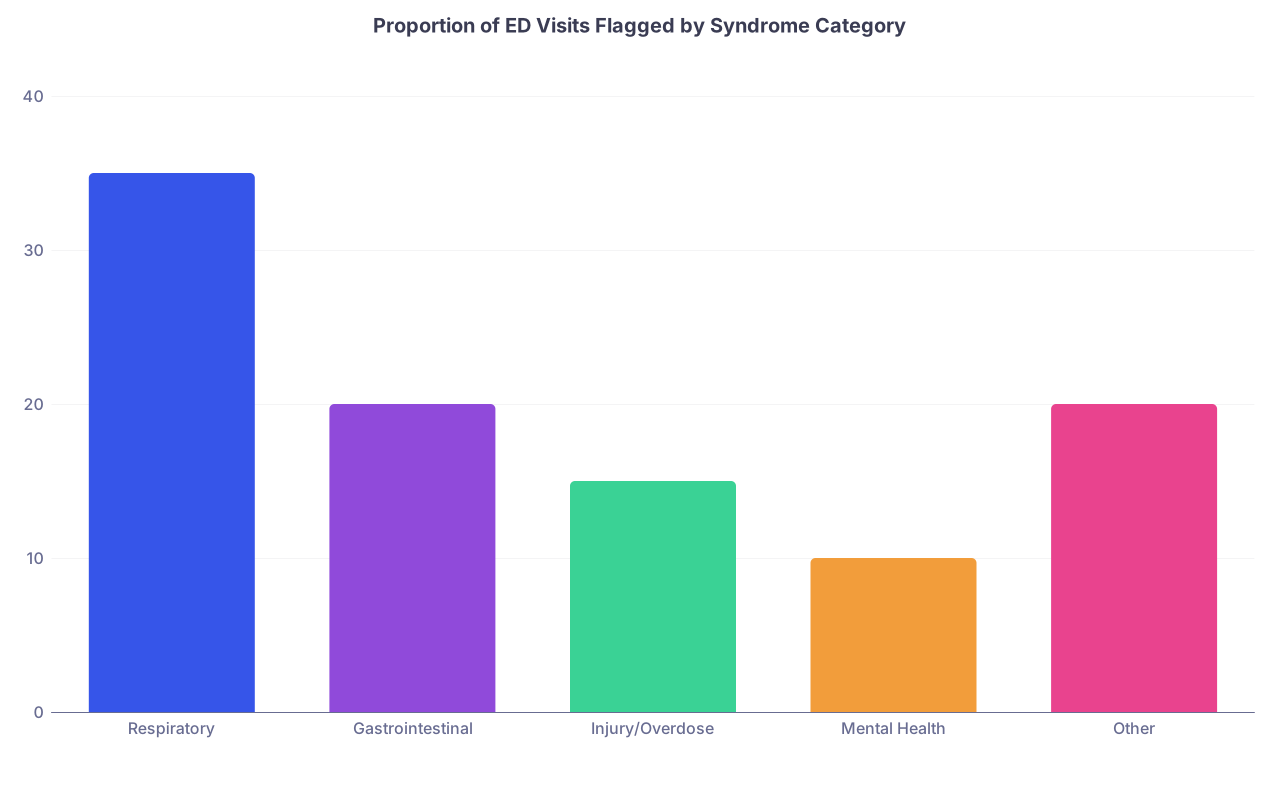
| Category | Value |
|---|---|
| Respiratory | 35 |
| Gastrointestinal | 20 |
| Injury/Overdose | 15 |
| Mental Health | 10 |
| Other | 20 |
Those categories start with you. With thirty seconds of typing at 2 a.m.
5. Ethical Fault Lines: Your Notes, Their Data, Patients’ Trust
Public health surveillance is ethically justified, but not ethically frictionless. You sit right at the fault line.
Autonomy vs Collective Protection
You are balancing:
- The patient’s right to privacy and control over their information.
- Society’s interest in preventing outbreaks, tracking STIs, intervening in abuse, and understanding health trends.
Legally, surveillance usually wins. Ethically, you still owe the patient transparency and respect.
There are wrong ways I have seen this handled:
- Telling patients “this is totally confidential, no one else will see this” when documenting STIs or HIV. That is simply false; the health department will see identified data.
- Avoiding accurate documentation of stigmatized conditions or behaviors to “protect the patient from the system.” That might shield them temporarily but undermines treatment, public health response, and can backfire badly when labs report anyway.
- Dumping every rumor or unverified detail into the note because “it might help public health,” without considering the harm if that record is later subpoenaed, hacked, or misinterpreted.
You need a more honest, nuanced frame.
Stigma, Risk Factors, and Harm
Risk factor documentation is particularly fraught:
- Substance use disorders
- Sex work
- Same-sex partners in hostile jurisdictions
- Immigration status
- Incarceration history
- Intimate partner violence
Some of this is directly relevant to surveillance (e.g., injection drug use in an HIV cluster). Some of it is relentlessly over-documented in populations that are already over-policed and over-surveilled.
So how do you balance it?
- Document what is clinically and epidemiologically relevant.
- Prefer structured, minimal necessary fields for required public health data (e.g., “injection drug use: yes/no”) rather than narrative labeling.
- Avoid gratuitous or judgmental language. “Engages in transactional sex” versus “prostitute,” for example, matters.
- Be aware of local legal and social context. In some places, certain disclosures put patients at real legal risk if records leak or are accessed by law enforcement.
You cannot fix the system from the note field alone. But you can reduce collateral damage.
“Minimum Necessary” and Note Bloat
HIPAA uses the “minimum necessary” standard for many disclosures. You should adopt a parallel standard for what you dump into your notes.
Ask yourself, before you immortalize a detail:
- Does this change diagnosis, treatment, or safety planning?
- Is this required for mandated reporting?
- Or is this gossip, curiosity, or CYA (cover-your-ass) material that mostly serves legal anxiety?
I have seen 6-page notes on straightforward encounters, full of highly identifying social minutiae that add nothing medical but massively expand the record’s risk surface. Every extra sentence is one more item that can be misused—by insurers, by lawyers, by data brokers if the system is breached.
Surveillance already gets more than enough from structured fields, codes, and labs. Your task is not to starve public health, but to avoid thoughtless oversharing.
6. How To Document Responsibly Knowing You Feed Surveillance
Let us get practical. You are not re-architecting Epic. You are one clinician with a panel of patients and a timer on your screen. What can you actually do?
1. Learn Your Local Mandated Reporting List and Workflow
This sounds basic. Almost nobody does it.
- Look up your state or country’s list of reportable conditions via the health department website.
- Add the reporting timeframes to your mental (or actual) cheat sheet: which are “immediate/24-hour,” which are “within a week,” etc.
- Ask your institution’s infection prevention or quality department: “For suspected measles/TB/syphilis/child abuse, exactly what is our process? What fires automatically? When do I have to call?”
Once you know that:
- You can align your documentation and coding with the correct case definitions.
- You can avoid assuming “the lab takes care of it” when, legally, you are the named reporter.
2. Be Deliberate With Diagnoses and Codes
Do not let your diagnosis list be a random outcome of billing autopick.
- Pick the most specific, accurate diagnosis you can support.
- Avoid coding “rule out” as if it were confirmed when serious public health triggers are at stake.
- When you later rule out a serious reportable disease, ensure your final diagnoses and problem list reflect the new reality.
You are steering the surveillance engine. It does not know “oh, they just threw that on the list to get the CT approved.”
3. Use Structured Fields When They Exist
If your EHR has:
- Travel history templates
- Risk factor checkboxes (e.g., MSM, injection drug use, pregnancy)
- Exposure screens (e.g., household contact with TB, work in healthcare)
Use them. These are often mapped to public health variables in eCR and syndromic surveillance. Free text is less reliable, harder to extract, and more likely to be misread.
But do not create your own “structured” text by copy-pasting the same bloated social history on every patient. That just generates noise.

| Step | Description |
|---|---|
| Step 1 | Clinician Note and Orders |
| Step 2 | EHR Coding and Structure |
| Step 3 | eCR Triggers |
| Step 4 | Syndromic Feed |
| Step 5 | Lab Orders and Results |
| Step 6 | Health Dept Case Surveillance |
| Step 7 | Syndromic Trend Monitoring |
4. Be Honest With Patients—Without Over-Explaining
You do not need a 20-minute lecture on surveillance every time you treat chlamydia. But you should never blatantly misrepresent what happens.
Phrases that are honest and efficient:
- “Positive tests for certain infections, like syphilis and HIV, are reported by law to the health department. That is standard everywhere, and they keep a separate confidential system.”
- “When a disease like measles is suspected, I am required to notify the health department so they can protect other people who were exposed.”
- “If I am worried about abuse or serious neglect, I am mandated to report that to child protective services. I want us to talk about that together rather than it being a surprise.”
You do not ask permission for these. You inform.
5. Apply a Harm Lens to Sensitive Details
Before documenting a sensitive non-mandatory detail, ask:
- Is this essential for care or safety?
- Is there a less harmful, more neutral way to record it?
- Would the patient be shocked, or feel betrayed, if they read this exact sentence in their portal?
With open notes and patient portals, that last question is not hypothetical. Many already are reading your language. And they are connecting the dots between what they told you, what is written, and what gets reported.
Neutral, behavior-focused language usually ages better than labels.
“Uses methamphetamine daily by injection, shares needles sometimes” tells you and public health what you need to know.
“Non-compliant, manipulative IV drug abuser” tells everyone much more about you than about the patient.
6. Stay Skeptical About Data Creep
Be very clear in your own mind about:
- What is required by law (reportable conditions, mandated abuse reporting).
- What is “nice to have” for quality metrics, research, or administrative curiosity.
Health systems love to blur that line. They will tell you something is “required” because a payer wants a quality measure, not because the statute demands it. Your ethical obligation is strongest where the law and public health necessity are clearest.
When someone pushes you to collect more and more social data “for population health,” ask:
- Where does this data go?
- Who will access it?
- Can patients decline?
- Is it clearly explained to them?
You are the last human checkpoint before a lot of intimate data enters a machine.
7. Looking Ahead: You Are Part of the Surveillance Architecture Now
Here is the uncomfortable truth: every clinician is now, functionally, a node in a massive, continuous, digital surveillance grid. You can pretend you are just “writing notes,” but the system does not care about your quaint self-concept.
Future directions that will make this more intense, not less:
- More automated natural language processing of notes to extract unstructured data for surveillance.
- Wider use of FHIR-based data feeds to health departments, including ongoing chronic disease registries.
- Increasing integration of social determinants, geolocation, and behavioral data into public health monitoring.
- Policy debates about incorporating law enforcement or immigration access into health data streams in certain jurisdictions.
You will not control all of that. But you are not powerless.
If you understand:
- Which of your words become codes.
- Which codes become reports.
- Which reports shape policy and interventions.
You can document in a way that is clinically sharp, legally compliant, and ethically defensible.
You do not need to become a public health informatician. You do need to stop pretending your notes sit quietly in the chart.
With that mental shift, you are ready for the deeper conversations that are coming—about algorithmic bias in surveillance, about law enforcement access to health data, about how EHR vendors and governments decide what your documentation really “means.” Those are bigger battles. But at least you will not walk into them with your eyes closed.