
The fastest way to lose your medical license is not a bad outcome. It is sloppy, grant-funded policy work that looks dishonest on paper.
If you touch grant money and public health policy—writing guidelines, running pilots, advising agencies—you are playing with three landmines at once:
- Medical ethics
- Government regulations
- License boards that do not care you 'meant well'
Let me walk you through the compliance mistakes that quietly wreck careers. These are not theoretical. These are the exact patterns that show up in board complaints, OIG investigations, and awkward “we need to talk” emails from your institution’s compliance office.
1. Confusing “Grant Goals” with “Clinical Care” – The Boundary You Cannot Blur
This is the big one. I see smart, ethical clinicians blow this all the time.
You get a grant to:
- Increase vaccination rates
- Reduce opioid prescribing
- Improve hypertension control
- Expand MAT access
- Enhance screening for depression
So you start building workflows, EMR alerts, incentives, and scripts. All good—until you cross the line where patients become means to your grant metrics instead of the center of your duties.
Classic boundary violations
Altering clinical decisions to hit a target.
- Pushing a vaccine when contraindicated because the “registry has to show improvement this quarter.”
- Switching a stable patient’s medication regimen only to match a grant-defined algorithm.
- Avoiding a clinically reasonable opioid or sedative because “it will hurt our metric” rather than “it will harm the patient.”
Pressuring staff to prioritize grant metrics over clinical nuance.
- “Everyone needs to leave this visit with a prescription for X unless they absolutely refuse.”
- “We need 90% screening completion—don’t let them leave without it.”
Hiding complexity from the funder.
- Not documenting patient refusals because it makes the numbers look bad.
- Reclassifying cases to fit inclusion criteria you clearly know they don’t meet.
That last one? That is how honest clinicians drift into fraud territory without realizing it.
Why this endangers your license
- Licensing boards read documentation and protocols, not your intentions.
- If a patient is harmed or complains (“I felt forced into this study/program”), your grant language can look like a blueprint for coercion.
- If documentation shows care decisions driven by “project goals” rather than clinical need, you look like you violated duty of care and autonomy.
Rule you cannot violate:
Grant goals can shape systems. They must never dictate individual clinical decisions against the patient’s best interest.
2. Mishandling Data: The Quiet Ethics Disaster in Policy Projects
Most grant-funded policy work is data-heavy. Dashboards. Registries. EMR pulls. De-identified datasets. “Aggregate only.”
This is where people get casual—and lose the plot on privacy, consent, and data governance.
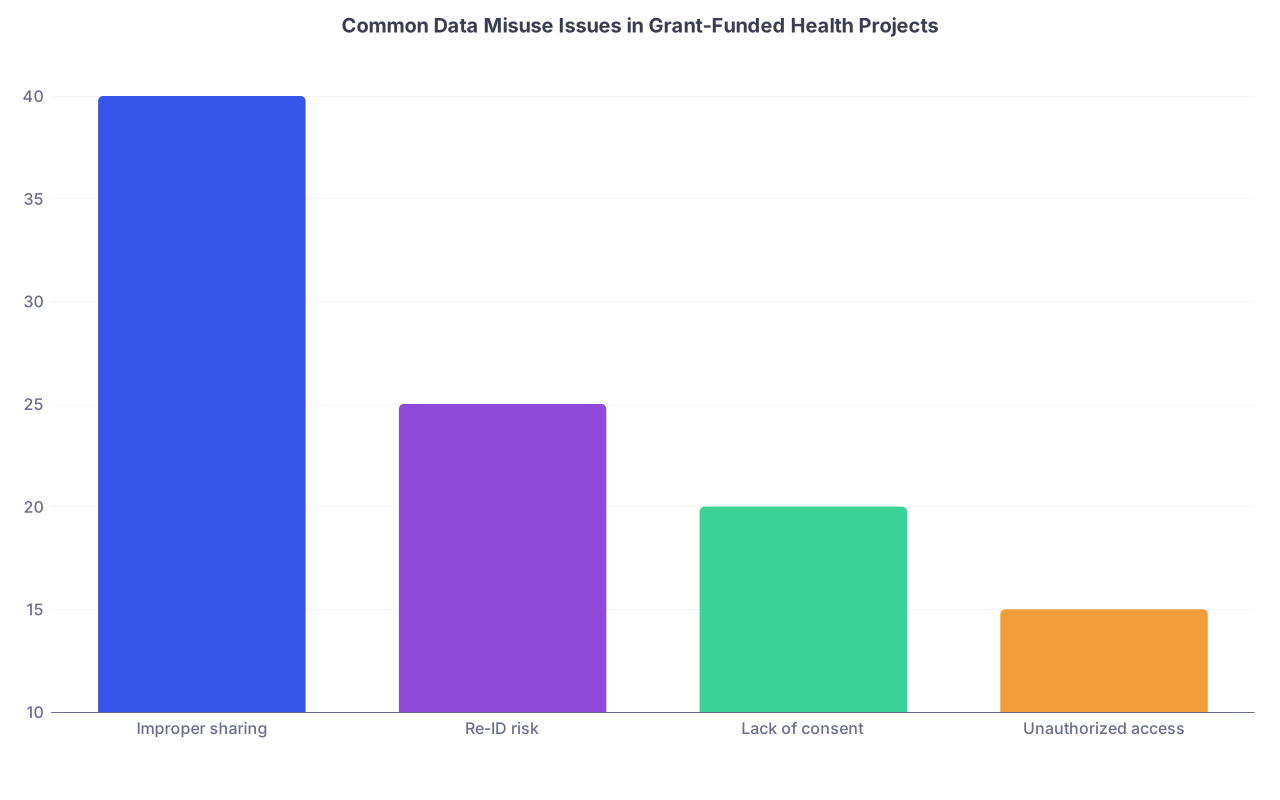
| Category | Value |
|---|---|
| Improper sharing | 40 |
| Re-ID risk | 25 |
| Lack of consent | 20 |
| Unauthorized access | 15 |
High-risk data mistakes
Assuming “quality improvement” = no consent needed
You label a project as “QI” in the grant, but:- You’re linking patient data across multiple systems
- You’re sharing with external partners
- You’re publishing or presenting identifiable subgroups
Some of that absolutely crosses into research or at least higher-risk secondary data use. Ethics committees care. So do regulators.
Sharing more data than the agreement allows
- Handing a full dataset (with date of birth, ZIP code, or rare conditions) to a policy think tank “for deeper analysis”
- Giving a vendor test data that’s actually live patient information
- Emailing spreadsheets with PHI because “IT is too slow”
Believing “de-identified” when it is absolutely re-identifiable
Small rural populations. Rare conditions. Narrow age ranges. You think you scrubbed it—until a journalist, a community member, or a lawyer connects the dots.Mixing clinical records with program data improperly
- Copying notes from the clinical chart into a policy evaluation database without clear governance
- Using identifiable clinical data to create case examples for advocacy without permission
Where the licensing risk kicks in
You may think of this as “IT” or “compliance stuff.” Boards see it as:
- Breach of confidentiality
- Violation of professional standards
- Disregard for patient trust
If the breach is big enough—or handled badly—you can be hit with both:
- Institutional discipline
- Board sanctions (reprimand, probation, or worse)
Avoid the mistake:
Do not move a single row of patient-linked data into any grant-related tool until:
- You have written approval from your privacy/compliance office, and
- You clearly understand what is allowed, what is prohibited, and how access is audited.
3. Misrepresenting Outcomes and Progress – “Spin” That Looks Like Fraud
Grant reporting invites exaggeration. Funders want success stories. Program officers love clean trends. Politicians want talking points.
And you want renewal.
This is where people start shading the truth. A little smoothing of definitions here. An optimistic interpretation of “impact” there. You rationalize it: “The direction is correct; we’re just… framing.”
That’s exactly how good people end up with words like misconduct, falsification, and fraud in their file.
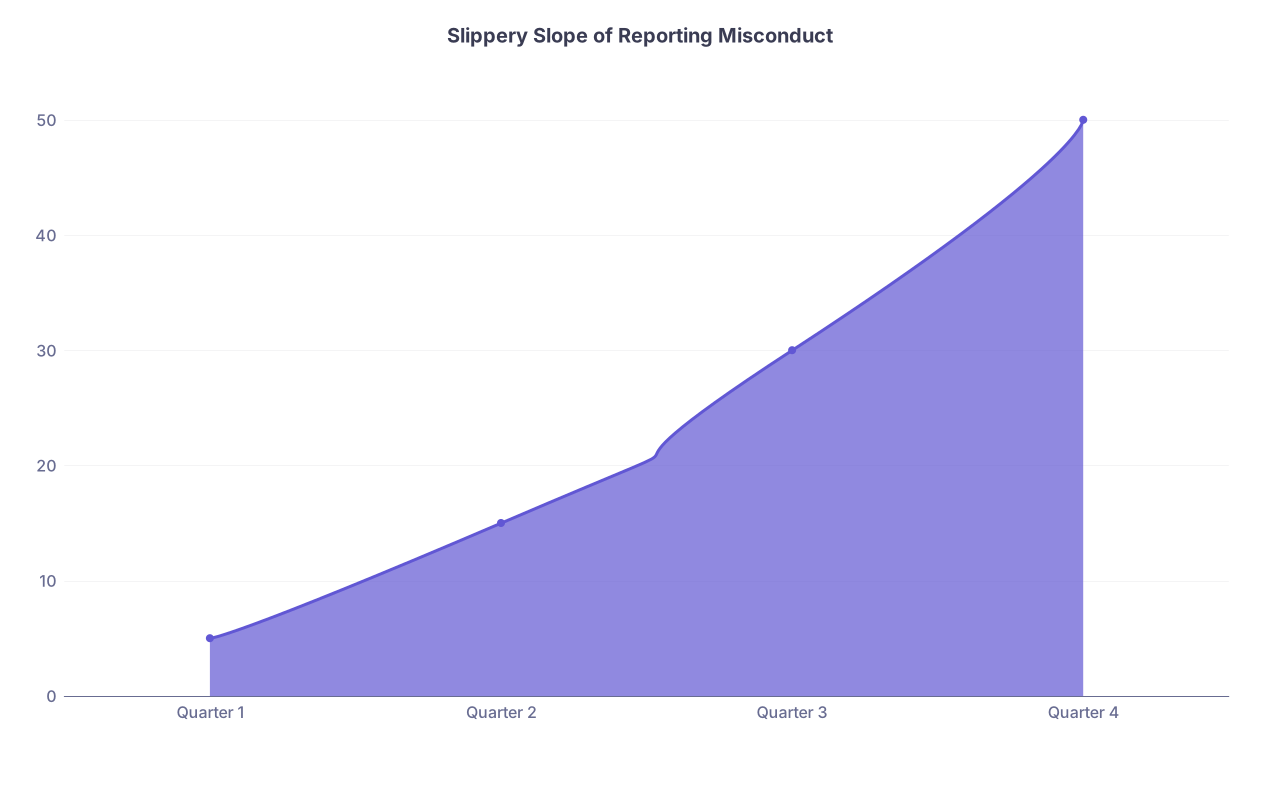
| Category | Value |
|---|---|
| Quarter 1 | 5 |
| Quarter 2 | 15 |
| Quarter 3 | 30 |
| Quarter 4 | 50 |
Forms of “soft” fraud that are still fraud
Redefining denominators midstream
- Excluding “difficult” patients from analysis to boost rates
- Quietly narrowing eligibility criteria when outcomes look bad—but still calling it the same population
Cherry-picking time windows
- Only reporting months when the intervention looked fantastic and omitting the messy startup or post-intervention drift
- Cutting off at a peak and calling it “endline”
Outcome laundering
- Calling process metrics (number of trainings, number of emails) “impact” on patient outcomes
- Suggesting causality where there’s only correlation—and you know it
“Data cleaning” that’s just erasing inconvenient reality
- Dropping outliers that are actually real people
- Reclassifying adverse events so they look unrelated to the intervention
Why this comes back to your license, not just the grant
- Many boards explicitly include “dishonesty” and “fraudulent or misleading statements” as professional misconduct—whether or not patients were directly harmed.
- If your name is on the report, the manuscript, or the policy brief, you own it. “I didn’t run the analysis” is not a defense.
- If the misrepresentation shaped clinical or policy decisions that affected care, that’s even worse.
Hard line:
Do not sign, submit, or attach your name to any report or policy product whose numbers or claims you’d be afraid to defend under oath.
If you’re not sure the numbers are honest? You stop. You ask. You document your concern.
4. Conflicts of Interest You Think Are “No Big Deal” (They Are)
Policy and grant work lives in a swamp of interests:
- Vendors
- Pharma
- State agencies
- Nonprofits
- Advocacy groups
- Your own institution’s financial goals
You’re expected to be at that table. What you cannot do is hide who paid for your chair.

Conflicts that get clinicians in trouble
-
- Serving as a paid consultant or speaker for a company whose product appears in your guideline or policy memo
- Getting “educational grants” routed through third parties that you somehow forget to disclose
Leadership roles that bias recommendations
- Board member of a nonprofit that stands to gain from the policy you’re pushing
- Equity holder in a startup being piloted in your grant
Financial ties through your institution
- Your department has a major contract with a vendor, and your policy work repeatedly favors that vendor—without transparency
- You help write procurement criteria that quietly match one product you’re professionally close to
Why boards care more than you think
Licensing boards do not read your conflict-of-interest form the way you do. They ask:
- Did you mislead patients, policymakers, or the public by hiding or downplaying your financial ties?
- Did your conflict shape recommendations that affected patient care or public health decisions?
- Does your behavior erode trust in the profession?
Even the appearance of undisclosed influence can trigger:
- Formal board investigations
- Public reprimands
- Requirements for ethics training or monitoring
Avoid the mistake:
Disclose more than you think you need to. Then document that you disclosed.
| Scenario | Risk Level |
|---|---|
| Disclosing consulting income in all policy-related work | Safer |
| Accepting honoraria and not updating disclosures | High risk |
| Recusing yourself from votes affecting your sponsor | Safer |
| Writing guidelines that favor a sponsor without disclosure | Extremely high risk |
5. Bypassing IRB / Ethics Review Because “It’s Just Policy”
This one is almost cliché now: big “data-driven policy” project, zero ethics oversight.
The usual rationalizations:
- “It’s QI, not research.”
- “We’re only using aggregate data.”
- “We’re informing policy, not publishing.”
Then someone wants to publish. Or a journalist asks questions. Or a community group complains they were used as guinea pigs. And suddenly the lack of IRB oversight looks like you tried to dodge scrutiny.

| Step | Description |
|---|---|
| Step 1 | Project idea |
| Step 2 | Consult IRB or ethics office |
| Step 3 | Lower ethics risk, still document |
| Step 4 | Formal review strongly advised |
| Step 5 | At least get written exemption |
| Step 6 | Using patient data |
| Step 7 | Interacting with people |
| Step 8 | Publication or policy impact |
High-risk patterns
Calling it “implementation” but designing it like research
Cluster interventions. Control sites. Systematic measurement of outcomes. You know what this is. Trying to label it QI doesn’t magically erase human subjects concerns.Running evaluations on vulnerable populations without safeguards
- Underserved communities
- Incarcerated populations
- People with limited English proficiency
Do this under a policy banner, with no clear consent or oversight, and you are begging for an ethics complaint.
Retroactively scrambling for IRB after the fact
This is how you end up modifying documentation, backdating communications, and generally looking like you have something to hide.
License exposure
When grants intersect with real people, boards don’t care what you stamped in the protocol. They care whether you:
- Respected autonomy
- Minimized risk
- Were honest about participation
If your policy project harmed people or treated them as test subjects without adequate protection, you can face:
- Findings of unethical conduct
- Limitations on your ability to supervise research or QI
- Broader professionalism sanctions
Bottom line:
When in doubt, ask for formal ethics review—or at least a written determination that review is not required. Verbal “you’re probably fine” from someone in the hallway will not help you when things go bad.
6. Letting Funders or Agencies Push You Past Ethical Lines
You will meet funders and policymakers who want one thing: validation. Not nuance. Not truth. Confirmation.
They will gently (or not so gently) pressure you to:
- Downplay negative findings
- Overstate success
- Adjust recommendations to match political goals
- Ignore subgroups that didn’t benefit—or were harmed

Subtle pressures that turn into major problems
- “Can we soften that language about harm? It might scare legislators.”
- “Do we really need to highlight racial disparities? That’s sensitive here.”
- “Let’s just focus on the good news for this brief. We can mention the limitations later.”
- “If this looks too negative, renewal will be tough for all of us.”
I have watched clinicians cave to this kind of pressure, then later be left alone holding the bag when complaints arise. The funder disappears. The official moves on. You’re the one in the complaint file.
When this touches your license
Boards ask:
- Did you allow external interests to distort your professional judgment?
- Did you contribute to misleading policy decisions that affected patient care or public health?
- Did you stay silent when you were ethically obligated to raise concerns?
Complicity is still misconduct.
Protect yourself:
- Put your concerns in writing (“I believe this change misrepresents the findings”).
- Keep versions of drafts and tracked changes.
- If you’re overruled, consider whether you want your name on the final product.
If you wouldn’t want your role described in a public hearing, don’t agree to it privately.
7. Documentation Sloppiness: The Paper Trail That Sinks You
You can be ethically solid and still get crushed because your documentation is a mess.
Public health policy work leaves traces:
- Meeting minutes
- Protocols
- Email chains
- Drafts and final reports
- Data dictionaries
- Consent language
If those traces are inconsistent, incomplete, or contradictory, you will look dishonest even if you weren’t.
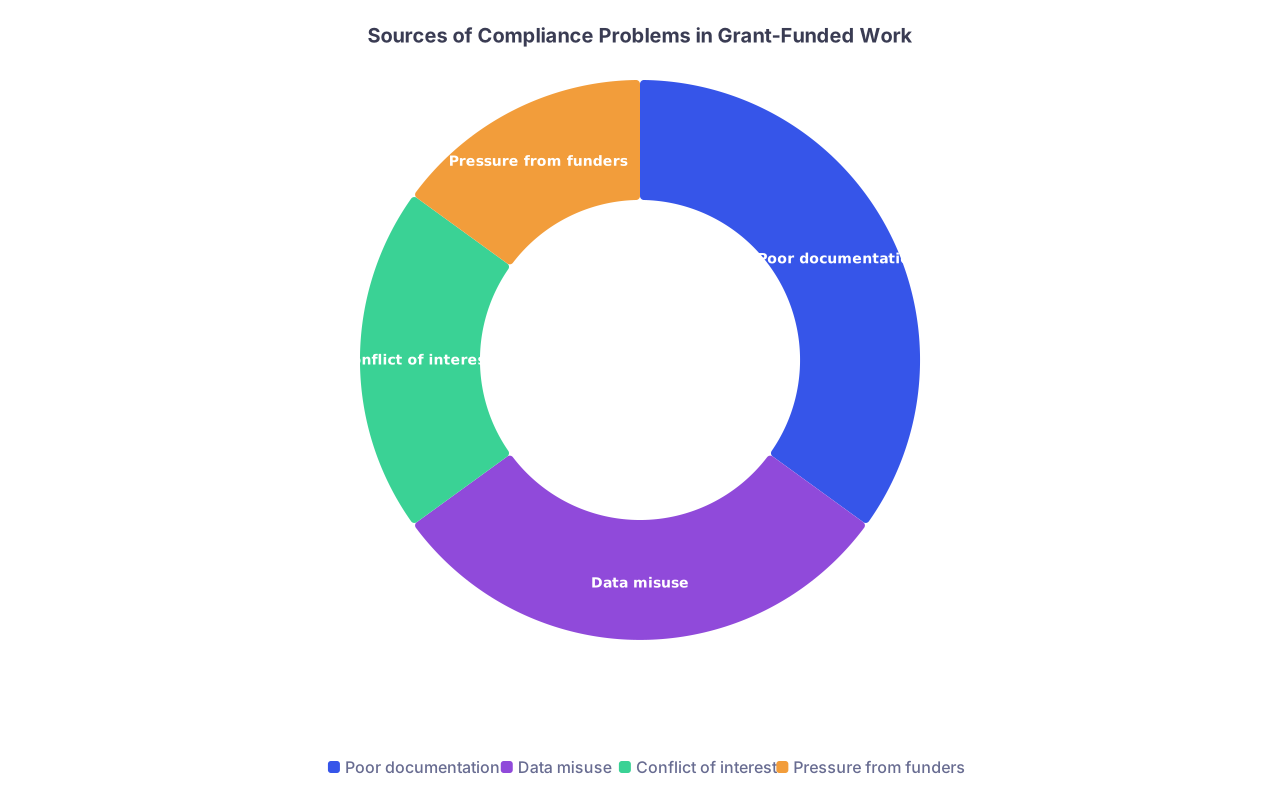
| Category | Value |
|---|---|
| Poor documentation | 35 |
| Data misuse | 30 |
| Conflict of interest | 20 |
| Pressure from funders | 15 |
Sloppy practices that cause nightmares later
Verbal-only decisions on major ethical issues
- “We talked to leadership, they said it’s fine” with no written record
- Protocol changes decided in hallway chats
Multiple “versions” of protocols with no clear final
- Different teams following different drafts
- No date stamping, no version control
Ambiguous descriptions of what participants were told
- No copy of the script or information sheet
- “We explained the program” with no detail
Inconsistent reporting across documents
- One document says data were de-identified; another describes linking to clinical records
- One report says “no adverse events”; emails clearly describe serious issues
How this plays with boards and investigators
When regulators or boards review your role, they reconstruct events from the paper trail. If:
- Your documentation is sloppy, they assume your thinking was sloppy.
- Your documents contradict each other, they suspect concealment.
- Key records are “missing,” they infer the worst.
Simple discipline that protects you:
Keep a dated folder (electronic is fine) for:
- Final protocols and amendments
- Ethics/IRB correspondence
- Data use and sharing agreements
- Conflict of interest disclosures
- Major ethical or methodological decisions
After high-stakes discussions, send a short summary email:
- “Per today’s meeting, we agreed to X, with safeguards Y and Z.”
It looks bureaucratic. It is actually self-defense.
8. Ignoring Power Dynamics with Communities – The Ethical Trap in “Population-Level” Work
Public health policy often targets communities, not individuals. That creates a tempting illusion: no need to worry about consent, autonomy, or justice. “We’re helping them.”
Careful. That mindset is how you end up in front of a board accused of exploitation.

High-risk behavior with communities
-
- One community representative on a steering committee and you call it “co-design”
- Presenting decisions as “input sessions” when everything’s already decided
Unequal burden with unclear benefits
- Collecting extensive data from a marginalized community with vague or distant benefits
- Exposing them to surveillance-like tracking (apps, check-ins, mandatory screenings) in the name of “policy innovation”
Stigmatizing narratives
- Policy briefs that paint the community as the problem instead of as people living in a broken system
- Ignoring community-identified harms when they clash with your metrics
Why boards might care
At first glance, this looks like a political or social issue, not a licensing concern. But if your name and credentials were used to:
- Justify policies that harmed or exploited a vulnerable group
- Overlook clear evidence of harm you were aware of
- Provide a veneer of “clinical legitimacy” to ethically questionable programs
then your professional integrity is on the line.
Ethics codes talk about:
- Respect for persons
- Justice
- Nonmaleficence
Those apply at community scale too.
Avoid the mistake:
- Treat communities as partners, not data sources.
- Elevate harms and concerns in writing, not just hallway sympathy.
- Refuse to be the credentialed face for a policy you know tramples on ethics, even if “everyone else at the table is fine with it.”
9. The Personal Development Trap: Thinking Policy Work Is “Less Regulated” Than Clinical Care
The final mistake is psychological:
You think:
- “I’m not prescribing. I’m just advising.”
- “This is systems work, not direct care.”
- “I’m wearing my ‘policy hat,’ not my ‘clinician hat.’”
Regulators and the public do not care about your hats. If your MD/DO/RN/NP credentials are on the line, they view everything you touch through a professional lens.

| Step | Description |
|---|---|
| Step 1 | Clinician role |
| Step 2 | Grant funded project |
| Step 3 | Policy recommendations |
| Step 4 | Changes in practice or systems |
| Step 5 | Patient and community impact |
| Step 6 | Complaints or harms |
| Step 7 | Board review of your conduct |
Development goals that backfire
Chasing leadership roles without ethics training
You get promoted into project leads and advisory committees without ever getting serious exposure to:- Research ethics
- Data governance
- Conflict-of-interest management
- Public accountability
So you improvise. That’s dangerous.
Equating “impact” with success, even when ethically messy
- You’re thrilled a policy got adopted statewide. You downplay the subgroup it harms.
- You frame “more access” as always good, ignoring coercion or loss of autonomy.
Normalizing gray zones
Once you’ve bent one rule and nothing exploded, the second and third bend feel easier. Before long, your baseline for what’s acceptable has silently shifted.
How to avoid becoming “that case”
Personal development in public health policy is not about more titles and committees. It is about building a spine and a framework.
At minimum, you should:
- Read your board’s professional conduct and ethics rules with policy work in mind.
- Take at least one serious course or workshop in research ethics / public health ethics / data governance.
- Cultivate colleagues (not your boss) you can reality-check these issues with.
The Short Version: How Not to Lose Your License Doing Grant-Funded Policy Work
Three points, no fluff:
Never let grant goals override ethics or clinical judgment.
Metrics matter. Patients and communities matter more. If they conflict, you stop and re-evaluate—on paper.Be brutally honest in data, conflicts, and reporting.
Over-disclose ties. Under-promise impact. Refuse to sign anything you couldn’t defend under oath.Treat policy work as fully inside your professional obligations, not outside them.
Your license follows you into every grant, committee, and pilot. Act like the board is already reading over your shoulder—because one day, they might be.