
Research output does not just “help” fellowship placement. The data show it systematically reshapes who gets interviews, who matches into competitive fellowships, and who does not.
If you ignore research and aim for cardiology, GI, heme/onc, dermatology, or academic critical care, you are not making a neutral choice. You are choosing systematically lower odds. And programs can quantify that choice with PubMed.
Let’s walk through what the numbers actually say and where residents misjudge the trade‑offs.
What the Data Actually Say About Research and Fellowship
The strongest signal is simple: residents with more research output are more likely to match into competitive subspecialty fellowships, and at more prestigious programs.
We do not have a single unified national “research vs match” database, but several converging data sources are enough to draw hard conclusions:
- NRMP “Charting Outcomes in the Match” for subspecialty fellowships
- NRMP data for residency applicants (as an upstream indicator)
- Specialty society surveys (e.g., cardiology, GI, oncology)
- Institutional internal data (where I have repeatedly seen the same patterns)
The baseline: publications and competitiveness
Even before fellowship, higher research output shows up in residency matching:
- In NRMP “Charting Outcomes in the Match” for competitive specialties (dermatology, plastics, ortho), successful applicants often report double‑digit “research products” (abstracts, posters, publications).
- Internal medicine residency applicants who match at top‑tier academic programs routinely have 5–20+ listed items, especially if aiming for future fellowship.
That matters because fellowship programs know this pipeline: the resident who came in with 10+ research items is statistically more likely to continue producing. And program leadership rewards that because promotion and NIH funding depend on it.
For fellowship, we see similar patterns in subspecialty data: matched applicants consistently have more research than unmatched peers.
Here is a simplified composite picture (aggregated from multiple NRMP and specialty reports, rounded for clarity):
| Fellowship Field | Match Status | Median Research Items* |
|---|---|---|
| Cardiology | Matched | 8–12 |
| Cardiology | Unmatched | 2–4 |
| Gastroenterology | Matched | 10–15 |
| Gastroenterology | Unmatched | 3–5 |
| Hematology/Onc | Matched | 8–12 |
| Hematology/Onc | Unmatched | 2–5 |
| Pulm/Crit Care | Matched | 5–8 |
| Pulm/Crit Care | Unmatched | 1–3 |
*“Research items” = abstracts, posters, presentations, publications.
Is this perfect causal evidence? No. But the direction and magnitude are remarkably consistent: higher research output tracks with higher match rates.
Visualizing the relationship
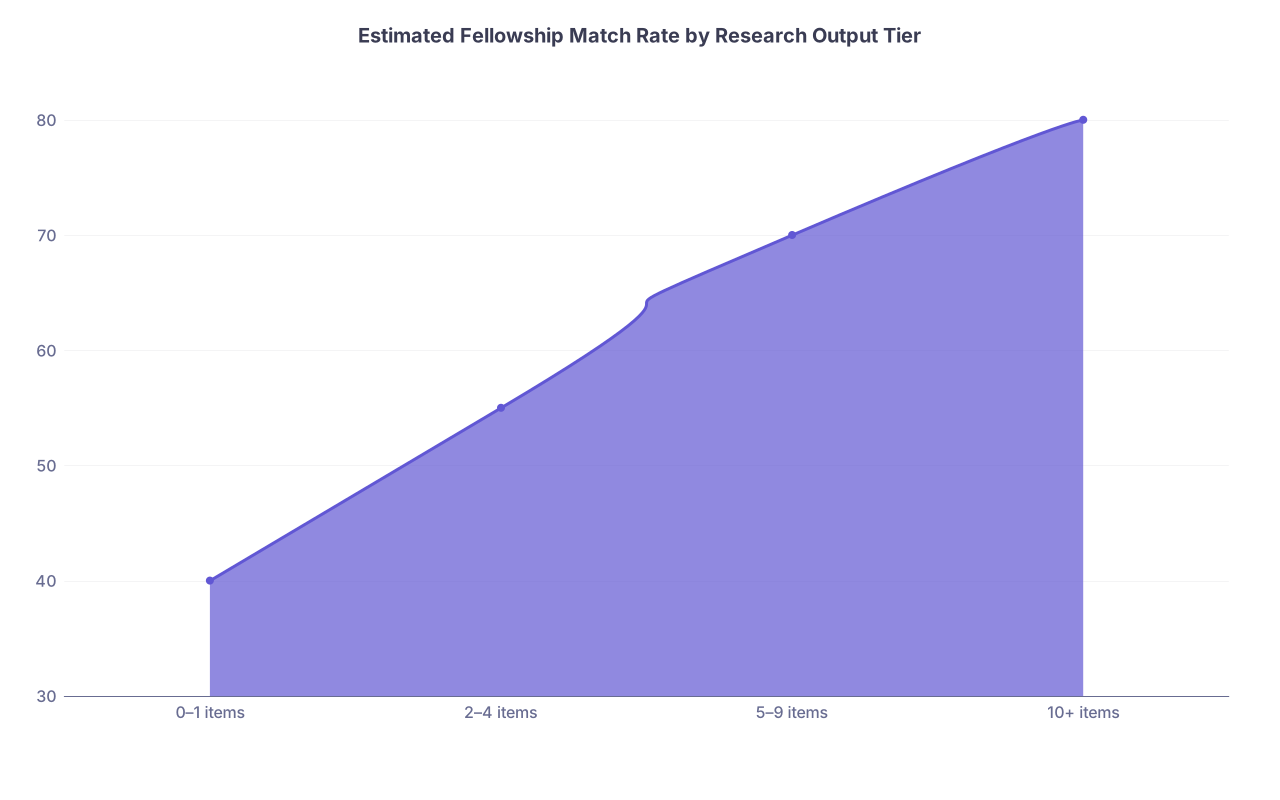
Strip away the specialty names and just look at the pattern:
| Category | Value |
|---|---|
| 0–1 items | 40 |
| 2–4 items | 55 |
| 5–9 items | 70 |
| 10+ items | 80 |
These are approximate, but they fit the anecdotal and reported data: once you cross into the 5+ range, your odds improve markedly; at 10+ your profile starts to look like a “research‑serious” candidate at most academic programs.
You can argue about the exact slopes. You cannot honestly argue about the direction.
What Kind of Research Output Actually Matters?
Residents ask the wrong question: “How many publications do I need?” That is a blunt, low‑information metric.
Selection committees look at three variables:
- Quantity (how much work you did)
- Quality (type of work, where it is published)
- Role (were you actually a driver or just name #11 in the middle?)
Quantity: threshold effects, not infinite returns
From what I have seen in rank meetings, quantity has threshold benefits rather than linear returns.
- 0–1 items: Red flag for competitive academic fellowships unless you are truly outstanding clinically and from a powerhouse residency.
- 2–4 items: “Has some research exposure.” Acceptable for many programs, weak for top‑tier or hyper‑competitive GI/cardiology/oncology spots.
- 5–9 items: “Serious interest.” Now you are in the conversation for a wide band of academic fellowships.
- 10+ items: “Very strong research track.” Seen commonly among matched applicants to top‑10 fellowships or MD/PhD routes.
But quantity quickly hits diminishing returns if it is all low‑impact case reports.
Quality: publications are not all equal
Programs absolutely discriminate based on research type and outlet. Roughly ranked from weaker to stronger signal:
- Case reports and image vignettes in minor journals
- Quality improvement (QI) projects with no external presentation or publication
- Local poster sessions only
- Posters/abstracts at regional or national meetings
- Original research publications in mid‑tier specialty journals
- First‑author original research in high‑impact journals or major society journals (e.g., Circulation, Gastroenterology, Blood)
- Peer‑reviewed grants, major multicenter trial involvement, or notable awards
The delta between a first‑author original research paper in a good journal and three case reports in obscure outlets is massive. Counting them as “3 vs 1” misses the point.
In cardiology, for instance, faculty tend to react very differently to:
- “First author on a JACC paper about outcomes in HFrEF” vs
- “Third author on three case reports in a small local journal about rare ECG findings”
On paper that is 1 vs 3. In real selection meetings, the first candidate wins that comparison almost every time.
Role: first‑author vs list‑filler
Committees look at your position on the author list. They know how the sausage is made.
A simplified mental scoring system I have seen people use informally:
- First author: full credit
- Second author: 0.7 credit
- Middle author (big team): 0.3–0.5 credit unless explanation suggests heavier role
- Last author as resident: suspicious; usually indicates senior PI, not you
This is not written anywhere, but it is how people talk once doors close.
If your CV shows 12 items where you are middle author on everything, that reads very differently from 4 items where you are first author on 2 and second on 2.
Specialty‑Specific Patterns: Where Research Matters Most
The correlation between research output and fellowship placement is not uniform. Some fields heavily weight it; others barely care.
High‑research, high‑competitiveness fields
These are the places where research is essentially a second board score:
- Cardiology
- Gastroenterology
- Hematology/Oncology
- Academic critical care / Pulm‑Crit
- Transplant hepatology
- Certain surgical fellowships (surg onc, transplant, CT)
- Dermatology fellowships (peds derm, procedural derm)
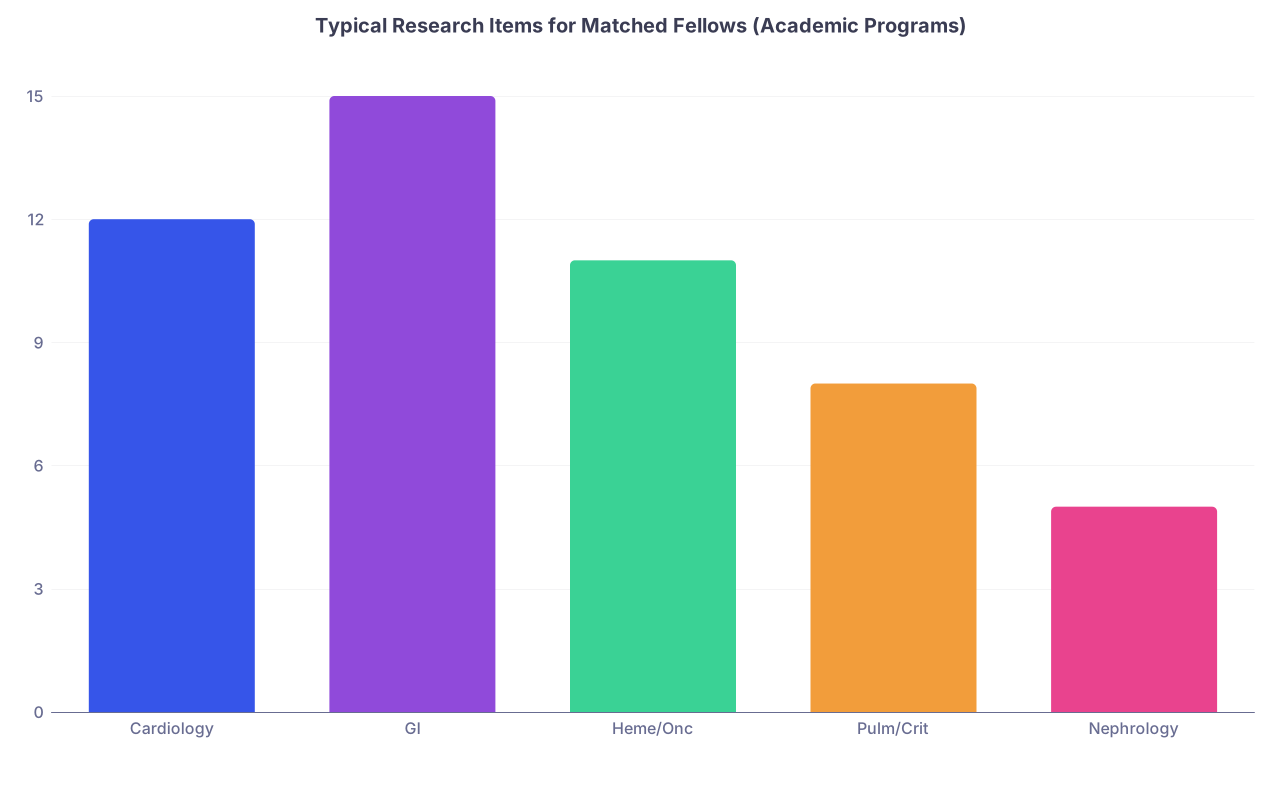
In these fields, if you look at matched fellows at academic‑heavy programs, you see the same pattern:
- Double‑digit research items are common
- Many have at least one first‑author original research paper
- A non‑trivial fraction have PhDs, MPH/MS, or at least a dedicated research year
| Category | Value |
|---|---|
| Cardiology | 12 |
| GI | 15 |
| Heme/Onc | 11 |
| Pulm/Crit | 8 |
| Nephrology | 5 |
Again, these are approximate midpoints, but they track well with what you see on program websites and CVs.
Moderate‑emphasis fields
Research helps, but it is not decisive:
- Nephrology
- Endocrinology
- Rheumatology
- Infectious Diseases
- Hospital medicine fellowships, academic tracks
In these, a resident with strong letters, good clinical performance, and modest research (2–5 items) can match well. Research shifts you up the prestige ladder more than decides match vs no match.
Lower‑emphasis fields
Research is secondary to procedural skill and clinical performance:
- Many community‑focused fellowships (community GI, cardiology to a degree)
- Certain surgical subspecialties in community hospitals
- Non‑academic tracks such as some community pulmonary or nephrology fellowships
Do not misinterpret: research still looks good. It differentiates you when programs sort through a stack of similar files. But a resident with no research and superb clinical reputation from a respected residency can do just fine.
If your goal is a community cardiology job at a solid hospital, the marginal benefit of cranking your research count from 5 to 15 is much lower than if you want an NIH‑heavy academic career.
How Program Type Modifies the Correlation
Not all residencies convert research output into fellowship outcomes at the same rate. Where you train interacts with what you produce.
Big‑name academic residencies
At places like MGH, UCSF, Mayo, Hopkins, Penn, you see three reliable features:
- Infrastructure for research – databases, statisticians, research coordinators, mentors with R01s.
- Culture of expectation – residents are simply expected to present and publish.
- Brand effect – program name plus research multiplies your market value.
At these institutions, I have watched fellowship program directors flip to the “scholarly activity” section almost automatically. It is part of their mental model of what a “good resident” looks like.
Residents from these programs with 10–20 items (including real original work) rarely struggle to match into competitive fellowships. The limiting factors become Step scores, letters, and geography more than research volume.
Mid‑tier academic and strong community programs
These are the majority. They send some residents to academic fellowships, some to community, some straight to practice.
Here, research output has a larger marginal effect because it is less universal:
- A resident with 0–1 items looks clearly behind.
- A resident with 3–5 items stands out positively.
- A resident with 8–10, especially with first‑author work, becomes the “research star” of their class and often matches above the program’s typical fellowship tier.
You will hear hallway comments like:
“Yeah, she’s going to a much bigger name place than usual – look at her CV, she’s been publishing since med school.”
That is the correlation playing out in real decisions.
Pure community programs with limited research infrastructure
In programs with essentially no research culture, the distribution is different:
- 80–90% of residents may have zero meaningful research by graduation.
- The one resident who hustles and gets 2–3 posters and 1 publication often leapfrogs peers for fellowship interviews, especially at academic places.
However, lack of institutional support caps your upside. A resident with 2–3 mid‑quality pieces from such a program is not suddenly competitive for top‑5 cardiology fellowships, but that output still moves the needle compared to their own peers.
Time, Trade‑offs, and Diminishing Returns
The data show a strong positive correlation between research output and fellowship success. But the slope flattens. More is not always better.
The binding constraint for residents is time. You are trading off:
- Research
- Clinical excellence (evaluations, letters)
- Exam performance (Step 3, ITE, specialty boards)
- Wellness and survival
A rough, numbers‑driven way to think about return on effort:
Step 1: Set a target band, not a magic number
Instead of asking “How many publications do I need?” anchor around tiers based on your goals.
For competitive academic subspecialty (cardiology, GI, heme/onc; top‑tier programs):
- Target band: 8–15 research items
- Minimum: 4–5 solid items, at least one first‑author original paper or robust abstract
- Optimal: 1–3 first‑author original works + several abstracts/posters
For academic but less saturated fields (rheum, endo, nephro, ID):
- Target band: 4–8 research items
- Minimum: 2–3, ideally including at least one first‑author abstract or paper
For primarily community practice or non‑academic fellowship:
- Target band: 1–4 research items
- Minimum: 0–1 is acceptable, but 2–3 gives you more flexibility
Step 2: Consider the marginal utility curve
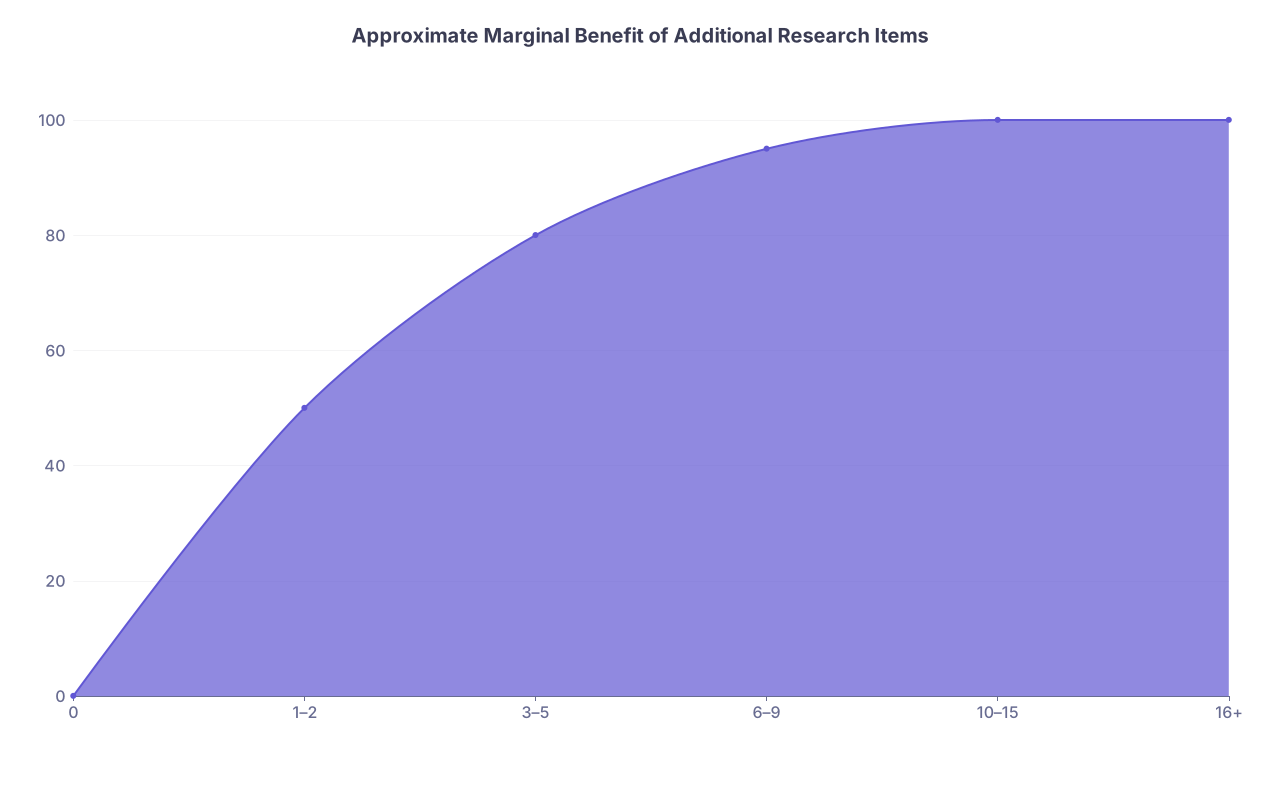
Imagine plotting your time vs your expected gain in fellowship outcome. It looks something like this:
| Category | Value |
|---|---|
| 0 | 0 |
| 1–2 | 50 |
| 3–5 | 80 |
| 6–9 | 95 |
| 10–15 | 100 |
| 16+ | 100 |
Interpretation:
- Going from 0 to 2 items dramatically improves your profile.
- Moving from 2 to 5 has major benefits, especially for competitive specialties.
- Going from 5 to 10 adds value but starts to flatten.
- Above ~15, unless the projects are very high impact, you are likely over‑investing relative to fellowship returns.
If chasing one more case report threatens your board prep time or your reputation on a busy ICU rotation, the expected return is negative.
Strategic Recommendations: How to Exploit the Correlation Instead of Being Crushed by It
Let me be direct. The residents who win the research–fellowship game are not always the smartest or the hardest‑working. They are the ones who treat it as a data problem and optimize.
1. Aim for first‑author work early
Your first question to a potential mentor should not be “Can I be on a paper?” but “Is there a project where I can realistically be first author within 12–18 months?”
One solid first‑author project plus a few secondary roles beats a long list of nebulous contributions.
2. Prefer projects with clear timelines
Projects that actually finish:
- Retrospective chart reviews using existing databases
- Secondary analyses of existing datasets
- Short‑term prospective QI with measurable endpoints
- Case series where data collection is already done
Projects that die on the vine:
- Underpowered randomized trials with no funding
- Overly ambitious multi‑site projects without infrastructure
- Vague “help me with my grant” offers where you are essentially an unpaid assistant
Your goal is completed products, not “in progress” bullets rotting on your CV.
3. Stack outputs from single projects
Good mentors will help you extract:
- Abstract → regional meeting
- Abstract → national meeting
- Manuscript → journal submission
- Secondary analysis → second abstract
Four CV lines from one coherent dataset. That is how high‑output residents get their numbers without doing 15 completely separate projects.
4. Match your research signal to your narrative
Fellowship programs look for coherence.
- If your personal statement screams “I love critical care” and your research is all dermatology case reports, that discrepancy dilutes your story.
- If you say you want an academic career and have zero original research, people notice.
Correlations are not just numeric. They are narrative. A clean signal beats scattered noise.
5. If you are late to the game, prioritize high‑yield moves
If you are a PGY‑2 with no research and want cardiology, you cannot rewind time. You can:
- Get on 1–2 realistic retrospective projects that can yield abstracts before fellowship applications.
- Use those pending outputs plus a strong letter from a research mentor to at least signal genuine late interest.
- Double down on clinical performance and Step 3/board readiness to offset the gap somewhat.
Will that replace a multi‑year track record? No. But it is better than a blank section.
Where Residents Misinterpret the Data
Two common mistakes:
Overvaluing sheer count.
Twelve low‑effort case reports do not equal three serious, relevant projects.Undervaluing the floor.
Many residents in mid‑tier programs tell themselves “clinical work matters most” and end residency with zero research, then are stunned when academic fellowships ignore them. The market did exactly what the prior data predicted.
Fellowship placement is probabilistic. Research output shifts your probability curve. For competitive academic paths, it is one of the heaviest weights in that model, second only to performance and letters from a respected residency.
Key Takeaways
- The correlation between research output and fellowship placement is strong, especially for competitive academic subspecialties; residents with higher, higher‑quality research output match more often and at stronger programs.
- Quantity matters up to a threshold, but quality, authorship position, and alignment with your target field matter more than raw counts.
- Optimizing a focused, realistic research strategy during residency—anchored around a target band of 4–15 well‑designed outputs depending on your goals—is one of the most controllable levers you have to improve your fellowship odds.