

The biggest threat to your “research productivity” isn’t a weak CV. It’s a PI who won’t let anything leave their hard drive.
You did the work. The study is basically done. But your PI keeps “needing one more analysis,” won’t answer emails, or refuses to submit until the perfect mythical revision happens. Meanwhile, ERAS is open, and you’re staring at a blank “Publications” section.
Let’s deal with that. Directly.
This is about what you can actually do when your PI is bottlenecking your work and residency applications are approaching (or already live).
Step 1: Get brutally clear on your timeline and what “counts”
Before you decide how hard to push, you need to know what’s realistic for this application cycle.
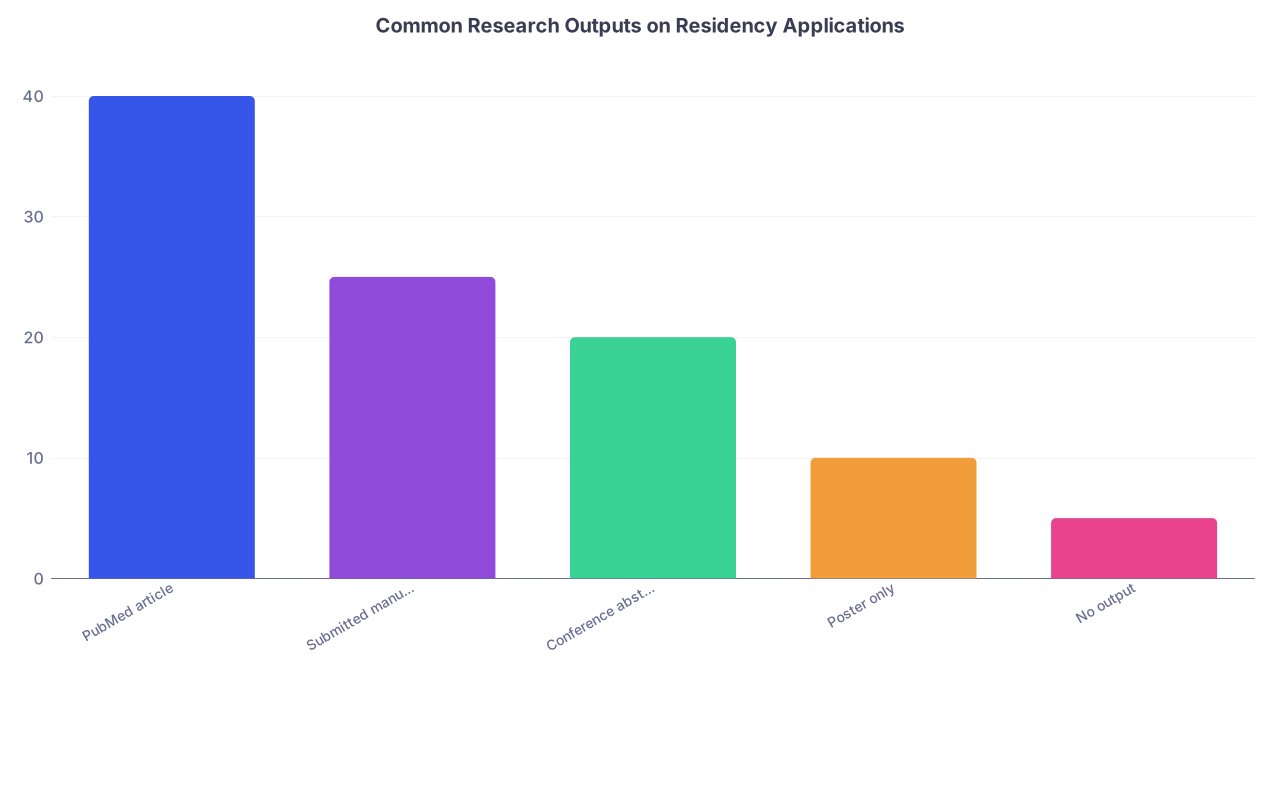
| Category | Value |
|---|---|
| PubMed article | 40 |
| Submitted manuscript | 25 |
| Conference abstract | 20 |
| Poster only | 10 |
| No output | 5 |
Most programs don’t require polished, accepted, PubMed-indexed work. They want evidence of:
- Engagement in research
- Ability to see projects through
- Some tangible product: abstract, presentation, draft, or submission
Look at what stage your project is in:
| Current Status | What You Can Usually List on ERAS |
|---|---|
| Data collected, no writing | “Research experience” only |
| Draft written, not submitted | “Manuscript in preparation” (if substantial) |
| Submitted to a journal | “Submitted manuscript” |
| Accepted abstract/poster | “Conference abstract/poster” |
If you’re:
- 6–9 months from applying: you still have time to push for submission.
- 2–4 months out: you’re living in “convert this into something listable” territory (abstract, poster, or at minimum, a solid “in preparation” manuscript).
- 0–2 months out or ERAS already submitted: the goal is to extract anything concrete and verifiable that reflects your work.
You are not in the “wait patiently and hope your PI changes” phase anymore.
Step 2: Diagnose the exact kind of PI roadblock you’re facing
Different PI behavior = different strategy. Be honest about which one you’re dealing with.
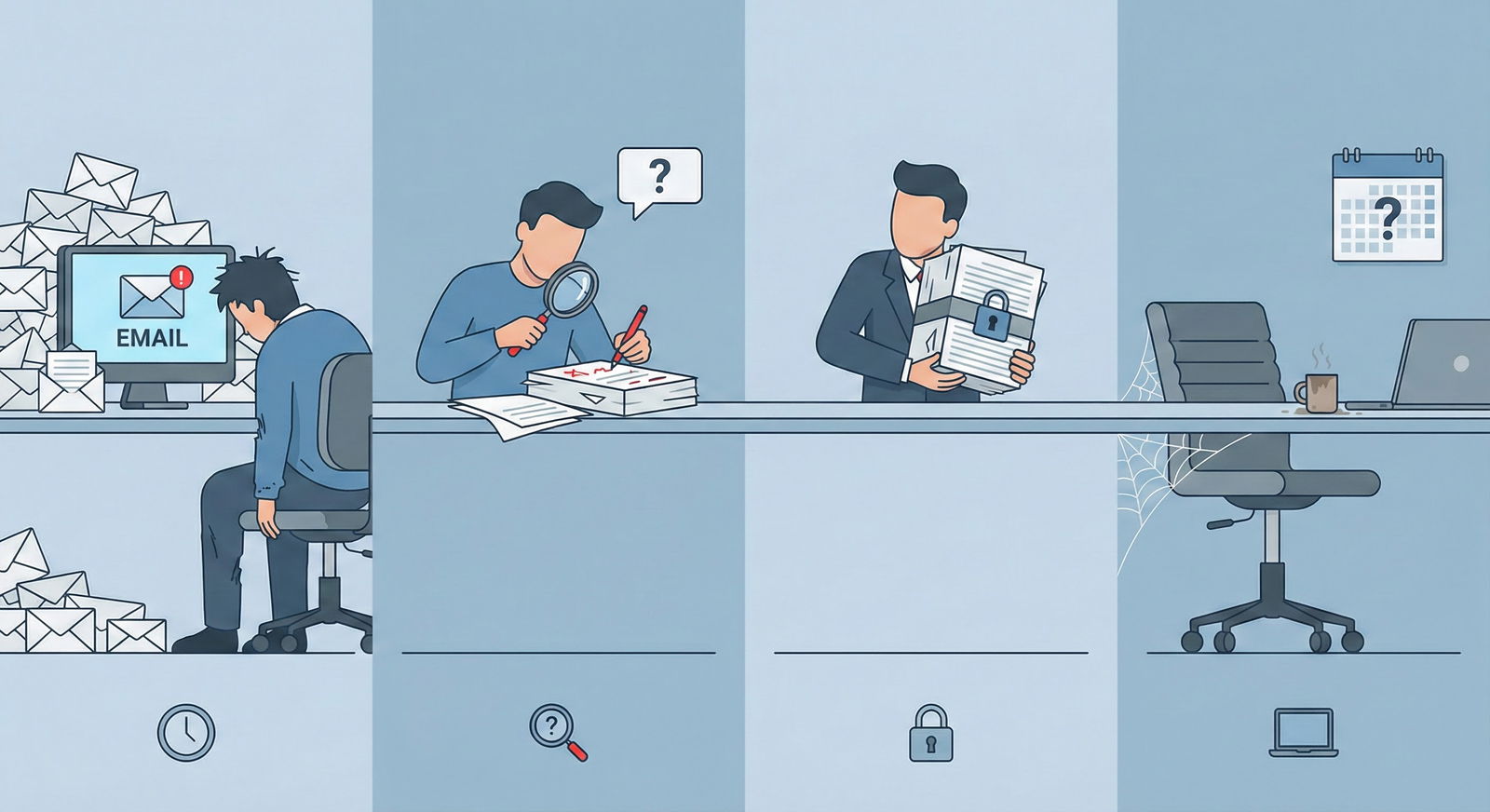
Common patterns:
The Perfectionist
- “We need to redo this analysis.”
- “The figures aren’t ready for prime time.”
- Never satisfied enough to submit.
The Ghost
- Doesn’t reply to emails for weeks.
- Cancels meetings, never sets a clear timeline.
- Project just… sits.
The Control Freak
- Won’t let you write or submit independently.
- Insists everything go through them, but then stalls.
- May gatekeep authorship or insist on first/last author drama.
The Overcommitted But Reasonable
- Actually well-intentioned.
- Drowning in grants, clinic, admin.
- Will move if you structure things and do the heavy lifting.
You’re going to approach each one slightly differently, but the backbone of what you do is the same:
- Put everything in writing.
- Offer concrete next steps and deadlines.
- Translate “this is blocking my career” into terms they care about: timelines, expectations, and reputation.
Step 3: Have the hard conversation – but do it strategically
You don’t fix this with one more vague, polite “just checking in” email. You need a reset.
First: Frame the situation around timelines and shared goals
Email first (so there’s a record). Then, if possible, talk in person or via Zoom.
Template you can adapt (don’t copy-paste like a robot; make it yours):
Subject: Manuscript timeline and residency applications
Dear Dr. [PI],
I’m starting to prepare my residency application for this upcoming cycle, and I wanted to touch base about our [project title] manuscript. I’m very grateful for the opportunity to work on this and would like to make sure we move it forward in a way that reflects well on the lab and also supports my application.
I’ve attached the current draft and [any updated analyses/figures].
Would it be possible to set a concrete timeline for final revisions and submission? For example, if we could aim to finalize the manuscript by [date ~3–4 weeks away] and submit to [journal name] by [date], that would allow me to list it appropriately on ERAS.
I’m happy to take on whatever additional tasks are needed (revisions, formatting, responding to reviewer-style comments) to make this as easy for you as possible.
Could we schedule a brief meeting next week to agree on next steps and timeline?
Best,
[Name]
A few important things you’re doing here:
- You explicitly tie this to your residency application.
- You propose a realistic but firm timeline.
- You volunteer work so they just need to approve and click submit.
Then in the meeting, be even more direct:
- “I’m applying in September. Programs will review applications in October. I’d like to be able to list this as submitted by then.”
- “What specific changes do you need from me before you’d feel comfortable submitting?”
- “Can we agree on a target journal and target submission date?”
Push them to say either “yes, by X date” or “no, not possible.” Ambiguity is your enemy.
Step 4: Convert the project into something you control
If your PI won’t budge on submission, your next move is to convert the work into outputs that don’t require journal acceptance.
Think: abstracts, posters, presentations, and at minimum, a complete draft.

| Step | Description |
|---|---|
| Step 1 | Project stalled with PI |
| Step 2 | Push to submission and list as submitted |
| Step 3 | Submit to conference, list as abstract/poster |
| Step 4 | Write full draft, list as in preparation |
| Step 5 | Consider involving department mentor or research office |
| Step 6 | Can PI commit to submission timeline? |
| Step 7 | Willing to approve abstract/poster? |
Option A: Abstract / Conference route
Ask directly:
- “If the full manuscript isn’t ready, would you be comfortable with me submitting an abstract to [local/national] meeting based on this data?”
Many PIs are weirdly more relaxed about abstracts than full manuscripts. Use that.
Fast paths:
- Local departmental research day
- Institutional research symposium
- Specialty-specific regional meetings (e.g., ACP local, AAP district, regional surgery meetings)
- National meetings with abstract deadlines that still fit your cycle
What this gives you for ERAS:
- “Smith J, Your Name, et al. [Title]. Abstract accepted for presentation at [Conference], [Month Year].”
- This absolutely counts as research output. Programs see this all the time.
Option B: “In preparation” – when it’s legit
You shouldn’t list “in preparation” if all you have is half a spreadsheet. But if:
- Data collection and analysis are done
- You have a mostly complete draft
- The PI agrees this is headed to a journal (eventually)
Then you can list:
- “Your Name, Smith J, et al. [Proposed title]. Manuscript in preparation.”
This is weaker than “submitted,” but better than nothing. And it’s honest if someone asks you in an interview, “What’s the status now?”
Option C: Internal talk or poster
If your PI is stonewalling everything external:
- Present at your department’s conference day.
- Ask to give an internal lab presentation or grand rounds mini-talk.
You can still list:
- “Oral presentation: [Title]. [Department/Institution], [Month Year].”
- “Poster: [Title]. [Institutional Research Day], [Month Year].”
Not as shiny as a national podium talk, but it still shows follow-through.
Step 5: When to escalate – and how not to blow yourself up
Sometimes you’re past “be polite and wait.” The project is deadlocked. Your PI is unreasonable or outright obstructive. And your career clock is ticking.
You have three escalation levers. Use them carefully.
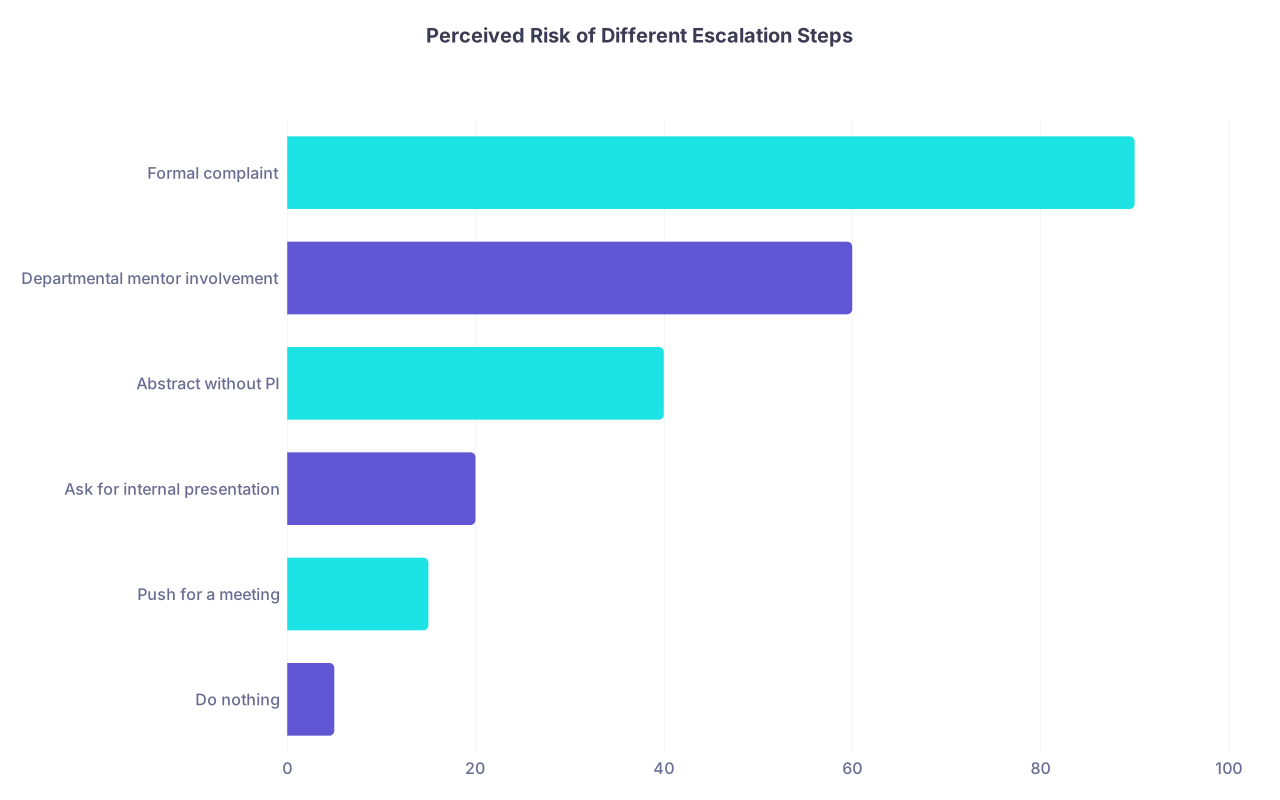
| Category | Value |
|---|---|
| Do nothing | 5 |
| Push for a meeting | 15 |
| Ask for internal presentation | 20 |
| Abstract without PI | 40 |
| Departmental mentor involvement | 60 |
| Formal complaint | 90 |
1. Quiet help: another mentor or advisor
Find a faculty member who:
- Knows your PI at least loosely, and
- Has no stake in the politics of your lab
Say something like:
“I’m in a difficult spot. I’ve done substantial work on a project with Dr. [PI], but the manuscript has been stalled for [X] months. I’m applying this cycle, and I’m worried I won’t have anything tangible to show. I want to respect authorship and PI boundaries, but I also don’t want my work to disappear. Can I get your advice on how to approach this?”
You are not asking them to attack your PI. You’re asking for strategy.
A good mentor might:
- Suggest specific language to use with your PI.
- Offer to email your PI copying you: “I understand [Name] is working on [project]. Given residency timelines, can we help them get this to at least an abstract by [date]?”
- Provide cover if things get tense.
2. Involving the research office / program leadership
If you’re a med student or resident and the project is tied to:
- A funded program
- A formal scholarly requirement
- A thesis or capstone
You may have the right to ask the research office or program director for help. Frame it as:
- “I’m not accusing anyone of misconduct; I’m just stuck and worried about my scholarly requirement and career timeline.”
- “Is there a standard process when a project stalls due to lack of PI availability?”
Sometimes, the quiet nudge from someone with administrative weight gets miracles done.
3. The nuclear option: conflict or misconduct
Use this only if:
- The PI is trying to remove you from authorship entirely despite your clear contribution, or
- There’s something unethical happening with data or credit.
Then we’re in COI/ombuds/ethics-office territory. That’s beyond “my paper is stuck” and into “I may need to protect myself formally.”
If you go this route, prepare:
- Detailed documentation: emails, drafts with tracked changes, notes of when you worked on what
- A very calm, factual explanation of your role and what you’re asking for
This can absolutely burn bridges. Don’t walk into it casually. But do not let someone erase your work or attach your name to something fraudulent. That follows you longer than a missing line on ERAS.
Step 6: How to list work honestly when it’s stuck
Residents and faculty read hundreds of applications. They can smell “inflated” faster than you think. But they’re also very used to seeing incomplete projects.
Use accurate status labels:
- “Published” – only if it’s accepted and in press/online.
- “Submitted” – manuscript sent to journal (you should be able to prove this if asked).
- “In preparation” – substantial draft exists; your name is on it; it’s not just an idea.
If you’re worried you’re stretching “in preparation” too far, ask yourself: if someone on the interview committee said, “Send me your current draft,” could you send something that looks like a real manuscript?
If yes, you’re fine.
Step 7: Multiple stalled projects? How to triage strategically
Some of you aren’t stuck on one project. You’re sitting on three half-dead things with three different PIs.
You cannot save them all before ERAS. Pick and choose.
| Project Type | Priority for This Cycle |
|---|---|
| Near-complete, you’re 1st/2nd | Highest – push hard to submit |
| Mid-stage, you’re middle author | Medium – aim for abstract |
| Early-stage, minimal role | Low – list as experience only |
Ask:
- Where am I highest in the author order?
- Which project is closest to something I can call “submitted” or “abstract presented”?
- Which PI is most likely to respond to a structured request?
Put your energy there. One concrete output is better than five vague “working on a paper with X” lines.
Step 8: Protect yourself for the next time you do research
This situation is awful, but it’s also a warning. You don’t want to repeat it during residency or fellowship.
For your next project:
- Clarify authorship and expectations early. “If I do X, Y, Z, would that be consistent with first or second authorship? What’s the usual path to submission in your group?”
- Ask about timelines before you commit. “What’s your usual time from draft to submission?”
- Keep your own copies of drafts, analysis code, and notes (within IRB and data security rules).
- Set up regular, recurring check-ins from the start, not when the project is already stalled.
You’re learning something programs actually care about: can you shepherd academic work to completion, not just “help out in a lab.”
FAQs
1. Can I submit an abstract or manuscript without my PI’s permission if I did most of the work?
Usually no. Ethically and often contractually, the PI is responsible for the project, data, and IRB. Submitting without their sign-off can:
- Violate institutional policy
- Jeopardize IRB compliance
- Legitimately damage your reputation more than help it
The safer route is to push hard for explicit permission or involve a neutral mentor/administrator first. Only in rare, ethically complex situations (e.g., data suppression, misconduct) would you even consider more radical steps, and in those cases you should talk to an ombuds/ethics office before you do anything.
2. How bad does it look if I only have “in preparation” and no accepted publications?
For most residency programs, especially outside of ultra-research-heavy ones, it’s fine. Programs understand that projects started in M3/M4 or PGY-1 often aren’t fully published by application time. What matters more:
- Is there a coherent story?
- Can you clearly explain your role?
- Do your letters back up that you actually worked on something real?
“One or two solid ‘in preparation’ or ‘submitted’ lines with a clear role” beats a laundry list of vague “research experiences” with zero tangible output.
3. My PI keeps promising to submit “soon” but it’s been over a year. Do I just give up?
Not immediately, but you stop relying on them. Do three things in parallel:
- Send one more very clear, timeline-based email with specific dates and actions.
- Convert the project into whatever you can list now (abstract, internal presentation, in-prep draft).
- Start a new, smaller-scope project with someone who has a track record of actually publishing with trainees.
You’re allowed to mentally move on while still being open to the pleasant surprise if the PI eventually follows through.
4. How do I talk about a stalled project in interviews without sounding bitter?
Be factual, not emotional:
- “I worked on a retrospective study on [topic] with Dr. X. I led data collection and initial analysis. We completed a draft manuscript, but it’s still in preparation due to scheduling and timeline issues. I learned a lot about [methods/topic], and in residency I’d like to work with a more structured research group to see projects through to publication.”
That shows maturity, insight, and zero drama. Interviewers know this happens. Many of them lived through the same thing with their own PIs.
Key points to walk away with:
- Stop waiting passively; structure a clear, written timeline and ask for specific commitments from your PI.
- If submission is blocked, convert the work into controllable outputs: abstracts, posters, or a real “in preparation” manuscript.
- Protect your future self by choosing better projects and setting expectations early so you never again have your entire application hinging on one PI’s inbox.


