
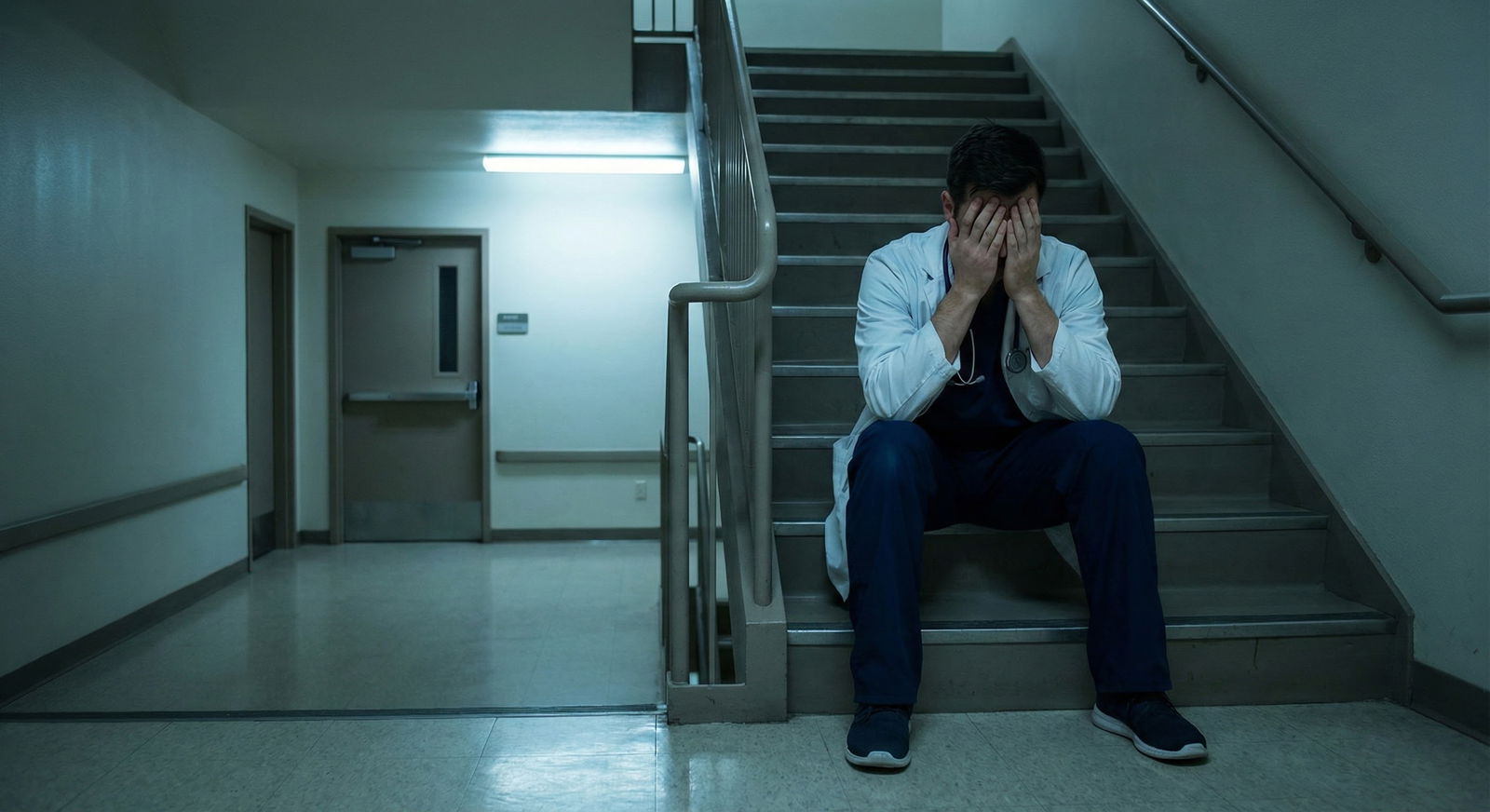
It’s 2:47 a.m. You’re on hour 21 of a “24-hour” call that never actually ends at 24. Your senior just humiliated you in front of the team for not knowing some random niche guideline. The PD’s email about “wellness” is still sitting in your inbox, unread, because you haven’t had a full day off in two weeks. Your anxiety spikes every time your phone vibrates. You’re wondering a very real question:
“Is it me… or is this program actually malignant? And if it is, how do I get out without detonating my career?”
You are not the first person to be here. You will not be the last. But right now, you need something concrete:
What are your options? How bad is “too bad”? When do you leave vs. when do you endure? And if you leave, what’s the actual step‑by‑step process?
That’s what we’re going to do. No wellness posters. Just a tactical survival and exit manual.
Step 1: Get Clear – Is Your Program Truly Malignant or Just Miserable?
Not every hard program is malignant. Some are brutal but fair. Others are fundamentally unsafe and ethically rotten. You need to know which you’re in, because your options and urgency change.
Let’s separate “this sucks” from “this is dangerous.”

Here are malignant program red flags I’ve seen repeatedly:
Retaliation culture
- Residents who speak up get punished with worse rotations, bad evals, or suddenly “unprofessional” labels.
- People say things like, “Just keep your head down,” or “We all went through it, don’t rock the boat.”
Routine violation of duty hours and safety
- 28–36+ hour shifts as the norm, not rare exceptions.
- You’re pressured to not log hours accurately.
- You’re driving home barely able to keep your eyes open regularly.
Systemic humiliation and abuse
- Yelling, name-calling, public shaming during rounds.
- Attendings or seniors mocking you or patients.
- “Teaching” that’s really just ritualized bullying.
Zero support when you raise concerns
- You’ve already tried talking to chief residents or leadership and either:
- Nothing changed, or
- Things got worse for you.
- You’ve already tried talking to chief residents or leadership and either:
Chronic patient safety issues that are ignored
- Unsafe patient loads, impossible cross-cover expectations.
- Errors swept under the rug instead of addressed.
Now contrast that with a tough but non-malignant program:
- Hours are heavy but logged honestly.
- Some attendings are jerks, but leadership backs residents when needed.
- When serious issues are raised, something actually shifts.
- People are tired but not broken. Residents still laugh sometimes. They don’t cry in the stairwell every week.
Why this matters:
If your program is malignant, the priority is preserving your health and your license and building an exit plan.
If your program is just brutally hard, the priority is tight burnout management + strategic positioning for fellowship or a later move.
Either way, you don’t just “wait and see” until you fall apart.
Step 2: Stabilize Yourself Before You Make Big Decisions
You’re probably exhausted, depressed, anxious, or all three. You cannot do clean thinking in that state. Before we talk transfer, quitting, or whistleblowing, you need to get out of emotional freefall.
This doesn’t mean months of therapy first. I’m talking about a short, aggressive stabilization phase. Think: 2–4 weeks of intentional moves.
1. Medical and mental health check
You’re a physician, but you know this: doctors are trash at taking care of themselves.
Do this within 7 days:
- Schedule an appointment with:
- A PCP (if possible) and
- A therapist / psychiatrist who has actually worked with residents or physicians.
- If you’re having:
- Recurrent thoughts of self-harm
- Can’t stop crying
- Using substances daily to numb out
You move this from “within 7 days” to now / today.
You cannot out-grind a major depression or PTSD from workplace trauma. It will eat you.
2. Micro-protections at work
No, you can’t magically fix the program this week. But you can lower the damage:
- Eat something with calories at least twice on shift. Even if it’s crackers and peanut butter stolen from the call room.
- Drink actual water. Not just coffee.
- Protect 1–2 non-negotiable sleep blocks per week. That might mean:
- Saying “no” to extra “voluntary” research meetings.
- Leaving the hospital the minute you’re allowed to, not 45 minutes later because of guilt.
- Limit after-hours EMR work. If you’re routinely charting at home for 2–3 hours, that’s gasoline on burnout.
These are small things. But small things keep you functioning long enough to execute bigger plans.
3. One trusted person to reality-check you
You need at least one person who is:
- Outside your program power structure (med school mentor, previous attending, faculty from another institution, or a prior co-resident who left).
- Willing to be blunt.
Tell them what’s happening. Ask: “If I were your sibling, what would you tell me to do?”
Then actually listen.
Step 3: Inventory Your Real Options
You have more options than “stay and die inside” or “quit medicine.” They’re not all pretty, but they’re real.
Let’s put them side by side.
| Option | Timeframe | Career Impact | Mental Health Impact | Risk Level |
|---|---|---|---|---|
| Stay and set strict boundaries | Immediate | Neutral to positive | Slightly improved | Low |
| Internal transfer (same program) | 1–6 months | Neutral | Variable | Medium |
| Transfer to another program | 3–12 months | Neutral to mild hit | Often improved | Medium |
| Take formal leave of absence | Weeks to months | Mild delay | Can be strongly positive | Medium |
| Resign and re-apply later | 6–24+ months | Significant detour | Mixed, depends on plan | High |
Now let’s break each one down practically.
Option A: Stay (For Now) But Change How You’re Playing the Game
Sometimes the smartest move short-term is tactical survival while you build leverage.
This is not “just suck it up.” This is: stay with intent.
1. Start documenting. Quietly.
If you might eventually report the program or transfer, documentation matters.
Keep a private, secure log (not on hospital devices):
- Dates, times, names.
- Brief factual descriptions:
- “12/4 – 32-hour shift, no relief, covered 60+ patients alone overnight. Explicitly told by senior not to log >24 hours.”
- “Attending X yelled ‘you’re incompetent’ in front of patient family. No teaching given.”
Do not editorialize. Just facts. Bullet points. This protects you later.
2. Log your hours accurately (or as close as you safely can)
ACGME only reacts to patterns they can see. Under-reporting helps malignant programs and hurts residents coming after you.
If your program punishes honest logging:
- That’s another data point in your documentation.
- That becomes powerful if/when you talk to your DIO or ACGME.
3. Use the system—selectively
Most programs have:
- A program director (PD)
- Associate PDs
- Chief residents
- A Designated Institutional Official (DIO) at the GME office
- An anonymous reporting mechanism
In a truly malignant place, PD may be part of the problem. Sometimes DIO is more neutral. Strategy:
- Start low-risk:
- Talk to a chief you trust, if one exists. Gauge their reaction.
- If chiefs are powerless or scared:
- Consider scheduling a confidential meeting with the DIO:
- Come with specific examples (from your log).
- Focus on patient safety and duty hour violations.
- Ask directly: “What protections are there against retaliation for raising these concerns?”
- Consider scheduling a confidential meeting with the DIO:
You’re not trying to be a martyr. You’re trying to see whether the institution is salvageable.
Option B: Internal Transfer – Different Track or Site
Sometimes the toxicity is concentrated:
- One main hospital site
- One service (e.g., surgery nights, ICU)
- One specific program track
In that case, a partial move might help.
Examples:
- Switching from categorical to preliminary year (or vice versa).
- Moving from one track (e.g., primary care) to another.
- Shifting your next block(s) to a different site with better culture.
How to approach it:
- Have a candid but controlled conversation with your APD or PD:
- Emphasize fit and educational needs, not “your program is abusive.”
- “I’m worried I’m not thriving on X service/site and I’m concerned about burnout. Are there options to shift more of my time to [other site/track]?”
- If they’re receptive and non-defensive, you may be in a tough-but-fixable environment.
- If they respond with hostility, blame, or threats, log it. That’s data.
Internal transfer won’t fix true malignancy. It can lower the pressure enough to finish training in some cases.
Option C: External Transfer – How It Actually Works
This is the path people talk about in whispers, like it’s mythical. It’s not. It’s messy, but very doable in some specialties and impossible in others.
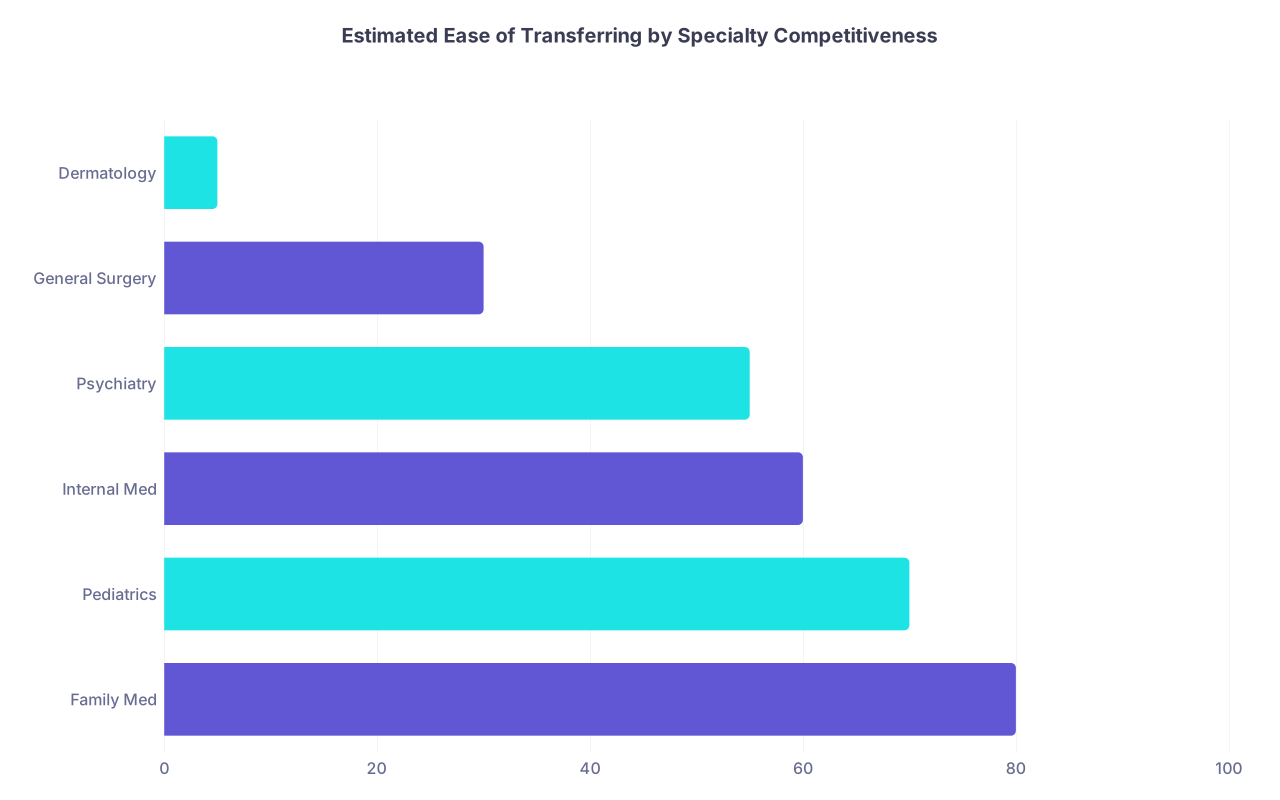
| Category | Value |
|---|---|
| Family Med | 80 |
| Pediatrics | 70 |
| Internal Med | 60 |
| Psychiatry | 55 |
| General Surgery | 30 |
| Dermatology | 5 |
(Think of those numbers as “rough ease” percentages, not actual stats.)
1. When external transfer is realistic
More realistic if:
- You’re in a less competitive specialty (FM, IM, peds, psych).
- You’re early (end of PGY-1 or early PGY-2).
- You have no major professionalism / patient care red flags.
- Your evaluations and in-service exams are decent or better.
Much harder if:
- Highly competitive specialty with few open spots.
- You’re late (PGY-3+), unless switching within same institution.
- Your PD will give you a negative or ambiguous letter.
2. Discreet first steps
Do NOT blast every program coordinator in the country with an email saying “my program is malignant.”
First:
- Update your CV and get copies of:
- USMLE/COMLEX scores
- Med school transcript
- Current evals (if you can access them)
- Quietly ask:
- Former attendings from med school.
- Faculty you trust outside your current program. If they’d be willing to:
- Advise you, and
- Possibly support you with a letter or call if you pursue transfer.
3. Finding open spots
Real methods:
- FRIEDA sometimes lists open positions, but it’s hit or miss.
- Specialty-specific listservs and groups (e.g., APDIM for IM, program coordinator listservs).
- Direct website listings on individual programs’ GME pages (“Open Resident Positions”).
- Word-of-mouth through attendings who trained elsewhere.
You send targeted, professional emails to PDs or coordinators:
- Brief intro
- Current PGY year and specialty
- That you’re exploring transfer for “fit and educational reasons”
- Attaching CV and score report
- Offering to provide more details and references
You do NOT start by ranting about your current program. You save details for phone or Zoom once there’s interest and trust.
4. The PD reference problem
Most programs will want something from your current PD. This is the ugly part.
There are three basic approaches:
Straightforward (ideal world):
- You tell your PD you’re struggling with fit and exploring transfer.
- They’re surprisingly reasonable and agree to support you.
- They give a neutral or even positive endorsement.
Reluctant PD:
- PD is annoyed but professional.
- They’ll say “would not prevent transfer” but won’t gush.
- This is still usable. Many receiving PDs read between the lines.
Hostile PD:
- They threaten to “end your career” or say they’ll block any transfer.
- They’ve done this to others.
- In this case:
- Document the conversation.
- You may involve the DIO or GME office.
- You may need other strong letters (med school dean, external attendings) to offset PD.
I’ve seen people successfully transfer even with a hostile PD, but it required:
- A clear story.
- Strong external advocates.
- A receiving program that understood what malignant programs look like.
Option D: Formal Leave of Absence – Hitting Pause Without Quitting
If you’re approaching collapse—panic attacks at work, suicidal thoughts, you’re numb with dread daily—you may need to step away before you decide anything long-term.
A medical leave of absence (MLOA) can:
- Give you weeks to months to treat depression, PTSD, anxiety, or physical illness.
- Stop the constant exposure to the toxic environment.
- Give you time and mental clarity to plan transfer, reentry, or a full exit.
How to request it
You do not need to give everyone your full psychiatric history. You do need to:
- See a mental health professional (or PCP).
- Get a note stating:
- You are currently under their care.
- They recommend a medical leave from residency for X condition (can be “medical/psychiatric condition” without specifics) and estimated duration.
- Send a brief, formal email to your PD and GME office:
- Attach note.
- Request meeting to discuss logistics.
Expect:
- Some programs are supportive.
- Some will act like you’re abandoning ship. That’s a red flag about them, not you.
Know:
- You may need to extend your training by the duration of leave.
- That’s still better than imploding and resigning in chaos.
Option E: Resign and Rebuild – When You’re Done
Sometimes the program is so malignant, or your health is so damaged, that the answer is: you leave. Even without a new spot lined up.
That is not career death. It is a big detour. But I’ve seen residents:
- Leave a malignant surgery program.
- Take a year or two to work as a research fellow, hospitalist (if board-eligible from prior training), or in a non-clinical role.
- Re-match into another specialty or reenter at a different level.
Key things if you resign:
Try to control the narrative
- “Resigned due to health reasons and need to reassess specialty fit” is more salvageable than a sudden no-show.
- Giving at least some notice (when safely possible) helps.
Secure documentation before you leave
- Copies of any evaluations.
- Letters from attendings who liked your work.
- Contact info of faculty willing to vouch for you.
Protect your mental health aggressively
- There is often a shame spiral.
- Get therapy. Join physician support groups. Stay connected to people who know your competence outside that program.
Plan for the gap
- Financial: savings, family support, part-time clinical (if licensed), research positions, telemedicine roles, etc.
- Professional: keep some clinical involvement if you plan to return to residency.
Resigning is surgery, not a band-aid. Sometimes you need it.
How to Decide What to Actually Do – A Simple Framework
You’re a scientist. So let’s stop the emotional hurricane and run a structured experiment.
Ask four blunt questions:
Am I safe?
- If patient safety or your personal safety is at serious daily risk, your timeline shrinks. Think weeks, not years.
Am I salvageable here?
- If leadership is at least somewhat responsive, and your mental health is not in freefall, staying with boundaries + long-term planning might be okay.
What does my outside mentor think?
- If two or three independent, experienced physicians all say “you need to get out,” listen.
If I do nothing different for 6 months, where will I be?
- If the honest answer is “on meds, divorced, or suicidal,” then you do not have the luxury of inertia.
Use this mental fork:
- If you’re unsafe / near collapse → push hard for:
- Medical leave first.
- Concurrent exploration of transfer or exit.
- If you’re exhausted but not collapsing →
- Stabilize.
- Document.
- Test the system (chiefs, PD, DIO).
- Quietly explore external transfer.
Protecting Your Future Self: Reputation, References, and Reality
You’re scared everyone will think you’re “weak” or “a problem resident.” Here’s the quiet truth: experienced PDs know which programs are toxic. They’ve all heard the stories.

Things that matter to future PDs:
- Did you leave in an organized, professional way?
- Can anyone credible vouch for your clinical skills and professionalism?
- Does your story make coherent sense and show insight, not just blame?
You don’t say:
“My program was malignant and everyone there is abusive trash.”
You say:
“The program and I turned out to be a poor fit, both in culture and support. I recognized my burnout was getting severe, and I chose to prioritize patient safety and my own health. Since then, I’ve been working on X, and I’m now ready to reenter training in an environment that aligns with how I want to practice.”
That’s not weakness. That’s judgment.
What You Can Do This Week
You’re overwhelmed. So here’s a short, concrete seven-day plan.

| Step | Description |
|---|---|
| Step 1 | Day 1 - Start log |
| Step 2 | Day 2 - Schedule appointments |
| Step 3 | Day 3 - Talk to trusted mentor |
| Step 4 | Day 4 - Honest duty hour logging |
| Step 5 | Day 5 - Evaluate options A-E |
| Step 6 | Day 6 - Draft emails or leave request |
| Step 7 | Day 7 - Implement first big step |
Day 1:
Start your private log of events. One page is enough.
Day 2:
Book an appointment with a therapist/psychiatrist or PCP. No more “I’ll do it when I’m less busy.”
Day 3:
Email or call one outside mentor. Tell them you need 30 minutes to discuss a serious situation.
Day 4:
Log your hours accurately for one week. Just one.
Day 5:
Sit down and write out your five options (stay w/ boundaries, internal move, external transfer, leave, resign). Put 2–3 pros and cons under each, honestly.
Day 6:
Based on that, decide your primary path and a backup:
- Example: Primary = external transfer, Backup = medical leave if I start to crash.
Day 7:
Take the first real step aligned with that path:
- Email 2–3 programs about potential openings, or
- Draft and send a formal email requesting medical leave, or
- Schedule a meeting with DIO.
One concrete move. Not just thinking.
FAQ (Exactly 3 Questions)
1. Will leaving a malignant program destroy my chances at fellowship or future jobs?
No, not automatically. What hurts you is:
- Chaotic exits.
- Unexplained gaps.
- Stories that sound like you blame everyone else and learned nothing.
If you leave in a structured way, maintain clinical involvement when possible, and get at least a couple strong letters, you can still match into fellowship or a different residency. I’ve seen people leave malignant IM programs and later match cards, GI, and heme-onc. Your path won’t be straight, but it’s not over.
2. Should I report my program to the ACGME?
Maybe, but not as your first move. Start by:
- Documenting specifics.
- Logging hours accurately.
- Talking to your DIO or GME office if they seem even remotely trustworthy.
If your institution does nothing and the pattern is clear (duty hour violations, retaliation, safety problems), an ACGME complaint can be appropriate. File it factually, with dates and examples. Expect zero immediate gratification; these processes are slow. Do it to protect residents after you, not as your only route to fix your current situation.
3. How do I know if I’m burned out vs. just weak and not cut out for medicine?
“Maybe I’m just weak” is almost a diagnostic sign of burnout, not weakness. Look at behavior, not self-judgment. Burnout shows up as:
- Emotional exhaustion (you feel nothing or everything).
- Cynicism (you start hating everyone and everything).
- Sense of inefficacy (you feel useless despite evidence you’re not).
None of that means you’re not “cut out” for medicine. It means you’re a human in a system that’s exceeding human limits. The real question is whether you can get into an environment where your effort translates into growth instead of damage. That might be a different program, a different specialty, or—for some people—a different career. But the decision should come from a clearer, treated, less-fried version of you, not from the edge of collapse.
Open the notes app on your phone right now and create a new entry titled “Residency Reality Log.” Write down the last three incidents that made you think, “This place might be malignant.” Facts only, no commentary. That’s your first step out of confusion and into an actual plan.


