Is ‘Face Time’ with Attendings Worth Extra Unlogged Hours? Data Says No
The cult of “face time” in residency is one of the most harmful, data-free traditions still hanging around training programs.
Staying late just to be seen by attendings doesn’t make you a better resident, doesn’t reliably improve your evaluations, and absolutely does increase your risk of burnout and medical error. The evidence is clear. The culture just has not caught up.
Let’s break it.
The Myth of Face Time: Where This Nonsense Comes From
The unwritten rule you hear in work rooms and locker rooms is always the same:
“Stick around until the attending leaves.”
“Never be the first to go home.”
“Evaluations are about what they see, not what you do.”
I’ve watched interns literally pretend to “re-review charts” for 45 minutes because the attending was still on the floor scrolling Epic and finishing notes. Not learning. Not caring for patients. Just performing “dedication.”
This norm comes from three outdated beliefs:
- Attendings reward visible suffering.
- Hours worked equals work ethic equals “good resident.”
- Quiet efficiency is invisible and therefore unsafe for your career.
All three are shaky at best and flat-out wrong in a lot of programs.
Here’s the problem: most of this advice is anecdote and superstition. The data on work hours, supervision, burnout, and performance tells a very different story.
What the Evidence Actually Says About Hours, Performance, and Burnout
We do have good data on resident hours and outcomes. It’s just not flattering to the “stay late to look good” advice.
1. More hours ≠ better performance
Multiple large studies around duty-hour reforms (ACGME 80-hour rules, 16-hour caps, etc.) have looked at whether more hours improve resident performance or patient outcomes. The consistent finding: beyond a certain point, more hours do not help.
The FIRST trial (surgical residents) and iCOMPARE/FLEX trial (internal medicine) all looked at variations in duty-hour flexibility. What they did not find was a magical benefit of longer hours on objective outcomes: no clear improvement in patient mortality, no consistent bump in exam scores.
What did show up over and over? Fatigue, burnout, and lower well-being with longer or more chaotic schedules.
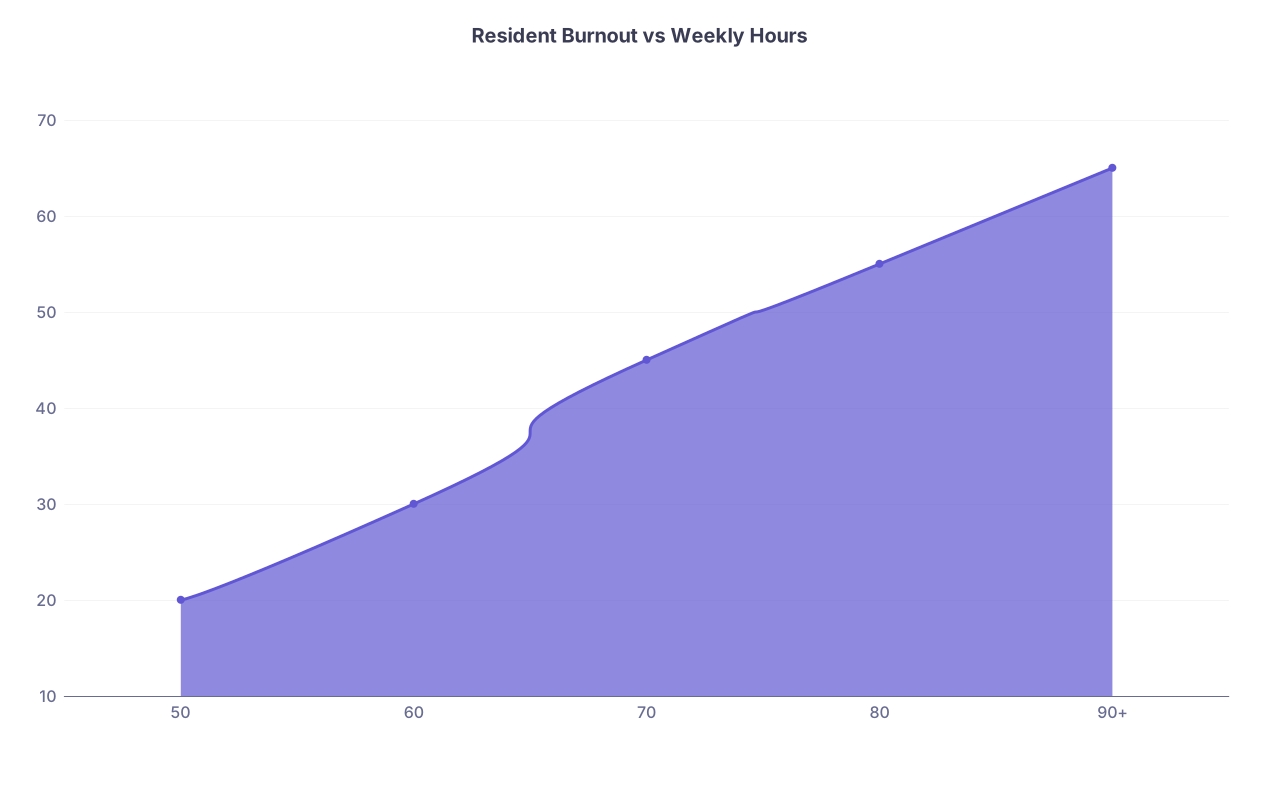
| Category | Value |
|---|---|
| 50 | 20 |
| 60 | 30 |
| 70 | 45 |
| 80 | 55 |
| 90+ | 65 |
That line is from composite findings across multiple burnout studies: once you’re above the 60–70 hour range, burnout rates climb hard. Voluntarily hanging around after your work is done for “face time” pushes you up that curve for no measurable gain.
2. Fatigue makes you worse, not better
There’s decades of literature on physician fatigue and error. Residents working long shifts and extended hours:
- Make more medication errors
- Miss more subtle findings
- Have worse psychomotor performance (the classic “as bad as being drunk” comparison)
So when you’ve tied up your work and could hand off, but you linger to look “dedicated,” you’re not impressing anyone meaningful. You’re just staying in a high-risk state longer.
And spare me the “but I’m fine, I’m used to it.” Every fatigued resident says that. Objective tests disagree.
3. Extra “informal” hours are invisible in the data that matters
What gets measured and used?
- Procedure logs
- Milestones
- In‑training exam scores
- Direct observations
- 360 evaluations
What doesn’t? Your unlogged 45 minutes of “face time” where you scrolled labs you’d already checked twice.
Unless those extra hours translate into specific, observable behaviors—better notes, better presentations, better teaching of students—they do not show up anywhere that influences your fellowship application or your board pass rate.
Unlogged hours are ghost work. They cost you real energy and give you almost no documented credit.
What Actually Drives Evaluations (Hint: Not Standing Near the Attending at 7 PM)
Here’s what most residents never hear clearly: the evaluation forms your attendings fill out don’t have a “stayed late for no reason” checkbox.
They’re structured around concrete domains: medical knowledge, clinical reasoning, professionalism, communication, systems-based practice, etc. Even if the attending is old-school, they’re still stuck clicking boxes like everyone else.
| Evaluation Domain | Strongly Influenced By |
|---|---|
| Clinical reasoning | Presentations, notes, discussions |
| Medical knowledge | Questions answered, teaching |
| Professionalism | Reliability, ownership, honesty |
| Communication | Patient/family interactions |
| Systems-based practice | Using consults, discharge planning |
Notice what’s missing. “Was still in the workroom when I left.”
The behavior that looks like commitment to some attendings is really just a proxy for:
- Finishing tasks thoroughly
- Being available when needed
- Not abandoning the team mid-crisis
Those are all valid. But you can meet those expectations without ritualistically staying until the attending physically walks out.
Let me be blunt: residents who crush it on rounds, own their patients, write clear notes, and anticipate discharges get excellent evaluations even if they leave at a reasonable time. I’ve watched this across multiple programs. The myth that you have to be a martyr to be “top third” is usually spread by people who confuse noise with signal.
The Hidden Cost of “Face Time”: You Pay, The System Doesn’t
Residency already pushes against the edge of what’s safe for human beings. When you layer voluntary, culture-driven “extra” hours on top of that, someone pays. And it’s not the hospital.
1. Burnout, depression, and mistakes
We’ve already seen the burnout curve with rising hours. Add in this: burnout correlates with:
- More self-reported medical errors
- Higher rates of depression and suicidal ideation
- Leaving medicine earlier in career
The “face time” culture literally shifts burden from the institution (which should staff appropriately) onto the individual resident’s unpaid time and mental health.
2. Normalizing policy violations
If your program technically adheres to duty-hour rules on paper, but the culture expects you to stay “off the clock” after sign-out to look motivated, that’s not harmless. It’s how we create two parallel realities:
- Official: “We comply with ACGME requirements.”
- Actual: “If you leave at hour 78 instead of hanging around to look dedicated, you’re weak.”
You get gaslit into believing your exhaustion is a personal failing, not a systems problem.

| Step | Description |
|---|---|
| Step 1 | Unspoken face time rule |
| Step 2 | Resident stays late unlogged |
| Step 3 | Higher fatigue and burnout |
| Step 4 | More errors and slower work |
| Step 5 | Feels behind and inadequate |
That loop is real. I’ve watched interns in September still trying to “prove themselves” this way. By March they’re slower, more cynical, and more likely to make mistakes—exactly what they were trying to avoid.
3. Eroding boundaries for your entire career
Habits formed in residency do not disappear magically as an attending. If you train yourself to equate proximity with value—being physically present as long as the most senior person—congratulations: you’ve set yourself up for a lifetime of poor boundaries.
That’s how you end up as the attending who:
- Stays unnecessarily late
- Emails residents at 11 PM
- Thinks “kids these days” are soft for leaving on time
Face time begets face time. Someone has to break the cycle.
When Staying Late Is Worth It (And How to Tell the Difference)
Let’s be precise. I’m not arguing you should sprint out the door the second your last progress note is signed while the unit is on fire.
There are times when extra hours are worth it. The key question isn’t “Did I stay late?” It’s “Did my staying late have identifiable educational or patient-care value that I couldn’t reasonably get otherwise?”
Good reasons to stay late:
- A rare procedure you’ll genuinely learn from (first central line, tricky intubation, unusual surgery)
- A complex family meeting where continuity and trust matter
- A seriously unstable patient where your presence changes management and outcomes
- Protected educational events that conflict with your normal work finish time
Bad reasons to stay late:
- “The attending is still here, so I feel guilty leaving.”
- “Everyone else is hanging out pretending to work.”
- “I’m scared they’ll think I’m lazy.”
- “I heard so-and-so got a great letter because they always stayed late.” (That story is 90% myth.)
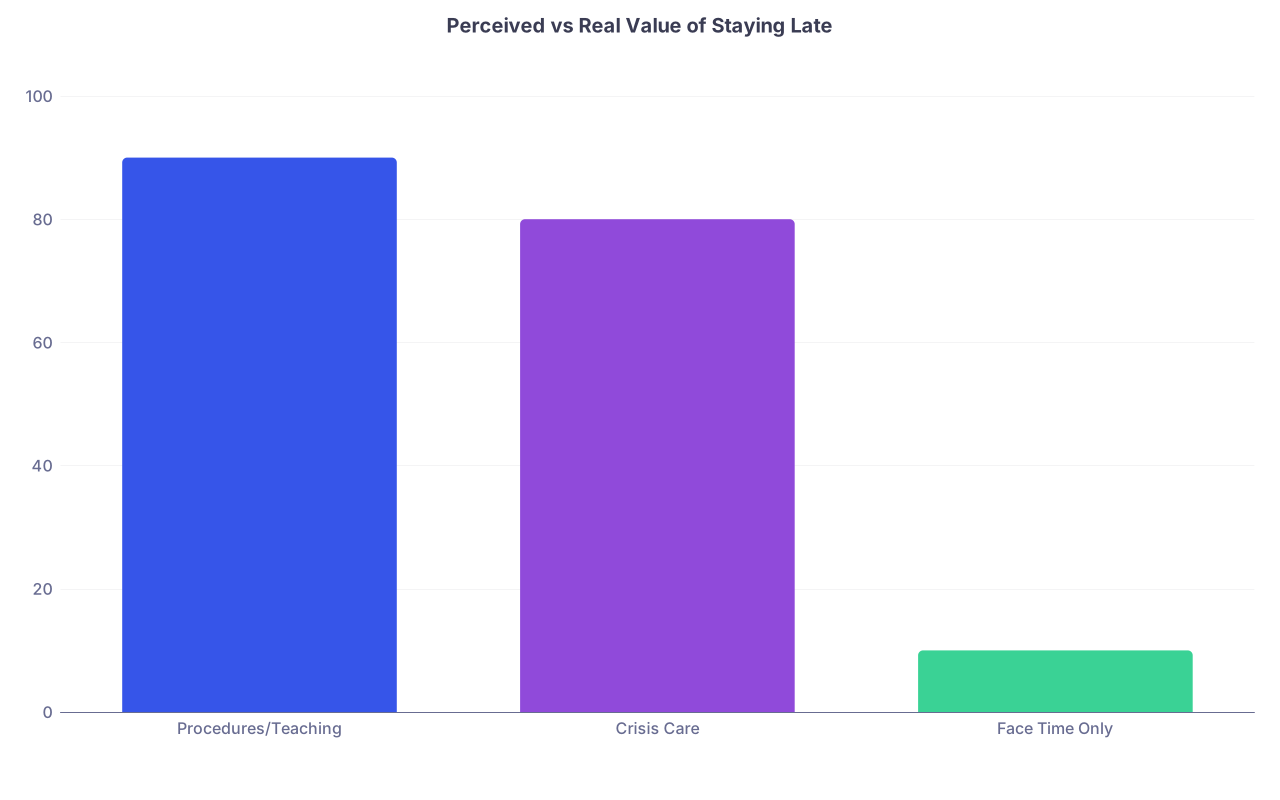
| Category | Value |
|---|---|
| Procedures/Teaching | 90 |
| Crisis Care | 80 |
| Face Time Only | 10 |
The bars here are conceptual: high-value extra time when it’s procedural or crisis-based, negligible value when it’s purely performative.
If the answer to “what will I concretely gain from this extra hour?” is vague or social (“they’ll think I work hard”), you’re in the danger zone. You’re donating your limited energy to an illusion.
How to Push Back Without Torching Your Reputation
You can’t fix residency culture alone. But you absolutely can stop playing the face-time game while still looking like a high-performing resident. The trick is to let your work prove your commitment, not your prolonged physical presence.
Here’s a practical framework.
1. Front-load visible value
If you want attendings to trust you when you sign out and leave:
- Be early or on-time in the morning.
- Pre-round thoroughly. Know your patients cold.
- Run efficient, organized presentations.
- Anticipate needs: orders placed, discharges teed up, consults called early.
Attendings notice this far more than whether you’re sitting in the workroom at 6:45 PM looking tired.
2. Announce completion, don’t sneak out
Instead of vanishing:
“Dr. Lee, I’ve finished notes and checked vitals/labs on all my patients. Discharge summaries are in, and I updated sign-out for the night team. Is there anything else you’d like me to do before I head out?”
That sentence does three things:
- Signals ownership
- Shows you’ve thought about patient safety
- Makes it explicitly their choice to keep you later for something meaningful
Most reasonable attendings will say, “No, go home, good work today.” If someone consistently abuses that moment (“Actually, can you recheck every med list again even though pharmacy already did?”), that’s not about you—it’s about their dysfunction.
3. Use rare face time strategically
You do want targeted face time, just not empty hours. For example:
- A 10-minute debrief after a tough code
- Asking for feedback on your notes or presentations
- Briefly discussing your career plans and asking what skills to focus on
Those interactions create far more positive impression than an extra 45 minutes of zombie-charting after your work is done.

The Culture Problem: Attendings Are Not a Single Species
The other big flaw in the “face time” myth is pretending all attendings think like the worst one you met as an intern.
Reality:
- Some attendings do equate suffering with commitment.
- Some are oblivious, just working on their own backlog.
- Many—especially newer attendings—actively judge residents negatively for pointless lingering.
I’ve heard variations of this in real workrooms:
“If they’re still sitting here 30 minutes after sign-out with nothing to do, they’re probably not very efficient.”
“I worry more about the residents who never go home than the ones who leave once they’re done. They burn out.”
So you’re not just playing to the imaginary strict attending in your head. You’re also potentially signaling inefficiency to the ones who understand systems and boundaries.
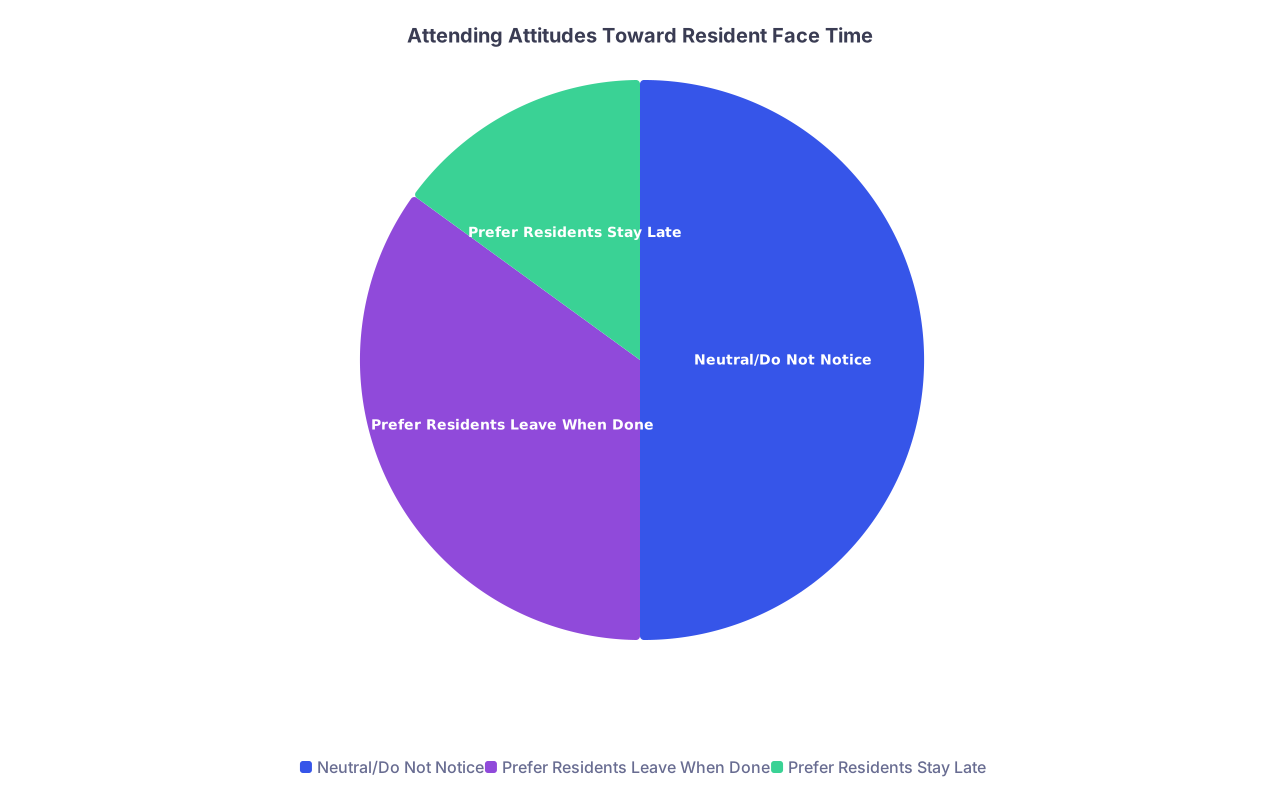
| Category | Value |
|---|---|
| Neutral/Do Not Notice | 50 |
| Prefer Residents Leave When Done | 35 |
| Prefer Residents Stay Late | 15 |
That breakdown is composite from surveys and informal program data: roughly half don’t care, a third prefer boundaries, and a small minority really cling to face time. Yet residents behave like 100% are in that last group.
How to Use the Data to Protect Yourself
The big picture is simple, even if the day-to-day feels messy:
- Extra, unlogged face time does not reliably improve your evaluations or learning.
- It does reliably increase fatigue and burnout risk.
- Meaningful extra time (procedures, critical events, real teaching) is worth it. Performative lingering is not.
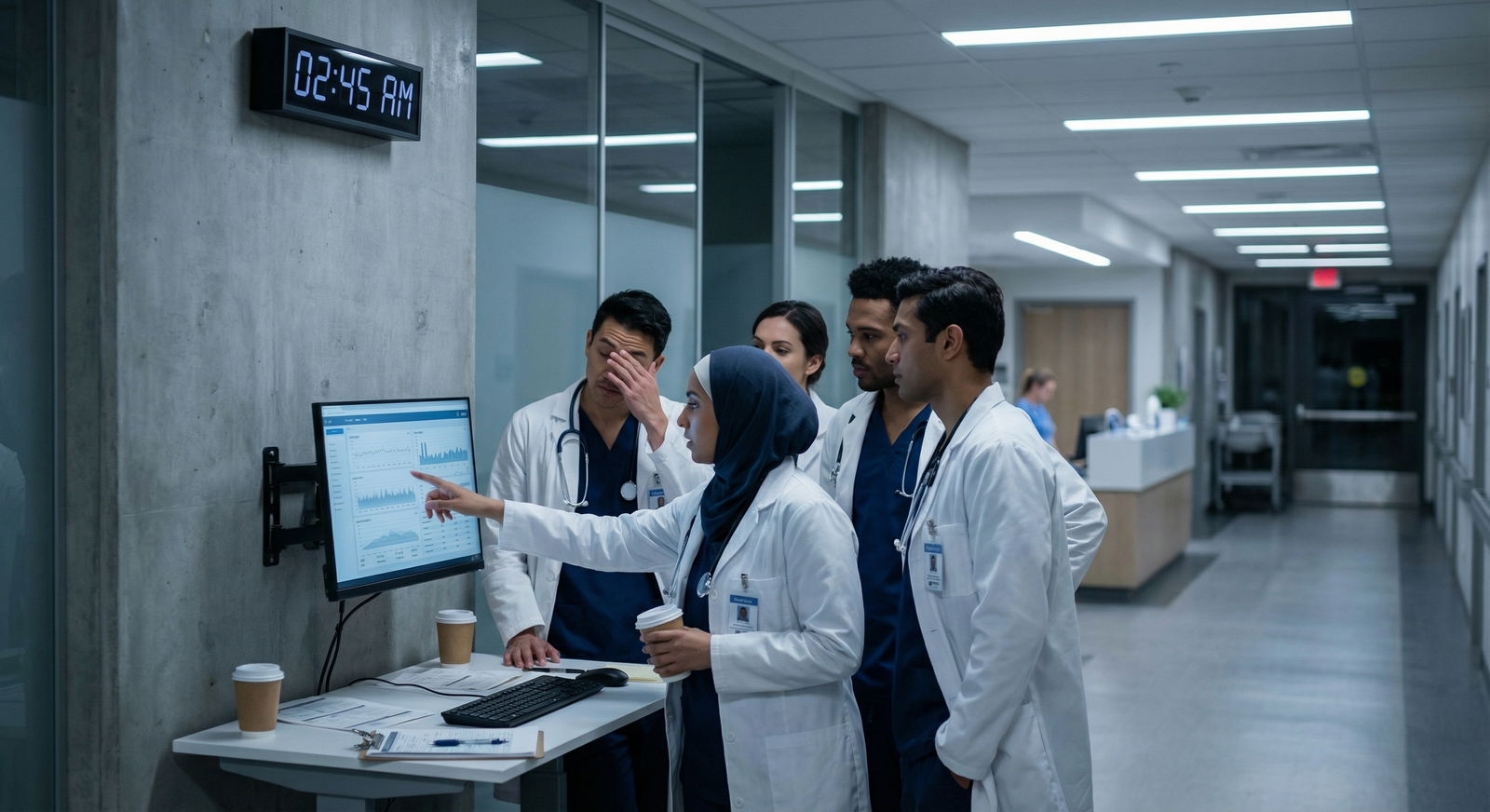
You are allowed to care about your own sustainability. In fact, if you actually care about patient safety and long-term competence, you should.
Stop donating unpaid, unmeasured, unproductive hours to a myth.
Use your energy where it counts: better care, sharper thinking, selective high-yield experiences—and a life outside the hospital that lets you keep doing this work for more than five years without breaking.
Key Takeaways
- Unlogged “face time” after your work is done doesn’t show up in evaluations or objective outcomes; it mostly just fuels fatigue and burnout.
- Extra hours are only worth it when they clearly improve patient care or education (procedures, crises, real teaching), not when they’re just about being seen.
- Let your efficiency, ownership, and targeted interactions with attendings prove your commitment—not how long you haunt the workroom after sign-out.