The typical post-call day is wasted. Residents stagger home, crash for 7 hours at the wrong time, wake up wrecked, and then wonder why they feel hungover for three days. The problem is not call. The problem is the lack of a plan.
Here is the plan.
This is a strict, hour‑by‑hour post-call day timeline built for one goal: recover enough to function safely tomorrow and reset your sleep for the rest of the week. You will not like all of it. It works anyway.
Big Picture: Your Post-Call Priorities (Non‑Negotiable)
Before we go hour by hour, you need the hierarchy. On a post-call day, your priorities are:
- Safety – No driving half-asleep. No procedures, no important decisions while your brain is offline.
- Sleep timing – You are not “catching up” on sleep. You are protecting tonight’s sleep.
- Physiology reset – Light, food, hydration, movement. In that order.
- Minimal life admin – Just enough to keep your life from falling apart. No more.
- Mental decompression – Intentional, limited. Not scrolling yourself into a dopamine coma.
If your program “post-call abuses” you (keeps you routinely past noon), you adapt this, but you do not abandon structure. Chaos is what keeps you permanently exhausted.
0–2 Hours Post-Shift: Getting Home Without Crashing (Literally)
Assume you are post 24‑hour call, “off” around 7–9 a.m. Adjust times by 1–2 hours as needed, but keep the sequence.
Hour 0: Leaving the Hospital
At this point you should:
- Finish sign-out cleanly. No lingering. Every extra 15 minutes in the hospital is stolen recovery time.
- Hit the bathroom, splash cold water on your face.
- Drink a glass of water before you walk out.
Now the key piece:
Decide if you are safe to drive. Be ruthless.
Quick check:
- Did you micro-sleep on rounds?
- Are you having trouble focusing your eyes?
- Do you “snap awake” standing still?
If yes to any of these: do not drive. I have watched people literally fall asleep at red lights post-call. You are not special. It can be you.
Options:
- Call a co-resident going your way.
- Use Uber/Lyft.
- Use hospital call-room nap for 45–60 minutes, then reassess.
Hour 0.5–1: Commute Home
On the way home you should:
- Avoid heavy music or podcasts that make you “zone out.”
- Crack a window or put AC on cool. Cold air wakes you just enough.
- Do not chug caffeine now if you plan to sleep within 90 minutes.
Once you get home: no collapsing on the couch “for a second.” That second becomes 4 hours of twisted neck sleep and a wrecked circadian rhythm.
1–4 Hours Post-Shift: The Controlled Crash (Short, Strategic Sleep)
This is the part almost everyone gets wrong. You do not binge sleep 6–8 hours in the late morning. That feels good for 20 minutes and then destroys your next night.
Hour 1–1.5: Decompress Ritual (30–45 min max)
At this point you should:
Change out of scrubs immediately.
- Put them straight into a hamper or bag.
- Psychological off-switch: scrubs off = work over.
Quick hygiene reset (10–15 min).
- Shower or at least wash face and brush teeth.
- This is not spa time. It is decontamination and signal to your brain: home now.
Light snack, not a feast.
- Protein + complex carb: yogurt and granola, eggs and toast, protein bar and fruit.
- Avoid grease bombs. Post-call GI plus grease equals regret.
Micro life check (5–10 min).
- Plug in phone.
- Check only for urgent messages (family, partner, program). No doomscrolling. No email deep dive.
- Toss your bag somewhere visible, so you can repack later instead of discovering at 4 a.m. that your stethoscope is at home.
Set alarms before you lie down:
- One alarm at 90 minutes.
- One backup at 2 hours.
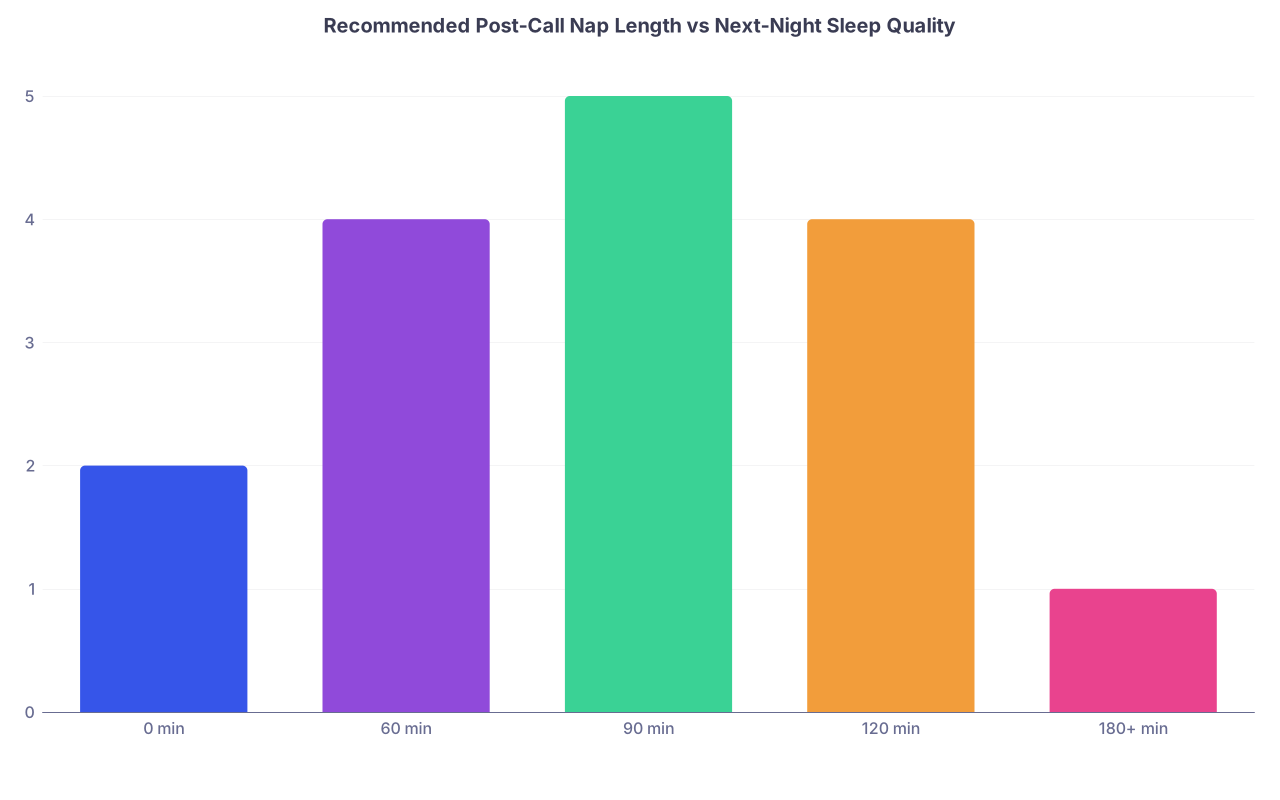
Non-negotiable: you are not allowed to nap longer than 2 hours.
| Category | Value |
|---|---|
| 0 min | 2 |
| 60 min | 4 |
| 90 min | 5 |
| 120 min | 4 |
| 180+ min | 1 |
(Scale 1–5: 5 = best next-night sleep. Yes, the data and experience both say: 90 minutes wins.)
Hour 1.5–3.5: Strategic Nap (90–120 min)
At this point you should:
- Sleep in a dark, cool room.
- Wear an eye mask if your room is bright.
- White noise is fine, TV is not. You need true sleep, not half-attentive noise.
If you wake up at 60–75 minutes and feel wired, do not force more sleep. Get up. Groggy is normal for 10–20 minutes. Full-body concrete feeling that lasts hours is the sign you overslept.
What if your pager goes off / you have kids / life interrupts?
- Get whatever sleep you can in one continuous block.
- Cap it at 2 hours regardless. You are anchoring circadian rhythm, not perfecting rest.
4–8 Hours Post-Shift: Midday Reset (Light, Food, Movement)
Assume you are up by ~11 a.m. or noon.
Hour 4: Controlled Wake-Up
At this point you should:
- Get out of bed immediately when the alarm goes off. No “5 more minutes.” You already stole those from your future self during the night.
- Expose yourself to as much bright light as you can manage:
- Open blinds.
- Step onto a balcony.
- If sunlight is impossible (night float schedules, winter), use a bright light box for 15–20 minutes sitting at a table.
Hour 4–5: First Real Meal + Hydration
Post-call appetite is weird. Some people are ravenous, some feel nauseated. Still:
- Eat an actual meal. Think:
- Omelet + toast + fruit
- Rice + chicken + vegetables
- Oatmeal with nuts and fruit
- Drink 500–750 mL of water or electrolyte mix over an hour.
- One normal cup of coffee or tea is fine if it is before 1 p.m. Do not chase away the afternoon lull with caffeine; let it guide you to an earlier bedtime instead.
Hour 5–6: Low-Intensity Movement (20–30 min)
This is the part you will want to skip. That is a mistake.
At this point you should:
- Do light activity:
- 15–20 minute walk outside.
- Gentle yoga or stretching.
- Easy cycling, no heroics.
- Keep heart rate modest. This is not PR day. Heavy workouts post-call often backfire with insomnia that night.
The goal is circulation, muscle reset, and a subtle mental “I am not a zombie” reminder.
6–10 Hours Post-Shift: The Life Block (Admin, Errands, People)
This is the window where residents either rescue or ruin their week. Running 15 errands, doing a full deep-clean of your apartment, and visiting three friends is how you end up wired and still awake at midnight.
Hour 6–7: Triage Your To‑Dos (15–20 min)
At this point you should:
- Make a quick list with three columns:
- Must do today (or the world burns)
- Should do this week
- Can wait
You will probably overfill column 1. Cut it down to 2–3 items, maximum.
Common “must do today” items:
- Pay bill due today or tomorrow.
- Refill critical meds.
- Wash 1 load of scrubs/underwear.
- Repack bag for tomorrow.
Common lies your brain tells you are “must do”:
- Deep cleaning your entire kitchen.
- Reorganizing your email inbox from PGY‑1.
- Starting a huge research data push.
Do not schedule cognitively heavy work (research stats, complicated notes, exam prep) in this block unless absolutely forced. Your error rate is high. Your patience is low. This is where sloppy work and resentment are born.
Hour 7–9: Run the Essentials Only
At this point you should:
- Tackle your 2–3 “must do” tasks, nothing more.
- Batch them:
- Start laundry → while it runs, prep simple meals for next 1–2 days → finish laundry.
- Go out once: pharmacy + quick grocery pick-up in a single trip.
If you have a partner or family:
- Communicate clearly: “Post-call window. I am functional for about 2–3 hours, then I crash.”
- Protect at least 30–60 minutes of low-key connection (eat together, talk, short walk) if possible. Long, emotionally intense conversations can wait.
10–14 Hours Post-Shift: Evening Wind-Down (Where Most People Blow It)
Assume your shift ended around 8 a.m., you napped until ~10–11 a.m., did your midday reset, ran your essentials. Now it is around 5–7 p.m.
This is the danger zone. You are tired enough to be irritable, but wired enough to think staying up late watching a show is a good idea.
Hour 10–11: Protect the Pre-Sleep Ramp
At this point you should:
- Set a target bedtime of 9–10 p.m. Not midnight. Not “whenever.”
- Work backward 60–90 minutes for a wind-down routine.
Example:
- 7:30 p.m. – light dinner
- 8:00 p.m. – shower, prep for tomorrow
- 9:00 p.m. – in bed, lights dim, low-stimulation activity
- 9:30–10:00 p.m. – sleep
Food and Caffeine Rules for Evening
- Light dinner. No massive, greasy meals. Good options:
- Soup + sandwich
- Rice + tofu/chicken + vegetables
- Pasta with vegetables and modest protein
- Zero caffeine after ~1–2 p.m. If you are dragging in the evening, that is the point. You want sleep pressure building.
Hour 11–12: Prep for Tomorrow on Autopilot (20–30 min)
At this point you should:
- Pack your bag:
- ID, pager, stethoscope, pens.
- Spare snack.
- Refill water bottle ready.
- Lay out clothes/scrubs for tomorrow.
- Check tomorrow’s start time and rotation location once. Not ten times.
This 20–30 minute block saves you from the classic 4:45 a.m. panic scramble, which spikes cortisol and wrecks the last hour of sleep.
Night After Call: Sleep Strategy (Reset, Not Revenge)
The goal tonight is one solid, normal-length sleep, not making up every lost hour from call. If you pull a 9 p.m.–9 a.m. marathon, you will feel fantastic tomorrow and awful for the next 3 days as your schedule drifts later and later.
Hour 12–14: Sleep Onset (9–11 p.m. Window)
At this point you should:
- Get into bed at your target time even if you “do not feel that tired.” Call fatigue is sneaky.
- Use the same routine every post-call night:
- Dim lights.
- No devices in your face for 30 minutes before bed. If you must, use blue light filters and low brightness.
- Low-stimulation activity: physical book, light stretching, podcast with screen off.
If you cannot fall asleep within ~30–40 minutes:
- Do not lie there stewing. Get up, go to a dim room, do something boring for 15–20 minutes, then try again.
- Avoid the “I’ll just scroll while I wait” trap.
Aim for 7–9 hours of sleep, not 10–12. You are resetting your orbit, not leaving the solar system.
Special Scenarios: Adjusting the Timeline
Post-call is not always clean. Sometimes you get destroyed. Sometimes you get a “golden call” and sleep all night. The timeline still has rules.
Scenario 1: Brutal Call (No Real Sleep Overnight)
You stagger out feeling like you have the flu. In this case:
- Nap length can go to the upper limit (2 hours).
- You might need a very early bedtime (8–9 p.m.).
- Everything else stays the same:
- Bright light on waking.
- Light movement.
- Zero caffeine after early afternoon.
You will feel rough regardless. The structure just makes it one bad day, not a bad week.
Scenario 2: Golden Call (5–7 Hours Slept Overnight)
You woke up multiple times but still got something resembling a night of sleep.
- You may skip the post-call nap or limit it to 20–30 minutes.
- Do not “treat yourself” to a 3‑hour nap just because you can. That is how you convert one good call night into three nights of insomnia.
Scenario 3: You Are On Consecutive Calls / Night Float
Here you are defending whatever sleep you can get, not aiming for a traditional day-night schedule.
- Keep your “anchor sleep” as consistent as possible. Same 4–6 hour block every “day” if you can.
- Use the same principles:
- Short nap, not a binge.
- Light exposure when you want to be awake.
- Darkness and cool room when you want to be asleep.
- On your last night float shift, use the full timeline in this guide to swing back to daytime.
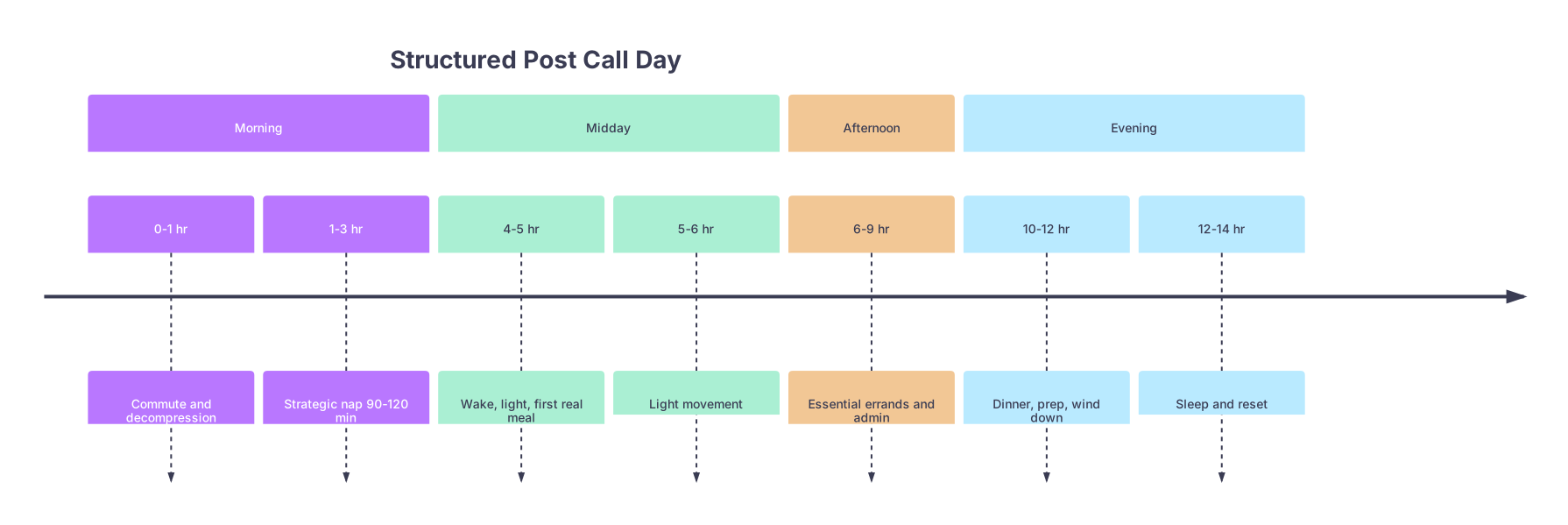
| Period | Event |
|---|---|
| Morning - 0-1 hr | Commute and decompression |
| Morning - 1-3 hr | Strategic nap 90-120 min |
| Midday - 4-5 hr | Wake, light, first real meal |
| Midday - 5-6 hr | Light movement |
| Afternoon - 6-9 hr | Essential errands and admin |
| Evening - 10-12 hr | Dinner, prep, wind down |
| Evening - 12-14 hr | Sleep and reset |
Quick Comparison: What Works vs What Wrecks You
| Aspect | Effective Approach | Harmful Approach |
|---|---|---|
| Nap length | 90–120 min max | 3–6 hour daytime crash |
| Caffeine timing | Small dose before 1–2 p.m. | Large doses all afternoon |
| Activity level | Light walk or stretching | Intense workout or total inactivity |
| Admin/errands | 2–3 essential tasks only | Full “life catch-up” day |
| Bedtime | 9–10 p.m., consistent routine | Midnight or later, “I feel awake” |
Mental Health Layer: Protecting Your Headspace
There is another piece residents ignore until it cracks them.
On post-call days you are emotionally raw. That is not weakness. It is sleep deprivation plus accumulated stress.
At this point you should deliberately:
- Avoid big life decisions. Do not:
- Draft resignation emails.
- Decide to switch specialties.
- End relationships.
- Use low-demand decompression:
- 20–30 minutes of a light show.
- Short call with a trusted friend who “gets it.”
- Simple journaling: 3 bullets – what went well, what was hard, what you learned.
If a case really hit you (code that went badly, pediatric death, major error):
- Do not force yourself to “process it” fully post-call. Your brain is not capable of nuance right now.
- jot down a brief note: “Talk to X about Y case.” Then schedule that for a non-post-call evening or a day off.
- If you routinely find yourself crying on the bathroom floor post-call: that is a signal. Time to involve your program leadership, trusted faculty, or mental health services. You are not supposed to white-knuckle through chronic collapse.

Putting It All Together: A Sample 24-Hour Post-Call Schedule
Assume: Call ends 8 a.m. the next day you start at 6 a.m.
- 08:00–08:30 – Sign-out, water, leave hospital.
- 08:30–09:00 – Commute home, no heavy caffeine.
- 09:00–09:30 – Quick shower, light snack, set alarms.
- 09:30–11:00 – Strategic nap (90 minutes).
- 11:00–11:30 – Wake up, bright light, hydrate.
- 11:30–12:30 – First real meal of the day.
- 12:30–13:00 – Light walk outside.
- 13:00–15:00 – Essential errands/admin (2–3 tasks only).
- 15:00–17:00 – Free low-key time (reading, show, light social).
- 17:00–17:30 – Light dinner prep.
- 17:30–18:30 – Dinner, short wind-down.
- 18:30–19:00 – Pack bag, lay out clothes, quick tomorrow review.
- 19:00–21:00 – Relaxing, low-stimulation time, screens dim.
- 21:00–06:00 – Sleep window (adjust by 30–60 min as needed).
You will not hit this perfectly every time. The goal is 70–80% fidelity, not obsession.
Three Things To Remember
- Cap the nap. Ninety to 120 minutes post-call is your sweet spot. Longer feels good now and wrecks you later.
- Use light, food, and movement as medicine. They reset your brain and body more reliably than any “just one more coffee.”
- Treat post-call as a structured recovery shift. You are still on duty—except the patient is you, and the goal is to show up tomorrow safe, functional, and slightly less miserable.