The way most residents approach night float is wrong. They treat it like survival mode instead of a month-long performance event that needs real planning.
You do not “wing” a 4-week night float block. You train for it. You script it. You protect it like a fragile ecosystem—because that’s what your sleep, mood, and cognition become under chronic circadian abuse.
Here’s how to plan your sleep and your life around a 4‑week night float, step by step, with specific timelines and checklists.
7–10 Days Before Night Float: Set Up Your Life, Then Your Sleep
At this point you should be planning logistics, not “seeing how it goes.”
1. Lock Down the Calendar (Days −10 to −7)
You start with life outside the hospital. Because that’s what gets crushed if you do not control it early.
Block 4 weeks on your calendar and assume:
- You’re essentially unavailable from ~7 pm–9 am daily.
- Your awake time overlaps with other humans for maybe 3–4 hours per day, tops.
In the week before:
- Cancel or move:
- Routine appointments (dentist, PCP, haircuts)
- Non-essential meetings (book clubs, committees, volunteer stuff)
- Clarify with family/partner:
- “For the next month, from X–Y dates, I’m on nights. I will be awake afternoon to midnight-ish. Mornings I’m dead to the world.”
- Identify 1–2 “protected connection slots” per week (e.g., Friday dinner at 5 pm before you leave).
If you have kids:
- Arrange:
- Morning coverage (you’ll be asleep)
- Flexible school drop-off/pickup alternatives
- Clear rules that bedroom door closed = do not wake unless emergency
Write this into a visible place. Fridge, shared calendar, whatever. Vague “I’ll be tired” conversations are how resentment starts.
2. Build Your Sleep Cave (Days −7 to −4)
At this point you should be turning your bedroom into an actual night-shift bunker.
Checklist:
Dark:
- Blackout curtains that actually block light
- Draft stopper or towel under the door to kill hallway light
- Turn off or tape over tiny LEDs (chargers, power strips, clocks)
Quiet:
- White noise machine or a loud fan
- Earplugs that fit well (test them now, not post-shift)
- Phone on “Do Not Disturb” with:
- Favorites allowed for true emergencies only
- Repeated calls bypass if you want that safety net
Cool:
- Target 65–68°F (18–20°C) if you can
- Thin blanket + easy-to-kick comforter system so you’re not waking up sweaty
Small detail that matters: have a specific sleep outfit that’s comfortable and signals to your brain “we sleep now.” Your brain loves consistent cues when your circadian system is otherwise wrecked.
3–4 Days Before: Gradually Rotate Your Clock
Now you start touching sleep. Not earlier.
The dumb move here is trying to “flip” in one day. That just gives you jet lag and sleep deprivation.
3. Slide Bedtime, Don’t Flip It (Days −4 to 0)
Goal: shift your schedule 2–4 hours later over a few days.
If your normal is:
- Sleep: 11 pm–7 am
- First night shift: 7 pm–7 am (for example)
Then:
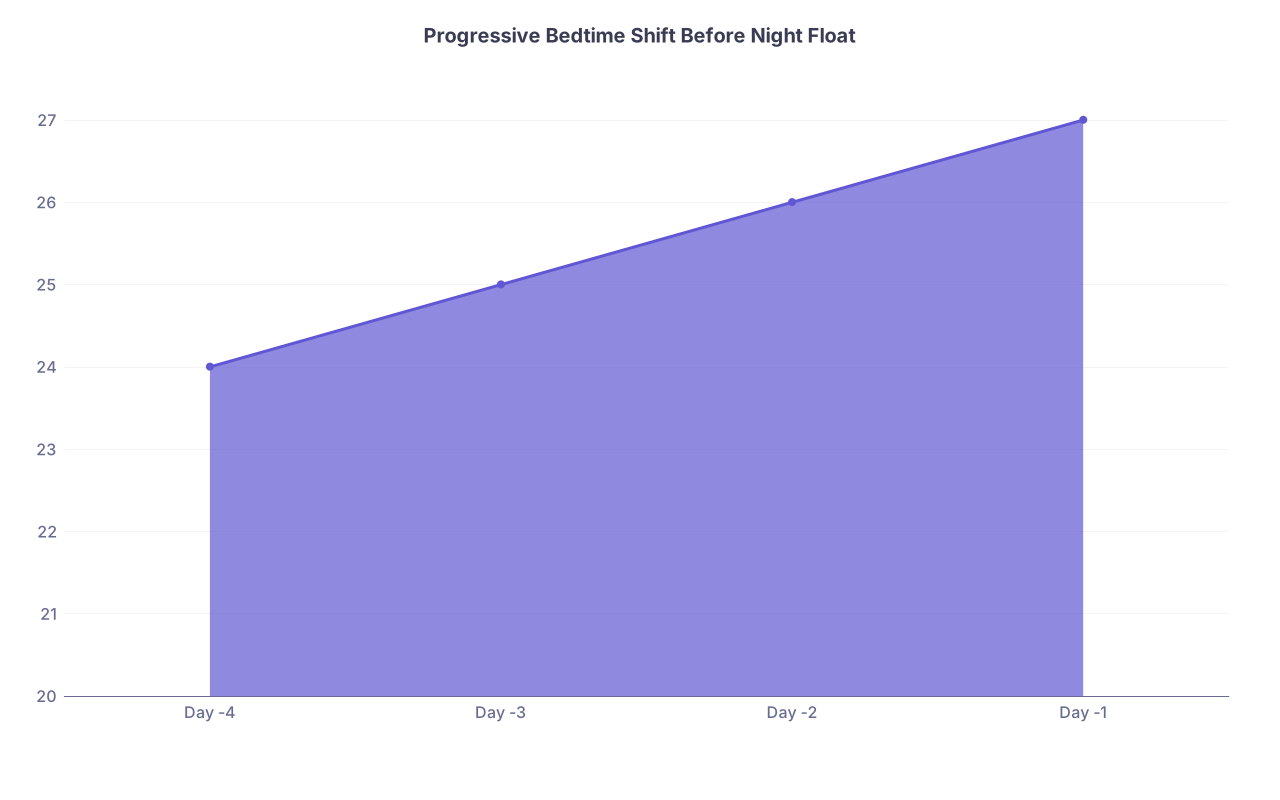
- Day −4: Sleep 12 am–8 am
- Day −3: Sleep 1 am–9 am
- Day −2: Sleep 2–10 am
- Day −1: Nap 3–5 pm, then stay up later (1–2 am), sleep until 9–10 am
You’re not trying to become fully nocturnal. You’re trying to be less destroyed the first 2–3 nights.
Key at this stage:
- Avoid early morning commitments.
- Push your main light exposure to late morning / early afternoon.
- After 5–6 pm, dim house lights, cut blue light where possible.
| Category | Value |
|---|---|
| Day -4 | 24 |
| Day -3 | 25 |
| Day -2 | 26 |
| Day -1 | 27 |
(Values are 24-hour clock equivalents: 24=midnight, 25=1 am, etc.)
First 48 Hours of Night Float: The Critical Transition
At this point you should be maximizing two things: sleep before the first shift and controlled light exposure.
4. The Day Before Your First Night
If your first night shift starts at 7 pm Monday, your “Day 0” is Monday.
Schedule it like this (adjust times to your actual shift):
- 8–9 am: Wake up (not too early).
- 9–1 pm: Low-key daytime life tasks, light exposure, maybe a short errand. No intense exercise late morning.
- 1–2 pm: Light lunch, hydrate, no heavy, greasy food.
- 2–5 pm: Anchor nap — aim for 2–3 hours. Dark, cool, full pre-sleep routine.
- 5–6 pm: Wake, light snack (protein + complex carb), coffee/tea allowed.
- 6–6:30 pm: Commute, get mentally into work mode.
Non-negotiables:
- Don’t “bank sleep” by sleeping 12+ hours the night before. Oversleeping destroys your ability to nap.
- Don’t do a 4 pm coffee and then expect to sleep at 2 pm. Time your last pre-shift caffeine to 5–6 pm.
5. First Night Shift (Night 1)
Your priorities:
- Stay functional.
- Don’t blast yourself with caffeine at midnight.
- Protect the post-shift sleep.
Typical 7 pm–7 am shift, structured:
- 7–11 pm:
- Light to moderate caffeine if needed.
- Eat real food early (not at 2 am).
- 11 pm–3 am:
- This is your “circadian desert.” Core temp drops, alertness plummets.
- Use:
- Bright light in work areas if possible
- Standing/walking during notes
- Short, strategic social contact (“check in with the cross-cover team at 1–2 am”)
- 3–5 am:
- If allowed, 10–20 min strategic nap. Set an alarm.
- No caffeine in this window if you want to sleep at 8 am.
- 5–7 am:
- Wrap up tasks, pre-round, handoff prep.
- Minimal caffeine now.
Weeks 1–4: Your Daily Night Float Template
Once you’re ~3 nights in, your goal is ruthless consistency. Same pattern every “day,” even on off days with only small tweaks.
6. The Core Daily Schedule (During the Block)
For a 7 pm–7 am shift, here’s the template:
7–8 am: Commute home
- Sunglasses on (seriously).
- Minimal direct light exposure.
- No loud music or hyping yourself up; wind down.
8–8:30 am: Pre-sleep routine
- Light snack if hungry (small carb-heavy snack can help sleep).
- Shower (optional but effective to signal “night is over”).
- Screens: if you must, low brightness + blue light filter.
8:30 am–2 pm: Main sleep block (target 5.5–6 hours)
- Phone on DND.
- House knows you’re “off-limits.”
2–3 pm: Groggy window
- Hydrate.
- Light snack.
- Get light exposure (sunlight if possible).
3–5 pm: Life + maintenance
- Errands that must get done.
- Light exercise (walk, light gym, yoga—nothing that will destroy you).
5–6 pm: Pre-shift anchor
- Main “dinner.”
- Coffee/tea if you need it—this is your big caffeine window.
6–7 pm: Commute and mental prep.
You’re not aiming for some perfect 8-hour continuous sleep. Realistic goal on nights is 5–7 hours main sleep, sometimes with a small pre-shift nap if you’re destroyed.

Micro-Adjustments by Week
At this point you should expect the pattern of each week to feel different.
Week 1: Adaptation and Damage Control
You’re tired, irritable, and your GI tract is confused. Normal.
Focus:
- Lock in the same sleep window every day.
- Discover your personal caffeine cutoff (usually 4–6 hours before main sleep).
- Stabilize GI:
- Small, regular meals.
- Avoid huge 2 am meals full of grease and sugar.
- Hydrate more than you think you need.
Common Week 1 mistakes:
- Pushing errands into your sleep block “just for this one thing.”
- Heavy workouts at 3–4 pm that leave you wiped at 2 am.
- Scrolling yourself awake pre-sleep.
Week 2: Systematize and Protect
By Week 2, your schedule is semi-stable. Now you optimize.
At this point you should:
- Establish 1–2 fixed “connection blocks”:
- Example: Wednesdays 3–5 pm you always have family time.
- Pre-plan 3–4 meals for the whole week:
- High-protein snacks for 11 pm–3 am.
- Easy-to-digest “night meals” you bring instead of trusting hospital food.
| Time | What to Eat |
|---|---|
| 5–6 pm | Main meal, balanced |
| 10–11 pm | Light snack, protein |
| 2–3 am | Small carb-based snack |
| 7–8 am | Optional small snack |
You’re trying to separate fueling from bored eating at 2 am because the nurse’s station has cookies.
Week 3: Watch for Cumulative Fatigue
This is when bad decisions start to creep in. I’ve seen residents:
- Sign up for extra moonlighting.
- Volunteer to cover a friend’s day shift on their “day off.”
- Assume “I’m used to it now” and then almost rear-end someone driving home.
At this point you should:
- Do a quick weekly audit:
- How many hours are you sleeping on average?
- Are you nodding off on your commute?
- How snappy/irritable are you with coworkers and nurses?
If red flags:
- Add a post-shift 90-minute nap once or twice a week after a particularly brutal night.
- Consider ride-share / carpool on the worst days.
- Lower your ambition for non-essential life projects. Nights is not when you “finally start that side business.”
| Category | Value |
|---|---|
| Week 1 | 6 |
| Week 2 | 6.2 |
| Week 3 | 5.5 |
| Week 4 | 5.3 |
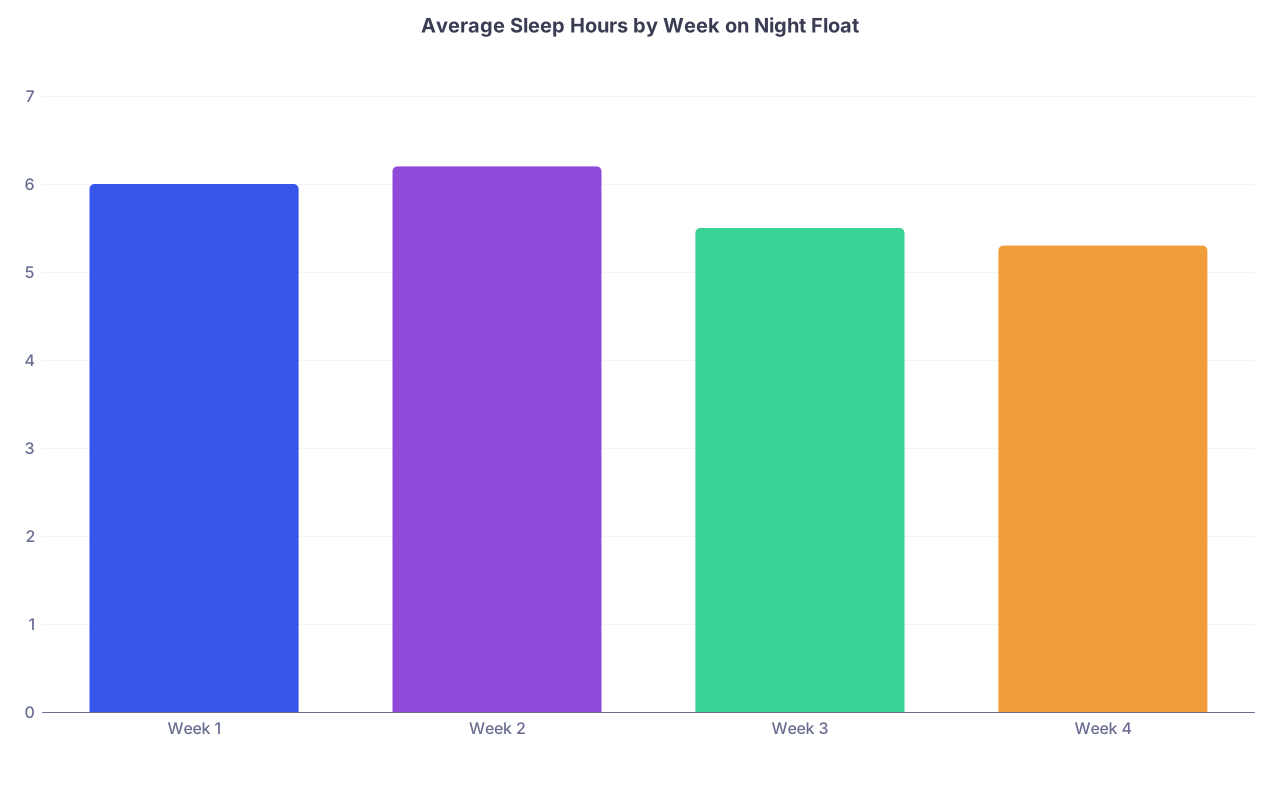
This is what usually happens. Week 3–4 sleep erodes if you don’t actively fight for it.
Week 4: Plan the Exit While You’re Still In It
Last week is when you start preparing to rejoin the diurnal world.
At this point you should:
- Look at your post-night-float schedule:
- Do you go straight into days?
- Do you have a golden weekend?
- Decide your flip strategy (we’ll talk about it below) based on that actual schedule.
Don’t wait until your last night to think about this. That’s how you spend 3 days wandering around like a zombie.
Days Off During Night Float: How to Not Ruin Your Rhythm
The seductive mistake on days off: “I’ll live like a normal person today.” Translation: destroy your sleep architecture and walk into your next night shift wrecked.
One Day Off in the Middle of Nights
At this point you should maintain a modified night schedule, not flip.
Example:
- Get off at 7 am.
- Sleep 8 am–1 pm (shorter than usual).
- Wake, do life things in afternoon/evening.
- Nap 9 pm–12 am.
- Stay up 12–4 am doing low-key stuff.
- Sleep 4–8 am.
- Then you’re closer to your night pattern.
You’re splitting sleep, but staying anchored to late sleep and late wake.
Two Consecutive Days Off
You have more flexibility but you still don’t fully flip if you’re going back to nights.
Simple rule:
- Keep at least 4–5 hours of sleep in the daylight block each “day.”
- Shift your wake time a little earlier, but don’t suddenly get up at 7 am and go to brunch both days.
Handover Week: Flipping Back to Days Without Destroying Yourself
This is where most people fail. They either:
- Stay up 24+ hours on the last day “to reset,” or
- Try to sleep like a normal person the very next night and lie awake miserably.
You’ll do better with a structured flip.
Your Last Night Shift → First Post-Nights Day
Assume last night ends 7 am Friday and you’re free until Monday days.
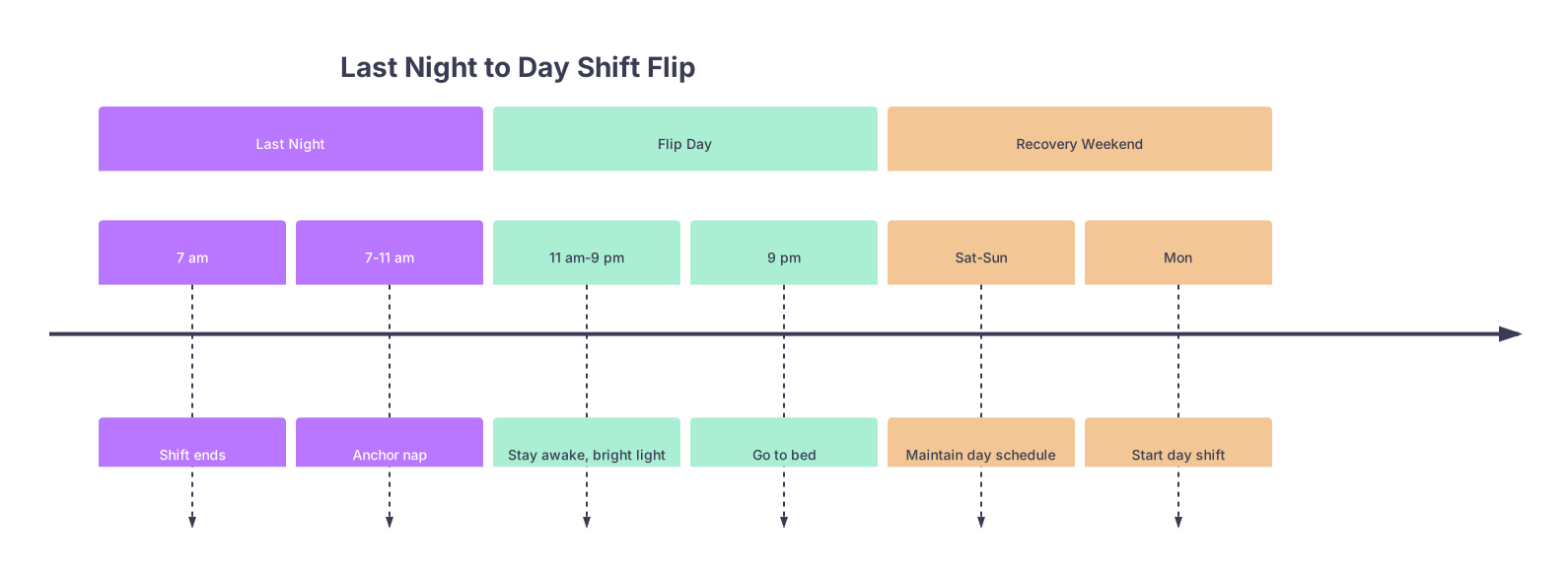
Option A: Gradual Flip (safer, slower)
- Friday 7–11 am: Sleep 4-hour anchor nap.
- Friday 11 am–9 pm: Stay awake (light, activity, social time).
- Friday 9 pm–Saturday 6 am: Main night sleep like a normal person.
- Saturday: Regular day schedule.
- Sunday: Reinforce day schedule (early light, no late caffeine).
- Monday: Start days reasonably adjusted.
Option B: Aggressive Flip (fast, harsher, sometimes necessary)
- Friday 7–10 am: Short 2–3 hour nap.
- Friday 10 am–9–10 pm: Stay awake, lots of light, movement, early evening exercise.
- Friday 10 pm–Saturday 7 am: Long sleep.
- Saturday: Act like normal day-shift human.
General rules:
- Do not pull a full all-nighter after your last night. You’re already sleep-deprived.
- Use sunlight like a drug: strong morning/early afternoon exposure for the next 2–3 days.
- Stop caffeine by 2 pm during flip days.
| Period | Event |
|---|---|
| Last Night - 7 am | Shift ends |
| Last Night - 7-11 am | Anchor nap |
| Flip Day - 11 am-9 pm | Stay awake, bright light |
| Flip Day - 9 pm | Go to bed |
| Recovery Weekend - Sat-Sun | Maintain day schedule |
| Recovery Weekend - Mon | Start day shift |
Mental Health and Relationships: Week-by-Week Touchpoints
You’re not a machine. Night float will test your mood, your patience, and your relationships. Pretending otherwise is how you end up snapping at nurses at 4 am and wondering why everyone avoids you.
Weekly Check-Ins
At this point each week you should run a 5-minute self-inventory:
Ask:
- Am I getting at least 5 hours of reasonably continuous sleep most “days”?
- Have I driven home drowsy even once this week?
- Have I lost my temper at work or home more than usual?
- Am I eating like a college student during finals?
If you’re flunking all of these:
- Tighten your schedule — go back to the core template.
- Drop optional obligations ruthlessly for the remaining weeks.
- Talk to someone (co-resident, chief, therapist). Nights is a classic time mood tanks and people feel isolated.
With partner/family:
- Plan one 15–30 minute non-distracted check-in per week:
- No phone.
- No TV.
- Just “how are we doing?” (yes, it’s awkward; do it anyway).
Putting It All Together: A Sample 4-Week Night Float Blueprint
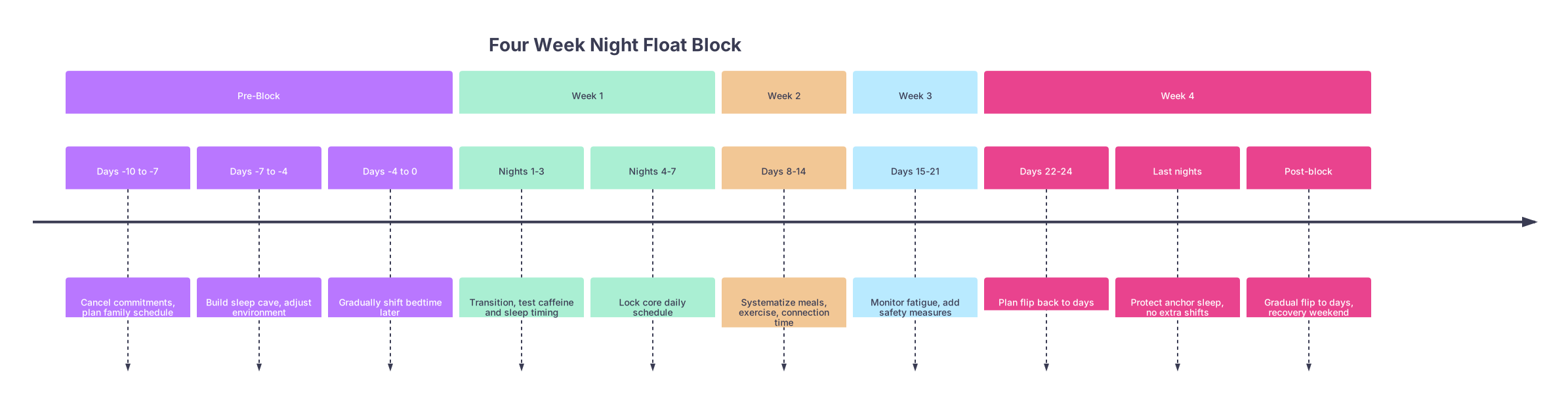
Here’s a high-level timeline to visualize the whole month.
| Period | Event |
|---|---|
| Pre-Block - Days -10 to -7 | Cancel commitments, plan family schedule |
| Pre-Block - Days -7 to -4 | Build sleep cave, adjust environment |
| Pre-Block - Days -4 to 0 | Gradually shift bedtime later |
| Week 1 - Nights 1-3 | Transition, test caffeine and sleep timing |
| Week 1 - Nights 4-7 | Lock core daily schedule |
| Week 2 - Days 8-14 | Systematize meals, exercise, connection time |
| Week 3 - Days 15-21 | Monitor fatigue, add safety measures |
| Week 4 - Days 22-24 | Plan flip back to days |
| Week 4 - Last nights | Protect anchor sleep, no extra shifts |
| Week 4 - Post-block | Gradual flip to days, recovery weekend |
Three Things to Remember
- Treat a 4-week night float like a performance block, not random survival. Plan logistics, sleep, food, and relationships before it starts.
- During the block, protect a consistent daily template: post-shift sleep, afternoon light and light activity, pre-shift anchor meal and caffeine window.
- The end of nights matters as much as the start. Script your flip back to days over 2–3 days instead of “resetting” with an all-nighter that just deepens the hole.