
Most residents ruin their ICU month before it even starts—by botching the sleep transition.
You cannot “wing it” into 24-hour call, q2 nights, or 7-on-7-off ICU blocks. Your brain and circadian rhythm are stubborn. If you slam from normal clinic hours into nights with no ramp, you will spend the first week in a fog, make more errors, and feel miserable.
Here is the structured, time-based plan: what to do 4 weeks out, 2 weeks out, the final 7 days, and literally the last 48 hours before you walk into the unit.
Big Picture: What You Are Up Against
Your body clock is not impressed by your work ethic. It is regulated by:
- Light exposure (strongest signal)
- Wake time (more important than bedtime)
- Meal timing
- Caffeine timing
If your ICU month includes any of the following, you need a sleep transition plan:
- 7p–7a night shifts
- 24-hour calls (or “28s” in disguise)
- Rotating schedules (days → nights mid-block)
- Home call with frequent overnight pages
| Pattern | Common Schedule | Risk Level for Sleep Disruption |
|---|---|---|
| Straight Days | 7a–7p | Moderate |
| Straight Nights | 7p–7a | High |
| q3–4 Call | 24h shifts | Very High |
| Week Split | 3 days / 4 nights | Very High |
| Home Call | 7a–5p + pages | Variable |
Your goal is not perfection. Your goal is to hit Day 1 of ICU having already shifted your circadian rhythm partway toward the schedule, with your routines (meals, caffeine, light) aligned.
4 Weeks Before ICU: Baseline and Inventory
At this point you should stop pretending this is “future you’s problem.”
Week -4: Know Your Enemy and Your Baseline
1. Confirm your exact schedule.
Do not guess. By 4 weeks out you should:
- Look up your ICU rotation schedule in the residency portal.
- Clarify:
- Start date and exact start time of first shift.
- Pattern: straight days, straight nights, or mixed.
- Call/coverage expectations (in-house vs home call).
- Ask a senior: “ICU nights here—are they truly 7p–7a or does sign-out make it 6p–8a?”
2. Map your current sleep pattern.
For 5–7 days, track:
- Bedtime and wake time.
- Caffeine timing (first and last dose).
- Any late-night screen time.
- Subjective: How sleepy are you at 10 p.m., midnight, 4 a.m.?
You need an honest baseline. If you “normally” sleep midnight–7, but on post-call days you drift, write it down. No fantasy schedules.
3. Decide your target pattern.
Match to your upcoming ICU month:
- Straight days: target 10 p.m.–6 a.m. or similar early schedule.
- Straight nights: target 2–10 a.m. sleep (or similar) before the block, then 8 a.m.–3 p.m. during.
- Mixed: prioritize being adaptable with anchor sleep and naps.
Write your Target ICU Sleep Window on a sticky note and put it where you see it daily.
4. Fix the easiest variable first: wake time.
Stop thinking in terms of “when should I go to bed?” Start here:
- Set a consistent wake time, 7 days per week, that is reasonably close to your future ICU wake time (for days) or pre-bed time (for nights).
- No sleeping in more than 1 hour on “days off.”
This is foundational. Everything else builds on wake time discipline.
3 Weeks Before: Start the Gradual Shift
At this point you should move from awareness to slow, controlled change.
Week -3: Move Bedtime and Wake Time in 30–60 Minute Steps
You are not flipping your schedule. You are nudging it.
If you are going into ICU DAYS:
Goal: Shift earlier.
- Every 3–4 days:
- Move wake time 30 minutes earlier.
- Move bedtime 30 minutes earlier.
- Example: You currently sleep midnight–7 a.m., but ICU days start at 6 a.m.
- Days 1–3: 11:30–6:30
- Days 4–7: 11:00–6:00
- Keep shifting until you are solidly 10–6.
If you are going into ICU NIGHTS:
Goal: Shift later, but not fully nocturnal yet.
- Every 3–4 days:
- Push bedtime 30–60 minutes later.
- Push wake time 30–60 minutes later.
- Example: Currently 11 p.m.–7 a.m., but ICU nights will be 7p–7a with sleep 8 a.m.–3 p.m.
- Days 1–3: midnight–8 a.m.
- Days 4–7: 1–9
- Days 8–10: 2–10
You do not need to reach “perfect night shift mode” yet. You are building tolerance for later wake times and stretching your circadian range.
Caffeine Rule, starting now:
- No caffeine within 8 hours of intended bedtime. Non-negotiable.
- If you are shifting later, that means you can keep drinking coffee later into the evening—but guard that 8-hour window fiercely.
2 Weeks Before: Lock in Routines and Environment
At this point you should treat this like an actual performance event you are training for. Because it is.
Week -2: Optimize Light, Food, and the Physical Sleep Setup
This is where most residents are lazy. They complain about “brutal nights” but never fix their room or light exposure.
1. Light: the master switch.
You will use light aggressively.
For upcoming ICU DAYS:
- Within 30 minutes of wake time:
- Get 10–20 minutes of bright light. Outside is best. No sunglasses.
- After 8 p.m.:
- Dim overhead lights.
- Use warm, low-intensity lighting.
- Blue-light filters on devices.
- If you are scrolling doom at midnight under bright LEDs, stop pretending you are “trying” to sleep earlier.
For upcoming ICU NIGHTS:
You are starting to invert the pattern.
- Delay bright morning light:
- If you are sleeping later, avoid strong light immediately after waking at, say, 9–10 a.m. Keep it moderate.
- In the evening (5–9 p.m.):
- Increase bright light exposure. Well-lit rooms, screens allowed, even a light therapy box if you are serious.
- Plan for post-shift:
- After your future night shifts, you will wear dark sunglasses on the commute home and keep lights low before bed.
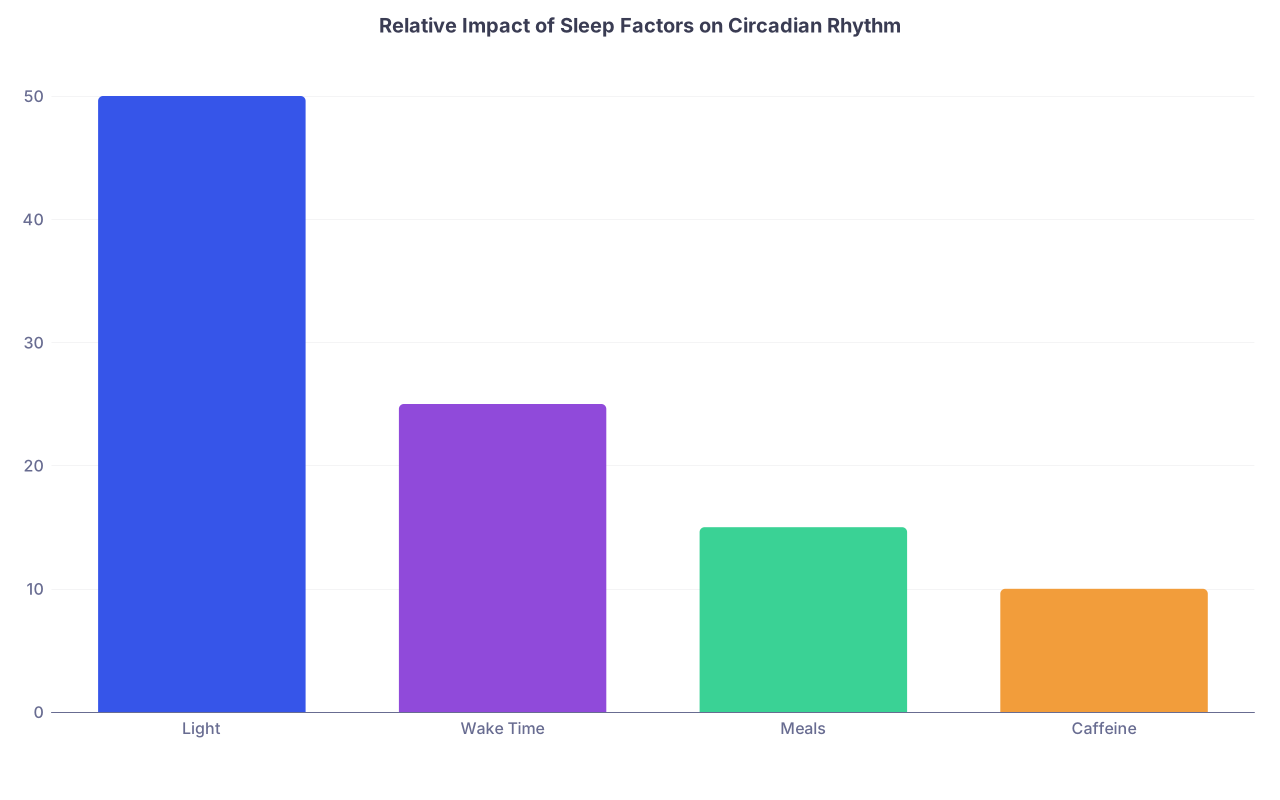
| Category | Value |
|---|---|
| Light | 50 |
| Wake Time | 25 |
| Meals | 15 |
| Caffeine | 10 |
2. Food: stop eating like an intern on autopilot.
You want your gut to expect fuel at times that match your ICU pattern.
- For DAYS:
- Shift main meals earlier.
- Solid breakfast within 1 hour of wake.
- Do not eat large meals after 8–9 p.m.
- For NIGHTS:
- Start practicing:
- A substantial “breakfast” closer to your new wake time (9–10 a.m.).
- A big meal in the late afternoon / early evening (pre-shift equivalent).
- Light snacks at “night-shift hours” maybe one or two nights per week to test tolerance.
- Start practicing:
3. Your sleep cave: build it now, not on post-call day.
- Blackout curtains or at least serious light blocking (foil + painter’s tape is ugly but effective).
- White noise machine or fan.
- Room cool enough you would not want to sit around in a T-shirt.
- Phone on “Do Not Disturb” with a very small VIP list.
Do one setup sprint this week: 60–90 minutes to fully ICU-proof your room.
1 Week Before: Tightening the Screws
At this point you should commit to a specific countdown plan based on your first shift.
We will split this into Days Rotation and Nights Rotation because the last week differs.
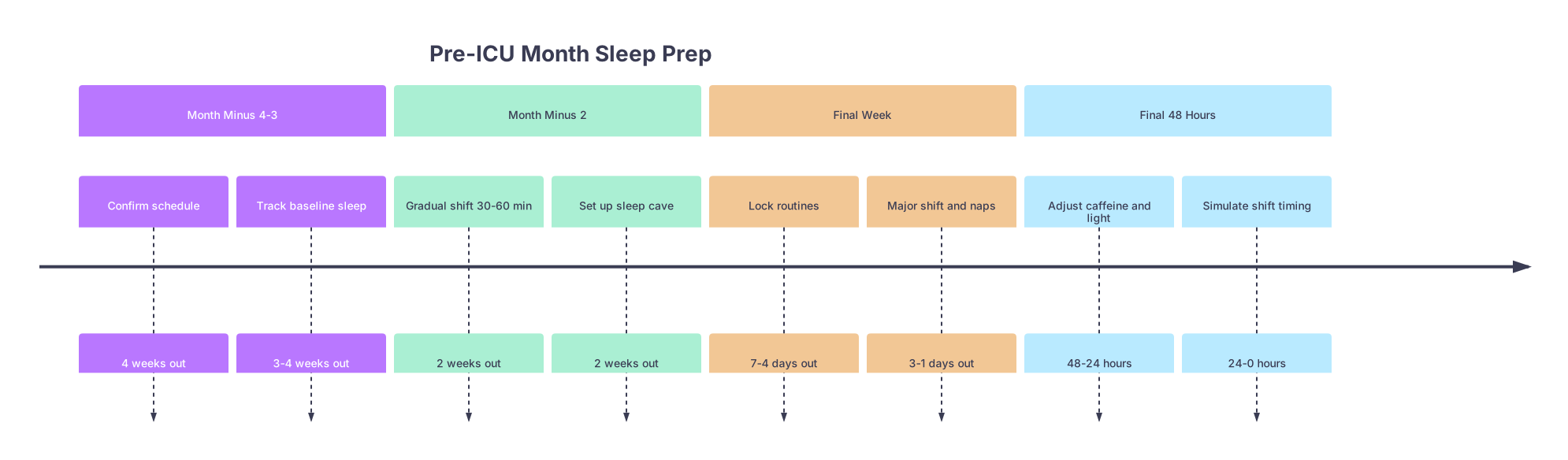
| Period | Event |
|---|---|
| Month Minus 4-3 - Confirm schedule | 4 weeks out |
| Month Minus 4-3 - Track baseline sleep | 3-4 weeks out |
| Month Minus 2 - Gradual shift 30-60 min | 2 weeks out |
| Month Minus 2 - Set up sleep cave | 2 weeks out |
| Final Week - Lock routines | 7-4 days out |
| Final Week - Major shift and naps | 3-1 days out |
| Final 48 Hours - Adjust caffeine and light | 48-24 hours |
| Final 48 Hours - Simulate shift timing | 24-0 hours |
Scenario A: ICU DAYS (e.g., 7a–7p)
7–4 days before start:
At this point you should be within 60 minutes of your target wake time.
- Lock in wake time exactly where it needs to be for ICU:
- If you must wake at 4:45 a.m. to make it, start that now. Not “on Monday.”
- Bedtime is determined by that wake time:
- Aim for a consistent 7.5–8 hours in bed, even if sleep is imperfect at first.
- Last caffeine by 11 a.m.–noon. You want early, strong coffee and nothing later.
3–2 days before start:
- Mimic ICU mornings:
- Wake at your exact ICU wake time.
- Full get-ready routine at that time—shower, scrubs (if you want), quick breakfast.
- Try one “practice early morning”:
- Actually leave the house and walk for 10–15 minutes in morning light.
- Night before day -1:
- Keep evening calm, low-stress.
- No heavy workouts after 6–7 p.m.
- Get in bed at your target time, even if you just read quietly for a while.
Day -1 (the day before ICU starts):
You are not cramming; you are protecting sleep.
- Wake at your ICU wake time.
- Short, moderate exercise early (walk, jog, light weights)—not at night.
- Limit naps to 20–30 minutes max, before 2 p.m.
- Caffeine:
- One coffee early, then cut off.
- Wind down aggressively:
- Screens off or on very low brightness 1 hour before bed.
- Same bedtime as the past few days. Consistency beats heroics.
Scenario B: ICU NIGHTS (e.g., 7p–7a)
This is where people usually crash and burn. You do not need full inversion a week out, but you must do a controlled pivot.
7–5 days before start:
At this point you should be waking later and going to bed later than your baseline.
- Push bedtime to around 1–2 a.m.
- Wake around 9–10 a.m.
- Get bright light soon after your new wake time, but avoid blinding morning sunlight if you are still trying to push later.
4–3 days before start:
Now you mimic a “half night shift” for 1–2 days.
- Bedtime: 3–4 a.m.
- Wake: 11 a.m.–noon.
- Caffeine:
- Move coffee later: first coffee around 1–2 p.m., last coffee/tea by ~11 p.m.–midnight.
- Late-evening engagement:
- Do something mentally active 9 p.m.–1 a.m.: reading, studying, deep cleaning, whatever keeps you awake and upright.
2 days before first night shift:
This is the key pivot.
- Go to bed 4–5 a.m., wake noon–1 p.m.
- Treat noon–1 p.m. as your “morning”:
- Light exposure.
- First meal.
- Light-to-moderate exercise early in this window.
- Evening:
- Stay fully awake and functioning until at least 3–4 a.m. again.
- Caffeine allowed in moderation 4–10 p.m., but cut off around midnight.
Day -1 before first night shift:
You are setting yourself up so that you walk into the first night shift already partially inverted.
Two options, depending on how aggressive you want to be:
Option 1 – Full pivot simulation (best if you can tolerate it):
- Stay awake through the night before ICU:
- Sleep 8–9 a.m.–3 p.m. This mimics your post-call sleep.
- Day structure:
- Wake at 3 p.m.
- “Breakfast” at 3–4 p.m., light exposure.
- Caffeine between 4–9 p.m., then stop.
- Stay awake and relatively active until 4–5 a.m.
- Then take a strategic nap:
- Short nap 1–2 p.m. on the actual day of your first shift, if needed, but not too long.
Option 2 – Long pre-shift nap (more common, slightly messier):
- Night before first shift:
- Sleep ~2–9 a.m.
- Day of first shift:
- Wake at 9 a.m.
- Live normally until mid-afternoon.
- Take a 2–3 hour nap from 2–5 p.m.
- Use caffeine just before the shift starts, not all morning.
Final 48 Hours: Micro-Adjustments and Hard Rules
At this point you should stop making large changes and focus on fine-tuning.

Caffeine Rules (Hard Lines)
- ICU DAYS:
- Last caffeine 8 hours before planned bedtime, even if you feel exhausted.
- ICU NIGHTS:
- No caffeine within 6 hours of planned post-shift sleep.
- Use caffeine early in the shift, not as an act of desperation at 5 a.m.
Nap Strategy
- Cap late naps:
- No naps after 3–4 p.m. if you are starting day shifts.
- For night shifts, consider a 90-minute nap ending 1–2 hours before your shift.
- Keep “just-in-case” naps short:
- 20–30 minutes for a quick reset, not 2 hours that wreck your sleep drive.
Tech and Mental Noise
Last 2 evenings before starting:
- No big life admin projects at 10 p.m. (taxes, visa paperwork, job hunt).
- Keep intense social media arguments or doomscrolling out of the pre-sleep window.
- Have your ICU bag packed earlier in the day, so you are not hunting for your stethoscope at midnight.
First 3 ICU Shifts: Adjust On the Fly
You will not get everything perfect. What matters is how you adjust after the first couple of shifts.

Daily Mini-Checklist (on shift days)
- Did I wake at my intended time (±30 minutes)?
- Did I get light at the right times?
- Did I keep caffeine within the boundaries?
- Did I protect at least one uninterrupted sleep block of 4–5 hours?
If the answer is no to 2 or more, fix those first before blaming “ICU is just brutal.”
Quick Comparison: Good vs. Bad Pre-ICU Prep
| Aspect | Good Prep Behavior | Bad Prep Behavior |
|---|---|---|
| Schedule Knowledge | Knows exact start times, pattern | Vague idea, checks schedule day before |
| Sleep Shift | Gradual 30–60 min adjustments over weeks | Goes to bed “early” night before only |
| Light Management | Timed light/dark exposure | Screens on bright until bed every night |
| Room Setup | Blackout, white noise, cool temp | Bare windows, phone buzzing on nightstand |
| Caffeine Use | Cutoff 6–8 hours before sleep | Coffee all day “to survive” |
FAQ (Exactly 4 Questions)
1. How many days does it actually take to shift my sleep schedule for night float?
For most residents, a 1–2 hour shift per day is reasonable without feeling wrecked. So moving from a midnight–7 a.m. pattern to a 4 a.m.–noon pattern takes about 3–4 days of deliberate adjustment. You then fine-tune with strategic naps and light exposure in the final 48 hours.
2. Is it ever smart to just not sleep before the first night shift?
Staying up all night before your first shift is usually a bad idea. You arrive to night one already sleep-deprived and cognitively dulled. A better compromise is: sleep part of the night, wake late morning, and then take a 2–3 hour nap in the afternoon before the shift. The only time a full all-nighter makes sense is if your schedule beforehand is so misaligned that you have zero other way to pivot, and even then, you use it once, not every block.
3. Should I use melatonin or sleep meds to force the transition?
Low-dose melatonin (0.5–1 mg) timed correctly can help anchor a new schedule, especially for night shifts trying to sleep in the morning. It should be taken 1–2 hours before your desired sleep time, not as a “sleeping pill” after you are already in bed. Sedative hypnotics (like zolpidem) and benzos are a last resort, and they can absolutely worsen cognitive function on ICU. If you use anything stronger than melatonin, do it with explicit guidance from an actual physician who knows your rotation demands.
4. What if my ICU schedule flips from days to nights mid-rotation?
That is the worst-case scenario for circadian rhythm, and you will not make it perfect. Your strategy becomes:
- Maintain a stable anchor sleep window (for example, always sleeping at least 3–4 a.m.–7 a.m.) whether on days or nights.
- Use strategic naps just before shifts during the transition days.
- Accept that the first 2 nights after a flip will feel rough and compensate with extra structure: tighter caffeine control, stricter light management, and more aggressive protected sleep blocks on post-call days.
Key points:
- You “pay” for sleep transition either before ICU or during it. Smart residents pay upfront, gradually, with structure.
- Wake time, light, and caffeine timing are the levers that matter. Move them on a schedule, not by vibes.